
How the UK’s social security system stopped tackling poverty

Spread the love
Ultraskrip/Shutterstock

Sharon Wright, University of Glasgow

The cost of living is the most important issue for many voters this election. It’s no surprise why. In 2022, nearly 4 million people in the UK experienced destitution, meaning they could not meet their basic physical needs such as having enough to eat and staying warm.

The UK’s social security system is failing in its core purpose to prevent poverty. And yet the Conservatives have promised more crackdowns on welfare, with the prime minister linking this with his pledge to lower taxes.

When the Conservative-Liberal Democrat coalition government came to power in 2010, they inherited a social security system in radically better shape than it is now. What happened?

During the previous Labour governments (1997-2010), 2.4 million people were lifted out of poverty, including 700,000 children. This was done during favourable economic conditions, but was also the result of progressive social security measures such as tax credits and child benefits.


Want more election coverage from The Conversation’s academic experts? Over the coming weeks, we’ll bring you informed analysis of developments in the campaign and we’ll fact check the claims being made. Sign up for our new, weekly election newsletter, delivered every Friday throughout the campaign and beyond.


People received working-age benefit payments for different needs: jobseeker’s allowance, income support for single parents and incapacity benefit for long-term illness and disability. Housing benefit went directly to landlords to cover claimants’ rent.

Enter the global financial crisis. The Conservative-led government’s response was austerity cuts: cutting back on welfare to tackle the budget deficit.

Lowering the value of benefits is the biggest austerity cut to have affected incomes. In 2010, the government switched from uprating the value of benefits each year in line with the retail price index to using a different measure of inflation, the consumer price index, instead. This is usually lower and effectively makes payments worth less.

This was expected to save the government around £6 billion pounds a year. In 2012, the value of benefits was capped to increase at 1% while inflation was forecast at 5.2%.

Benefit sanctions and caps

In 2012, the government introduced a new system of tougher rules and sanctions on people receiving benefits. Conservative politicians said this would end “the ‘something for nothing’ culture”, but the change has had lasting negative effects.

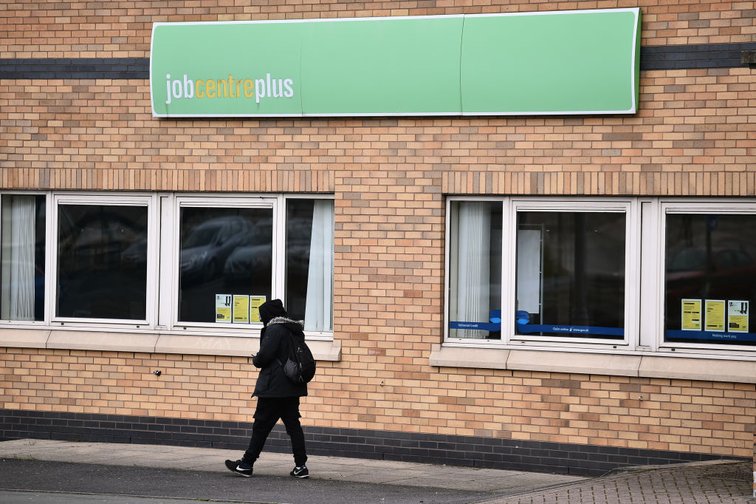
Benefit sanctions were always part of the system, but became extreme in 2012. If, for example, someone misses one Jobcentre appointment their benefit could be reduced or removed for 28 days.

Woman looking worried and tired sat by window with toddler
Many people receiving benefits have been penalised with sanctions. Bricolage/Shutterstock

Nearly a quarter of all jobseeker’s allowance claimants were sanctioned between 2010 and 2015. Research shows that sanctions have “profoundly negative outcomes”, including on people’s mental health.

Other cuts to incomes followed the Welfare Reform Act 2012. The “bedroom tax” penalised social housing tenants who had “extra” bedrooms. The idea was to reduce renters’ housing benefit so they would downsize to a smaller home. However long-term housing shortages mean that smaller properties are rarely available.

In 2013, the household benefit cap was introduced to limit the maximum amount a family could receive in benefits payments. It had the most impact on families with children and those with high rents.

Universal credit

Universal credit, introduced in 2013, was billed as the biggest shake-up of benefits in 70 years. It promised to make work pay and simplify the system. It replaced separate tax credit, unemployment, lone parent, disability and housing payments with a single payment.

Research from think tank the Resolution Foundation suggests that universal credit provides more support for working people who rent their homes than the previous system. But disabled people who cannot work are likely to be much worse off than under the old system.

There are other problems with universal credit. Unlike under the previous system that gave housing benefit straight to landlords, claimants have to pay their rent from a pot of money provided by the government that is almost certainly too small to cover all their costs.

The first universal credit payment takes around five weeks to arrive, meaning people may fall into rent arrears. A result is that some landlords take legal action to evict those receiving universal credit.

Further cuts

In 2015, the Conservatives abandoned targets set by Labour to reduce child poverty. Then in 2016, new legislation slashed spending again. Benefits were frozen for four years.

The two-child limit was applied to tax credits and universal credit in 2017 to remove income for third or subsequent children. Large families faced increased poverty as a result.

In 2020, the pandemic hit. Universal credit and tax credits were raised by £20 per week, but this ended in late 2021. The cost of living crisis has since widened the gap between benefits and prices.

Today, the value of universal credit falls £890 per month short of the cost of living for single people over 25. This is because of the changes to uprating and the benefit freeze.

In Feburary 2024, charity the Trussell Trust published research showing that over half of people on universal credit had run out of money for food in the previous month.

What can the next government do?

The next UK government must make emergency repairs to social security to halt harrowing declines in health and life expectancy. This should ensure a minimum acceptable standard of living, including restoring the value of benefits such as universal credit to cover the costs of living.

Since 71% of children living in poverty are in working families, employers should be required to pay the real living wage. In-work universal credit also needs to top up wages enough to make work pay.

Repairing the social safety net is an enormous challenge, but public support for it has been on the rise for years. In 2010, many people thought benefit claimants didn’t deserve any help. But from 2015 there has been a growing preference to help people receiving benefits.

Sharon Wright, Professor of Social Policy, University of Glasgow

This article is republished from The Conversation under a Creative Commons license. Read the original article.
Continue ReadingHow the UK’s social security system stopped tackling poverty

Jeremy Hunt’s benefit crackdown will worsen an already terrible system

Spread the love

Original article by Mikey Erhardt republished from Open Democracy under a Creative Commons Attribution-NonCommercial 4.0 International licence

Chancellor Jeremy Hunt has threatened to cut benefits for people with disabilities and long-term illnesses who do not get a remote job
 | Nathan Stirk/Getty Images

The long-term effects of a dangerously mismanaged pandemic and cuts to health and social care are kicking in, with a record 2.5 million working-age people in the UK having disabilities or long-term health conditions that prevent or restrict their ability to work.

This should be the time to reform our punitive welfare system, which fewer Britons than ever believe offers enough support to those who need it. Instead, chancellor Jeremy Hunt has used his autumn statement to inflict yet more pain.

Hunt announced plans to stop people who are unemployed but not actively looking for work due to long-term sickness or disability from claiming free prescriptions and discounted bus travel, as well as to tell people they must find remote jobs or risk losing their benefits.

The news is hardly surprising – the government has long tried to paint Disabled people as ‘scroungers’. Yesterday, Laura Trott, chief secretary to the Treasury, callously told interviewers that Disabled or ill people have “a duty” to work. And just last month, Hunt promised to review benefit sanctions, telling the Conservative Party conference that “around 100,000 people are leaving the labour market every year for a life on benefits”.

What Hunt omitted, though, is that the UK already has one of the least generous welfare systems in Western Europe. Disabled people have lost an average of £1,200 a year between 2008 and 2019 due to a series of cuts and reforms, including the introduction of Employment and Support Allowance, the Work Capability Assessment, Personal Independence Payment, the bedroom tax, the benefit cap, the two-child limit, and Universal Credit.

A reduction in financial support can be difficult for anyone. But for Disabled people, it’s devastating. A household with at least one Disabled adult or child needs an additional £975 a month to have the same standard of living as non-disabled households, according to Scope disability rights charity.

The government is well aware of the mental anguish our threadbare welfare system causes. Just this week, a coroner warned work and pensions secretary Mel Stride that the system can worsen symptoms of mental illness, after a man whose “anxiety was exacerbated by his application for Universal Credit” died by suicide. The number of secret reviews into the deaths of benefit claimants carried out by the Department for Work and Pensions (DWP) has also more than doubled over the past three years.

Emma, a freelance benefits adviser in Greater London who requested that their surname not be published, knows better than most how to navigate the welfare system – they spend their working life helping others to do so.

Yet even Emma was told last year that their Hypermobile-Ehlers-Danlos Syndrome didn’t classify them for an enhanced Personal Independence Payment (PIP), which is designed to help a person with an illness, disability or mental health condition with everyday life. This money would have been a lifeline for Emma, who, despite being in work, was struggling to cover the extra costs that many Disabled people face, including, in their case, the purchase of two wheelchairs and an E-bike to help them get around.

“As a benefits adviser myself, I was able to give examples of how I met the enhanced rate mobility descriptors,” she said, referring to the criteria that must be met to be eligible for the enhanced mobility element of PIP, which is worth £71 a week. “But the caseworker [at the DWP] still refused and eventually offered me the standard rate [of £26.90 a week].”

“The whole process was incredibly stressful… He told me I had to decide there and then whether to accept his offer and that there would be no point in taking the appeal further as it would be unsuccessful.”

Pushing Disabled people towards work with threats often results in them becoming more unwell and further from the labour marketTom Pollard, head of social policy at the New Economics Foundation

Emma eventually worked with Citizens Advice to lodge a new appeal, which was successful, but it took them months to eventually receive PIP, making dealing with the additional costs associated with disability very difficult.

Having witnessed firsthand the difficulties of the current welfare system, Emma branded “current conversations” about sanctions and “getting people back to work” as “scary”.

They said: “Sanctions are an easy way [for the government] to save some money, at a time when finances are under pressure and scrutiny and they don’t know of a better way. And because they don’t understand the ramifications that sanctions will have on Disabled people”.

Emma’s sentiment was echoed by Tom Pollard, head of social policy at the New Economics Foundation. He told openDemocracy that Hunt’s threats to sanction people who do not find work will backfire and fail to achieve their stated aims.

“Any attempt to push [Disabled people] towards work by applying pressure and threats often simply results in people becoming more unwell and further from the labour market,” Pollard explained.

Labour’s position, should it take power next year, is not much better than the Tories’. In January, the then shadow work and pensions secretary, Jonathan Ashworth, announced that there would be “conditionality” – which requires people to behave a certain way to access benefits – in any welfare system the party oversees. This line appears unchanged, despite claims on the fringes of the Labour conference that the party would “co-produce” its benefits system with Disabled people.

That both of the biggest parties are resorting to threats of further sanctions or more conditionality is indicative of a system in desperate need of repair, said Geoff Fimister, policy co-chair at the Disability Benefits Consortium. “Ministers have so little confidence in what is on offer,” he explained, “that they feel they need to resort to threats to promote uptake.”

Linda Burnip from Disabled People Against Cuts, agreed, saying: “[Politicians] aren’t interested in how a good system works.” She added: “Ideologically, their only interest is in removing state aid to those who need it.”

The social security system should be an essential public service – a piece of social infrastructure that ensures we all have access to the right support when we need it. But after years of dire cuts and reforms, it has been torn apart. Hunt’s crackdown will only serve to worsen it, with disastrous consequences for those who are reliant on it.

This should be our moment for creating a system built on respect, dignity and support, that enables us to live the lives we deserve – not imprison us. We should be introducing a Guaranteed Decent Income – based on 50% of the minimum wage – and doing away with punitive sanctions, benefit caps, bedroom tax, conditionality, five-week wait for the first payment, and the two-child limit.

These are must-haves to create a system where everyone has chances and is valued and treated as equal citizens. One that pushes through the barriers of this cross-party consensus on inflicting suffering, which is completely out of line with the general public’s views.

Original article by Mikey Erhardt republished from Open Democracy under a Creative Commons Attribution-NonCommercial 4.0 International licence

Continue ReadingJeremy Hunt’s benefit crackdown will worsen an already terrible system