
Tag: climate action

  • 6 reasons why global temperatures are spiking right now

    Spread the love
    Jonas Weckschmied/Unsplash

    Andrew King, The University of Melbourne

    The world is very warm right now. We’re not only seeing record temperatures, but the records are being broken by record-wide margins.

    Take the preliminary September global-average temperature anomaly of 1.7°C above pre-industrial levels, for example. It’s an incredible 0.5°C above the previous record.

    So why is the world so incredibly hot right now? And what does it mean for keeping our Paris Agreement targets?

    Here are six contributing factors – with climate change the main reason temperatures are so high.

    1. El Niño

    One reason for the exceptional heat is we are in a significant El Niño that is still strengthening. During El Niño we see warming of the surface ocean over much of the tropical Pacific. This warming, and the effects of El Niño in other parts of the world, raises global average temperatures by about 0.1 to 0.2°C.

    Taking into account the fact we’ve just come out of a triple La Niña, which cools global average temperatures slightly, and the fact this is the first major El Niño in eight years, it’s not too surprising we’re seeing unusually high temperatures at the moment.

    Still, El Niño alone isn’t enough to explain the crazily high temperatures the world is experiencing.

    2. Falling pollution

    Air pollution from human activities cools the planet and has offset some of the warming caused by humanity’s greenhouse gas emissions. There have been efforts to reduce this pollution – since 2020 there has been an international agreement to reduce sulphur dioxide emissions from the global shipping industry.

    It has been speculated this cleaner air has contributed to the recent heat, particularly over the record-warm north Atlantic and Pacific regions with high shipping traffic.

    It’s likely this is contributing to the extreme high global temperatures – but only on the order of hundredths of a degree. Recent analysis suggests the effect of the 2020 shipping agreement is about an extra 0.05°C warming by 2050.
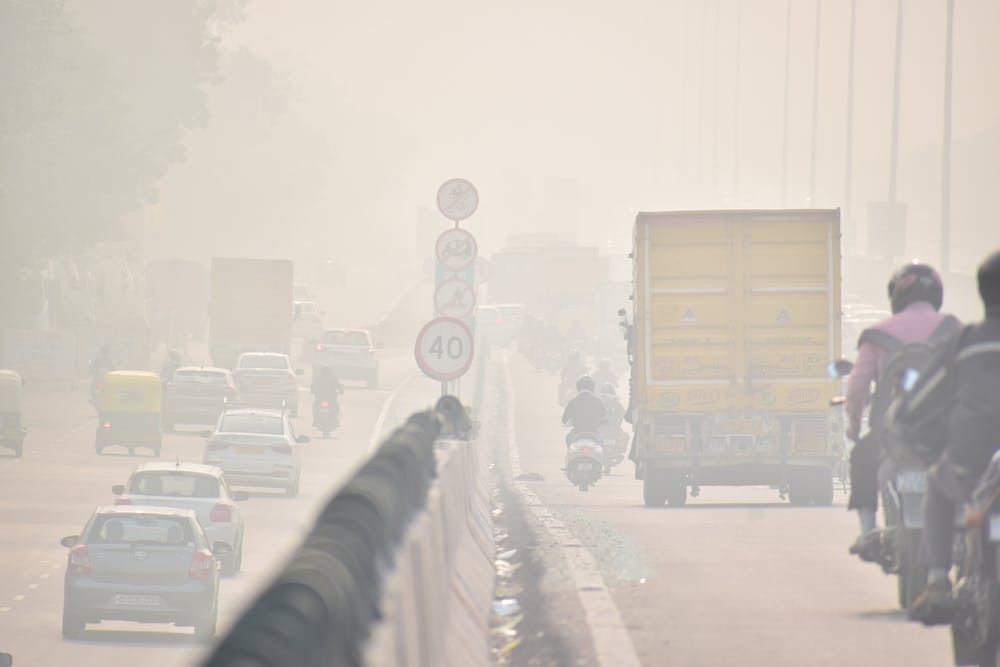
    A smog shrouded road with motorcycles, trucks and cars barely visible through the pollution
    People pass through the rising pollution on the Delhi-Jaipur Expressway in Gurgaon, Haryana, India, on November 12 2021.
    Shutterstock

    3. Increasing solar activity

    While falling pollution levels mean more of the Sun’s energy reaches Earth’s surface, the amount of the energy the Sun emits is itself variable. There are different solar cycles, but an 11-year cycle is the most relevant one to today’s climate.

    The Sun is becoming more active from a minimum in late 2019. This is also contributing a small amount to the spike in global temperatures. Overall, increasing solar activity is contributing only hundredths of a degree at most to the recent global heat.

    4. Water vapour from Hunga Tonga eruption

    On January 15 2022 the underwater Hunga Tonga–Hunga Haʻapai volcano erupted in the South Pacific Ocean, sending large amounts of water vapour high up into the upper atmosphere. Water vapour is a greenhouse gas, so increasing its concentration in the atmosphere in this way does intensify the greenhouse effect.

    Even though the eruption happened almost two years ago, it’s still having a small warming effect on the planet. However, as with the reduced pollution and increasing solar activity, we’re talking about hundredths of a degree.

    5. Bad luck

    We see variability in global temperatures from one year to the next even without factors like El Niño or major changes in pollution. Part of the reason this September was so extreme was likely due to weather systems being in the right place to heat the land surface.

    When we have persistent high-pressure systems over land regions, as seen recently over places like western Europe and Australia, we see local temperatures rise and the conditions for unseasonable heat.

    As water requires more energy to warm and the ocean moves around, we don’t see the same quick response in temperatures over the seas when we have high-pressure systems.

    The positioning of weather systems warming up many land areas coupled with persistent ocean heat is likely a contributor to the global-average heat too.

    6. Climate change

    By far the biggest contributor to the overall +1.7°C global temperature anomaly is human-caused climate change. Overall, humanity’s effect on the climate has been a global warming of about 1.2°C.

    The record-high rate of greenhouse gas emissions means we should expect global warming to accelerate too.

    While humanity’s greenhouse gas emissions explain the trend seen in September temperatures over many decades, they don’t really explain the big difference from last September (when the greenhouse effect was almost as strong as it is today) and September 2023.

    Much of the difference between this year and last comes back to the switch from La Niña to El Niño, and the right weather systems in the right place at the right time.

    The upshot: we need to accelerate climate action

    September 2023 shows that with a combination of climate change and other factors aligning we can see alarmingly high temperatures.

    These anomalies may appear to be above the 1.5°C global warming level referred to in the Paris Agreement, but that’s about keeping long-term global warming to low levels and not individual months of heat.

    But we are seeing the effects of climate change unfolding more and more clearly.

    The most vulnerable are suffering the biggest impacts as wealthier nations continue to emit the largest proportion of greenhouse gases. Humanity must accelerate the path to net zero to prevent more record-shattering global temperatures and damaging extreme events. The Conversation

    Andrew King, Senior Lecturer in Climate Science, The University of Melbourne

    This article is republished from The Conversation under a Creative Commons license. Read the original article.
  • Dramatic climate action needed to curtail ‘crazy’ extreme weather

    Spread the love

    https://www.theguardian.com/environment/2023/aug/28/dramatic-climate-action-needed-curtail-extreme-weather

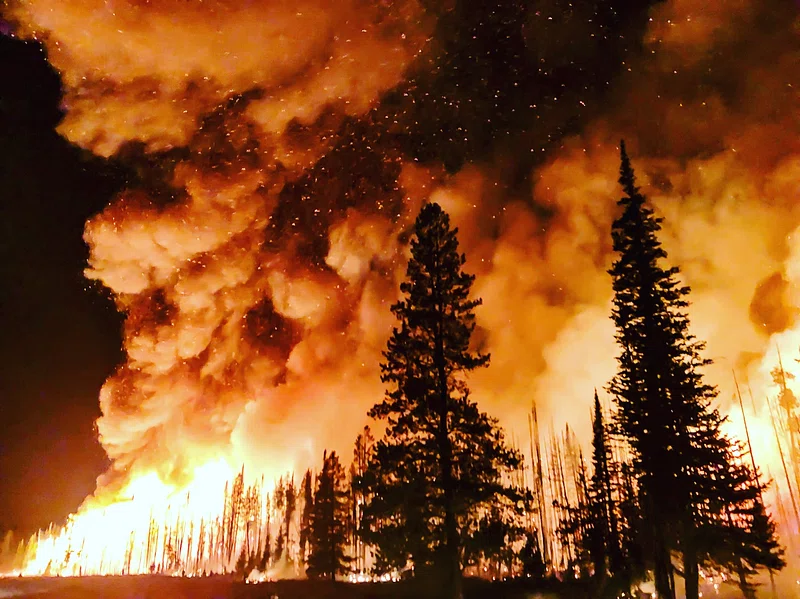
    Heatwaves, wildfires and floods are just the ‘tip of the iceberg’, leading climate scientists say

    ‘Crazy off-the-charts records’: has humanity finally broken the climate?

    Canadian wildfire 2023
    ‘Crazy off-the-charts records’: has humanity finally broken the climate?Canadian wildfire 2023

    The “crazy” extreme weather rampaging around the globe in 2023 will become the norm within a decade without dramatic climate action, the world’s leading climate scientists have said.

    The heatwaves, wildfires and floods experienced today were just the “tip of the iceberg” compared with even worse effects to come, they said, with limitations in climate models leaving the world “flying partially blind” into the future.

    …

    “We need to stop burning fossil fuels,” said Dr Friederike Otto at Imperial College London. “Now. Not some time when we’ve allowed companies to make all the money they possibly can.”

    Prof Emily Shuckburgh at the University of Cambridge in the UK said: “Anyone in any way perpetuating the fossil fuel era is firmly on the wrong side of history.”

    “Knowing that we will look back on today’s extreme events as mild relative to what lies in our future is truly mind-boggling,” said Prof Andrea Dutton at the University of Wisconsin-Madison, US. “The speed at which we make this transition will define the future that we get.”

    …

    https://www.theguardian.com/environment/2023/aug/28/dramatic-climate-action-needed-curtail-extreme-weather

  • World’s largest asset managers block climate action 

    Spread the love

    https://www.energymonitor.ai/finance/sustainable-finance/worlds-largest-asset-managers-block-climate-action-amid-anti-esg-backlash/

    Fresh analysis of asset managers’ 2022 proxy voting patterns reveals the world’s largest investors are backsliding on climate-related votes, mainly in the energy sector.

    By Polly Bindman

    While 2022 was the hottest year on record for a number of countries globally, the world’s largest asset managers’ progress on climate action has cooled. 

    Investors filed a record number of shareholder resolutions relating to environmental and social issues during 2022’s proxy season. However, new analysis by non-profit ShareAction of how US, UK and European asset managers voted on these resolutions reveals that those with the biggest influence worked to block a number of key climate votes last year. 

    The overall share of support across surveyed investors for environmental or social resolutions (filed mainly in the US, with a handful from other countries) increased from 60% in 2021 to 66% last year, but this was mainly down to a surge of supportive votes from asset managers in Europe, where sustainability disclosures are tightening.

    Overall, the total number of supportive votes from US and UK investors barely changed between 2021 and 2022. Worryingly, the data reveals how the world’s four largest asset managers – BlackRock, State Street Global Advisors, Vanguard Group and Fidelity Investments – have worked to block key climate votes going through. 

    This is particularly notable within the energy sector, where the world’s largest asset manager, BlackRock, went from supporting 72% of such votes in 2021 to just 16% in 2022.

    …

    https://www.energymonitor.ai/finance/sustainable-finance/worlds-largest-asset-managers-block-climate-action-amid-anti-esg-backlash/

  • Earth Day 2022

    Spread the love

    It occurs to me that this could be a dangerous time for politicians and others failing to address the climate crisis. We have the most recent IPCC report identifying necessary action including an immediate stop to all new fossil fuel use and it’s ignored. Climate change is seen and experienced, it’s beyond controlling the narrative. The people that have warned of the growing crisis will be gaining power and influence, [ed: in a few years … ] we may well have laws that are applied retrospectively – and why shouldn’t they be? [ed: Why shouldn’t they be held responsible for their actions or – potentially recognised as criminal – neglect? Had the power to address severe climate destuction but chose not to …]

    Climate Group Calls Biden’s Earth Day Order for Old-Growth Forests ‘Grossly Inadequate’

    U.S. President Joe Biden’s reported plan to protect old-growth forests—which help combat global temperature rise by storing planet-heating carbon—is “grossly inadequate,” one climate advocacy group said Thursday.

    Biden will mark Earth Day in Seattle on Friday with an executive order on the issue, according to The Washington Post, which cited five unnamed sources briefed on the plan.

    Responding in a statement, Food & Water Watch national organizing manager Thomas Meyer declared that “President Biden seems to think we’re celebrating the first Earth Day in 1970, rather than in [the] depths of the climate crisis in 2022.”

    “Protecting forests without addressing the root cause of the climate crisis, namely the continued extraction and burning of fossil fuels, will do very little to slow global warming,” he warned.

    “The president has many effective tools at his disposal to address the climate and public health impacts of fossil fuels in a serious way,” Meyer added. “He should start by following through on his pledge to end fracking on public lands and stop offshore drilling, and directing his agencies to reject all new fossil fuel infrastructure.”

    …

    US Mobilization Planned to Demand ‘Livable, Just, and Healthy Planet for All

    Over 20 advocacy organizations are planning a nationwide “Fight for Our Future” mobilization for Saturday to demand climate action from the Biden administration and Congress.

    On the heels of Earth Day, demonstrators plan to gather in Washington, D.C., and communities across the United States to reiterate the necessity of pursuing bold policies to combat the fossil-fueled planetary emergency, citing the Intergovernmental Panel on Climate Change (IPCC) report released earlier this month.

    The organizing comes not only in the midst of the climate emergency but also as Russia’s war on Ukraine and price gouging by fossil fuel giants—in the third year of the Covid-19 pandemic—drive up the cost of gas.

    Sierra Club president Ramon Cruz in a statement that “in this unprecedented moment of climate crisis, rising prices, energy insecurity, and racial and environmental injustice, it’s vital that our leaders fight to establish a livable, just, and healthy planet for all.”

    “The latest IPCC report made clear that we not only have an imperative to address the climate crisis, but also the means to do so—doing so just requires the political will to make transformational investments at the scale and speed the crisis demands,” he added. “There’s a clear path forward for critical investments in climate, care, jobs, and justice, and Congress must seize this crucial opportunity to truly ensure the future we all deserve.”

    …