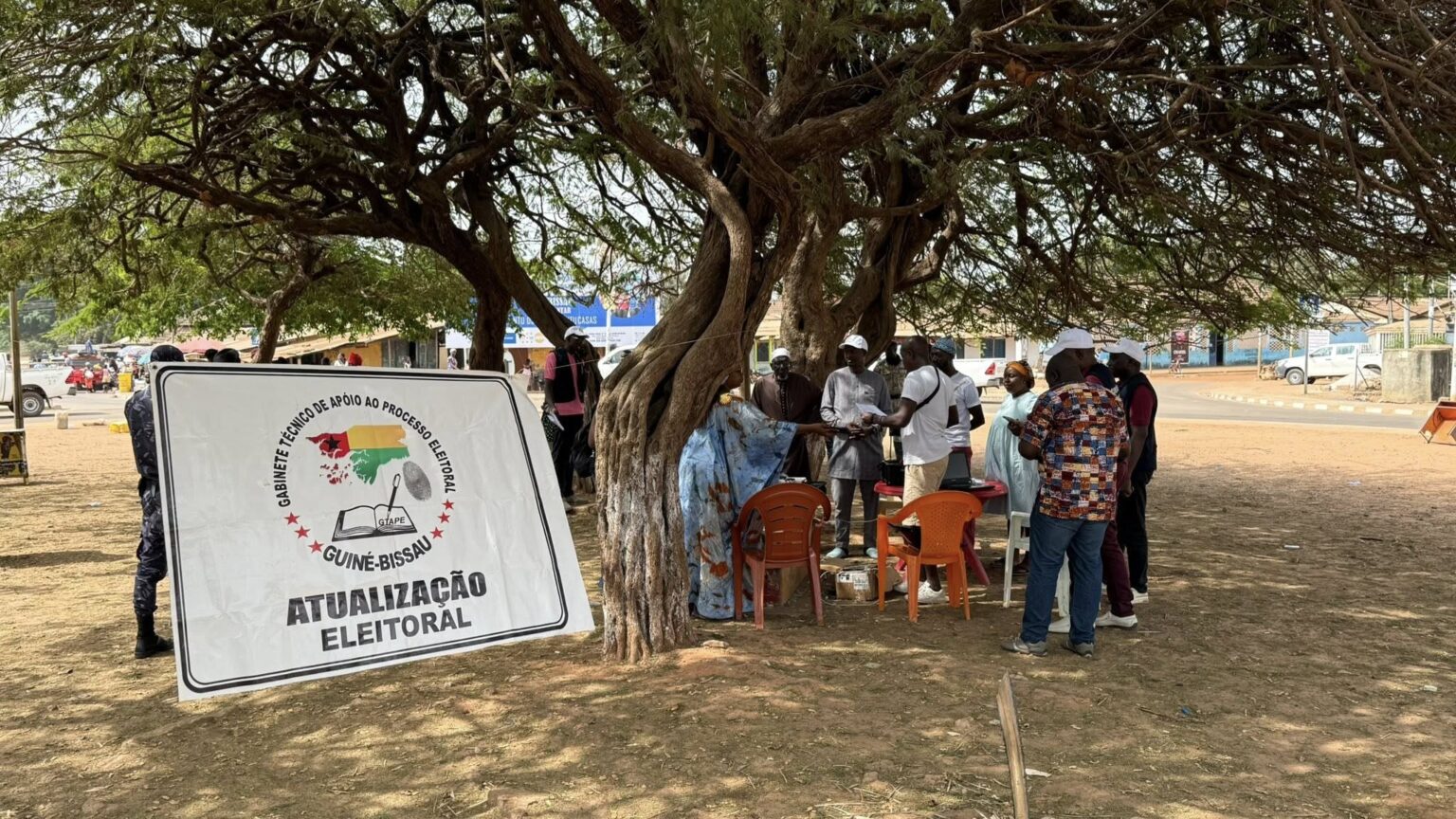
Preparations in April 2025 by Guinea-Bissau’s National Electoral Commission. Photo: CNE Guinea-Bissau
Guinea-Bissau’s election commission has claimed inability to announce election results after soldiers siege ballots and destroy servers holding the voting data after a coup allegedly staged by the outgoing president. Opposition parties accuse the commission of collaboration.
Seizing the ballots, tally sheets, and computers from the offices of Guinea-Bissau’s National Election Commission (CNE), soldiers have destroyed the servers storing the voting data submitted by the various Regional Election Commissions (CREs).
“We do not have the material and logistic conditions to follow through with the electoral process,” Idrissa Djalo, a senior official of the CNE, said on Tuesday, December 2. The CNE’s HQ came under attack on November 26, one day before it was scheduled to announce the results of the Presidential and parliamentary elections held on November 23. However, opposition parties are not convinced by Djalo’s reasoning that the CNE is unable to announce election results under the circumstances.
When the “regional tabulation was concluded at the national level and throughout the diaspora,” on November 26, the “minutes were already in the possession of the… candidates, representatives of the Public Prosecutor’s Office, and the Judicial Police,” said a statement by the National Campaign Directorate for Fernando Dias da Costa.
“Furthermore, a copy of the minutes and all electoral operation documents are delivered to the Regional Governor, who keeps them under his custody and responsibility. [Therefore], it is evident that conditions exist for the conclusion of the electoral process.”
Demanding the “convening of the CNE plenary and the publication of the results”, the statement condemned the “Executive Secretariat of the CNE” for collaborating with the “coup d’état staged by” Embaló in an “attempt to sabotage the electoral process.”
Opposition parties maintain that data submitted by the CREs show that Dias had won with over 50% of the votes. National and international electoral observers had also agreed that incumbent Umaro Sissoco Embaló had been voted out.
Swearing himself in as the president in 2020 at a hotel guarded by soldiers after a disputed election, Embaló has since dissolved the parliament twice. To thwart the return to constitutional order by preventing the transfer of power after losing elections, Embaló staged this coup, according to opposition parties and members of the dissolved parliament.
Claiming to be under arrest while still communicating with the French media, Embaló flew to neighboring Senegal a day after the staged coup on November 27. He was not welcome. Progressive Senegalese protested alongside Guinea-Bissau’s diaspora against hosting him in the country.
Dismissing his claim that he was the victim of a coup as a “sham” orchestrated by himself, Senegal’s Prime Minister Ousmane Sonko said in a parliamentary session on November 28: “We want the electoral process to continue. The [electoral] commission must be allowed to declare the winner.”
The following day, Guinea-Bissau’s diaspora population protested in Paris, London, Portugal’s Porto, and Brazil’s São Paulo, demanding disclosure of the electoral results and release of political prisoners held by the military.
Among the high-profile political prisoners is Domingos Simões Pereira, president of the dissolved parliament and leader of the historic African Party for the Independence of Guinea and Cape Verde (PAIGC), which had led the liberation struggle against Portuguese colonialism. He was Embaló’s main challenger, barred from contesting the election at the last moment.
The PAIGC-led coalition then backed the candidacy of the Party for Social Renewal (PRS) leader Dias, who is said to have won the election. Dias himself narrowly escaped capture by soldiers and has found asylum in Nigeria.
On December 2, security forces detained another member of parliament, Marciano Indi, at the Osvaldo Vieira airport, where he was waiting for his flight to Nigeria’s capital, Abuja, to attend a parliamentary session of the Economic Community of West African States (ECOWAS).
Earlier, on November 27, ECOWAS had suspended Guinea-Bissau from all decision-making bodies. Then on November 29, the African Union (AU) also announced its suspension of the country “from all AU activities until constitutional order is restored.”
Presidential candidate Fernando Dias da Costa of the Party for Social Renewal (PRS) in a pre-election meeting. Photo: JAAC / Facebook
Claiming to be under arrest, President Embaló has left the country while his opponents remain in custody after a military coup a day ahead of the announcement of the final results
The military coup in Guinea-Bissau on November 26 was not directed against the outgoing president, Umaro Sissoco Embaló, but orchestrated by him to thwart the return to constitutional order, opposition parties and members of the dissolved parliament allege.
Claiming to be arrested by the coup leaders – while still communicating with the French media – Embaló flew to neighboring Senegal the following day. His opponents, on the other hand, are still held in military custody.
The coup came on the heels of the long-delayed elections on Sunday, November 23. Both domestic and international observers had reportedly agreed that Embaló was voted out of the presidency.
“Why would anyone do a coup against a losing candidate?” asked Imani Umoja, Central Committee member of the African Party for the Independence of Guinea and Cape Verde (PAIGC).
Having led the country’s liberation struggle against Portuguese colonialism under the leadership of the Marxist revolutionary Amilcar Cabral, PAIGC is the country’s largest party. Its presidential candidate, Domingos Simões Pereira, Embaló’s main opponent, was barred from contesting the election by the Supreme Court, whose legitimate president had been replaced in 2023 by militias of the presidential guard under Embaló’s command.
“We had three options. One was to boycott the election,” which would have only handed over power to Embaló for the second term without a fight, Umoja told Peoples Dispatch. “Or we could have taken the streets in protest, but that is what the regime wanted. They would have killed us and postponed the election,” further extending his rule that had already continued beyond his term.
“So we decided to back one of the candidates approved to contest. Dias was our natural choice,” because he is the head of the Party for Social Renewal (PRS) – a splinter from the PAIGC. “There is no great ideological difference between us,” he added, explaining the split was over tactical differences, overcoming which the two parties had often collaborated on broader struggles.
Although the leadership of the PRS identified the party as “social-democratic” as opposed to PAIGC’s “socialist” identification, the rank-and-file of both parties are Cabralists.
“So we were able to reach an agreement that once Dias becomes the president, he would reverse all the unconstitutional decrees by Embaló.”
An unconstitutional regime
Swearing himself in as the country’s president at a hotel guarded by soldiers in February 2020 after a disputed election against the PAIGC leader Pereira, who was barred from contesting this time, Embaló had the president of the Supreme Court replaced, practically at gunpoint, in November 2023. Then, in December that year, he unconstitutionally dissolved the parliament, where the PAIGC had the majority, justifying the action by citing a coup attempt he had allegedly staged himself.
Removing the ministers constitutionally chosen by this parliament, he replaced them with a so-called “Government of Presidential Initiative.”
Thus, grabbing all power and dismantling democratic structures, Embaló has allegedly been signing away in secret valuable natural resources and lucrative infrastructure projects to France and the neighboring West African states under its neocolonial yoke.
A reversal of this neocolonial penetration was set to begin under Dias’s presidency, starting with the restoration of the dissolved parliament, the National People’s Assembly, dominated by the PAIGC and presided by its leader and barred candidate, Pereira.
According to the vote count from each region published by the Regional Electoral Councils, Embaló bagged around 43% of the votes, while Dias had won with about 53%, said Umoja.
A staged coup
However, one day before the National Electoral Council was set to publish the final results, summing up the nationwide count and the votes from the diaspora, gunfire erupted near the presidential palace.
“But there was no fighting. Soldiers were shooting in the air,” said Umoja. Embaló then told the French media that he had been removed from power in a coup led by a group of soldiers who had put him under arrest. “It was all staged. The coup was not against Embaló, but Dias… the president-elect.”
Opening fire near the National Election Council, “another group of armed people from the Ministry of Interior, accompanied by some soldiers, barged into its office and seized the phones of all the workers there, including the representatives of the candidates,” he added.
“A group of heavily armed militias associated with the Presidential Palace” also “invaded the campaign headquarters of the presidential candidate [Dias],” said Ruth Monteiro, Director of the Office of the President of the National People’s Assembly, namely Pereira.
Pereira was arrested with Dias’s National Representative, Octávio Lopes, and several others, Monteiro added. Dias himself managed to escape arrest “through a back door,” he later said in a video message.
Shutting down the radio, the officers who carried out the coup read out a statement on television, declaring themselves in charge, christening their junta as the “High Military Command for the Restoration of Order.”
Announcing the closure of borders, they ordered the suspension of the electoral process “until further notice”, ostensibly to thwart the “capture of Guinean democracy” by “narcotraffickers”.
Labeling this as “a self-coup orchestrated by Umaru Sissoko Embaló, who was overwhelmingly defeated at the polls,” the West Africa People’s Organization said: “The very clear aim is to prevent the electoral body from announcing results that are unfavorable to this well-known agent of the neo-colonial system.”
On November 27, when General Horta Nta Na Man swore in as transitional president for one year, the junta announced that it “strictly prohibits any demonstration, march, strike or action that disrupts peace and stability.”
Protests
“We cannot fold our hands while our leadership is imprisoned unjustly. When our leader and candidate was barred from contesting, we chose to avoid” a confrontation by not taking to the streets, backing another candidate instead. “But now we have run out of options. We have to protest.”
The Amílcar Cabral African Youth (JAAC) posted videos of protest marches in some neighborhoods around the Ministry of Interior. Large-scale protests are at high risk at the moment in Guinea-Bissau. A large section of “our leadership is still in hiding,” Umoja added.
However, the diaspora is mobilizing. In Dakar, the capital of Senegal, progressive Senegalese activists protested alongside the diaspora outside the Guinea-Bissau embassy against hosting Embaló in the country. “Dictators are not wanted anywhere!” Umoja remarked.
JAAC Portugal and Firkidja di Pubis, an organization of Guinean students and workers abroad, protested in Lisbon, capital of their former colony, outside the Community of Portuguese Language Countries (CPLP), chaired by Embaló.
“The CPLP and the so-called international community” is complicit with Embaló, who “orchestrated a fake coup d’état with the sole purpose of derailing the electoral process in which the people had defeated his dictatorship,” Firkidja di Pubis accused. Protesters demanded the “completion of the electoral process in which the people chose Fernando Dias da Costa as their President.”
Should the junta not pay heed, Umoja warns, “Embaló’s followers in the military are only those who are paid” for their loyalty, but the bulk of the rank-and-file soldiers are unpaid.
The PAIGC denounced on Saturday, November 29, that a group of masked and armed men raided their headquarters, attacking party leaders and those present. In statements released, the party alleges that the objective of the raid was to plant weapons in the office to later serve as evidence against them. The party called on the international community to “follow these events closely and support all of the efforts to preserve democratic legality.” The party has also called for authorities to release Pereira and all others arrested amid the coup plot.
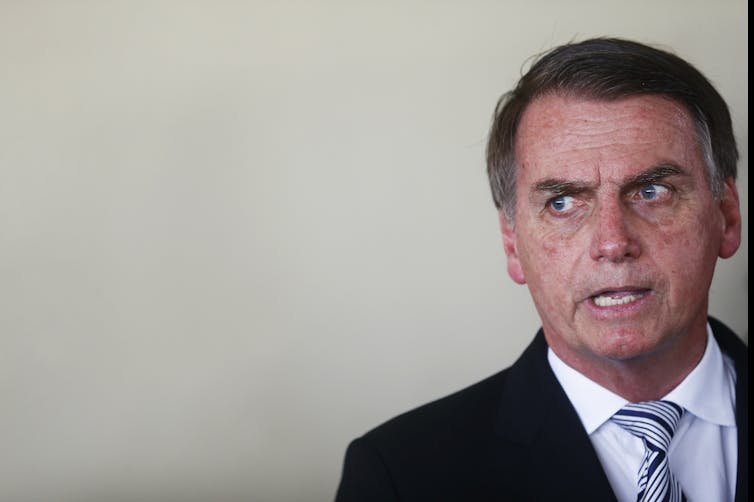
Brazil’s top prosecutor has filed federal charges against Jair Bolsonaro, alleging that the former president attempted a coup in 2023. Focus Pix / Shutterstock
The Brazilian attorney-general has charged the country’s former president, Jair Bolsonaro, with participating in a plot to cling to power through a coup d’etat in 2023 milo. If Bolsonaro is convicted, he could spend between 38 and 43 years in prison.
Bolsonaro, who governed Brazil between 2019 and 2022 but lost his attempt at re-election to current president Luiz Inácio “Lula” da Silva, is one of 34 people to be formally charged for offences related to the alleged coup. These include high-ranking serving and retired members of the military, as well as former ministers and politicians.
The charges levelled against them are involvement in an attempted coup d’etat, violent abolition of the democratic rule of law, and criminal organisation.
According to the attorney-general’s 272-page indictment, Bolsonaro became increasingly inclined to pursue anti-democratic measures in the months before the election. He allegedly considered taking steps to retain power even before the first round of voting.
Then, after his defeat by an extremely narrow margin, the indictment claims that Bolsonaro and his alleged accomplices decided to implement the plan before Lula took office in January 2023.
An investigation by Brazil’s federal police in November found that the insurrection in the country’s capital Brasília on January 8 2023, where rioters invaded the presidential palace, congress and supreme court, was part of this plan. The same investigation suggested the plan also included a plot to assassinate Lula and his vice-president Geraldo Alckmin, as well as supreme court judge Alexandre de Moraes.
Bolsonaro denies any wrongdoing and – at least in public – is bullish about his fate. Speaking to journalists hours before the charges were filed, he said: “I have no concerns about the accusations, zero.”
The case will now be considered by the Supreme Court, whose judges will decide whether to initiate criminal proceedings against Bolsonaro and the other defendants. This is expected to happen over the coming weeks. If the judges accept the charges and proceedings are established, the defendants will be called to answer them.
This is the first time in Brazilian history that high-ranking members of the armed forces have been indicted and charged with crimes associated with a coup d’etat. According to the indictment, the intention was for the armed forces to be called upon to act as a “moderating power”, with the aim of overturning the election result.
Army generals Augusto Heleno, Walter Braga Netto and Paulo Sérgio Nogueira de Oliveira are among those who have been charged. These men served as ministers in the Bolsonaro government, with Braga Netto also running as the vice-president on Bolsonaro’s ticket in 2022.
Another high-ranking member of the armed forces charged by the attorney-general is Almir Garnier Santos, the commander of the Brazilian navy. These four men were allegedly part of the inner nuclei that planned and prepared the attempted coup.
Several other servicemen, including generals, colonels and other officers, were charged with crimes related to the planning and execution of the initial phases of the coup. The sentences for all of these men could amount to up to 30 years in prison.
Like Bolsonaro, Braga Netto denies any guilt. In a statement released on February 18, his lawyers called the charges a “fantasy”. Lawyers for Garnier Santos and Heleno have chosen not to comment until having fully reviewed the charges.
Unlike those in the military, some of the political figures charged by the attorney general had criminal antecedents. One of the politicians named in the indictment is Filipe Martins, Bolsonaro’s former international affairs adviser and a “disciple” of the deceased far-right polemicist, Olavo de Carvalho. Martins’ lawyers released a statement on February 18 calling the accusations “unfounded”.
In December 2024, Martins was convicted of making a gesture alluding to white supremacy during a virtual session of the senate. He initially received a sentence of two years and four months in prison for inciting racial prejudice, which was replaced by 850 hours of community service.
Far-right commentator Paulo Figueiredo Filho, the grandson of Brazil’s last military dictator, João Figueiredo, was also charged. He appeared on a podcast on February 19 to criticise the charge. Figueiredo lives in the US, where he was arrested in 2019 because of problems with his immigration status.
Lessons from and to Brazil
Brazil has already offered some lessons to other countries facing similar authoritarian challenges. Its response to the insurrection in Brasília was swift and robust. Within days, hundreds of rioters had been arrested and the state governor of the federal district was suspended for his sluggish response.
Then, in 2023, Bolsonaro was banned from running for office for eight years over false claims that the electronic ballots used in the previous year’s election were vulnerable to hacking and fraud. Those involved with the attempted military coup have also been investigated and some subsequently arrested.
But the coup plot case can also serve as a lesson to the country. Brazil has a history both of successful and unsuccessful military coups. The last successful military coup led to a dictatorship that lasted from 1964 until 1985.
Brazil also has a history of amnesties, whereby crimes committed during these coups and authoritarian regimes have been pardoned. There have been 48 amnesties in Brazil since 1889, with the most recent one, in 1979, allowing the dictatorship to self-amnesty its crimes.
For over 45 years, it has hindered criminal accountability for the perpetrators of the crimes of the dictatorship. This included the murder of politician Rubens Paiva, whose disappearance was the focus of the 2024 Oscar-nominated film, I’m Still Here.
Bolsonaro and other individuals charged, as well as their supporters and aligned politicians, have been demanding a “humanitarian amnesty” for those who allegedly participated in the coup plot.
Given Bolsonaro’s history, this seems paradoxical. Throughout his decades-long public career, Bolsonaro has consistently celebrated the crimes of the military dictatorship and supported violations of human rights. At the same time, he has also opposed individuals and organisations that advocate for victims of the dictatorship.
If Bolsonaro and his alleged accomplices are found guilty, it could be an unparalleled lesson for Brazil. Punishing anyone convicted would be an opportunity to step away from the country’s tradition of impunity and move towards addressing systemic injustices.
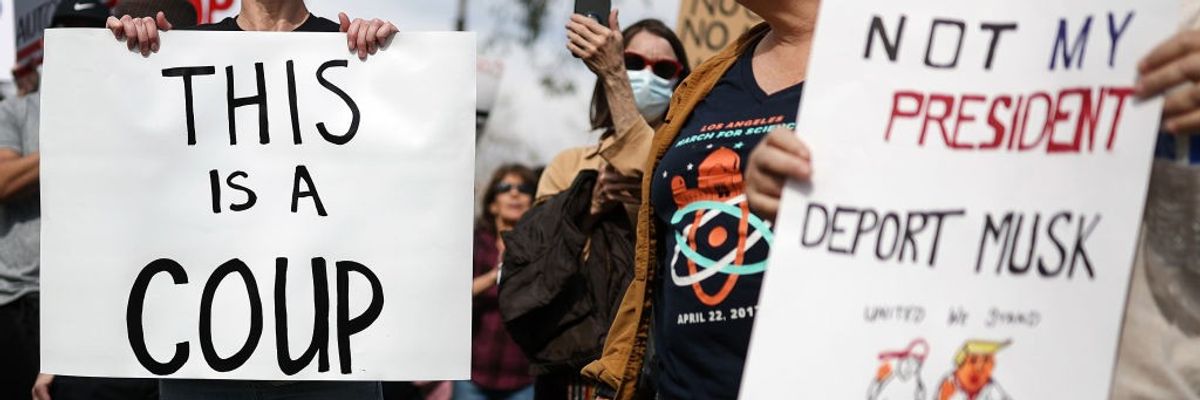
A protester holds a ‘This Is A Coup’ sign at a rally against the Trump administration during a “Not My President’s Day” protest on February 17, 2025 in North Hollywood, California. (Photo by Mario Tama/Getty Images)
Trump’s attempt to incite a coup in 2021 and his subsequent victory in the 2024 presidential election speak volumes of the democratic decline in the United States. We must admit exactly where we are at this point in time.
Over the past few years, there has been an alarming surge of coups d’état across the world, particularly in Africa. The most common definition of a coup is an illegal attempt to seize control of the government. The seizure of power by coup leaders is often justified by pointing to poor governance and/or deteriorating security situations.
Coups are typically irregular transfers of power that occur in countries with weak democratic institutions and may be carried out by military or civilian elites. Consolidated democracies have long prided themselves of being immune to the conditions that generate coups d’etat, but the Trump phenomenon in U.S. politics seems to suggest that there are no absolutes, and that liberal democracy can be brought down.
The storming of the U.S. Capitol building on January 6, 2021, was a coup attempt incited by outgoing president Donald Trump, and can be best described as an “attempted auto-coup.” Yet, shockingly enough, not only wasn’t Trump held accountable in the end for being criminally engaged in a “multi-part conspiracy” to overturn the lawful results of the 2020 election but was allowed to run again for the presidency in 2024. And what is even more shocking is that he prevailed in his third presidential bid by winning both the electoral college and the popular vote.
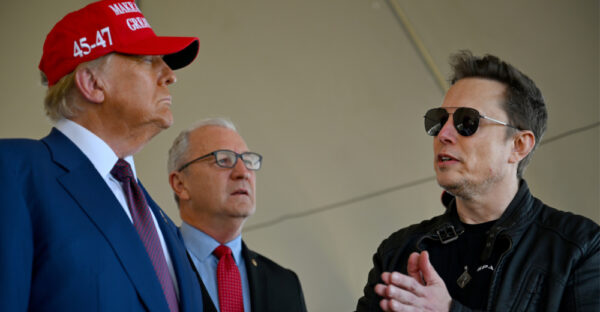
Trump and his Nazi buddy Elon Musk are trying to destroy civil society by dismantling the State.
Both Trump’s attempt to incite a coup in 2021 and his subsequent victory in the 2024 presidential election speak volumes of the democratic decline in the United States. Citizens’ support not just for a democracy-eroding leader but for one who repeatedly promised during his campaign to be a dictator, even if only for one day, is ample evidence to make the case that the end of democracy in the U.S. (or whatever is left of it as the country was never designed to be democratic) is upon us.
Indeed, an actual neo-fascist coup is now underway. Trump and his Nazi buddy Elon Musk are trying to destroy civil society by dismantling the State. Trump had promised on numerous occasions during his campaign to “demolish the deep state,” and even offered specific details for how he planned to do so. And this is exactly what is happening right now.
During his first month back in office, Trump signed a plethora of executive orders which ranged from a militarized crackdown on immigration and pardoning those who had taken part in the January 6, 2021, coup attempt to shutting down scores of federal agencies and starting mass layoffs across governments. By declaring himself above the law, Trump’s intent is to use executive power not for the purpose of dismantling the “deep state” in order to make federal government more efficient and therefore more responsive to citizen needs, but rather in order to take over government and have it run by loyalists, by people who would faithfully obey the commands of the “Great Leader.”
The aims behind this neofascist coup are threefold: Oligarchic state capture; white Christian nationalism as the hegemonic project; and the rise of a new U.S. empire.
Oligarchic state capture is a key goal of the Trump-Musk strategy behind the demolition of the so-called “deep state.” Dismantling the government bureaucracy is seen by the aspiring dictator and the world’s richest person as an essential course of action if “powerful individuals or corporations” are to have absolute freedom in creating rules and policies that serve their own benefit, at the expense of society. Trump and Musk are both fervent believers in the “natural right” of the rich and powerful to shape society as they please and make government function as they see fit.
Oligarchic state capture is a key goal of the Trump-Musk strategy behind the demolition of the so-called “deep state.”
The assault on regulations and on workers’ rights and vital workers’ institutions by the “two brothers” as prerequisites for economic prosperity forces us to go back to the 1880s when laissez-faire capitalism and social Darwinism ruled the day in order to find comparable situations. Trump has always been anti-labor, but Trump 2.0, influenced as heavily as it is by the anti-labor agenda of Project 2025, that wants to roll back all labor reforms under the Biden administration, outlaw public sector unions and indeedrewrite a hundred years of labor law, could be the most damaging administration the U.S. labor movement has ever faced. Trump’s agenda for the economy revolves around laissez-faire product market regulation and laissez-faire labor market regulations. Thus, the fact that the white working-class, which has been increasingly voting Republican instead of Democrat since 2000, helped Trump to return to power is indeed one of the most disconcerting trends in U.S. society.
Trump’s vision for America’s future is also rooted in white Christian nationalism and, as such, its realization virtually mandates anti-equality and so-called “gender ideology” attacks, along with a host of other “enlightened” undertakings such as book bans and seeking to revoke birthright citizenship. Trump’s white Christian nationalism agenda is born out of the preconceived notion that the rightful owners of this country are losing their political and cultural power. It is thus an exclusionist and nostalgic ideology which transcends social class and thus may explain why a significant segment of white working-class Americans support Trump.
Dark times are ahead—dark times, indeed.
Lastly, Trump envisions a new U.S. empire which includes gaining control of the Panama Canal, the purchase of Greenland, the possibility of turning Canada into the 51st U.S. state, owning Gaza, and even extending America’s manifest destiny into the stars.The acquisition of new wealth, greater security and strategic advantage in power politics are the drivers behind this new U.S. imperialism envisioned by Donald Trump. His imposition of tariffs on imports, which is baffling to economists, is intended to force countries to play according to the rules of the free market, so it is a profound mistake to think that Trump has somehow turned his back on neoliberalism. His deadly anti-regulatory blitz combined with tax-cutting for the rich and corporations and the use of economic rules into politics should be alone sufficient enough to dispel the notion that Trump is somehow waging a war on neoliberalism simply because he is using tariffs as part of his “America First” policy.
This, of course, is not to indicate that the neoliberal world order that the United States created after the end of the Cold War is not in crisis. Economic inequalities, political fragmentation, and social discontent threaten to bring down western liberal democracies and be replaced instead by authoritarian yet staunchly pro-capitalist regimes. The contradictions of neoliberal capitalism have become so extreme that only neofascism may be able to prevent the system’s ultimate collapse. This is precisely why Trump’s billionaire top lieutenant has so enthusiastically embraced far-right parties not only in Europe but across the globe. Neofascism is also needed to defend Christian values from the “radical left” and halt the alleged threat of the Islamization of the western world.
Dark times are ahead—dark times, indeed. And the only question is how to fight back before everything good and decent is lost once again in the return to fascism.
Elon Musk urges you to be a Fascist like him, says that you can ignore facts and reality then.Neo-Fascist Climate Science Denier Donald Trump says Burn, Baby, Burn.
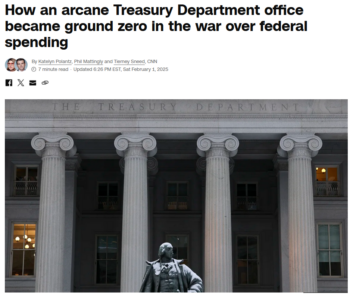
CNN (1/31/25) framed Elon Musk’s extra-constitutional power grab as part of “the war over federal spending.”
When President Donald Trump announced an unprecedented freeze on federal grants and loans last week, some of the most prominent US news outlets proved themselves largely uninterested in whether it was legal. Meanwhile, a few braver journalists called out the move as the constitutional crisis that it was (FAIR.org, 1/29/25).
When Democratic attorneys general rushed to challenge the move in court, with positive results, Trump rescinded the order. But the crisis is hardly over.
On the contrary: Elon Musk, the unelected centibillionaire who threw Nazi salutes at the inauguration, has wrested control of the Treasury Department’s payment system, after forcing out its most senior career civil servant, David Lebryk. As CNN (1/31/25) reported, the Treasury takeover happened after Trump’s team had repeatedly asked about the department’s ability to stop payments, to which Lebryk had insisted, “We don’t do that.”
These payments include everything from Social Security checks to tax refunds, federal employee salaries to contractor payments. It’s over $5 trillion a year, a fifth of the US economy. The database Musk and his tech bro allies in the non–congressionally approved “Department of Government Efficiency” (DOGE) have access to also contains enormous amounts of sensitive personal information for most Americans, including Social Security numbers. And Musk and a 25-year-old former X employee have access to the code that controls the payment systems, allowing them to make irreversible changes to it, according to Wired (2/4/25).
At the same time, Musk has infiltrated the General Services Administration and the Office of Personnel Management—two other rather obscure and nonpolitical but hugely consequential agencies that manage federal offices, technology and employees (Wired, 1/28/25, 1/31/25).
‘An idea that crosses party lines’
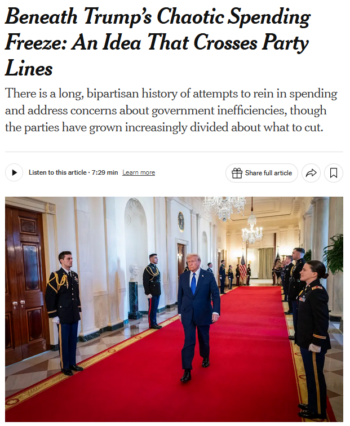
The New York Times (1/31/25) put its seal of approval on Trump’s illegal attempt to freeze federal spending, calling the idea behind it “bipartisan.”
Instead of appropriately pushing the increasing lawlessness and opacity to the forefront of their reporting, the New York Times and Washington Post largely buried these stories, downplaying their earth-shattering break from democratic norms.
As Musk took over the Treasury system, the Times (1/31/25) did point out:
Control of the system could give Mr. Musk’s allies the ability to unilaterally cut off money intended for federal workers, bondholders and companies, and open a new front in the Trump administration’s efforts to halt federal payments.
And yet somehow this story struck editors as page 13 material.
Meanwhile, a piece (1/31/25) by the Times‘ Michael Shear published online the same day was deemed front-page material, causing even seasoned media critics to spit out their morning beverage at its breathtaking ability to bothsides the situation: “Beneath Trump’s Chaotic Spending Freeze: An Idea That Crosses Party Lines.”
Shear wrote that Trump is simply “continuing a mostly failed effort by a long series of presidents and Congress” to “somehow reverse the seemingly inexorable growth of the federal government, an issue that resonates with some Democrats as well as most Republicans.” He thus clearly communicated that he is not up for the task of reporting on this administration.
The Times published Musk’s Treasury takeover on page 18, under the rather nonchalant headline: “Elon Musk’s Team Now Has Access to Treasury’s Payments System.” The subhead read:
Treasury Secretary Scott Bessent gave Mr. Musk’s representatives at the so-called Department of Government Efficiency a powerful tool to monitor and potentially limit government spending.
And hey, don’t worry, the article suggests:
Mr. Musk’s initiative is intended to be part of a broader review of the payments system to allow improper payments to be scrutinized, and is not an effort to arbitrarily block individual payments, the people familiar with the matter said.
At the Post, readers got language like, “The clash reflects an intensifying battle between Musk and the federal bureaucracy” (1/31/25), and “it is extremely unusual for anyone connected to political appointees to access” the payment systems (2/1/25). (In fact, it appears to be unprecedented—Independent, 2/3/25.)
‘Reminiscent of Stalin’
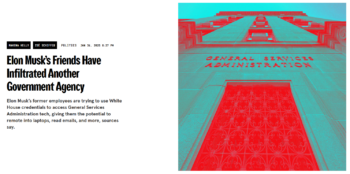
Wired (1/31/25): Musk’s team is “attempting to use White House security credentials to gain unusual access to GSA tech, deploying a suite of new AI software, and recreating the office in X’s image.”
There is another way to do journalism. It’s called connecting dots, asking questions, not accepting anonymous claims of benevolent intent—and helping people understand the gravity of the situation when unprecedented end-runs around democracy are happening before our very eyes. And it’s heartening to see quite a few news outlets engaging in it.
For instance, Wired has been doing a tenacious job following Musk’s assault on the government, connecting the dots between his actions and explaining the dangers to the country. It broke the news (1/28/25) that Musk workers from his various companies had taken over management positions at the Office of Personnel Management—well before Trump’s nominee to take over the OPM has even had a confirmation hearing. Its subhead noted: “One expert found the takeover reminiscent of Stalin.”
Wired explained that the installation of AI experts at OPM suggests a forthcoming effort to use AI on the reams of data it has access to in order to target federal employees for removal.
Regarding the GSA infiltration, Wired reported (1/31/25):
The access could give Musk’s proxies the ability to remote into laptops, listen in on meetings, read emails, among many other things, a former Biden official told Wired on Friday.
“Granting DOGE staff, many of whom aren’t government employees, unfettered access to internal government systems and sensitive data poses a huge security risk to the federal government and to the American public,” the Biden official said. “Not only will DOGE be able to review procurement-sensitive information about major government contracts, it’ll also be able to actively surveil government employees.”
Wired again put that danger (“the potential [for Musk minions] to remote into laptops, read emails, and more”) into its subhead—unlike the Times‘ muted headlines.
‘Incredibly dangerous’
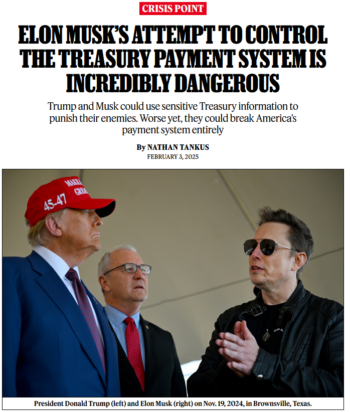
Rolling Stone (2/3/25) pointed out that “the danger of operational access to the payments system is precisely that there are very little safeguards for its improper use or manipulation.”
Others are also raising alarms in their headlines, as at Rolling Stone (2/3/25): “Elon Musk’s Attempt to Control the Treasury Payment System Is Incredibly Dangerous.” The subhead explained: “Trump and Musk could use sensitive Treasury information to punish their enemies. Worse yet, they could break America’s payment system entirely.”
The piece, by Nathan Tankus, pointed out that there are glaring reasons to disbelieve administration claims about this being about “improper payments,” such as:
At 3:14 a.m. Sunday, Musk pledged to shut down supposedly “illegal payments” to Global Refuge, a faith-based organization that exists to provide “safety and support to refugees, asylum seekers and immigrants from across the world.”
Tankus also points out what the Post and Times won’t, which is that the seizure of the payment system means Trump and Musk
can just impound agency payments themselves. They could also possibly stop paying federal employees they have forced on paid administrative leave, coercing them to resign.
Even in bigger media, some critical voices could be heard. CNN‘s Zachary Wolf (2/1/25) asked some appropriate journalistic questions: “Has [Musk] taken an oath, like the federal workers he apparently has plans to fire, to uphold the Constitution?…. What are Musk’s conflicts of interests?”
Accessories to the coup
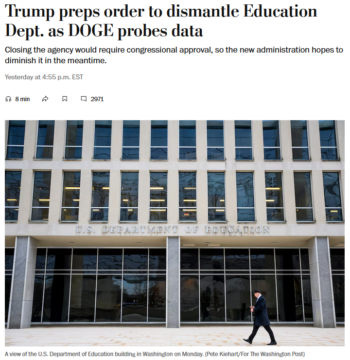
The Washington Post (2/4/25) assures readers that “the Education Department was created by Congress, and only Congress can eliminate it.”
The WashingtonPost put news about Musk’s takeovers on the front page today (2/4/25), as it reported on Trump preparing an executive order to dismantle the Department of Education, which Musk has apparently also infiltrated. But it still managed to sound rather sanguine about the threat: “The expected executive order would not shut down the agency, as there is widespread agreement in both parties that doing so would require congressional action.” Despite reporting daily on actions Trump and Musk have taken that have usurped congressional authority, the paper still seems to believe—and want readers to believe—against all evidence that our Constitution’s constraints on executive power continue to hold.
And the New York Times finally published an article (2/3/25) taking a deeper look “Inside Musk’s Aggressive Incursion Into the Federal Government,” as the headline stated. Still, it seemed to find it difficult to use language in its early framing paragraphs any stronger than to say that Musk’s actions “have challenged congressional authority and potentially breached civil service protections,” as it explains in the third paragraph. These moves are “creating major upheaval,” the fifth paragraph allowed, and the sixth said it “represented an extraordinary flexing of power by a private individual.”
The piece was not published in the print newspaper the next day; FAIR has yet to see it rise to the top of the paper’s homepage.
As Musk and Trump continue to behave like kings, it’s incumbent upon news media to not just report on their actions, but put them in the proper context for the public to understand the threat level they represent; otherwise, we can’t respond appropriately.
That kind of reporting takes real bravery in the kind of moment we are in: Musk has already (falsely) called it a crime to reveal the names of those working for him at the agencies DOGE is targeting, which Wired and others have done. The Trump-installed interim US attorney for DC has obsequiously promised Musk to go after those who identify his underlings—and to prosecute “anyone who impedes your work or threatens your people” (New Republic, 2/3/25).
While that might sound laughable, media outlets have already paid Trump handsome settlements to settle lawsuits that should have been seen as similarly laughable (FAIR.org, 12/16/24; PBS, 1/29/25; New York Times, 1/30/25). When prominent news outlets won’t summon the courage to vigorously oppose this descent into autocracy, they are accessories to the coup. We must demand better from them, and support the outlets and journalists doing the critical work we as citizens require to defend our democracy.
ACTION: Tell the New York Times and Washington Post to treat Musk’s actions like the existential threat to democracy that they are.
Please remember that respectful communication is the most effective. Feel free to leave a copy of your message in the comments thread here.
Correction (2/5/25): An earlier version of this article misstated the title of the official who threatened to prosecute those who revealed the names of DOGE employees. He is the interim US attorney for the District of Columbia.
FAIR’s work is sustained by our generous contributors, who allow us to remain independent. Donate today to be a part of this important mission.
Elon Musk urges you to be a Fascist like him, says that you can ignore facts and reality then.Climate Science Denier Donald Trump says Burn, Baby, Burn.