
Limiting jury trials will harm minority ethnic victims and defendants, research shows

Spread the love

Tara Lai Quinlan, University of Birmingham and Katharina Karcher, University of Birmingham

The right to trial by jury dates back to at least the 12th century. The government’s proposals to limit it in England and Wales, many argue, run counter to the UK’s core democratic principles. And as others have pointed out, scrapping jury trials for some crimes is unlikely to solve the massive backlog in the crown courts.

Our research suggests that there is another reason why it is a bad idea to scrap jury trials. They can play a vital role in reducing racial discrimination in the criminal justice system.

The proposals laid out by justice secretary David Lammy would have a disproportionately negative impact on people of colour – both defendants and victims – for whom jury trials give a glimmer of hope in a criminal justice system where “ethnic minorities (excluding white minorities) appear to be over-represented”.

Government data repeatedly shows black, Asian and minority ethnic defendants are less likely to plead guilty than white defendants, and more likely to take their cases to trial. Lammy’s own 2017 review of racial inequality in the justice system suggests this is driven by a perception that the plea-bargaining process is unfair to defendants of colour, and that only a jury of peers will give them a fair trial.

Once black defendants choose a jury trial, research shows they are “more likely … to obtain acquittals or reductions in charges as a result”, compared to black defendants who plead guilty without opting for a trial.

A jury of 12 people brings a broader array of diverse perspectives and opinions which enhance the quality of discussions in deliberations, particularly in cases involving an ethnic minority defendant. Defendants should have their fate decided by people who might better understand their experiences, backgrounds and motivations.

Lammy’s 2017 review emphasised the importance of juries in making the criminal justice system more legitimate, particularly for people of colour: “Juries deliberate as a group through open discussion. This both deters and exposes prejudice or unintended bias: judgements must be justified to others.”

Sentencing is also disproportionate for defendants of colour when compared to white defendants, following both jury trials and plea agreements. Research has found that explicit or implicit judicial biases – whether judges stereotype the defendant, how they interpret sentencing recommendations from prosecutors and defence counsel, or how they apply aggravating and mitigating factors – may all contribute to these disparities.

Empirical evidence from other jurisdictions shows that more diverse juries are fairer to black defendants. Indeed, studies repeatedly show that all-white juries much more readily convict black defendants. Juries with even one black member are less likely to do so.

The UK’s Contempt of Court Act limits this type of research with live juries. But there is enough evidence from other jurisdictions to suggest that retaining juries, and ensuring those juries are diverse, is essential for protecting the fair trial rights of people of colour generally, and black people in particular.

Justice for victims

Jury trials are also essential for black victims and their families. Since 2022, we have worked with the family and friends of Dea-John Reid, a 14-year-old black boy who was racially abused and chased through the streets of Birmingham by a group of white boys and men who fatally stabbed him in broad daylight.

In their 2022 trial, the perpetrators were acquitted of racially aggravated murder, with only the principal offender found guilty of manslaughter by a jury of one Asian and 11 white members. Dea-John’s family felt that the lack of diversity on the jury, which did not have a single black member, could have meant they were less likely to see Dea-John as a worthy victim. Research shows that black men and boys are stereotyped as suspects – even when they are victims of crime.

Since 2022, we have worked with the family’s campaign, which supports retaining jury trials, but wants them to be more ethnically diverse, particularly in cases involving black victims. Our research has documented the campaign and is addressing critical gaps in UK research on jury diversity.

Diversity in the judiciary

Lammy’s proposals for reform include expanding the use of bench trials. This means that more cases would be heard by a single judge alone.

The judiciary in England and Wales is neither sufficiently diverse nor representative of the population. While black, Asian or minority ethnic people make up around 22% of the population, as of 2025, they make up only 11% of all court judges.

Lammy’s proposal also goes against what the public wants. In 2024, we surveyed 1,000 members of the public, 75% of whom stated explicitly that they believed the UK should have jury trials.

While most of our respondents believed that jury trials were fair (51%) and trustworthy (60%), they also felt strongly that more diverse juries were fairer (61%). Around half of people (51%) believed juries should look like the communities they serve. We found that for people of colour, taking part in jury service was viewed as even more important than for white respondents.

When it comes to perceptions of fairness and trust in the courts, we found important racial differences. Our research found that people of colour trust judges and the courts at lower rates than white people. People of colour in our survey were also more likely than white people to believe that judges treat them more unfairly compared to white people. And most of our respondents believed that more diversity in the judiciary is needed.

If Lammy remains committed to reducing inequality in the criminal justice system for people of colour, rather than reducing jury trials, he should be increasing them, and the diversity on them, to ensure justice for all.

Tara Lai Quinlan, Associate Professor in Law and Criminal Justice, University of Birmingham and Katharina Karcher, Senior Lecturer, Department of Modern Languages, University of Birmingham

This article is republished from The Conversation under a Creative Commons license. Read the original article.
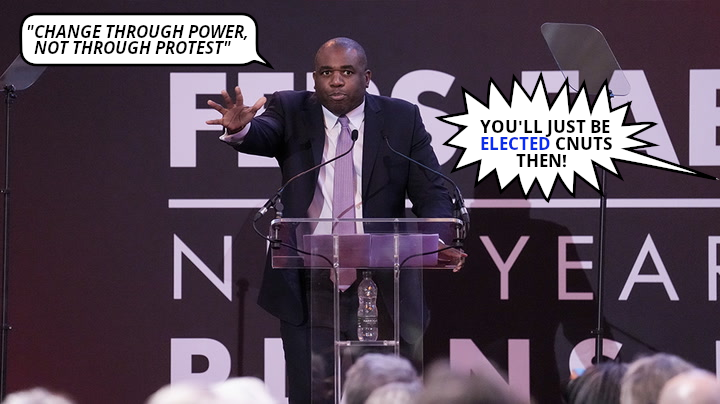
UK Labour Party Foreign Secretary David Lammy repeatedly heckled at a speech to the Fabian Society over his and the Labour Party's support for and complicity in Israel's genocide of Gaza.
UK Labour Party Foreign Secretary David Lammy repeatedly heckled at a speech to the Fabian Society over his and the Labour Party’s support for and complicity in Israel’s genocide of Gaza.

Richard Tice refuses to condemn Reform mayoral candidate’s comments about David Lammy

Continue ReadingLimiting jury trials will harm minority ethnic victims and defendants, research shows

Jeremy Corbyn publishes his manifesto

Spread the love
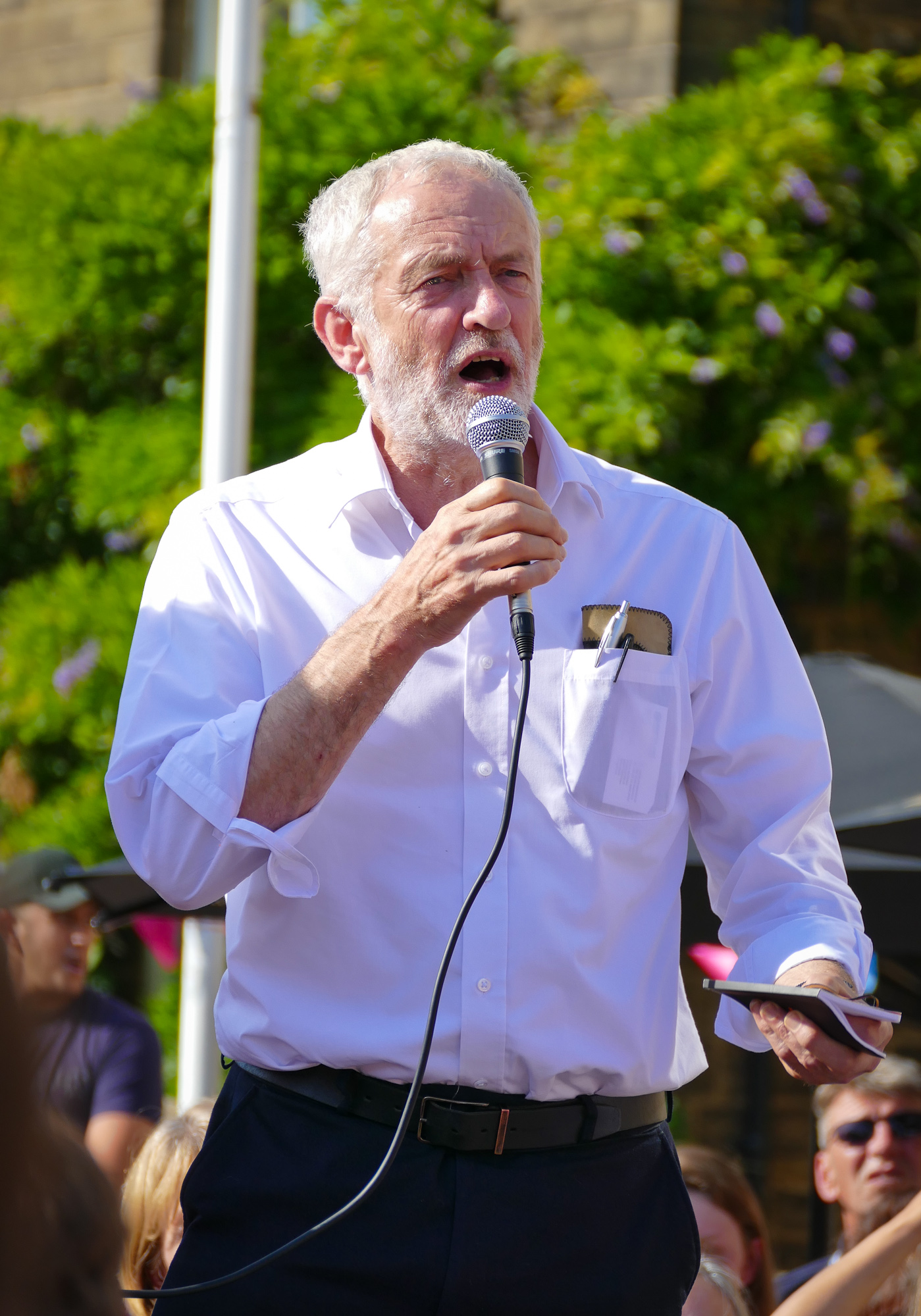
Image of Jeremy Corbyn MP, former leader of the Labour Party
Jeremy Corbyn MP, former leader of the Labour Party

Former leader of the Labour Party Socialist Jeremy Corbyn publishes his manifesto as independent candidate for Islington North.

https://www.votecorbyn.com/manifesto

This manifesto is our manifesto – it belongs to every single person who has written to me over the last 41 years, met me at a community event or simply stopped me in the street. Meeting people, talking to people and working together to bring about a fairer society – that is what being an MP is all about.

The issues facing people in Islington are part of a much wider set of crises. There are more people living in desperate poverty than I have ever known. More rough sleepers struggling to survive. More refugees fleeing the horrors of war and climate catastrophe. We will not solve these crises unless we build a new kind of politics. Our people-powered campaign will demand a redistribution of wealth, ownership and power. For rent controls. For an end to the two-child benefits cap. For a Green New Deal. For safe routes for asylum seekers. For a fully funded, fully public NHS.

This future is no pipedream – our community is proof that a kinder world is possible. I visit community centres which are welcoming, creative places, where people can meet each other, learn, eat together, receive support when they need it, and give it when they are able to. I meet carers doing all they can to support relatives or friends, often in the most difficult circumstances. I meet members of mutual aid groups who are building a new economy, one act of solidarity at a time. If we applied these basic principles across the board, we would create a society that cares for each other and cares for all.

When I vote in Parliament, I do not vote alone. I vote with my community – and this campaign is bringing together people of all ages, faiths and backgrounds in pursuit of a better world. We are offering people something very precious: hope.

Join us at www.votecorbyn.com to prove that when we come together to fight for a better society for everyone, we can win.

CONTENTS


ACTION ON THE COST OF LIVING

End the energy and water rip-off
Fair pay for Islington workers
Abolish the two-child benefit cap
Universal basic income
Wealth tax


HOUSING IS A HUMAN RIGHT
Security for renters
Build social housing
Housing insulation
Leasehold reform
Cladding justice


DEFEND OUR NHS
End privatisation
Support our doctors and nurses
Mental health
A National Care Service
Reproductive health


A GREENER ISLINGTON
A Green New Deal
Protect our parks
Save our buses
Walking and cycling
Animal welfare


EDUCATION FOR ALL
Save our schools
Education is not a commodity
Lifelong learning
Update our curriculum


A SAFER ISLINGTON
A public health approach
Tackling hate crime and extremism
A fairer criminal justice system


HUMAN RIGHTS ARE UNIVERSAL
Peace
Reparations
Refugees are welcome here
Migrant justice


OUR DEMOCRACY
The right to protest
The right to strike
Decentralisation
Local public ownership
Media and sport

Click here to download the manifesto

Continue ReadingJeremy Corbyn publishes his manifesto

UK Tory government intends to criminalise the fundamental democratic right to protest

Spread the love

5 WAYS THE GOVERNMENT’S POLICING BILL JUST WENT FROM BAD TO WORSE

Jun Pang – Policy and Campaigns Officer on 02 Dec 2021 at Liberty

Not content with the already draconian powers in the [Police, Crime, Sentencing and Courts] Bill to shut down protests and criminalise people trying to make their voices heard, the Government has recently added amendments to it.

1. LOCKING ON

Locking on only needs to be “capable” of causing serious disruption to “two or more people”. On top of that, no one knows what “serious disruption” means because it’s not defined in the Bill. Instead, the Home Secretary will get to define and re-define it at will.

2. WILFUL OBSTRUCTION OF THE HIGHWAY

The current punishment for someone who wilfully obstructs the highway is a fine. Amendments to the Policing Bill will change it to up to 51 weeks in prison, a fine, or both.

Such heavy punishments will stop people taking to the streets to stand up to power – and will add to existing pressures on courts, prisons, and the probation service.

3. OBSTRUCTION OF MAJOR TRANSPORT WORKS

This is another new offence that a person commits if they obstruct someone from taking any steps connected to the construction or maintenance of any major transport works, or they in any way interfere with “any apparatus” relating to that construction or maintenance.

4. STOP AND SEARCH

The Government’s amendments will also expand stop and search. Police will be able to stop and search a person or vehicle for items intended for use in connection with the offences in the Bill: obstructing the highway, public nuisance, locking on, and obstructing major transport works.

Police will also be able to put orders in place allowing for ‘suspicion-less’ stop and search for these items in a specific location for up to 24 hours (and up to 48 hours, if authorised).

5. SERIOUS DISRUPTION PREVENTION ORDERS – PROTEST BANNING ORDERS

People given a protest banning order will be subject to a set of conditions, including not associating with certain people, going to certain places, carrying certain items, or using the internet in a certain way.

They can last for up to two years, but there is no limit to the number of times a protest banning order can be renewed by the court.

Protest is a fundamental right, but protest banning orders effectively ban people from organising and making their voices heard, striking at the heart of what makes protest meaningful and effective: political community.

TAKE ACTION

These new offences will either deter people from protesting, or drag them into the criminal justice system for doing so. They will further entrench discrimination, with devastating consequences for marginalised communities.

But they are’t law yet, and this Government buckles under public pressure and u-turns time and again.

If you haven’t yet signed the petition against the Policing Bill, do so today.

We’ve also created this quick and easy tool to email your MP and tell them to stop this dangerous and discriminatory Bill from becoming law.

Continue ReadingUK Tory government intends to criminalise the fundamental democratic right to protest