Climate Obstructionism Runs Deep in the UK — Watch Out for It at the Election

Spread the love

Original article by Freddie Daley and Peter Newell republished from DeSmog.

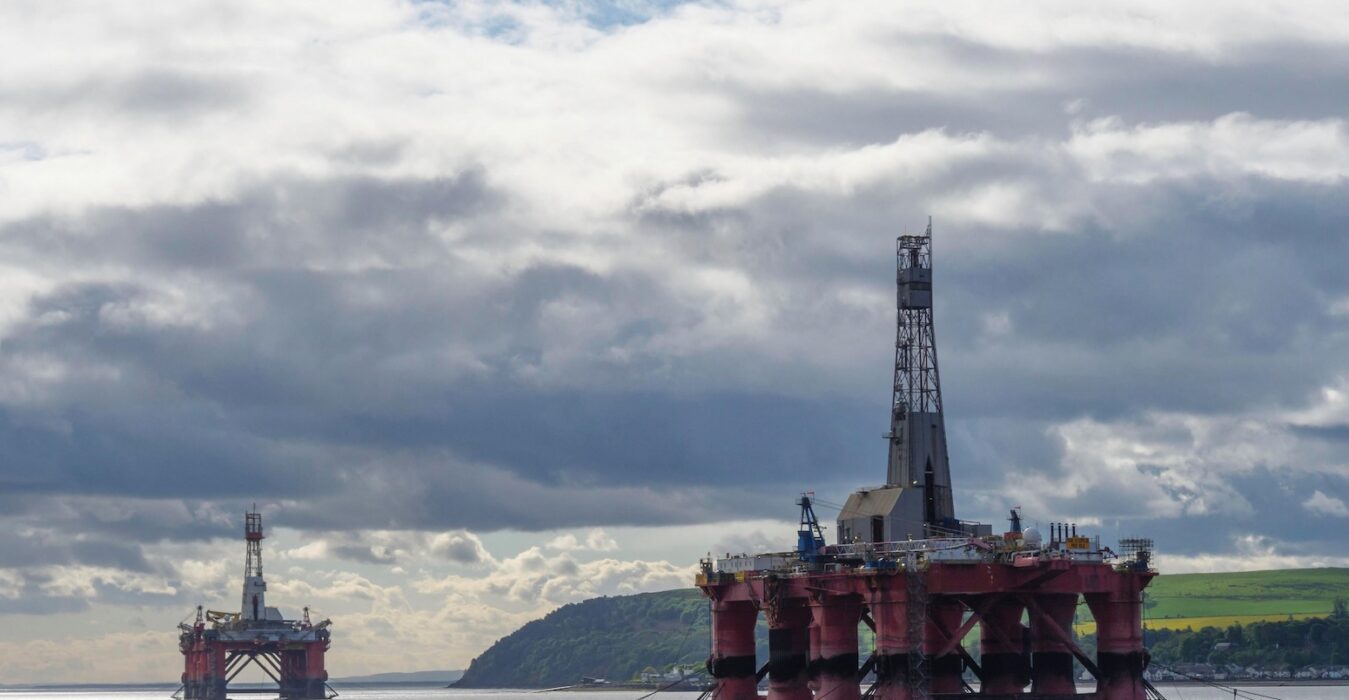
Credit: Lindsay Grime.

Regardless of who wins next month, fossil fuel interests have multiple levers for influencing policy.

The UK is heading to the polls on July 4. Although it doesn’t get enough attention, the two major parties — the Conservatives and Labour — have chosen climate change and, in particular, fossil fuel production in the North Sea as a clear political dividing line for the electorate. 

As polling day draws closer, and election fervour takes hold, we will see the forces of British climate obstruction in full effect. Influential individuals, organisations and media outlets that seek to block, dilute, delay, or even reverse climate policies will attempt to widen that political dividing line with a mixture of claims to be defending individual freedoms, putting growth first, being ‘climate realists’, or by displacing concerns about the UK’s responsibility to act on climate change through ‘whataboutism’.

The Conservative government, under Prime Minister Rishi Sunak, has pushed ahead with issuing hundreds of new oil and gas licences in the North Sea. The government was due to further reform the licensing regime so permits are handed out on an annual basis, all under the auspices of ‘energy security’, but the election has halted the bill’s progress through Parliament. Future licences are expected to yield just three weeks’ worth of gas per year

Sir Keir Starmer’s Labour Party, however, announced that it will end new licensing for oil and gas in the North Sea, with the very large caveat of honouring those already approved. But even this announcement ignited fierce resistance from the media, trade unions, Labour’s political opponents and some figures it deemed allies. The plan was labelled as “Thatcher on steroids”“naive”, and risked “creating a cliff-edge” for industry and investment in and around the North Sea. In response to the vitriol, Starmer conceded that fossil fuels will continue to be used in the UK “for many, many years”.  

This episode provides a useful insight into how climate obstructionism operates in the UK. In a new publication for the Climate Social Science Network (CSSN) based at Brown University, alongside Dr Ruth McKie and Dr James Painter, we identified three major channels through which obstructionism operates in Britain and the network of organisations that sustain it. 

Financial Power

The first is the material. This speaks to the financial and structural power of the fossil fuel industry that allows it to use threats of capital flight and job losses to curry favourable policy conditions and fend off tax hikes that would dent profitability. It also speaks to party donations, where fossil fuel firms, or those that benefit from their expansion, provide funds to individual politicians or the wider party for access and a say over policy. 

Since 2019, the Conservatives have received £8.4 million in donations from big polluters and those with direct links to fossil fuel production. The current Energy Security and Net Zero Secretary, Claire Coutinho, accepted a £2,000 donation in January 2024 from Lord Michael Hintze, a funder of the UK’s leading climate science denial group, the Global Warming Policy Foundation. Labour too have taken money from big polluters, most notably Drax, whose North Yorkshire power plant is the UK’s single largest source of emissions.

Alongside the material sits the institutional. The policy making process in the UK provides a multitude of opportunities for actors to shape policy, all within the bounds of proper procedure and due process. All Party Parliamentary Groups (APPGs), informal groups of politicians organised around key themes or policy issues, have provided an effective fora for obstructionist actors to garner access and shape policy. The rules governing APPGs often inhibit public scrutiny. Trade associations, and the companies they represent, can be omitted from official parliamentary transparency logs as only benefits in kind above £1,500 a year must be declared — a threshold many industry bodies claim not to meet. 

Revolving doors between industry and government are another institutional means through which fossil fuel interests can determine policy. An investigation by The Ferret found that since 2011, 127 former oil and gas employees have gone into top government roles and been appointed to ministerial advisory boards. At least a dozen of these individuals were given roles in the North Sea Transition Authority, the organisation tasked with governing oil and gas production, as well as within departments responsible for writing energy and climate policy. Shutting this revolving door, or even just slowing it down through ‘cool-off’ periods, would go some way in curtailing obstructionism. 

Climate Delay

The final, and perhaps most pronounced, thread of climate obstructionism in the UK is discursive, primarily promoted through the media. The right-leaning media in the UK, such as the Daily Telegraph and Daily Mail, have persistently opposed climate policy and action. This opposition used to be grounded in outright denial, where the integrity of climate science was disputed and denigrated. Now, though, a more pernicious form of discursive obstructionism is prevalent; that of climate delay. 

Countless op-eds and articles have been published that acknowledge climate change but dispute the necessity of addressing it, the cost of implementing climate policy (both economically and in terms of national security), and the efficacy of green technologies such as wind turbines, electric vehicles (EVs) and heat pumps. These interventions, which are sometimes made by individuals with direct links to sceptic organisations or else use their framing, often push blatant untruths to the public, such as renewable energy pushing up household energy bills or solar panels  jeopardising British farming. The media continues to both demonise climate activists and undermine public support for key climate policies. 

In this election, watch out for climate obstructionism. While institutional channels may be curtailed due to purdah, others will pick up the slack. With all parties now firmly on an election footing, donations will become a crucial resource for knocking doors and getting out the vote in marginal seats. The sources of these donations, and the interests behind them, will bear the thumbprint of the fossil fuel industry. The media will increase its scrutiny of manifesto pledges and publish a litany of analyses. It is highly likely that Labour’s climate policy will be painted as a threat to national security, an insurmountable cost to the public purse, and reflecting the demands of both Vladimir Putin and Just Stop Oil simultaneously. The foundation of this framing has already been set. 

What is less clear, though, is what comes after July 4. With a change of government comes a reconfiguration of interests and, for the winners, concessions will be made to those actors and constituencies that helped get them past the post. For the losing party, most likely to be the Conservatives, there may be an ideological reorientation that ends the cross-party consensus on tackling climate breakdown, making them the party of climate obstructionism that challenges the necessity of net zero and fights for more oil and gas. 

This election might be the one that ends 14 years of Conservative rule, but it’s not likely to be the one to end climate obstructionism in the UK.  

Freddie Daley is a Research Associate at the Centre for Global Political Economy at the University of Sussex.

Peter Newell is a Professor of International Relations at the University of Sussex.

They are the authors of a chapter in Climate Obstructionism across Europe, a new collection of essays analysing the organisations, politicians, think tanks and media outlets seeking to delay, derail and denigrate climate policy, produced by the Climate Social Science Network.

Original article by Freddie Daley and Peter Newell republished from DeSmog.

dizzy: I don’t agree that there is “cross-party consensus on tackling climate breakdown.” I suggest that instead the Conservative and Labour parties are indistinguishable in their support of plutocracy, sucking up to the rich and powerful. The Conservatives under Sunak have made no pretence of their intention to forge ahead with exploiting North Sea fossil fuels all they can and Labour do not intend to stop the Rosebank North Sea oil and gas field. Starmer has abandoned so many pledges that he should be recognised as as much a liar as Tony Blair or Boris Johnson.

The title of “… the party of climate obstructionism that challenges the necessity of net zero and fights for more oil and gas. ” is currently shared by the Conservatives and climate denier Nigel Farage’s Reform UK.

Rishi Sunak on stopping Rosebank says that any chancellor can stop his huge 91% subsidy to build Rosebank, that Keir Starmer is as bad as him for sucking up to Murdoch and other plutocrats and that we (the plebs) need to get organised to elect MPs that will stop Rosebank.

Continue ReadingClimate Obstructionism Runs Deep in the UK — Watch Out for It at the Election

Venture Fund Set to ‘Take Control’ of Telegraph Has Fossil Fuel Investments

Spread the love

Original article by Sam Bright republished from DeSmog.

The group, which reportedly has UAE state backing, is leading the race to buy the British newspaper.

The Daily Telegraph front page. Credit: Steven May / Alamy

The investment fund that has reportedly reached an agreement to buy the Telegraph Media Group has stakes in several oil and gas companies, DeSmog can report. 

U.S.-based RedBird Capital has entered into a joint venture to take control of The Telegraph alongside International Media Investments (IMI) of Abu Dhabi in the United Arab Emirates (UAE). 

The two groups have reportedly agreed to provide loans to The Telegraph’s existing owners, the Barclay family, to allow them to pay off their £1.16 billion debt to Lloyds Banking Group. The family lost control of The Telegraph and the Spectator magazine, which is also part of the media group, earlier this year due to this outstanding debt. 

News reports suggest that the deal is being backed by Sheikh Mansour bin Zayed Al Nahyan, who serves as the deputy prime minister of the UAE, the head of its state-owned investment company, and the owner of Manchester City football club.

Conservative MPs have voiced concerns over the potential purchase and the danger of foreign influence, asking the UK government to use national security laws to investigate the agreement. Culture Secretary Lucy Frazer has echoed these concerns, warning that the deal could undermine “free expression of opinion” and prevent the “accurate presentation of the news”.

The UAE is a petrostate that has the world’s largest oil expansion plans. The state-owned energy company, the Abu Dhabi National Oil Company (Adnoc), intends to increase its oil production by more than any other fossil fuel firm in the world, according to data from the Global Oil and Gas Exit List (Gogel). Adnoc said that Gogel’s data and assumptions were “incorrect and misleading” but has not provided its own figures.

RedBird-IMI has said that, under its proposal, The Telegraph and Spectator will be managed by RedBird Capital “alone” and IMI would be a “passive investor”.

RedBird Capital trades in a number of core investment sectors, including energy. The firm’s website states that it holds investments in at least six fossil fuel firms: Aethon United, CapturePoint, FireBird Energy, Four Corners Petroleum, Lambda Energy Resources, and Tally Energy Services.

All of these companies are based in the U.S., with a majority operating in Texas.

Aethon United was listed by Enverus Intelligence Research as one of the most prolific private oil and gas producers in the U.S. in 2023. It was reported in 2022 that the firm was considering a public listing that would value it at more than $10 billion.

CapturePoint specialises in carbon capture, utilisation and storage (CCUS), a favoured technology of the fossil fuel industry that it claims will help to limit global warming. The RedBird website claims that CapturePoint is “building out a carbon capture network on the Gulf Coast and in the Midwest”.

There is limited evidence of the efficacy of CCUS at scale. DeSmog recently analysed 12 large-scale CCUS projects around the world and found countless missed carbon capture targets, as well as cost overruns, with taxpayers picking up the tab via billions of dollars in subsidies. Meanwhile, captured carbon is often merely used to extract more oil. 

“If this deal goes through, it will pollute our press and the UK’s fight against climate breakdown,” Alexander Kirk, fossil fuels campaigner at Global Witness, told DeSmog.

RedBird Capital also holds an investment in Majority Strategies, a political strategy firm that claims to have worked for every official Republican presidential nominee since 2000. Majority Strategies received more than $27 million during the 2022 election cycle, including $9.2 million from the Republican Senate Leadership Fund. 

Responding to media speculation about The Telegraph’s future ownership, the paper’s editor Chris Evans sent an internal memo earlier this week. Seen by Politico Playbook, the memo read: “You’ve been asking me how we can be confident that editorial independence would be protected. At the moment I know no more than you will have read.”

Polly Truscott, a foreign policy adviser at Amnesty International UK, told The Times that: “Any Emirati state ownership of the Telegraph may have serious implications for press freedom in the UK and should be carefully scrutinised by the government. In the UAE, anyone who dares to speak out against the Emirati authorities is likely to be at serious risk.”

The UAE ranks 145 out of 180 in the 2023 Press Freedom Index produced by Reporters Without Borders.

Other sources claim that the bidding process for The Telegraph and the Spectator is still ongoing and that no deal has been finalised. Paul Marshall, the co-owner of GB News, is also reportedly interested in buying the titles. DeSmog revealed in October that Marshall’s hedge fund has $2 billion in fossil fuel investments. 

RedBird Capital and the Telegraph Media Group did not respond to our request for comment. 

Climate Attacks

A new DeSmog analysis has found that eight in 10 opinion pieces from The Telegraph on environmental issues downplay the climate crisis. 

Our analysis, for the six months ending 16 October, found that of the 171 articles covering environmental issues, 85 percent were identified as “anti-green” – attacking climate policy, downplaying climate science and ridiculing environmental groups.

Of the 1,930 opinion pieces published by the paper during this period, nearly one in five (17.6 percent) featured an attack on climate science, policy or environmental groups. Ten writers linked to the Global Warming Policy Foundation, the UK’s leading climate science denial group, wrote a total of 144 opinion pieces for The Telegraph during the period. 

The Telegraph’s print circulation at the end of 2019, when it last released the data, was over 300,000. It had an online audience of 13.5 million in September this year. 

World leaders next week gather in Dubai, UAE, to negotiate how to reduce emissions and limit global warming. The COP28 summit is being led by Sultan Al Jaber, the chief executive of Adnoc, which is the world’s 11th largest oil and gas producer. Al Jaber has claimed that fossil fuels should “continue to play a role in the foreseeable future” – a statement labelled as “very dangerous” by former UN climate chief Christiana Figueres.

The UAE has also attempted to emphasise the importance of CCUS in capturing emissions. However, according to an analysis by Global Witness, based on Adnoc’s carbon capture plans, it would take 343 years for the firm to capture all the CO2 emissions it will produce in just the next six years. This week, the Kick Big Polluters Out coalition also revealed that at least 7,200 fossil fuel lobbyists have attended UN-led climate over the last 20 years.

Total trade between the UK and UAE exceeded £25 billion in the year ending Q2 2023, an increase of 47.3 percent compared to the year before. The Gulf state has also pledged to invest £10 billion in “priority” UK industries. 

In the year following Russia’s February 2022 invasion of Ukraine, the UK imported £2.5 billion in fossil fuels from the UAE. The average monthly value of fossil fuel imports from the UAE increased from £84.4 million in the year to February 2022, to £195 million the year after. 

In total, UK fossil fuel imports from authoritarian petrostates surged to £19.3 billion in the year following the invasion – an increase of more than 60 percent. 

Original article by Sam Bright republished from DeSmog.

Continue ReadingVenture Fund Set to ‘Take Control’ of Telegraph Has Fossil Fuel Investments

Telegraph Columnist Allison Pearson Becomes Director of Climate Science Denial Group

Spread the love

https://www.desmog.com/2023/05/02/telegraph-columnist-allison-pearson-becomes-director-of-climate-science-denial-group/

The newspaper’s chief interviewer and columnist joins an increasingly influential body of trustees at the Global Warming Policy Foundation.

The Daily Telegraph’s chief interviewer and columnist Allison Pearson has joined the Global Warming Policy Foundation (GWPF), one of the UK’s principal climate science denial groups. 

This appointment adds to the influence of the GWPF in the press and potentially the amount of sway that it holds over the Conservative Party. 

Pearson, who has written a number of articles criticising climate action, will be assuming a role on the board of trustees alongside former Australian Prime Minister Tony Abbott, who joined the GWPF in February and also serves as a trade adviser to the UK government.

Lord David Frost – a Conservative peer and former Cabinet Office minister who was appointed in November – is also a GWPF director, along with Terence Mordaunt, who has donated £342,500 to the Conservative Party and its MPs since 2008 via First Corporate Consultants and First Corporate Shipping. This includes £10,000 donated in March this year to Leader of the House of Commons Penny Mordaunt. 

The GWPF is a member of the Tufton Street network – an interconnected hub of think tanks and pressure groups that lobby against state action, including in the realm of climate change. The GWPF has criticised both the policies adopted by governments to address climate change, and the science underpinning these policies.

The group said in 2015 that “policies to ‘stop climate change’ are based on climate models that completely failed to predict the lack of warming for the past two decades”. It has also expressed the view that carbon dioxide has been mis-characterised as pollution, when in fact it is a “benefit to the planet”.

In September 2022 Net Zero Watch – the GWPF’s campaigning arm – published two reports rejecting climate science on the greenhouse effect. 

https://www.desmog.com/2023/05/02/telegraph-columnist-allison-pearson-becomes-director-of-climate-science-denial-group/

Continue ReadingTelegraph Columnist Allison Pearson Becomes Director of Climate Science Denial Group

Extinction Rebellion spray paint the offices of The Sun, Daily Mail and The Telegraph and call out suppression of truth on climate crisis

Spread the love

Extinction Rebellion has been taking on the tabloid media this morning in a series of actions calling out their blatant suppression of crucial news on the climate and ecological crisis. In London, three people met The Sun’s political investigative reporter Amir Razavi in a sting operation, where they posed as whistleblowers there to provide him with top secret information. The group questioned Razavi about his climate ethics, asking him to explain his newspaper’s 30-year campaign of climate lies and misinformation.

The Extinction Rebellion citizen journalists took the rare opportunity to ask why The Sun continues to withhold, deny and downgrade vital information on the scale of the climate crisis and its root causes, just days after Antonio Guterres likened the latest IPCC report to a “survival guide for humanity”.

Extinction Rebellion image, the Lightscraper

While this was happening, at the headquarters of Rupert Murdoch’s News UK at London Bridge, the Telegraph HQ in Victoria and the offices of the Daily Mail in Kensington, several people spray painted the buildings with green washable paint using fire extinguishers. A large banner with the words ‘CORRUPT AS FUCK’ was attached to multiple helium filled balloons at News UK and was floated up in front of the office windows on higher floors to highlight the destructive influence of media moguls such as Rupert Murdoch on democracy.

Steve Tooze of Extinction Rebellion and former Sun and Daily Mail journalist, said: “The mainstream media has a major role to play in delivering the truth to the general public about the climate and ecological emergency. They could and should be helping all of us come together around the clear need for change and providing people with the facts so we can work out how to transition away from fossil fuels and build a future that is safer, fairer, better for everyone. Instead, their business model thrives on division and click bait culture that sets people against one another. The reality is, the billionaire owned media uses this strategy to uphold the status quo so that those with power can hold on tightly to that power. 

“Extinction Rebellion is saying we’re not going to accept this anymore. People need to set aside their differences and come together if we’re going to stave off the worst of the climate crisis and build a better society, so we’re inviting everyone to join us at Parliament from 21st April to start creating the change we need. The mainstream press has a responsibility to help people find a way to achieve this rather than profiting from our division.”

Extinction Rebellion image by Denise Laura Baker

Climate solutions are readily available, as outlined in the IPCC report. What is lacking is media reporting and government support, with the Telegraph suggesting for example that Monday’s IPCC report was “nothing but confected hysteria” and the The Daily Mail accused the authors of using “hysterical language”. The Sun devoted less than half a column on page two to the report. The Daily Mail has repeatedly published misleading or outright false information on the climate crisis. The Telegraph platforms and emboldens known climate deniers, and none of our national papers give this crisis the attention appropriate to the scale of the emergency.

Anna, a photographer from London who took part in the action, said: “I am taking this action to highlight the Daily Mail’s inadequate response to the climate and ecological crises. From editorials calling for an end to net zero policies, to their support of fracking, the Mail makes itself an enemy of our planet and the humans who depend on it. The news shapes our minds, and without honest reporting we risk sleepwalking into an unnecessarily difficult future.”

Tom Masters, Civil Servant from Bristol, said: “Extinction Rebellion demands that people tell the truth about the climate emergency.  This shouldn’t be too much to ask of a national newspaper that exerts significant influence over its readership and over the British government.

The Telegraph has been described as ‘Fleet Street’s last dinosaur of climate change denial’ by climate science expert Dr Bob Ward, and with good reason. Only this week they downplayed the severity of the IPCC report and labelled it as hysterical. I undertook today’s action to highlight the irresponsibility of mainstream press and their unwillingness to do their job and tell people the truth and hold power to account for their inaction.”

Protesters from Extinction Rebellion spray paint on the windows of News Corp, the headquarters of The Sun, in protest at their failure to report on the climate crisis, London, England, UK. Extinction Rebellion image by Denise Laura Baker

These actions are just 30 days before thousands will descend on Parliament for four days for The Big One. On Monday this week, dozens of major NGOs, trade unions, justice movements and more made their commitment to stand with Extinction Rebellion in April to face the intersecting crises of climate breakdown, the cost of living, attacks on democracy, and the shredding of essential public services, together.

Continue ReadingExtinction Rebellion spray paint the offices of The Sun, Daily Mail and The Telegraph and call out suppression of truth on climate crisis