US Southern Command announced its 71st confirmed boat bombing, which killed four people, on October 4, 2026. (Photo: screen grab/US Southern Command/X)
Condemning the “illegal campaign of extrajudicial killings” as “murder at sea,” Amnesty International USA asked, “Where is Congress to stop the horror?”
US President Donald Trump’s boat-bombing spree continued on Sunday despite condemnation from around the world, claiming four more lives and bringing the death toll from the 13-month campaign to at least 238.
Sharing a video of the strike, US Southern Command said on social media late Sunday that “under the direction of SOUTHCOM, Joint Task Force Western Hemisphere executed a lethal, kinetic strike on a go-fast vessel operating along established narco-trafficking routes in the Caribbean.”
“Confirmed intelligence revealed the vessel’s active involvement in narco-trafficking,” SOUTHCOM continued, without offering any evidence, as with at least 70 previous strikes since September 2025. “The operation killed four narco-terrorists.”
Citing a federal memo that it aims to keep concealed from the public, the Trump administration claims to be at war with drug cartels and that the killings in the Caribbean Sea and Pacific Ocean are justified. Legal experts and human rights advocates argue the bombings are at least war crimes, if not outright murder.
Sunday’s strike was the administration’s first confirmed boat bombing since Ben Saul, the United Nations special rapporteur on human rights and counterterrorism, said last month that even if the targeted vessels were engaged in drug trafficking, there are no “international legal rights to unilaterally use military force” to counter cartels.
After SOUTHCOM’s announcement, Gizmodo reporter Matt Novak declared, “We murdered four more people in a boat today.”
Brian Finucane, a former State Department legal adviser who now advises the US Program at the International Crisis Group, called it “more performative killing at sea.”
Nearly 240 dead in this illegal campaign of extrajudicial killings, i.e., murder at sea.
Highlighting the rising death toll from Trump’s “illegal campaign of extrajudicial killings, ie, murder at sea” initiative, Amnesty International USA asked, “Where is Congress to stop the horror?”
The Republican-controlled Congress has declined to pass war powers resolutions intended to stop the strikes—though the odds of passage could change if Democrats reclaim one or both chambers in next month’s midterm elections.
Trump’s bombing spree has apparently been not only illegal but ineffective. The Washington Postreported in July that a Drug Enforcement Administration analysis concluded that the boat-bombing campaign has not “reduced the amount of cocaine entering” the United States.
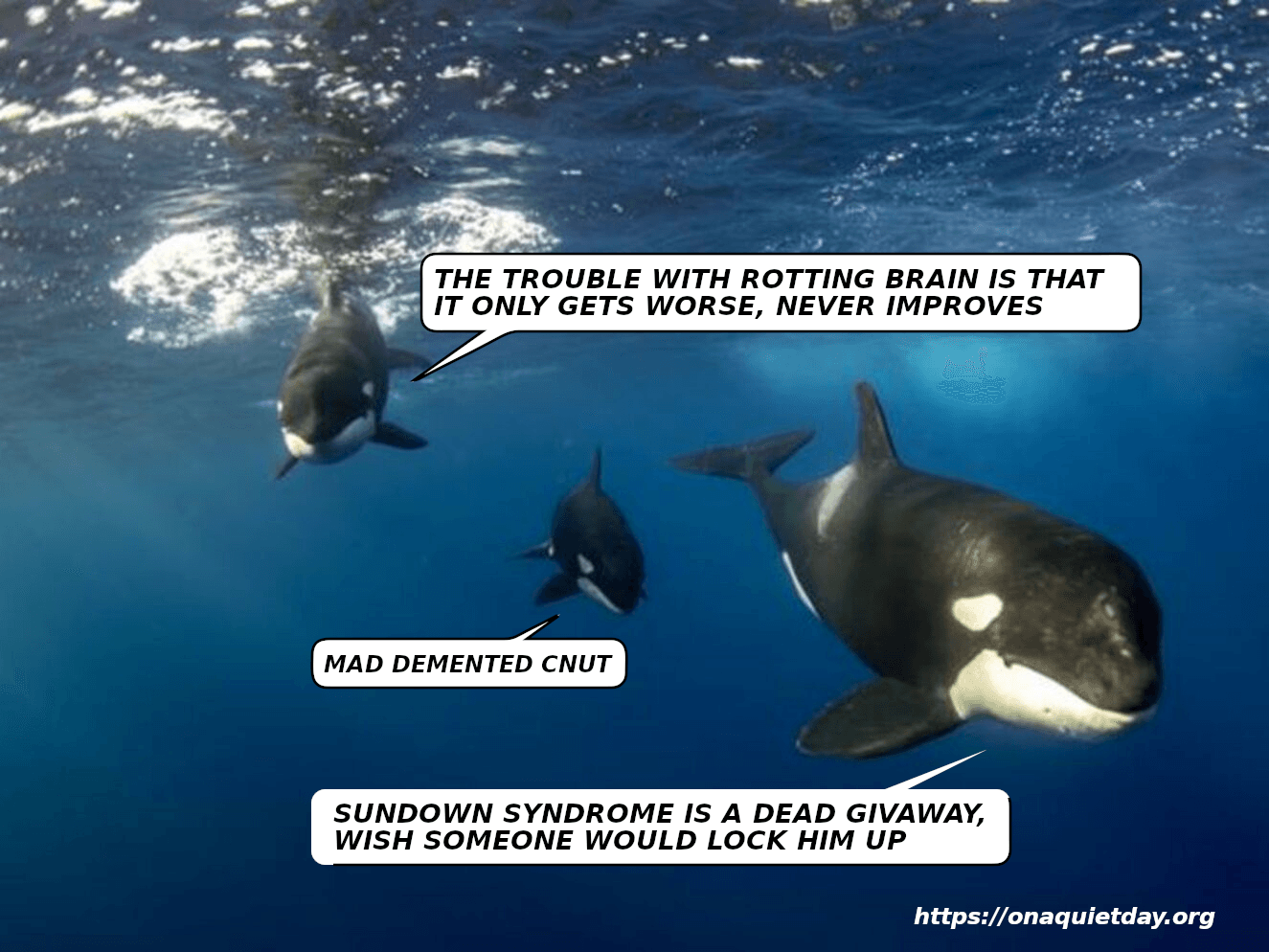
Donald Trump sings and dances, says that it’s fun to kill everyone … unless he gets distracted or falls asleep.Orcas discuss rotting brain, front Orca says Sundown Syndrome is a dead givaway and he wishes someone would Lock Him Up
Green-winged teals are seen flying over water at Seedskadee National Wildlife Refuge in Wyoming on April 25, 2019. (Photo by Tom Koerner/US Fish and Wildlife Service/flickr/cc)
“If it comes to pass, this deal would bulldoze America’s most important wildlife law,” said one campaigner.
A bipartisan Senate proposal to overhaul federal permitting rules drew fierce opposition Wednesday from environmental and wildlife advocates, who warn that the legislation could significantly weaken the Endangered Species Act and other key protections in service of boosting President Donald Trump’s pro-fossil fuel and artificial intelligence agenda.
Senate negotiators—chiefly Democrats Martin Heinrich (NM) and Sheldon Whitehouse (RI) and Republicans Shelley Moore Capito (W.Va.) and Mike Lee (Utah)—reportedly reached an agreement Monday on the text of a sweeping permitting package intended to speed construction of energy and infrastructure projects.
While the full legislative text of the “Bipartisan American Affordability and Jobs Act of 2026” had not been publicly released as of Wednesday, reported provisions have prompted alarm among conservation groups, who warn that the proposal would weaken endangered species protections, shift federal authority and responsibility to states, limit scientific review and judicial oversight, and exempt some projects from key environmental consultations.
“If it comes to pass, this deal would bulldoze America’s most important wildlife law,” Defenders of Wildlife president and CEO Andrew Bowman said Wednesday. “We can build the infrastructure America needs without sacrificing the wildlife we have a responsibility to protect and that Americans cherish. Development should not come at the expense of science, accountability, or the ability of America’s most imperiled wildlife to survive.”
“This ‘dirty deal’ threatens to raise electricity prices for working families by accelerating the buildout of energy-guzzling AI data centers and liquefied natural gas export projects,” said Oil Change International US campaigns manager Collin Rees. “Our recent research shows that the Trump administration’s support for reckless AI development and greater gas exports drives up energy costs for households.”
Brett Hartl, government affairs director at the Center for Biological Diversity (CBD), said that “this is a climate kill shot that condemns our most vulnerable communities to suffer decades more fossil fuel pollution.”
“It’s absurd to ensure our planet chokes with greenhouse gases, gut endangered species protections, and eviscerate the Clean Water Act for what seems to be a nearly meaningless victory against Trump’s war on offshore wind,” Hartl continued. “The minor benefits for renewable energy corporations are massively dwarfed by the gifts to the fossil fuel industry.”
“If this grotesque legislation becomes law, the paltry increases in renewable energy will be instantly devoured by AI data centers,” he added. “The only winners here are Elon Musk, Mark Zuckerberg, tech oligarchs, and the shareholders of fossil fuel companies.”
According to CBD:
Today’s package contains numerous provisions that lock in thousands of fossil fuel projects, including oil and gas pipelines, [liquefied natural gas] export terminals, and expanded fossil fuel drilling onshore and offshore approved by President Trump over the past two years. It also ensures that future fossil fuel pipelines and methane gas-generated electricity can never be challenged in court.
Additional provisions gut parts of the Clean Water Act, including the Section 401 authority of states to protect their rivers and streams from the impacts of building pipelines and the [Environmental Protection Agency’s] Section 404(c) permit veto authority, which has been used to stop projects like the Pebble Mine in Alaska.
The legislation weakens the National Historic Preservation Act and Tribal consultations, leaving most Tribal nations with no meaningful way to protect their sovereignty when faced with potential fossil fuel projects on their lands.
Furthermore, CBD noted, “the legislation guts the Endangered Species Act by allowing states to take over the Section 7 consultation process with minimal safeguards, turning one of the law’s strongest provisions into a state-run rubber stamp of dangerous projects.”
The Western Environmental Law Center described the proposal as a “five-alarm fire,” warning that it could weaken the Clean Water Act, Endangered Species Act, [National Environmental Policy Act], and other safeguards.
“The permitting deal is a betrayal of public lands, water, and wildlife, and environmental justice values that Westerners depend on,” said Erik Schlenker-Goodrich, the group’s executive director, who warned that the measure could ultimately “hobble the ability of future administrations to enact an ambitious climate and conservation agenda.”
Hartl called out Democrats Heinrich and Whitehouse for “giving away our most cherished environmental laws based on fantastical models that project a renewable energy utopia.”
“They’re rewarding a ruthless fossil fuel industry that will always put its quarterly profits ahead of a livable planet and future generations,” he said. “Trump promised fossil fuel companies that he’d do everything in his power to assist them in his second term, and Sen. Heinrich and Sen. Whitehouse seem hell-bent on helping Trump fulfill that promise.”
Bowman contended that “Congress should be looking for ways to make permitting more efficient rather than a Trojan horse to weaken the Endangered Species Act.”
“Efficiency and conservation are not opposing goals,” he added. “A durable permitting bill should deliver both. Congress should not lock in permanent damage to the Endangered Species Act simply to get a deal today.”
Orcas discuss Donald Trump and the killer apes’ concept of democracy. Front Orca warns that Trump is crashing his country’s economy and that everything he does he does for the fantastically wealthy.Climate science denier Donald Trump confirms that he knows nothing about democracy and that more liquid gold is being secured according to his policy of global privateering.Orcas discuss rotting brain, front Orca says Sundown Syndrome is a dead givaway and he wishes someone would Lock Him Up
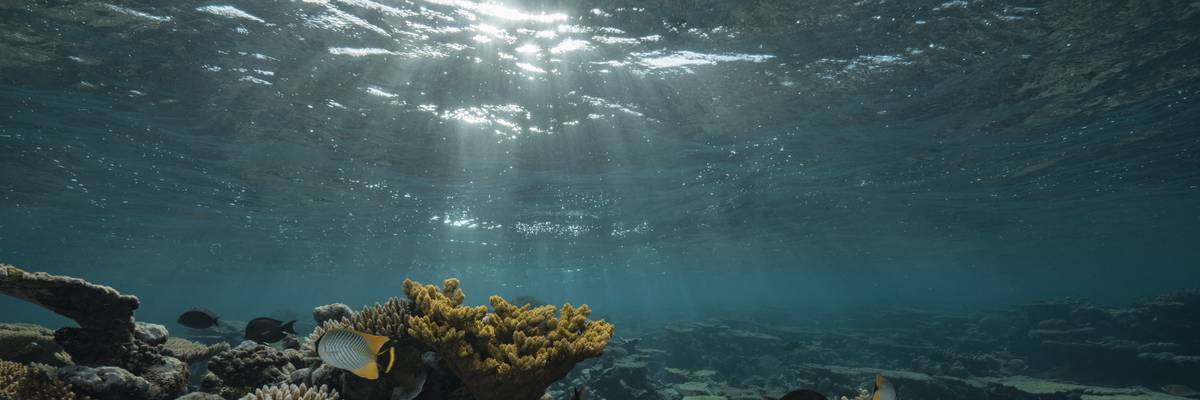
A coral reef around Taravai Island with many acropora corals is seen on February 16, 2018 in the Gambier Islands, French Polynesia. (Photo by Alexis Rosenfeld/Getty Images)
“The ocean is transforming before our eyes: Warming, rising seas, and ecosystem degradation are interconnected signs of significant and long-term change.”
The 10th annual Copernicus Ocean State Report, released Wednesday by a team of more than 100 international scientists, provided the latest reminder that, as one United Nations official said, “the ocean is one of the clearest indicators of the profound shifts” that the climate crisis is causing.
Data gathered by Mercator Ocean International, the nonprofit that produced the report, revealed “an ocean warming at an alarming pace, with far-reaching consequences for marine life, coastlines, and communities worldwide,” said the group.
The study delivers ocean scientists’ “starkest warning yet of the profound changes sweeping across the ocean, as a likely unprecedented El Niño takes shape in the Pacific,” said Mercator, referring to the natural warming trend that is expected to be made more intense this year by planetary heating.
Drawing on four decades of data from satellites, buoys, sensors, and modeling, the scientists found that 2024 was marked by record-breaking marine heatwaves as well as an unprecedented extreme low sea level event, causing levels in the Bothnian Bay between Sweden and Finland to plunge 60 inches, bringing ferries to a halt for 18 hours.
Heatwaves in the Mediterranean and Black seas lasted more than 30 days and raised water temperatures by more than 8.3°F (4.6°C) above average.
“These are not isolated hot spells; they are occurring against a backdrop of sustained ocean warming that is changing the conditions marine ecosystems experience,” Blanca Fernández-Álvarez, a report author and a conresearcher at the Mediterranean Institute for Advanced Studies, told CNN.
Ten editions. One increasingly urgent picture. Explore the 10th Copernicus Ocean State Report and the evidence shaping our understanding of the ocean.
But along with extreme events documented in the report, the scientists found unmistakable trends showing no sign of letting up, including persistent damage to marine life due to ocean heating fueled by continued oil and gas extraction.
Small island states—some of the countries least responsible for carbon emissions that are leading to record heat absorption by the oceans—face worsening, “overlapping pressures” including sea-level rise that could wipe out coastal and island communities and the growing threat of more intense tropical cyclones.
Over the last three decades, reads the report, “ongoing reorganization of marine ecosystems around the world” hasr been made clear by persistent changes in growth patterns of phytoplankton, which support food webs and carbon flows, in nearly 5% of the ocean.
Heat stress also contributed to coral bleaching in 84% of the world’s reefs, threatening marine ecosystems as well as coastal communities that rely on reefs for protection and tourism.
“The ocean is transforming before our eyes: Warming, rising seas, and ecosystem degradation are interconnected signs of significant and long-term change,” said Pierre Bahurel, director general of Mercator Ocean International.
As humans have continued to emit carbon and other greenhouse gases despite warnings from energy experts and scientists, the rate of ocean heating has doubled over the past two decades, causing sea surface temperatures to skyrocket to record highs in 2023, 2024, and this year.
In 2025, the report says, the ocean absorbed an additional 23 zettajoules—about 40 times the energy consumed by the entire world last year. The energy absorption is equivalent to 12 atomic bombs going off every second for one year.
The global mean sea level rose by 3.8 ± 0.3 millimeters each year between 1999-2025, and the ocean has become about 17% more acidic over the last four decades, wreaking havoc on crucial underwater ecosystems.
Peter Thomson, the UN secretary-general’s special envoy for the ocean, emphasized that the dangers posed to the world’s oceans by continued fossil fuel extraction have been made clear over 10 years of reports by Mercator, as well as other warnings from scientists.
“What it tells us is unmistakable: The ocean is changing, and those changes are reaching into the lives, livelihoods, and security of people everywhere,” said Thomson. “We have the knowledge. We have the evidence. Now we need the political will to act.”
Orcas discuss Donald Trump and the killer apes’ concept of democracy. Front Orca warns that Trump is crashing his country’s economy and that everything he does he does for the fantastically wealthy.Climate science denier Donald Trump confirms that he knows nothing about democracy and that more liquid gold is being secured according to his policy of global privateering.Orcas discuss rotting brain, front Orca says Sundown Syndrome is a dead givaway and he wishes someone would Lock Him Up
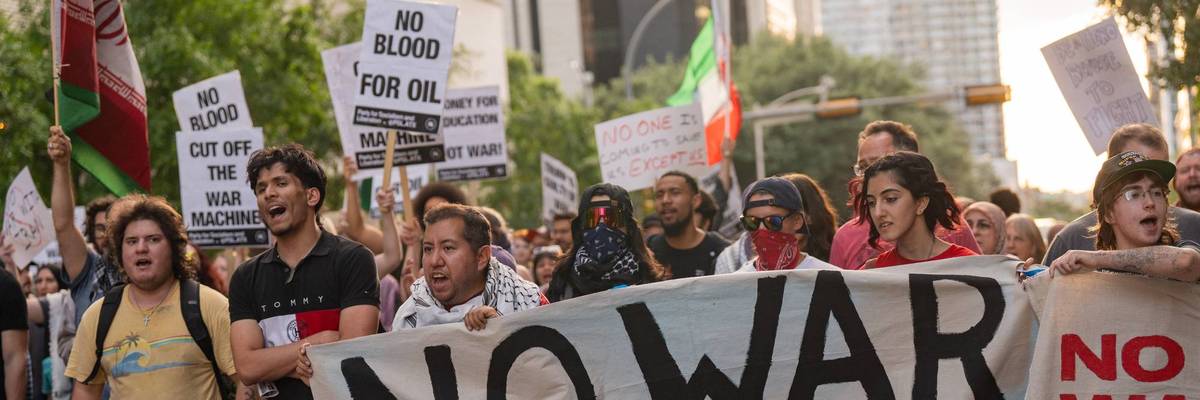
Protesters march to show opposition to the war in Iran in Austin, Texas, on April 8, 2026. (Photo by Mikala Compton/The Austin American-Statesman via Getty Images)
“This is a self-inflicted wound, it’s a choice, and it can be undone.”
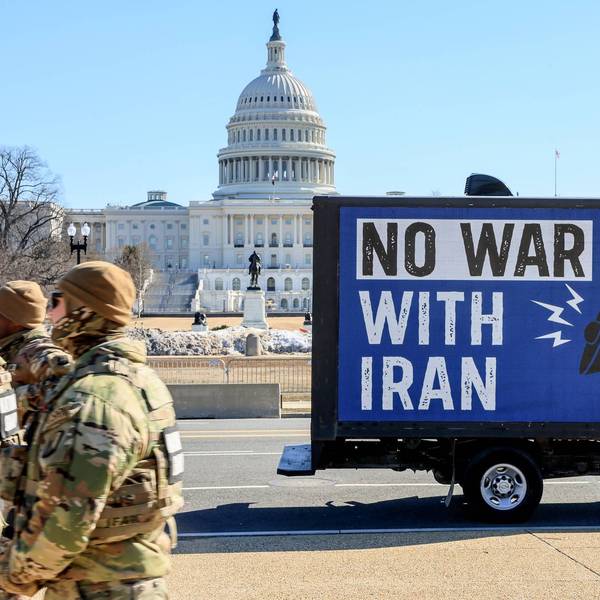
A group of experts says that President Donald Trump’s illegal war with Iran, which has been massively expensive and has made Americans less safe, shows the need for a radical overhaul of US foreign policy.
Scholars at the Political Economy Research Institute (PERI) at the University of Massachusetts on Wednesday are holding a webinar to present ideas for reducing the US military footprint and using the savings to invest in programs that will directly benefit working-class Americans.
In a video posted on social media ahead of the webinar, PERI experts advocated for making major changes to US foreign policy, which they argued has left the country overstretched.
“The Iran War costs us billions while making us less safe,” says a message accompanying the video on PERI’s social media account. “By reining in military spending and taxing the wealthy to pay their fair share, we can fund critical services like universal preschool, infrastructure investments, and Medicare for All.”
The Iran War costs us billions while making us less safe.
By reining in military spending and taxing the wealthy to pay their fair share, we can fund critical services like universal preschool, infrastructure investments, and medicare for all. pic.twitter.com/daOFLyWHEr
Lindsay Koshgarian, program director of the National Priorities Project (NPP), made the case that the US can no longer enforce a policy of “maintaining dominance over the entire world.”
“We have endless wars in the Middle East, a war of choice with Iran at the moment,” said Koshgarian. “Clearly, something is broken about our foreign policy. It’s extremely costly and, in fact, it actually makes us less safe.”
Koshgarian then outlined her plan for what she described as “a smaller, safer military” that would slash US presence overseas and generate between $200 billion to $500 billion of savings per year.
Heidi Peltier, senior researcher at the Watson School of International and Public Affairs at Brown University, pointed to Trump’s request for an “astronomical” $1.5 trillion military budget to argue that America’s priorities have become completely warped.
“The money is there,” Peltier said. “The question really is, what are our priorities?”
Peltier’s research aims to “demilitarize” federal spending by reducing the annual US Department of Defense budget by 10%, which would free up $100 billion more to spend on domestic priorities.
Aaron Medlin, professor of international studies at Boston College, pointed to the ways Trump’s illegal war had made the price of energy more expensive and was inflicting economic pain on working-class Americans.
Medlin said that his work focuses on raising taxes on the wealthy by taxing income generated from owning assets at the same rate as income generated from working, while also imposing a minimum tax on fortunes over $100 million, and small levies on stock, bond, and derivatives trades.
In total, Medlin estimates that the proposed tax package would raise more than $2 trillion annually.
“The United States is just becoming unaffordable for a huge share of Americans,” he said. “This is a self-inflicted wound, it’s a choice, and it can be undone.”
The experts’ proposals for reducing the US military footprint and taxing extreme wealth came on the same day that petroleum industry analyst Patrick De Haan estimated that Americans have now spent over $75 billion more on gasoline since the start of the Iran War.
When higher gas prices are combined with rising rates for diesel, the Costs of War Project at Brown’s Watson Institute estimates that Americans have spent an extra $121.7 billion.
Orcas discuss Donald Trump and the killer apes’ concept of democracy. Front Orca warns that Trump is crashing his country’s economy and that everything he does he does for the fantastically wealthy.Climate science denier Donald Trump confirms that he knows nothing about democracy and that more liquid gold is being secured according to his policy of global privateering.Orcas discuss rotting brain, front Orca says Sundown Syndrome is a dead givaway and he wishes someone would Lock Him Up
A woman holds a placard with the words “Stop the war” and the image of US President Donald Trump drinking from a barrel of Venezuelan oil during a protest. (Photo by Marcos del Mazo/LightRocket via Getty Images)
Did Trump take the oil and the money from the oil? Bessent refuses to say. Trump refuses to say. Nobody, in fact, in the Trump regime will tell us where that money is or who controls it or even who’s making the money accrued on its interest.
At any other time in American history, it would end the career of somebody like Scott Bessent, our limited-intelligence Treasury Secretary. It came out yesterday when Illinois Congressman Sean Casten was questioning him about the “billions of dollars” that Trump keeps claiming America is “getting” from selling Venezuelan oil.
Bessent agreed with Trump, saying the oil and oil money we’ve seized from that country is “one of the largest assets to ever go on the U.S. balance sheet.” Billions and billions of dollars.
So Casten asked him a simple question: Can you tell us who controls that money and where it is? Can you confirm “whether or not those [funds] are flowing to U.S. persons?”
Bessent’s answer was a shocking single word: “No.” He ain’t talkin…
Did Trump take the oil and the money from the oil? Bessent refuses to say. Trump refuses to say. Nobody, in fact, in the Trump regime will tell us where that money is or who controls it or even who’s making the money accrued on its interest.
Here’s what we do know:
Three days after Trump kidnapped President Maduro and his wife, he went on his Nazi-infested social media site and wrote that Venezuela’s oil revenues would be controlled by him personally “as President of the United States.”
Three days after that, he signed an executive order declaring a “national emergency” involving that oil so no court or creditor could touch the money, screwing the bondholders and oil companies to which Venezuela owed roughly $150 billion.
Then Trump started selling the oil we’d seized from Venezuela. The first load, according to Reuters and Semafor, went to commodity trading companies Vitol and Trafigura for about $500 million, groups that the Washington Post said both carry histories of bribery schemes tied to oil sales.
And that money didn’t go to the Treasury account that was described in Trump’s own executive order. Instead, it went to a bank account in Qatar, right after that country’s leaders gave him a $400 million jet. A senior official explained to Semafor that Qatar was chosen as a “neutral location” where money “can flow freely” without risk of seizure.
Senator Elizabeth Warren was outraged, and told the world what most of us were thinking at the time:
“There is no basis in law for a president to set up an offshore account that he controls so that he can sell assets seized by the American military. That is precisely a move that a corrupt politician would be attracted to.”
In January, Secretary of State Marco Rubio testified to the Senate that $300 million had been sent to Venezuela to cover government payroll needs and another $200 million was “still sitting” in Doha. He referred to the entire operation as “novel” and “a short-term mechanism.”
But a month later, Energy Secretary Chris Wright said on CNBC that the account had been closed and no more money would be flowing to or through Qatar…and nobody has identified where it went, or where it is, since then.
Where’s the money?
House Foreign Affairs committee ranking member Gregory Meeks called it “an offshore slush fund.” Bessent, questioned by Casten back in Februaryrefused to say which accounts the Treasury Department was even using, even though Trump’s executive order had named him/Treasury as the custodian for the funds. Casten and Senator Chris Van Hollen again demanded to know where the money was in March, and were again stonewalled. And then again this week.
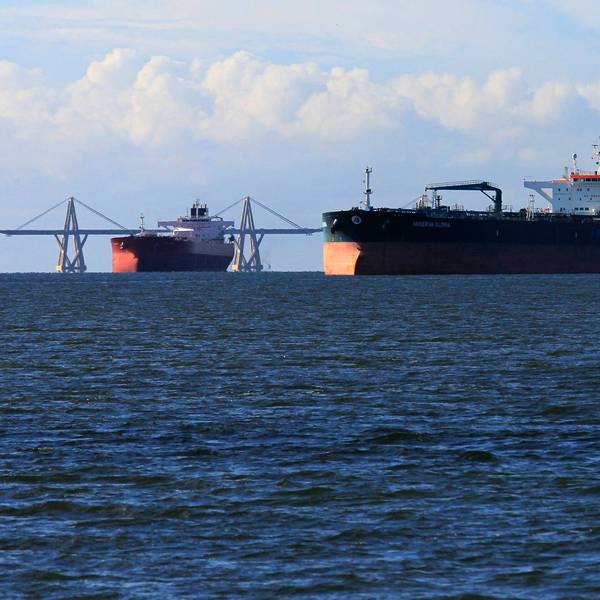
Meanwhile, the pile of money is growing, particularly given the oil crisis provoked by Trump’s idiotic war against Iran. Using Bloomberg tanker-tracking data, the Council on Foreign Relations published an April estimate that:
“In the first four months of the United States exerting control over Venezuela’s oil exports, almost one hundred million barrels of oil worth an estimated $8 billion have flowed through a process marked by no transparency and minimal oversight.”
A State Department official testified to Congress back in April that around $3 billion had gone back to Venezuela, but Trump boasted in July that the US had sold more than $13 billion in stolen Venezuelan oil and suggested he could divert those funds to the American military or anywhere else he wanted.
Back in June, Marco Rubio tried to assuage Congress’ concerns by saying that accounting firm KPMG “audits every disbursement.” But when the libertarian Reason Magazine dug into it in August they found that neither the agreements nor the audits have been published.
And the so-called “Transparent Sovereignty” website the Venezuelan government set up to show the world its oil transactions only lists one single sale. Apparently, Trump is not even telling them what he’s done with their oil, or where their money went.
And it’s not just oil. In March, Interior Secretary Doug Burgum flew a planeload of American mining executives to Caracas and came home bragging about having made off with over $100 million in gold. He set up a deal to sell it to reportedly bribe-friendly Trafigura with the proceeds going into, well, nobody knows where.
This is an old script that Trump appears to be following here, one many corrupt petrostates pioneered long ago.
For example, in 2014 Nigeria’s central bank governor, Lamido Sanusi, accidentally revealed to his Senate that roughly $20 billion in oil revenue had never made it into the national treasury. President Goodluck Jonathan’s response was to fire him and call the money a “phantom.” When PriceWaterhouseCoopers finally audited the books, it found at least $1.48 billion was simply gone.
I’ve done international relief work in some of the most corrupt nations in the world, been offered bribes and threatened for not taking them, and the pattern I’m seeing here is eerily familiar. They never announce the looting; they just stop letting you know where anything went or who ended up with it. Most people figure that it must be okay since it’s not being reported or discussed, and the conversation dies away.
So, here we are. Trump:
— announced that he’d taken the oil, — then that he’d taken the money from the sale of the oil and put it in a bank with the country that had given him a free 747 jet, — hired traders with bribery records, — refused to publish the contracts, — put his own hand-picked cabinet members in charge of both the disbursements and oversight, and — then sent Bessent to Congress to say, “No” when asked if we could please, please know where it’s all gone.
Meanwhile, Republicans in Congress seem to have developed a sudden case of lockjaw.
Congressmen Casten and Joaquin Castro have introduced into the House the Venezuela Oil Proceeds Transparency Act to force the GAO to audit the Qatar account and whatever’s followed it. Republicans refuse to let it out of committee, and Mike Johnson won’t give it a chance on the floor.
Climate science denier Donald Trump confirms that he knows nothing about democracy and that more liquid gold is being secured according to his policy of global privateering.