NHS news review

Spread the love

Monitor to employ 600 at an average salary of over £50,000.

Private health firms are experiencing a boost in business from NHS cuts.

The ConDem coalition government eases information requirments for private healthcare providers.

The ConDem coalition government hides the cost of reforming the NHS until after the third reading of the Destroy the NHS / Health and Social Care Bill. It is disappointing that the government resorts to such subterfuge.
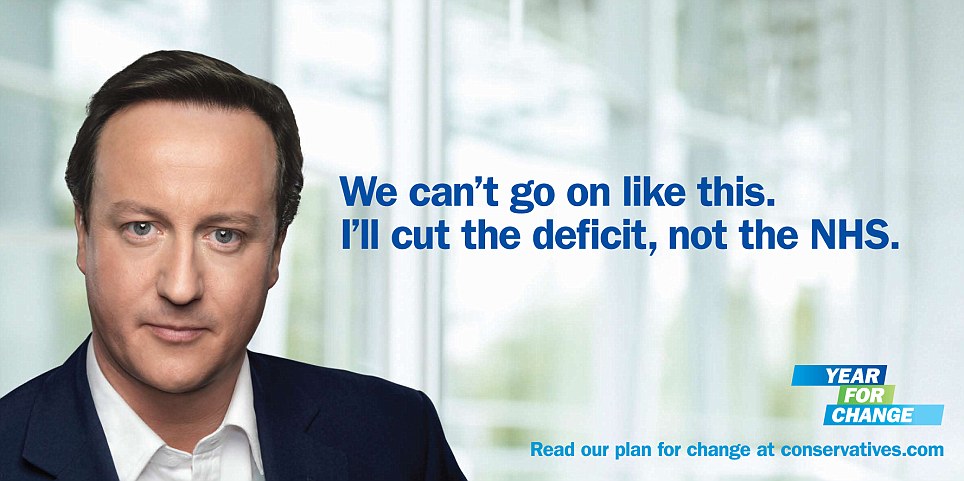
Conservative election poster 2010

A few recent news articles about the UK’s Conservative and Liberal-Democrat coalition government – the ConDem’s – brutal attack on the National Health Service.

NHS ‘watchdog’ set to become ‘bureaucratic monster’, says Unite

Monitor – the government’s revamped organisation to regulate competition in the NHS – is set to become ‘a bloated bureaucratic monster’, Unite, the largest union in the country, has warned.

Unite said that Monitor’s running costs were set to soar from £72 million-a-year to £82 million – with a 600-strong staff being paid twice the national average wage of £26,000.

Unite said that ministers were creating a bloated, old fashioned bureaucracy which would be responsible for handing over lucrative NHS contracts to the ‘government’s friends’ in the private healthcare sector.

Monitor was expecting to spend a further £14 million-a-year on consultants and £4 million in legal fees, according to the Department of Health’s own Impact Assessment report.

Monitor is a lynchpin of the government’s Health and Social Care Bill, currently before Parliament, with the remit of promoting choice, competition and collaboration – which Unite says are contradictory and confusing aims.

Unite national officer for health, Rachael Maskell said: ‘It is equally disgraceful that the Impact Assessment team have been unable “to develop a robust monetary estimate of the benefits of changes to the regulatory regime”.

‘All this indicates that a revamped Monitor is not being geared for the benefit of patients, but as a conduit to channel lucrative NHS contracts to private healthcare companies, many of whom have bankrolled the Tory party since David Cameron became leader.’

‘Monitor anticipates employing about 600 staff at an average cost of £84,000 each, which would include salaries, National Insurance contributions, any pension provision and other costs.’

‘This works out at average annual salary levels of more than £50,000 – double that of the average national salary of £26,000. A bloated bureaucratic monster is being created – so much for all the ministerial chatter about efficiency savings. This is being paid for by cuts to frontline services, as well as staff pay and terms and conditions.’

Grasp the nettle now – before it’s too late / Features / Home – Morning Star

As Andrew Lansley’s hugely controversial and largely unaltered Health and Social Care Bill faced its crucial vote in the Commons, unelected Tory Health Minister Lord Howe was smugly assuring a conference of grasping private-sector companies that the Bill offers them “genuine opportunities” to take over large chunks of the NHS.

There would be profitable opportunities galore – both in the provision of certain profitable services and in supplying management expertise to help GPs decide how to spend local budgets.

Howe recognised that “the NHS will not give up their patients easily.”

But of course that’s why the Bill, which sailed through a docile Commons with a majority of 65, will stack the odds against public-sector providers and open up most of the £100 billion NHS budget in England to cherry-picking private companies.

It will scrap any pretence at strategic planning or equitable provision by abolishing primary care trusts and strategic health authorities and strip away the thin veneer of local accountability, putting a new national body, the NHS Commissioning Board, and the regulator Monitor – led by pro-market fundamentalist and former McKinsey consultant David Bennett, who was also at the conference with Howe bigging up the private sector – firmly in charge.

Monitor will draw up the list of “any qualified providers” which GPs will have to offer as “choices” when patients need further treatment.

The Bill, coupled with the massive £20bn cuts programme to be achieved by 2014, will also pull the financial rug from under dozens of major NHS hospitals, forcing them to close services, merge with neighbouring trusts and axe staff to stay afloat.

At the same time it will encourage many foundation trusts to maximise the numbers of wealthy private patients they treat, by removing all limits on the amount of money they can make.

While David Cameron and his arrogant, lying ministers falsely claimed support from “the Royal College of GPs, the Royal College of Physicians, the nurses, people working in the Health Service,” we all know that quite the opposite is the case.

The Bill is even opposed by a large majority of GPs, who are the only people apparently set to benefit from its proposals, making Lansley possibly the first politician in history to seek to force £80bn in commissioning budgets into the hands of people who insist they don’t want it.

The Bill is also rejected by the BMA, which has promised to step up its lobbying against the Bill in the Lords, by Royal Colleges, and by almost every academic and think tank not in the pay of the neoliberal right wing.

Every health union is also against the Bill, but the mass campaign that was needed to stop it has still not taken off – a year after the TUC voted unanimously against the outlines of the Bill, as set out in Lansley’s white paper.

NHS rationing boosts private healthcare firms – report | Business | The Guardian

NHS costs squeeze means longer waiting lists – and growing numbers of patients opting to pay for operations, say private firms

by Denis Campbell

Private healthcare firms are experiencing an increase in business caused by the financial squeeze across the NHS in England, a new report on the sector shows.

Independent providers are benefitting from the growing number of patients who are choosing to pay for their own care after having treatment delayed or denied altogether by an NHS primary care trust (PCT).

In a survey of 101 influential industry figures – including chief executives, investors and advisers – 34% said budgetary pressure in the NHS had led to increased demand for private healthcare.

While the reasons were not given, experts said the NHS’s need to cut costs was prompting patients to fund their own hip or knee replacement, hernia repair or cataract removal. “We are certainly picking up that some patients are being asked to wait longer than they would have expected and are therefore deciding to pay for themselves rather than wait,” said David Worskett, chief executive of the NHS Partners Network, which represents more than 30 firms – both for-profit and not-for-profit – that work with the NHS.

Worskett said “misguided” decisions of many PCTs to force patients to wait many months for treatment, often until the next financial year, lay behind the growing trend. Many PCTs are rationing access to care as the NHS struggles to adjust to a 0.1% annual increase in its budget, after years of big rises, and the need to make £20bn of efficiency savings by 2015.

The trend is a boost for a UK private health market which that was hit hard by the downturn in 2008 and for which recovery since has lagged behind that seen elsewhere in Europe, according to Credit Suisse. It is contained in HealthInvestor magazine’s annual study of the industry’s fortunes in conjunction with law firm Nabarro, called The Healthcare Industry Barometer 2011, which is published today.

The NHS will soon be less accountable: that’s good news for the health reform lobby | openDemocracy

While battle rages over the government’s controversial reforms of the NHS, the Department of Health has sneaked out two toxic changes that could seriously damage your health by promoting ignorance and restricting your rights as a citizen.

The two changes appear to be unconnected but are extremely helpful to new private providers of NHS medical services. One will limit the information that the private firms have to provide under the Freedom of Information Act to patients and relatives, the other will help them by abolishing the collection of health statistics on the services they provide and the quality of staff they employ.

The first has been revealed by the authoritative Campaign for Freedom of Information who are rightly demanding that Andrew Lansley, the health secretary, amends the law so patients can be protected. See their letter .

The second comes from a very convoluted consultation exercise launched the day after the August bank holiday and trumpeted by Anne Milton, the public health minister, as a drive against “red tape”.

This proposes to slash the collection of statistics by the Department of Health by 25 per cent in a rather uneven and unclear way. But it is clear that the aim is to “minimise the burden” on the NHS and in particular the new private providers.

Half the statistics collected on the NHS workforce – which are used to improve staff training and forecast the need for skilled staff – are to be dropped. The consultation document says: “This will be of significance for non-NHS providers of NHS services as it will determine the minimum workforce information they would be required to provide.”

Ministers ”hid impact of NHS reforms” – Public Service

Labour’s shadow health secretary John Healey has attacked the government for slipping out details on the cost of reforming the NHS the day after the House of Commons finished debating the legislation.

The Department of Health published the revised impact assessment on 8 September but, Healey said, this was prepared and signed off on 1 September.

Healey said in the Commons: “Last week MPs were asked to debate, amend and pass the Health and Social Care Bill with no new information of the costs and consequences of the biggest reorganisation in NHS history because the government had promised a new impact assessment following the Future Forum recommendations.

“The day after the debate, the new impact assessment was then smuggled out with no press statement. It shows Monitor, the new economic regulator, plan to employ 600 staff at an average cost of £84,000. And most importantly, it shows a health minister signed off the assessment on 1 September – a full five days before the Bill was debated last week.

“It’s a disgrace these facts were kept hidden from MPs and the public before such a critical and controversial debate.”

UNISON News | The public service union | ‘Save the NHS – kill the bill’

“Save the NHS and kill the bill.” That was the rallying cry from UNISON president Eleanor Smith as the TUC debated the government’s NHS plans and the All Together for the NHS campaign to defeat them.

“Our NHS is number one in equity, number one in quality and number one in safety,” said Ms Smith, who works in the health service as a theatre nurse.

But just a week ago, she recalled: “MPs began a two-day debate to wash their hands of the NHS. And on Wednesday night they voted to pass the Health and Social Care Bill.”

Now, she said, in terms of Parliament “all that stands between the government and our NHS is the House of Lords.”

And make no mistake, she added, “the bill hasn’t changed. Yes, they had what they laughingly called a listening exercise. Yes, there have been tweaks. But all the essentials are still there.”

The bill still removes the health secretary’s responsibility to deliver a health service in England, “any qualified provider” remains, allowing private companies to provide services instead of the NHS and the cap on NHS hospitals treating private patients has been lifted.

And in an age of austerity and cuts, warned Ms Smith, “hospitals will be forced to do all they can to raise cash from whatever source”.

‘There is still time to protect the NHS,’ TUC Congress told | The Chartered Society of Physiotherapy

The government’s proposed health service changes have nothing to do with improving the NHS, promoting better integration, or keeping the NHS safe for future generations, the CSP told the TUC Congress today.

CSP industrial relations committee chair Alex MacKenzie said the Any Qualified Provider policy and the Health and Social Care Bill would put the free market above all other considerations, leading to fragmented services, a postcode lottery for care, rationing and the undermining of professional collaboration.

Seconding composite motion 10 at Congress, which ‘deplored’ the government’s health reforms because they would ‘break up the NHS and put profits ahead of patients’, Ms MacKenzie said ‘overseas healthcare companies are rubbing their hands. The Coalition is waving to them – ‘come over here, Britain’s open for business, the rest of the country might be struggling, but there’s money to be made on the NHS’.

Pointing out that the NHS was ranked number one in the world for quality, equity and safety despite costing less per head than many other major developing countries, Ms MacKenzie said there was no case for radical upheaval. The CSP and other health unions would continue to oppose the reforms, she said.

‘It isn’t all over yet.’

‘The Bill has still to go through the House of Lords and then back to the Commons.

‘There is still time to protect the NHS.’

The vote was carried.


Continue ReadingNHS news review

NHS news review

Spread the love

Conservative election poster 2010

A few recent news articles about the UK’s Conservative and Liberal-Democrat coalition government – the ConDem’s – brutal attack on the National Health Service.

NHS reform bill must be resisted, leading doctors tell royal colleges | Society | The Guardian

Letter urges professional bodies to stop co-operating with reforms it says most grassroots doctors do not support

by Randeep Ramesh

More than 150 scientists, surgeons and doctors have written to NHS professional bodies calling on the medical establishment to demand that the government withdraws its controversial health bill.

Co-ordinated by the NHS Consultants’ Association, the medics have written to presidents of the royal medical colleges urging them to stop co-operating with the government’s proposed NHS reforms.

The move comes as the British Medical Association begins to mobilise a public campaign against the bill, and coincides with the suggestion of Clare Gerada, chair of the Royal College of General Practitioners, that family doctors hire lawyers to cope with the conflicts of interest they would face over the commissioning reforms.

The letter says the health bill, devised by the health secretary, Andrew Lansley, is not supported by the majority of the medical profession and is not in the best long-term interests of either patients, doctors or the royal colleges.

The plan would, the doctors argue, lead to “marketisation and privatisation” of the English NHS, as well as promote competition with a new regulator, and remove the health secretary’s duty to provide a comprehensive health service. The letter highlights a poll of more than 1000 doctors from the British Medical Journal, showing 93% want Lansley’s bill withdrawn, and suggests there is a lack of democratic legitimacy. The government needs to “reform its reforms”, following the public and professional backlash this year, and the changes have been expensive, the writers say: savings from the changes would bring in £4.5bn over the next four years, £700m less than the government first envisaged.

The doctors are also concerned at the emollient tone of some royal colleges. The Academy of Medical Royal Colleges told MPs there were too “many disadvantages” in delay, while Norman Williams, president of the Royal College of Surgeons, said his body largely backed “the aims of the reforms to modernise the health care system”. The letter claims “colleges are out of touch with the views … of the majority of grassroots doctors”, and accuses them of failing to safeguard their own principles, a key role being to “promote the underlying principles of medical professionalism and leadership”.

The bill, the letter says, cannot pass without the medical profession’s support.

“The colleges have a rare opportunity to make a stand for the NHS, medical profession, and patients. We therefore call upon the Academy of Medical Royal Colleges to act in the public interest by publicly calling for the withdrawal of the health and social care bill.”

‘Timebomb’ fear as ‘rationing by stealth’ of operations hits NHS – Telegraph

“Rationing by stealth” is hitting the NHS, the Royal College of Surgeons (RCS) has claimed, after official figures were released showing a steep fall in the number of people referred to hospital by GPs. by Stephen Adams

Department of Health statistics show the number of referrals made by GPs in the year up to July was 4.7 per cent lower than for the same period in 2010.

These referrals had shown a 3.5 per cent increase at the same stage last year, according to the department.

The number of patients attending for outpatient appointments has also fallen, by 2.7 per cent.

Professor Norman Williams, president of the RCS, described the figures as “extremely disturbing”.

He said: “These data provide further evidence that rationing by stealth is occurring across the NHS.

“Such a steep reduction in the number of referrals by GPs suggests that patients are being given limited access to specialist clinical advice and could be missing out on treatments.”

He went on: “If correct this is extremely concerning for surgeons across the NHS.

“Stopping referrals is only storing up problems for the future – a timebomb which will end up costing the NHS and taxpayer more in the long-term.

“The rise in waiting times for orthopaedic surgery is an indicator that demand for surgery is not reducing and that the issue of rationing needs to be addressed. It will not go away.”

Continue ReadingNHS news review

NHS news review

Spread the love

The third and final reading of the Destroy the NHS / Health and Social Care Bill is taking place now. I think that the vote is yet to be taken.

Many doctors and other health professionals have spoken out against the bill.

During Prime Ministers Questions David Cameron falsely claimed that the Royal College of GPs and the Royal College of Nursing backed the government’s NHS plans.

Tory minister Lord Howe caused a row by describing the huge opportunities for private companies by the proposed ‘reforms’.

I regret and apologise for my recent comments.

Conservative election poster 2010

A few recent news articles about the UK’s Conservative and Liberal-Democrat coalition government – the ConDem’s – brutal attack on the National Health Service.

Black mood in Westminster as NHS vote looms

John Healey spent the afternoon as Labour’s attack dog, challenging the facts of the prime minister and publicising slip-ups by ministers while online activists frantically lobbied their MPs to oppose the bill.

A stormy PMQs session saw David Cameron insist that the Royal College of GPs and the Royal College of Nursing backed the government’s NHS proposals, a fact the shadow health secretary challenged immediately afterwards.

“When experts criticise Cameron’s health bill, he doesn’t just ignore them – he pretends they support him,” he said.

RCGP rejects David Cameron’s claim that it supports NHS reforms | GPonline.com


RCGP chairwoman Dr Clare Gerada said while the college supports putting clinicians at the centre of health service planning, it continues to have a ‘number of concerns’ about the government’s reforms.

‘As a college we are extremely worried that these reforms, if implemented in their current format, will lead to an increase in damaging competition, an increase in health inequalities, and to massively increased costs in implementing this new system. These concerns have been outlined and reiterated pre- and post-pause.’

BBC News – Private sector have huge NHS opportunity – minister

The overhaul of the NHS in England presents “huge opportunities” to the private sector, a health minister says.

He said that the changes being made presented “huge opportunities” to private groups who could provide high quality care.

And he added: “In the coming months and years, the NHS is going to evolve and grow into a very different animal.”

However, after the speech he released a statement once again reiterating that the government would never privatise the NHS.

City doctors back call for rethink on NHS reforms | This is Bristol

SEVEN Bristol doctors have signed a letter calling on the government to completely scrap its health reforms.

GPs and specialists were among the 400 medics who said the changes would cause “irreparable harm” to the NHS.

Their intervention came at a critical time for the controversial legislation as it was last night debated on the floor of the House of Commons.

Doctors in revolt over NHS shake-up (From The Northern Echo)

A NORTH-EAST doctor at the forefront of a campaign against the Government’s controversial plan to overhaul the NHS last night insisted: “We will continue to fight it.”

As MPs prepared to vote on the Health and Social Care Bill, nearly 30 health professionals from across the North- East and North Yorkshire signed a letter saying the reworked Bill would “cause irreparable harm to the health service”.

The protest also accused David Cameron of “misleading the public by repeatedly stating that there will be no privatisation of the NHS”.

Last night, Dr Clive Peedell, a cancer consultant at The James Cook University Hospital, in Middlesbrough, said: “The overwhelming feeling is that doctors want the Bill withdrawn.”

Dr Peedell represents the North-East on the national council of the British Medical Association and proposed the motion calling for a public campaign against the Bill.

He said the Bill was a “clear drive towards increasing privatisation that goes completely against what the coalition Government is saying”.

News & Star | News | Government changes could harm NHS, claim Cumbrian doctors

Three Cumbrian doctors are demanding the Government scrap its health proposals amid fears that it will destabilise the NHS.

Dr Gavin Young, of Temple Sowerby Medical Practice, Dr Kate Keohane, of Caldbeck Surgery and retired west Cumbrian GP Dr Mary Henman, are among more than 400 doctors across the country worried the reforms will not improve patient care.

Southampton doctors join NHS reforms protest (From Daily Echo)

FIVE Southampton doctors have signed a letter calling on the Government to scrap its health reforms.

GPs and specialists were among the 400 medics who said the changes would cause “irreparable harm” to the NHS.

Their intervention came at a critical time for the controversial legislation as it was last night debated for one of the last times on the floor of the House of Commons.

Health reforms ‘threaten future of NHS’, claims leading Manchester doctor | Manchester Evening News – menmedia.co.uk

A top Manchester doctor has hit out at plans to reform the NHS – saying it could lead to chaos.

Raymond Tallis, emeritus professor of geriatric medicine at the University of Manchester, has spoken out to warn the government’s planned shake-up could ruin decades of progress.

Prof Tallis, 64, from Bramhall in Stockport, fears the Health and Social Care Bill could open the way to privatisation of care and an American-style health service.

He has written to the British Medical Association and senior politicians to voice his concerns and urge health secretary Andrew Lansley to reconsider the proposals.

Continue ReadingNHS news review

NHS news review

Spread the love

The Destroy the NHS / Health and Social Care Bill is due it’s third (final) reading in Parliament today and tomorrow. Unless abandoned in its entirety, it will then pass to the House of Lords.

It is widely accepted and recognised that the purpose of this bill is to kill the NHS as a quality public service free at the point of need.

Health professionals continue to warn of the dangers of the bill.

The Trades Union Congress (TUC) warns of the dangers of the bill.

Helston and West Cornwall MP Andrew George reaffirms that he will vote against the bill and warns of the dangers of the bill.

Conservative election poster 2010

A few recent news articles about the UK’s Conservative and Liberal-Democrat coalition government – the ConDem’s – brutal attack on the National Health Service.

The NHS reforms still amount to privatisation | Society | guardian.co.uk

This bad bill will force hospitals to choose private over public care to make ends meet, write Kailash Chand and JS Bamrah

• Dr Kailash Chand has been a GP for 30 years and chairs Tameside and Glossop NHS

• Dr JS Bamrah is a consultant psychiatrist and honorary senior lecturer at North Manchester general hospital

Cameron’s reassurance that the NHS is safe in Tory hands now seems hollow. To date, Andrew Lansley has failed to explain to the British public the need for this monumental change. Remember, a recent study in the Journal of the Royal Society of Medicine showed that the NHS is the most efficient service in the world, in lives saved per pound spent. How has David Cameron allowed this to happen?

The public should have no illusions: beneath the veneer of the listening exercise, the core substance that constitutes the bill remains contentious. The NHS reforms remain driven by pure market ideology, without a shred of evidence that they will benefit the English population. On the contrary, the evidence shows that if you create an American-style healthcare system the result will be denial of care and huge costs for the taxpayer. If the bill is passed, coming generations will not forgive us for taking the “National” out of the NHS.

Trades Union Congress – NHS Bill is ‘toxic cocktail of competition, markets and cuts’

The Health and Social Care Bill, due to start its final Commons stages today (Tuesday), has been ‘barely improved’ by the government’s pause and Future Forum consultation, says the TUC in a briefing for MPs produced on behalf of all its member health unions.

The main concern of health staff that the Bill undermines the founding principles of the NHS has not been met, says the TUC. Instead the NHS will be made more complex and bureaucratic with new structures absorbing funds that will be taken from patient care at a time when services are already being cut.

NHS staff’s top concerns with the Bill are:


  • The reforms are still based on extending competition and markets within the health service even though international evidence already shows the NHS is one of the most efficient health systems in the world.
  • NHS hospitals will be allowed to maximise their income from private patients, which will mean NHS patients are pushed to the back of growing waiting lists.
  • The government is still pushing ahead with the Any Qualified Provider concept which will hinder NHS provision, and open up swathes of the health service to the private sector.
  • The Secretary of State for Health will no longer have a full duty to ensure the provision of NHS services, increasing the risk of postcode lotteries in the care available, and meaning a lack of accountability.
  • The changes are being forced through at a time when the NHS is already being asked to find £20 billion of efficiency savings (4 per cent a year) and Monitor* has advised foundation trusts to find an extra 2.5 per cent a year. The cost of the re-organisation is estimated at £3 billion a year and is rising by £1 million a day.

MP urges colleagues to vote against health bill (From This is The West Country)

Helston and West Cornwall MP Andrew George has said he will vote against the government’s controversial Health Bill this week as concerns rise that it will see the privatisation of the NHS.

There has been widespread concern among doctors and campaigners that, as it stands, the bill will allow much of the £85bn NHS budget to flow into the pockets of private companies and their shareholders.

GP leaders and unions have also stepped up calls on MPs to reject the bill this week after e-mails obtained under the FoI act showed Department of Health officials have discussed plans for private firms to run between ten and 20 NHS hospitals in a deal worth up to £500m.

Speaking ahead of the debate, Mr George said; “The bill breaks the Coalition Agreement, is based upon a false claim that the NHS performs poorly in comparison with health systems across Europe, and represents the biggest upheaval of the NHS in its history at precisely the time it needs stability and certainty.

“The bill runs the high risk of producing a NHS which is driven more by private profit than by concern about patient care; risks undermining emergency services through the fragmentation of health systems; is a major missed opportunity to produce a health service that is more accountable to the patients and communities it serves; and fails to do what really needs to be done, i.e. streamline the pathways between health and social care.”


Continue ReadingNHS news review

NHS news review

Spread the love

The Destroy the NHS / Health and Social Care Bill is due it’s third (final) reading in Parliament tomorrow and Wednesday. It will then pass to the House of Lords.

Spinwatch has revealed that the Department of Health has been negotiating the running of hospitals by foreign companies. The Guardian identified the German company Helios. This clearly discredits government assurances that there is no intention to privatise the NHS.

There are proposals to sell St Mary’s, Paddington teaching hospital to property developers.

The Royal College of Nursing, the union Unite, and the umbrella group for health service managers, the NHS Confederation, warn about the complex tangle of management and quangos proposed by the ‘reforms’.

I suggest that Liberal-Democat members seriously consider dumping their Tory leader Clegg. Clegg has supported privatisation of the NHS from the very outset, engaged in the sham of the listening exercise, not followed direction from the Summer conference and even now still supports the shambolic Destroy the NHS Bill. Liberal-Democrats should be the stronger coalition partner since their support is essential.

Conservative election poster 2010

A few recent news articles about the UK’s Conservative and Liberal-Democrat coalition government – the ConDem’s – brutal attack on the National Health Service.

DoH email exchange stokes NHS reform fears – Channel 4 News

Fears that the Government’s health reforms will mean the privatisation of the NHS are reinforced by an email exchange in which health officials consider private firms running up to 20 hospitals.


Concerns about the privatisation of the NHS were reinforced today when it emerged that emails between the Department of Health and an international consulting firm discussed the possibility of private companies taking on the running of up to 20 NHS hospitals.

German company involved in talks to take over NHS hospitals | Society | The Guardian

Helios involved in discussions about ‘potential opportunities in London’ with officials from the health department

A German company has been in talks to take over NHS hospitals, the first tangible evidence that foreign multinationals will be able to run state-owned acute services, a market worth £8bn, the Guardian can reveal.

On the eve of the last Commons vote on the government’s bill before it heads to the Lords this week, freedom of information requests reveal a series of meetings focused on “potential opportunities in London” between officials from the Department of Health, the NHS, the management consultant McKinsey and one of the largest German private hospital chains, Helios.

Top hospital to be closed as cash crisis engulfs NHS – Health News, Health & Families – The Independent

A leading teaching hospital faces closure as a result of the financial crisis gripping the NHS. Managers at Imperial College Healthcare NHS Trust, which runs three major hospitals in London and two smaller units, is considering a proposal to shut St Mary’s, Paddington, and sell off the site to property developers.

New NHS could be more complex and costly, warns nursing chief – Telegraph

Dr Peter Carter, general secretary of the Royal College of Nursing, said the introduction of new levels of management and quangos could “tangle” the health service in “more red tape and bureaucracy”.

His concerns are echoed by the leading public sector trade union, Unite, and the umbrella group for health service managers, the NHS Confederation, which has raised concerns over “confusion and duplication” among newly created quangos.

Their comments come in another wave of opposition to the Government’s biggest upheaval in the 63-year history of England’s National Health Service, which aims to hand control of buying treatment to GPs while giving private companies and voluntary groups more opportunity to run services.

The leading doctors’ union, the British Medical Association, is still calling for the entire Bill to be withdrawn despite the concessions made earlier this year and it faces opposition from peers when it reaches the House of Lords as well as Labour MPs who fear it spells the backdoor privatisation of a key public service.


27/11/13 Having received a takedown notice from the Independent newspaper for a different posting, I have reviewed this article which links to an article at the Independent’s website in order to attempt to ensure conformance with copyright laws.

I consider this posting to comply with copyright laws since
a. Only a small portion of the original article has been quoted satisfying the fair use criteria, and / or
b. This posting satisfies the requirements of a derivative work.

Please be assured that this blog is a non-commercial blog (weblog) which does not feature advertising and has not ever produced any income.

dizzy

Continue ReadingNHS news review