NHS news review

Spread the love

The Lancet on the failed NHS records IT project.

Corporate Watch investigates the Co-operation and Competition Panel (CCP) quango that supports privatisation and the abolition of public sector NHS provision.

Waiting times for Accident and Emergency treatment increase.
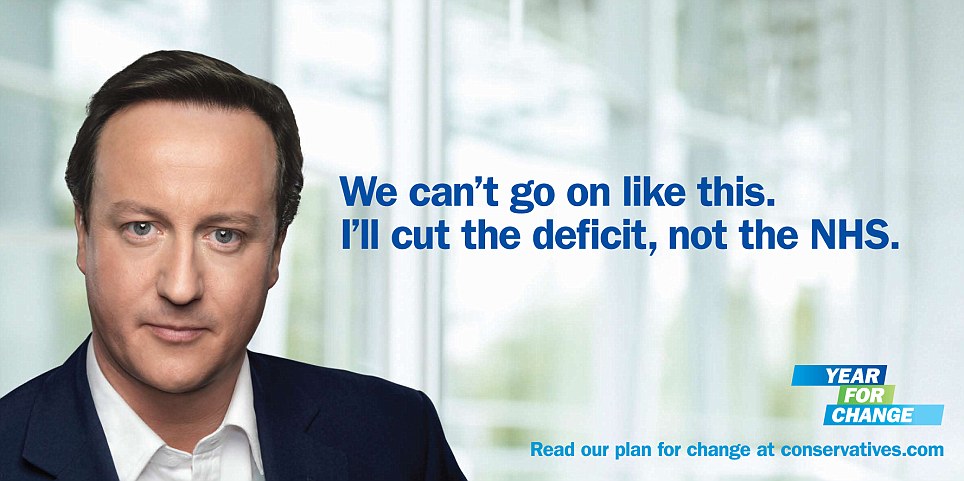
Conservative election poster 2010

A few recent news articles about the UK’s Conservative and Liberal-Democrat coalition government – the ConDem’s – brutal attack on the National Health Service.

Winner of world’s most mismanaged health project » Hospital Dr

This is an editorial from The Lancet.

If there were an award for the world’s most mismanaged national health project, England’s National Programme for IT in the NHS would be a strong contender, if not outright winner. Started in 2002, Tony Blair’s brainchild has, like the computer in 2001: A Space Odyssey, gone badly wrong.

The main aim of the project was to create a fully integrated centralised electronic care records system to improve services and patient care by 2007. The budget for the undertaking was a substantial £11·4 billion. Nine years on, the Department of Health has spent £6·4 billion on the project so far, failed to meet its initial deadline, and has had to abandon the central goal of the project because it is unable to deliver a universal system.

Given the ineptitude that has characterised this project, disaster was almost certain. According to a new report by the Public Accounts Committee (PAC), the Department has failed to get value for the vast sums of money that it has paid contractors. Of the two companies that are still involved in the project, one has yet to deliver the bulk of the systems that it was contracted to supply despite being paid £1·8 billion since 2002, and the other is being paid £9 million to implement systems at each NHS site that have cost other organisations outside the programme £2 million.

The Department seems to have been foolishly duped by commercial companies that promised the sun, cost the earth, and delivered not much more than hot air. Damningly, PAC’s report states: “The Department could have avoided some of the pitfalls and waste if they had consulted at the start of the process with health professionals.”

Corporate Watch : LATEST NEWS : Co-operating and competing to privatise the NHS

“NHS delays operations ‘as it waits for patients to die or go private’” thundered the front page of the Daily Telegraph after the release of the Co-operation and Competition Panel (CCP)’s report on choice and competition in elective care late last month. Most of the major papers and news broadcasters jumped on board, the majority repeating that Primary Care Trusts (PCTs), in an attempt to cut costs, are setting minimum waiting times for patients, who then either “die or go private.” A Daily Mail leader declared: “it’s hard to conceive of a more barbaric tactic than making patients wait so long for surgery that they either go private or die.”

But reading the report, it turns out they were getting all worked up for nothing. For a start, the report is looking into elective care. Elective care includes things like hip replacements, knee replacements, foot surgery, tinnitus, varicose veins and so on: “pre-arranged, non-emergency care that includes scheduled operations,” in the words of the Department of Health. Serious, painful conditions of course, but not ones that will kill you if you have to wait a couple more weeks for an operation. As a weary David Stout, director of the Primary Care Trust Network, told the Today programme: “the suggestion people are dying waiting for routine elective care doesn’t make sense.”

So what’s this “waiting for patient to die” claim? It comes from paragraph 131 of the report, in which the writers explain they were told: “increasing waiting times for patients did have the potential to save money overall” and then they quote someone who says: “Experience suggests that if patients wait longer then some will remove themselves from the list or will no longer require treatment when it is finally offered.”

This is footnoted, but not to explain who is being quoted.* Instead, the note says:

“We understand that patients will ‘remove themselves from the waiting list’ either by dying or by paying for their own treatment at private sector providers.”

And that’s what the fuss is about. One unsubstantiated footnote. We asked the CCP if they had based this on any evidence but they didn’t reply. So the Co-operation and Competition Panel – which, if the government’s reforms go through, will become a decision-making body within the NHS – is saying that if someone’s knee replacement is delayed by an extra two weeks they may choose to die rather than wait. As the Daily Mail put it: that is sickening.


We are told early on that it is based on “around 80 submissions from NHS providers, GPs, Primary Care Trusts, Strategic Health Authorities, independent and third sector providers, representative organisations and others,” but that those submissions made by the independent sector providers – i.e. private companies – will not be disclosed due to: “concerns that publication of these submissions would be likely to prejudice the commercial interests of the organisation which had made the submission.” This makes things difficult, because the report is based on the companies’ allegations that PCTs are unfairly denying them work by encouraging patients to use public healthcare providers. Quotes of no more than a couple of sentences are pulled out of the companies’ submissions, but we are never told which company made them or what context they were made in.

Reading through the submissions made by the PCTs which we are allowed to read, it seems they were kept in the dark too. Many seem confused because the CCP has told them they have been accused of something but they haven’t been told what. NHS Somerset, among others, says it is “difficult to comment directly on the points raised without sight of the specific allegations raised.” NHS North Yorkshire and York note: “without further detail or specific examples it is difficult to respond to this allegation.”

Recommendations for the whole NHS are conjured up from a combination of accusations from a few un-named companies, explanations from a few PCTs and the panel’s “understanding” of the issue, which, as we have seen, isn’t exactly foolproof. To show PCTs are encouraging GPs to restrict patients’ ability to choose which provider they go to for their treatment, for example, we are given two, single sentence quotes from un-named PCTs and three unsubstantiated allegations made by unnamed providers. There is no thorough analysis of all the evidence taken together and no suggestion of exactly how widespread this so-called anti-competitive behaviour is. Early on they say they saw “many” examples of PCTs “excessively constraining patients’ ability to choose” and then, later on: “a significant number of PCTs are restricting patient choice and competition in routine elective care,” but that’s about it.

If the Health and Social Care bill goes through the CCP’s remit will only widen. The Department of Health has already announced that the “any qualified provider” policy will be extended into community and mental health services and it will not stop there. David Cameron and his health secretary Andrew Lansley are always keen to say how their reforms will bring an end to the reign of pen-pushing bureaucrats in the NHS but they are quietly loading an unelected body run by bureaucrats (albeit pro-market bureaucrats) with the power to censure and overrule any doctors, managers or staff that try to keep healthcare public.

Number of NHS patients waiting more than four hours in A&E doubles | Society | The Guardian

The number of patients waiting more than four hours for treatment in accident and emergency departments has almost doubled in the space of a year, the latest statistics reveal.

Figures show 161,422 patients were left waiting over four hours for “major A&E” treatment between April and June 2011 – 91% more than during the same period in 2010.

A broader measure including minor injuries units and walk-in centres was also up 90%, to 165,279.

The increases come despite a slight fall in the number of patients using A&E services, from 3.6 million to 3.58 million, scotching past Department of Health assertions that the longer waits were down to increased pressure on services.

Continue ReadingNHS news review

NHS news review

Spread the love

Conservative election poster 2010

A few recent news articles about the UK’s Conservative and Liberal-Democrat coalition government – the ConDem’s – brutal attack on the National Health Service.

Unison: Why we worry about social enterprises in the NHS | Social enterprise network | Guardian Professional


A quick look at the Right to Request scheme set up by the last Labour government, giving staff the right to ask to form a social enterprise, led to just 20 being established. Very few existing social enterprises were driven by bottom-up demand from staff and in most cases they have voted overwhelmingly to stay in the NHS. The majority of requests were management led, top-down initiatives, where employee engagement was little more than an afterthought. So much so, that Unison called for a free and fair ballot of staff before any new social enterprises were set up.

So how have these existing social enterprises worked out? There’s very little hard evidence of the benefits cited by the government of greater patient choice or more innovation. This pours cold water on government attempts to expand social enterprises, to create in its words, “the largest social enterprise sector in the world’.

The recent Kings Fund report on social enterprises was the result of a survey of a small number of directors and chief executives of social enterprises and foundation trusts rather than staff, as was acknowledged in the report. This also found that some of the aims of social enterprise such as greater staff and client engagement, less bureaucracy and more innovation can be achieved without the upheaval of structural change. Indeed these advantages can be and are demonstrated in many types of organisations and services – public, private and not for profit. They are much more dependent on a culture that promotes and rewards motivated staff, collaborative management and the active involvement of service users.

Even if there was clear evidence that existing social enterprises delivered improvements for patients, the conditions in which they will have to operate in the future have changed dramatically. The first generation of NHS social enterprises were set up when competition was at a minimum. The new breed will be forced to compete in an open market with private companies, under the government’s “any qualified provider” plans. Social enterprises are just another vehicle for the government to drive more competition into the NHS – a move that will ultimately mean patient care will suffer as the race to provide the cheapest service will damage the quality of care.

Service users doubtful over NHS personal budgets – 8/12/2011 – Community Care

“Deeply engrained clinical, organisational and managerial cultures” needed to change to make mental health services less medicalised and more person-centred if personal health budgets were to work, found a report today by the NHS Confederation’s Mental Health Network, based on a survey of users.

The report follows a poll of professionals by the network, which found social workers and other mental health practitioners were unconvinced that personal health budgets would deliver improvements for service users.

Only a minority of service users surveyed said they would take up a budget, many saying they were confused about what a personal health budget was and were unclear about how it would integrate with similar social care budgets.

This comes with the government planning to roll out personal health budgets from October 2012 following pilots in 68 areas.

The Mental Health Network has urged the government to postpone the roll out, extend the pilot schemes and begin an extensive programme of professional engagement as soon as possible.

Warnings over staff cuts after negligence costs rise | News | Nursing Times

Cuts to staffing and training budgets have been described as a “false economy” and “short sighted” after new figures showed the spiralling cost of lawsuits against the NHS.

The NHS Litigation Authority’s annual report showed that the number of clinical negligence claims brought against the NHS rose by 32 per cent in 2010-11, to 8,655. The NHS paid out £863m to claimants last year, up from £787m the year before.

Chris Cox, legal director at the Royal College of Nursing, said the figures were no reflection on the safety of NHS care, and warned that there would be a rise in clinical negligence cases if staffing numbers and skill levels were cut back. “It’s short-sighted to think it is too costly an exercise to maintain this level of staffing”, he told Nursing Times.

Continue ReadingNHS news review

NHS news review

Spread the love

The Audit Commission reports that NHS organisations face “the worst financial situation they have ever experienced”.

Pulse reports that “Private companies are poised to bid to run huge chunks of NHS care across the country”.

Waiting times rise despite David Cameron’s pledges.

Conservative election poster 2010

A few recent news articles about the UK’s Conservative and Liberal-Democrat coalition government – the ConDem’s – brutal attack on the National Health Service.

Funding crisis looms over NHS / Britain / Home – Morning Star

NHS organisations face “the worst financial situation they have ever experienced” as a result of government funding cuts, the Audit Commission claimed today.

It found that most trusts were only able to balance their books with financial help in 2010-11.

Sixteen NHS trusts needed £90 million to help them keep on track while cash was also distributed from underspending primary care trusts to those that had overspent.

The public-service watchdog said that although only nine out of the 276 NHS organisations in England were in deficit, six in the south-east, trusts face a challenging 12 months trying to keep on top of a £20 billion efficiency savings target by 2015.

Related: NHS faces growing financial pressure, says auditor | Healthcare Network | Guardian Professional


PCTs clamour to put entire care pathways out for tender – newsarticle-content – Pulse

Exclusive Private companies are poised to bid to run huge chunks of NHS care across the country, as a host of PCTs follow NHS East of England’s controversial lead in placing entire care pathways out to tender.

NHS East of England plans to auction off £300m of services to GPs, private companies or a combination of the two, in pathways including respiratory and musculoskeletal medicine.

Eight PCTs are now planning to replicate the NHS East of England plans, which Pulse first revealed in March and are backed by an adviser to the Government’s QIPP programme.

Pulse has established that NHS Bassetlaw, NHS Hampshire, NHS Coventry, NHS Brighton and Hove and NHS Outer North East London, a cluster covering four PCTs, are all considering putting entire care pathways out to tender, with several having started discussions with GP commissioners about the move.

NHS Outer North East London said it would tender out entire care pathways and would ‘provide an outline programme of these once prioritised and agreed with GP consortia and existing service providers’. NHS Bassetlaw said it had already awarded tenders for musculoskeletal and dermatology pathways, worth £680,000 and £775,000 respectively, to NHS providers.

Leap in waiting times for key NHS health tests despite Cameron’s pledge – Health News, Health & Families – The Independent

The number of NHS patients waiting more than three months for tests has increased nine-fold in a year.

In June, 1,763 people had been waiting for at least 13 weeks for one of 15 diagnostic tests – including MRI and heart scans, ultrasound and colonoscopies – according to Government figures released yesterday. This compares with only 190 in June 2010.

The figures came a month after the Prime Minister personally pledged to keep waiting times low. Health ministers were quick to point to a small month-on-month improvement in June, but with nearly 600,000 people in total waiting for a test to diagnose or exclude a medical condition, June is the worst month of 2011 so far.

Related: Nine-fold increase in patients waiting for diagnostics » Hospital Dr  Number of NHS patients waiting more than six weeks for tests quadruples in one year | Mail Online

BMA calls on every GP to join pensions fight – newsarticle-content – Pulse

The BMA has issued a rallying cry for every GP in the country to join the fight to protect NHS pensions by responding individually to the Department of Health’s ongoing consultation.

BBC News – Bupa calls for ‘urgent’ action over care home crisis

Ray King, chief executive of medical group Bupa, has called for a “chronic underfunding” of the care homes system to be addressed “urgently”.


27/11/13 Having received a takedown notice from the Independent newspaper for a different posting, I have reviewed this article which links to an article at the Independent’s website in order to attempt to ensure conformance with copyright laws.

I consider this posting to comply with copyright laws since
a. Only a small portion of the original article has been quoted satisfying the fair use criteria, and / or
b. This posting satisfies the requirements of a derivative work.

Please be assured that this blog is a non-commercial blog (weblog) which does not feature advertising and has not ever produced any income.

dizzy

Continue ReadingNHS news review

NHS news review

Spread the love

Corporate media still seems to be obsessed with exaggerated rioting and looting.

UK RIOTS 2011: Manchester and Midlands burn but London is ‘under control’ | Mail Online

In Bristol there were 19 arrests for offences, including having a balaclava in your possession.


Conservative election poster 2010

A recent news article about the UK’s Conservative and Liberal-Democrat coalition government – the ConDem’s – brutal attack on the National Health Service.

BBC News – Call for more maternity doctors

The NHS needs more specialist maternity doctors to prevent mothers dying due to “substandard care”, experts have said.

An editorial in the British Medical Journal written by six obstetricians says most maternal deaths are now caused by treatable medical conditions.

The Royal College of Obstetricians and Gynaecologists says too few doctors means warning signs can be missed.

Increasing numbers of women with often complex medical conditions are now becoming pregnant or seeking fertility advice. And with more women delaying starting a family, doctors are now seeing more older women with complicated pregnancies.

The latest review of UK maternity services – the Confidential Enquiry into Maternal Deaths report – found that although the overall maternal death rate has been declining, there has been an increase in maternal deaths associated with existing medical conditions, like diabetes, epilepsy, asthma or heart failure.

And many of these are linked with substandard care, meaning more could have been done by healthcare professionals.

In a third of these cases, different care might have actually prevented the death of the mother.

Continue ReadingNHS news review

NHS news review

Spread the love
Media attention is on the riots and looting mainly in London areas rather than the NHS.

Conservative election poster 2010

A recent news article about the UK’s Conservative and Liberal-Democrat coalition government – the ConDem’s – brutal attack on the National Health Service.

Hundreds of NHS jobs in Sussex to be axed (From The Argus)


Hundreds of jobs are to be axed by health bosses over the next five years.

NHS trusts across the county are battling to save millions of pounds while facing one of the biggest shake-ups in the organisation’s history.

Managers say they are unable to rule out redundancies although they are hoping to make savings by cutting back on expensive agency staff and not filling vacant posts.

Unions believe the cuts are just the tip of the iceberg.

The Sussex Community NHS Trust has revealed it wants to reduce its staff numbers by 10% – the equivalent of about 430 positions, by 2015.

The trust runs specialist community and rehabilitation services for adults and children across Brighton and Hove and West Sussex.

Its work covers district nurses, podiatrists, nurses specialising in skin problems like eczema and support for stroke patients.

The losses could affect different parts of the trust but it is hoped they will be covered through not filling vacancies, retirements, staff moving on to other jobs and cutting back on agency and staff spending.

The changes are down to the way the trust plans to provide services in the future while it tackles the same financial pressures as the rest of the NHS.

Western Sussex Hospitals NHS Trust, which runs Worthing Hospital, Southlands in Shoreham and St Richard’s in Chichester, is also planning to cut the amount it spends on staff this year by the equivalent of 128 posts.

Brighton and Sussex University Hospitals NHS Trust, which runs the Royal Sussex in Brighton and the Princess Royal in Haywards Heath, maintains it has no plans to reduce positions, despite having to save £21 million this year.

The hospital trust has called in an independent financial expert at a cost of £143,000 in an effort to get its spending under control.

East Sussex Healthcare NHS Trust, which runs Eastbourne District General Hospital and the Conquest in St Leonards, is working with accountants Ernst and Young to try to clear a £6 million deficit and has not ruled out the possibility of job losses in the future.

More than 170 jobs have already been lost at the county’s primary care trusts ahead of their planned axing in two years time as part of the government’s shake up of the NHS.


Continue ReadingNHS news review