NHS news review

Spread the love

It has emerged that Andrew Taylor, head of the Co-operation and Competition Panel has been liaising extremely closely with private-sector lobbying groups to produce the report claiming that PCTs impose waiting so that patients either pay for treatment or die. There’s a feint, familiar ring to that … a circular echo, something in a spin?

Anyway then he got taken to a Health Investor’s dinner. Of course, Health Investor’s dinner would be packed with higher management of private health care companies – the perfect situatuion for Taylor to be networked.

Hypocrite Andrew Lansley condemned PCTs for the actions claimed by the report when – of course – he is largely responsible for them. It is Lansley and the Con-Dems that are destroying the NHS and imposing huge cuts. It is clear that this was the intention.

There are reports on Labour’s analysis that deprived areas will see greater cuts than relatively prosporous areas. The Con-Dems’ are stealing from the poor to give to the rich.
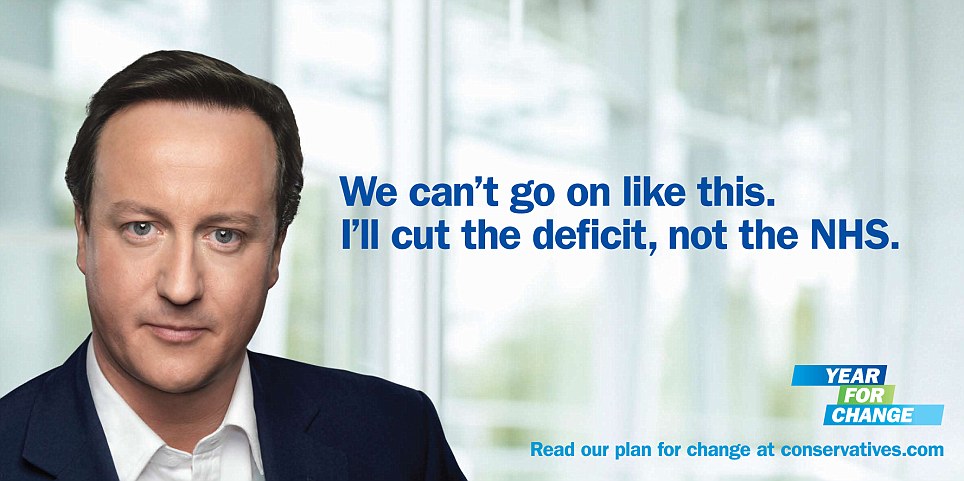
Conservative election poster 2010

A few recent news articles concerning the UK’s Conservative and Liberal-Democrat coalition government – the ConDem’s – brutal attack on the National Health Service.

Private healthcare group lobbied competition body for NHS inquiry | Society | The Guardian

The close links between a private sector lobby group and an NHS regulator in the runup to the launch of a groundbreaking inquiry into competition in the health service have emerged in a series of documents passed to the Guardian.

Emails released under the Freedom of Information Act show that NHS Partners Network, a lobby group which represents companies including Care UK, Circle, General Healthcare Group, Bupa and United Health, helped draft a letter requesting a formal investigation into how firms were being blocked from getting NHS work. A week later the private healthcare lobby group took the regulator out to a £250-a-head gala dinner.

The network began lobbying the Co-operation and Competition Panel (CCP) last October for an inquiry into restrictions on the use of non-state companies in the health service – an investigation that was given the go-ahead two months later. The result was a report published this week which included recommendations to offer patients “more choice” because people were “dying” while waiting for operations in NHS hospitals.

Since 2006, patients have had a right to choose where they go for treatment for elective surgery, including private hospitals. In this week’s landmark ruling the panel found that almost half of NHS primary care trusts, the state bodies which control health budgets, were unreasonably restricting patients’ choice over where they go for operations.

The tactics employed included setting minimum waiting times before patients were getting treated – even when private providers could treat them – and directing GPs to refer patients to keep cash flowing into a local hospital.

In a contentious passage the regulator claimed that “we understand that patients will ‘remove themselves from the waiting list’ either by dying or by paying for their own treatment at private sector providers”.

Andrew Lansley, the health secretary, leapt on the findings, telling the BBC that “too many [trusts] have been operating in a cynical environment where they can game the system – and in which political targets, particularly the maximum 18-week waiting time target, are used to delay treatment.”

However, David Stout, director of the PCT Network, described this claim as “unsubstantiated”, pointing out that average waiting times were just eight weeks for what were non-emergency and therefore non-life threatening operations. He said the regulator’s statements “cause unnecessary public anxiety and alarm”.

Emails, obtained by Spinwatch which campaigns for greater transparency in government, between the head of the CCP, Andrew Taylor, and David Worskett, the director of the NHS Partners Network, reveal the inquiry followed a letter from the lobby group to the Department of Health, which Taylor helped draft.

It’s obvious why PCTs are making patients wait » Hospital Dr

You really have to wonder what it’s like in the world of a Tory minister. It’s evidently a place where nobody has to rely on a public service. David Cameron’s gratitude to the NHS for treating his son Ivan, frequently repeated in the run up to the election, seems to have been conveniently forgotten.

First we have Steve Hilton, David Cameron’s director of ‘strategy’ (for which his qualification are…ummm…I’ll have to get back to you on that one), suggesting the abolition of maternity leave, job centres and consumer rights legislation.

Then Oliver Letwin claiming public sector workers need more ‘fear and discipline’ (how about a spot of whipping?). Thanks for that, boys – if that’s the direction of travel, we’ll soon be opening workhouses again. Let’s admit this government is devoid of intelligent ideas for deficit reduction, or indeed, any grasp on the realities of life for the majority who don’t have a trust fund and didn’t go to Eton.

Then we have the Cooperation and Competition Panel doing what it was set up to do – clobbering the NHS and cosying up to the private sector. Its report last week claims that PCT’s are unfairly giving work to local hospitals, and restricting access for elective surgery to save money.

Making patients wait for treatment, we’re told, is designed expressly to force those who can afford it to go privately. Not only that – those wicked managers are hoping that many others will tidy themselves off the waiting list by dying before they finally get an op date. With breathtaking hypocrisy, the government piles in with expressions of horror, completely ignoring the reason why PCT’s are so desperate to save money. It’s a shame PCTs are so strapped for cash that they can’t treat CCP members to the same corporate entertainment package that lobbyists from the private healthcare industry recently did, according to a report in The Guardian. It was obviously be money well spent.

What the government also fails to acknowledge, is that this was always the plan – i.e. to force NHS waiting lists to increase so that the private sector is able to ride in and save the day – patients will either pay privately, or demand an alternative provider. And this is before the Health and Social Care Bill has even become law.

Deprived areas in England will ‘lose out’ in NHS reforms – UK Politics, UK – The Independent

Deprived areas in England will lose out to affluent parts of the country under health spending reforms, Labour has claimed.

Changes to funding formulas means poor health rates will be given less consideration when cash is allocated, the party said.

It suggested areas like Manchester and the London borough of Tower Hamlets would lose out to parts of the wealthy south east, such as Surrey and Hampshire.

Labour based the claims on an assessment of funding reforms by public health bodies in Manchester.


27/11/13 Having received a takedown notice from the Independent newspaper for a different posting, I have reviewed this article which links to an article at the Independent’s website in order to attempt to ensure conformance with copyright laws.

I consider this posting to comply with copyright laws since
a. Only a small portion of the original article has been quoted satisfying the fair use criteria, and / or
b. This posting satisfies the requirements of a derivative work.

Please be assured that this blog is a non-commercial blog (weblog) which does not feature advertising and has not ever produced any income.

dizzy

Continue ReadingNHS news review

NHS news review

Spread the love

David Cameron is accused by Labour of breaking an election pledge that NHS spending would not be cut.

NHS cuts costs by delaying operations so that patients either go private or die.

Unhealthy foods kill. Lansley consults with junk food pushers.

Conservative election poster 2010

A few recent news articles concerning the UK’s Conservative and Liberal-Democrat coalition government – the ConDem’s – brutal attack on the National Health Service.

Cameron accused of breaking pledge on NHS, as health spending falls | Politics | The Guardian

David Cameron was accused of breaking his biggest pledge at the general election – a guarantee that health spending will increase every year in real terms – after Treasury figures showed a fall in spending in the coalition’s first year in government.

Labour accused the government of burying figures in a Treasury document which show that spending on the NHS was cut in real terms to £101.9bn in the coalition’s first year in office from £102.7bn in Labour’s last year in government.

John Healey, the shadow health secretary, said: “David Cameron has broken his NHS pledge. He put up posters pledging to cut the deficit, not the NHS, but we see now that the Tory-led government has already cut spending on the NHS in its first year.

“On top of this cut, Cameron’s reckless NHS reorganisation is set to cost £2bn, money which could be better spent treating patients. And there are more cuts forecast in future years. This proves again what people have seen before: that you can’t trust the Tories with the NHS.”

Labour criticised the government after figures in the Treasury’s Public Expenditure Statistical Analyses (PESA) for this month showed a cut in NHS spending in real terms from £102.7bn in 2009-10 to £101.9bn in 2010-11. The Tories opened their NHS section in their general election manifesto with the words: “We will back the NHS. We will increase health spending every year.”

In a question and answer session on 14 June the prime minister said: “I want to make this clear, you know we are not cutting spending on the NHS, we are increasing spending on the NHS. This government took a very big decision, given that the NHS is one of the biggest budgets there is in the country, we took a decision to increase by more than inflation in each year NHS spending.”

Related: Parties trade blows on NHS spending – Mortgages, Money – The Independent

Labour accuses David Cameron of breaking NHS spending pledge | Politics

NHS cuts waiting lists ‘by letting patients die’ | News

Health bosses are deliberately making patients wait for treatment so they will remove themselves from waiting lists by either going private or dying, a report has suggested.

Some Primary Care Trusts (PCTs) are refusing to operate before 15 weeks in a bid to save money, an independent agency that advises the Department of Health has discovered.

The tactic was employed by PCTs after they found that if patients were made to wait longer “some will remove themselves from the list or will no longer require treatment when it is finally offered.

“A PCT may therefore save money overall by increasing waiting times,” the report said.

“We understand that patients will ‘remove themselves from the waiting list’ either by dying or by paying for their own treatment at private sector providers,” the report by the Co-operation and Competition Panel (CCP) said.

Related: NHS delays operations ‘as it waits for patients to die or go private’ – Telegraph

Health News – Laws that restrict unhealthy food ‘would save lives and money’

The government could protect lives and save the NHS money by introducing laws that restrict unhealthy foods, experts say.

According to an article in the British Medical Journal, measures such as reducing the salt content of foods and eliminating industrial trans-fats could prevent thousands of cases of heart disease in England and Wales each year.

Researchers at the University of Birmingham’s School of Health and Population Sciences concluded that measures to reduce people’s salt intake by 3g per day or trans-fats by 0.7 per cent could save the NHS £40 million or £230 million, respectively, per year.

‘The findings are reassuringly consistent with results from very different methods in the United States, Australia and the UK Treasury,’ the study authors wrote.

McDonald’s and PepsiCo to help write UK health policy | Politics | The Guardian

The Department of Health is putting the fast food companies McDonald’s and KFC and processed food and drink manufacturers such as PepsiCo, Kellogg’s, Unilever, Mars and Diageo at the heart of writing government policy on obesity, alcohol and diet-related disease, the Guardian has learned.

In an overhaul of public health, said by campaign groups to be the equivalent of handing smoking policy over to the tobacco industry, health secretary Andrew Lansley has set up five “responsibility deal” networks with business, co-chaired by ministers, to come up with policies. Some of these are expected to be used in the public health white paper due in the next month.

The groups are dominated by food and alcohol industry members, who have been invited to suggest measures to tackle public health crises. Working alongside them are public interest health and consumer groups including Which?, Cancer Research UK and the Faculty of Public Health. The alcohol responsibility deal network is chaired by the head of the lobby group the Wine and Spirit Trade Association. The food network to tackle diet and health problems includes processed food manufacturers, fast food companies, and Compass, the catering company famously pilloried by Jamie Oliver for its school menus of turkey twizzlers. The food deal’s sub-group on calories is chaired by PepsiCo, owner of Walkers crisps.

The leading supermarkets are an equally strong presence, while the responsibility deal’s physical activity group is chaired by the Fitness Industry Association, which is the lobby group for private gyms and personal trainers.

In early meetings, these commercial partners have been invited to draft priorities and identify barriers, such as EU legislation, that they would like removed. They have been assured by Lansley that he wants to explore voluntary not regulatory approaches, and to support them in removing obstacles. Using the pricing of food or alcohol to change consumption has been ruled out. One group was told that the health department did not want to lead, but rather hear from its members what should be done.


27/11/13 Having received a takedown notice from the Independent newspaper for a different posting, I have reviewed this article which links to an article at the Independent’s website in order to attempt to ensure conformance with copyright laws.

I consider this posting to comply with copyright laws since
a. Only a small portion of the original article has been quoted satisfying the fair use criteria, and / or
b. This posting satisfies the requirements of a derivative work.

Please be assured that this blog is a non-commercial blog (weblog) which does not feature advertising and has not ever produced any income.

dizzy

Continue ReadingNHS news review

NHS news review

Spread the love

The Guardian reports that the cost of the Con-Dems’ assault on the NHS is rising at almost £1m a day.

Many operations are routinely refused because of cuts. This may be the beginning of the end of the NHS and exposes David Cameron as a blair-faced liar.

Conservative election poster 2010

A few recent news articles concerning the UK’s Conservative and Liberal-Democrat coalition government – the ConDem’s – brutal attack on the National Health Service.

Cost of NHS changes rising by £1m a day, official figures show | Society | guardian.co.uk

The cost of the government’s plans to restructure the NHS is rising at almost £1m a day, the Guardian has learned. Buried in a spreadsheet put out by the Department of Health as part of its revised business plan last week, officials admitted that the cost of transition was now £1.49bn.

This figure is £160m more than the previous estimate, issued six months ago, when the reforms bill was first published. In January the department estimated the total cost of the structural change to be £1.33bn. The health bill was amended after suggestions by a committee set up by David Cameron, the Future Forum, to head off criticism over the wide-ranging reforms. But the effect appears to have been to increase significantly the cost of the upheaval to the taxpayer.

A new impact assessment will now be completed by the Department of Health following the forum’s recommendations. Analysis by the Health Service Journal has shown that the transition to placing health budgets in the hands of GPs had already cost £228m since July last year.

The size, scale and cost of the reforms have long troubled MPs and health service professionals, who point out that cutting staff also costs huge sums in redundancy payments. Trade unions claim that three-quarters of the estimated cost of the transition will go towards redundancy payments to 20,000 staff, suggesting average settlements of more than £45,000.

John Healey, the shadow health secretary, said: “People will be shocked at the scale of wasted cost due to David Cameron’s NHS upheaval. These new figures, slipped out by the Department of Health, show that the costs of this unnecessary reorganisation are spiralling out of control.” Alan Maynard, professor of health economics at York University, said: “The delays and time taken for the reforms have really begun to affect morale and work ethic. People just won’t work if they don’t know where they will be next year or whether they have a job.”

Cataracts, hips, knees and tonsils: NHS begins rationing operations – Health News, Health & Families – The Independent

Hip replacements, cataract surgery and tonsil removal are among operations now being rationed in a bid to save the NHS money.

Two-thirds of health trusts in England are rationing treatments for “non-urgent” conditions as part of the drive to reduce costs in the NHS by £20bn over the next four years. One in three primary-care trusts (PCTs) has expanded the list of procedures it will restrict funding to in the past 12 months.

Examples of the rationing now being used include:

* Hip and knee replacements only being allowed where patients are in severe pain. Overweight patients will be made to lose weight before being considered for an operation.

* Cataract operations being withheld from patients until their sight problems “substantially” affect their ability to work.

* Patients with varicose veins only being operated on if they are suffering “chronic continuous pain”, ulceration or bleeding.

* Tonsillectomy (removing tonsils) only to be carried out in children if they have had seven bouts of tonsillitis in the previous year.

* Grommets to improve hearing in children only being inserted in “exceptional circumstances” and after monitoring for six months.

* Funding has also been cut in some areas for IVF treatment on the NHS.

The alarming figures emerged from a survey of 111 PCTs by the health-service magazine GP, using the Freedom of Information Act.

Doctors are known to be concerned about how the new rationing is working – and how it will affect their relationships with patients.

Related: NHS begins rationing operations in cost-cutting drive – Telegraph


27/11/13 Having received a takedown notice from the Independent newspaper for a different posting, I have reviewed this article which links to an article at the Independent’s website in order to attempt to ensure conformance with copyright laws.

I consider this posting to comply with copyright laws since
a. Only a small portion of the original article has been quoted satisfying the fair use criteria, and / or
b. This posting satisfies the requirements of a derivative work.

Please be assured that this blog is a non-commercial blog (weblog) which does not feature advertising and has not ever produced any income.

dizzy

Continue ReadingNHS news review

NHS news review

Spread the love

Nixon promotes private health care in similar fashion to David “I love the NHS” Cameron and Andrew Lansley. [I don’t agree with the comments on Clinton].

Conservative election poster 2010

A few recent news articles concerning the UK’s Conservative and Liberal-Democrat coalition government – the ConDem’s – brutal attack on the National Health Service.

Andrew Lansley is wrong – GPs do not support this NHS bill | Ron Singer | Comment is free | guardian.co.uk

Those GPs who have joined commissioning groups have done so to defend their patients, not support this race to privatisation

Many have said the health and social care bill will ruin the NHS. Where do doctors stand? This doctor opposes the bill. It will reduce the health secretary’s duty to provide a comprehensive, universal service in England, sell off NHS services to “any willing provider” and replace co-operation with competition (euphemism: “choice”). The £20bn of “efficiencies” demanded over five years will mean the NHS shrinks. The better off will buy “health top-ups”, perhaps supported by private insurance schemes to pay for them. The rest will have an NHS safety-net service only.


Polls and conference resolutions demonstrate much disquiet among doctors about the race towards privatisation. Making GPs responsible for the treatments you can or cannot receive will move GPs from impartial, generally trusted patient advocate to guardians of their referral budgets. Some “doctorpreneurs” have stakes in private health providers. GPs’ decisions about you will no longer be impartial or trusted. Doctors and the public are increasingly concerned about this; trust is crucial to therapeutic relationships.


Two GP organisations, the National Association of Primary Care (NAPC) with close government links and the NHS Alliance – a naive implementer of governments’ policies – are in favour with Andrew Lansley. They contain the GP enthusiasts for getting their hands on the levers of power – allegedly. Allegedly because commissioning groups (CGs) will have little commissioning power after the enormous bureaucracy being created – the NHS commissioning board and regional outposts, remnants of primary care trusts, health and well-being boards and clinical senates – has told them what they can and cannot do.


The BMA is about to launch (a little late perhaps) a public campaign for the bill to be withdrawn. It refuses to oppose the bill so it can stay in negotiation with government rather than leaving the field open to NAPC and the NHS Alliance. The BMA acknowledges it will end in tears and wants to stay “in touch” to help stitch the NHS back together.

Labour highlights NHS competition fears and criticises Health Bill amendments | GPonline.com

In a Labour briefing document, John Healey MP, shadow health minister, criticised the government’s Health Bill amendments for not changing the role of new regulator, Monitor, enough.

Mr Healey argued that changing Monitor’s duty to promote competition to a duty of ‘preventing anti-competitive behaviour’ did not address fears raised during the listening exercise.

‘We are concerned that this flipping of language may not substantially affect how Monitor carries out its duties, and therefore does not reflect the deep concerns expressed by those responding to the listening exercise.’

Mr Healey said that the amendments changed Monitor’s specific duties but did not alter the broad scope of its powers.

He warned that the NHS’s protection from UK and EU competition law would be removed by changes in the Bill.

‘Monitor will still have the power to enforce competition law and to fine hospitals by 10% of their income, for collaboration that is deemed to be anti-competitive,’ he said.

Mr Healey said that decisions about providers could end up being made ‘by lawyers in Monitor and competition courts’.

The amendments have created ‘more bureaucracy and more complexity’ and would ultimately lead to the NHS becoming a market, Mr Healey warned.

‘The government amendments still leave in place the essential elements of the Tories’ long-term plan to set up the NHS as a full-scale market and break up the NHS as a national public service,’ Mr Healey said.

The Bill returns to the Commons for report stage debate on 6 September.
Further Reading

Hospital cuts jobs threat is revealed – Health Care Services – lep.co.uk

Health chiefs have said there will be job losses at Preston and Chorley hospitals as they battle to slash a massive £50m from their budget.

Managers at Lancashire Teaching Hospitals, which runs the Royal Preston and Chorley and South Ribble Hospitals, say that at this stage there are no plans for compulsory redundancies, but there will be a reduction in headcount as they attempt to cut their pay bill.

As part of the Government’s plans for £20bn of NHS savings, Lancashire Teaching Hospitals has to make around £50m of savings over the next three-years.

Lancashire Teaching Hospitals has an annual expenditure of £360m, which means the budget for three years will exceed £1bn.

The hospital trust has to make £21m of savings by April 2012 and then a further £15m for each of the following two years.

Measures identified to make savings reducing the number of theatre sessions and clinics, best prices for supplies, including stationery and reducing the need for temporary staff.

Continue ReadingNHS news review

NHS news review

Spread the love

Sir Roger Boyle, the UK’s former National Director for Heart Disease and Stroke criticises Andrew Lansley’s plan to abolish the National Health Service.

“Competion means more providers, which means more contracts have to be placed which means transactional costs rise. The allegiances [of the private companies] will be to their shareolders not to the users of the services. We have already spent £1billion on redundancy payments. Is that value for money?”

“If the market was going to work the Americans would have cracked it. My 91 year old American mother in law (who lives in Florida) has to fill in a 150 page form each year for her health insurance and then more forms each time she makes a claim.”

“I favour evolution, not revolution.We could have got to the same point without this huge disruption. Everything has effectively stopped [while the reforms are thrashed out] except the focus on saving cash – it is very unsettling.”


A petition for GPs and GPs battling against hugely rising costs.

Conservative election poster 2010

A few recent news articles concerning the UK’s Conservative and Liberal-Democrat coalition government – the ConDem’s – brutal attack on the National Health Service.

Sir Roger Boyle: ‘It is horrific that the NHS’s future is threatened’ – Health News, Health & Families – The Independent

When Andrew Lansley was appointed to the cabinet by David Cameron in May 2010 you might have expected the new health secretary to take the trouble to introduce himself to the leading players in his department. But no – his first meeting with Sir Roger Boyle, who had been toiling away as the Government’s National Director for Heart Disease and Stroke for more than a decade, did not come until a couple of weeks ago, for what Boyle describes as a “decapitation.”

The heart czar had given a speech in which he described Lansley’s claim that the NHS was over managed as “complete baloney”. He had critcised the NHS reform strategy of throwing out the old and bringing in the new “without even looking at things that have worked well,” and had warned about the dangers of dismantling relationships nurtured over years and destroying “corporate memory.”

A day or two later he appeared on the Today programme to re-iterate his criticisms, expressing the widely held view that what the NHS needs now is “stability not more change.”

Lansley was not pleased. Boyle described what happened. “Miraculously, I found myself in his office. His aides were debating whether they could sack me before they discovered I was going anyway. Lansley said he was disappointed I had gone public without telling him. Which is fair dos except he could have found out if he had bothered to see me. It was a short meeting. I had my knuckles rapped.”

It is a pity Lansley had not made more effort to find out what Boyle was up to because he would have learnt some important lessons about the NHS and what it had achieved without the benefit of the market revolution being ushered in under the NHS reforms.

During his 11 years in post – Boyle retired on Friday – the death rate from heart disease has halved. Waiting times for treatment have been slashed. There are more surgeons, more patients on drugs (for blood pressure and cholesterol), better equipped units,and around 60,000 lives saved each year – half from changes in lifestyle (such as reduced smoking) and half from improvements in treatment. Not a bad record on which to bow out.

The scale of the advance has been so great that the NHS has had to cut back on training posts for heart surgeons because there will not be enough work for them to do in the future. As well as improved health, the NHS is starting to save money.

But Lansley was not keen to trumpet this success. And Boyle thinks he knows why – it does not play to the Health Secretary’s agenda which is to dismiss everything done before his time in order to bolster support for the revolution he has meticulously planned to open up the NHS market and subject it to more competition.

Related Leading article: A justified critique of a blinkered Health Secretary – Leading Articles, Opinion – The Independent

Senior Department of Health doctor launches scathing attack on Lansley reforms – Telegraph

NHS Reforms Criticised By Former Government Advisor

England’s GPs to sign petition calling for NHS bill to be withdrawn

Thousands of England’s GPs can express their dissatisfaction at the government’s Health and Social Care bill by signing a new petition calling for the bill’s withdrawal.

The government is claiming that because GPs have signed up to Clinical Commissioning Groups (formerly GP Consortia), they are supportive of the bill and this new model of health care delivery.

The petition is designed to counter this claim and to tell government that GPs have signed up in order to protect their patients’ interests, but are not supportive of the proposed reorganisation of the NHS.

The petition was launched today (Monday 25 July) by the Medical Practitioners’ Union (MPU) and is targeted at GP members of Clinical Commissioning Groups (CCGs) and members of practices that are members of CCGs.

The petition supports the British Medical Association’s (BMA) policy that the bill should be withdrawn.

But adds: ”If the bill is not withdrawn, we demand that the government allows full and proper scrutiny of the entire bill and the amendments to it.

”If the bill is not withdrawn, the entire bill with amendments should be recommitted and its committee stage extended.“

GPC warns rising expenses could drive GPs out of business | GPonline.com

GPC negotiator Dr Peter Holden warned that a failure to tackle rising expenses would force practices out of business and ultimately leave the NHS facing far higher costs.

He said the issue had become the number one priority for GP negotiators.

‘We are where we were in the 1970s,’ he warned. ‘We are in a scenario where rising expenses are not being met, but are eating into what we already have. Sooner or later that pressure cooker will blow up.’

Dr Holden’s comments came as a poll revealed a 22.8% rise in costs for small businesses over the last five years. The rise outstripped the rise in inflation as measured by the consumer price index, which totalled 19.4% over the same period, according to the poll by small business savings advisors Make It Cheaper and the Centre for Economic and Business Research.

A total of 48% of GP, vetinary and dental practices warned that they could go out of business if nothing was done to address the imbalance between rising costs and income.


27/11/13 Having received a takedown notice from the Independent newspaper for a different posting, I have reviewed this article which links to an article at the Independent’s website in order to attempt to ensure conformance with copyright laws.

I consider this posting to comply with copyright laws since
a. Only a small portion of the original article has been quoted satisfying the fair use criteria, and / or
b. This posting satisfies the requirements of a derivative work.

Please be assured that this blog is a non-commercial blog (weblog) which does not feature advertising and has not ever produced any income.

dizzy

Continue ReadingNHS news review