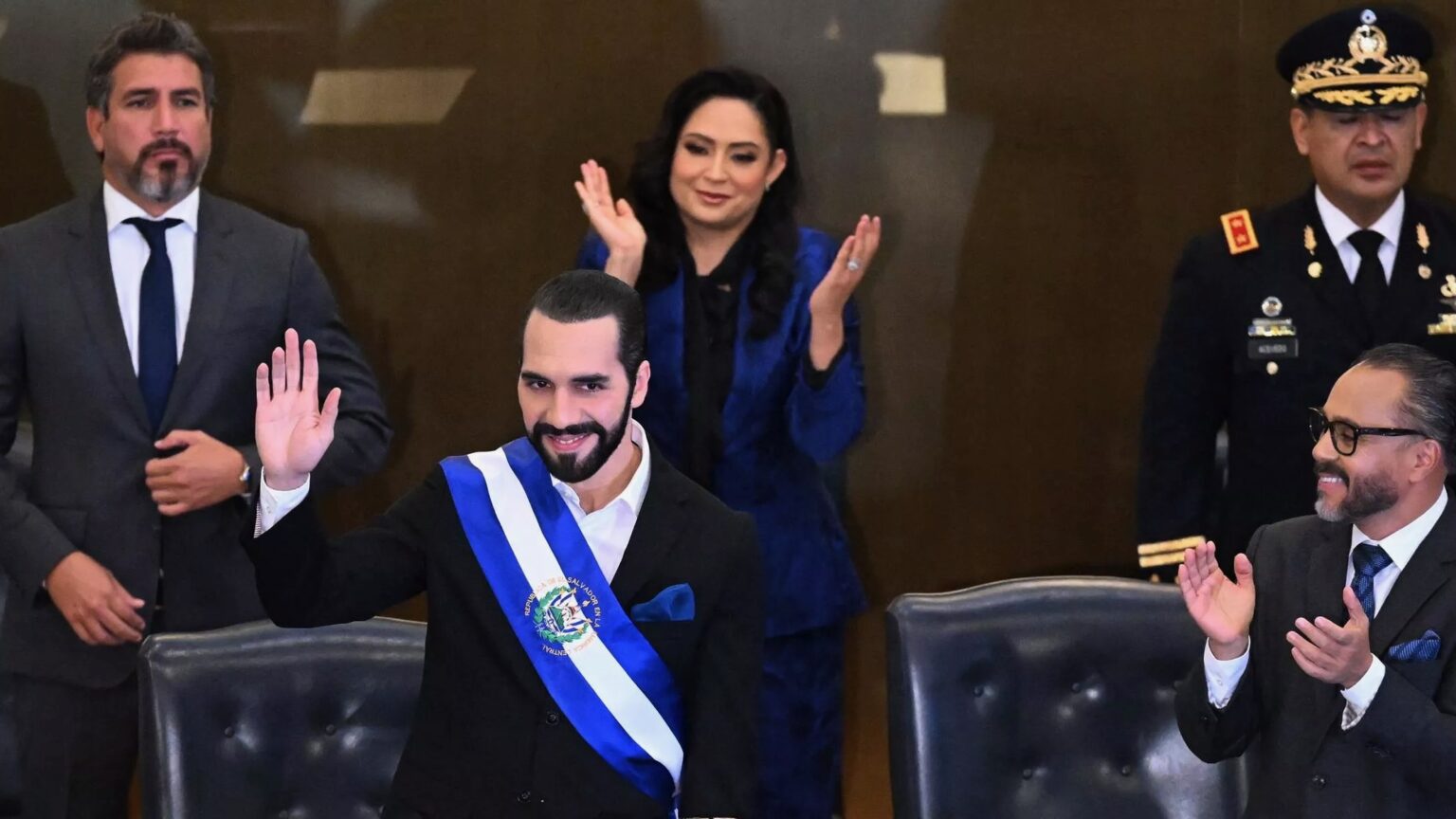
The government’s latest offensive came after the release of a documentary co-produced by PBS that allegedly exposes the deals Bukele is said to have struck with El Salvador’s most powerful gangs.
Last week, the online newspaper El Faro reported that the government of right-wing Salvadoran President Nayib Bukele froze the bank account and a property belonging to two partners of Trípode S.A., the company that founded and supports El Faro. According to the Ministry of Finance, the measure functions as collateral for alleged debts related to tax evasion.
However, the media outlet’s partners and journalists assert that this is yet another attempt to intimidate the press that has been critical of the Bukele administration and that, at its core, seeks to silence those who expose the right-wing government’s alleged acts of corruption.
The online newspaper El Faro has reported on numerous occasions that the government of right-wing President Nayib Bukele has launched several attacks against its journalists. It all began in 2020, when the president himself announced at a press conference that an investigation into the media outlet for money laundering would be launched.
Following that, the government conducted four audits to examine the source of the media outlet’s funding. Once it could not be proven that the funds were of illicit origin, the government pivoted to investigating the outlet for alleged tax evasion.
Carlos Dada, director of El Faro, told El País: “None of those audits has reached a final ruling; all are currently being litigated. We do not evade taxes. The taxes have been paid, and we have proven it.”
The allegations of deals between Bukele and the gangs
El Faro began facing increased pressure after it revealed alleged pacts between powerful Salvadoran gangs and various governments, including Bukele’s.
In May 2025, several leaders of the Barrio 18 gang claimed that their organization had engaged in negotiations with Bukele before he became president – that is, while he was mayor of San Salvador.
The recent attempt to financially strangle El Faro coincides with the release of a documentary titled “The Deal,” produced in collaboration with the US network PBS, which reconstructs the alleged agreements between the Bukele administration and the MS-13 and Barrio 18 gangs. This documentary has garnered hundreds of thousands of views in less than a month.
“Clearly, this is another step in the escalation we’ve been facing since 2020. Not only through legal channels, but also through economic strangulation, political attacks, false accusations, espionage, and the interception of our communications,” Dada told El País.
In 2023, after several years of investigations, threats of criminal trials, and audits that have proven nothing, the administrative structure was forced to relocate to Costa Rica. In 2022, the newspaper also reported that 22 of its staff members had been subjected to nearly 226 attempts to hack into their electronic devices using the Pegasus spyware.
“We conclude that at least 35 individuals from the media organizations El Faro, GatoEncerrado, La Prensa Gráfica, Revista Digital Disruptiva, Diario El Mundo, El Diario de Hoy, and two independent journalists were hacked using Pegasus. We also identified hacking against civil society organizations in El Salvador, including Fundación DTJ, Cristosal, and another NGO,” Citizen Lab states in a report on the spying on journalists and activists in El Salvador
According to a recent report by the Association of Journalists of El Salvador (APES), nearly 50 journalists and reporters have been forced into exile in 2025 for fear of being imprisoned by the Bukele administration, including the entire main editorial staff of El Faro. In addition, there have been more than 400 attacks against journalists by a government that appears to have no moral qualms about confronting the press with the force of the state.
In this regard,El Faro states in an article: “The government continues to criminalize journalists and media outlets that defy its propaganda. It is using the state apparatus, which is under the control of the Bukele family, to persecute critical voices.” A year after the forced exile of our staff from El Salvador, we have continued to practice journalism and investigate the government, through the publication of monthly magazines, weekly podcasts, international collaborations, and more gatherings of journalists, such as the Central American Journalism Forum.”
Finally, the newspaper stated: “We will continue to practice journalism with the commitment and rigor that has characterized us since 1998. But also with the certainty that, as long as we don’t stop, they won’t stop either.”
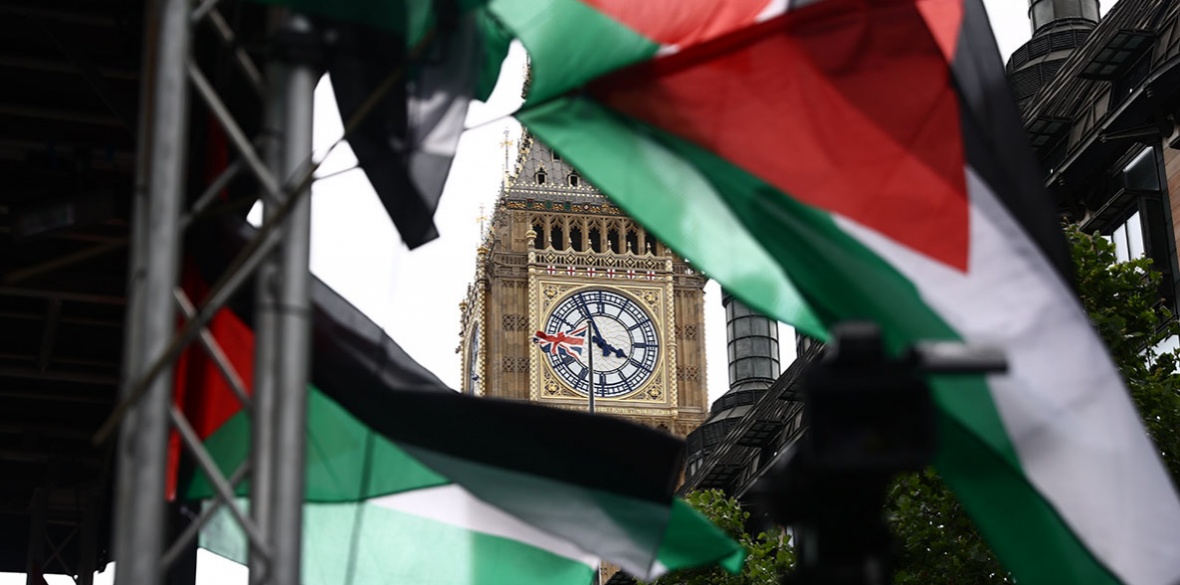
People take part in a pro-Palestine march in central London organised by the Palestine Solidarity Campaign, July 6, 2024
THE BBC has been urged not to give in to “cynical” attacks on a documentary on the Israeli invasion of Gaza, which it has pulled from iPlayer after criticism of its child narrator’s father being a Hamas official.
Gaza: How To Survive A War Zone is narrated by 13-year-old Abdullah, whose father is deputy minister of agriculture in Gaza’s Hamas government.
Last week Culture Secretary Lisa Nandy said she would raise this with the BBC’s director-general and chairman, “particularly around the way in which they sourced the people who were featured in the programme.”
A petition signed by socialist Jews including film-maker Mike Leigh, comedian and writer Alexei Sayle and actor Miriam Margolyes calls on the BBC to resist “censorship.”
The Institute of Economic Affairs has its headquarters on Lord North Street, Westminster. Credit: Des Blenkinsopp (CC BY-SA 2.0)
A senior figure at the influential Institute of Economic Affairs (IEA) think tank contributed to a new documentary that spread numerous myths about climate change.
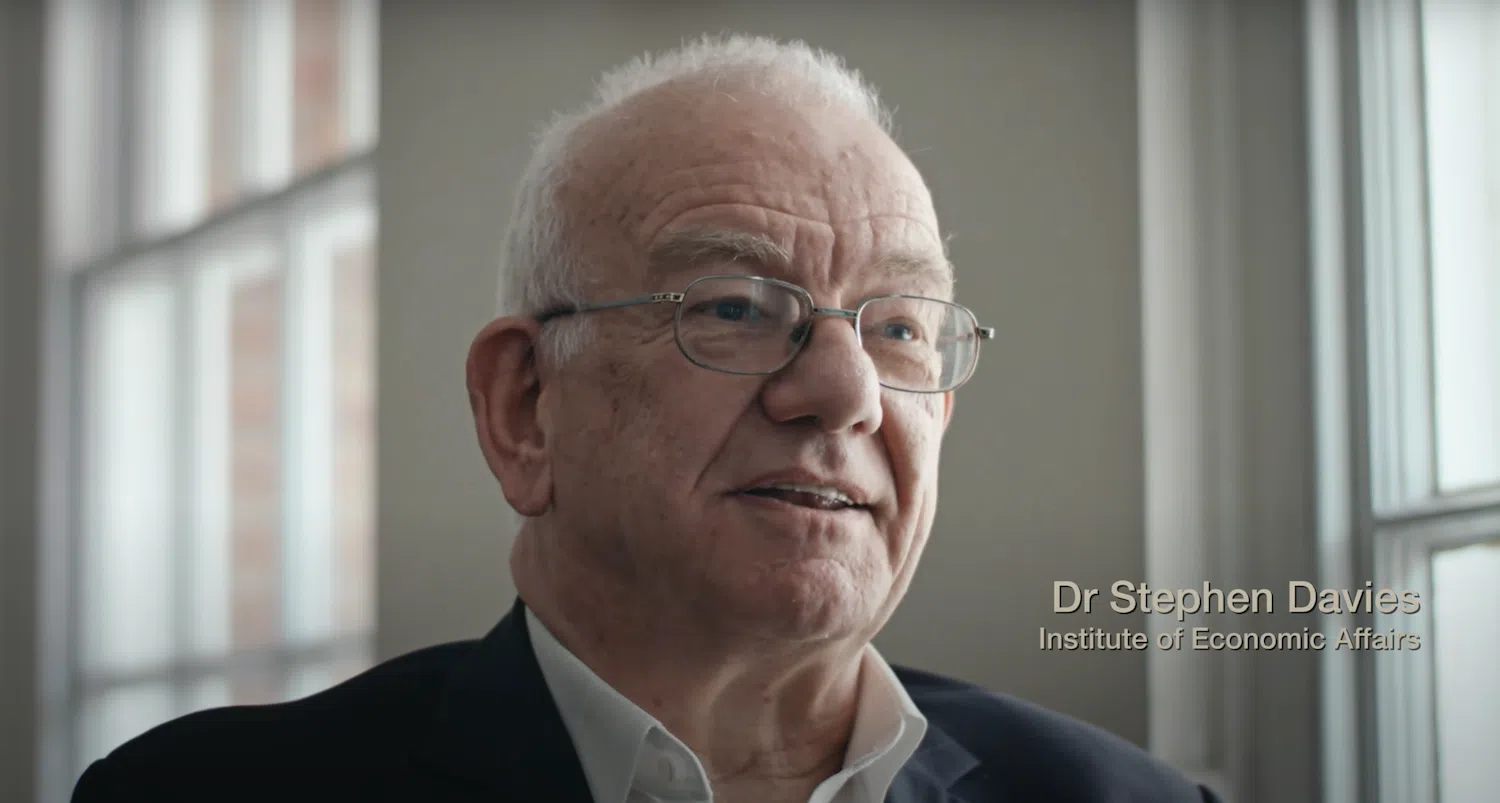
Stephen Davies, an academic who has worked in educational outreach roles at the IEA since 2010, appeared several times in Climate The Movie: The Cold Truth – a new film directed by climate science denier Martin Durkin.
In the documentary, Davies claims that climate activists want to impose an “austere” life on ordinary people. “Behind all the talk about a climate emergency, climate crisis” is “an animus and hostility towards” working-class people, “their lifestyle, their beliefs and a desire to change it by force if necessary,” he says.
According to the website Skeptical Science, which debunks climate misinformation, Climate The Movie contains more than two dozen myths about climate change. The film suggests that we shouldn’t be worried about greenhouse gas emissions, because plants need carbon dioxide. “We’re in a CO2 famine,” one interviewee claims.
The UN’s Intergovernmental Panel on Climate Change (IPCC), the world’s foremost climate science body, has stated that carbon dioxide “is responsible for most of global warming” since the late 19th century, which has increased the “severity and frequency of weather and climate extremes, like heat waves, heavy rains, and drought”.
Climate The Movie producer Thomas Nelson told DeSmog that “I see the misguided fight against carbon dioxide as being as crazy as fighting against oxygen or water vapour, and I think scaring innocent children about this is deeply evil”.
The IEA said that “Steve firmly believes that climate change is happening and carbon emissions are having an impact. His view that climate policy imposes costs, particularly on working-class communities, is entirely mainstream. IEA publications and spokespeople have supported action on climate change, including carbon pricing.”
A screenshot of Stephen Davies of the Institute of Economic Affairs in Climate The Movie: The Cold Truth. Credit: Climate The Movie / YouTube
In 2018, Greenpeace’s investigative journalism unit Unearthed revealed that the IEA had received funding from oil major BP every year since 1967. In response to the story, an IEA spokeswoman said: “It is surely uncontroversial that the IEA’s principles coincide with the interests of our donors.”
The IEA also received a £21,000 grant from U.S. oil major ExxonMobil in 2005.
The IEA has extensive influence in politics and the media. It was pivotal to Liz Truss’s short-lived premiership as prime minister, and has boasted of its access to Conservative ministers and MPs. During the year ending March 2023, the IEA appeared in the media on 5,265 occasions, a figure 43 percent higher than its previous peak in 2019.
The group has also received donations from a number of philanthropic trusts accused of channelling funds from the fossil fuel industry and helping to support climate science denial groups. The IEA is a member of the Atlas Network – an international collaboration of “extreme” free market groups that have been accused of promoting the interests of fossil fuel companies and other large corporations.
It’s not known if the IEA has received funding from BP since 2018.
The IEA is a prominent supporter of the continued and extended use of fossil fuels. The group has advocated for the ban to be lifted on fracking for shale gas, calling it the “moral and economic choice”. The IEA has also said that a ban on new North Sea oil and gas would be “madness”, has criticised the windfall tax imposed on North Sea oil and gas firms, and said that the government’s commitment to “max out” the UK’s fossil fuel reserves is a “welcome step”.
The IEA is part of the Tufton Street network – a cluster of libertarian think tanks and pressure groups that are in favour of more fossil fuel extraction and are opposed to state-led climate action. These groups are characterised by a lack of transparency over their sources of funding. The IEA does not publicly declare the names of its donors.
“From Brexit to Trussonomics, the IEA has consistently peddled and promoted destructive and damaging policies,” Green Party MP Caroline Lucas told DeSmog. “Yet perhaps nothing will prove more dangerous long term than the stream of climate denialism and calls to delay action that have been pouring out of Tufton Street for many years.
“Clearly the IEA is now ramping up its climate culture war and the Conservative Party has been following suit. The cross-party consensus on climate action we used to have in Parliament is under strain like never before.”
The IEA and Stephen Davies were approached for comment.
Climate The Movie
During the documentary, Davies suggests that action to reduce greenhouse gas emissions is being used to limit the freedom of individuals. He claims that climate activists want to impose “a much more austere simple kind of lifestyle” on people “in which the consumption choices of the great bulk of the population are controlled or even prohibited.”
Davies adds that: “What you have here is a classic example of class hypocrisy and self-interest masquerading as public spirited concern. You could take these kinds of green socialist more seriously if they lived off grid, they cut their own consumption down to the minimum, they never flew. Instead you get constant talk about how human consumption is destroying the planet but the people making all this talk show absolutely no signs of reducing their own.”
The documentary also features an interview with Benny Peiser, the director of the Global Warming Policy Foundation (GWPF) – the UK’s leading climate science denial group. Peiser has previously claimed that it would be “extraordinary anyone should think there is a climate crisis”, while the GWPF has expressed the view that carbon dioxide has been mischaracterised as pollution, when in fact it is a “benefit to the planet”.
The film was favourably reviewed by commentator Toby Young in The Spectator magazine, who described it as “a phenomenon”. Young has previously said that he’s sceptical about the idea of human-caused climate change.
The IPCC has stated it is “unequivocal that human influence has warmed the atmosphere, ocean and land”, while scientists at NASA have found that the last 10 years were the hottest on record. Earth’s average surface temperature in 2023 was the warmest since records began in 1880.
The IPCC has also warned that false and misleading information “undermines climate science and disregards risk and urgency” of climate action.
The documentary also features Claire Fox, a member of the House of Lords who was nominated for a peerage by former prime minister Boris Johnson in 2020.
Fox used the documentary to claim that, by tackling climate change, people will be forced to pay more “to simply live the lives that they were leading”.
She suggests that supporters of climate action are trying to “take away what we consider to be not luxuries but necessities.”
The UK’s Climate Change Committee, which advises the government on measures to achieve net zero emissions by 2050, estimates that the combined policies will cost less than one percent of the country’s national output.
The Office for Budget Responsibility, the UK’s independent economic forecaster, has also said that “the costs of failing to get climate change under control would be much larger than those of bringing emissions down to net zero”.
Claire Fox and the GWPF were approached for comment.
A Charitable Cause?
The IEA is a registered charity, meaning that it receives generous tax breaks.
The group justifies this charitable status partly on the basis of its educational outreach programme, which aims to “equip tomorrow’s leaders with a deep understanding of free market economics”.
The IEA claims that: “Our aim is to change the climate of opinion in the long term and our work with students is a key part of this.”
In the year ending March 2023, the group claimed to have engaged with 3,500 students and 1,200 teachers via its seminars, internships and summer schools.
Formerly the IEA’s head of education and now a senior education fellow, Davies is a senior member of the group’s outreach programme. He is the first person listed in the IEA’s student speakers brochure, which advertises the IEA staff members who are available to speak at schools or universities.
The brochure also lists the IEA’s chief operating officer Andy Mayer, who has said that the government should “get rid of” its target of achieving net zero emissions by 2050, which he called a “very hard left, socialist, central-planning model”.
The non-profit Good Law Project recently made a complaint to the Charity Commission about the IEA, claiming that the libertarian group had breached charity rules. Namely, the Good Law Project claims that the IEA is in breach of rules stating that charities must avoid presenting “biased and selective information in support of a preconceived point of view”.
The Charity Commission rejected this complaint, stating that: “We have assessed the concerns raised and have not identified concerns that the charity is acting outside of its objects or the Commission’s published guidance.”
Good Law Project campaigns manager Hannah Greer told DeSmog: “It won’t be a surprise to anyone that the IEA is cementing its role as a major mouthpiece for climate change scepticism. It’s a huge scandal that the IEA is still allowed to peddle fringe views under the guise of being an ‘educational charity’ while benefiting from taxpayer subsidies.
“This has been allowed to happen because we have seen alarming and unambiguous regulatory failure from the Charity Commission – who have been presented with evidence of how the IEA is flouting charity law, but have chosen to look the other way.”