Harvard set up worthless carbon offsetting scheme that sold millions of junk credits

Spread the love

Original article by Fin Johnston republished from TBIJ under a Creative Commons Attribution-NonCommercial-NoDerivs 3.0 Unported License.

Project has sold credits to EasyJet, British American Tobacco and Ernst & Young

A carbon offsetting project set up by Harvard University’s endowment fund has sold millions of junk credits to major international companies, the Bureau of Investigative Journalism (TBIJ) can reveal.

After establishing the scheme in 2012 on land it has bought in Uruguay, Harvard ended its involvement when it sold the land across two deals in 2017 and 2019 worth a combined $450m. But the project is still active today and has sold enough credits to have supposedly offset over 5 million tonnes of CO2 emissions – roughly equivalent to what a million cars would produce in a year.

EasyJet, British American Tobacco and Ernst & Young are all among the biggest buyers of credits from the project.

The current owner of the project told TBIJ it had received no revenues from sales of carbon credits to these companies. A spokesperson for the Harvard fund said it does not comment on individual investments.

The project was given the green light to sell carbon credits in 2012 by Verra, the carbon credit standards body. But in 2022 it was given a rating of zero by an agency that assesses the effectiveness of carbon offsetting schemes.

More from this investigation Tobacco giant’s ‘carbon neutral vape’ was offset with junk credits

The rating means that the credits, which should each represent one tonne of emissions avoided or removed from the atmosphere, represent no change. In other words, the project has had no effect on the environment at all.

The Guanaré Forest Plantations Project, a vast reforesting scheme, was set up following the 2006 purchase of an area of land in eastern Uruguay about the size of Washington DC. It was ultimately paid for by the university’s endowment fund, Harvard Management Company (HMC), a $50bn vehicle which invests to support research and student bursaries.

Though the land was bought through two companies set up by HMC, and the running of the project was outsourced to a Uruguayan forestry company, all the money made from sales of carbon credits went to the Harvard fund.

[section omitted: What is carbon offsetting?]

Carbon offsets allow companies to make up for the carbon emissions they create by paying to avoid or remove emissions elsewhere. Each carbon credit represents a ton of carbon dioxide either removed from the atmosphere or prevented from entering it in the first place.

Offsetting has been the subject of much debate. Some argue it is necessary and provides much-needed incentives for investors to channel their money into green initiatives. Others have said it offers polluting companies a way to avoid reducing their own greenhouse gas emissions.

The $2bn global market for carbon offsets has been hit by a number of recent scandals – with reports claiming that many credits do not represent genuine carbon reductions.

On day one of this year’s Cop climate talks in Baku, an early agreement was reached over rules around the creation of a global carbon market, in theory paving the way for rich countries to pay for cheap climate action abroad.

Among the project’s customers was British American Tobacco, which purchased 130,000 credits to offset emissions from its flagship product Vuse, marketed by the company as “the world’s first carbon neutral vape brand”.

The coffee company Lavazza also bought credits from the project to offset the emissions of a supposedly “carbon neutral” coffee capsule it launched in 2022.

Renoster, the agency that gave the project a zero rating, raised three criticisms of the scheme. The first hinged on a factor known as “additionality”, which exists to prevent companies from going about their normal business – for example running a commercial timber project – and selling carbon credits on top. If a project could run without carbon finance, then it cannot be considered additional.

Documents submitted to Verra state that the project’s objective is to create “high value” timber products. Renoster ruled that carbon finance had ultimately made no difference. “We believe that these trees were going to be planted regardless of the project,” it said.

The second criticism was that the scheme’s “baseline assumptions” were wrong. A baseline number is something given to every carbon offsetting project, against which its removals are measured. The project had a baseline of 0, meaning no emissions whatsoever would have been removed from the atmosphere if the scheme did not exist.

Renoster said that baseline was “not a reasonable assumption for the region” because large portions of nearby land were already being converted from pasture to eucalyptus plantations.

Renoster’s third criticism was that the project was unlikely to run its full course, which was projected to be 100 years.

“We do not believe that Guanaré’s carbon credits represent true emissions reductions,” Renoster’s chief science officer, Elias Ayrey, told TBIJ. “We would not consider carbon neutrality claims based on these particular credits to be legitimate.”

The current owners of the project said: “Carbon credits have been critical for achieving the rates of return that investors required when the project started.” They said this cash means they can let the trees grow for longer before they are harvested.

A second agency, BeZero Carbon, also assessed the project and raised similar concerns around additionality and baseline assumptions. It found that the project had a “low” likelihood of achieving the purported emissions avoidance or removal.

The project has also been criticised by World Rainforest Movement, an organisation that monitors the Uruguayan forestry industry, which said: “Industrial tree plantations in Uruguay have led to land concentration by a small group of corporations and investment funds. They replace an extremely important ecosystem – grasslands – to plant tree monocultures, destroying biodiversity and watersheds.”

A BAT spokesperson told TBIJ that its carbon neutrality claim was independently validated in 2021. Lavazza said it had removed the claims from its products and is dedicated to transparency in all its sustainability initiatives.

An EasyJet spokesperson told TBIJ that it transitioned away from offsetting in 2022 but until then “had robust due diligence processes in place”.

Ernst & Young said it selects offsetting projects which have been certified against internationally recognised standards and continues to work on its due diligence procedures. It said it retired all remaining credits in this project in 2023.

This story was updated on 20 November 2024 to clarify the response given to TBIJ by the Harvard fund.

Reporter: Fin Johnston
Global health editor: Fiona Walker
Deputy editor: Chrissie Giles
Editor: Franz Wild
Impact producer: Paul Eccles
Production editor: Alex Hess
Fact checker: Somesh Jha

TBIJ has a number of funders, a full list of which can be found here. None of our funders have any influence over editorial decisions or output.

Original article by Fin Johnston republished from TBIJ under a Creative Commons Attribution-NonCommercial-NoDerivs 3.0 Unported License.

Continue ReadingHarvard set up worthless carbon offsetting scheme that sold millions of junk credits

Airlines downplayed science on climate impact to block new regulations

Spread the love

Original article by Ben Webster and Lucas Amin republished from openDemocracy under a Creative Commons Attribution-NonCommercial 4.0 International licence.

Campaigners say the lobbying tactics used to argue against tougher measures on emissions echo those of the 20th century tobacco industry

Image of a dirty passenger aircraft

Airlines have been accused of using a “typical climate denialist” strategy after downplaying decades of scientific research on aviation emissions to block tougher regulations.

Campaigners said the lobbying tactics echoed those of the 20th century tobacco industry, which fought stricter measures by magnifying minor doubts on the health risks of smoking.

Documents obtained by openDemocracy show airlines and airports privately told the government there was too much uncertainty about the additional warming effects of flights to justify introducing new policies to tackle them.

But senior climate scientists contradicted the industry’s claims, saying the science is well established on what are known as aviation’s “non-CO2 effects”.

These are caused by emissions at high altitude of water, nitrous oxides, sulphur dioxide and particulate matter, with aircraft vapour trails, also known as contrails, a particular problem because they form clouds at high altitude that trap heat radiated from the Earth.

The Intergovernmental Panel on Climate Change estimated in a special report in 1999 that the total historic impact of aviation on the climate was two to four times greater than from its CO2 emissions alone.

Research in 2021 largely confirmed those findings and concluded aviation emissions were warming the climate at “approximately three times the rate of that associated with aviation CO2 emissions alone”. An EU study from 2020 also found non-CO2 emissions warm the planet about twice as much as CO2 emissions, but acknowledged there were “significant uncertainties”.

The Department for Transport considered regulating these non-CO2 impacts and asked for views on the issue in a consultation in 2021 on its proposed “Jet Zero strategy”.

Responses from airlines and airports, obtained under FOI by openDemocracy, reveal several used the same tactic of arguing the science was too uncertain to justify policies to address non-CO2 effects. Several recommended instead that the government should limit its action on the issue to funding further research into it.

‘A bit of a joke’

Airlines UK, a trade body that lobbies for airlines including British Airways (BA), easyJet and Virgin Atlantic, told the DfT that “the science around these [non-CO2 impacts] is not yet robust enough to form reduction targets”.

When asked during the Jet Zero consultation what could be done to tackle non-CO2 impacts, Ryanair said it was “too early to say until impact is better understood”.

Low-cost airline Wizz Air told the DfT: “There is too high a level of uncertainty of non-CO2 emission contribution to climate change for a policy to be formed.”

Airlines UK, Ryanair and Wizz – alongside others across the industry – called on the DfT to instead fund further research into the science of non-CO2 impacts.

The tactic appears to have worked, with the DfT announcing in the Jet Zero strategy last year that more work would be done with scientists and the industry to understand the issue.

The DfT did, however, say the government was “exploring whether and how non-CO2 impacts could be included in the scope of the UK ETS (emissions trading scheme)”.

Professor Piers Forster, an atmospheric physicist and member of the independent Climate Change Committee, told openDemocracy it was “completely wrong” for the aviation industry to claim the science on aviation’s non-CO2 effects was too uncertain to address them.

He said: “It’s a bit of a joke to say the effects are too uncertain to do anything about. We see their contrails and we’ve known for over 20 years that they are warming the planet. The industry should not hide behind uncertainty.”

He added that “the non-CO2 effects absolutely have to be accounted for in some way and action should be taken to reduce them”.

Milan Klöwer, a climate physicist at Massachusetts Institute of Technology, said airlines were adopting a “typical climate denialist strategy” by overstating the level of uncertainty about non-CO2 effects.

“Even in the best case they roughly double the effect of CO2 emissions on the climate,” he said.

He called on airlines to start accounting for their non CO2 effects and invest more in solutions, such as alternative fuels, which reduced those effects.

Rob Bryher, aviation campaigner at climate charity Possible, said: “These documents show that airlines cannot be trusted to decarbonise on their own. Demand management solutions like a frequent flyer levy, introducing fuel duty, carbon pricing, or management of airport capacity are going to be crucial.”

Matt Finch, UK policy manager of campaign group Transport & Environment, said: “Aviation’s non-CO2 impacts are somewhere between huge and absolutely massive. But the industry doesn’t want you to know that. Instead of confronting its environmental problems head-on, the industry copies the tobacco industry of the ’50s and the oil industry of the ’70s in casting doubt and disbelief around the science.”

BA said it was working with academics and experts on non-CO2 impacts of flying while Sustainable Aviation, an industry group that includes airlines, said it was committing to addressing them but reiterated more research was needed. Wizz Air said it was already addressing the impacts through a range of measures.

Some airlines ignore non-CO2 effects in schemes they support to help passengers calculate and offset the emissions of their flights.

BA’s emissions calculator states a one way flight from London Heathrow to New York emits 348kg CO2E (carbon dioxide equivalent) and charges £3.97 for offsetting.

Atmosfair, a German non-profit organisation which supports the decarbonisation of flying, calculates the same journey on a Boeing 777-200 – an aircraft type used by BA – emits 896kg and charges 21 euros (£18.37) for offsetting. Atmosfair’s emissions total comprises 308kg of CO2 emissions and 587 kg equivalent for “climate impact of contrails, ozone formation etc”.

While the DfT has so far failed to act on non-CO2 effects, they are mentioned in official advice to companies from the Department for Business Energy and Industrial Strategy on how to report their emissions.

It says: “Organisations should include the indirect effects of non-CO2 emissions when reporting air travel emissions to capture the full climate impact of their travel.”

A DfT spokesperson said: “Our Jet Zero Strategy confirmed our aim of addressing the non-CO2 impacts of aviation, by developing our understanding of their impact and possible solutions, and the UK is one of the leading countries working to address this issue.”

Sustainable Aviation Fuel

International Airlines Group (IAG), which owns BA, Vueling and Aer Lingus, told DfT’s Jet Zero consultation it could address non-CO2 emissions by supporting “sustainable aviation fuel” (SAF).

SAF is a jet fuel made from sources which the industry claims are sustainable, including cooking oil and animal fat. It performs in a similar way to kerosene but can produce up to 80% less CO2 depending on how it is made. It potentially also reduces contrails.

IAG told the Jet Zero consultation SAF was “the only viable solution for decarbonising medium and long haul flights”, which account for about 70% of global aviation emissions.

But further documents obtained by openDemocracy reveal IAG then lobbied the DfT to water down its SAF mandate.

In response to a separate consultation, IAG argued the SAF mandate should only cover flights within the UK or to the EU, and not the long haul flights on which British Airways makes most of its profits.

IAG also lobbied against a proposal to ban airlines from dodging the mandate by filling their tanks with cheap kerosene at overseas airports – a practice known as “tankering”.

A BBC Panorama investigation in 2019 revealed tankering by BA and other airlines was creating small financial savings but unnecessary carbon emissions.

IAG also argued against a proposal aimed at building demand for “power-to-liquid” jet fuel, which is produced by combining hydrogen made by renewable energy with carbon captured from the atmosphere.

Unlike other so-called sustainable jet fuels, power-to-liquid fuel does not involve a feedstock needed by other industries to decarbonise, such as used cooking oil or animal fat.

IAG called it “a very expensive pathway to directly decarbonise aviation”.

Sustainable Aviation, an industry group that includes airlines, said: “We are committed to addressing [non-CO2] impacts based on the scientific evidence, but further research is key to developing effective mitigation solutions, for example the use of sustainable aviation fuels (which contain lower contrail forming particulates), alongside steps such as optimising flight routes to avoid contrail formation.”

BA, IAG’s principal airline, said: “We are actively engaging with academics, experts within the industry and the government’s Jet Zero Council to take proactive steps to look into non-CO2 impact.”

Wizz Air said it was mitigating non-CO2 effects “through route optimisation and jet fuel improvements” and by using Airbus A321neo aircraft which reduced NOx emissions by 50%.

Ryanair did not respond to a request for comment.

Original article by Ben Webster and Lucas Amin republished from openDemocracy under a Creative Commons Attribution-NonCommercial 4.0 International licence.

Continue ReadingAirlines downplayed science on climate impact to block new regulations

UK government lets airlines off the hook for £300m air pollution bill

Spread the love

Original article by Lucas Amin and Ben Webster at openDemocracy republished under a Creative Commons Attribution-NonCommercial 4.0 International licence.

The government wrote off emissions equivalent to 400,000 passengers flying from London to Sydney and back in one year

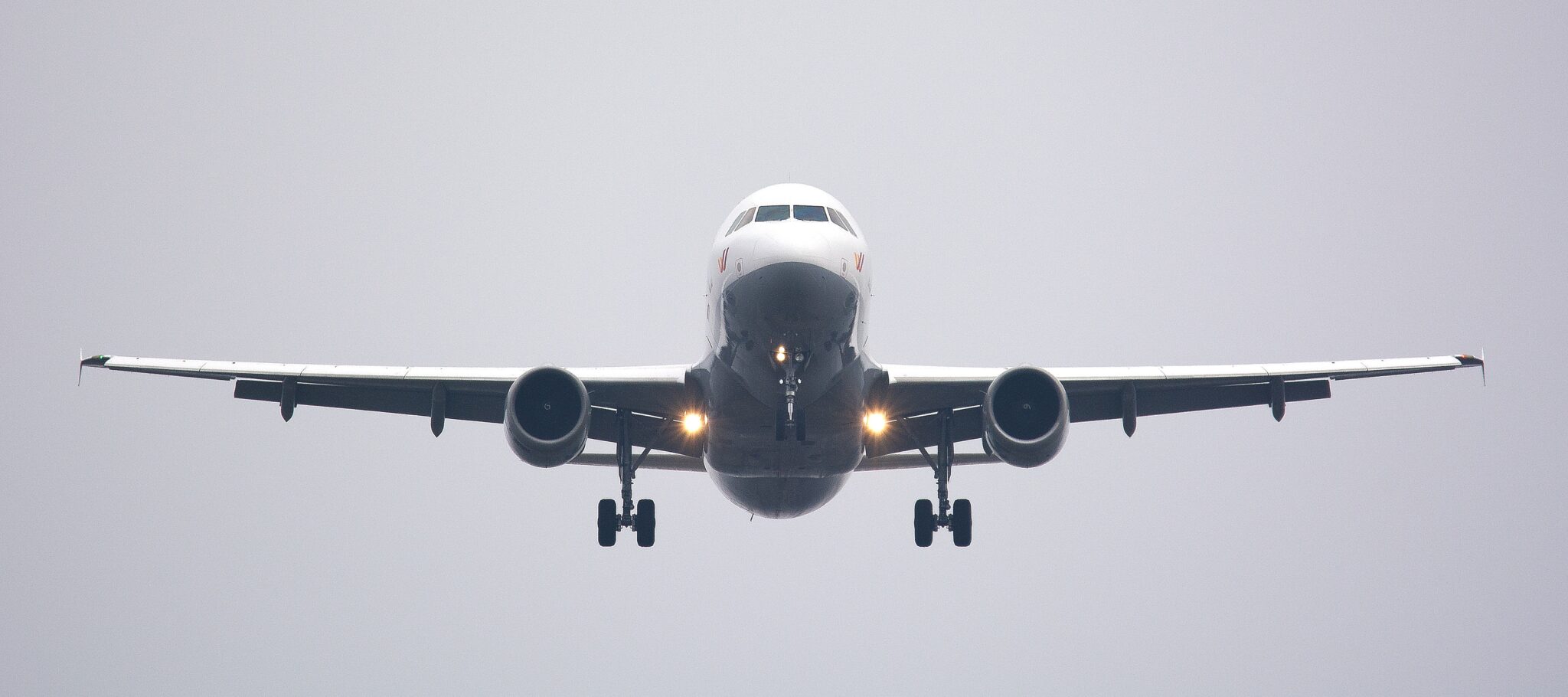
Photo by Pixabay from Pexels: https://www.pexels.com/photo/air-air-travel-airbus-aircraft-358319/

The government gave more than £300m worth of free ‘pollution permits’ to airline companies including British Airways, RyanAir and EasyJet under a scheme designed to tackle climate change.

The UK’s Emissions Trading Scheme is meant to reduce carbon emissions by forcing big polluters to buy a permit for each tonne of carbon they emit, with the money going into the public purse.

But data obtained by openDemocracy reveals the UK’s aviation sector was handed more than four million “pollution permits” last year, free of charge.

The 4.1 million tonnes of CO2 they represent are equivalent to the emissions of more than 400,000 passengers flying economy-class from London to Sydney and back. The free permits saved airlines the equivalent of £336m based on the annual average carbon price – 39% more than the previous year, 2021.

EasyJet, RyanAir and British Airways were the big winners of the handouts, bagging permits worth £84m, £73m and £58m respectively. The companies all made heavy losses during the pandemic but have since become profitable again: British Airways owner International Airlines Group (IAG) announced profits of £1.3bn last month, while RyanAir just enjoyed its “most profitable December quarter on record” and easyJet is reporting “record-breaking sales”.

openDemocracy has previously revealed how oil and gas companies including Shell and BP were similarly handed more than £1bn worth of free pollution permits during 2022.

Caroline Lucas, the Green MP for Brighton Pavilion, told openDemocracy the government was “letting aviation companies get away with it” and “forcing the public to pick up the tab”.

“Ministers must bring an end to these free pollution permits immediately, and make high-carbon companies pay for the climate-wrecking damage they’re causing,” she added.

The Department for Net Zero and Energy Security is now analysing the results of a consultation on phasing out free permits for the aviation sector – but policy changes will not take effect until at least 2026.

The government has already allocated 12.2 million free permits for the next three years, which at last year’s carbon price will be worth a further £965m.

A government spokesperson told openDemocracy the UK was giving away free permits because it was “committed to tackling climate change” but also to “protecting our industry from carbon leakage”.

But the risk of carbon leakage – when companies relocate to countries that do not have carbon pricing – is “minimal”, according to research commissioned by the government itself.

The study by Frontier Economics on behalf of the Department for Business, Energy and Industrial Strategy (BEIS) also found that ending permit giveaways would lead to a decrease in airline profits and improve market competition.

Daniele de Rao, an aviation expert at Carbon Market Watch, told openDemocracy: “Despite several studies showing that the risk of carbon leakage in the aviation sector is insignificant, airlines are still receiving an enormous amount of free allocation.

“The United Kingdom should apply the ‘polluters pay’ principle in its own ETS and, following the European Union’s example, should end the handout of free pollution permits to airlines as soon as possible.”

Matt Finch, UK policy manager of campaign group Transport & Environment, added: “The nation is up in arms about sewage pollution, but at the same time our government is paying airlines millions of pounds a year to pollute. Are these the actions of a climate leader? No. Free allowances should be phased out of the ETS as quickly as possible.”

The remaining £120m in free permits was carved up among the rest of the UK airline industry – with even the owners of private jets getting handouts.

Ineos Aviation, the company owned by oil and gas billionaire Jim Ratcliffe, was given free permits worth around £2,000.

The government has claimed that “our UK ETS is more ambitious than the EU system it replaces”.

But the EU has voted to phase out free permit allocations from 2026. It also redistributes the revenues raised by permit sales to environmental projects – whereas in the UK the proceeds are retained by the Treasury.

A government spokesperson told openDemocracy: “The UK is committed to tackling climate change while protecting our industry from carbon leakage. That is why a proportion of allowances are allocated for free to businesses under the UK Emissions Trading Scheme.”

They claimed handing free permits to airline giants would “support industry in the transition to net zero in the context of high global energy prices while incentivising long term decarbonisation”.

Whatever you’re interested in, there’s a free openDemocracy newsletter for you. HAVE A LOOK

Original article by Lucas Amin and Ben Webster at openDemocracy republished under a Creative Commons Attribution-NonCommercial 4.0 International licence.

Continue ReadingUK government lets airlines off the hook for £300m air pollution bill

Rishi Sunak cut air taxes and blocked climate levy after airline lobbying

Spread the love

Original article by Lucas Amin and Ben Webster republished from openDemocracy under a Creative Commons Attribution-NonCommercial 4.0 International licence.

Rishi Sunak halved has aviation tax on domestic flights 
| Liam McBurney/alenaohneva / Getty / Pexels. Composite by openDemocracy

Rishi Sunak slashed aviation tax on domestic flights and rejected a new ‘frequent flyer levy’ after lobbying by the airline industry, openDemocracy can reveal.

The decision to halve air passenger duty (APD), which takes effect next month, will mean more flights and less rail journeys in Britain – undermining the government’s net-zero commitment.

Clean transport campaigner Matt Finch, the director of Transport and Environment, told openDemocracy: “Simply taxing airlines in the same way that all other UK companies are taxed would bring in precious funds to the Treasury, and stop the ridiculous favouritism shown to airlines.”

He added: “It’s clear that the aviation sector gets preferential treatment from the government, but it’s unclear exactly why.”

In June 2021, when Sunak was chancellor, Ryanair’s director of route development told the Treasury that APD “should be abolished in order to stimulate immediate traffic growth”, documents obtained by openDemocracy under Freedom of Information law reveal.

Ryanair said it could offer “ultra-low” domestic fares if the tax was reduced. It has responded to Sunak’s cut by sharply increasing flights from London, adding three a day between the capital and Edinburgh and three a week to Newquay, Cornwall.

Responding to the Treasury’s June 2021 consultation on the plans, British Airways’ owner, International Airlines Group (IAG), and easyJet also said they supported APD tax cuts. IAG said “positive outcomes could include new routes, increased frequency and larger aircraft on existing routes as well as lower fares”.

EasyJet said: “Our analysis shows that if domestic APD is reduced by 50%, this would

support an overall 31% increase in domestic volume to 10.6 million passengers.”

But the UK’s rail industry warned that cutting air taxes would lead to 222,000 passengers shifting from rail to air each year, equivalent to an extra 1,000 domestic flights. The Rail Delivery Group said that reducing the cost of flying “runs counter to government’s legal commitment to decarbonise” and could increase carbon emissions by 27,000 tonnes a year.

Sunak ignored the warning and in October 2021 announced a 50% cut to APD on domestic flights, from £13 to £6.50.

It’s clear that the aviation sector gets preferential treatment from the government, but it’s unclear exactly why

Matt Finch, Transport and Environment

Silviya Barrett, the director of Policy and Research at Campaign for Better Transport, said: “In the context of the climate emergency, it’s hard to think of a more wrong-headed policy than making domestic flights cheaper. Not only will it encourage more polluting travel, but it will reduce revenue which could and should be invested in sustainable alternatives.”

France is taking the opposite approach by banning domestic flights between cities that are linked by a train journey of less than 2.5 hours.

The railway industry’s ability to compete with cheap flights was further undermined last week when the government increased rail fares by up to 5.9%, the biggest rise for 11 years.

The airline industry already benefits from the absence of tax on jet fuel and no VAT on airline tickets. A study last year estimated that taxing jet fuel in the UK at the same rate as road fuel would have raised £6.7bn in 2019. The sector generates around 8% of UK emissions.

Sunak, who now travels around Britain in a private jet, also rejected a recommendation to introduce a progressive tax on frequent flyers.

The Climate Change Committee has found that a “frequent flyer levy” –which makes those who fly more often pay progressively more tax – is a fairer way of taxing aviation.

Research shows that just 15% of Brits take 70% of flights.

It’s hard to think of a more wrong-headed policy than making domestic flights cheaper

Silviya Barrett, Campaign for Better Transport

Nine in ten people back the idea of a frequent flyer levy, according to a survey by conservation charity WWF and think tank Demos, but Ryanair told the Treasury not to do it.

Ryanair argued that a frequent flyer levy would be “likely only to punish passengers that have an ongoing practical requirement to fly frequently”, while IAG told the Treasury that “taxing aviation does not benefit the environment”.

Grahame Morris, a Labour member of the House of Commons Transport Select Committee, told openDemocracy: “It is counterintuitive of this government to remain committed to ‘Jet Zero’ by 2050 and at the same time to reject a frequent flyer levy while alternative sustainable aviation fuels to replace existing fossil fuels are still under development and evaluation.”

A government spokesperson said: “We are absolutely committed to levelling up the UK and delivering on our net-zero commitments, which is why from April we are cutting duty in half for flights within the UK, except for private jets, and introducing new higher rates of duty for ultra-long haul flights, ensuring that those who fly furthest contribute the most.

“In line with the tax policy-making process, we consulted on a frequent flyer levy in 2021, which a wide range of stakeholders fed into. Having considered views, including around privacy and data concerns of implementing such a levy, we concluded that Air Passenger Duty should remain the principal tax on the aviation sector.”

Original article by Lucas Amin and Ben Webster republished from openDemocracy under a Creative Commons Attribution-NonCommercial 4.0 International licence.

Continue ReadingRishi Sunak cut air taxes and blocked climate levy after airline lobbying