Interview: Prof Philippe Sands on UN court’s landmark climate-change hearing

Spread the love

This week, the international court of justice (ICJ) opened two weeks of hearings on states’ climate-related legal obligations – and the consequences, if “significant harm” is caused.

The case stems from a unanimous UN general assembly (UNGA) request for an “advisory opinion” from the ICJ.

It is taking place against a backdrop of rapidly escalating climate impacts. Emissions continue to rise, rather than falling rapidly, as needed to avoid dangerous levels of global warming.

It is the ICJ’s largest ever case, with more than 100 countries and international organisations making interventions, deploying a wide variety of legal arguments.

Ralph Regenvanu, climate envoy for Vanuatu, which led the campaign for the ICJ hearings, said in his opening address: “[T]his may well be the most consequential case in the history of humanity.”

Below, Carbon Brief interviews leading international law scholar Prof Philippe Sands – who drafted the pleadings for Mauritius, but is speaking here in a personal capacity – to find out more about the legal issues at stake and the wider significance of the ICJ case.

Carbon Brief: Would you be able to start by just situating this case in its wider legal context and explaining why it could be so consequential?

Philippe Sands: Well, it’s the first time the international court of justice has been called upon to address legal issues relating to climate change. The ICJ is the principal judicial organ of the United Nations and, although the advisory opinion that it hands down will not be binding on states, it is binding on all UN bodies. The determinations that the court makes will have consequences that go very far and that will have a particular authority, in legal and political terms. Of course, everything turns on what the court actually says.

CB: Would you be able to summarise the key legal arguments that are being fought over in this case?

PS: No! I mean, there’s just a huge number of issues that are coming up. But, essentially, the court has been asked two questions by the UN General Assembly – the first time, I believe, that a request from the General Assembly has been consensual, with no objections. The two questions are, firstly, what are the obligations for states under international law to protect the climate system? And, secondly, what are the legal consequences under these obligations, where, by their acts and emissions, [states] cause significant harm to the climate system? So, there are two distinct questions – and about 100 states and international organisations of various kinds have made submissions on the vast range of issues that are raised by these two questions. The questions are very, very broad and that signals to me that the court’s response may be quite general. But, for me, the crucial issues are, firstly, what the court says about the state of the science: is it established, or is there any room for doubt? Secondly, what are the obligations of states having regard to the clarity of the science? Thirdly, are there legal obligations on states in relation to the climate system that exist and arise outside of the treaty regime – the 1992 [UN Framework] convention [on climate change], the Kyoto Protocol, the Paris Agreement and so on and so forth. And, related to that, fourthly – this is the most intense, legally interesting aspect – what are the responsibilities of states for historic emissions under general international law? And, in particular, are the biggest contributors liable under international law to make good any damages that may arise from their historic actions? But, I mean, there’s just such a vast array of questions that are addressed, it’s impossible to summarise briefly.

… Article continues at https://www.carbonbrief.org/interview-prof-philippe-sands-on-un-courts-landmark-climate-change-hearing/
On climate change, the international court of justice faces a pivotal choice

Continue ReadingInterview: Prof Philippe Sands on UN court’s landmark climate-change hearing

‘Unacceptable’: Campaigners Decry Climate Finance Failures as COP29 Enters Final Hours

Spread the love

Original article by Eloise Goldsmith republished from Common Dreams under Creative Commons (CC BY-NC-ND 3.0).

Activists demonstrate against industrial agriculture and agribusiness lobbyists on day eight at the UNFCCC COP29 Climate Conference on November 19, 2024 in Baku, Azerbaijan. (Photo by Sean Gallup/Getty Images)

“By the end of the UN climate talks, we must see at least a trillion dollars in public finance on the table,” said one campaigner.

As the clock winds down at the UN climate summit taking place in Baku, Azerbaijan, green groups are sounding the alarm Thursday following the release of a draft climate finance deal that they say falls short of what’s needed to support climate-vulnerable countries and adequately address the planetary crisis.

“The clock is ticking. COP29 is now down to the wire,” said UN Secretary-General António Guterres on Thursday, just a day before the two-week conference is set to conclude.

Finance has been a major focus of this year’s summit. Under the 20125 Paris Agreement, countries are supposed to come up with a “new collective quantified goal”—or NCQG in COP jargon—that will govern how much money from rich countries will be transferred to developing countries in order to help the latter cut their emissions and adapt to climate change.

No equivalent climate finance arrangement has been agreed to before, though countries at the summit broadly agree that richer countries, who are responsible for much of historic CO2 emissions, should help poorer and more climate-vulnerable nations deal with natural disasters and their transition to green energy.

The draft text that dropped early Thursday, however, was received poorly.

Oxfam International’s climate justice lead, Safa’ Al Jayoussi, said “COP29 must do more than simply repeat the same threadbare promises. Rich countries have spent decades now stalling and blocking genuine progress on climate finance. This has left the Global South suffering the most catastrophic consequences of a climate crisis they did not create. The draft text scandalously misses the crucial element of declaring a clear public commitment to a new climate finance goal.”

Instead of specifying how much annually should be funneled towards developing countries via climate finance, the NCQG draft text displayed “X” in place of any actual figures or monetary commitments.

Oscar Soria, a director at the Common Initiative think tank, told the Guardian: “The negotiating placeholder ‘X’ for climate finance is a testament of the ineptitude from rich nations and emerging economies that are failing to find a workable solution for everyone.”

“By the end of the UN climate talks, we must see at least a trillion dollars in public finance on the table,” added Andreas Sieber, 350.org associate director of policy and campaigns. Economists told the summit attendees last week that developing countries need at least $1 trillion annually by 2030 to deal with climate change.

A specific and shared concern from campaigners was the draft text’s inclusion of carbon market schemes as a way “to scale up” climate finance. While the draft promotes “high-integrity voluntary carbon markets” and other “instruments that mobilize new sources of climate finance and private finance” as part of the equation, critics have long warned that these market-based approaches are nothing but false solutions designed to benefit corporate investors, wealthier nations, and the fossil fuel industry itself.

“Labelling carbon credits as climate finance—which they are unreservedly not—should be axed from the text or risk creating a dangerous escape route for polluters. The same goes for explicitly allowing investments in fossil fuel infrastructure. This is fundamentally incompatible with the goals of the Paris Agreement,” said Laurie van der Burg, Oil Change International’s global public finance manager, in response to the draft text.

While Article 6 of the Paris Agreement allows for the international transfer of carbon credits, groups warned the changes in the COP29 draft would dramatically strengthen the foothold of such schemes.

“Shockingly, COP29 is set to agree to carbon markets that are even worse than the voluntary carbon markets,” said Kirtana Chandrasekaran, a climate campaigner with Friends of the Earth International. “We know these markets have failed. They are riddled with fraud and they do not reduce emissions or provide finance. Communities everywhere and, in fact, the planet itself is on the line.”

Without addressing these concerns, advocates of a meaningful deal at the conference say COP29 is headed for failure.

As 350.org‘s Sieber argued, paying the “historic debt that rich countries owe will enable all nations to take action on climate at home and meet the collective goal agreed last year at COP28—to triple renewable energy, and transition away from fossil fuels. Right now, we only see cowardice and a void in leadership, ignoring the undeniable science that we can’t keep polluting our planet with dirty oil, gas and coal.”

“The time to course correct is now—the European Union and other rich countries must stop playing poker with the planet and humankind’s future at stake,” Sieber added. “It’s time to put their cards on the table and commit real, transformative funding—no more excuses, no more delays, it’s time.”

Original article by Eloise Goldsmith republished from Common Dreams under Creative Commons (CC BY-NC-ND 3.0).

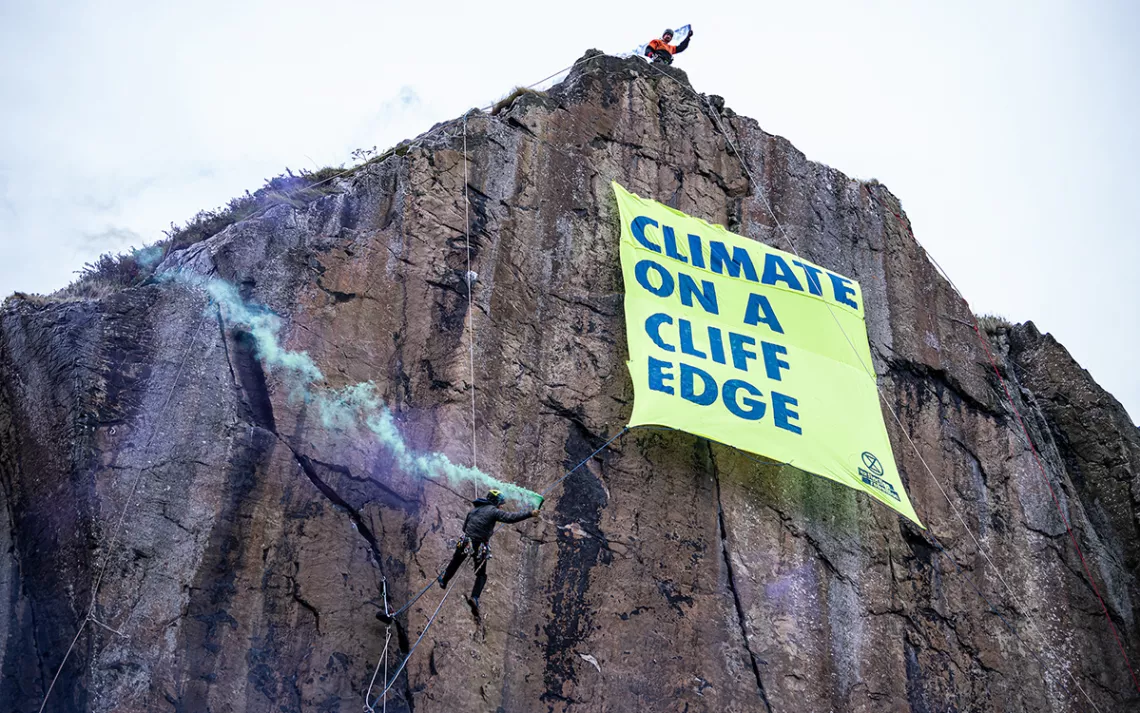
Experienced climbers scale a rock face near the historic Dumbarton castle in Glasgow, releasing a banner that reads “Climate on a Cliff Edge.” One activist, dressed as a globe, symbolically looms near the edge, while another plays the bagpipes on the shores below. | Photo courtesy of Extinction Rebellion and Mark Richards
Orcas comment on killer apes destroying the planet by continuing to burn fossil fuels. Second version, corrected text.
Continue Reading‘Unacceptable’: Campaigners Decry Climate Finance Failures as COP29 Enters Final Hours

The Climate Finance Plan Leaders Won’t Consider at COP29? Tax the Rich

Spread the love

Original article by Sam Pizzigati republished from Common Dreams under Creative Commons (CC BY-NC-ND 3.0).

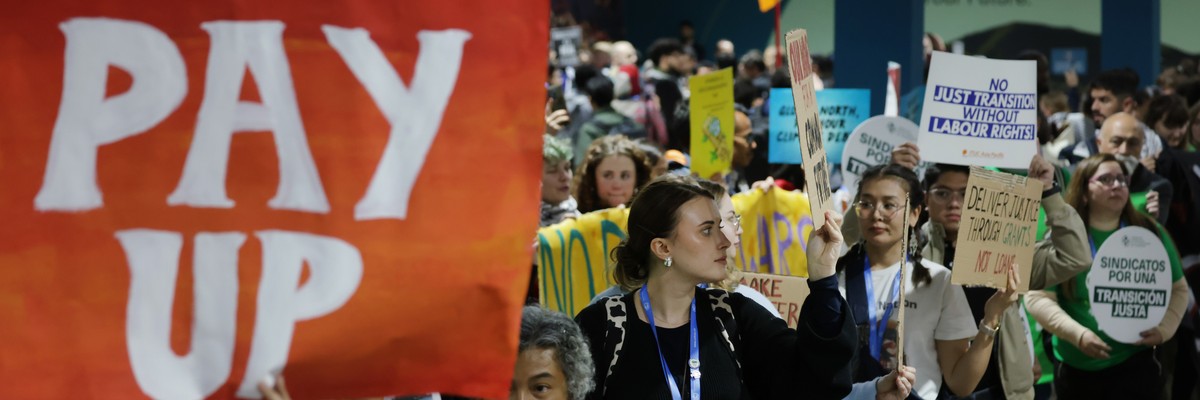
Activists gather with banners, including one that reads: “Pay Up,” outside the plenary halls to voice their demands for a variety of climate-related issues, including labour rights, Indigenous peoples’ rights, loss and damage financing, and the expulsion of fossil fuel lobbyists from the conference on day six at the UNFCCC COP29 Climate Conference on November 16, 2024 in Baku, Azerbaijan. (Photo: Sean Gallup/Getty Images)

A global 2% annual tax on billionaire wealth could raise $250 billion per year from just the world’s 100 richest families.

The world desperately needs to pull the plug on fossil fuels. So agree most of the official delegates from nearly 200 nations who have gathered this month by the Caspian Sea for the 29th annual global “Conference of the Parties” on climate change—COP29 for short—in Azerbaijan’s capital city Baku.

But not all the estimated 70,000 attendees at this year’s COP are practicing what they should be preaching. Private jet arrivals at Baku’s international airport, news reports note, have just doubled.

What makes that such a big deal? Practically nothing symbolizes wanton disregard for our Earth’s environment more dramatically than private jet travel. A corporate executive taking a single long-haul private jet flight, points out the Travel Smart Campaign’s Denise Auclair, “will burn more CO2 than several normal people do in an entire year.”

Instead of taxing the world’s wealthiest at higher levels, rich nations want to give their richest more opportunities to become ever richer.

Researchers at Oxfam have just gone through the flight records of 23 global billionaires. Those airborne souls averaged 184 private jet flights each over a recent single year. They each essentially circumnavigated the globe 10 times over. Their flights averaged 2,074 tons of carbon emissions, an outlay an average person globally would take 300 years to emit.

Extravagances like private jets help explain why global carbon emissions last year expanded by 1.3%. To get climate anywhere near under control, United Nations Secretary-General António Guterres noted on the eve of this month’s COP29 extravaganza, the world’s nations ought to be reducing carbon emissions by at least 9% a year.

“The world is still underestimating climate risks,” Guterres added. “It’s absolutely essential to reduce emissions drastically now.”

And that reducing will only unfold, the U.N. secretary-general emphasized in his COP29 opening remarks, if the world’s nations address the pivotal contribution to climate catastrophe that our world’s wealthiest are making.

“The rich cause the problem,” as Guterres explained, “the poor pay the highest price.”

Observers have tagged this year’s global environmental gathering the “climate finance COP.” The key question before all the official government delegates gathered in Baku: Who will actually pay the bill for addressing the climate change crisis?

Back in 2009, national delegations to that year’s COP gathering pledged to raise an overall annual $100 billion over the next 15 years. The world’s nations have since then met that target only once. Any new annual target for the next 15 years, most researchers and activists agree, needs to run considerably higher, anywhere from $500 billion to $5 trillion higher.

No one can reasonably expect governments alone, COP principals from rich nations counter, to come up with anywhere near that level of support. These rich-nation COP delegations want to encourage private investors to get more involved in financing new climate initiatives.

In other words, instead of taxing the world’s wealthiest at higher levels, rich nations want to give their richest more opportunities to become ever richer.

Nations rich with fossil fuels most heartily agree. The “onus” for financing moves to counter the climate crisis, COP29 President Mukhtar Babayev from Azerbaijan is arguing, “cannot fall entirely on government purses.”

Our globe’s richest nations would also like to expand the trading of “carbon credits,” transactions that let wealthy developed nations delay making costly emissions cuts at home by underwriting much less costly climate actions in poor nations.

But the offset projects that developed nations underwrite, The Guardiannotes, have regularly overpromised and underdelivered, leaving “wildfires burning through forests that were supposed to be protected and emissions from renewable energy projects being counted on balance books even though they would probably have been built anyway.”

This year’s CO29 conference will wrap up on November 22, and no serious climate change analyst is predicting any consensus that could significantly slow our globe’s ever more perilous progress to climate collapse. Developed nations, Bloomberg’s Mark Gongloff observes, remain “loath to pitch in more than $100 billion a year.”

“Transitioning the world to clean energy alone,” counters Gongloff, could actually cost $215 trillion by 2050.

How could the world make real progress toward those trillions? Guardian environmental editor Fiona Harvey earlier this week ran down some promising options.

Nations could for starters, Harvey notes, put a serious tax bite on the “unprecedented” profit bonanza that fossil fuel companies have enjoyed ever since Russia invaded Ukraine in 2022. Those companies have pocketed well over a quarter-trillion dollars in profits in the two years since.

Nations could also place new taxes on the jet flights our richest so enjoy or move to end the more than $650 billion spent annually in the developing world on subsidies for fossil fuels and polluting industries. Better yet, in a world where our five richest billionaires have more than doubled their wealth since 2020, we could adopt the 2% annual tax on billionaire wealth that Brazilian president Luiz Inácio Lula da Silva has proposed.

A global tax along that line could raise $250 billion per year from just the world’s 100 richest families.

The only sure thing about initiatives like these: No proposals that could make a real climate difference will get any serious attention at COP29, as the prime minister of Albania, Edi Rama, observed in his brief and biting remarks to conference-goers. Rama opened his address to COP29 by noting that he had decided to ditch his prepared remarks after spending some time in the conference’s leaders lounge.

The global notables in that lounge, Rama continued, had all gathered to “eat, drink, meet, and take photos together, while images of voiceless speeches from leaders play on and on and on in the background.”

“To me, this seems exactly like what happens in the real world every day,” he went on to explain. “Life goes on with its old habits, and our speeches, filled with good words about fighting climate change, change nothing.”

Concluded Rama, a former artist and the current chair of his nation’s Socialist Party: “What on Earth are we doing in this gathering, over and over and over, if there is no common political will on the horizon to go beyond words and unite for meaningful action?”

That inaction—in the face of overwhelming global public support for greater pro-climate action—continues to comfort our world’s most fantastically wealthy.

Original article by Sam Pizzigati republished from Common Dreams under Creative Commons (CC BY-NC-ND 3.0).

Continue ReadingThe Climate Finance Plan Leaders Won’t Consider at COP29? Tax the Rich

Keir Starmer says the UK can decarbonise without disruption – that’s neither true nor helpful

Spread the love
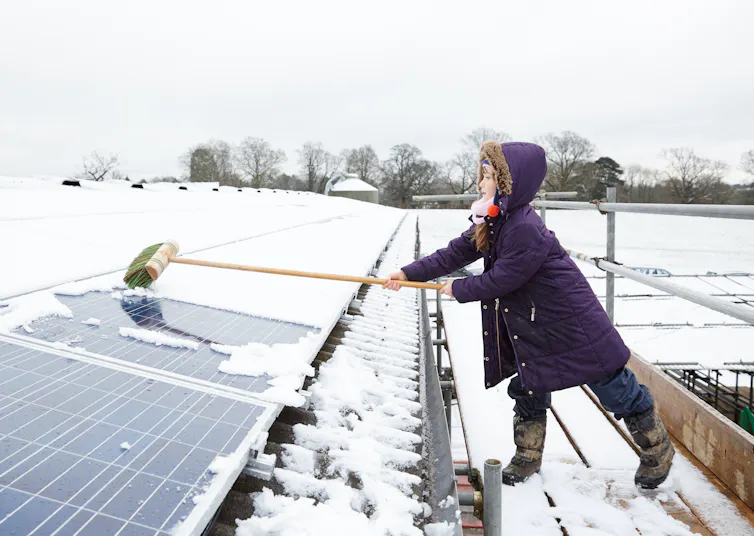
A young girl removes snow from a solar panel at a power plant in Balcombe, southern England. Oliver Rudkin, CC BY

Sam Hampton, University of Oxford and Lorraine Whitmarsh, University of Bath

Keir Starmer’s pledge to cut the UK’s emissions by 81% by 2035 is undoubtedly ambitious. However, his assertion at the Cop29 climate conference that it can be achieved without “telling people how to live their lives” is probably not true – at least, not according to what scientists who study this problem have found.

We are two such researchers. Our work concerns the lifestyle and behaviour changes needed to mitigate climate change and we argue that Starmer’s claim is not only unrealistic, it’s also potentially harmful to the prospects of effective climate action.

Many politicians, including Starmer, subscribe to the belief that technological advancements alone – more efficient wind turbines or electric vehicle batteries – will solve the climate crisis. This kind of “techno-optimism” is rife in government policy statements and strategies, but it is misplaced.

The latest scientific assessments, and our own research, show that systemic changes to society and the global economy are necessary to keep global warming at safe levels. While some progress has been made in shifting the supply of energy from fossil fuels to renewables (in the UK, renewables now account for 40% of electricity generation, though only 25% of total energy), far less attention has been paid to tackling demand – how we use energy and resources – which directly relates to people’s lifestyles and values.

Radically different lifestyles

Telling people “how to live their lives”, or more accurately, encouraging and enabling significant lifestyle changes, is essential for meeting climate targets. Most measures for reaching carbon targets in the UK will require changes to public behaviour. It’s the government’s job to make it easier, cheaper and advantageous for people to make those changes.

The necessary scale of this change is startling. To stay within the emissions budget consistent with limiting global warming to 1.5°C, the average UK carbon footprint must shrink from the equivalent of 8.5 to 2.5 tonnes of CO₂ by 2030.

This cannot be achieved through incremental change. It requires radically different lifestyles which involve flying less, eating more plant-based foods, wasting less and replacing boilers and combustion engines with heat pumps and electric vehicles.

Not everyone needs to change their lifestyle to the same extent. Those with the largest carbon footprints – typically the wealthiest people – need to make the most significant changes. As well as having a moral responsibility to act, wealthy people also have a greater capability to change and have more potential to influence wider change as organisational leaders and investors.

A line graph.
Emissions inequality exists within and between countries. International Energy Agency/Samuel Hampton

Change for the better

Not all climate action is sacrifice. Pro-environmental behaviour and lifestyle change can improve your wellbeing.

There is overwhelming evidence that climate action has health benefits, whether it is eating more plant-based food and less meat, or enjoying cleaner air as you walk or cycle instead of driving.

People with greener lifestyles also tend to be happier. Our international analysis found people who took more environmental action reported higher wellbeing. It can also help manage anxiety about the climate. In this sense going green is more likely to improve your quality of life rather than diminish it.

Importantly, research from numerous countries shows that there is public appetite for radical change. This includes not just a desire for governments and businesses to do more to address climate change, but also a willingness to make personal sacrifices. In a survey of 130,000 people randomly selected across across 125 countries, 69% said they would be willing to contribute 1% of their personal income to climate action.

Achieving the necessary changes to our lives and wider society will require more than public information campaigns (“telling people how to live their lives”, as Starmer calls it). These are what we call downstream approaches: they urge people to make different decisions but have been shown to have little effect in changing behaviour in the long term.

Instead, we need upstream approaches which change the array of options available to everyone. This could involve using regulations, taxes and subsidies to make low-carbon lifestyles easier, cheaper and more attractive to adopt. Most of these measures already enjoy public support.

While Starmer’s emissions target is commendable, his reluctance to discuss lifestyle changes is at odds with the scientific consensus. Tackling climate change effectively requires a shift to a more equal society, where happiness is prioritised over consumption. It necessitates radical behavioural changes, particularly from the wealthiest, and policies that enable these changes.


Imagine weekly climate newsletter

Don’t have time to read about climate change as much as you’d like?
Get our award-winning weekly roundup in your inbox instead. Every Wednesday, The Conversation’s environment editor writes Imagine, a short email that goes a little deeper into just one climate issue. Join the 40,000+ readers who’ve subscribed so far.


Sam Hampton, Researcher, Environmental Geography, University of Oxford and Lorraine Whitmarsh, Professor of Environmental Psychology, University of Bath

This article is republished from The Conversation under a Creative Commons license. Read the original article.

Continue ReadingKeir Starmer says the UK can decarbonise without disruption – that’s neither true nor helpful

‘We Don’t Give Up’: Climate Groups Resolute as Shell Wins Appeal Against Landmark Ruling

Spread the love

Original article by Jake Johnson republiahed form Common Dreams under Creative Commons (CC BY-NC-ND 3.0).

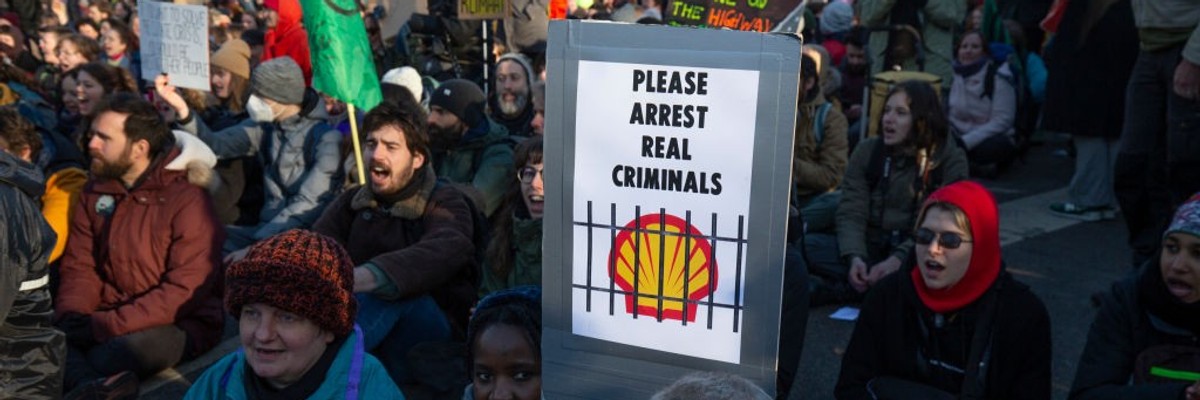
A protester holds a sign with a Shell logo during a demonstration on March 11, 2023 in The Hague, Netherlands. (Photo: Michel Porro/Getty Images)

“This setback will only help us grow stronger,” said the Dutch climate group that originally brought the case. “Large polluters are powerful. But united, we as people have the power to change them.”

Climate campaigners didn’t sugarcoat their reactions to a Dutch court decision on Tuesday that overturned a landmark 2021 ruling ordering the oil behemoth Shell to cut its planet-warming emissions nearly in half by the end of this decade.

“We are shocked by today’s judgment,” said Donald Pols, director of Milieudefensie, the Netherlands-based environmental group that originally filed suit against Shell in 2018.

“It is a setback for us, for the climate movement, and for millions of people around the world who worry about their future,” Pols said of Tuesday’s ruling by the Hague Court of Appeal. “But if there’s one thing to know about us, it’s that we don’t give up. This setback will only help us grow stronger. Large polluters are powerful. But united, we as people have the power to change them.”

The original 2021 ruling, as CNBC noted, marked “the first time in history that a company was found to have been legally obliged to align its policies with the Paris Agreement” and “sparked a wave of lawsuits against other fossil fuel companies.”

Despite acknowledging that Shell has “an obligation toward citizens to reduce CO2 emissions,” the appeals court on Tuesday scrapped a legal mandate compelling the company to slash its emissions by 45% by 2030 compared with 2019 levels, saying it was “unable to establish that the social standard of care entails an obligation for Shell to reduce its CO2 emissions by 45%, or some other percentage.”

“It is primarily up to the government to ensure the protection of human rights,” the court added.

Laurie van der Burg of Oil Change International said in response that “while we mourn today’s setback, the ruling establishes a responsibility for Big Oil and Gas to act that future litigation can build on.”

“The court ruled protection against climate change is a human right, and corporations have a responsibility to reduce their emissions,” she added. “As far as we know, this is the first case where a court has acknowledged that new investments in oil and gas are incompatible with international climate goals.”

“Today’s ruling underscores the importance of world leaders now negotiating at the U.N. Climate Summit in Baku taking responsibility.”

Shell, which is responsible for just over 2% of global CO2 emissions, said in a statement that it was “pleased” with the court’s ruling and claimed to be “making good progress in our strategy to deliver more value with less emissions.”

But research by the human rights organization Global Witness has found that Shell has consistently overstated the scale of its investments in green energy—including by characterizing fossil fuels as “renewable.”

“Even as Shell claims to be reducing its oil production, it is planning to grow its gas business by more than 20% over the next few years, leading to significant additional emissions,” Global Witness wrote in a complaint to the U.S. Securities and Exchange Commission last year.

Andy Palmen, the director of Greenpeace Netherlands, said Tuesday that while campaigners working toward a just phaseout of fossil fuel emissions are “disappointed that Shell is being allowed to continue polluting,” they “will not give up the fight.”

“This only motivates us more to take action against major polluters,” said Palmen. “It really gives hope that the court finds that Shell must respect human rights and has a duty to reduce its CO2 emissions.”

“Today’s ruling underscores the importance of world leaders now negotiating at the U.N. Climate Summit in Baku taking responsibility,” Palmen added, referring to the COP29 gathering that kicked off on Monday in Azerbaijan’s capital city. “The summit in Dubai last year marked the end of coal, oil, and gas, now governments must come up with concrete plans to move away from fossil fuels.”

The Dutch appeals court’s ruling came in the wake of new research showing that oil and gas production surged to an all-time high in 2023—the hottest year on record.

“The oil and gas industry is not transitioning,” the environmental group Urgewald and dozens of other NGOs found. “In fact, 95% of the upstream companies on [the Global Oil and Gas Exit List] are still exploring or developing new oil and gas resources. This includes the oil and gas producers TotalEnergies, Shell, BP, Eni, Equinor, OXY, OMV, and Ecopetrol, which all claim to be targeting net zero emissions by 2050.”

Nils Bartsch, head of oil and gas research at Urgewald, said Tuesday that the 2023 oil and gas production record is “deeply concerning.”

“If we do not end fossil fuel expansion and move towards a managed decline of oil and gas production,” said Bartsch, “the 1.5°C goal will be out of reach.”

Original article by Jake Johnson republiahed form Common Dreams under Creative Commons (CC BY-NC-ND 3.0).

Continue Reading‘We Don’t Give Up’: Climate Groups Resolute as Shell Wins Appeal Against Landmark Ruling