Canada Fossil Fuel Subsidies Hit $30 Billion Amid Pipeline Push, Study Reveals

Spread the love

Original article by Taylor Noakes republished from DeSmog.
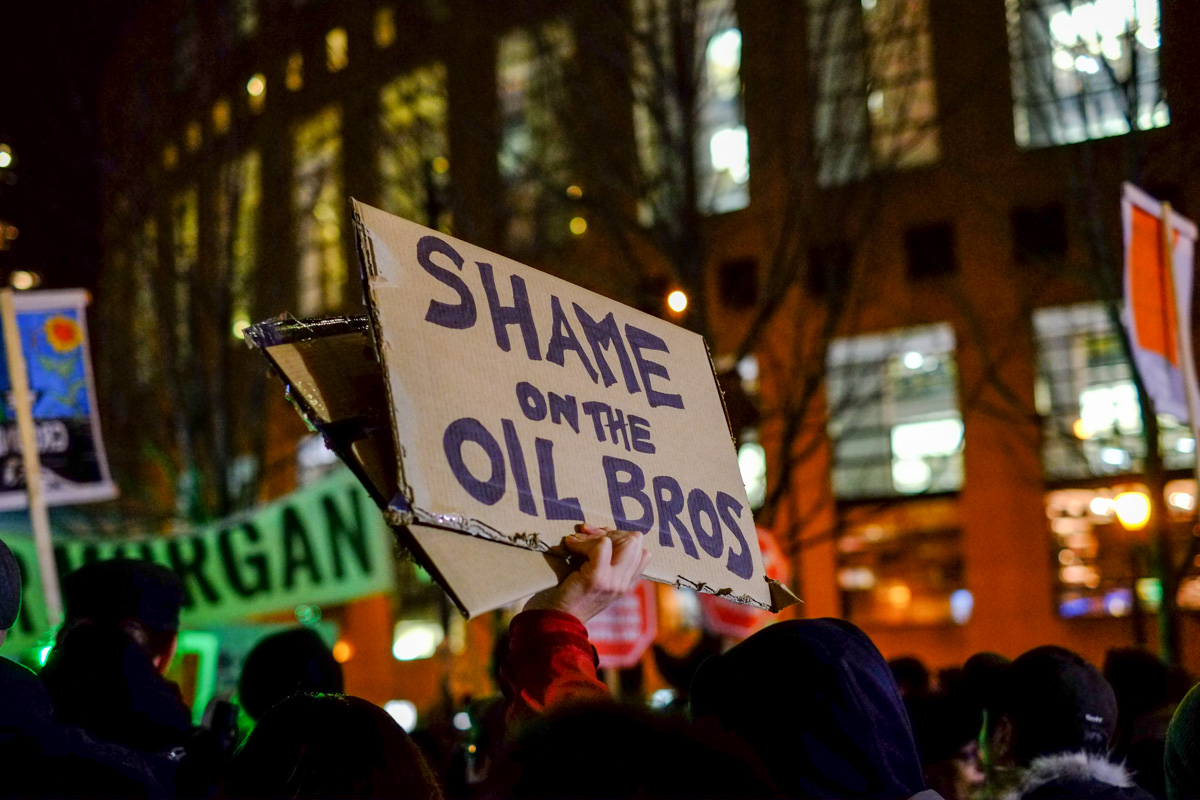
Shame Oil Bros on cardboard sign
Federal subsidies to the oil and gas sector totalled $74.6 billion over five years, Environmental Defence found. Credit: David Niddrie / Flickr (CC BY NC 2.0)

Amid trade war talk of expanding Canadian energy infrastructure, a new report reveals that direct Canadian subsidies to the fossil fuel and petrochemical sectors reached nearly $30 billion in 2024.

For comparison’s sake, Canada spent between $38 billion and $39 billion on defense in 2024. 
 
 “Oil and gas companies – emboldened by their influence over President Trump – are exploiting the current economic uncertainty to call on governments to double down on fossil fuels,” Julia Levin, associate director of national climate with nonprofit group Environmental Defence, which put out the report, said in a statement.

Levin notes that oil and gas companies have been vocal in their demand that politicians work to expand pipelines and related projects, and seek new export markets for Canadian fossil fuels. Meanwhile, Canadian taxpayers, who fund the companies’ subsidies, face the expensive consequences of climate change and related disasters.

In recent weeks, the chief executives of Canada’s major oil and gas companies — including Suncor, Cenovus, Enbridge, and Imperial — signed an open letter to the leaders of four of Canada’s major political parties. In it, they demand federal party leaders to eliminate regulations, emissions caps, tanker bans on the West Coast, and carbon levees on major emitters.

The open letter was endorsed by prominent Canadian conservatives, including Conservative Party leader Pierre Poilievre. Alberta Premier Danielle Smith recently repeated many of the same industry talking points in defending her taxpayer-funded trip to attend a controversial PragerU fundraiser where she shared a stage with far-right influencer Ben Shapiro.  
 
 Last month, Liberal leader Mark Carney indicated his interest in building new east-west pipelines, ostensibly to reduce dependence on foreign imports and develop new trade opportunities. 

“This push ignores the fact that fossil fuels come at a high price — not just at the pump, but through rising costs of groceries, worsening health outcomes, damage to property and huge government handouts,” said Levin in the statement. 

“It also ignores the rapid energy transition towards renewable energy that is happening globally.”

Among Environmental Defence’s principal findings is that the Canadian government spent $29.6 billion on the fossil fuel sector in 2024, which is nearly $6 billion more than what it would cost to build interprovincial grid connection infrastructure. Recent research from the International Institute for Sustainable Development suggests that a national electrical grid could lower electricity costs nationwide, create hundreds of thousands of new clean tech jobs, stabilize electricity costs, improve Canadians’ health, and provide Canada with the energy security currently threatened by the Trump trade war.
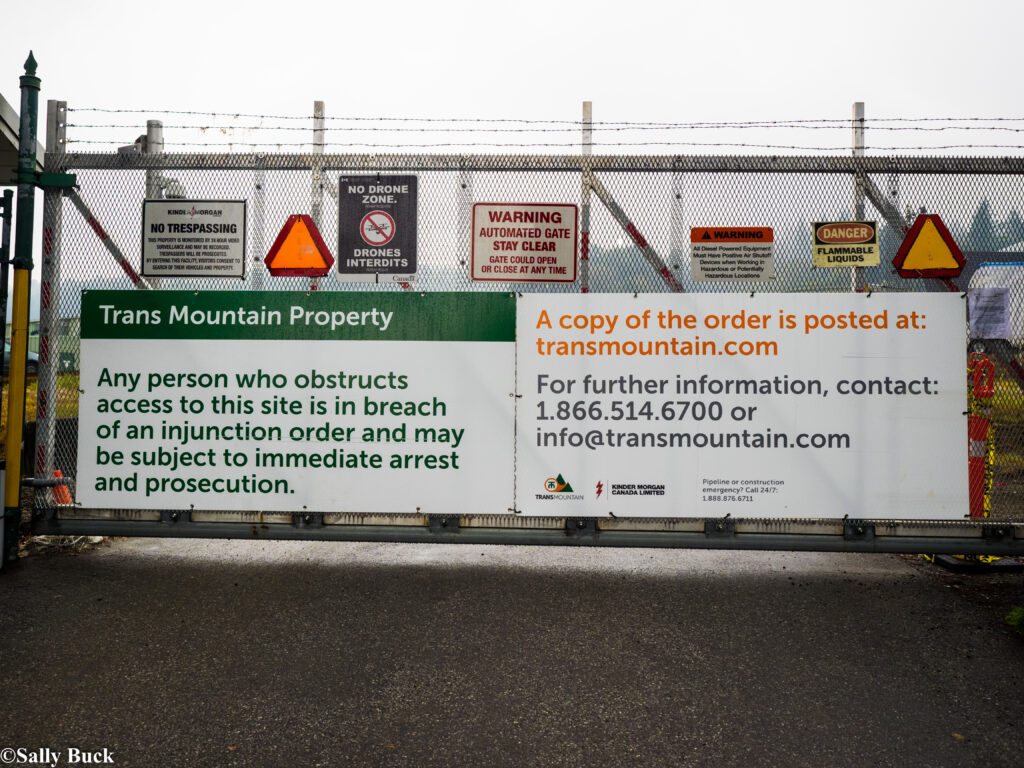
The Trans Mountain project has received $21 billion in government financing. Credit: Sally T. Buck / Flickr (CC BC NC ND 2.0)

Canada’s direct subsidies includes approximately $21 billion in financing for the Trans Mountain Pipeline, $7.5 billion from Export Development Canada (which included money for LNG and carbon capture, and financing for Canadian companies and companies and governments seeking to buy Canadian products), and another $700 million for LNG infrastructure.
 
Big Oil regularly promotes LNG and carbon capture as potential solutions for the climate crisis, though these arguments have been thoroughly debunked. LNG advocates in Canada often characterize it as a “bridge fuel” that could be used to help developing nations transition away from coal. Recent research indicates that the world’s two largest coal users — India and China — are in fact transitioning directly to renewable energy systems like solar and wind.

Moreover, LNG is a deadly fossil fuel that also happens to be resource intensive to produce, and often results in large volumes of methane emissions. Methane is estimated to be 80 times more potent a greenhouse gas than carbon dioxide. As for carbon capture, recent research from the Institute for Energy Economics and Financial Analysis poured cold water on Canada’s premier industry-driven carbon capture project — Pathways Alliance — determining that it is not financially viable and is unlikely to provide any environmental benefit. This determination is consistent with expert analyses of other carbon capture projects, both in Canada and globally.

Canada Has Given Away $74.6 Billion in Subsidies 

Environmental Defence estimates Canada spent $2.4 billion on carbon capture projects in 2024, more than in previous years.

The group’s report also determined that federal subsidies to the oil and gas sector over the last five years amounted to $74.6 billion. Their analysis of what constitutes federal fossil fuel funding includes direct grants, tax breaks, loans, and loan guarantees from the government of Canada and some federal agencies (such as Export Development Canada).

Despite oil industry claims that fossil fuel companies are investing in climate solutions (claims that have led the federal government to introduce anti-greenwashing legislation), Environmental Defence found that none of Canada’s four largest industry companies reported investments in climate initiatives or emissions reductions as part of their capital spending.

The report has also reveals that pollution created by oil and gas companies reached an estimated $53 billion in 2024. This includes increased health costs, property damage from extreme weather events, as well as decreased agricultural productivity, a consequence of changing weather patterns.

“The calls for a new oil pipeline pose real risks to Canadian taxpayers,” said Levin in an email to DeSmog, noting not only that global demand for oil is set to peak in the next four years and then significantly decline, but that oil demand is already showing signs of plateauing in major energy markets like China.

“No company is willing to bet its own money on what is guaranteed to quickly become a massive stranded asset,” said Levin. “Instead, oil and gas companies want taxpayers to pay the price for new fossil fuel infrastructure as their wealthy shareholders reap the rewards.”

Levin is particularly critical of the under reported fact that federal subsidies to the fossil fuel sector have deepened Canada’s economic vulnerability.

“The Canadian public is already on the hook for the new Trans Mountain Pipeline — to the tune of somewhere around $30 to $40 billion and rising. And the project has done nothing to reduce our dependence on the United States, with nearly half its oil still flowing south of the border,” she said.

Original article by Taylor Noakes republished from DeSmog.

Orcas comment on killer apes destroying the planet by continuing to burn fossil fuels.
Continue ReadingCanada Fossil Fuel Subsidies Hit $30 Billion Amid Pipeline Push, Study Reveals

Barclays’ billions of ‘sustainable’ finance for fossil fuel industry is greenwash, says investor

Spread the love

Original article by Josephine Moulds Nimra Shahid republished from TBIJ under a Creative Commons Attribution-NonCommercial-NoDerivs 3.0 Unported License.

The bank has funded the companies behind a controversial pipeline and aggressive oil expansion as part of their commitment to fighting climate change

Barclays has been branded “totally dishonest” by one of its investors for calling tens of billions of dollars for fossil fuel companies “sustainable finance”.

The UK high street bank says it is helping to address climate change by raising $1 trillion in sustainable and transition finance by 2030. This includes sustainability-linked loans and bonds, in which a company agrees to meet certain climate-related targets or else face a higher interest rate.

But these targets can be weak and the penalties for failing to meet them paltry. The company can also use the money raised how it sees fit, meaning supposedly sustainable finance could fund polluting activities.

Andrew Harper of Epworth, an investment manager owned by the Methodist church that invests in Barclays, said: “We’re concerned because the bank is making such a substantial claim and the public thinks the climate emergency is being worked towards being solved. Meanwhile, the problem is getting worse and worse. We think it’s totally dishonest.

“If they are calling the financing of any fossil fuel companies sustainable finance, that to me is greenwash.”

Barclays said: “We are committed to being transparent and report separately on the green finance, sustainable finance and the sustainability-linked finance mobilised towards our $1 trillion target, so stakeholders and investors have a clear understanding of what we are reporting.” It said it set out very clear requirements for energy clients’ targets and transition plans in order to access finance.

‘Deeply problematic’ deals

Barclays helped raise $41bn in sustainability-linked finance for fossil fuel companies last year, according to an analysis by the Bureau of Investigative Journalism of data from LSEG, the financial markets group. The $41bn figure covers the total value of the deals Barclays worked on alongside other banks. Barclays itself counts only the funding it is directly responsible for, which it said was $10.9bn across all sectors last year.

Katharina Lindmeier, responsible investments manager at the publicly owned workplace pension scheme Nest, which also invests in Barclays, said TBIJ’s findings were “very concerning”. She added: “We’ll be raising this research with their management team directly at the next opportunity.

“Regulators are looking closely at the issue of greenwashing and if there is any uncertainty, it’s better to be cautious than to mislead customers. Any loans which help companies expand oil and gas infrastructure should not be classed as sustainable.”

The Financial Conduct Authority, the UK regulator, wrote to banks last year highlighting concerns about this type of loan, including weak incentives, potential conflicts of interest, and low ambition. It said that these may lead to accusations of greenwashing.

Anders Schelde, chief investment officer of AkademikerPension, another Barclays investor, said sustainability-linked finance for oil and gas companies is “in most cases deeply problematic”. He said: “We don’t count sustainability-linked bonds and loans as green investments in our own accounting because we know there are so many problems with them. The penalties are low and the targets often insufficient.”

Last year, Barclays helped raise $3bn worth of sustainability-linked loans and bonds for Enbridge, a company that is dramatically expanding oil and gas infrastructure across North America.

Enbridge is behind the construction of a controversial 1,000-mile pipeline that cuts through Indigenous land in the US to pump tar sands oil. It paid US police to crack down on protesters and has been fined millions of dollars for repeated environmental violations.

Barclays classifies the Enbridge debt as sustainable because the company has set a target to cut emissions from its own operations. In part, it intends to do this by using solar power to pump oil through its pipelines.

“The real source of emissions from a company like Enbridge will be from the oil and gas its pipelines help transport,” said Jeanne Martin from responsible investment charity ShareAction. “We do not need greener pipelines, we need to stop the reckless expansion of the fossil fuel industry.

“If the conditions that a bank sets to provide financing to oil and gas transport companies don’t tackle oil and gas, the bank will be accused of greenwashing.”

Barclays also helped raise a $2.8bn sustainability-linked loan for Harbour Energy, the UK’s largest oil and gas producer. Harbour extracted the equivalent of nearly 70m barrels of oil last year, which if burned would produce the equivalent of eight coal-fired power stations’ annual emissions.

Scientists agree that developing any new oil and gas fields will derail climate targets and push global heating beyond 1.5 degrees – which the UN says will threaten lives, food sources and economies worldwide.

It seems that Harbour is aggressively exploring for new oil and gas as it hopes to extract a further 880 million barrels of reserves in the coming decades. It does not appear from Harbour’s public statements that the company has any plans to shift its focus to renewables.

Yet Barclays’ loan to Harbour Energy is called sustainable because the company has committed to reducing emissions from the process of extracting oil and gas. This, however, takes no account of the vast majority of Harbour’s emissions, which are generated from burning the oil and gas itself.

Enbridge paid US police to crack down on protesters opposing its Line 3 pipeline
Nicole Neri/Bloomberg via Getty Images

The notorious oil trader Trafigura also benefited from more than $5.4bn in loans that Barclays called sustainable finance. Counting its supply chain and all the emissions generated by the oil it trades and transports, Trafigura was responsible for more greenhouse gas emissions last year than Spain.

Trafigura’s interest payments are linked to certain sustainability targets, including a pledge to cut emissions – but only from its own operations rather than the burning of the fuels it trades and transports. This accounts for about 1% of the company’s total emissions.

Trafigura said Barclays was one of 54 banks involved in the deal, and said “sustainability-linked loans are an important tool in incentivising reductions in emissions”. It added that its direct emissions were less than 1% of Spain’s. While it reports its indirect emissions, it does not consider all of them “to be within our current sphere of influence”.

Enbridge said it takes climate change seriously and is committed to reducing its greenhouse gas emissions. It said sustainability-linked finance plays an important role in meeting emission-reduction goals and supporting the transition to a lower carbon economy. The company also said that the 1,000-mile Line 3 pipeline had local and tribal approvals and met the strictest environmental standards, and that payments to law enforcement were made and administered via a third party.

Harbour did not respond to a request for comment.

Barclays said: “Sustainability linked loans and bonds are an important sustainable finance tool, incentivising borrowers, particularly in hard to abate sectors, to achieve sustainability objectives over time.”

Net-zero banking

Barclays has committed to cut its emissions – including of the companies it finances – to net zero by 2050. To reach this target, it will have to stop providing money to companies that refuse to shift away from fossil fuels.

Enbridge’s Line 3 project cuts through Indigenous land
Tim Evans/Bloomberg via Getty Images

But a report out today shows that the bank’s funding for fossil fuels increased in 2023 from 2022, which troubled shareholders who have been urging it to reduce lending in line with its climate targets. Barclays was Europe’s top funder of the fossil fuel industry last year, according to the report led by the Rainforest Action Network.

Lindmeier, the Nest investment manager, said: “We want to see Barclays immediately reduce its financing to companies behind new fossil fuel expansion. Any delays could leave the company more exposed to bad loans and potentially cost them millions of pounds.”

Laura Hillis from the Church of England pensions board, another Barclays investor, said: “We are looking for banks to produce a clear climate plan and to see the commitments carry through into lending decisions. Our concern is that these fossil fuel financing figures show that is not happening at the pace we’d like.”

Climate-conscious investors have been putting pressure on Barclays to make good on its net-zero pledge and earlier this year the bank committed to stop providing specific project finance for oil and gas expansion and related infrastructure.

However, less than 2% of Barclays’ funding for oil and gas last year fell under the label of “project finance”. Almost all of it comes in the form of general, unrestricted finance for the companies undertaking those projects.

“Barclays’ new oil and gas policy is an important step forward for the bank but it should have gone so much further,” said Martin from ShareAction, which brought together Barclays shareholders to urge the bank to restrict lending to oil and gas companies.

“Ultimately, the bank has kept the right to finance companies that have plans to massively expand the fossil fuel industry with no strings attached, and that’s a real problem.”

Original article by Josephine Moulds Nimra Shahid republished from TBIJ under a Creative Commons Attribution-NonCommercial-NoDerivs 3.0 Unported License.

Continue ReadingBarclays’ billions of ‘sustainable’ finance for fossil fuel industry is greenwash, says investor