‘Never-ending’ UK rain made 10 times more likely by climate crisis, study says

Spread the love

https://www.theguardian.com/world/article/2024/may/22/never-ending-uk-rain-10-times-more-likely-climate-crisis-study

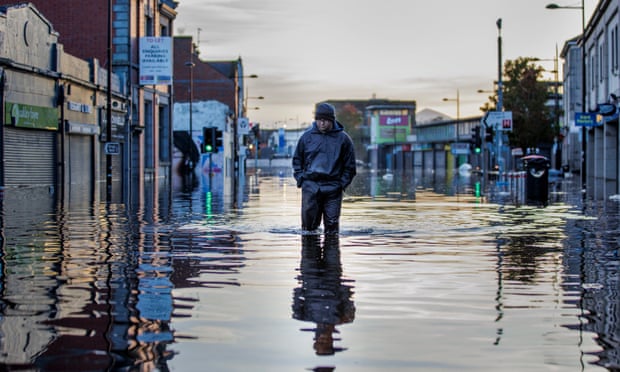
A man wades through flood water in Downpatrick, Northern Ireland, in November. Photograph: Liam McBurney/PA

Winter downpours also made 20% wetter and will occur every three years without urgent carbon cuts, experts warn

The seemingly “never-ending” rain last autumn and winter in the UK and Ireland was made 10 times more likely and 20% wetter by human-caused global heating, a study has found.

More than a dozen storms battered the region in quick succession between October and March, which was the second-wettest such period in nearly two centuries of records. The downpour led to severe floods, at least 20 deaths, severe damage to homes and infrastructure, power blackouts, travel cancellations, and heavy losses of crops and livestock.

The level of rain caused by the storms would have occurred just once in 50 years without the climate crisis, but is now expected every five years owing to 1.2C of global heating reached in recent years. If fossil fuel burning is not rapidly cut and the global temperature reaches 2C in the next decade or two, such severe wet weather would occur every three years on average, the analysis showed.

The experts behind the study warned that work to protect the populations of the UK and Ireland was still “sorely lacking” and poor and vulnerable people were hardest hit. For example, dehumidifiers provided to dry out flooded homes were not used by some because of high energy costs, while others could not afford to replace losses of frozen food after storms cut power supplies.

The analysis, conducted by climate scientists working as part of the World Weather Attribution group, compared how likely and how intense the wet winter was in today’s heated world with how likely it would have been in a world without high levels of carbon emissions. Warmer air can hold more water vapour and therefore produce more rain. Hundreds of “attribution studies” have shown how global heating is already supercharging extreme weather such as heatwaves, wildfires, droughts and storms across the world.

“The seemingly never-ending rainfall this autumn and winter across the UK and Ireland had notable impacts,” said Dr Mark McCarthy, a climate scientist at the UK Met Office and part of the WWA team. “In the future we can expect further increases – that’s why it is so important for us to adapt to our changing climate and become more resilient.”

Dr Sarah Kew, a researcher at the Royal Netherlands Meteorological Institute and also part of the WWA team, said: “The UK and Ireland face a wetter, damper and mouldier future due to climate change. Until the world reduces emissions to net zero, the climate will continue to warm, and rainfall in the UK and Ireland will continue to get heavier.”

Article continues at https://www.theguardian.com/world/article/2024/may/22/never-ending-uk-rain-10-times-more-likely-climate-crisis-study

Continue Reading‘Never-ending’ UK rain made 10 times more likely by climate crisis, study says

South Asia sizzles: Record heatwave and extreme weather blamed on climate crisis

Spread the love

https://globalvoices.org/2024/05/06/south-asia-sizzles-record-heatwave-and-extreme-weather-blamed-on-climate-crisis/#

Screenshot from YouTube video by Abhi and Niyu via Zoom.Earth. April 7, 2024. Fair use.

A scorching heatwave is ravaging South and Southeast Asia, impacting hundreds of millions with its intense heat. With April temperatures shattering previous records, the region is witnessing extreme weather patterns, wildfires, and tragic heat-related deaths. Schools have been forced to close, agricultural production and storage of perishable foods have been disrupted, and the risk of heatstroke and other health problems has risen significantly.

Climate scientist Roxy Koll tweeted:

The scientists attribute the heatwave to the diminishing influence of the 2023–2024 El Niño event, which started in July 2023.

Forest fires and heatstroke deaths in Bangladesh

Bangladesh has experienced increasingly extreme weather conditions in recent years, and April 2024 stands out as the hottest month since 1948, with average temperatures ranging from 40–42 degrees Celsius (104–107.6 degrees Fahrenheit) in over 80 percent of the country.

Climate journalist Rafiqul Montu posted on X (formerly Twitter):

Wildfires erupt amid extreme heat and dry conditions

Typically in April, Bangladesh receives 130.2 millimetres of rain, however, this year, there was almost none. The government announced the closure of government schools affecting 33 million students nationwide, while private schools with better facilities transitioned to online education. In just one week of April, over 10 deaths across the country were attributed to heatstroke.

However, the most notable impact was the wildfires in different parts of the Sundarbans Reserve Forest, the world’s largest mangrove forest. Sundarbans is a remote area, lacking adequate firefighting resources nearby. The Forest Department, along with fire service personnel, local villagers, and other volunteers, could only start firefighting efforts 17 hours after the first fire. As of the time of writing this report, a significant portion of the huge fire in the Amurbunia area of the Chandpai range is still burning, posing a threat to its rich biodiversity.

Article continues at https://globalvoices.org/2024/05/06/south-asia-sizzles-record-heatwave-and-extreme-weather-blamed-on-climate-crisis/#

Continue ReadingSouth Asia sizzles: Record heatwave and extreme weather blamed on climate crisis