ExxonMobil Plans to Keep an Entire Generation on the Hook for Its Climate Destruction

Spread the love

Original article by Allie Lindstrom republished from Common Dreams under Creative Commons (CC BY-NC-ND 3.0).

ExxonMobil CEO Darren Woods sits during testimony before the U.S House Committee on Oversight and Reform on October 28, 2021.  (Photo: Screenshot/C-SPAN)

Public pensions must exit Exxon to protect workers’ savings and retirement.

It is no secret that ExxonMobil poses some of the most powerful opposition to climate action at every level of government. Environmentalists have long pointed out that Exxon Knew about climate change, and instead of pivoting their business model to a more sustainable energy future, buried the evidence and began a decades-long disinformation campaign.

Leaders across the country have wisened up to the oil major’s dirty politics, which is why the House Oversight Committee has been investigating Exxon and its peers, and state attorneys general have sued the company for damages. Most recently, California AG Rob Bonta, alongside environmental organizations like the Sierra Club, sued the company for lying to the public about the recyclability of plastics.

If the tide is turning against Exxon, why haven’t investors caught on?

Unrestricted funding for companies engaged in fossil fuel expansion threatens workers’ right to dignified retirement safety, a right that unions have fought hard to win.

ExxonMobil sparked headlines and investor outrage this spring when the company sued its own shareholders over a climate-related shareholder resolution. Public pensions representing trillions in worker savings across the country pushed back and mounted a vote-no effort against CEO Darren Woods and Director Joseph Hooley, but Wall Street asset managers watered down their efforts instead offering unwavering support of Exxon.

To add insult to injury, Woods made an appearance at the Council of Institutional Investors—a nonprofit dedicated to advocating for the investor rights of public, union, and private employee benefit funds—in September. There, he promised to continue to crack down on “extreme” investors who are concerned that the company’s business model has loaded the economy with systemic financial risks and instability. Never mind that such a definition of extreme would describe many of the institutions present, which represent over 15 million workers and $5 trillion in assets under management.

But perhaps most indicative of ExxonMobil’s commitment to business-as-usual pollution is the bonds they’ve issued this fall, with a maturity date of 2074.

These long-dated bonds represent unrestricted funds for ExxonMobil to continue to pursue fossil fuel expansion and plastic pollution well past most of the world’s—and investors’—Net Zero by 2050 goals. This is an especially risky gamble for investors with long-term obligations, including public pension funds that manage millions of workers’ retirement savings.

Not only is the future of oil and gas uncertain, but prolonged pollution wrought by disinformation and investor cash increases economy-wide systemic risks. Investors—and the everyday people who rely on institutions to manage their savings—will be left holding the purse strings as climate change wreaks havoc. Moreover, bond ownership does not come with the shareholder rights investors hope to use to influence company behavior. This gives Exxon complete freedom to use the funds however it wishes, even if that’s out of alignment with investor interests.

This increasing risk is why we joined California Common Good and pension beneficiaries to testify during a recent CalPERS Board meeting to ask CalPERS to issue a moratorium on purchasing Exxon bonds.

The Sierra Club represents millions of members, many of whom are saving for retirement in the face of an uncertain future and working tirelessly to protect the communities and places they love. Whether relying on a public pension plan or a private asset manager, our members rely on investment professionals to keep their futures in mind. Unrestricted funding for companies engaged in fossil fuel expansion threatens workers’ right to dignified retirement safety, a right that unions have fought hard to win. That’s why we call on investors, particularly public pension funds, to refuse to participate in Exxon’s bond issuances.

Original article by Allie Lindstrom republished from Common Dreams under Creative Commons (CC BY-NC-ND 3.0).

From Your Site Articles

Experienced climbers scale a rock face near the historic Dumbarton castle in Glasgow, releasing a banner that reads “Climate on a Cliff Edge.” One activist, dressed as a globe, symbolically looms near the edge, while another plays the bagpipes on the shores below. | Photo courtesy of Extinction Rebellion and Mark Richards
Orcas comment on killer apes destroying the planet by continuing to burn fossil fuels. Second version, corrected text.
Continue ReadingExxonMobil Plans to Keep an Entire Generation on the Hook for Its Climate Destruction

‘Climate Arsonists’: 8 Major Oil Companies Fail to Align With Paris Agreement

Spread the love

Original article by OLIVIA ROSANE republished from Common Dreams under Creative Commons (CC BY-NC-ND 3.0).

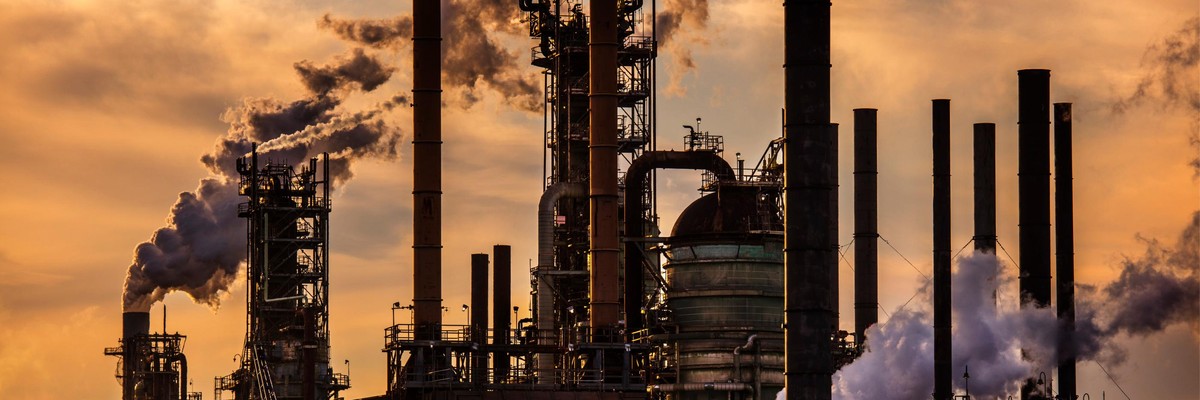
An ExxonMobil oil refinery is pictured in Baton Rouge, Louisiana. (Photo: Barry Lewis/InPictures via Getty Images)

“We cannot trust fossil fuel corporations to do anything but line the pockets of their CEOs and investors at the cost of our climate and communities,” one campaigner said.

The eight largest U.S. and Europe-based oil and gas producing companies are failing to align their plans with the Paris agreement goal of limiting global heating to 1.5°C above preindustrial levels and avoiding ever more catastrophic climate impacts.

Oil Change International’s Big Oil Reality Check report, released Tuesday, concludes that the plans of BP, Chevron, ConocoPhillips, Eni, Equinor, ExxonMobil, Shell, and TotalEnergies would actually put the world on track for more than 2.4°C of warming and burn through nearly one-third of the global carbon budget for hitting the 1.5°C target.

“It’s clearer than ever that oil and gas companies—the climate arsonists fueling climate chaos—cannot be trusted to put out the fire,” David Tong, report author and global industry campaign manager at Oil Change Internationalsaid in a statement. “There is no evidence that big oil and gas companies are acting seriously to be part of the energy transition.”

The Big Oil Reality Check report reveals that oil and gas corporations are more interested in looking like they are acting on climate change than actually acting on climate change.”

For its fourth annual Big Oil Reality Check, Oil Change International judged the oil companies’ climate plans and pledges against a set of minimum standards for alignment with the Paris agreement. The standards were divided into three main categories: ambition, integrity, and people-centered transitions.

Under ambition, the companies were assessed on whether they had plans to stop oil and gas exploration, stop approving new extraction projects, decrease production every year through 2030, and stop extraction on a certain date while outlining a long-term plan to end production.

Under integrity, the companies were assessed on whether their emissions-reduction plans included their entire supply chain, whether they relied on carbon capture or offsets, whether their methane-reduction plans were really in line with climate goals, and whether they lobbied or advertised against climate action.

For people-centered transitions, they were assessed on whether they had just transition plans for employees and members of frontline communities and whether they respected human rights overall and the rights of Indigenous peoples, including to free, prior, or informed consent to any fossil fuel activities.

The companies were then rated from “fully aligned” to “grossly insufficient” for how well their plans complied with the Paris goals within the assessment’s framework, but all eight companies scored “insufficient” or “grossly insufficient” for a majority of the criteria.

Only one company—Eni—scored above “insufficient” in any category, earning a ranking of “partially aligned” for having greenhouse gas-reduction plans that included its supply chains. The three U.S.-based companies—Chevron, ConocoPhillips, and ExxonMobil—scored “grossly insufficient” for all 10 criteria.

“American fossil fuel corporations are the worst of the worst,” Oil Change International’s U.S. program manager Allie Rosenbluth said. “Chevron, ExxonMobil, and ConocoPhillips perpetuate harm in frontline communities not only across the U.S. but worldwide.”

Oil Change found that six out of the eight companies have official plans to increase oil and gas production. The only two that did not were BP and Shell; however, these companies employ a misleading strategy. They compensate for new oil and gas projects by selling off polluting assets. While the emissions from the sold operations no longer count toward company emissions, they still count toward the planet’s total. This practice is out of line with the GHG Protocol on corporate emissions accounting and may violate the United Nations Guiding Principles on Business and Human Rights.

Four of the companies assessed in the report—BP, Shell, Exxon, and Chevron—were also the subject of a recent U.S. House investigation and Senate hearing detailing how the fossil fuel industry playbook has shifted from outright denial of climate science to greenwashing its activities by presenting itself as part of the solution to the climate crisis while its day-to-day operations continue to raise global temperatures.

“The efforts of climate and social movements have forced oil and gas companies to acknowledge that fossil fuels are dirty and dangerous, leading to a variety of climate pledges and ‘plans,'” said Oil Change campaigner Myriam Douo. The Big Oil Reality Check report reveals that oil and gas corporations are more interested in looking like they are acting on climate change than actually acting on climate change.”

“They spend billions on smoke and mirrors to try to fool us into believing they have solutions for a livable planet when, in reality, they are perpetuating harm to the climate and local communities while trying to suck every last ounce of profit out of their dirty fossil fuel business,” Douo concluded.

All told, Rystand energy data suggests that the combined production of the eight companies will be 17% by 2030 than they were last year.

“Such an increase in production on a global scale would put the world on a path towards global heating well beyond 2°C, locking in destruction of vulnerable communities and ecosystems,” the report authors wrote.

The report finds that all of the companies intend to rely on unproven carbon capture technology or offsets schemes to meet their claimed emission-reduction goals and have continued to spend money on lobbying against climate action and greenwashing their own activities since the agreement in Paris.

Further, no company has plans consistent with ensuring a just transition or protecting human rights. In one recent and urgent example, ExxonMobil, Chevron, TotalEnergies, BP, Shell, and Eni all continue to provide Israel with crude oil despite “the Israeli military’s ongoing assault on Palestinian civilians, ecosystems, and infrastructure in Gaza and mounting evidence of war crimes,” a March Oil Change investigation found.

The report comes nearly half a year after world leaders agreed to contribute to “transitioning away from fossil fuels” at the COP28 U.N. climate change conference in Dubai. In light of its conclusions, Oil Change called on governments to take action to further a just transition:

  1. Stop permitting or approving new fossil fuel projects or infrastructure;
  2. Set a Paris-aligned date for phasing out fossil fuel production;
  3. End subsidies and financing for fossil fuels and false solutions like carbon capture;
  4. Use tax policy to incentivize against investing in fossil fuels;
  5. Craft a just transition, including by making polluters pay for cleanup and reparations; and
  6. Passing laws to protect human rights and Indigenous rights and giving communities a legal mechanism to seek redress from corporate polluters.

Oil Change also argued that governments in the Global North should hold companies headquartered within their borders accountable for harm abroad and put money into funds to enable the Global South to transition to renewable energy, adapt to climate change, and pay for inevitable loss and damage.

“This year’s Big Oil Reality Check makes it clearer than ever—we cannot trust fossil fuel corporations to do anything but line the pockets of their CEOs and investors at the cost of our climate and communities,” Rosenbluth said. “People around the world are rising up to end the era of fossil fuels and build a just energy system that puts climate and communities first.”

Original article by OLIVIA ROSANE republished from Common Dreams under Creative Commons (CC BY-NC-ND 3.0).

Continue Reading‘Climate Arsonists’: 8 Major Oil Companies Fail to Align With Paris Agreement

Huge oil and gas profits should be returned to climate change victims, campaigners urge

Spread the love

https://morningstaronline.co.uk/article/b/huge-oil-and-gas-profits-should-be-returned-climate-change-victims

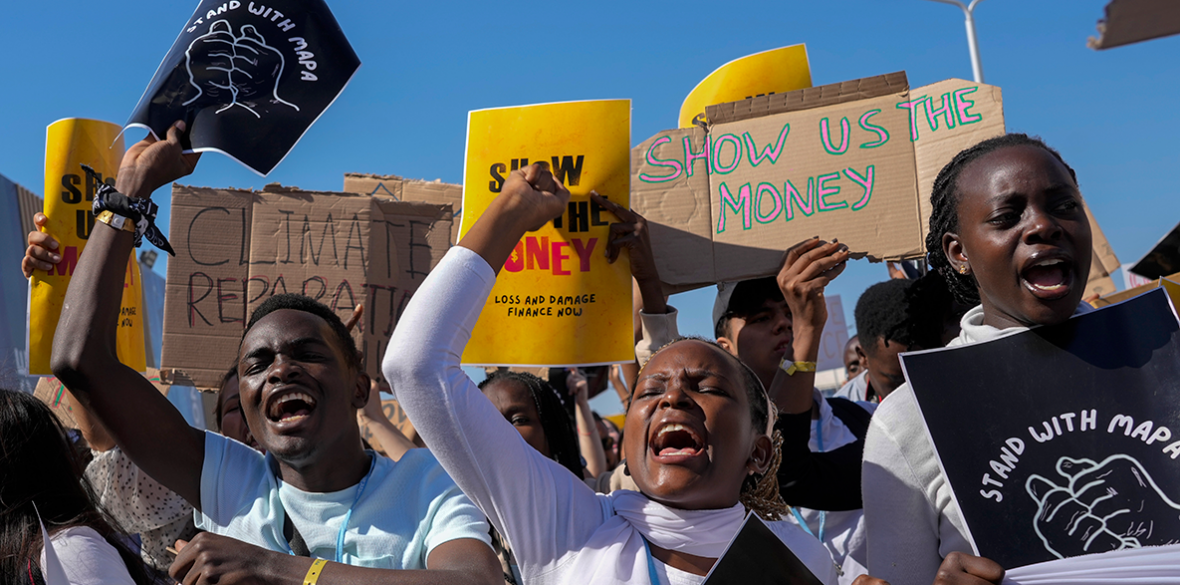
Demonstrators participate in a Fridays for Future protest calling for money for climate action at the COP27 U.N. Climate Summit, Friday, Nov. 11, 2022, in Sharm el-Sheikh, Egypt.

HUGE profits declared by oil and gas firms should be channelled towards compensating for the loss and damages suffered by victims of climate change, campaign group Greenpeace has urged.

Following Shell’s announcement last week of its record high profits of £32.2 billion last year, BP is expected to announce record profits of its own tomorrow.

The firm has already announced more than £20bn profit for the first three quarters of last year.

Collectively, energy giants Shell, BP, Chevron, Exxon, and Total are believed to have pocketed almost £166bn in profits last year, said Greenpeace.

https://morningstaronline.co.uk/article/b/huge-oil-and-gas-profits-should-be-returned-climate-change-victims

Continue ReadingHuge oil and gas profits should be returned to climate change victims, campaigners urge