Hundreds of California Highway Patrol officers showed up as protesters against US Immigration and Customs Enforcement operations block the entrance to Alameda’s Coast Guard Island on October 23, 2025. (Photo by Tayfun Coskun/Anadolu via Getty Images)
Carlos Jimenez claims the FBI drove him from the hospital to the scene for an interrogation, “while the bullet and fragments remained lodged in his body,” even as he “kept bleeding and vomiting in the agents’ van.”
Carlos Jimenez, a US citizen and father of three who still has bullet fragments lodged near his lung after being shot by a US Immigration and Customs Enforcement officer in California last year, is suing the Trump administration, San Bernardino County, and various agents for over $25 million in damages.
Jimenez, who is from Ontario, east of Los Angeles, filed his complaint against the United States, the county, ICE Enforcement and Removal Operations officer Eusebio Ortiz, two US Customs and Border Protection (CBP) officers, a Federal Bureau of Investigation (FBI) special agent, and 20 unnamed defendants on Friday.
While Jimenez was driving to work on the morning of October 30, 2025, he approached agents conducting an immigration operation to let them know they were near a bus stop for schoolchildren. Ortiz ultimately shot him, but it was Jimenez, not the officer, who then faced charges that have since been dropped.
As with some other people ICE or CBP agents have shot—sometimes fatally—the US Department of Homeland Security (DHS), which oversees both agencies, has claimed Jimenez “attempted to run officers over” federal agents “by reversing directly at them without stopping,” but his lawyers have disputed that account.
After the shooting, at a local hospital, FBI agents “interfered with his medical care,” according to a complaint. They allegedly prevented Jimenez from talking to healthcare providers, removed him from the hospital bed, and “handcuffed him with a leather waist restraint.”
As the FBI drove Jimenez back to the scene for an interrogation, “while the bullet and fragments remained lodged in his body,” he “kept bleeding and vomiting in the agents’ van,” and they told him not to “ruin their vehicle,” the filing claims. He was taken to West Valley Detention Center, where he was also denied adequate medical care.
A few weeks later, a grand jury indicted Jimenez, whom federal prosecutors charged with assaulting a federal officer using a deadly or dangerous weapon, but “the criminal case later became the subject of a dispute over evidence,” Newsweek reported Monday.
As the outlet detailed:
On May 5, US District Judge Kenly Kiya Kato ordered the government to turn over communications and operational records sought by the defense; this included responsive communications on government-issued and personal phones. The order also required a declaration under penalty of perjury from Ortiz if no responsive messages from him existed.
Jimenez entered into a diversion agreement shortly afterward. After he completed its conditions, Kato dismissed the indictment with prejudice on November 2, meaning the charge cannot be refiled. The dismissal order did not make a finding that federal officers used excessive force or otherwise acted unlawfully.
The Guardian highlighted that in addition to calling the criminal charges against Jimenez “fabricated,” the complaint “alleges that the FBI falsely claimed that two neighbors witnessed the incident and told an agent that Jimenez’s vehicle had enough room to pull forward without reversing. When Jimenez’s legal team interviewed those witnesses, both denied making those statements and said they were unaware there had been a shooting until they saw news reports.”
While the FBI declined to comment and DHS referred questions to the US Department of Justice, Ciaran McEvoy, a spokesperson for the DOJ in Los Angeles, said in an email to the newspaper that Jimenez “could have exercised his right to take the case to trial, but he instead requested that our office agree to resolve the case through a diversion agreement.”
Jimenez is among at least 32 people fired upon by federal immigration agents as part of Republican President Donald Trump’s mass detention and deportation campaign. Others include Renee Good and Alex Pretti, US citizens killed early this year in Minneapolis, Minnesota, and Silverio Villegas González, a Mexican man fatally shot last year near Chicago, Illinois.
At the beginning of October, Good’s family filed a pair of lawsuits against the federal government and immigration officials over her death and an alleged conspiracy to interfere with civil rights in Minnesota’s Twin Cities. A week later, Villegas González’s relatives filed a legal claim against the administration over his “execution-style killing.” Pretti’s family hasn’t yet sued, but his parents demanded justice at a press conference late last month.
Donald Trump sings and dances, says that it’s fun to kill everyone … unless he gets distracted or falls asleep.Orcas discuss Donald Trump and the killer apes’ concept of democracy. Front Orca warns that Trump is crashing his country’s economy and that everything he does he does for the fantastically wealthy.
Kicking out Palantir, experts warn, may not solve the problems its Federated Data Platform has created.
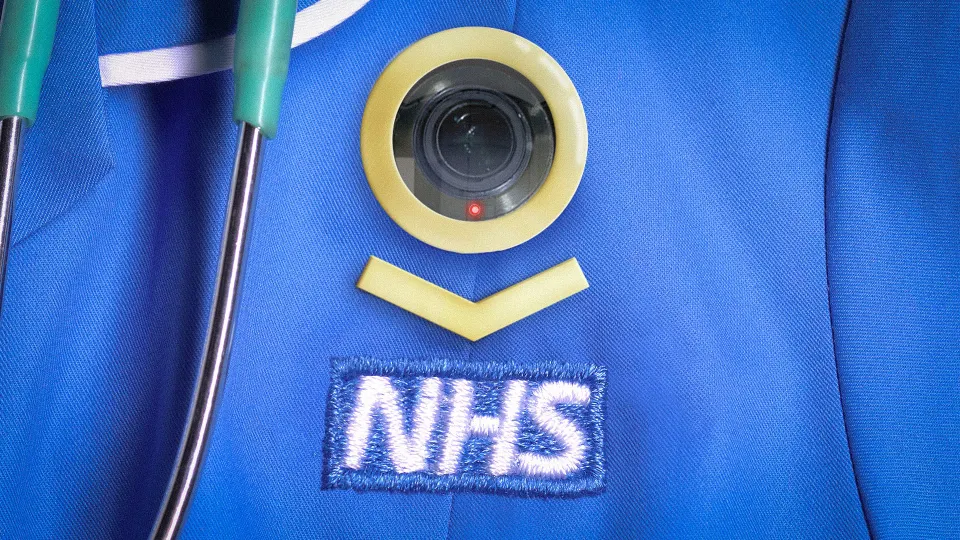
NHS England’s Federated Data Platform, run primarily by controversial US military contractor Palantir, would give a future UK government the ability to use patients’ healthcare data to unleash unprecedented mass surveillance, experts and technologists have warned openDemocracy.
“We have already seen in the US how Palantir’s reach into so many different areas of government has allowed it to build a system that provides detailed profiles of people to enable ICE raids,” said Duncan McCann of the Good Law Project, referring to how President Donald Trump’s mass deportation programme has used Palantir’s tools. “The exact same thing is being enabled by the integration of Palantir into the UK public sector.”
This risk is only exacerbated by the fact that nearly three years after Palantir was awarded the £330m contract to run the FDP, it remains unclear what patient data it gathers, on what basis and to what end. Despite this, 69% of regional NHS Trusts have already adopted the platform, which provides the health service with a new operating system intended to link up otherwise unconnected databases and disparate software across different NHS services and regions.
This lack of clarity was laid bare this week, when the UK’s cross-party Science, Innovation and Technology Committee urged the government to break the NHS’s contract with Palantir. Its report contained a stark recommendation to the government: reveal “the exact nature of Palantir’s access to identifiable and non-identifiable patient data, on what statutory basis this was authorised, when, and by whom.”
McCann and the Good Law Project are part of an unusually wide coalition demanding the UK cut ties with Palantir, but technologists who have worked closely on the FDP warn that the genie is now out of the bottle; kicking the US giant out of the NHS may not be enough to solve the data privacy problems its Federated Data Platform has created.
“You know you could pull Palantir out,” Tom Bartlett, an NHS technologist who worked on the FDP and has spoken publicly in favour of the project, told openDemocracy. “But the danger remains.”
“You still might get a government that says, ‘We need to have the data from the NHS and the data from the Home Office connected, and we want to use it for the purpose of denying people healthcare or deporting people or whatever’.”
Coalition of Resistance
To understand how deeply Palantir is enmeshed in the UK’s public sector, consider the coalition opposed to it.
NHS data analysts and chief data and analytical officers have spoken out against the FDP. The British Medical Association, a union representing doctors and medical students, has urged GPs to reject it. The Greater Manchester Integrated Care Board, which oversees NHS services for 2.8 million people, has refused to sign up to the platform, claiming outstanding security risks haven’t been addressed, and that it has better technology in-house.
It’s not just the NHS, either. London’s mayor has blocked a £50m Palantir contract with the Metropolitan Police, arguing that it was improperly awarded. The housing ministry replaced a Palantir system to match British hosts with Ukrainian refugees with its own technology. In Coventry, local politicians and unions are protesting the renewal of a £750,000 Palantir contract with the council’s children’s services department. Financial Conduct Authority employees are seeking to orchestrate a cross-union campaign against a 12-week trial contract with Palantir that they fear could expose the UK’s sensitive financial data to US law enforcement authorities.
“Our pilot with Palantir allows the Met for the first time to bring together data it already lawfully holds in one place to identify potential standards, welfare or cultural concerns,” said a spokesperson for The Met over email. “It also allows us to identify early issues so we can act more fairly and consistently, ensuring officers receive support or face appropriate action before problems escalate.” In April, Met officers expressed outrage at the “intrusive” use of Palantir’s technology to assess them for misconduct.
The Financial Conduct Authority’s contract with Palantir involves testing an AI search tool for its data. “The data used in the trial will be fully encrypted and under our control,” wrote a spokesperson for the regulator over email. “No-one is able to access the unencrypted data without our authorisation.”
Coventry City Council did not respond to questions about its Palantir contract.
He co-founded the company with $2 million from the venture capital arm of the CIA in the early 2000s, when the failure to prevent 9/11 was being debated across Washington and Silicon Valley. It was suspected, and would be confirmed by the public report a year later, that the CIA, the FBI, and the National Security Agency had separately held the data required to have foreseen the terror attacks, but had “failed to connect the dots”.
That finding has since been the basis of much of Palantir’s success. It argues that governments, militaries, law enforcement authorities and businesses already have much of the data they need to make decisions, but that it is not readily available in the forms needed.
Palantir, it tells them, is the solution.
“The actual thing that’s difficult is organising all your data together,” Alex Bores, a member of the New York State Assembly and a former Palantir employee turned critic, told The New York Times. “That requires hard work, and there’s no magic to do that yet. The software, plus engineers going on site and doing a lot of that hard work to do the manual hookups, was always going to be the true source of value.”
Databasing the Nation
In the NHS, Palantir’s work involves organising, hooking up, and streamlining vast troves of patient data currently scattered across, by one count, 44,000 healthcare IT systems in 26,000 organisations. “The fragmentation is absolutely massive,” said Bartlett, who helped build the FDP. “There’s all this information, and it’s all sat in different pockets.”
Palantir’s solution has two layers. Bartlett describes one layer as an “operating system” analogous to the software that runs your iPhone, which will allow NHS Trusts and third-party developers to create applications (or what Palantir calls “products”) that allow for efficiency gains. An ambulance crew, for example, could input information about an accident victim to a product that would pass it onto the hospital, so that “the A&E department could prepare, rather than being sort of hit in the face” with information when the ambulance arrives, he said.
Yet, much like how your iPhone decisively locks you into the ecosystem of Apple products, running this system efficiently requires as much of the NHS as possible to sign on to the Palantir system – something experts call “vendor lock-in” – and to draw on a staggering library of data held across the health service.
The FDP’s public documentation reveals that the platform is already in the process of ingesting several hundred databases, covering a vast array of variables that include mental healthcare contact activity, mortality, flu vaccination status, covid vaccination status, emergency services data, race and ethnicity, aggregated data for persons held in secure mental health facilities in adult prisons and immigration removal centres, and much more.
As the cross-party committee of MPs noted in their report last week, there is little clarity around exactly what data will make it into the FDP, and how it will be accessed. The debate around patient data held by GP practices offers a useful illustration.
Back in 2023, the then secretary of state for health and social care, Victoria Atkins, told the House of Commons: “No new data will be collected, and GP data will not be part of the national platform.” However, an NHS FAQ page last updated in April 2026 admits that “some of the data” in the FDP “may have been sourced from GP records”, and GP data lawfully shared with NHS trusts that use the FDP could end up on the platform.
More worryingly, the FDP uses all this data to create detailed profiles of individual patients that it calls the ‘Person Ontology’. To quote from an NHS Data Protection Impact Assessment: “The Person Ontology serves as the single source of the truth for pseudonymised patient level datasets”.
Elsewhere, the document says that “the Person Ontology currently holds activity data for citizens in different care settings”, explaining that the platform assigns individual patients a unique ID that can be cross-referenced across multiple databases.
The NHS says that as the data held in the FDP is pseudonymised, it does not directly identify individuals. But pseudonymisation, as has been pointed out by the Information Commissioner’s Office, the UK’s data protection watchdog, is a reversible process. “Take care not to confuse pseudonymisation with anonymisation,” the ICO warns.
A person’s healthcare data is their “most intimate information,” said a spokesperson and legal officer at Privacy International, a UK-based charity focusing on technology and rights. “We’re talking about the breadth of the data, how personal it is, and the severity of what could be done with it if it were to land in the wrong hands.”
Big Data Means Big Brother
Consolidating so much data brings very real risks of surveillance, say those familiar with the platform, particularly since Palantir also holds contracts with police forces in the UK. In principle, all that’s stopping the Home Office from accessing NHS data are legal safeguards that can be reversed.
Here in the UK, Palantir UK CEO Louis Mosley has said that if Nigel Farage’s Reform comes into power, the company will follow the party’s professed directives to use NHS data to target individuals based on their immigration status.
Such a scenario played out in the US when Trump first became president in 2016, as Bores, the former Palantir employee, told The New York Times.
“Palantir had signed a contract with a department within ICE called HSI, Homeland Security Investigations. During the Obama administration, it was focused on anti-human trafficking, anti-drug trafficking, sometimes counterfeiting,” Bores said. “Then, when Trump comes in in 2017, they try to change the nature of that work. They try to get another part of ICE called ERO, Enforcement and Removal Operations – the part that everyone thinks of as ICE – to get access to the software and to use it for deportations.”
In the US, Palantir already uses data from the Department of Health and Human Services to track people targeted for deportation by ICE. Here in the UK, junior doctor Rhiannon Mihranian Osborne, who is organising against Palantir in the NHS with health justice organisation Medact, described what she said was a disturbing pattern: “Reform’s policy ‘Operation Restoring Justice’ wants to create a powerful immigration surveillance system by mining data from health, police and financial databases. Louis Mosley said his company would comply with this.
“Palantir’s police contracts in the UK include collating highly sensitive information on victims of crime, including sexual orientation and trade union membership. The home secretary says she wants to create a panopticon of state surveillance. The synergy between Palantir and governments who use data to abuse human rights is deeply alarming, and a sign of what could be coming in the UK.”
This is a real risk, conceded Bartlett. “Let’s take [a] Reform government and the immigration question coming in, I do worry about that scenario,” he said – but he questioned whether that means the NHS doesn’t need a Federated Data Platform. “So is the answer to that bad scenario playing out to keep the data in such a bad state that nobody could ever use it at all for good or bad?”
Palantir, NHS England, the Cabinet Office, the Department of Health and Social Care and The Reform Party did not respond to requests for comment.
Critics of the FDP, however, have pushed back against what they see as a narrative that the NHS’s systems are so hopelessly complex and tangled that the only way to solve them is with a mass surveillance tool built by Palantir.
“There’s no magic here,” Sam Smith, a technologist with patient rights organisation medConfidential, said of the FDP. “It’s not like Palantir is doing anything that other people can’t do… They’re just doing the thing because they have the mythos that they can do the thing.”
Andrew Holway, the founder of UK-based medical software startup Darwinist, told the cross-party committee that “the primary barrier to NHS innovation” is mega contracts with companies such as Palantir. These, he said, hold the NHS “hostage, preventing the implementation of modern productivity tools that could save tens of billions of pounds”.
Some in the NHS have also questioned whether the service has tried different approaches that are less intrusive and data-centric. The NHS Greater Manchester Integrated Care Board, for instance, uses its own Analytics and Data Science Platform because it believes it offers better technology and access to better data.
“Public trust isn’t a side issue for the Federated Data Platform,” wrote Matt Hennessey, the chief data and analytics officer at Manchester Integrated Care Board, in a post on LinkedIn. He outlined the “effect that ethical concern, moral unease or perceived opacity has on trust–and, in turn, on participation.”
The platform’s “main problem is that it isn’t clear what it actually is,” he wrote. “Where trust is eroded, people disengage, patients opt out, and clinicians become cautious about involvement.”
Ultimately, as Osborne said, “any NHS data system must be built on public trust, buy-in from staff, and most importantly, protection from abuse by private corporations and governments themselves”.
Hundreds of flowers and pieces of unique artwork are on display at the memorial site for Alex Pretti in Minneapolis, Minnesota on February 14, 2026. (Photo by Alex Kormann/The Minnesota Star Tribune via Getty Images)
“The Trump administration is sending a clear message: federal law enforcement can kill with absolute impunity.”
A broad coalition of organizations on Tuesday accused the Trump administration of trying to sabotage a genuine investigation into the killing of Alex Pretti, the intensive care nurse who was fatally shot by federal immigration enforcement agents last month.
In a statement released by the Not Above the Law Coalition, the groups pointed to recent reporting about the FBI denying Minnesota law enforcement officials access to evidence gathered in relation to the Pretti shooting as proof that the administration has no intention of conducting an independent investigation into his death, which has been ruled a homicide by the Hennepin County medical examiner.
“By blocking Minnesota’s investigation and attempting to shield agents from accountability,” said the groups, “the Trump administration is sending a clear message: federal law enforcement can kill with absolute impunity. This move attempts to place federal agents above the law and beyond the reach of justice.”
The groups noted that the administration was breaking with decades of standard practices by not cooperating with local police and prosecutors to investigate Pretti’s death, and they warned it could set a dangerous precedent for future shootings carried out by federal officers.
“We demand immediate action,” they concluded. “Mandatory independent investigations for all federal use of deadly force, recognition of state authority to investigate federal misconduct, federal cooperation with local investigators, and real consequences for constitutional violations. Without accountability, we allow federal forces to operate with impunity and face no consequences for taking American lives.”
Included among the statement’s signatories were the ACLU, Citizens for Responsibility and Ethics in Washington, Common Cause, Indivisible, Public Citizen, and the Revolving Door Project.
The Minnesota Bureau of Criminal Apprehension (BCA) said last week that it was continuing its probe into Pretti’s killing, even without the assistance of federal investigators.
“The BCA will present its findings without recommendation to the appropriate prosecutorial authorities for review,” the agency vowed.
In addition to investigating the Pretti killing, the BCA is also conducting probes into the fatal shooting of Minneapolis mother Renee Good and the shooting of Venezuelan immigrant Julio Cesar Sosa-Celis.
Hennepin County Attorney Mary Moriarty last week similarly said that her office was not getting any help from the federal government in its investigation into the Pretti shooting, though she said her team was continuing to gather evidence and interview witnesses.
Moriarty emphasized that her office, which is currently working with the Minnesota BCA in its investigation, can bring criminal charges against federal immigration officers if it has enough evidence to do so, even without the cooperation of the Trump administration.
Orcas discuss Donald Trump and the killer apes’ concept of democracy. Front Orca warns that Trump is crashing his country’s economy and that everything he does he does for the fantastically wealthy.Donald Fuhrump says that Amerikkka doesn’t bother with crimes or charges anymore, not being 100% Amerikkkan and opposing his real estate intentions is enough.Elon Musk urges you to be a Fascist like him, says that you can ignore facts and reality then.
Hundreds of flowers and pieces of unique artwork are on display at the memorial site for Alex Pretti in Minneapolis, Minnesota on February 14, 2026. (Photo by Alex Kormann/The Minnesota Star Tribune via Getty Images)
“Minnesota needs impartial investigations into the shootings of American citizens on our streets,” said Minnesota Gov. Tim Walz. “Trump’s left hand cannot investigate his right hand.”
President Donald Trump’s administration has officially denied law enforcement officials in Minnesota access to evidence related to the fatal shooting of Minneapolis intensive care nurse Alex Pretti last month.
In a Monday announcement, the Minnesota Bureau of Criminal Apprehension (BCA) revealed that the FBI on Friday delivered a formal notification informing the agency that will not receive “access to any information or evidence that it has collected” related to Pretti’s shooting at the hands of federal immigration enforcement officials.
BCA described the refusal to share evidence as “concerning and unprecedented,” but it vowed to conduct a “thorough, independent, and transparent” investigation into the Pretti shooting “even if hampered by a lack of access to key information and evidence.”
In addition to requesting evidence gathered in the Pretti shooting, the BCA reiterated its call for federal law enforcement to share whatever evidence it has collected in relation to last month’s fatal shooting of Minneapolis mother Renee Good and the shooting of Venezuelan immigrant Julio Cesar Sosa-Celis.
“BCA investigations of these incidents continue,” the agency vowed. “The BCA will present its findings without recommendation to the appropriate prosecutorial authorities for review.”
Democratic Minnesota Gov. Tim Walz slammed the Trump administration for denying his state’s officials access to evidence, and he demanded a real investigation into Pretti’s killing.
“Minnesota needs impartial investigations into the shootings of American citizens on our streets,” he wrote in a social media post. “Trump’s left hand cannot investigate his right hand. The families of the deceased deserve better.”
In a Sunday interview with CBS News Minnesota, Hennepin County Attorney Mary Moriarty revealed that her office was not getting any help from the federal government in its investigation into the Pretti shooting, though she said her team was continuing to gather evidence and interview witnesses.
Moriarty emphasized that her office, which is currently working with the Minnesota BCA in its investigation, can bring criminal charges against federal immigration officers if they have enough evidence to do so, even without the cooperation of the Trump administration.
Donald Fuhrump says that Amerikkka doesn’t bother with crimes or charges anymore, not being 100% Amerikkkan and opposing his real estate intentions is enough.Elon Musk urges you to be a Fascist like him, says that you can ignore facts and reality then.Orcas discuss rotting brain. Front Orca says “Wish someone would lock him up”.
Reps. Ro Khanna (D-Calif.) and Thomas Massie (R-Ky.) hold a news conference after reviewing unredacted portions of the Jeffrey Epstein files in Washington, DC on NoMa on February 9, 2026. (Photo by Tom Williams/CQ-Roll Call, Inc. via Getty Images)
“The reality is that Donald Trump’s FBI scrubbed these files in March, long before Thomas Massie and I passed the Epstein Transparency Act,” said the California progressive.
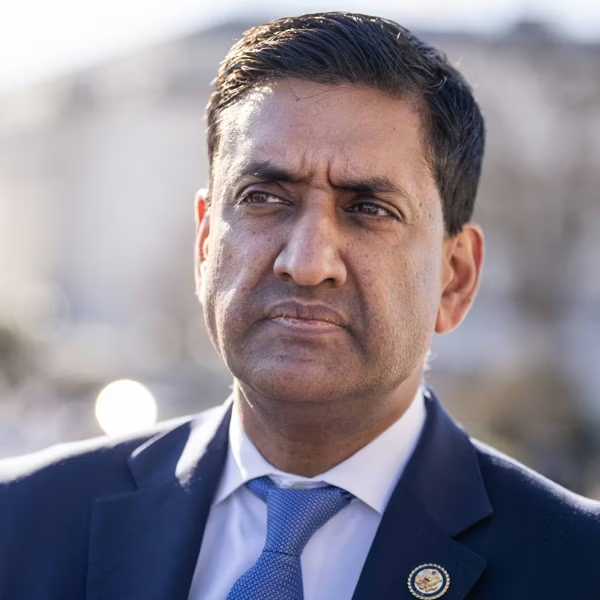
Democratic Congressman Ro Khanna on Tuesday read aloud on the House floor the names of half a dozen men he said are “likely incriminated” in files concerning Jeffrey Epstein, the late convicted child sex criminal and former friend of President Donald Trump.
“Yesterday, Congressman [Thomas] Massie [R-Ky.] and I went to the Department of Justice to read the unredacted Epstein files,” Khanna (Calif.) said. “We spent about two hours there, and we learned that 70 to 80% of the files are still redacted.”
“In fact, there were six wealthy, powerful men that the DOJ hid for no apparent reason,” the congressman continued. “When Congressman Massie and I pointed this out to the DOJ, they acknowledged their mistake, and now they have revealed the identity of these six powerful men.”
“These men are: Salvatore Nuara; Zurab Mikeladze; Leonic Leonov; Nicola Caputo; Sultan Ahmed bin Sulayem, CEO of Dubai Ports World; and billionaire businessman Leslie Wexner, who was labeled as a ‘co-conspirator,’ by the FBI.” Khanna said.
.@RepThomasMassie and I forced last night the DOJ to disclose the identities of 6 men:
Salvatore Nuara, Zurab Mikeladze, Leonic Leonov, Nicola Caputo, Sultan Ahmed Bin Sulayem, and billionaire businessman Leslie Wexner.
“Now my question is: Why did it take Thomas Massie and me going to the Justice Department to get these six men’s identities to become public?” Khanna asked. “And if we found six men that they were hiding in two hours, imagine how many men they are covering up for in those three million files.”
Last year, Congress passed Khanna and Massie’s Epstein Files Transparency Act, which required the public release of all relevant documents within 30 days. The legislation also empowered Attorney General Pam Bondi to redact large amounts of information that critics fear could include material that incriminates Trump, who Rep. Jamie Raskin (D-Md.) said Tuesday is mentioned “more than a million times” in the unredacted Epstein files.
Democratic lawmakers and Massie have accused the DOJ of violating the law by incomplete disclosure and blowing the legal deadline for publishing the documents.
Major update: Trump mentioned in the “unredacted” Epstein Files more than one million times.FBI scrubbed files before giving them to the DOJ, so many “unredacted” files remain redacted.Khanna reads the names of six men on the House floorHead of Ohio State gynecology received money from Epstein
“The story gets worse,” Khanna said Tuesday. “The reality is that Donald Trump’s FBI scrubbed these files in March, long before Thomas Massie and I passed the Epstein Transparency Act… That means the survivors’ statement to the FBI naming rich and powerful men who went to Epstein’s island… they’re all hidden.”
None of the six named men had responded to Khanna’s action as of late Tuesday afternoon. A legal representative for Wexner previously told the Associated Press that prosecutors had informed the 88-year-old billionaire that he was “neither a co-conspirator nor a target in any respect,” and that he cooperated with investigators.
The names of the six men were entered into the Congressional Record as part of Khanna’s remarks. Inclusion in the Epstein files does not by itself prove or even imply any criminal wrongdoing.
“It’s time to begin with accountability for the Epstein class,” Khanna said during his remarks Tuesday. “Hold them in front of Congress, those people who visited the island or did business with Epstein after he was a convicted pedophile. Investigate them. Prosecute them. And let us return to democratic accountability in the United States of America.”
Orcas discuss Donald Trump and the killer apes’ concept of democracy. Front Orca warns that Trump is crashing his country’s economy and that everything he does he does for the fantastically wealthy.Donald Fuhrump says that Amerikkka doesn’t bother with crimes or charges anymore, not being 100% Amerikkkan and opposing his real estate intentions is enough.Elon Musk urges you to be a Fascist like him, says that you can ignore facts and reality then.