Dagenham fire exposes lack of progress on building and fire safety ahead of Grenfell Report

Spread the love

Original article by Ana Vračar republished from peoples dispatch under a Creative Commons Attribution-ShareAlike 4.0 (CC BY-SA) license.
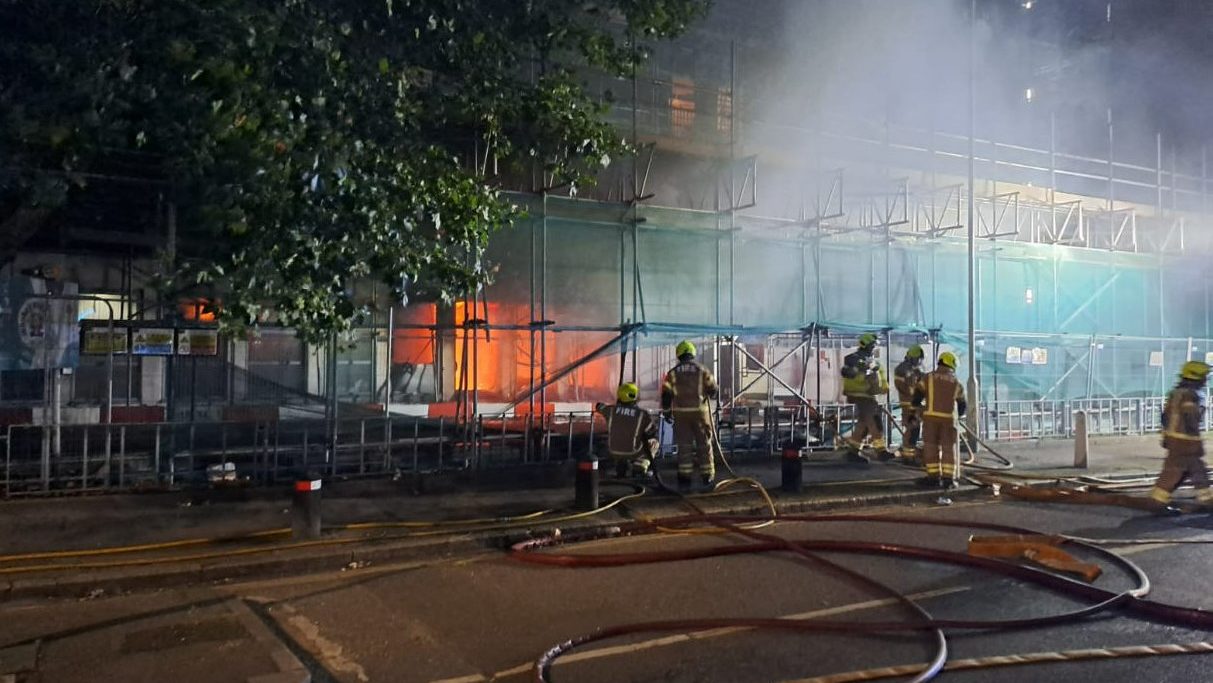
Source: London Fire Brigade/X

A recent fire in London serves as a stark reminder of the UK’s ongoing failures in building and fire safety, just days before the final report on the 2017 Grenfell Tower tragedy is set to be published

More than 200 firefighters were deployed overnight on Monday, August 26, to combat a fire that broke out in an apartment block in Dagenham, London. The building had previously been identified as a high-risk location by fire brigades, yet it had not seen sufficient safety improvements, similar to other localities across the country that represent housing hazards due to slow progress on necessary fire and building security measures.

London Fire Brigade Commissioner Andy Roe confirmed that the tower block had “a number of fire safety issues” known to the service. Matt Wrack, General Secretary of the Fire Brigades Union (FBU), condemned the situation as a “national scandal.”

“Time and time again, these warnings have been ignored by public authorities and by central government. This must change immediately,” Wrack insisted.

The Dagenham fire comes just days before the final report of the Grenfell Tower Inquiry is set to be published. The similarities between the recent fire in Dagenham and the Grenfell Tower fire in June 2017, which killed 72 people, are difficult to ignore. Both incidents involve buildings with inadequate cladding, a factor believed to have exacerbated the fires.

“Once again, a fire has erupted in a residential building wrapped in inflammable cladding. There needs to be an urgent and swift investigation into how this has been allowed to happen,” Wrack said.

Read more: Four years after Grenfell tragedy, justice for victims remains elusive

Fortunately, the Dagenham fire resulted in no casualties, but the incident has reignited calls for improved building safety. Grenfell United, a group formed by survivors and families of the Grenfell fire, criticized the lack of progress since the 2017 disaster. The fact that the best outcome in a fire is a near miss “speaks volumes about the progress made since June 14, 2017,” the group said in a statement.

Recent data from the FBU adds to an already worrying picture. Since 2010, cuts to public service have led to the loss of 12,000 firefighter positions across the UK, with London alone losing over 1,300. The union also highlighted that some firefighters might be counted twice in official statistics because they—some 4,000 of them—hold more than one type of contract, suggesting the actual shortfall may be even worse.

These staffing reductions have contributed to slower emergency response times, increasing risks to public safety. “With flooding, wildfires, and storms on the rise due to the climate emergency, firefighters are being asked to do more with less,” Wrack said.

In light of these issues, trade unions and community activists are calling for immediate and decisive action from the Labour government. They are demanding urgent and substantial investment in fire and rescue services, along with the implementation of building safety measures to prevent future tragedies.

Original article by Ana Vračar republished from peoples dispatch under a Creative Commons Attribution-ShareAlike 4.0 (CC BY-SA) license.

Continue ReadingDagenham fire exposes lack of progress on building and fire safety ahead of Grenfell Report

The climate is changing so fast that we haven’t seen how bad extreme weather could get

Spread the love
Andreas Thaller/Alamy Stock Photo

Simon H. Lee, University of St Andrews; Hayley J. Fowler, Newcastle University, and Paul Davies, Newcastle University

Extreme weather is by definition rare on our planet. Ferocious storms, searing heatwaves and biting cold snaps illustrate what the climate is capable of at its worst. However, since Earth’s climate is rapidly warming, predominantly due to fossil fuel burning, the range of possible weather conditions, including extremes, is changing.

Scientists define “climate” as the distribution of possible weather events observed over a length of time, such as the range of temperatures, rainfall totals or hours of sunshine. From this they construct statistical measures, such as the average (or normal) temperature. Weather varies on several timescales – from seconds to decades – so the longer the period over which the climate is analysed, the more accurately these analyses capture the infinite range of possible configurations of the atmosphere.

Typically, meteorologists and climate scientists use a 30-year period to represent the climate, which is updated every ten years. The most recent climate period is 1991-2020. The difference between each successive 30-year climate period serves as a very literal record of climate change.

This way of thinking about the climate falls short when the climate itself is rapidly changing. Global average temperatures have increased at around 0.2°C per decade over the past 30 years, meaning that the global climate of 1991 was around 0.6°C cooler than that in 2020 (when accounting for other year-to-year fluctuations), and even more so than the present day.

A moving target for climate modellers

If the climate is a range of possible weather events, then this rapid change has two implications. First, it means that part of the distribution of weather events comprising a 30-year climate period occurred in a very different background global climate: for example, northerly winds in the 1990s were much colder than those in the 2020s in north-west Europe, thanks to the Arctic warming nearly four times faster than the global average. Statistics from three decades ago no longer represent what is possible in the present day.

Second, the rapidly changing climate means we have not necessarily experienced the extremes that modern-day atmospheric and oceanic warmth can produce. In a stable climate, scientists would have multiple decades for the atmosphere to get into its various configurations and drive extreme events, such as heatwaves, floods or droughts. We could then use these observations to build up an understanding of what the climate is capable of. But in our rapidly changing climate, we effectively have only a few years – not enough to experience everything the climate has to offer.

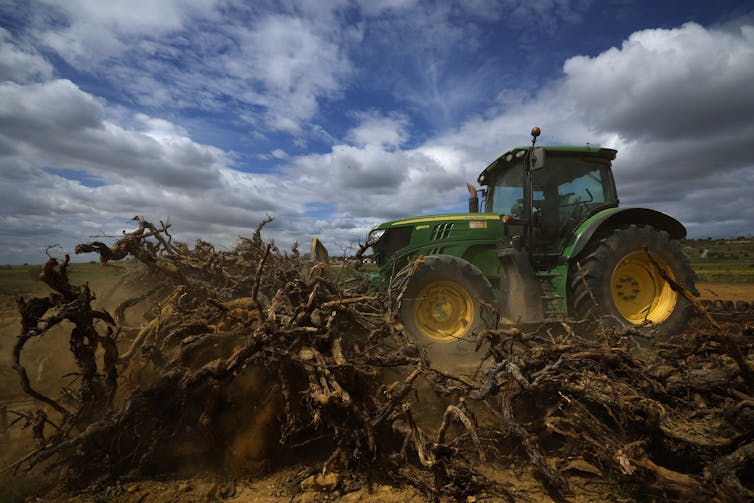
Extreme weather, such as drought, is a particular problem for farmers. EPA-EFE/Guillaume Horcajuelo

Extreme weather events require what meteorologists might call a “perfect storm”. For example, extreme heat in the UK typically requires the northward movement of an air mass from Africa combined with clear skies, dry soils and a stable atmosphere to prevent thunderstorms forming which tend to dissipate heat.

Such “perfect” conditions are intrinsically unlikely, and many years can pass without them occurring – all while the climate continues to change in the background. Based on an understanding of observations alone, this can leave us woefully underprepared for what the climate can now do, should the right weather conditions all come together at once.

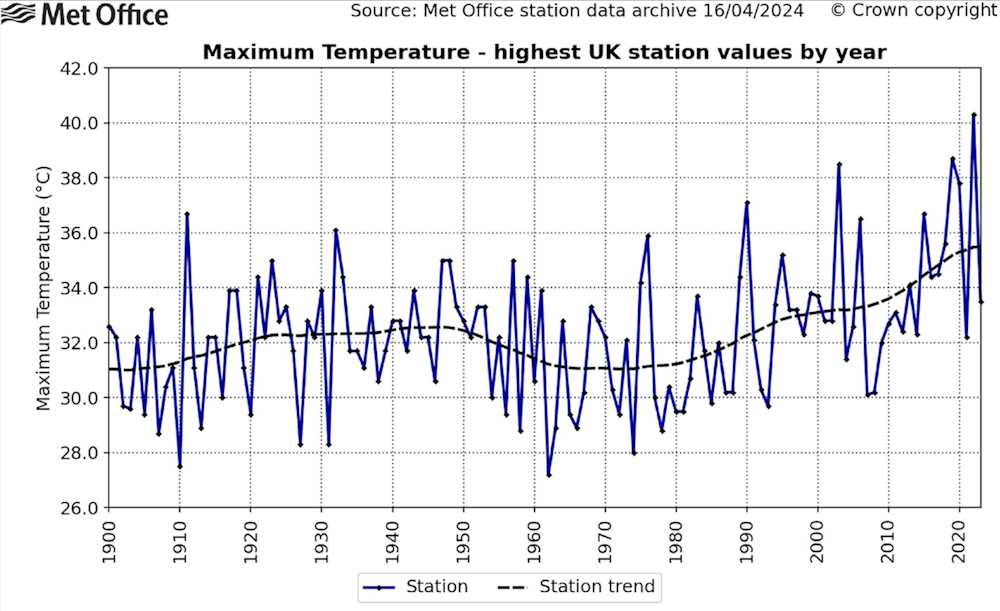
Startling recent examples include the extreme heatwave in the Pacific north-west of North America in 2021, in which temperatures exceeded the previous Canadian record maximum by 4.6°C. Another is the occurrence of 40°C in the UK in summer 2022, which exceeded the previous UK record maximum set only three years earlier by 1.6°C. This is part of the reason why the true impact of a fixed amount of global warming is only evident after several decades, but of course – since the climate is changing rapidly – we cannot use this method anymore.

Playing with fire

To better understand these extremes, scientists can use ensembles: many runs of the same weather or climate model that each slightly differ to show a range of plausible outcomes. Ensembles are routinely used in weather prediction, but can also be used to assess extreme events which could happen even if they do not actually happen at the time.

When 40°C first appeared in ensemble forecasts for the UK before the July 2022 heatwave, it revealed the kind of extreme weather that is possible in the current climate. Even if it had not come to fruition, its mere appearance in the models showed that the previously unthinkable was now possible. In the event, several naturally occurring atmospheric factors combined with background climate warming to generate the record-shattering heat on July 19 that year.

The highest observed temperature each year in the UK, from 1900 to 2023

A graph showing the highest observed temperature in the UK between 1900 and 2023.
The hottest days are getting hotter in the UK. Met Office/Kendon et al. 2024

Later in summer 2022, after the first occurrence of 40°C, some ensemble weather forecasts for the UK showed a situation in which 40°C could be reached on multiple consecutive days. This would have posed an unprecedented threat to public health and infrastructure in the UK. Unlike the previous month, this event did not come to pass, and was quickly forgotten – but it shouldn’t have been.

It is not certain whether these model simulations correctly represent the processes involved in producing extreme heat. Even so, we must heed the warning signs.

Despite a record-warm planet, summer 2024 in the UK has been relatively cool so far. The past two years have seen global temperatures far above anything previously observed, and so potential extremes have probably shifted even further from what we have so far experienced.

Just as was the case in August 2022, we’ve got away with it for now – but we might not be so lucky next time.


Imagine weekly climate newsletter

Don’t have time to read about climate change as much as you’d like?
Get our award-winning weekly roundup in your inbox instead. Every Wednesday, The Conversation’s environment editor writes Imagine, a short email that goes a little deeper into just one climate issue. Join the 35,000+ readers who’ve subscribed so far.


Simon H. Lee, Lecturer in Atmospheric Science, University of St Andrews; Hayley J. Fowler, Professor of Climate Change Impacts, Newcastle University, and Paul Davies, Chief Meteorologist, Met Office and Visiting Professor, Newcastle University

This article is republished from The Conversation under a Creative Commons license. Read the original article.

Continue ReadingThe climate is changing so fast that we haven’t seen how bad extreme weather could get