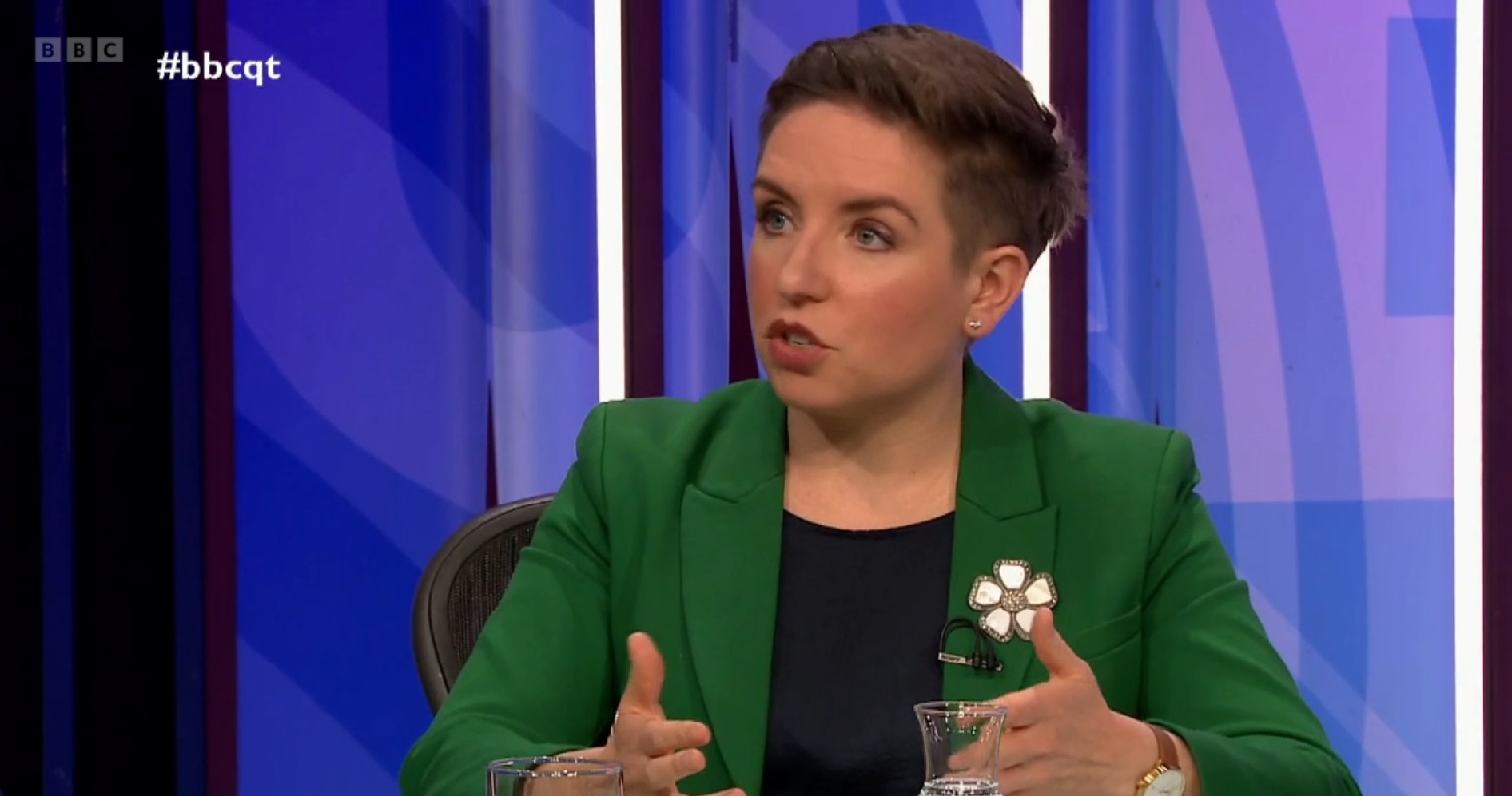
Green Party’s Bristol Central MP Carla Denyer on BBC Question Time.
Reacting to President Trump’s threats towards Greenland, Green MP Carla Denyer said
“Buoyed up by his imperialistic adventures in Venezuela, where he trampled over international law, Trump is now eyeing up Greenland.
“A year of pandering to the President has had no restraining effect whatsoever. It is time for Keir Starmer and government ministers to show some backbone.
“They must make clear that the UK will not tolerate an attack on Greenland and that they will stand up for international law and state sovereignty. Not selectively, but wherever such violations take place and whoever is committing them – whether that be Putin in Ukraine, Netanyahu in Gaza, or Trump in Venezuela, and now potentially in Greenland.
“The Green Party will always reject “might is right” authoritarianism, where military power is used to trump sovereignty and the rule of law. Diplomacy, cooperation and peacebuilding efforts must be strengthened.”
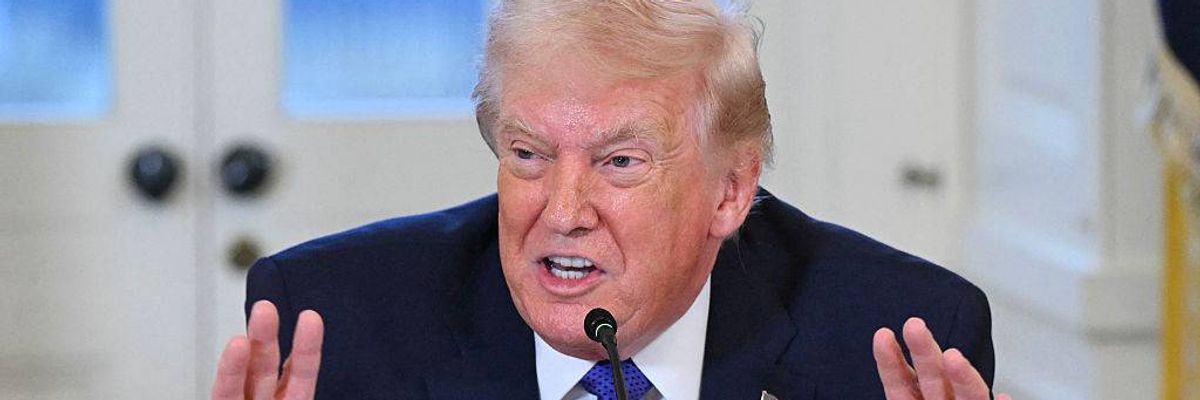
President Donald Trump speaks during a meeting with US oil companies executives in the East Room of the White House in Washington, DC on January 9, 2026. (Photo by Saul Loeb/AFP via Getty Images)
The Trump administration has been ratcheting up threats against Europe in the wake of its invasion of Venezuela and the abduction of President Nicolás Maduro.
President Donald Trump finished up a busy week by once again leveling threats against longtime allies over their refusal to hand Greenland over to US control.
While taking questions from reporters at the White House on Friday, Trump was asked about a reported plan to win over Greenlanders on joining the US by giving them annual $10,000 payments.
“I’m not talking about money for Greenland yet,” the president replied. “I might talk about that, but right now we are going to do something on Greenland, whether they like it or not.”
Trump: "We are going to do something on Greenland whether they like it or not because if we don't, Russia or China will take over Greenland. If we don't do it the easy way we're gonna do it the hard way." pic.twitter.com/Pb29UqBzCC
Trump then explained his purported rationale for making Greenland a US territory.
“If we don’t do it, Russia or China will take over Greenland,” he said. “And we’re not going to have Russia or China as a neighbor.”
Neither Russia nor China have shown any indication that they want to take over Greenland, which is currently a self-governed Danish territory. Because Denmark is a founding member of NATO, an attack on its territory from Russia or China would trigger a counterattack by all other NATO members, theoretically including the US.
Trump then informed the press that he would “like to make a deal the easy way” to acquire Greenland, before adding that “if we don’t do it the easy way, we’re going to do it the hard way.”
The president then claimed that he was a “fan of Denmark,” even though seconds ago he hinted at using military force to seize their territory.
“The fact that they had a boat land there 500 years ago doesn’t mean that they own the land,” Trump said. “I’m sure we had lots of boats go there also.”
The Trump administration has been ratcheting up threats against Europe in the wake of its invasion of Venezuela and the US abduction of President Nicolás Maduro last week.
Top Trump aide Stephen Miller on Monday refused to rule out using the military to take Greenland, telling CNN host Jake Tapper that “we live in a world… that is governed by strength, that is governed by force, that is governed by power.”
Elon Musk urges you to be a Fascist like him, says that you can ignore facts and reality then.Donald Fuhrump says that Amerikkka doesn’t bother with crimes or charges anymore, not being 100% Amerikkkan and opposing his real estate intentions is enough.Orcas discuss how Trump was re-elected and him being an obviously insane, xenophobic Fascist.
US President Donald Trump speaks to House Republican lawmakers during their annual policy retreat, January 6, 2026, in Washington
Campaigners call on public to join protests across the country demanding Starmer stands up to the far-right US president
PEACE campaigners have warned Sir Keir Starmer to break with US President Donald Trump now before Britain is embroiled in a “full-scale conflict” over “oil and empire” as Britons join protests around the country on Saturday.
The Prime Minister’s tepid reaction to the US attack on Venezuela and its abduction of President Nicolas Maduro and his wife Cilia Flores has already driven thousands out onto the streets this week.
Even more are expected this weekend at demonstrations in urban centres across the country on Saturday, including outside Downing Street at 1pm on and the US consulate in Edinburgh at 11am.
Campaigners called on the public to join them in keeping pressure on the government after the Labour leader this week said siding with Europe over the US would be a mistake in the wake of further US military threats on Greenland.
His reactions prompted further fury from activists, as the former human rights barrister also refused to say whether the US operations in Venezuela broke international law at PMQs.
Stop the War Coalition (StWC) convener Lindsey German told the Morning Star: “The British government should break with Trump and his far-right racist warmongering policies now before the world is embroiled in a full scale conflict for oil and empire.
Elon Musk urges you to be a Fascist like him, says that you can ignore facts and reality then.Donald Fuhrump says that Amerikkka doesn’t bother with crimes or charges anymore, not being 100% Amerikkkan and opposing his real estate intentions is enough.Orcas discuss how Trump was re-elected and him being an obviously insane, xenophobic Fascist.
In 2018, a colleague and I, together with a team of Greenlandic research assistants, conducted one of the most comprehensive surveys to date on public opinion in Greenland. We travelled to 13 randomly selected towns and settlements across the island nation, conducting in-person interviews with a representative sample of adult residents.
The survey explored a wide range of topics. We asked for views on climate change, economic matters – and the prospect of independence from Denmark. Until recently, this was the latest poll on what the people of Greenland thought about this issue.
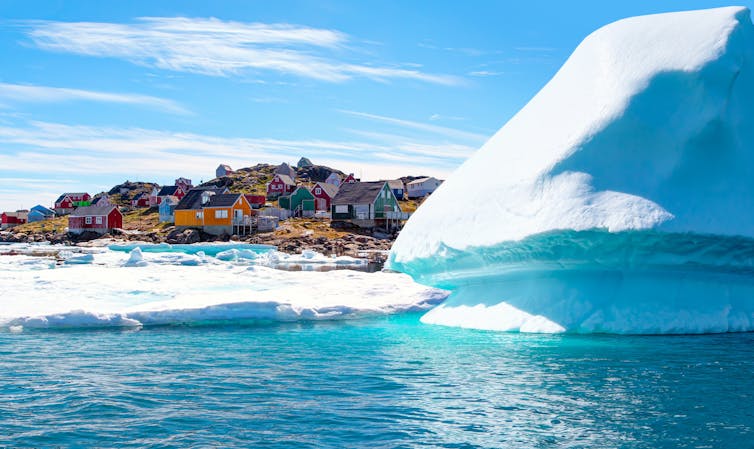
Greenland, a former Danish colony, is currently an autonomous territory within the Kingdom of Denmark. This political arrangement grants Greenland extensive self-rule, including control over most domestic affairs, as well as its own prime minister and parliament. However, Denmark retains authority over foreign policy, defence and monetary policy.
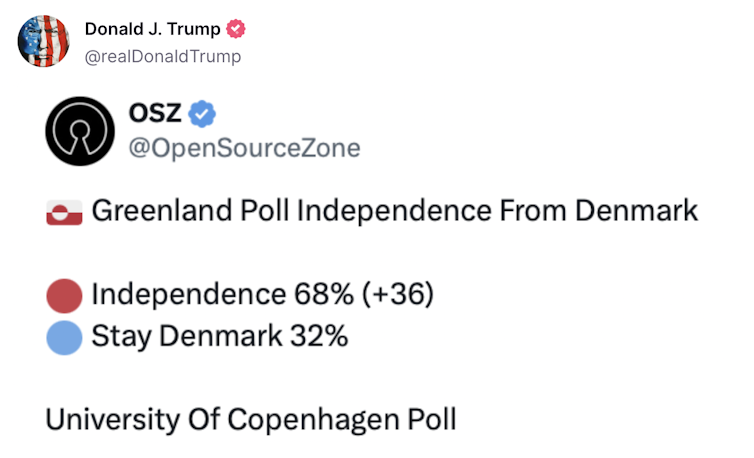
While our survey results were covered in Greenlandic and Danish media upon their release, they received scant international attention. This changed abruptly on January 15, when newly re-elected US president Donald Trump reposted an old news article about our results. The headline stated that two-thirds of Greenlandic citizens support independence.
Trump did not add a comment in the post but the insinuation was clear given his recent statements about annexing Greenland from Denmark: Greenlandic residents want independence from Denmark, and therefore, they might be open to other political or economic arrangements with the US.
“I think we’re going to have it,” Trump recently said after a phone call with the Danish prime minister, Mette Frederiksen, who told him the land was “not for sale”. Trump has in the past spoken of somehow “purchasing” Greenland but has since moved on towards speaking in more assertive terms about taking control of the territory.
Back in 2018, when we conducted the survey, Trump had not yet revealed any plans to annex the island nation. It was a scenario we could hardly even have imagined and therefore did not ask our participants about. As such, regardless of how Trump framed them, the survey results in no way indicated that the population harboured a desire to join the US.
In fact, a recent survey conducted by Sermitsiaq (a Greenlandic newspaper) and Berlingske (a Danish newspaper) directly addressed this question and found that only 6% of respondents wanted Greenland to leave Denmark and instead become part of the US.
In the study I published based on the 2018 data collection, I reported that a majority of the Greenlandic population aspired to independence. Two-thirds of the participants thought that “Greenland should become an independent country at some point in the future”.
Opinions were more divergent regarding the timing of independence. When asked how they would vote in an independence referendum if it were held today, respondents who stated a preference were evenly split between “yes” and “no” to independence.
The Act on Greenland Self-Government, passed in 2009, grants the Greenlandic government the legal authority to unilaterally call a referendum on separating from the political union with Denmark. According to the law, “the decision regarding Greenland’s independence shall be taken by the people of Greenland”.
During the 15 years since its passage, the option to call a referendum has not been exercised. This is likely due to the potential economic consequences of leaving the union with Denmark.
Each year, Denmark sends a block grant that covers approximately half of Greenland’s budget. This supports a welfare system that is more extensive than what is available to most Americans. In addition, Denmark administers many costly including national defence.
This backdrop presents a dilemma for many Greenlanders who aspire to independence, as they weigh welfare concerns against political sovereignty. This was also evident from my study, which revealed that economic considerations influence independence preferences.
For many Greenlanders, the island nation’s rich natural resources present a potential bridge between economic self-sufficiency and full sovereignty. Foreign investments and the associated tax revenues from resource extraction are seen as key to reducing economic dependence on Denmark. Presumably, these natural resources, which include rare earths and other strategic minerals, also help explain Trump’s interest in Greenland.
As Greenland’s future is likely to remain at the centre of a geopolitical power struggle for some time, it is crucial to remember that only Greenlanders have the right to determine their own path. What scarce information is available on their views suggests that while many aspire to independence, it is not driven by a desire to join the US.
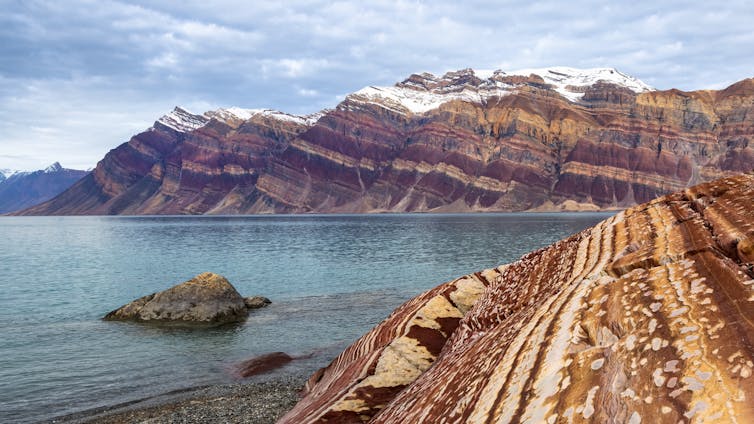
Greenland’s concentration of natural resource wealth is tied to its hugely varied geological history over the past 4 billion years. Jane Rix/Shutterstock
Greenland, the largest island on Earth, possesses some of the richest stores of natural resources anywhere in the world.
These include critical raw materials – resources such as lithium and rare earth elements (REEs) that are essential for green technologies, but whose production and sustainability are highly sensitive – plus other valuable minerals and metals, and a huge volume of hydrocarbons including oil and gas.
The scale of Greenland’s hydrocarbon potential and mineral wealth has stimulated extensive research by Denmark and the US into the commercial and environmental viability of new activities like mining. The US Geological Survey estimates that onshore northeast Greenland (including ice-covered areas) contains around 31 billion barrels of oil-equivalent in hydrocarbons – similar to the US’s entire volume of proven crude oil reserves.
But Greenland’s ice-free area, which is nearly double the size of the UK, forms less than a fifth of the island’s total surface area – raising the possibility that huge stores of unexplored natural resources are present beneath the ice.
Greenland’s concentration of natural resource wealth is tied to its hugely varied geological history over the past 4 billion years. Some of the oldest rocks on Earth can be found here, as well as truck-sized lumps of native (not meteorite-derived) iron. Diamond-bearing kimberlite “pipes” were discovered in the 1970s but have yet to be exploited, largely due to the logistical challenges of mining them.
Geologically speaking, it is highly unusual (and exciting for geologists like me) for one area to have experienced all three key ways that natural resources – from oil and gas to REEs and gems – are generated. These processes relate to episodes of mountain building, rifting (crustal relaxation and extension), and volcanic activity.
Greenland was shaped by many prolonged periods of mountain building. These compressive forces broke up its crust, allowing gold, gems such as rubies, and graphite to be deposited in the faults and fractures. Graphite is crucial for the production of lithium batteries but remains “underexplored”, according to the Geological Survey of Denmark and Greenland, relative to major producers such as China and South Korea.
But the greatest proportion of Greenland’s natural resources originates from its periods of rifting – including, most recently, the formation of the Atlantic Ocean from the beginning of the Jurassic Period just over 200 million years ago.
Greenland’s onshore sedimentary basins such as the Jameson Land Basin appear to hold the greatest potential of oil and gas reserves, analogous to Norway’s hydrocarbon-rich continental shelf. However, prohibitively high costs have limited commercial exploration. There is also a growing body of research suggesting potentially extensive petroleum systems ringing the entirety of offshore Greenland.
Metals such as lead, copper, iron and zinc are also present in the onshore (mostly ice-free) sedimentary basins, and have been worked locally, on a small scale, since 1780.
Difficult-to-source rare earth elements
While not as intimately related to volcanic activity as nearby Iceland – which, uniquely, sits at the intersection of a mid-ocean ridge and a mantle plume – many of Greenland’s critical raw materials owe their existence to its volcanic history.
REEs such as niobium, tantalum and ytterbium have been discovered in igneous rock layers – similar to the discovery (and subsequent mining) of silver and zinc reserves in south-west England, which were deposited by warm hydrothermal waters circulating at the tip of large volcanic intrusions.
Critically among REEs, Greenland is also predicted to hold sufficient sub-ice reserves of dysprosium and neodymium to satisfy more than a quarter of predicted future global demand – a combined total of nearly 40 million tonnes.
These elements are increasingly seen as the most economically important yet difficult to source REEs because of their indispensable role in wind power, electric motors for clean road transport, and magnets in high-temperature settings like nuclear reactors.
The development of known deposits such as Kvanefield in southern Greenland – not to mention those not yet discovered in the island’s central rocky core – could easily affect the global REE market, owing to their relative global scarcity.
An unfortunate dilemma
The global energy transition came about due to increasing public recognition of the manifold threats of burning fossil fuels. But climate change has major implications for the availability of many of Greenland’s natural resources that are currently blanketed by kilometres of ice – and which are a key part of that energy transition.
An area the size of Albania has melted since 1995, and this trend is likely to accelerate unless global carbon emissions fall sharply in the near future.
Recent advances in survey techniques, such as the use of ground-penetrating radar, allow us to peer with increasing certainty beneath the ice. We are now able to obtain an accurate picture of bedrock topography below up to 2 km of ice cover, providing clues as to the potential mineral resources in Greenland’s subsurface.
However, progress is slow in prospecting under the ice – and sustainable extraction is likely to prove even harder.
Soon, an unfortunate dilemma may need to be addressed. Should Greenland’s increasingly available resource wealth be extracted with gusto, in order to sustain and enhance the energy transition? But doing so will add to the effects of climate change on Greenland and beyond, including despoiling much of its pristine landscape and contributing to rising sea levels that could swamp its coastal settlements.
Currently, all mining and resource extraction activities are heavily regulated by the government of Greenland through comprehensive legal frameworks dating from the 1970s. However, pressures to loosen these controls, and to grant new licences for exploration and exploitation, may increase amid the US’s strong interest in Greenland’s future.


 US President Donald Trump speaks to House Republican lawmakers during their annual policy retreat, January 6, 2026, in Washington