Greenland is rich in natural resources – a geologist explains why
Spread the love
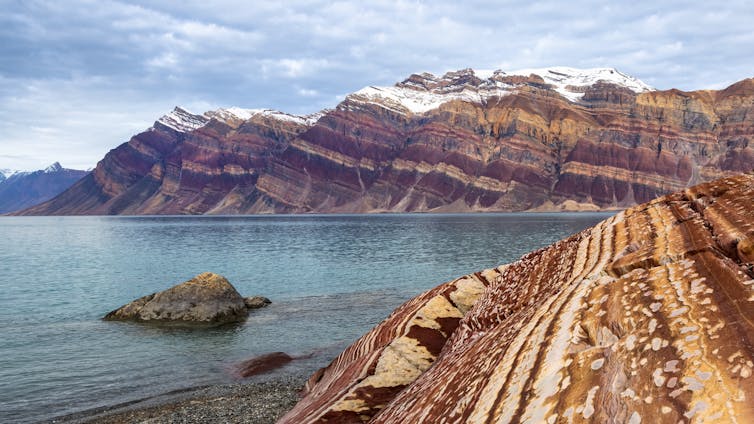
Greenland’s concentration of natural resource wealth is tied to its hugely varied geological history over the past 4 billion years. Jane Rix/Shutterstock

Jonathan Paul, Royal Holloway, University of London

Greenland, the largest island on Earth, possesses some of the richest stores of natural resources anywhere in the world.

These include critical raw materials – resources such as lithium and rare earth elements (REEs) that are essential for green technologies, but whose production and sustainability are highly sensitive – plus other valuable minerals and metals, and a huge volume of hydrocarbons including oil and gas.

Three of Greenland’s REE-bearing deposits, deep under the ice, may be among the world’s largest by volume, holding great potential for the manufacture of batteries and electrical components essential to the global energy transition.

The scale of Greenland’s hydrocarbon potential and mineral wealth has stimulated extensive research by Denmark and the US into the commercial and environmental viability of new activities like mining. The US Geological Survey estimates that onshore northeast Greenland (including ice-covered areas) contains around 31 billion barrels of oil-equivalent in hydrocarbons – similar to the US’s entire volume of proven crude oil reserves.

But Greenland’s ice-free area, which is nearly double the size of the UK, forms less than a fifth of the island’s total surface area – raising the possibility that huge stores of unexplored natural resources are present beneath the ice.

Greenland’s concentration of natural resource wealth is tied to its hugely varied geological history over the past 4 billion years. Some of the oldest rocks on Earth can be found here, as well as truck-sized lumps of native (not meteorite-derived) iron. Diamond-bearing kimberlite “pipes” were discovered in the 1970s but have yet to be exploited, largely due to the logistical challenges of mining them.

Geologically speaking, it is highly unusual (and exciting for geologists like me) for one area to have experienced all three key ways that natural resources – from oil and gas to REEs and gems – are generated. These processes relate to episodes of mountain building, rifting (crustal relaxation and extension), and volcanic activity.

Greenland was shaped by many prolonged periods of mountain building. These compressive forces broke up its crust, allowing gold, gems such as rubies, and graphite to be deposited in the faults and fractures. Graphite is crucial for the production of lithium batteries but remains “underexplored”, according to the Geological Survey of Denmark and Greenland, relative to major producers such as China and South Korea.

But the greatest proportion of Greenland’s natural resources originates from its periods of rifting – including, most recently, the formation of the Atlantic Ocean from the beginning of the Jurassic Period just over 200 million years ago.

Map of Greenland's major geologic provinces with their rock types.
Greenland’s major geologic provinces with rock types and ages. Geophysical Research Letters, CC BY-NC-SA

Greenland’s onshore sedimentary basins such as the Jameson Land Basin appear to hold the greatest potential of oil and gas reserves, analogous to Norway’s hydrocarbon-rich continental shelf. However, prohibitively high costs have limited commercial exploration. There is also a growing body of research suggesting potentially extensive petroleum systems ringing the entirety of offshore Greenland.

Metals such as lead, copper, iron and zinc are also present in the onshore (mostly ice-free) sedimentary basins, and have been worked locally, on a small scale, since 1780.

Difficult-to-source rare earth elements

While not as intimately related to volcanic activity as nearby Iceland – which, uniquely, sits at the intersection of a mid-ocean ridge and a mantle plume – many of Greenland’s critical raw materials owe their existence to its volcanic history.

REEs such as niobium, tantalum and ytterbium have been discovered in igneous rock layers – similar to the discovery (and subsequent mining) of silver and zinc reserves in south-west England, which were deposited by warm hydrothermal waters circulating at the tip of large volcanic intrusions.

Critically among REEs, Greenland is also predicted to hold sufficient sub-ice reserves of dysprosium and neodymium to satisfy more than a quarter of predicted future global demand – a combined total of nearly 40 million tonnes.

These elements are increasingly seen as the most economically important yet difficult to source REEs because of their indispensable role in wind power, electric motors for clean road transport, and magnets in high-temperature settings like nuclear reactors.

The development of known deposits such as Kvanefield in southern Greenland – not to mention those not yet discovered in the island’s central rocky core – could easily affect the global REE market, owing to their relative global scarcity.

An unfortunate dilemma

The global energy transition came about due to increasing public recognition of the manifold threats of burning fossil fuels. But climate change has major implications for the availability of many of Greenland’s natural resources that are currently blanketed by kilometres of ice – and which are a key part of that energy transition.

An area the size of Albania has melted since 1995, and this trend is likely to accelerate unless global carbon emissions fall sharply in the near future.

Recent advances in survey techniques, such as the use of ground-penetrating radar, allow us to peer with increasing certainty beneath the ice. We are now able to obtain an accurate picture of bedrock topography below up to 2 km of ice cover, providing clues as to the potential mineral resources in Greenland’s subsurface.

However, progress is slow in prospecting under the ice – and sustainable extraction is likely to prove even harder.

Soon, an unfortunate dilemma may need to be addressed. Should Greenland’s increasingly available resource wealth be extracted with gusto, in order to sustain and enhance the energy transition? But doing so will add to the effects of climate change on Greenland and beyond, including despoiling much of its pristine landscape and contributing to rising sea levels that could swamp its coastal settlements.

Currently, all mining and resource extraction activities are heavily regulated by the government of Greenland through comprehensive legal frameworks dating from the 1970s. However, pressures to loosen these controls, and to grant new licences for exploration and exploitation, may increase amid the US’s strong interest in Greenland’s future.

Jonathan Paul, Associate Professor in Earth Science, Royal Holloway, University of London

This article is republished from The Conversation under a Creative Commons license. Read the original article.
Continue ReadingGreenland is rich in natural resources – a geologist explains why

Majority of UN Security Council rejects the US attack on Venezuela

Spread the love

Original article by Pablo Meriguet republished from peoples dispatch under Creative Commons Attribution-ShareAlike 4.0 (CC BY-SA) license.

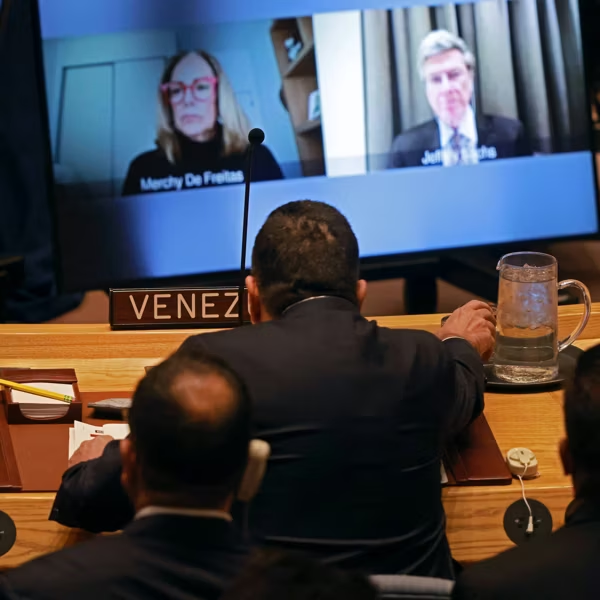
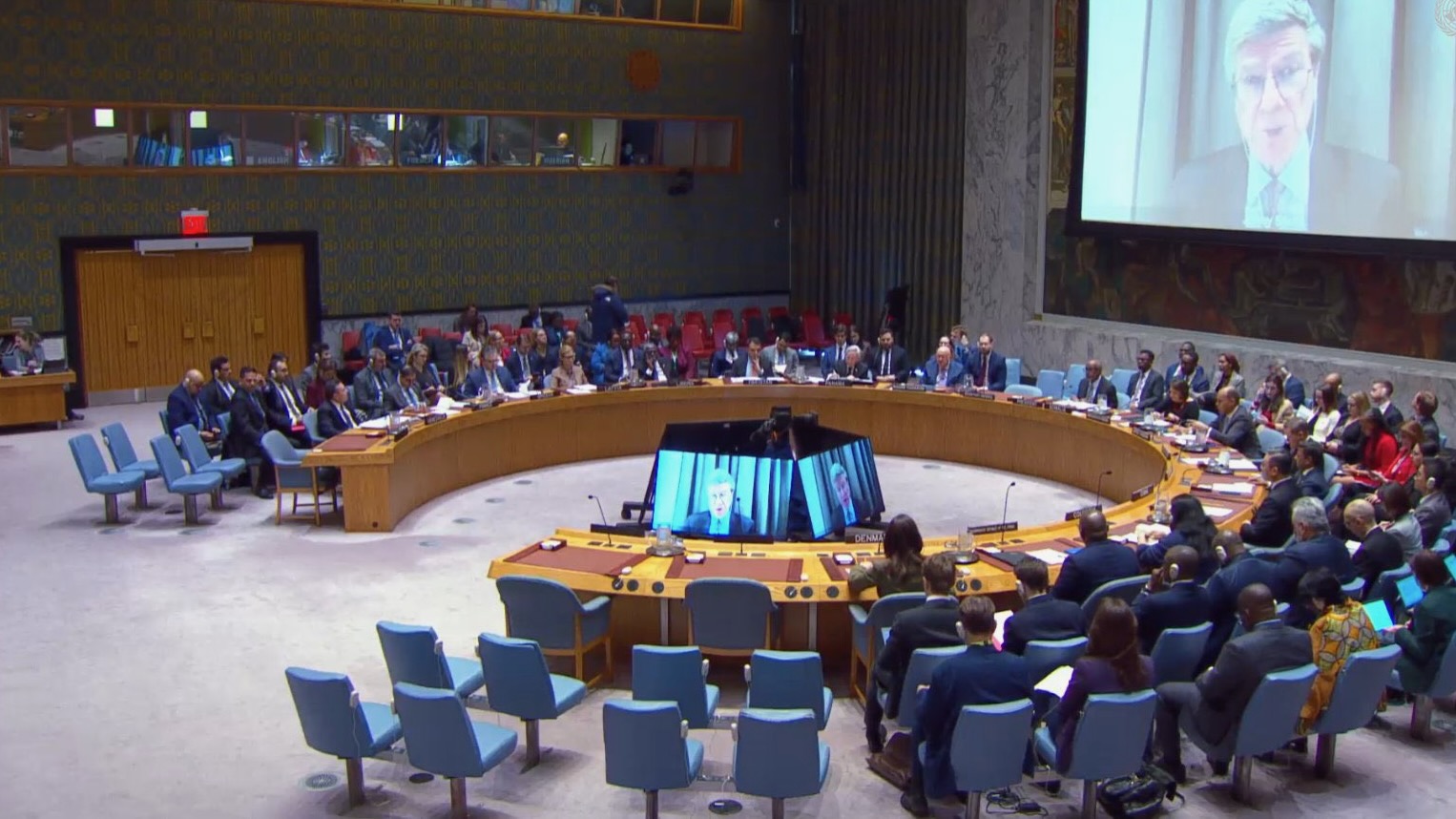
UNSC emergency session on US attack on Venezuela. Photo: X

In this piece, we review the arguments made by members of the United Nations Security Council regarding the US attack on Venezuela on January 3.

The UN Security Council held an emergency meeting on January 3 in response to the US attack on Venezuela, which resulted in the deaths of dozens of people and the capture of Venezuelan President Nicolás Maduro.

The high-level diplomatic meeting was marked by two clearly distinguishable positions: those who supported Washington’s actions and those who rejected them, claiming they violated international law and the South American country’s national sovereignty.

Rosemary DiCarlo, representative of the Secretary-General, said that the actions could generate greater instability in the nation: “We meet at a grave time following the January 3 United States military action in the Bolivarian Republic of Venezuela.” In addition, DiCarlo, following the statements of Secretary-General Antonio Guterres, emphasized that the attack constituted a military aggression that violates the UN Charter.

Future of the UN Charter at stake

Renowned scholar Jeffrey D. Sachs, president of the UN Sustainable Development Solutions Network, also addressed the session and highlighted that beyond the immediate violation of Venezuela’s sovereignty, the US actions constitute an existential threat to the entire UN system. “The issue before the Council today is not the character of the government of Venezuela. The issue is whether any Member State—by force, coercion, or economic strangulation—has the right to determine Venezuela’s political future or to exercise control over its affairs. This question goes directly to Article 2(4) of the United Nations Charter, which prohibits the threat or use of force against the territorial integrity or political independence of any state.”

Sachs implored the UNSC to take action and call on the US to end its military threats and attacks against Venezuela, end its naval blockade, and withdraw its military forces from the Caribbean which have been amassing since August.

Sachs affirmed that, “Peace and the survival of humanity depend on whether the United Nations Charter remains a living instrument of international law or is allowed to wither into irrelevance.”

Neocolonialism, illegality and imperialism: condemnation of the attack

Samuel Moncada, Venezuela’s representative to the Security Council, strongly condemned the US military actions against his country. He stated that what happened on January 3 constituted an “illegitimate armed attack” that lacked legal justification and violated the UN Charter, the Geneva Convention, and the principles of sovereignty. The situation also calls into question the “credibility of international law,” as it seems that “the law is optional” when it is one country and not another that “kidnaps a head of state”.

China

Along the same lines, Fu Cong, representative of China, said: “[China] strongly condemns the unilateral, illegal, and bullying acts against Venezuela.” “[The United States] wantonly tramples upon Venezuela’s sovereignty, security, and legitimate rights and interests,” he said. He also called on the United States to return to dialogue to reach a peaceful solution.

Cuba

Cuba, for its part, categorically rejected the “imperialist and fascist aggressions” of the United States and warned of “criminal and hegemonic plans” that Washington is carrying out. In addition, the Cuban representative stated that the United States commits acts of economic suffocation and maritime terrorism against the governments it seeks to overthrow, which is in flagrant contradiction with the UN Charter and international law. He asserted that the objective behind the “kidnapping” of Maduro and his wife, Cilia Flores, is to gain “control over Venezuela’s land and natural resources.”

Russia

Likewise, the representative of the Russian Federation, Vassily Nebenzia, condemned the “armed aggression” against Venezuela for violating international law and demanded the immediate release of the “legitimately-elected president”, Nicolás Maduro. He also called for an end to fear and hypocrisy in the face of US actions that seek to justify “such an egregious act of aggression [out of fear of the] American global gendarme.” Finally, he stated that the actions of the United States constitute new examples of “neocolonialism and imperialism”.

Colombia

For her part, Leonor Zalabata said that her country, Colombia, strongly condemns the actions of January 3, and affirmed that the use of force, according to the UN Charter, can only be used in exceptional situations, such as self-defense, but never to take political control of another state, as Trump said he would do with Venezuela. The attacks, she added, could lead to a large-scale migration that would require significant budget allocations to care for the migrants. Colombia shares thousands of kilometers of border with Venezuela, and Trump has directly threatened Colombian President Gustavo Petro with carrying out a similar attack on Colombian territory.

Mexico

Mexico also strongly criticized the military attack and stated that such actions “should not be allowed” because they jeopardize multilateralism and international law. It called on members to abandon double standards and “act decisively” in respect for the national sovereignty of the peoples of each country, who are the only ones authorized to decide “their destiny”.

Brazil

Brazil also joined in the criticism. Representative Sérgio França stated that “South America is a zone of peace,” and therefore his country rejects military intervention in Venezuela, which “crossed an unacceptable line”, and violates the UN Charter and international law.

Read more: “We’re going to run the country”: Trump hints at possible US occupation of Venezuela

The violation of international law: moderate criticism of the United States

Several members of the Security Council also criticized Washington’s actions, albeit indirectly or less forcefully. 

United Kingdom

Among them was the United Kingdom, whose representative, James Kariuki, stated that his country reaffirms its commitment to international law and the principles of the United Nations. However, he also criticized the actions of the Maduro government for allegedly increasing poverty, repressing the opposition, and the illegitimacy of his government.

Panama

Along the same lines, Panama’s representative, Eloy Alfaro de Alba, condemned the US attack. He stated that US military actions could have very serious consequences for peace in the Latin American region. He also stressed that his country, which suffered a US invasion between 1989 and 1990, reaffirms its respect for the sovereignty of nations. However, he also took the time to criticize what he called Maduro’s illegitimate and authoritarian government, which he said had eroded the democratic system after the 2024 elections.

Chile

Chile was another country that criticized the US military actions “unilaterally in Venezuela,” according to the South American country’s representative, Paula Narváez. “Chile does not recognize the Maduro regime, but serious human rights violations… cannot be resolved militarily and can only be addressed through peaceful, gradual, and incisive processes.”

“There is no war”: in defense of the US attack

For his part, US representative Michael Waltz defended his government’s actions and stated that “there is no war against Venezuela or its people”. On the contrary, Waltz argued that the attack was “a surgical law enforcement operation to apprehend two indicted fugitives, [the] narco-terrorist Nicolás Maduro and Celia Flores.”

Argentina

Another country that openly supported the attack was Argentina. Its representative, Francisco Tropepi, welcomed Trump’s “decisive action” and stated that it was justified by Maduro’s alleged involvement in drug trafficking. However, he called for the situation to be normalized and for institutional order to be restored as soon as possible.

Latvia

Along the same lines, Latvia’s representative, Sanita Pavļuta-Deslandes, indirectly justified the radical measure taken by the United States when she told the Security Council that Maduro’s government had violated human rights and encouraged drug trafficking and corruption.

The international community and international law are under threat

However, despite some direct and indirect support, the United States’ actions have not been well received by the majority of the United Nations Security Council. Several of its members understand that if such actions are not strongly condemned, they could pave the way for similar military actions in other parts of the world.

Asian and African countries fear a new wave of colonialism in their lands, and Europeans, many of whom do not support Maduro, see expansionist arguments looming over Greenland, which have not been heard in Europe for centuries.

Read more: Africa voices outrage against US invasion of Venezuela and kidnapping of President Maduro

Thus, the international community and international law (both structured after the defeat of the Axis in 1945) face an immense challenge following the attack on Venezuela. Whether they will emerge stronger or weakened will become clear in the coming months.

Original article by Pablo Meriguet republished from peoples dispatch under Creative Commons Attribution-ShareAlike 4.0 (CC BY-SA) license.

Elon Musk urges you to be a Fascist like him, says that you can ignore facts and reality then.
Donald Fuhrump says that Amerikkka doesn't bother with crimes or charges anymore, not being 100% Amerikkkan and opposing his real estate intentions is enough.
Donald Fuhrump says that Amerikkka doesn’t bother with crimes or charges anymore, not being 100% Amerikkkan and opposing his real estate intentions is enough.
Orcas discuss how Trump was re-elected and him being an obviously insane, xenophobic Fascist.

Continue ReadingMajority of UN Security Council rejects the US attack on Venezuela

Spanish PM says Gaza, Venezuela and Ukraine territorial unity is not negotiable

Spread the love

This work by Middle East Monitor is licensed under a Creative Commons Attribution-NonCommercial-ShareAlike 4.0 International License.

Spanish Prime Minister Pedro Sanchez holds a press conference following the European Union (EU) Leaders’ Summit in Brussels, Belgium, on October 23, 2025. [Dursun Aydemir – Anadolu Agency]

Spanish Prime Minister Pedro Sanchez said on Monday that the territorial unity of Ukraine, the Gaza Strip and Venezuela is not open to negotiation.

In a post on the X platform, Sanchez said that “respect for the sovereignty of all states and their territorial integrity is a non-negotiable principle, from Ukraine to Gaza, including Venezuela”.

Commenting on remarks by US President Donald Trump, who described Greenland as having a strong strategic position and said the United States needs it for national security reasons, Sanchez expressed his rejection of those statements.

He added that Spain “will always remain actively committed to the United Nations and will be in full solidarity with Denmark and the people of Greenland”.

On Sunday, Spain, Brazil, Colombia, Mexico, Uruguay and Chile said in a joint statement that they “reject unilateral US military operations” in Venezuelan territory.

The statement, distributed by the Spanish authorities, said: “We express our deep concern about what is happening in Venezuela and our rejection of unilateral military actions carried out on Venezuelan territory.” Such actions had violated the “basic principles of international law, in particular the prohibition of the use of force and respect for territorial sovereignty established in the United Nations Charter.”

READ: Venezuela Vs US: Is Maduro paying the price for his support of Gaza? 

This work by Middle East Monitor is licensed under a Creative Commons Attribution-NonCommercial-ShareAlike 4.0 International License.

Elon Musk urges you to be a Fascist like him, says that you can ignore facts and reality then.
Donald Fuhrump says that Amerikkka doesn't bother with crimes or charges anymore, not being 100% Amerikkkan and opposing his real estate intentions is enough.
Donald Fuhrump says that Amerikkka doesn’t bother with crimes or charges anymore, not being 100% Amerikkkan and opposing his real estate intentions is enough.
Orcas discuss how Trump was re-elected and him being an obviously insane, xenophobic Fascist.

Continue ReadingSpanish PM says Gaza, Venezuela and Ukraine territorial unity is not negotiable

Owen Jones: Trump Will INVADE GREENLAND – And NATO Will COLLAPSE

Spread the love

Elon Musk urges you to be a Fascist like him, says that you can ignore facts and reality then.
Donald Fuhrump says that Amerikkka doesn't bother with crimes or charges anymore, not being 100% Amerikkkan and opposing his real estate intentions is enough.
Donald Fuhrump says that Amerikkka doesn’t bother with crimes or charges anymore, not being 100% Amerikkkan and opposing his real estate intentions is enough.
Orcas discuss how Trump was re-elected and him being an obviously insane, xenophobic Fascist.

Continue ReadingOwen Jones: Trump Will INVADE GREENLAND – And NATO Will COLLAPSE

Mad Kings Don’t Stop Themselves. They Must Be Stopped.

Spread the love

Original article by Thom Hartmann republished from Common Dreams under Creative Commons (CC BY-NC-ND 3.0). 

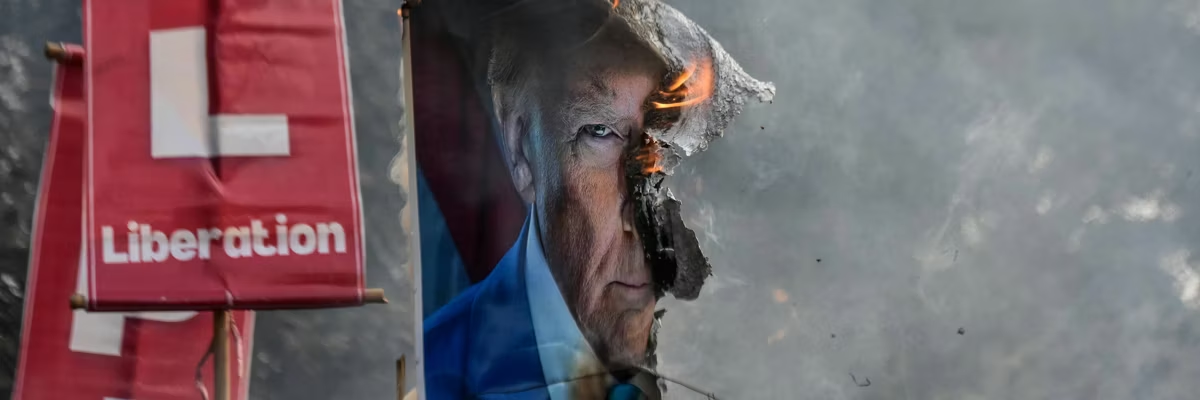
Protesters rally towards the American embassy in Kolkata, India, on January 5, 2026, against the USA’s attack on Venezuela and the capture of Venezuela’s President Nicolas Maduro and his wife. They stage a demonstration and burn an effigy of Donald Trump during the protest. (Photo by Debarchan Chatterjee/NurPhoto via Getty Images)

Insane rulers rarely stop themselves: they’re stopped when the people around them decide the country matters more than the crown.

When Louise and I lived in Germany in the 1980s, we visited Neuschwanstein Castle, the fantasy palace perched on a Bavarian cliff that looks like it escaped from a fairy tale. Tour guides will tell you about its beauty and its role as an inspiration for Disney, but they’ll also share a more unsettling story that today echoes Donald Trump.

Neuschwanstein was built by King Ludwig II, a ruler who withdrew from reality, governed through spectacle instead of policy, ignored his ministers, and bankrupted Bavaria by indulging his own grandiosity and a never-ending stream of construction and renovation projects. (Neuschwanstein was only one of three castles he built.) Bavaria eventually dealt with Mad King Ludwig: his own government declared him mentally unfit to rule and removed him from the throne.

RECOMMENDED…

TOPSHOT-US-VENEZUELA-CONFLICT-TRUMP

Run Venezuela? They Can’t Even Run The United States

United Nations Security Council Meets In New York To Discuss U.S. Incursion Into Venezuela

My Briefing to the UN Security Council Regarding US Aggression Against Venezuela

That memory of Ludwig and his architectural obsessions has been haunting me lately, and it’s frankly astonishing that more people in the media aren’t asking the same question I’m bringing up here (and people are constantly calling into my radio/TV show about): “Is Trump losing his sanity?”

I’m not talking about his well-documented lifelong narcissism, his sociopathic inability to feel or even understand the pain of other people, his bullying, or even his compulsive lying, greed, and lechery; this is about whether he’s fit for the job he’s holding or is losing his touch with reality in a way that endangers both our nation and world peace.

When Trump held his press conference announcing the invasion of Venezuela and the arrest of Nicolás Maduro, a reporter asked the most basic question imaginable: Who is running Venezuela now and going forward?

Trump first claimed that he was in charge, but then when other reporters asked for details he waved his hand toward the men standing behind him and said, “They are.” Marco RubioStephen Miller, General Dan Caine, and Pete Hegseth.

The expressions on their faces told the real story: Surprise, confusion, and even alarm. This was clearly, visibly news to them. Shocking news, even.

Did he just decide to BS his way through the press conference like he’s done so much of his life? Didn’t he realize this was a violation of both international law and the US Constitution? Did he think for a moment that he’s the king of the Americas? Or the world?

The next day we discovered the truth their expressions revealed; there was no plan for governing Venezuela, or even trying to via an occupation Iraq-style. There was no congressional authorization; in fact, he told the oil companies before the raid but didn’t bother to inform Congress until yesterday. (Although the oil companies now say he’s lying.)

There was no public debate and no involvement of any visible constitutional process involved in this invasion and body-snatch. Under our federal system, the president doesn’t get to just improvise an occupation or administration of a foreign nation from a podium.

Even Nixon, Reagan, Bush, and Bush didn’t try to pull that off; all sought congressional authorizations for their wars and each gave explanations that at least gave a hat-tip to the traditional American values of democracy, peace, and the rule of law.

Congress, after all, declares war under our Constitution, as well as controlling the purse that makes that war possible. Even the idea of “running” another country would require massive legal, diplomatic, and military frameworks, and now we discover that none of that stuff existed. Instead, apparently, Trump had an impulsive thought or idea and just blurted it out.

That moment should have set off loud alarms throughout Washington and should have shot across our media like a meteorite. Instead, it drifted by as simply another strange episode in a presidency that’s taught us to pretend the abnormal is now normal.

Democrats (and a few Republicans) condemned Trump’s claim that he was running Venezuela; Republican politicians are now twisting themselves into pretzels to try to justify it. Reporters were simply confused. It’s nuts.

And in just the few days since then, Trump has openly threatened to seize GreenlandCuba, Colombia, even Mexico. These aren’t policy proposals. They also aren’t rooted in American or international law, military or political strategy, or diplomacy.

They are, instead, Mad King Ludwig-like expressions of personal fantasy, of imperial imagination, of a man who appears increasingly convinced — who actually believes — that all power in America and perhaps around the world flows from his will alone.

And then there’s Trump’s bizarre online behavior, like posting over 100 times a night, and promoting a tweet saying that Minnesota Governor Tim Walz had hired a hit on State Representative Melissa Hortman and her husband, close personal friends of Walz’s.

Or his refusal to consider the last Venezuelan election winner, María Corina Machado, to run the country because she “stole” the Nobel prize from him.

Rachel Maddow last night on her television program suggested that the real reason Trump invaded Venezuela was simply because he could. Like a child, or a mad king, he wanted to play with his soldiers, watch them kill people and blow things up, and he doesn’t want anybody to tell him that he can’t.

And, I would add, eventually he plans to turn them on people like you and me. Once he’s made sure they’ll do anything he demands, no matter how bizarre, no matter how wrong, no matter how illegal. That’s why he’s now going after Senator Mark Kelly and other members of Congress for telling soldiers they don’t have to follow illegal orders.

Lev Parnas, who once worked closely with Trump and still hears from people inside his orbit, writes that Trump is receiving regular intravenous infusions of a new Alzheimer’s medication, administered through veins in his hands, whose known side effects include “sleepiness” during the day, “poor judgment,” and “impaired impulse control.” It could explain the bruises, the CT scans and MRIs, and the regular cognitive tests that the medication requires.

Not to mention the increasingly bizarre and grandiose behavior.

I’m not diagnosing Trump, but I am watching — a shocked world is watching — a pattern of behavior that is becoming more erratic, more impulsive, and more detached from constitutional reality week by painful week.

This also isn’t a partisan observation; I’m describing precisely the scenario the Framers and a later Congress worried about when they designed safeguards for presidential incapacity. The 25th Amendment wasn’t written for removing villains but rather for those moments when a president can’t or won’t reliably discharge the duties of his office but doesn’t have the good grace, insight, or ability to step down himself.

But constitutional tools are only as strong as the people willing to use them.

Bavaria in the nineteenth century had fewer options than we do. It had no elections to depose Mad King Ludwig, and no amendment laying out a clear procedure for replacing him.

For years, Ludwig had ministers serving him who watched how crazy he’d become but nonetheless delayed, rationalized, and hoped the problem would solve itself. It wasn’t until the damage became so great, as the state trembled on the verge of bankruptcy, that it was impossible to ignore any longer.

Modern America, on the other hand, has elections, courts, and a theoretically independent Congress. And we have the 25th Amendment. What we lack right now, however, is courage in the GOP and Trump’s cabinet.

Republican members of Congress know that a president can’t unilaterally invade or administer foreign nations on his own whim or impulse. They know that threatening annexation destabilizes the entire world, and Trump’s handed both Putin, Netanyahu, and Xi the rationalizations they all crave to expand their own empires.

Even Republicans know that governing by impulse isn’t strength but, instead, represents a very real danger to our republic. And yet they remain silent, calculating that confronting Trump is riskier to their careers than indulging him is to the country.

That GOP calculation is the real threat.

Trump’s love of military spectacle also fits perfectly — and dangerously — into this pattern. Like Ludwig staging operas and medieval fantasies in his version of the Kennedy Center, Trump treats America’s armed forces as props in his own pathetic personal drama. Rallies, salutes, parades, flyovers, and dramatic announcements substitute for deliberation, applause substitutes for legitimacy, and the human costs, the constitutional limits, and the long-term consequences are all fading into the background.

Neuschwanstein still stands today, beautiful and empty, a monument to what happens when fantasy replaces governance. Bavaria survived despite Ludwig, not because of him. Twenty-first century America, however, doesn’t have the luxury of turning its current ruler into a picturesque lesson (complete with a Ludwig-style ballroom) after the damage is done. A nuclear-armed superpower can’t afford indulgence that’s pretending to be patience.

The Constitution isn’t self-enforcing and doesn’t rise up on its own when norms are trampled. It instead relies on people in positions of authority to choose responsibility over fear; that’s why federal officials and our soldiers pledge their allegiance to our Constitution rather than to our government or any particular administration or person.

We hold the rulebook sacred, not the rulers.

If Republicans continue to refuse to even acknowledge the danger in front of them, history suggests the reckoning will come anyway, just at a far higher cost.

Bavaria eventually acted, not because it was easy but because delay had become more dangerous than dealing with a psychologically incapacitated and emotionally stunted ruler. The question facing the United States today is whether we’ll learn from that history or insist on repeating it.

Mad kings rarely stop themselves: they’re stopped when the people around them decide the country matters more than the crown.

Let your elected officials, particularly the Republicans, know your thoughts on the issue. The phone number for Congress is 202-224-3121. And pass it along…

Original article by Thom Hartmann republished from Common Dreams under Creative Commons (CC BY-NC-ND 3.0). 

Donald Fuhrump says that Amerikkka doesn't bother with crimes or charges anymore, not being 100% Amerikkkan and opposing his real estate intentions is enough.
Donald Fuhrump says that Amerikkka doesn’t bother with crimes or charges anymore, not being 100% Amerikkkan and opposing his real estate intentions is enough.
Orcas discuss how Trump was re-elected and him being an obviously insane, xenophobic Fascist.
Donald Trump urges you to be a Climate Science denier like him. He says that he makes millions and millions for destroying the planet, Burn, Baby, Burn and Flood, Baby, Flood.
Continue ReadingMad Kings Don’t Stop Themselves. They Must Be Stopped.