My Green colleagues and I are so incredibly disappointed in this King’s Speech, but it’s not a surprise. In the wake of a devastating set of local election results for the Labour Party, the Prime Minister and the government should have used this opportunity to lay out an urgent, transformative, progressive programme to redistribute wealth, tackle the nature and climate crisis and make life affordable for everyone.
My Green colleagues and I will seek to amend the government’s plans to include the urgent action needed to bring down people’s bills – rent controls, nationalising water, freezing energy prices, and taxing wealth. We need to see these measures despite the Labour Party’s drama, and even if there’s a different Prime Minister this time tomorrow!
I’m disappointed that instead of using this opportunity to get behind the Green Party’s demands, the government has laid out more of the same fiddling around the edges. There’s some positive movement on democratic reform and EU alignment, but also worrying double-downs on airport expansion and their cruel, unworkable immigration policy.
I was elected to give a voice to a politics that represents everyone. This is the first King’s Speech I have been in Parliament to hear, and I haven’t heard anywhere near enough to make meaningful changes to people’s lives. It’s a missed opportunity, it’s disappointing, and it’s out of touch. The people of this country deserve so much more.
The amendment will include:
Freezing energy prices in July to stop them going up by over £300
New powers to control rents
Funding for councils to buy existing homes from private landlords
Water utilities to be brought back into public ownership
Free bus passes for under 22s
Universal free school meals
Further measures to tax fossil fuel companies and the extreme wealth of billionaires and multimillionaires
Apologies, I have withdrawn this article because I consider that it was misleading. It referred to a YouGov poll of 3 March 2026 [ed: 2nd March] instead of a more recent one.
Nigel Farage explains the politics of Reform UK: Racism, Fake anti-establishmentism, Deregulation, Corporatism, Climate Change Denial, Mysogyny and Transphobia.Nigel Farage reminds you that he’s the man that brought you Brexit and asks what could possibly go wrong.Orcas discuss how Trump was re-elected and him being an obviously insane, xenophobic Fascist.
Star-studded think tank launches, defection rumours and ‘growing pains’ – a week inside the ascendant Green Party
As the bass dropped in Trafalgar Square last Saturday, the mood tipped from protest to party. A day that had begun as one of the largest anti-racism rallies London has seen in years – with organisers estimating a turnout of half a million – ended in dance music and defiant optimism.
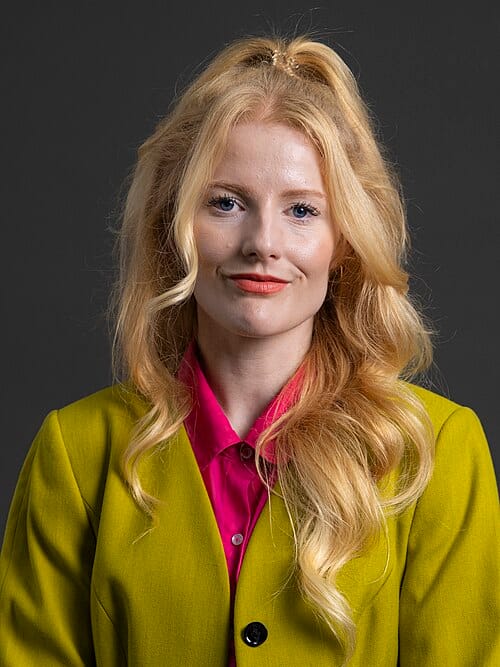
“Trafalgar Square, who’s ready to make hope normal again?” shouted Green Party leader Zack Polanski over the booming music. This was the House Against Hate rave; on the stage, Polanski was flanked on one side by Hannah Spencer, the new Green MP for Gorton and Denton, and on the other, by a man clad in leather and hotpants, displaying an impressive range of hip motion.
“Who’s here for love, unity, solidarity?” Polanski shouted again to more cheers, before handing the microphone to Spencer, who led the crowd in a familiar chant of “Oggy, Oggy, Oggy, Oi, Oi, Oi”, to which she added a new battle cry: “Let’s defeat the millionaires!”
The event marked the end of a good week in Green Party politics – the latest in a growing, uninterrupted succession of them.
Hotpants aside, there is a sense in Westminster and beyond that the Greens are getting serious. Under Polanski’s leadership, the party is riding high: Spencer became its fifth MP at a historic by-election victory last month, and in recent weeks it has regularly polled third nationally, occasionally second – a feat it has never previously come close to in its history.
The party is now preparing for what is tipped to be its most successful elections ever on 7 May, and with its membership having more than tripled since Polanski was elected leader in September last year, there is no shortage of activists ready to knock on doors. Predictions suggest the Greens could gain up to 450 council seats across England, while in Wales, where voters will cast national ballots on the same day, the party is forecast to win its first ever seat in the Senedd, and then take nine more.
“It’s a good time for us, clearly, but we’re not complacent,” said a Green Party aide on Thursday evening in late March, as the sun dipped below the rooftops outside a popular SW1 watering hole. Polls suggest Nigel Farage’s right-wing Reform UK will win as many as 2,000 council seats in England and become the Senedd’s second party, after Welsh nationalists Plaid Cymru. Delivering a campaign speech in Leeds last week, Green Party deputy leader Mothin Ali addressed Reform-curious voters.
“I get it,” Ali said, “you have seen things go downhill year after year; prices have gone up whilst your wages have stayed the same. We’re in a system of managed decline, so I understand why you’re angry… But I promise you, voting for Reform will not improve your quality of life.”
The Greens have not struggled to perform well at local elections in recent years; where they have traditionally faltered is in building and sustaining a national profile. Now, however, the party is for the first time finding itself able to consistently make meaningful interventions on the political questions of the day.
Perhaps the most striking example is on the ongoing war in Iran – not a natural talking point for a party that, unlike Labour, the Conservatives, Reform and the Liberal Democrats, did not commit to increasing defence spending in line with the NATO target of 2.5% of GDP in its 2024 general election manifesto. Yet the Greens have deftly connected the war with cost-of-living concerns at home, while putting pressure on Keir Starmer over the US’s use of RAF bases to launch what have been described in starkly Orwellian terms as ‘defensive strikes’.
It’s a strategy reminiscent of former Labour leader Jeremy Corbyn. In 2017, as the British media sought to paint him as a left-wing pacifist who was ‘soft on terror’, Corbyn made a speech on the Manchester Arena bombing that articulated a position voters were unused to hearing, linking Western ‘forever wars’ foreign policy to domestic terrorism – his polling improved throughout the course of that campaign.
But that was almost a decade ago, and in the years since, Corbyn has remained the British left’s figurehead, if at times an absent one.
But at East London’s Troxy theatre last Tuesday night, there was what felt like a partial passing of the reins. As Corbyn and Polanski appeared on stage together for a panel event, it was abundantly clear who is now the most important politician on the British left.
‘He likes the attention’
The evening after the Troxy event, a collection of policy wonks, campaigners and politicians gathered at the swanky London offices of Leigh Day solicitors.
It was the launch of the new Green-aligned think tank, Verdant, led by veteran progressive campaigner Deborah Doane and James Meadway, who’s best-known as a top adviser to the Corbyn-era Labour shadow chancellor, John McDonnell.
Greek economist and former Finance Minister Yanis Varoufakis speaks to Green Party leader Zack Polanski and MP Jeremy Corbyn during a panel discussion at DiEM25 | Denise Baker/Getty Images
The cost of living was a theme of the evening, a prescient one given a warning from the UK’s Food and Drink Federation hours earlier that the Iran war would likely raise prices on supermarket shelves. Attendees were asked to write down their best guess at the price of milk and bread 12 months ago – winner: Green MP Ellie Chowns – and its price in 12 months.
But while many view Verdant as an attempt to revive the economic radicalism of Labour’s Corbyn years, the Corbynite mantra of ‘borrow to invest and end austerity’ will no longer suffice, as Meadway set out on the night. The UK economy is now too desperately exposed to international tensions and government borrowing rates are sky-high; the Greens will need to go further – and with less room for manoeuvre.
To this end, Verdant’s first report calls on a future Green government to tackle waste such as consultancy spending and bloated defence projects to save £30bn – leading the media to frame it as a ‘left-wing DOGE’.
While the comparison with Elon Musk’s cost-cutting efforts in the Trump administration left some in the party sceptical, the proposal more closely resembles a policy enacted by the Western left’s current cause de celebre, New York City mayor Zohran Mamdani, which he described in a trademark slick video titled ‘We’re finding savings everywhere’ that coincidentally came out on the same day as the Verdant report. New York, Mamdani told viewers, has so far saved tens of millions of dollars since he was elected in November last year, including $9m on an axed contract with McKinsey, a major consultancy firm that won UK government contracts worth £277m between 2017 and 2022, according to Byline Times.
There were several recognisable faces milling around at the Verdant launch, picking at a buffet including crisps that one speaker clarified had come in compostable bags – this is still the Green Party, after all.
The YouTuber and former City trader turned wealth inequality campaigner, Gary Stevenson, held court by the bar in his trademark attire of Adidas tracksuit bottoms and thick socks tucked into a pair of Osaka Tigers. Economist and author of 23 Things They Don’t Tell You About Capitalism, Ha-Joon Chang spoke convivially to attendees; being lefty policy wonk types, many approached him with a kind of awe that seemed to leave him more than a little embarrassed.
The attendee who arguably attracted the most attention, though, was the only non-Green politician present: Clive Lewis, the Labour MP for Norwich South. Lewis made no attempt at keeping a low profile, standing right at the front of the room for the speech section of the evening. It’s no secret that he is a Corbynite who has clashed with Starmer on issues ranging from welfare cuts to Gaza to the suspension of other Labour MPs; was his attendance at the event a sign that he plans to join the Greens?
“Maybe Clive wants people to think he’s going to defect. Maybe he likes the attention – or maybe he wants to be seen as being at the front of the queue,” said a well-placed Green Party insider. “But if he were serious about it, he would be having proper meetings with us on the quiet, as some of the others are. But if they’re going to do it, they need to get on with it.”
Some weeks ago I texted a source close to another left-wing Labour MP, sharing a post on X calling on Socialist Campaign Group MPs to defect. Was there any chance such a defection was on the cards?
“More chance of Polanski learning how to run properly,” they joked, referring to a Green Party campaign video that went viral the day before, in which the party’s leader sprints through the streets of London. Seconds later, a one-word follow-up: “Sadly.”
‘Growing Pains’
If there is still a question as to whether Labour MPs will jump ship, at a local council and grassroots level the answer is clear.
Recent months have seen more than 50 Labour councillors defect to the Greens, while a significant proportion of the party’s 150,000 new members are likely drawn from the hundreds of thousands who have fled the Labour Party under Starmer’s leadership.
Some longtime Green Party activists view the influx of newcomers from the rest of the left with something just short of suspicion, fearing they may import some of the wider left’s tendency toward infighting – the likes of which have already tarnished the British left’s other fledgling political project, Your Party, led by Corbyn and ex-Labour MP Zarah Sultana – or try to ‘take over’ the party and fundamentally reshape it. “I don’t have any reason to doubt their motives whatsoever,” said one at Verdant’s launch event, “but equally, we will be keeping a close eye on it.”
Others are less concerned: “We are experiencing some growing pains, sure, but how could we not be? We’ve shot from 5’8 to 16 feet tall in a matter of months. That’s not a bad problem to have.”
These ‘growing pains’ – the practical and political problems of a party membership expanding so rapidly – could be seen at the Green’s spring policy conference, which was taking place online as Polanski and Spencer addressed crowds in Trafalgar Square on Saturday.
A controversial ‘Zionism is racism’ motion to alter the party’s stance on Palestine was postponed, leading to accusations of filibustering. Party sources told openDemocracy that the motion was never likely to be heard due to its position in the running order, and that it will be rescheduled for the party’s main conference in Autumn, when both supporters and those who’ve expressed concerns (which range from ideological opposition to questions on its practical application) will be able to debate and vote on it.
Also worrying for some newcomers was the support for a motion against nationalising the ‘big five’ energy companies, which passed by a significant margin – 478 in favour and 192 against – albeit of a tiny fraction of the party’s 215,000 members. Party sources say this does not rule out nationalisation, but leaves open the door for a better, more developed policy that allows room for community-owned initiatives.
The two events have prompted a (largely online) fallout, with some questioning whether the party is the new home of radical progressive politics that they believed it to be. Among others, there is another concern. Traumatised from the battles with the Labour right that characterised Corbyn’s tenure of the party, some feel a tense unease, as though they are expecting to hear the opening shots of an establishment fightback at any moment.
But this is not Corbyn’s Labour. There is no long history of factionalism, nor an endless stream of backbench rebels and aggrieved party grandees with enough SW1 clout and friends in the media to all but guarantee themselves a slot denouncing their leader on the airwaves.
Rather, Dame Caroline Lucas, the Greens’ first and only parliamentarian from 2010 to 2024 and therefore its only former MP, sits on the board of Verdant. Speaking at its launch last week, she seemed for all the world comfortable with the energy that has been injected into her party under Polanski’s leadership. And to the extent that it exists, the ‘right wing’ of the Green Party – more just its soft left, led by Polanski’s leadership rival, Adrian Ramsay – has significantly less sway.
Ramsay took to X last week to share a write-up in a local newspaper of a Green councillor leaving the party and launching what the Eastern Daily Press called a “blistering attack” on its new populist direction. On the same day, Polanski was interviewed by the New York Times.
“Without wishing to sound mean,” a party source said of the departing councillor, “I think we’ll survive without them.”
Hannah Spencer (left) and Zack Polanski. A new technique that predicted Spencer’s byelection win forecasts that Labour could lose Hackney and Lambeth to the Greens. Photograph: Stefan Rousseau/PA
[Guardian] Exclusive: Senior party figures share data suggesting Green surge could put Labour in fourth place in capital in May
Senior Labour politicians across London have warned the government not to take progressive voters for granted, with concerns the party faces a “political earthquake” in the capital in May after a surge in support for the Greens.
They have been privately circulating new data that suggests Labour could drop from first to fourth place in London in the May elections – losing control of all but two of their councils – with the Greens soaring into first place to take nine.
“The government needs to demonstrate that they’re not taking liberal, progressive voters in the capital for granted,” a senior London Labour figure warned.
Another added: “It’s going to be a total catastrophe for us in London. If we lose swathes of voters on our progressive flank then we’re doomed. We need to start listening to them.”
A new technique, which builds on MRP modelling and correctly predicted the Gorton and Denton byelection result, forecasts that Labour, which holds 21 boroughs in London, could lose flagship authorities such as Hackney and Lambeth to the Greens.
The modelling, from the data firm Bombe, will spook Labour MPs, who hold 59 of London’s 75 parliamentary seats, and include Keir Starmer, David Lammy, Steve Reed and Wes Streeting.
According to the forecast, the party would lose more than half its council seats – many to the Greens – in the prime minister’s own back yard, Camden, which would fall to no overall control.
…
Mike Joslin, the chief executive of Bombe, which is non-political, said: “Labour is facing wipeout in London in the face of a Green tidal wave. The data shows that Labour’s core voters think Keir Starmer disagrees with them on Gaza, social equality issues and Brexit. They want someone that shares their values.
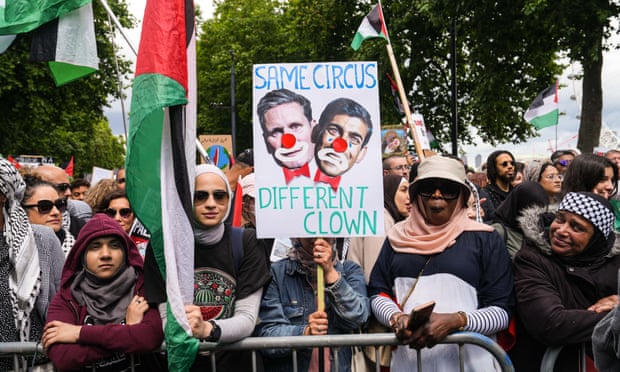
‘Labour’s core voters think Keir Starmer disagrees with them on Gaza.’ Demonstrators at a pro-Palestine march in 2024. Photograph: Antonio Olmos/The Observer
Keir Starmer objects to criticism of the IDF. He asks how could anyone object to them starving people to death, forced marches like the Nazis did, bombing Gaza’s hospitals and universities, mass-murdering journalists, healthworkers and starving people queuing for food, killing and raping prisoners and murdering children. He calls for people to stop obstructing his genocide for Israel.Orcas discuss Genocide-supporting and complicit Zionists. Donald Trump, Keith Starmer, David Lammy, Rachel Reeves, Angela Rayner and Wes Streeting are acknowledged as evil genocide-complicit and supporting cnuts.Keir Starmer says that the Labour Party under his leadership is intensely relaxed about assaulting those least able to defend themselves – the very poorest and most vulnerable.
An F-35 arriving back at RAF Akrotiri in Cyprus, June 2019
Corbyn tables Commons Bill requiring Parliament’s approval before allowing foreign militaries to use British bases
LEFT MPs moved today to block Britain from being dragged deeper into the escalating attack against Iran.
Former Labour leader Jeremy Corbyn tabled a Commons Bill to require MPs’ approval before allowing foreign militaries to use British military bases.
The move comes as not only are US forces using the bases to pursue their illegal aggression, but British military forces are increasingly becoming directly involved in the conflict.
Mr Corbyn’s Military Action (Parliamentary Approval) Bill is co-sponsored by Labour, Green and Independent Alliance MPs and a response to PM Sir Keir Starmer’s agreement to allow US use of the bases.
While it has scant chance of becoming law, it signals growing disquiet in Labour’s ranks and beyond about Britain getting bogged down in supporting US President Donald Trump’s attack.
It would “require parliamentary approval for the deployment of UK armed forces and military equipment for armed conflict” and “require parliamentary approval for the granting of permission by ministers for use of UK military bases and equipment by other nations for armed conflict.”
Its co-sponsors are new Green MP Hannah Spencer and her colleague Ellie Chowns, Adnan Hussein and Ayoub Khan from the Independent Alliance and Labour’s Bell Ribeiro-Addy, Brian Leishman, John McDonnell, Richard Burgon, Apsana Begum, as well as suspended Labour MP Diane Abbott.
Sir Keir is under growing pressure from Mr Trump to fall in line as British governments usually do, forcing the premier to assert in the Commons that the “special relationship” did not “depend on hanging on to President Trump’s latest word.”
Genocide denier and Current UK Prime Minister Keir Starmer is quoted that he supports Zionism without qualification. He also confirms that UK air force support has been essential in Israel’s mass-murdering genocide. Includes URLs https://www.declassifieduk.org/keir-starmers-100-spy-flights-over-gaza-in-support-of-israel/ and https://youtu.be/O74hZCKKdpADonald Trump explains why he established his Bored of PeaceOrcas discuss rotting brain. Front Orca says “Wish someone would lock him up”.




 An F-35 arriving back at RAF Akrotiri in Cyprus, June 2019