Israel’s latest massacres have exacerbated the crisis in Gaza’s healthcare facilities

Spread the love

Original article by Ana Vračar republished from peoples dispatch under a Creative Commons Attribution-ShareAlike 4.0 (CC BY-SA) license.

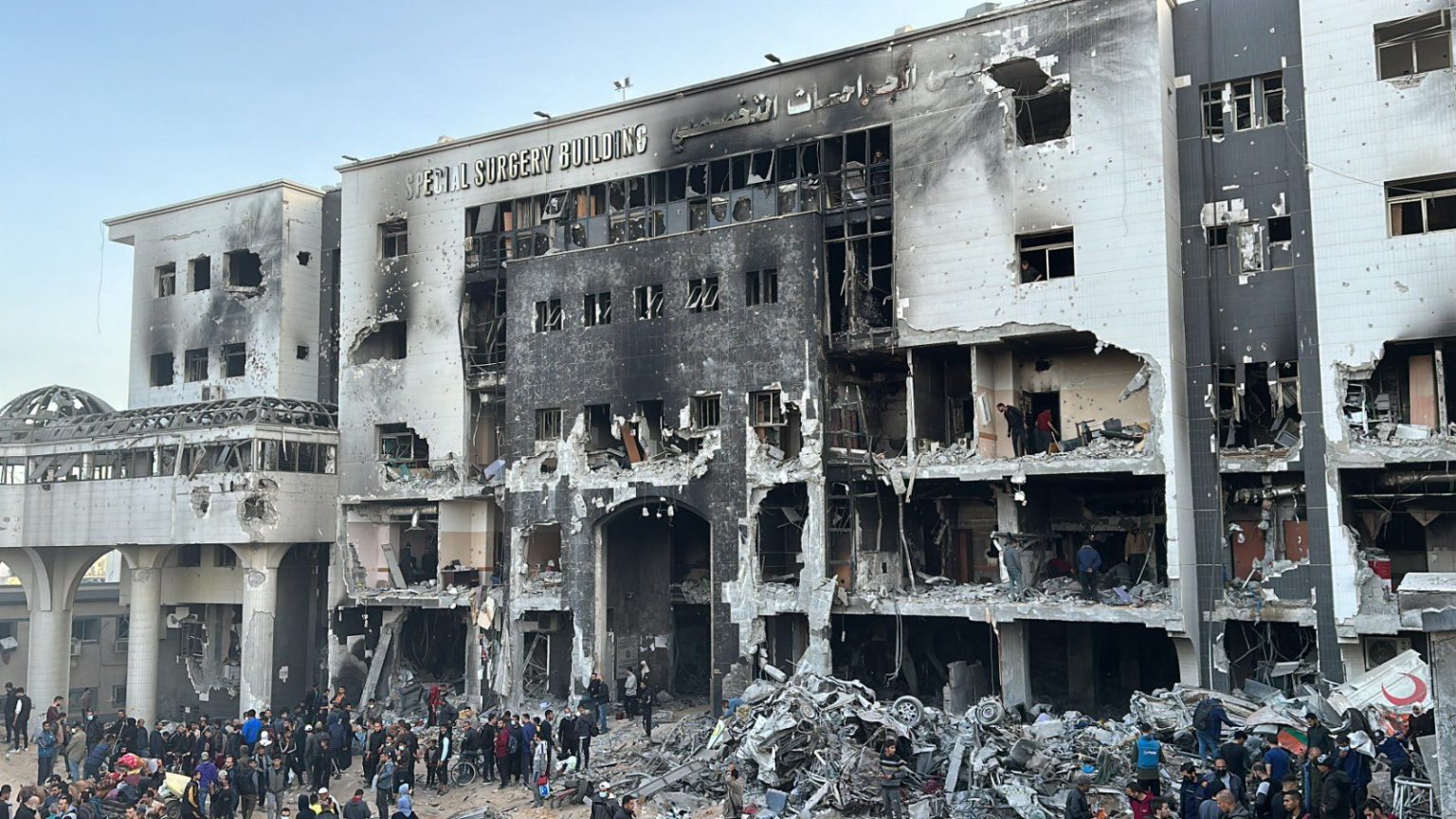
Al Shifa Hospital after a two-week Israeli siege, April 2024.

Gaza’s hospitals, already overwhelmed, are struggling with an influx of casualties following brutal attacks on refugee camps. Sugary drinks have become the most affordable food as aid delivery obstructions persist

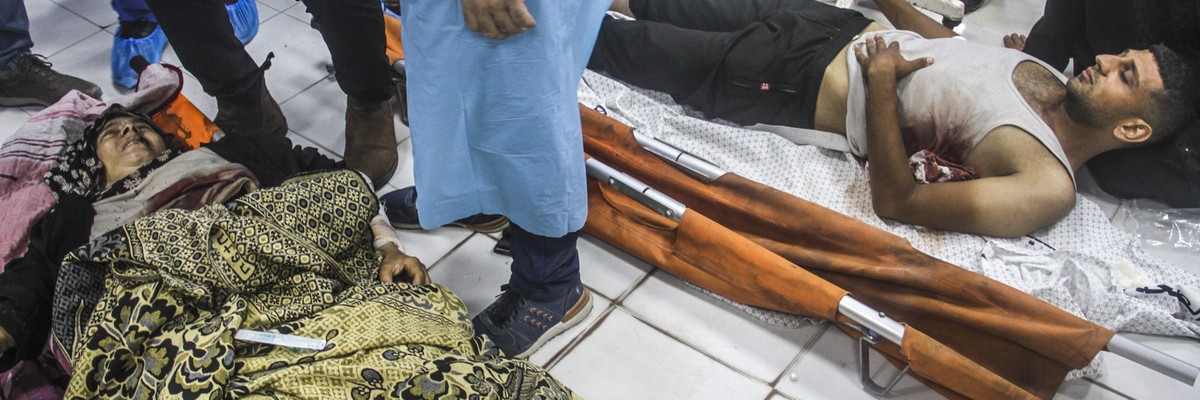
Brutal attacks by the Israeli Occupation Forces (IOF) have, yet again, intensified pressure on the few functional hospitals in the Gaza Strip. Health workers at Nasser Medical Complex reported harrowing scenes following attacks on Khan Younis on July 13, where they received over 100 new casualties despite the hospital already operating over capacity.

“At one point, you had people in the hallway moaning in pain,” said Amy Kit-Mei Low, Doctors Without Borders (MSF) project medical referent. “Even though they had [wound] dressings, the dressings were oozing blood. […] the hospital was trying to cope, but it can barely cope with normal cases.”

UNRWA representative Scott Anderson described the scene at the hospital, stressing the lack of beds, disinfectants, and electricity to run ventilation at Nasser. “I saw toddlers who are double amputees, children paralyzed and unable to receive treatment, and others separated from their parents. I also saw mothers and fathers who were unsure if their children were alive,” Anderson said.

In addition to the relentless IOF attacks, including those targeting healthcare facilities that have killed 2.5% of Gaza’s health workforce since October 7, hospitals are also struggling with aid delivery restrictions imposed by Israel. Since the beginning of the war on Gaza, and especially since the beginning of May, the flow of essential goods to hospitals has been drastically reduced. Hospitals are particularly burdened by the ban on certain medications, including anesthetics, strong painkillers, and even diabetes drugs. Recently, a consortium of organizations providing health care in Gaza warned of a shortage of antibiotics safe for pregnant and breastfeeding women due to the blockade.

Read more: Israel continues its efforts to undermine UNRWA

Despite having hundreds of kilos of aid ready for dispatch, supplies are blocked from reaching hospitals and health centers. The blockade is reinforcing severe food shortages, exacerbating the health crisis. Reports indicate that Israel prioritizes commercial trucks over humanitarian ones at crossings, leaving people with limited and extremely expensive food options. The same consortium of organizations reported that sugary drinks are currently the most affordable food in Gaza.

Famine is spreading rapidly across all regions of Gaza. Nearly 10,000 pregnant and breastfeeding women are on the verge of famine, and 7,000 are already living in famine conditions, according to the United Nations. As a result, more babies are being born preterm and underweight.

Read more: UN experts say, there is already famine in Gaza

For older children, mental health persists as a critical issue. The Gaza Community Mental Health Program (GCMHP) recently estimated that half a million children in Gaza require mental health support. Displaced families report that children are struggling with bedwetting, continuous shaking, violent outbursts, and likely PTSD due to living under constant attack.

GCMHP warns that mental health is also deteriorating among adults, as needs in Gaza far exceed available services. Many people are becoming emotionally numb as a consequence of not being able to receive any mental health support, and are disillusioned by the international community’s failure to halt the genocide perpetrated by Israel. GCMHP teams have encountered people in a state of emotional stagnation, recounting the loss of entire families as if it were a routine event. While scaling up mental health services is crucial for addressing this, GCMHP and other organizations insist that this will not be enough without a ceasefire.

​​People’s Health Dispatch is a fortnightly bulletin published by the People’s Health Movement and Peoples Dispatch. For more articles and to subscribe to People’s Health Dispatch, click here.

Original article by Ana Vračar republished from peoples dispatch under a Creative Commons Attribution-ShareAlike 4.0 (CC BY-SA) license.

Continue ReadingIsrael’s latest massacres have exacerbated the crisis in Gaza’s healthcare facilities

UN Experts Say ‘Targeted Starvation Campaign’ by Israel Has Led to Famine Across Gaza

Spread the love

Original article by JULIA CONLEY republished from Common Dreams under Creative Commons (CC BY-NC-ND 3.0).
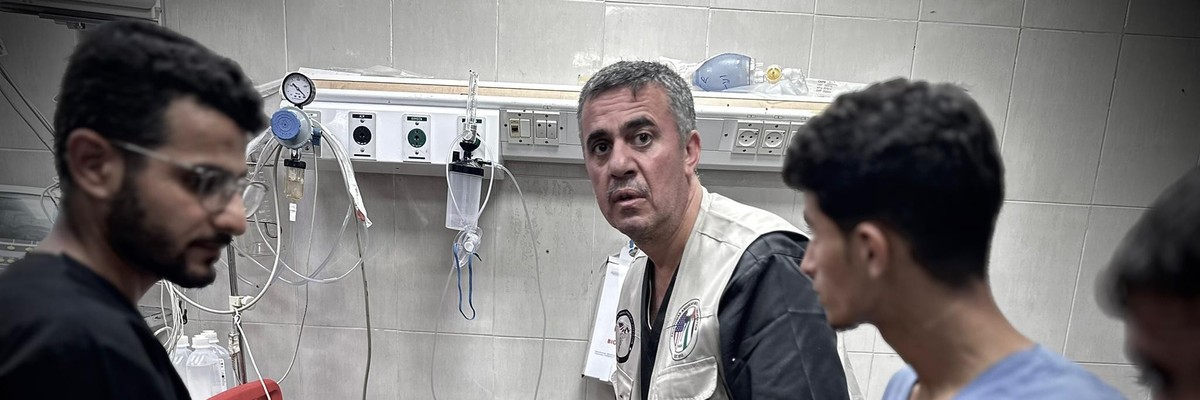
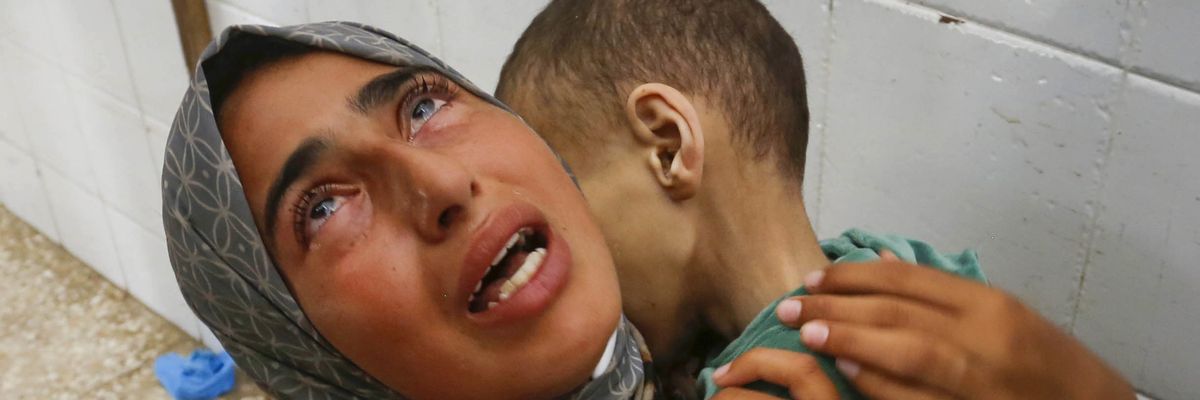
Fatma Hijazi, the mother of 10-year-old Palestinian boy Mustafa Hijazi, who died due to malnutrition and lack of medication, holds the lifeless body of her child in Deir al-Balah, Gaza on June 14, 2024. (Photo: Ashraf Amra/Anadolu via Getty Images)

The starvation of Palestinians in Gaza “is a form of genocidal violence,” said 10 rights experts.

While the United Nations still has not formally declared a famine in Gaza after nine months of Israel’s near-total blockade on humanitarian aid, 10 top U.N. experts on Tuesday said they have seen enough.

“We declare that Israel’s intentional and targeted starvation campaign against the Palestinian people is a form of genocidal violence and has resulted in famine across all of Gaza,” said the experts.

Michael Fakhri, special rapporteur on the right to food, was joined in the statement by other experts including Francesca Albanese, special rapporteur on the situation of human rights in the Palestinian territory occupied since 1967, and Paula Gaviria Betancur, special rapporteur on the human rights of internally displaced persons.

They said the recent deaths of three children in various parts of the enclave led the experts, who do not speak on behalf of the United Nations as a whole, to declare a famine has taken hold.

“Fayez Ataya, who was barely six months old, died on May 30, 2024 and 13-year-old Abdulqader Al-Serhi died on June 1, 2024 at the Al-Aqsa Hospital in Deir Al-Balah,” said the experts. “Nine-year-old Ahmad Abu Reida died on June 3, 2024 in the tent sheltering his displaced family in Al-Mawasi, Khan Younis. All three children died from malnutrition and lack of access to adequate healthcare.”

“With the death of these children from starvation despite medical treatment in central Gaza, there is no doubt that famine has spread from northern Gaza into central and southern Gaza,” they continued.

At least 34 Palestinians in Gaza—the majority being children—have now died from malnutrition since October, when Israel began its bombardment of the enclave in retaliation for a Hamas-led attack and Defense Minister Yoav Gallant announced there would “be no electricity, no food, no fuel” allowed in to Gaza.

Israeli officials said in response to Tuesday’s statement that it has increased the aid allowed into Gaza recently, but hundreds of delivery trucks remain stranded in Egypt and a floating pier built by the U.S. has not significantly improved the humanitarian crisis.

The U.N. experts said that with the first death of a child from malnutrition and dehydration, it should have been considered “irrefutable that famine has taken hold.”

“When a two-month-old baby and 10-year-old Yazan Al Kafarneh died of hunger on February 24 and March 4, respectively, this confirmed that famine had struck northern Gaza,” they said. “The whole world should have intervened earlier to stop Israel’s genocidal starvation campaign and prevented these deaths… Inaction is complicity.”

The Integrated Food Security Phase Classification, which is backed by the U.N., said last month that Gaza is at high risk for famine and that nearly half a million people were facing “catastrophic” food insecurity, with an extreme lack of food.

In May, Human Rights Watch co-founder Aryeh Neier, who had previously hesitated to say Israel was committing genocide in Gaza, said Israel’s “sustained policy of obstructing the movement of humanitarian assistance into the territory” ultimately convinced him that Israeli officials are “engaged in genocide.”

In March, the International Court of Justice ordered Israel to ensure its military refrain from violating the Genocide Convention by preventing humanitarian aid from reaching people in Gaza, saying that “the catastrophic living conditions of the Palestinians in the Gaza Strip have deteriorated further” and that “famine is setting in.”

A woman named Ghaneyma Joma told Reuters on Monday at a hospital in Khan Younis that she feared her son would soon die of starvation.

“It’s distressing to see my child… lying there dying from malnutrition because I cannot provide him with anything due to the war, the closing of crossings, and the contaminated water,” she told the outlet.

The Council on American-Islamic Relations called on the U.S. government, the biggest international funder of Israel’s military and a persistent defender of its actions in Gaza, to ensure that a cease-fire agreement is reached and that Palestinians receive necessary humanitarian aid.

“The intentional starvation of the Palestinian people in Gaza can only occur with the active complicity of the Biden administration in Israel’s campaign of genocide,” said Ibrahim Hooper, national communications director for the group. “This complicity must end, and the Palestinian people must be offered a future in which they are free of occupation and can live in dignity.”

Original article by JULIA CONLEY republished from Common Dreams under Creative Commons (CC BY-NC-ND 3.0).
Zionist Keir Starmer is quoted "I support Zionism without qualification." He's asked whether that means that he supports Zionism under all circumstances, whatever Zionists do.
Zionist Keir Starmer is quoted “I support Zionism without qualification.” He’s asked whether that means that he supports Zionism under all circumstances, whatever Zionists do.
Continue ReadingUN Experts Say ‘Targeted Starvation Campaign’ by Israel Has Led to Famine Across Gaza

Israeli Bombings, Evacuation Order in Gaza City Forces Hospitals to Shut Down

Spread the love

Original article by JULIA CONLEY republished from Common Dreams under Creative Commons (CC BY-NC-ND 3.0). 
Injured Palestinians lay on the floor at Indonesian Hospital in northern Gaza on July 8, 2024, following Israeli attacks on Gaza City.  (Photo: Mahmoud Issa/Anadolu via Getty Images)

Patients were forced to move to other facilities in northern Gaza, where one hospital was at “triple capacity” and providers were struggling to provide care amid fuel and medical supply shortages.

Healthcare officials were joined by human rights experts on Tuesday in condemning Israel’s latest evacuation orders for Gaza City, which the World Health Organization director said would “further impede delivery of very limited lifesaving care” as hospitals in the area struggled to treat sick and wounded Palestinians.

The Israel Defense Forces claimed on Tuesday morning that there was “no need to evacuate the hospitals and medical facilities in the area,” after it had issued an evacuation order for 70% of Gaza City on Monday. The IDF has ordered civilians to evacuate parts of the city three times since June 27 as it has intensified its military operations, forcing tens of thousands of people to flee.

Despite the IDF’s claims, the Episcopal Diocese of Jerusalem, which partially operates al-Ahli Arab Hospital in Gaza City, said it had closed and evacuated all patients and workers after a series of drone strikes in the facility’s “immediate vicinity.”

“To our great dismay, our hospital is now out of operation at a time when its services are in very significant demand and where injured and sick people have few other options for places to receive urgent medical care,” said the diocese in a statement.

“Key hospitals and medical facilities could quickly become nonfunctional due to hostilities in their vicinity or obstruction to access.”

Healthcare authorities have been forced to transport patients to other hospitals that are also struggling to provide care, as Israel’s near-total blockade on humanitarian aid since October has caused dire shortages of fuel and medical supplies.

Tedros Adhanom Ghebreyesus, director of the World Health Organization, said Patient’s Friends Benevolent Society Hospital in Gaza City was also out of service due to the evacuation order, putting more strain on other facilities in the northern city of Beit Lahia, including Kamal Adwan and Indonesian hospitals.

Those medical centers are “suffering shortage of fuel, beds, and trauma medical supplies,” said Tedros on social media. “Indonesian Hospital is triple over its capacity. Al-Helou Hospital is within the blocks of the evacuation order but continues to be partially functional. As-Sahaba and al-Shifa hospitals are in close proximity to the areas under evacuation order but remain functional so far. Six medical points and two primary healthcare centers are also within the evacuation zones.”

“These key hospitals and medical facilities could quickly become nonfunctional due to hostilities in their vicinity or obstruction to access,” he added before repeating a demand: “Cease-fire!”

Israel’s claim that the hospitals in Gaza City remain safe despite the evacuation orders comes after several Israeli bombings of medical facilities and other so-called “humanitarian areas” since October.

Hospitals including al-Shifa in Gaza City have become major targets of Israel’s assault on the enclave, prompting outcry from human rights advocates who have demanded that the IDF follow international humanitarian law.

The United Nations Office of the High Commissioner for Human Rights (OHCHR) on Tuesday said it was “appalled” by the IDF’s latest evacuation order, noting that Palestinians have been killed after fleeing to supposedly “safe” zones since Israel’s bombardment began.

Many of the people fleeing Gaza City this week “have been forcibly displaced multiple times, to evacuate to areas where IDF military operations are ongoing and where civilians continue to be killed and injured,” said the OHCHR.

Deir al-Balah, where Gaza City residents have been told to move in the latest order, “is already seriously overcrowded with Palestinians displaced from other areas of the Gaza Strip,” the office added.

The Gaza Health Ministry reports that 38,243 people have been killed in the enclave since Israel began its attacks in retaliation for a Hamas-led attack on October 7.

As Israel forced hospitals in Gaza City out of operation and occupied the southern part of the city, including around the headquarters of the U.N. Relief and Works Agency for Palestine Refugees in the Near East, another Israeli attack on the Bureij refugee camp killed nine people on Tuesday, including five children.

The IDF also said its warplanes had attacked “a school complex” in the Nuseirat refugee camp.

“There’s really no safe corner in Gaza,” said Tedros.

Original article by JULIA CONLEY republished from Common Dreams under Creative Commons (CC BY-NC-ND 3.0). 

Continue ReadingIsraeli Bombings, Evacuation Order in Gaza City Forces Hospitals to Shut Down

Israeli Military Has Killed 500 Gaza Healthcare Workers—Two a Day Since Assault Began

Spread the love

Original article by JAKE JOHNSON republished from Common Dreams under a CC licence.

Mourners carry the body of Palestinian doctor Hani al-Jaafarawi, Gaza’s ambulance and emergency teams chief, during his funeral in Gaza City, Gaza on June 24, 2024. (Photo: Omar Al-Qattaa/AFP via Getty Images)

“This cannot be allowed to continue any longer,” said one advocate. “Every potential serious violation must be independently investigated and those responsible brought to justice.”

Doctors and humanitarian organizations demanded international investigations and action on Wednesday after the United Nations announced that Israel’s military has now killed 500 healthcare workers in Gaza—roughly two per day on average—during its nearly nine-month assault on the besieged Palestinian enclave.

The U.N. Human Rights Office said in a statement Tuesday that Israeli forces’ killing of hundreds of healthcare workers has “occurred against the backdrop of systematic attacks on hospitals and other medical facilities in violation of the laws of war.” The World Health Organization has documented more than 460 attacks on healthcare workers and infrastructure in Gaza since October 7.

“The latest health worker reportedly killed was Mr. Hani Al Ja’afarwi, head of Emergency and Ambulance Services at a health clinic in Gaza City on 23 June 2024,” said the U.N. Human Rights Office. “Many health workers have also died with their family members when residential buildings were struck by the Israel Defense Forces (IDF).”

The U.N.’s latest tally did not include Fadi Al-Wadiya, a 33-year-old Médecins Sans Frontières (MSF) staffer who was killed along with five other people Tuesday in an attack in Gaza City. MSF did not explicitly assign blame for the attack, which the group described as “yet another brutal example of the senseless killing of Palestinian civilians and healthcare workers in Gaza.”

Rohan Talbot, director of advocacy and campaigns at Medical Aid for Palestinians (MAP), said Wednesday that “hospitals, medical staff, and civilians all have protected status under international law, law that the Israel military has flagrantly ignored every day through its repeated targeting of healthcare facilities and staff.”

“Though now happening at an unprecedented rate in Gaza, attacks on Palestinian healthcare by the Israeli military have recurred over many years, ever-worsening because of chronic impunity,” said Talbot. “This cannot be allowed to continue any longer. Every potential serious violation must be independently investigated and those responsible brought to justice.”

Not a single hospital is fully functioning in the Gaza Strip after months of relentless Israeli bombing, and medical workers have been forced to treat airstrike victims and other patients in overwhelmed facilities without necessary equipment and medications, including anesthesia.

As Israel’s blockade leaves the occupied territory’s population without sufficient access to clean water and other essentials, infectious diseases have been spreading rapidly as the health crisis spirals out of control, starvation proliferates, and the death toll mounts.

“Systematic attacks on healthcare by Israeli forces are exacerbating the worst humanitarian crisis ever seen in Gaza,” MAP said Wednesday. “More than 37,000 Palestinians have been killed and at least 86,000 injured since Israel’s assault began, with an estimated 10,000 still trapped under rubble, most presumed dead. Instead of being able to safely provide medical care for those in urgent need, Palestinian healthcare workers have themselves come under both indiscriminate and apparent targeted attack by the Israeli military.”

Tanya Haj-Hassan, a doctor who volunteered in a hospital with MAP earlier this year, said that “Palestinian healthcare workers have told me that when they leave the hospital, civilians give them civilian clothing because wearing scrubs is putting a target sticker on their back.”

“This is how systematically healthcare has been targeted in Gaza,” Haj-Hassan added.

Haider Al-Qudra, executive director of the Palestine Red Crescent Society (PRCS) in Gaza, told MAP that “as long as the international community does not take any measures against Israeli forces that continue to violate international humanitarian law, we will lose more personnel working to meet the health and humanitarian needs of citizens on the frontline.”

“Because of this systematic targeting from Israeli forces,” said Al-Qudra, “34 PRCS staff have lost their lives, most of them emergency medical services staff, including 19 while they tried to respond to emergency calls from citizens.”

Original article by JAKE JOHNSON republished from Common Dreams under a CC licence.

The Gaza Project Exposes Israel’s ‘Chilling Pattern’ of Killing Journalists

Aid Group Warns New UN Figures Show ‘Hunger Catastrophe’ for Gaza Children

Over 20,000 Children Missing in Gaza, With ‘Unknown Number’ in Mass Graves: Report

Zionist Keir Starmes is quoted "I support Zionism without qualification." He's asked whether that means that he supports Zionism under all circumstances, whatever Zionists do.
Zionist Keir Starmes is quoted “I support Zionism without qualification.” He’s asked whether that means that he supports Zionism under all circumstances, whatever Zionists do.

Continue ReadingIsraeli Military Has Killed 500 Gaza Healthcare Workers—Two a Day Since Assault Began

New Popular Front gains support from French health activists

Spread the love

Original article by Peoples Health Dispatch republished from peoples dispatch under a CC licence.

French health activists stage a protest.

Social movements and trade unions in France are rallying behind the New Popular Front, which promises a genuine alternative to the far-right and liberal health policies

Trade unions and activists warn that a National Rally victory would spell disaster for public healthcare in France. If the far-right wins the upcoming election, as polls currently predict, changes would come at the expense of sexual and reproductive health services and migrant health, among other things.

Marine Le Pen’s party recently dominated the European Parliament elections, prompting President Emmanuel Macron to call for a snap election, hoping to mobilize voters against the far-right. According to analysts, Macron gambled that the people of France would go to great lengths to keep the National Rally out of power, perhaps even reaffirming his mandate.

However, Macron’s policies, including privatization and commodification of health services, have fueled the far-right’s growth. His administration has caused closures of local hospitals, creating health deserts, and continues to push for more privatization, causing patient suffering. Despite the failures of this approach, liberals continue to pursue the same strategy in the current campaign, advocating for a more profit-driven logic in healthcare. The Trade Union of Health Centers’ Physicians (USMCS) stated: “We are experiencing the consequences of this policy on a daily basis. Patients suffer. We want no more of it.”

The far-right is expected to continue liberalizing the sector while introducing intolerance and xenophobia by prioritizing French citizens and marginalizing other residents. “If implemented, the [far-right policies] will pose a major risk to public health, not only for these ‘excluded’ individuals but also for the population as a whole,” USMCS warned.

“Abandoning the values of solidarity and universalism that underpin our healthcare system, a right-wing program will worsen social and territorial inequalities. We reject any program that proposes a healthcare policy based on exclusion and discrimination.”

Trade unions and organizations, united under the Tour de France pour la Santé, are backing the New Popular Front (NFP), a left-wing coalition opposing Macron’s policies as much as the far-right. The NFP plans to retract the controversial pension reform, curb living costs, and rebuild the healthcare system by recruiting healthcare workers, increasing incomes, and regulating the private sector. For example, the program states that new private clinics will only be allowed if they provide guarantees that patients will not face any out-of-pocket costs.

Read more: Left and progressives form New Popular Front to counter far-right in French elections

The USMCS emphasized that the NFP’s program is the only one to offer real prospects for healthcare reform. To support this, the Tour de France pour la Santé announced a series of actions during the election campaign, starting with an assembly in Lille on June 27, where activists will discuss the importance of resisting the far-right. Speakers will include Françoise Nay from the People’s Health Movement (PHM) France and Ramon Vila from the trade union SUD Santé Sociaux.

“Confronted with the threat of the extreme right, now more than ever, we urge citizens, trade unions, associations, mutual insurance societies, and progressive parties to unite in defending the right to health for all,” the platform said in its press release.

Ahead of the first round of the election on June 30, the National Rally leads with approximately 35% in polls, followed by the NFP at more than 29%, and Macron’s party at 19.5%. Bridging the gap between the far-right and the progressives might be possible with strong social movement support.

People’s Health Dispatch is a fortnightly bulletin published by the People’s Health Movement and Peoples Dispatch. For more articles and subscription to People’s Health Dispatch, click here

Original article by Peoples Health Dispatch republished from peoples dispatch under a CC licence.

Continue ReadingNew Popular Front gains support from French health activists