One year of Milei: hunger and resistance

Spread the love

Original article by Pablo Meriguet republished from peoples dispatch under a Creative Commons Attribution-ShareAlike 4.0 (CC BY-SA) license.
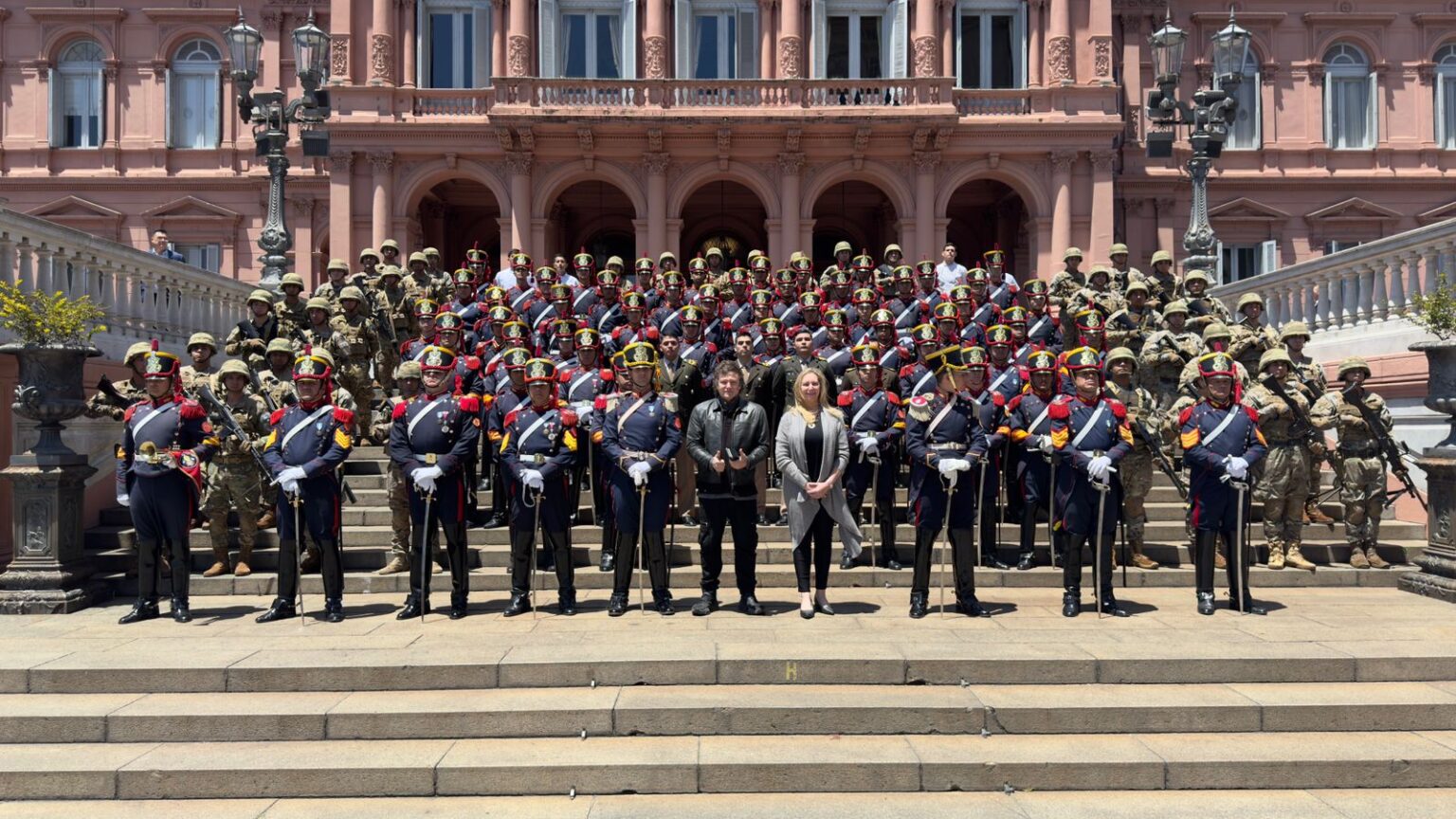
Argentine President Javier Milei. Photo: Milei / X

At one year of Milei’s presidency, we take stock of his economic policies, the impact on the working class, and perspectives for the future

A year ago, what many considered unthinkable a couple of years ago happened: Javier Milei, the eccentric libertarian economist who was almost compulsively invited by the media to increase ratings, was sworn in as president of Argentina. Gone was the neoliberal and demure option of the Argentine right wing that managed to triumph with Mauricio Macri, as well as the always latent Peronist option, which could not overcome the obstacles that the government of Alberto Fernandez left in its path.

Milei became a celebrated outsider who confronted his adversaries directly (often insulting and humiliating them), promising to lift the country out of poverty through a radical liberalization of the economy, with bold, or absurd, proposals to dollarize the economy and the eliminate the central bank. Indeed, his style as a guest on television programs was not too far removed from his actions as president of Argentina.

Erika Giménez, social communicator and a journalist with ARG Medios told Peoples Dispatch that Milei arrived with a promise that he was going to “break the State” and end all state social programs and aid to impoverished sectors because they are “a waste of money that prevents Argentina’s resurgence as a great country.” Did he succeed in his grandiose vision? What did the “lion” of Argentina manage to accomplish in his first year of governance?

Falling inflation and rising poverty

One of Milei’s main obsessions was to reduce inflation at all costs. After several setbacks that ended up increasing inflation, in October it was recorded that inflation had risen by 2.3%, the lowest percentage in several years. To achieve this, he had no qualms about firing tens of thousands of state workers (almost 36,000 according to the National Institute of Statistics and Census) and aggressively cutting the number of ministries (from 18 to 9). Social programs that had been a bulwark of the Republic for several decades were eliminated. Of the state workers who survived the layoffs, almost all have seen a reduction in their purchasing power as a consequence of the economic retrenchment policies.

Similarly, despite the fact that year-on-year inflation stood at 193%, retirees’ pensions only increased by 105%, meaning that retired elderly workers today, thanks to Milei’s government, can buy fewer things than before, because their pension was not adjusted for inflation. This incongruity provoked several mobilizations by retirees.

Likewise, Milei has refused to increase the public education budget so as not to affect the much-desired “fiscal balance”, which has led to a decline in the quality of education in the country. Also, hospital workers (doctors, nurses, and others) have reported that they have lost almost 104% of their purchasing power, which puts the country’s health care system at risk.

During Milei’s administration, poverty increased. According to data from the Observatory of the Argentine Social Debt of the Catholic University of Argentina, in the second half of 2023, 41.9% of the inhabitants of the South American country were poor, while, in the first half of 2024, the figure reached 52.9%. Similarly, private consumption fell by 9.8%.

In addition, according to Erica Giménez, inflation is currently decreasing, among other things, because people are not able to buy goods, which causes stores to reduce prices to sell more. This can lead to a distorted view of inflation as the only measure of economic improvement because, in reality, it is actually masking a more serious problem: people have lost purchasing power. “[The decrease in inflation] is quite a deceptive figure because people cannot consume because their salary is not enough to do so…The macroeconomic meters improve (as Milei wants) by not generating fiscal deficit, but this happens at the cost of the increase of unemployment, of retirement pensions, of the most needy, and of so many who are nowadays below the poverty line,” Giménez affirms.

One of the cases which shone a light on the ridiculous nature of his radical adjustment was what happened with the social kitchens, soup kitchens run oftentimes by left and progressive community organizations. Milei’s government and his Minister of Human Capital Sandra Pettovello were involved in a serious controversy when it was shown that, while the kitchens were subjected to serious budget cuts as part of the fiscal adjustment which made it impossible to feed the increasing number of hungry people, several tons of food were rotting in State warehouses. The Argentine courts had to order the immediate distribution of the food.

The defunding of university education

Probably the most important internal challenge faced by Milei during this first year was the massive demonstrations of students, professors, and university workers against the Executive’s refusal to increase the university budget. The Legislature had passed a law allowing for the budget increase, but Milei refused to comply with it and vetoed it completely. This generated a lot of discontent among Argentine students who took to the streets against the austerity policies of Milei’s libertarian government, and even went so far as to take over dozens of universities and hold university classes in the streets as a form of protest.

Giménez says in this regard, “Those who lose the most with [the veto of the law] are the professors of public universities who today are within the poor population…According to several surveys, the majority of the population agrees with the public character of health, education, etc., and of the Argentine State as protector and benefactor of these areas, so Mieli’s discourse against universities did not work because…public university education has great popular support.”

International relations

Milei has repeatedly stated that Argentina was, at some point in its history, the first world power. Therefore, what his government should do, according to his rhetoric, is to turn it into a great world power again. This “messianic” bet is synthesized in the often-used slogan “Make Argentina Great Again”, which evidently is reminiscent of Trump’s MAGA. “But Argentina never had a geopolitical weight that Milei says it once had as a first power,” Giménez tells us.

During the vote on whether or not to lift the US economic blockade of Cuba, Argentina voted along with almost all countries to call for an end to the blockade. In retaliation, Milei fired his foreign minister for this vote. According to Giménez, Argentina has historically voted against the blockade and supported other progressive international issues because it hopes that other countries will support its intention to recover the Malvinas Islands, which are currently under British control. Milei however, has wanted to assume a Trumpist international logic, says Giménez, and has assumed a fight against LGBTIQ+ groups and measures to curb climate change, while manifesting strong support in favor of Israel and the United States.

That is why the discussions at the UN on the prevention of violence against girls and women, the ceasefire in Palestine, and the withdrawal of the Argentine delegation from COP29, show the rejection of certain political causes which the president himself calls “the Cultural Battle”. As part of this battle he has attacked journalists, politicians and intellectuals, and founded the new think tank Faro Foundation whose objective is to: “To promote the ideas of economic liberalism and the historical values of Argentine culture, in order to contribute to the economic and social development of our Nation, fighting the cultural battle.” This confrontational attitude has led him to have several impasses with regional political leaders such as Colombian President Gustavo Petro.

But this confrontational attitude, more typical of a media commentator, has its limits. For example, Giménez reminds us that after announcing before his presidency that he would never negotiate with China because they are communists, Milei eventually had to negotiate with Beijing because of the importance of that country for the Argentine economy.

Read: Milei and Trump: allies in the battle for “freedom” and to combat “wokeism”

Likewise, Milei has openly positioned himself behind the geopolitical line of US President-elect Donald Trump, attending several select meetings organized by the US president. Milei, according to Giménez, intends to position himself, unsuccessfully, as an international leader who will inspire a global political transformation. Perhaps that is why he has made more trips abroad than within the country, especially to the United States. Likewise, his closeness with the International Monetary Fund stands out.

His revisionist ideological struggle

Milei has also had a significant impact on the ideological dispute in Argentina with his bizarre and aggressive speeches.

For example, he said that he would be delighted to drive the last nail in the coffin of former Peronist president Cristina Fernández, who is the subject of a judicial process that seeks to disqualify her politically and put her in prison.

He has also questioned the figures of human rights organizations on the number of dead and disappeared caused by the last military dictatorship in Argentina. His vice-president, Victoria Villarruel, is a descendant of a military family and before his death, had paid a personal visit to Rafael Videla, head of the last military dictatorship. Milei wants Argentines to forget the dictatorship as if it’s something that can be left behind, says Giménez. In order for Milei to advance his political and ideological project to “make Argentina great again”, he must break certain established and socially consensual notions “and generate other discourses closer to capitalism, revisionist, discuss the importance of the university and public employment…and that includes relativizing one of the darkest periods of Argentine history such as the military dictatorship,” Giménez explains.

Milei has vigorously gone after his ambitious goals of economic liberalization and austerity, without asking “at what cost?” The significant rejection of such policies by broad sectors of the population and the deepening of social conflict will continue and intensify. Milei still has three years left in his presidency, so the future of his government is uncertain. What is certain is that he does not seem to be slowing down his pretensions, but rather accelerating the radical neoliberal program that he defends to the hilt.

Original article by Pablo Meriguet republished from peoples dispatch under a Creative Commons Attribution-ShareAlike 4.0 (CC BY-SA) license.
Continue ReadingOne year of Milei: hunger and resistance

Milei’s unfinished promises: Argentina has the highest inflation in the world

Spread the love

Original article by Pablo Meriguet republished from peoples dispatch under a Creative Commons Attribution-ShareAlike 4.0 (CC BY-SA) license.

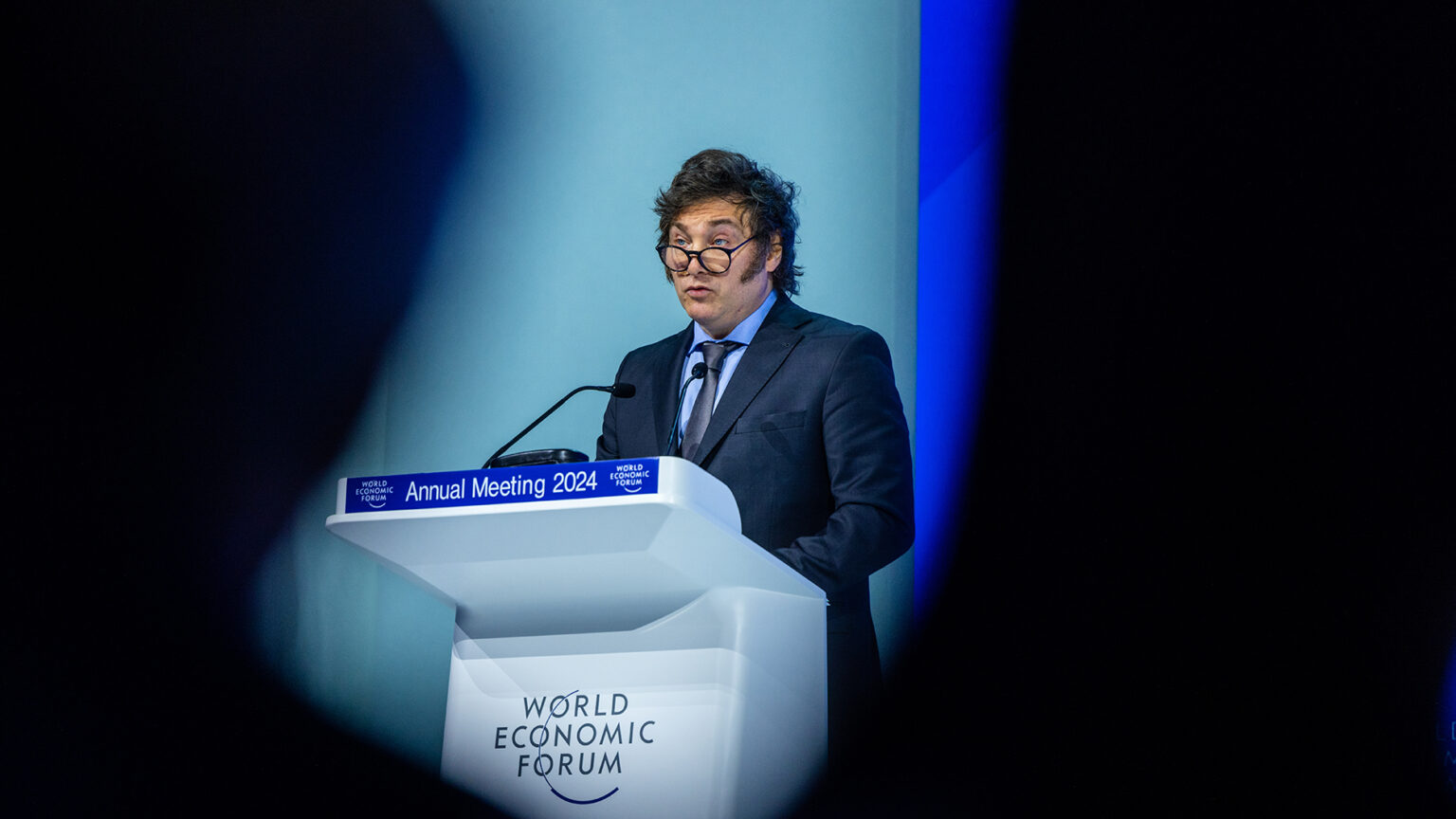
Photo: World Economic Forum

Javier Milei’s right-wing government promised to stop inflation in Argentina, and has thus far failed

The neoliberal economic measures of Javier Milei’s government are not improving the economic situation they promised to eradicate. During the election campaign, Milei made several promises that thus far he has been unable to keep. For example, he stated that the price of gas would not increase under his government, but from April to May rates rose by 450%. He also promised that public transportation fares would not increase, but the price of the subway went from 125 to 757 pesos.

The government has not been able to stimulate the growth of the Argentine economy either. According to the IMF itself, which bases a good part of its analysis and recommendations on neoliberal economic theory, the GDP of the Argentine economy will fall by 3.5% in 2024. In this sense, the recession the country is enduring does not seem to have a clear way out. Initially, the IMF thought that the economic contraction would be 2.8% of the GDP, but given the incontestable evidence, it had to adjust its forecast.

However, the IMF maintains that there will be a rebound effect, and that, therefore, in 2025 Argentina will grow by 5%. In addition, the agency praised the economic measures of the Milei government to curb the inflationary process, fiscal adjustment, and liberalization of the economy. Petya Koeva Brooks, deputy director of the Research Department, said that “looking ahead, even in the coming quarters, we expect growth to rebound because we see the effects of fiscal adjustment, the return of confidence and rising wages.”

However, several Argentine economists have stated that such expectations are not based on the reality of the national economy, as the problems caused by high inflation have worsened, as well as the evident decrease in employment in the country. According to data for the first half of 2024, Argentina has the highest cumulative inflation worldwide, 79.8%, and a peak year-on-year inflation of 271.5%.

Another unfulfilled promise of Milei was the increase of employment in the country thanks, according to the libertarian government, to the radical liberalization of the economy. However, despite the set of neoliberal economic measures, there has been a 7.7% increase in unemployment during the first quarter of 2024.

Milei’s administration celebrates the fact that the inflationary process decreased a little compared to previous years, claiming that this is thanks to certain public policies of his administration. This is even though Milei’s brutal fiscal adjustment, the contraction of the State, and the loss of thousands of jobs, which Milei stated would have a very positive impact on inflation, have not had the expected results. For example, food prices in Argentina have risen 260% (40 times more than Mexico), one of many figures which confirms that the neoliberal “shock” measures of Milei are not likely to benefit workers in the long run.

Original article by Pablo Meriguet republished from peoples dispatch under a Creative Commons Attribution-ShareAlike 4.0 (CC BY-SA) license.
Continue ReadingMilei’s unfinished promises: Argentina has the highest inflation in the world

Farage said Andrew Tate was ‘important voice’ for men in podcast interview

Spread the love
Image of Nigel Farage

https://www.theguardian.com/politics/article/2024/jun/20/nigel-farage-andrew-tate-important-voice-men-podcast-interview

Reform UK leader has also argued against diversity quotas and said people on benefits were ‘too stupid’ to work in appearances over past year

Nigel Farage has praised the misogynist influencer Andrew Tate for being an “important voice” for the “emasculated” and giving boys “perhaps a bit of confidence at school” in online interviews that appear to be aimed at young men over the past year.

The Reform UK leader spoke in favour of Tate for defending “male culture” in a Strike It Big podcast that aired in February, while acknowledging that the influencer had gone “over the top” and elsewhere that he had said some “pretty horrible” things.

Since December 2022, Tate has been facing charges in Romania of human trafficking, rape, and forming a criminal gang to sexually exploit women, which he denies.

Many politicians and teachers have spoken out against Tate’s influence on young boys in the UK, after the self-proclaimed misogynist said women belonged in the home and were a man’s property. “There’s no way you can be rooted in reality and not be sexist,” Tate said in one video.

Andrew Tate pictured with Nigel Farage in a Facebook post by Tate from March 2019. The caption read: ‘Brexit baby.’ Photograph: Emory Andrew Tate/Facebook

Farage’s interview comments

February 2023
“‘I’m too fat, I’m too stupid, I’m too lazy, I don’t get out of bed in the morning. I smoke drugs, give me money’ … That’s what we’re saying. ‘I don’t need to work, the state will provide for me’ … We cannot afford it.

“I welcomed much of [Liz Truss’s] budget. I think if there is a criticism, they tried to do too much, too quickly, without prior explanation … What happened here is the backbenches wobbled really quite quickly because a lot of Conservative backbenchers are basically globalists and listened to those big noises from the multinationals and the IMF. As soon as she sacked Kwarteng, it was all over … I would much have preferred her to hold her nerve, keep making those arguments and see if the party dared get rid of them.”

August 2023
“I think Andrew Tate is a fascinating figure. I think his speaking to men, who because of the woke agenda were told they couldn’t be male in any way at all, was an important thing. But I feel some of his comments were pretty horrible.”

April 2024
Javier Milei is “Thatcherism on steroids – this is incredible, cutting and slashing public expenditure, doing all the things he’s done … That’s leadership … He is amazing.”

https://www.theguardian.com/politics/article/2024/jun/20/nigel-farage-andrew-tate-important-voice-men-podcast-interview

Continue ReadingFarage said Andrew Tate was ‘important voice’ for men in podcast interview

Argentine organizations reject attempts by Milei to silence dissent with fear

Spread the love

Original article by Pablo Meriguet republished from peoples dispatch under a Creative Commons Attribution-ShareAlike 4.0 (CC BY-SA) license.
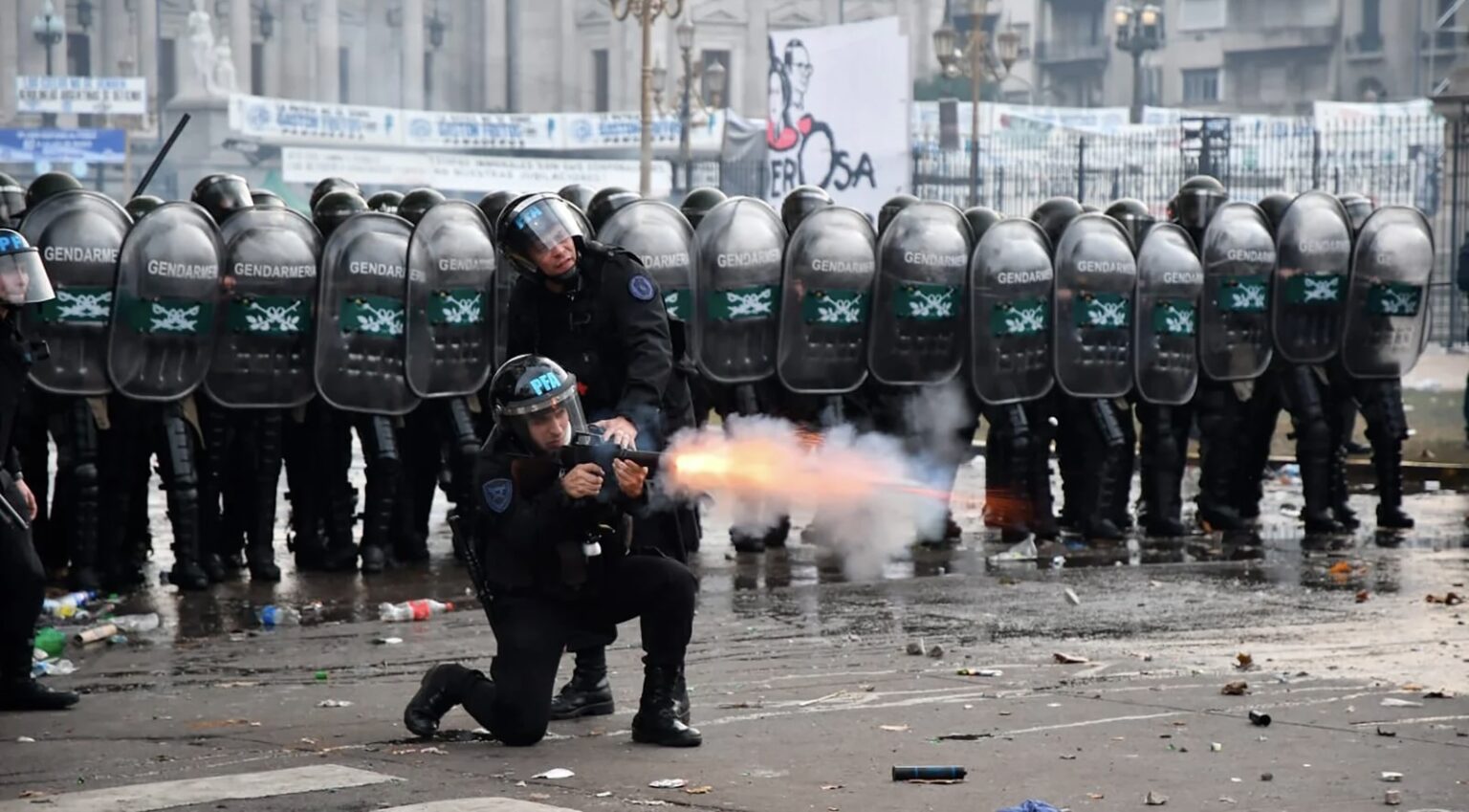
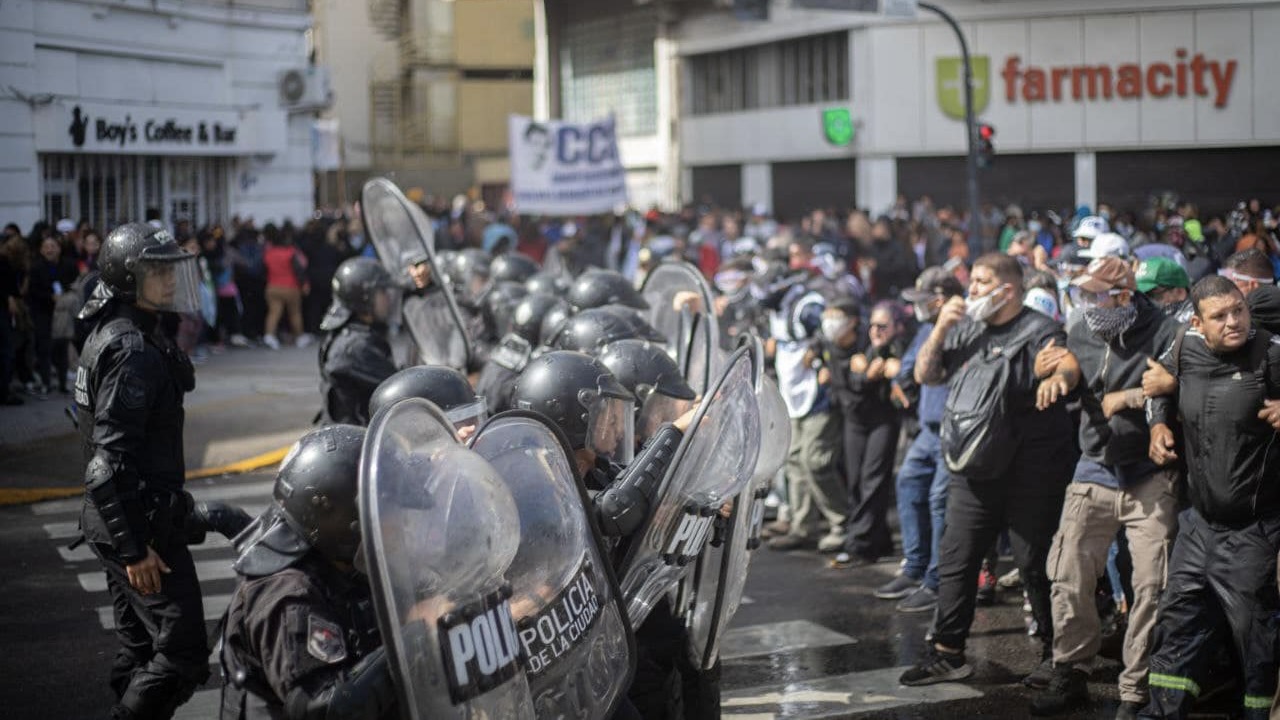
Police in Argentina brutally repressed a mobilization against Milei’s controversial economic reforms. Photo: UP Diputados

Over 30 people were detained in Buenos Aires during the brutal repression of the protests against Milei’s economic reform law

Last week, the Argentine Senate debated the bill called “Law for Bases and Starting Points for the Freedom of Argentines” (Ley Bases), a set of economic and political reforms proposed by the far-right government of Javier Milei. While the Executive sought the necessary votes in the Senate to pass the law, thousands of demonstrators gathered around the legislature to demand that the law be shelved.

The protests were called by several social organizations and trade unions, including the country’s largest trade union confederations, the General Confederation of Labor (CGT), the Argentine Workers’ Central Union, and the Argentine Workers’ Central Union (Autonomous).

The action of the police, under the orders of the Minister of Security, Patricia Bullrich, was excessive and brutal. Even lawmakers were not spared the violent repression. Peronist legislators, Eduardo Valdés, Carlos Castagnetto, Leopoldo Moreau, Juan Manuel Pedrini, Carolina Yutrovic and Luis Basterra, denounced that they were beaten by the security forces. In addition, several detainees told press that “they were stripped naked and that pepper spray was thrown at them”.

Martin Dirroco, a worker detained during the protests, recounted: “We were in Congress and we began to feel the tear gas, our throats began to burn and we began to leave. We heard more and more shots fired; we could see the repression. […] Suddenly a lot of people started to come, we tried to leave and seven motorcycles appeared. The one on the back of the motorcycle was pointing a gun at us. They got off the motorcycle and told us to stay still. They shooted and shouted ‘everybody against the wall’. They started pushing and shoving, holding me and throwing me to the ground. […] We had to sleep in a courtyard with handcuffs on”.

On Wednesday, June 12, 33 people were arrested, with many held for several days. Carlos Lopez, a left Argentine political leader, told Peoples Dispatch that as of today there are still five people detained on alleged charges of “public intimidation” and “arson”. Lopez comments that some people were even arrested 15 blocks from the Senate, far away from the events for which they are accused. “They are trying to sow terror from the government, the State, so that the population feels fear and shuts its mouth”. In addition, López continues, the detainees did not have adequate access to water and food; some spent more than 15 hours in a police patrol car and many could not speak to their lawyers: “There was intimidation, torture and threats […] We ask for everyone’s solidarity so that this type of action does not happen again,” said López.

Police launching tear gas canisters at protesters on Wednesday June 12 in Buenos Aires. Photo: Somos Telam

The President’s Office celebrated the approval of the law and called the demonstrators “terrorists”: “Starting from 38 deputies and 7 senators, with terrorist groups attacking the Congress, having to deploy the Security Forces in defense of democracy, with the political caste resisting and operating until the last moment, and having to resort to the tie-breaker of the Vice President of the Nation, Victoria Villarruel, tonight’s is a triumph of the Argentine people and the first step towards the recovery of our greatness, having approved the most ambitious legislative reform of the last forty years.”

Several human rights organizations, such as the Grandmothers and Mothers of the Plaza de Mayo, the Permanent Assembly for Human Rights, the Relatives of the Disappeared and Detained for Political Reasons, among others, called for a demonstration on Tuesday June 18 to demand the release of the 16 people that were still detained (including several students and professors) accused of “terrorism”. During a press conference, various relatives of the detainees denounced the injustice of the accusations against the prisoners and affirmed that they are not terrorists and demanded their immediate release.

Milei’s “Ley Bases”

At the end of the debate last Wednesday, the law was approved thanks to the vote of Vice President Victoria Villarruel, who broke the tie. The controversial law must be approved a second time in the Chamber of Deputies.

The reforms of the “Ley Bases” propose a paradoxical transformation of the functioning of the Argentine State. At the same time that they seek to diminish the State’s capacity to control the economy, they strengthen the President’s political power to make economic and political decisions, which will no longer have to be approved by the legislative branch. In other words, the intention is to build a weaker but more agile State to execute President Milei’s neoliberal plan.

One of the most controversial changes is the creation of the “Incentive Regime for Large Investments” (RIGI, for its initials in Spanish). The purpose of this regime is to reduce the State’s control over large companies that invest more than USD 200 million in the country. The government promises these big companies a reduction in taxes, privileges in the project approval process, and protection of capital from state control for 30 years. RIGI seeks, among other things, the exploitation of natural resources by major companies.

According to the “Ley Bases”, the President may have “extraordinary powers” for one year if he declares a public emergency in the economic, financial, and energy fields. In this sense, Milei would have several powers that currently only the Legislative has. To achieve its approval in the Senate, the Executive committed itself not to interfere with 15 public agencies, such as the National Service of Food, Health and Quality (SENASA), the National Bank of Genetic Data (which has information on those who disappeared during the last dictatorship), among other institutions. However, the government will be able to legislate through expeditious decrees, which implies, in general, the first great legislative victory for its political project.

In addition, the “Ley Bases” authorizes the privatization of Intercargo, a state-owned company dedicated to provide services to air travel companies, and Energía Argentina S.A., which is in charge of the extraction and exploration of hydrocarbon deposits, their transportation, and storage. Although Milei wanted to privatize more than 40 public companies, the negotiations forced him to limit his aspirations. Nevertheless, Milei’s major project in this regard seems to be aimed, at first, at the privatization of the mining, energy and fuel sectors.

Finally, the “Ley Bases” seeks to make a discreet, although controversial, labor reform, as it proposes, among other things, to eliminate penalties for companies that use informal workers, which is currently sanctioned by law.

While the Executive celebrates its neoliberal legislative victory, the families of the prisoners continue to pressure the justice system to free the detainees and drop the serious charges that could mean several years in prison.

Original article by Pablo Meriguet republished from peoples dispatch under a Creative Commons Attribution-ShareAlike 4.0 (CC BY-SA) license.
Continue ReadingArgentine organizations reject attempts by Milei to silence dissent with fear

Milei celebrates violent repression of thousands protesting hunger in Argentina

Spread the love

Original article by peoples dispatch republished under a Creative Commons Attribution-ShareAlike 4.0 (CC BY-SA) license.
Police attacked the protest organized by UTEP in Buenos Aires. Photo: UTEP

Police cracked down on a protest of thousands of workers in the capital who demanded the government listen to its demands to send food to the community kitchens and address the growing hunger in the country

On Wednesday April 10, the Federal Police and the Police of the city of Buenos Aires violently evicted and repressed a peaceful demonstration on 9 de Julio Avenue in the center of the capital. The mobilization organized by the Union of Workers of the Popular Economy (UTEP) was one of many which took place in cities across the country to raise awareness to the critical situation faced by workers in the popular, or informal, economy in Argentina.

Organizations part of UTEP claim that the national government has suspended programs providing food to community kitchens and has also refused to dialogue with organizations who have repeatedly denounced the suspension and now, are unable to provide food to the thousands of families that they previously worked with. Many poor families across the country have also suffered from a freezing and arbitrary reduction of their “Social Complementary Salary”, a government program which provided supplementary economic aid to workers of the popular economy.

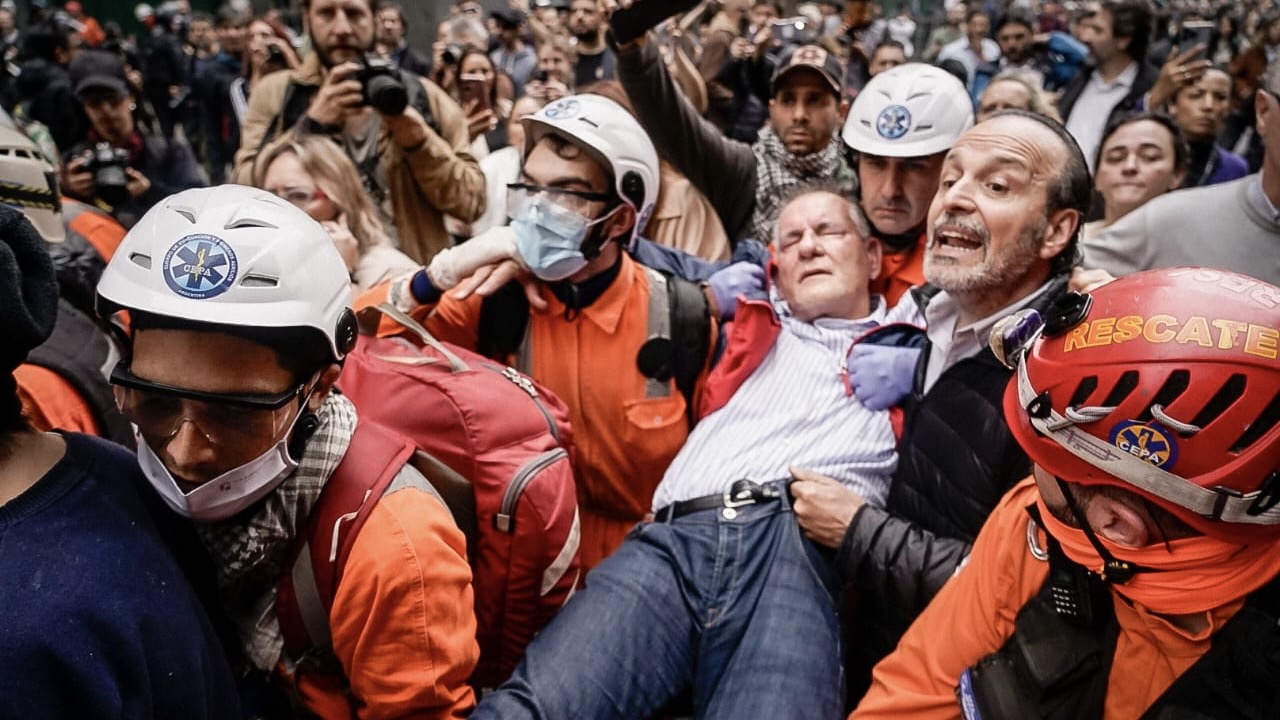
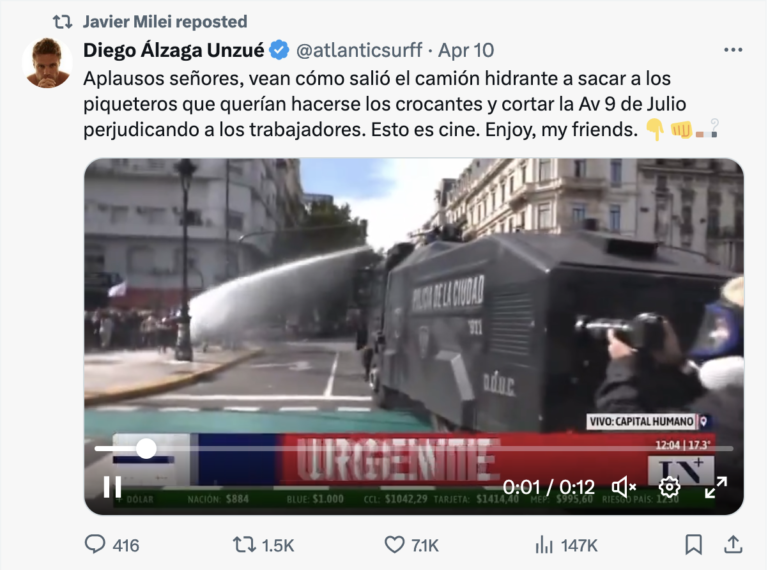
In Buenos Aires, thousands of protesters attempted to march to the Ministry of Human Capital when they were violently attacked by police with gas, water cannons. Over 10 were arrested in the brutal police repression and several were injured, including one protester who was dragged down the street and hit against the asphalt. Additionally, a journalist with the outlet Crónica TV driver was hit with a rubber bullet in the face.

The Ministry of Human Capital is a creation of the Milei government as a part of his promise to cut the majority of ministries and secretaries and create “super ministries”. It is the combination of the former Ministry of Labor, Ministry of Employment and Social Security, Ministry of Education, Ministry of Culture, and the Ministry of Social Development. This move, in addition to massively reducing the number of people working for the ministry, also saw severe cuts be made to the dozens of social programs run by those areas.

Milei, who was in Miami visiting with zionist and far-right US leaders such as Ben Shapiro, celebrated the repression of the protesters who were demanding government action against hunger amid unprecedented levels of poverty in the country. Milei reposted a publication from user Diego Álzaga Unzué on X which said: “Applause, gentlemen, see how the fire hydrant truck came out to remove the picketers who wanted to get dirty and cut off 9 de Julio Avenue, harming the workers. This is cinema. Enjoy, my friends.”

His Minister of Security Patricia Bullrich declared: “Law and order” in her post praising the “effective” crackdown on the mobilization through her “anti-picket protocol”.

Following the repressive operation, UTEP wrote in a statement: “We tried to create a channel of dialogue by all possible means, but once again the only response to the social and economic crisis is batons, gas and bullets. We denounce the violent actions of this Government, which the only thing it proposes for the people is planned misery. Our fight plan will continue to deepen to get food for our community kitchens, work and projects in our working class neighborhoods and social wages for the workers of the popular economy.”

The past week saw mass unrest across Argentina after over 10,000 public sector workers lost their jobs. As the “chainsaw” austerity of Milei continues alongside a growing military partnership with the United States, Argentina’s robust social organizations continue to be engaged in fierce struggle and opposition.

Original article by peoples dispatch republished under a Creative Commons Attribution-ShareAlike 4.0 (CC BY-SA) license.

Continue ReadingMilei celebrates violent repression of thousands protesting hunger in Argentina