Tag: Jean-Luc Mélenchon

  • French student protests set to continue as Macron and Lecornu fail to meet demands

    Spread the love

    Article by Ana Vračar republished from BreakThrough News under a Creative Commons Attribution-ShareAlike 4.0 (CC BY-SA) license.

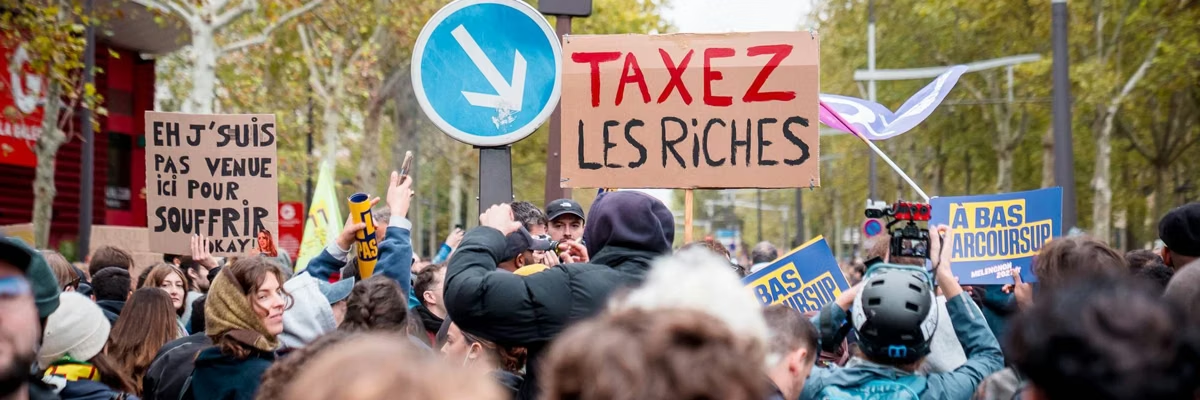
    Tens of thousands on the streets of Paris on October 24.
    Tens of thousands on the streets of Paris on October 24. Photo: La France Insoumise

    France braces for another round of mass mobilizations on October 31 as PM Lecornu and President Macron fail to meaningfully address protesters’ demands.

    France is gearing up for another round of anti-austerity mobilizations on Saturday, October 31. As the weekend approaches, President Emmanuel Macron and Prime Minister Sébastien Lecornu have still not substantially addressed the protest demands tabled by the student movement. 

    For the past weeks, students and their organizations have taken to the streets in the hundreds of thousands, denouncing the state of the education sector, including overcrowded classrooms, overworked teachers, and dilapidated buildings. Authorities have responded with a full-blown crackdown – police violence, curfews, and protest bans – while avoiding meaningful conversation about the protests’ causes.

    “The authorities’ top priority is to strip the movement of the political meaning it carries: the condemnation of the neoliberal policy that has ruined the French education system,” presidential candidate Jean-Luc Mélenchon pointed out in a recent interview. “Young people are pulling at the thread of a larger unraveling.”

    Government tried to break student unity

    Lecornu and his ministers called a meeting with high school and university student groups on Monday, announcing the government was ready to open dialogue on their demands. Yet even before the meetings kicked off, a list of government-proposed measures published by the media only fueled frustration. 

    These measures included a transparency-oriented reform of the higher education recruitment platform Parcoursup, the creation of 15,000 additional higher education placements, low-interest loans to regional authorities for renovating school infrastructure, and the indexation of grants to inflation.

    Read more: Students in France are fighting for stronger public education

    Students criticized the officials for attempting to set a negotiation agenda before even speaking to them. They also called them out for trying to break their unity by organizing separate meetings with different groups instead of a joint discussion. In this process, they emphasized, crucial voices were left out. 

    Among others, the Fédération Lycéenne des Quartiers (FLQ), representing high school students from working-class neighborhoods – the demographic group from which the protest wave originated – was not invited to meet Lecornu. Students interpreted this as yet another sign of the government’s failure to grasp what is at stake. “They see us first and foremost as ‘young people from the banlieues,’ rather than young people who, like everyone else, want to make their voices heard,” FLQ’s Soumaya Sarré told Mediapart. 

    “Crumbs” instead of solutions

    The way meetings were set up was not the only problem. Following the publication of the government’s proposals, the university students’ association Union Étudiante described them as “crumbs” and detailed how they fail to address the movement’s concerns. 

    “There are not 15,000 places missing but at least 250,000,” the organization warned. “Where are those 250,000 places needed for young people who have been denied their right to education because of classist and racist selection?” 

    Union Étudiante similarly criticized the lack of clarity surrounding proposed financing for infrastructure investment, employment plans, and the promise to “reform” rather than abolish Parcoursup. 

    Roughly 800,000 people participated in nationwide protests on October 24. Source: Union Étudiante/X

    This last demand has become emblematic for the student movement over the past weeks of protest. Young people on the streets have repeatedly explained how the tool allows university selection to maintain racist and classist tones – all while pushing tens of thousands of students without placements toward the private sector. 

    “We are not asking for a reform that offers more transparency or clarity; we already know how the selection process works, and it will remain unjust even if the selection criteria are made public,” Union Étudiante wrote. “The problem is selection itself. Why should young people be denied the right to pursue higher education? We must abolish all forms of selection while keeping a centralized platform for enrolling in academic programs.” 

    Mobilizations against racism and the far right

    Trade unions and progressive organizations continue to support the students ahead of Saturday’s demonstrations, while building toward a general strike on November 5. The networks remain connected over shared austerity-related problems, linking budget cuts in public services, attacks on pensions, and precarious working conditions. 

    In between regular nationwide mobilizations, the past few days have also seen significant protests against racism and the far right. After a racist attack in the Trappes working-class suburb of Paris last Friday – where one person was killed and five, including a 12-year-old, were seriously injured – calls are circulating for solidarity assemblies. 

    “This crime did not come out of nowhere,” wrote Saint-Denis mayor Bally Bagayoko. “For years, the perpetrator blamed ‘Black people and Arabs’ for all his misfortunes.”

    “He claimed he wanted to avenge a looting that never actually happened – a piece of false information broadcast on television,” he added.

    “This hatred has its architects: those who, hour after hour on the airwaves, designate our neighborhoods as the problem and ‘the other’ as a threat.”

    Read more: Students across the US South demand justice for Nolan Wells

    The far-right National Rally – whose program ahead of the 2027 presidential election endorses exactly this vision of “the other” – held its congress in Orléans over the October 24-25 weekend. Approximately 26,000 people joined a local march against the policies endorsed by the party, signaling continuous resistance in the lead-up to the April 2027 presidential election.
  • Thousands March Across Europe Against Inequality and ‘for Young People’s Future’

    Spread the love

    Article by Olivia Rosane republished from Common Dreams under Creative Commons (CC BY-NC-ND 3.0).

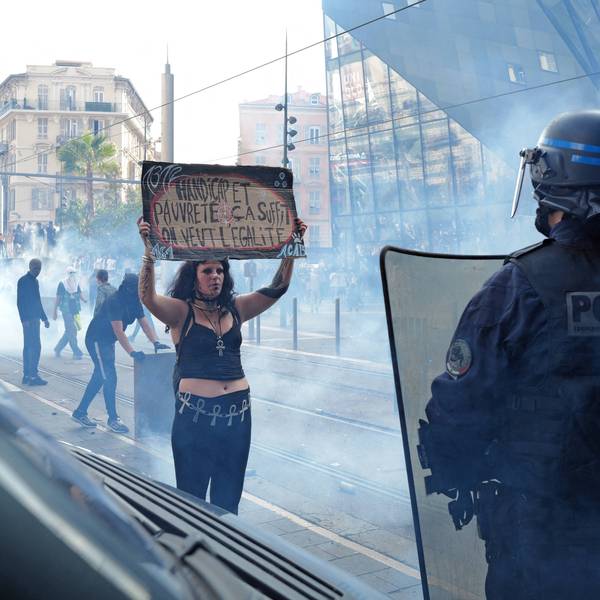
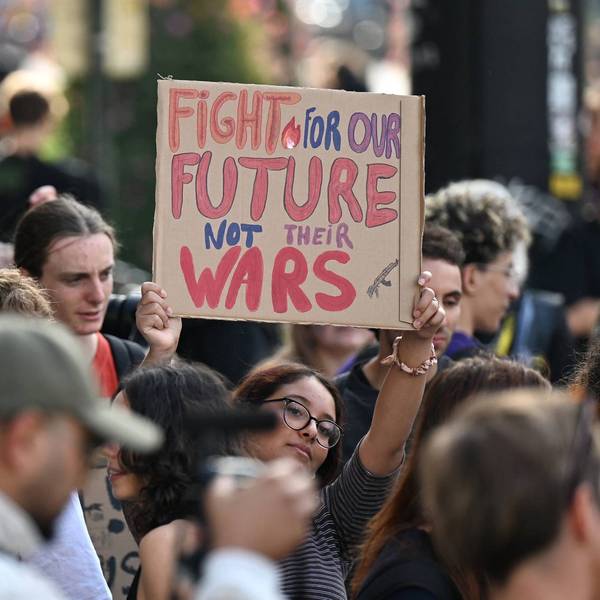
    People march in Paris for education reform and against inequality on October 24, 2026.
    (Photo by Jean-Luc Mélenchon /X)

    “Looking at countries like the United States, we don’t want to end up like them, where part of the population has everything and the others have nothing,” one French protester said.

    Hundreds of thousands of people took to the streets across Europe on Saturday as anger continues to build over the rising cost of living and deteriorating social services.

    While demonstrators emphasized different demands in different countries, the protest wave reflects a sense that the status quo has ceased to work for ordinary people, especially the young.

    RECOMMENDED…

    Student Protests in Belgium

    ‘This Is Going Global’: Anti-Austerity Protests Spread From Spain and France to Chile, Belgium, and Beyond

    'The Government Is Trembling': Protests Erupt in France, Spreading to 140 Cities

    ‘The Government Is Trembling’: Protests Erupt in France, Spreading to 140 Cities

    “I see so many more similarities than differences,” Alice de Brito, the vice president of French student union UNEF, told CNN of the protests. “We are all talking about the need for investments in education, in the universities, in youth in general. But we are also talking about the cost of living, about housing.”

    France

    Across France, between 410,000 and 800,000 people turned out in the continuation of protests that erupted in September when students began to mobilize against underfunding, teacher shortages, and other poor conditions in their schools. Adult workers have joined with the students, criticizing widespread inequality and the rising cost of living, leading to mass demonstrations on October 17 and again a week later.

    “Looking at countries like the United States, we don’t want to end up like them, where part of the population has everything and the others have nothing,” Paris protester Louis Ledoux–Xatard told The Associated Press.

    “Too many billionaires; we are preparing the revolution,” one group of protesters chanted, according to Al Jazeera.

    There were 289 protests in France, including in Marseilles, Nantes, Nice, Lyon, Bordeaux, and Orleans. Interior Minister Laurent Nunez said that almost 1,000 people were arrested, though the number was expected to grow. Two people sustained significant injuries.

    “Behind every police officer, a compliant camera.”

    The protest in Paris had originally been scheduled to run through the center of the city, but authorities relocated it to outskirts and banned marches organized by groups other than unions.

    “It won’t stop the movement. It won’t stop students from demanding better conditions in schools,” nurse Soumaya Abed told AP of the changes.

    Jean-Luc Mélenchon, who leads the left-wing France Unbowed party, criticized the government of President Emmanuel Macron for changing the route, but also praised the marchers for carrying on.

    “Total victory for the social movement,” Mélenchon wrote on social media. “The march gathered at the new authorized point and is now flowing calmly over more than four kilometers. The provocations for disorder by the Paris police prefect and [French Prime Minister Sébastien] Lecornu are a total failure. For the authorities, it is time to give in, or soon they will have only the exit door left.”

    Media reported that the Parisian demonstration was largely peaceful until the end, when police released tear gas and fired water cannons and some black-clad protesters threw projectiles.

    Reporters with Agence France-Presse said they saw:

    police charge several times and vigorously use tear gas and batons against some, mostly young, protesters.
    “The police started moving towards everyone, telling them to get down and back off. They were just taking people down, you know, beating protesters,” one demonstrator bleeding from a baton blow to his face, who gave his first name as David, told AFP.

    Other witnesses also described a repressive police response to The Guardian:

    Mike, a 23-year-old student who also declined to give his surname, said: “Look around, they’re just teenagers. Is it normal for teenagers to be teargassed and beaten with batons?”

    For Jessica, a 24-year-old student, said: “I just don’t understand why there’s so much violence. I feel like our right to protest is being trampled on.”

    Mélenchon lambasted the police and the media for working together to discredit the movement.

    “In Paris, to ruin the day and unwind, the so-called forces of law and order gas and fire into the crowd at the back of the procession, all in a bid to get footage for the domestic news channels that spent the whole week airing the images that spurred the Trappes killer,” he wrote on social media, referring to a racially motivated shooting west of Paris on Friday that killed one and wounded five.

    In a second post, he added: “It continues with the policing of minds through the televisions of power. Tonight, staging of the « tails of the procession » to spew hatred against the popular movement. Without a single image of the masses in peaceful action. Behind every police officer, a compliant camera.”

    He encouraged readers to “turn off the televisions! Form your own opinion without a guardian. Journey through social networks. Stay free to think for yourselves.”

    Belgium

    In neighboring Belgium, hundreds of people marched in Brussels in a continuation of demonstrations for improvements in the education system.

    “We are here for young people’s future, for better work,” rally speaker Celia Ponce told the crowd, as The Brussels Times reported.

    She also accused governments of wanting to “destroy public services.”


    Police used tear gas to disperse some protesters and, in an incident reported by Reuters, kicked and hit one demonstrator after they fell during a chase.

    Spain

    Approximately 25,000 people marched in Madrid to support Spain’s pension system and demand that it keep pace with inflation and that a gender gap be eliminated, according to Al Jazeera.

    “How beautiful Madrid is when it defends its rights,” Emilio Delgado, deputy spokesperson for left party Mas Madrid, wrote on social media. “We propose that no pension should be below the minimum wage. A lifetime of work deserves a dignified retirement.”

    The protests come a month ahead of Spain’s general election, in which current Prime Minister Pedro Sanchez’s Spanish Socialist Workers’ Party will face off against the right-wing Popular Party. Popular Party leader Alberto Nunez Feijoo has promised to adjust pensions according to inflation if his party wins, but demonstrators are still concerned about what a right-wing victory would mean for the pension system.

    Portugal

    In Portugal, meanwhile, the main demand was affordable housing.

    People marched in Lisbon, continuing a movement that began October 10 in the city of Porto calling on the government to address the country’s housing crisis, according to The Resident.

    “We have no home, so we set up tents!” read the slogan of the March, organized by the Acampada de Lisboa movement.

    The protesters also opposed new policies from Prime Minister Luis Montenegro that would weaken a limit on annual rent increases and make it easier to evict people who are unable to make rent payments, according to AP.

    Italy

    Thousands of people joined demonstrations across Italy to protest the affordability crisis as well as the right-wing government of Prime Minister Giorgia Meloni. Protests were called for eight cities including Milan, Turin, and Rome, with 10,000 attending the Milan demonstration alone.

    “We are here because of the rising prices and because I believe that our government has no respect for its citizens,” a 17-year-old student participant, who did not give a name, told Al Jazeera. “There are four people in my family. My mother works in a factory, but my father is about to lose his job. It’s hard to make ends meet on just one salary.”

    The Italian protests were a continuation of demonstrations that have taken place throughout October. There were fewer clashes between police and demonstrators on Saturday compared with earlier marches, though some protesters tried to enter the Colosseum before being pushed back.

    Albania

    In Albania, outrage over plans by US President Donald Trump’s son-in-law Jared Kushner to build a luxury resort near a protected wildlife area—which is widely seen as an example of government corruption—has dovetailed with demands by students for less corruption in the education system specifically as well as lower tuition fees and more funding.

    A demonstration in the capital of Tirana on Saturday marked the 12th day of anti-government protests this month following a summer of mobilizations against the luxury hotel.

    Some protesters lit fires and threw projectiles, while police used tear gas, rubber bullets, and water cannons.

    One demonstrator, the ⁠28-year-old Daniel Tahiri, told Reuters that the Albanian government was a “dictatorship with the clothes of democracy.”

    “Albanians have woken up,” Tahiri said.

    Article by Olivia Rosane republished from Common Dreams under Creative Commons (CC BY-NC-ND 3.0).

  • European leaders praise Gaza ceasefire deal, back neocolonial agenda

    Spread the love

    Original article by Ana Vračar republished from peoples dispatch under a Creative Commons Attribution-ShareAlike 4.0 (CC BY-SA) license.

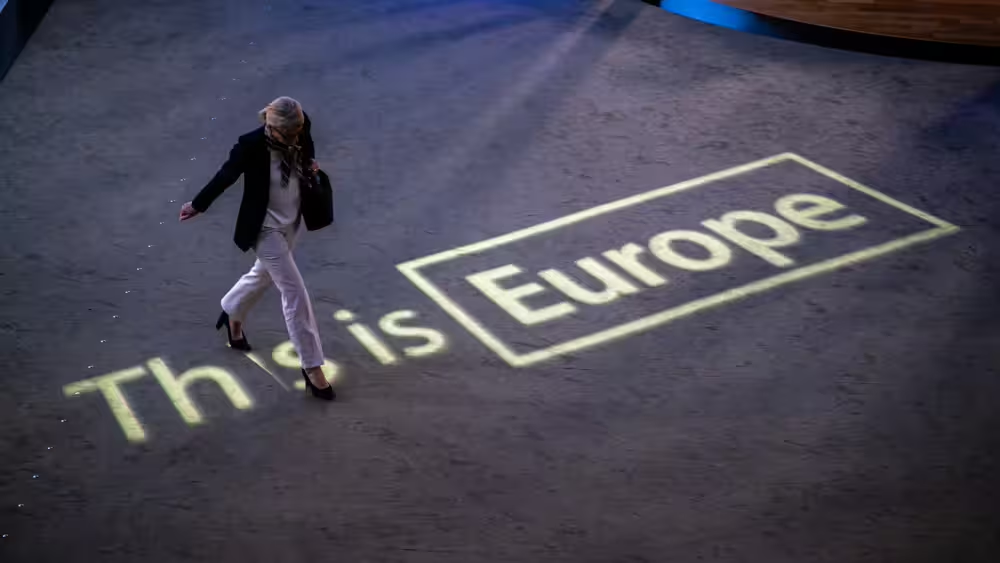
    Source: EU – European Parliament/Denis Lomme

    Reactions to the Gaza ceasefire deal signal that European leaders are more interested in advancing neocolonial projects than seeing peace in Palestine.

    European government leaders were quick to comment on the recently announced ceasefire deal for Gaza – but their enthusiasm seemed directed less toward a possible respite for the people of Palestine after two years of genocide, and more toward a new opportunity to ingratiate themselves with US President Donald Trump. Early statements overflowed with compliments for the US administration, accompanied by brief acknowledgments of other participants in the negotiations, before moving to promises of what Europe intends to do next.

    Read more: Israel-Hamas ceasefire deal met with cautious optimism

    “The European Union will continue to support the swift and safe delivery of humanitarian aid into Gaza,” European Commission President Ursula von der Leyen wrote on social media. “And when the time comes, we will be ready to help with recovery and reconstruction.” In her remarks, von der Leyen made no mention of the fact that the EU had failed to take decisive action to ensure the delivery of food and medicine to Gaza throughout Israel’s genocide, or that EU member states continued to ship weapons to the occupation power, thus directly contributing to the destruction she now presumably wants to help Gaza recover from.

    Similar statements could be found across communication channels of French, British, and other European officials. Some of the most remarkable reactions, however, came from Italy, whose government representatives had previously described President Trump’s plan for Gaza as the only achievable one and poured praise on his diplomatic skills. The same officials had criticized Italian activists who joined the Global Sumud Flotilla to break the sea blockade of the Strip and deliver essential supplies, failing to protect them from an Israeli terrorist attack and kidnapping in international waters.

    Prime Minister Giorgia Meloni announced that Italy “is ready to contribute to the stabilization, reconstruction, and development of Gaza,” while Foreign Minister Antonio Tajani posted videos showing Gazans waving Italian flags alongside Palestinian ones, apparently mistaking their recognition of Italian workers and students – who organized two general strikes and mass demonstrations in solidarity with Palestine, bringing inspiration to the whole region – for gratitude toward the Meloni administration itself.

    In reality, Italy’s far-right government has continuously backed Israel throughout the genocide and shipped substantial quantities of weapons to the occupation forces. For this reason, Meloni, Tajani, and Defense Minister Guido Crosetto, along with arms manufacturer Leonardo’s CEO Roberto Cingolani, were recently reported to the International Criminal Court for suspicion of complicity in crimes against humanity.

    Read more: Workers shut down Italy again in solidarity with Palestine

    Reactions from the left were more skeptical of what lies ahead. Jean-Luc Mélenchon of France Unbowed (La France Insoumise) commented: “After so many deaths and months of genocide, a ceasefire could take place in Gaza. How could one not rejoice at this? […] But once again, the Palestinians will have to endure a new foreign political order. And can one really believe Trump? From our continent, let us lend lucid and vigilant support to the ceasefire while remaining attentive and mobilized.”

    Progressive politicians in Europe also criticized the EU’s enthusiasm to define Gaza’s political future. Marc Botenga, MEP for the Workers’ Party of Belgium (PTB-PVDA), warned: “The EU needs to pressure Israel to respect the ceasefire, lift the humanitarian blockade, withdraw from the Gaza Strip and other occupied Palestinian territory.” Reacting to EU High Representative for Foreign Affairs Kaja Kallas, who suggested that the bloc should have a seat at the table while the management of Gaza is discussed, Botenga added: “Europe should stand for Palestinian self-determination instead of fighting to be part of a neocolonial administration.”

    Original article by Ana Vračar republished from peoples dispatch under a Creative Commons Attribution-ShareAlike 4.0 (CC BY-SA) license.

    Experiencing issues with this image not appearing. I suspect because it's so critical of Zionist Keir Starmer's support of and complicity in Israel's genocides.
    Genocide denier and Current UK Prime Minister Keir Starmer is quoted that he supports Zionism without qualification. He also confirms that UK air force support has been essential in Israel’s mass-murdering genocide. Includes URLs https://www.declassifieduk.org/keir-starmers-100-spy-flights-over-gaza-in-support-of-israel/ and https://youtu.be/O74hZCKKdpA

  • 100,000+ People Across France March to Decry Macron’s ‘Denial of Democracy’

    Spread the love

    Original article by Julia Conley republished from Common Dreams under Creative Commons (CC BY-NC-ND 3.0). 

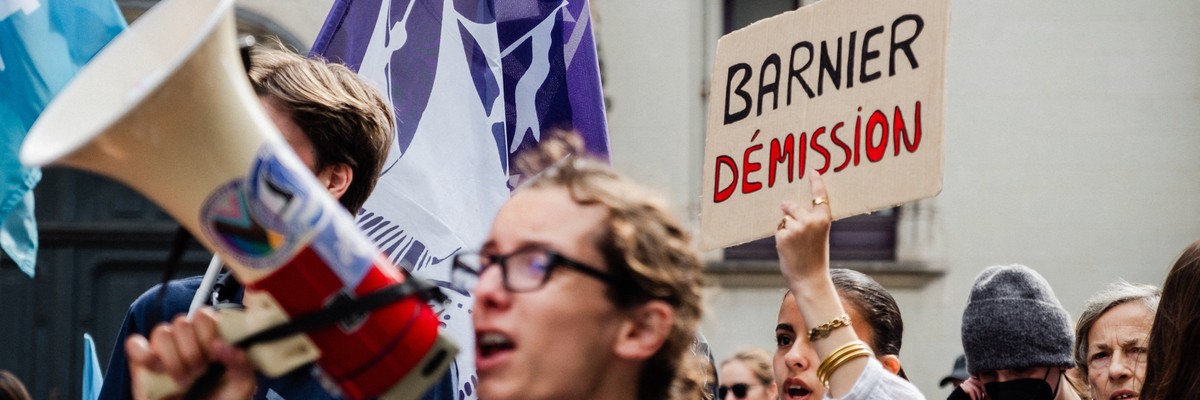
    A protester carries a sign called on Michel Barnier, who was selected by French President Emmanuel Macron as the prime minister, to resign at a protest on September 7, 2024 in Nantes, France. (Photo: Maylis Rolland/Hans Lucas/AFP via Getty Images)

    “Expressing one’s vote will be useless as long as Macron is in power,” said one demonstrator.

    In cities and towns across France on Saturday, more than 100,000 people answered the call from the left-wing political party La France Insoumise for mass protests against President Emmanuel Macron’s selection of a right-wing prime minister.

    The demonstrations came two months after the left coalition won more seats than Macron’s centrist coalition or the far-right Rassemblement National (RN) in the National Assembly and two days after the president announced that Michel Barnier, the right-wing former Brexit negotiator for the European Union, would lead the government.

    The selection was made after negotiations between Macron and RN leader Marine Le Pen, leading protesters on Saturday to accuse the president of a “denial of democracy.”

    “Expressing one’s vote will be useless as long as Macron is in power,” a protester named Manon Bonijol told Al Jazeera.

    A poll released on Friday by Elabe showed that 74% of French people believed Macron had disregarded the results of July’s snap parliamentary elections, and 55% said the election had been “stolen.”

    Jean-Luc Mélenchon, the leader of La France Insoumise (LFI), or France Unbowed, also accused Macron of “stealing the election” in a speech at the demonstration in Paris on Saturday.

    “Democracy is not just the art of accepting you have won but the humility to accept you have lost,” Mélenchon told protesters. “I call you for what will be a long battle.”

    He added that “the French people are in rebellion. They have entered into revolution.”

    Macron’s centrist coalition won about 160 assembly seats out of 577 in July, compared to the left coalition’s 180. The RN won about 140.

    Barnier’s Les Républicains (LR) party won fewer than 50 parliamentary seats. French presidents have generally named prime ministers, who oversee domestic policy, from the party with the most seats in the National Assembly.

    Barnier signaled on Friday that he would largely defend Macron’s pro-business policies and could unveil stricter anti-immigration reforms. Macron has enraged French workers and the left with policies including a retirement age hike last year.

    Protests also took place in cities including Nantes, Nice, Montpellier, Marseilles, and Strasbourg.

    All four left-wing parties within the Nouveau Front Populaire (NFP) coalition have announced plans to vote for a motion of no confidence against Barnier.

    The RN has not committed to backing Barnier’s government yet and leaders have said they are waiting to see what policies he presents to the National Assembly before deciding how to proceed in a no confidence vote.

    Original article by Julia Conley republished from Common Dreams under Creative Commons (CC BY-NC-ND 3.0). 

  • Two months after elections, Macron refuses to nominate progressive prime minister

    Spread the love

    Original article by Ana Vračar republished from peoples dispatch under a Creative Commons Attribution-ShareAlike 4.0 (CC BY-SA) license.

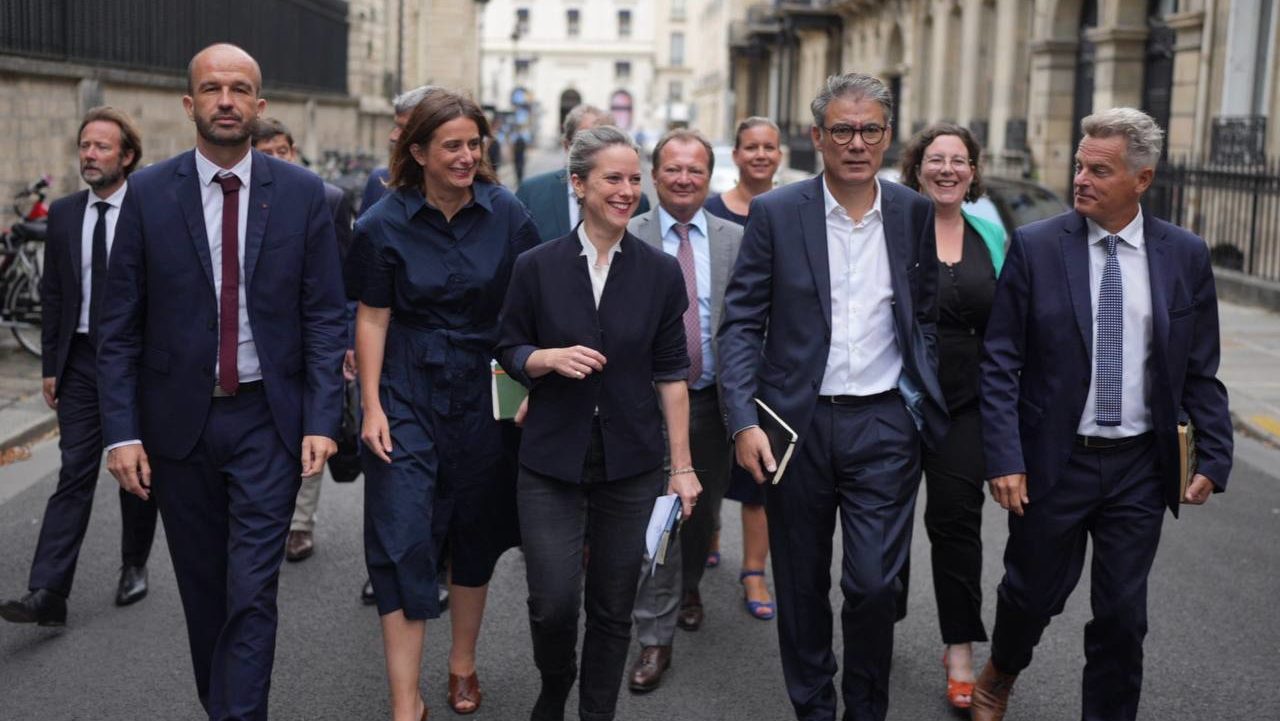
    NFP representatives ahead of talks with President Macron, August 2024. Source: Lucie Castets/X

    Emmanuel Macron continues to block the formation of a New Popular Front-led government, sparking outrage over his disregard for democratic processes

    Almost two months have passed since the snap election in France, and President Emmanuel Macron is still avoiding to nominate a new prime minister. His behavior has sparked outrage, particularly in left and progressive circles, who accuse him of usurping power and showing a gross lack of respect for democratic processes.

    Following consultations with representatives of all parliamentary parties between August 23 and 26, Macron refused to nominate Lucie Castets, the candidate put forward by the New Popular Front (NFP), claiming he is acting to preserve “institutional stability.”

    The NFP emerged as the group with the largest number of parliamentary seats in the election, despite not securing an absolute majority. This lack of an absolute majority has been exploited by political opponents, ranging from Macron’s liberals to the far-right led by Marine Le Pen and Jordan Bardella, who argue that there was no clear election winner and seek to block a progressive government from taking office.

    Read: Macron calls for ‘political pause’ amid post-election transition

    Both liberals and right-wing factions have vowed to block an NFP-led government, especially if it includes ministers from the left-wing party France Unbowed (LFI). However, these threats have been denounced by NFP representatives as attempts to prevent the coalition from implementing its program, which aims to break with the neoliberal policies championed by the liberals and supported by the right.

    “Emmanuel Macron understands that our priority, as the French people expect, will be to reverse his unfair pension reform and restore public services,” said Lucie Castets. “He is looking for excuses to prevent us from doing so.”

    The President’s latest statements have been described as “a disgrace” and “lunatic” by leaders of the parties united in the NFP. “The President of the Republic has just created a situation of exceptional gravity,” summarized Jean-Luc Mélenchon, announcing that LFI will be calling for Macron’s impeachment.

    “Anger. That is what millions of us are feeling this morning. Emmanuel Macron is telling us that elections are worthless. So, does democracy mean nothing to the President? That’s extremely dangerous,” Castets pointed out in an interview.

    Meanwhile, Macron continues to insist that the only way forward is to find a candidate for prime minister who enjoys cross-party support, raising questions about the purpose of elections in the first place. According to the President, an NFP government would face an immediate vote of no confidence from the liberals and the right wing, leaving it completely ineffectual. Instead, he announced another round of conversations with parliamentary groups to define a way forward—talks that the NFP has already declared they will not attend, deeming them illegitimate.

    “The gravity of the moment calls for a firm response from French society against the incredible abuse of power to which it is being subjected,” LFI said in a press statement. As a first step, the left party, along with student organizations and unions, has called for protests on September 7.

    Original article by Ana Vračar republished from peoples dispatch under a Creative Commons Attribution-ShareAlike 4.0 (CC BY-SA) license.