BP has been rowing back on renewables for years. So why was it helped by ‘net zero’ banks?

Spread the love

Original article by Rob Soutar republished from TBIJ under a Creative Commons Attribution-NonCommercial-NoDerivs 3.0 Unported License.

Oil companies’ move to double down on fossil fuels should come as no surprise to anyone – not least its financers

Last week, BP’s CEO Murray Auchincloss said his company had gone “too far, too fast” in its plan to transition away from fossil fuels. BP still says it aims to be a net zero company by 2050 but it will now take a different path to the one it set out in 2021 … doubling down on fossil fuels in the meantime.

Perhaps the move shouldn’t have come as a surprise. After all, BP is a commercial enterprise with a responsibility to deliver returns for its shareholders. And since Russia’s invasion of Ukraine, which led many countries to prioritise energy security over long-term sustainability, oil and gas have remained reliably lucrative.

What’s more, the company made a similar announcement two years ago, saying it would be ramping up its investments in oil and gas.

But if BP had indicated such a significant change in direction so long ago, how did it continue to raise billions from banks that said they’d only do business with “net zero” companies?

Milestone moment?

At the 2021 climate talks in Glasgow, a number of the world’s leading banks made landmark pledges: to slash the footprint of their own operations and, crucially, the emissions of their lending and investment portfolios.

It was hailed as a watershed moment. In theory, the vast stockpiles of money that had supported fossil fuel expansion would now be cut off for companies without net zero ambitions. The same year, the International Energy Agency warned that there must be no new oil and gas projects if the world is to reach net zero by 2050.

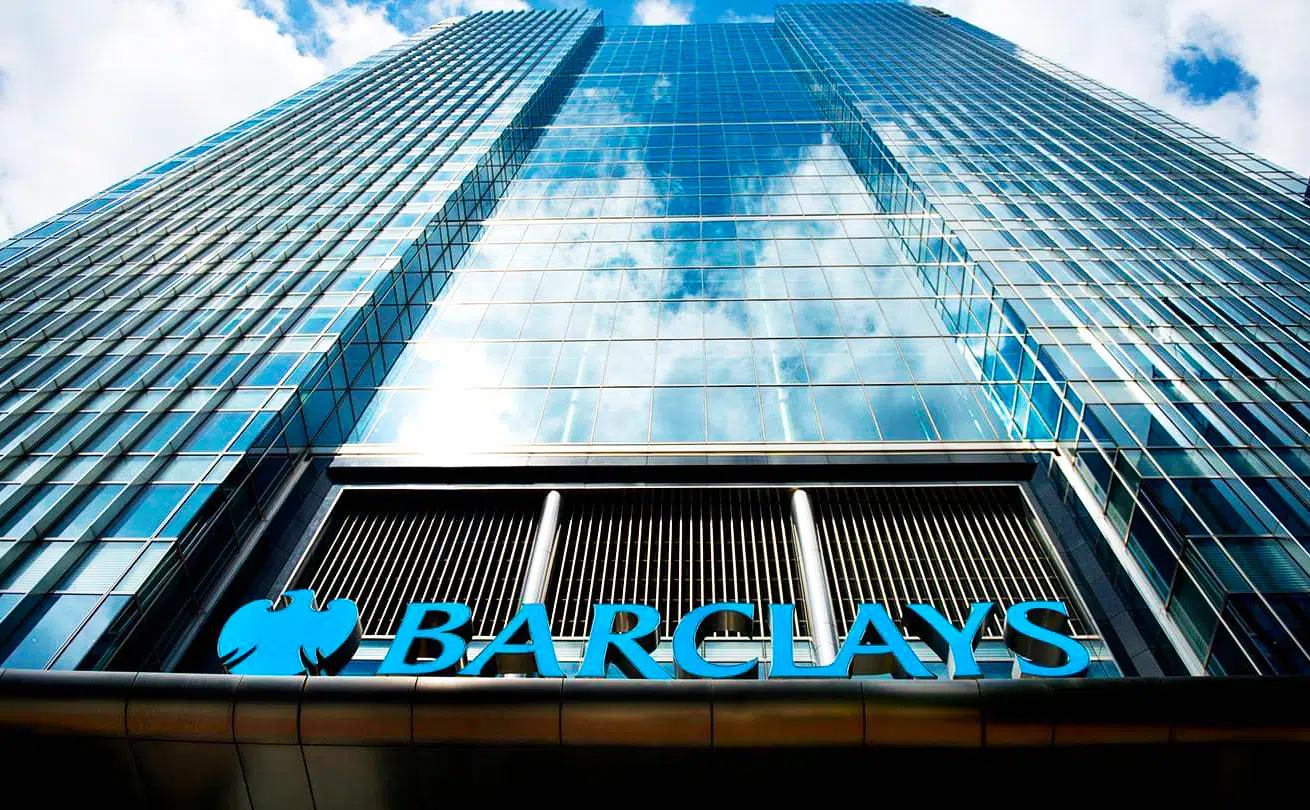
Yet throughout 2023, after it said it would invest significantly more in fossil fuels, BP raised more than $5bn with help from “net zero” banks including NatWest, HSBC and Barclays.

The deals illustrate a core problem with the banks’ net zero commitments. A key condition for companies they agreed to do business with was the existence of a “credible” transition plan. But it wasn’t always clear how the banks were assessing that credibility.

Even before Auchincloss’ announcement last week, the world-leading Grantham Research Institute assessed the credibility of oil and gas companies’ transition plans – and found that BP’s fell well short.

That lack of clarity on what was “credible” left the banks with enough wriggle room to maintain relationships with huge fossil fuel companies.

Recommended Articles

And those relationships have proved profitable. Since May 2021, global banks that have committed to net zero have poured almost $1 trillion into companies pursuing expansion of oil and gas projects that would push the world beyond its survivable limits.

Looking long-term

The policy environment has changed since Glasgow, when both fossil fuel companies and banks launched net zero targets. BP is not the only company of its kind to have “reset” its core business to oil and gas. But critics say that recent moves to boost fossil fuels and ensure quick returns are alarmingly short-sighted.

In the UK, the costs of getting to net zero are cheaper than was anticipated just five years ago, according to a recent report by the Climate Change Committee. And in a low-carbon economy, fossil fuels could nosedive – leaving the oil and gas fields currently in development as “stranded assets” with little value.

But crucially, the banks face considerable risks too. Their previous promises to work only with clients committed to the transition were made for a reason: they were feeling the pressure from climate-conscious investors.

If the banks are found to have broken these promises, they could well be held to account by regulators – not to mention see their credibility shattered in the eyes of their investors.

Reporter: Rob Soutar
Deputy editor: Chrissie Giles
Editor: Franz Wild
Fact checker: Ero Parksakoulaki
Production editor: Alex Hess

TBIJ has a number of funders, a full list of which can be found here. None of our funders have any influence over editorial decisions or output.

Original article by Rob Soutar republished from TBIJ under a Creative Commons Attribution-NonCommercial-NoDerivs 3.0 Unported License. Corrected a reference to “oil company’s” in the subheading in this version.
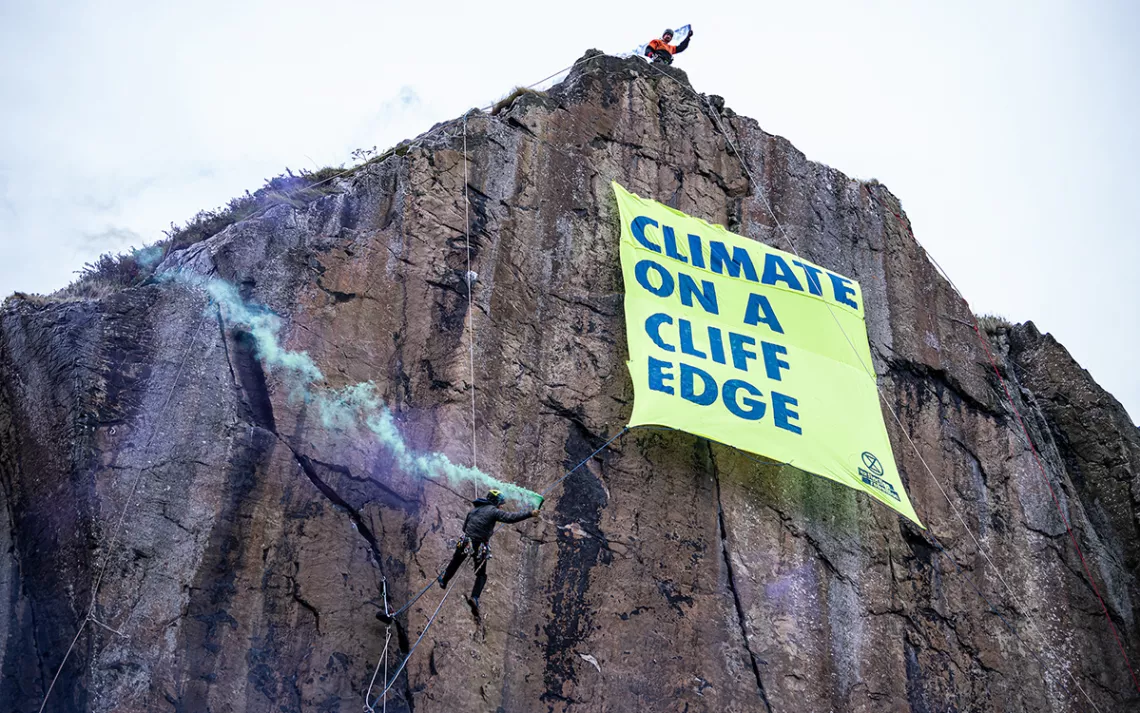
Experienced climbers scale a rock face near the historic Dumbarton castle in Glasgow, releasing a banner that reads “Climate on a Cliff Edge.” One activist, dressed as a globe, symbolically looms near the edge, while another plays the bagpipes on the shores below. | Photo courtesy of Extinction Rebellion and Mark Richards
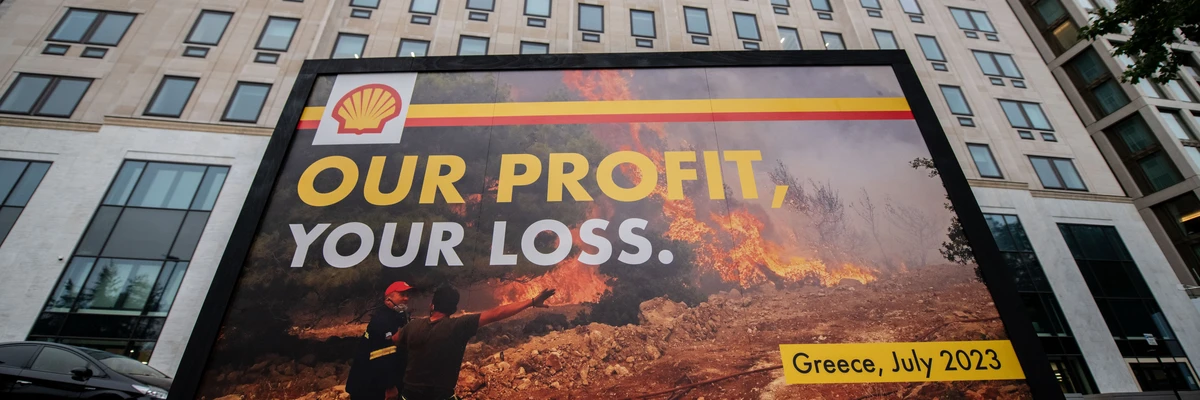
Greenpeace activists display a billboard during a protest outside Shell headquarters on July 27, 2023 in London.
Greenpeace activists display a billboard during a protest outside Shell headquarters on July 27, 2023 in London. (Photo: Handout/Chris J. Ratcliffe for Greenpeace via Getty Images)
Neo-Fascist Climate Science Denier Donald Trump says Burn, Baby, Burn.

Continue ReadingBP has been rowing back on renewables for years. So why was it helped by ‘net zero’ banks?

Bankers roll in cash as pensioners freeze and children forced to go hungry

Spread the love

https://morningstaronline.co.uk/article/bankers-roll-in-cash-as-pensioners-freeze-and-children-forced-to-go-hungry

People walking near the Bank of England

RACHEL REEVES’S decision to protect fat cat bankers has lost the public £15 billion — money that could have saved freezing pensioners and hundreds of thousands of children from going hungry, a damning new report found today.

Campaigners for a windfall tax on banking profits slammed the Chancellor after it emerged that Britain’s four biggest banks made a record £45.9bn in profits for 2024.

Positive Money found that the policy, called for by unions and left MPs, would have brought in an additional £14.7bn for the Exchequer this year after Lloyds Bank became the last of the so-called Big Four to announce its £6bn pre-tax profits for last year.

The group calculated that increasing the existing surcharge on bank profits from 3 to 35 per cent, in line with the government’s windfall tax on energy companies, could have raised this sum from Lloyds, HSBC, Barclays and NatWest alone.

This would be enough to cover the cost of scrapping the two-child benefit cap — fives times over.

Article continues at https://morningstaronline.co.uk/article/bankers-roll-in-cash-as-pensioners-freeze-and-children-forced-to-go-hungry

Keir Starmer, Angela Rayner and Rachel Reeves wear the uniform of the rich and powerful. They have all had clothes bought for them by multi-millionaire Labour donor Lord Alli. CORRECTION: It appears that Rachel Reeves clothing was provided by Juliet Rosenfeld.
Keir Starmer says pensioners can freeze to death and poor children can starve and be condemned to failure and misery all their lives.

Editorial:The stark division in modern capitalist Britain – people or profits

Continue ReadingBankers roll in cash as pensioners freeze and children forced to go hungry

95 UK Universities That Have Pledged to Divest from Oil and Gas Use Banks Funding Climate Crisis

Spread the love

Original article by Max Colbert republished from DeSmog

Students have accused the institutions of ‘hypocritical and performative’ green commitments.

The Barclays UK headquarters. Credit: Gary Group Editor / Wikimedia CommonsCC-BY- SA-4.0

Almost 100 universities that have pledged to shed ties to the fossil fuel industry still bank with financial institutions that have collectively provided $419 billion (£345 billion) to polluting interests between 2016 and 2022. 

The new research, conducted by campaign group Make My Money Matter and obtained using Freedom of Information requests, shows that 95 universities still hold a bank account with one of five leading global fossil fuel funders: Barclays, HSBC, Santander, NatWest, and Lloyds.

These banks have supplied billions in financing to Shell and BP, which this year scaled back their climate targets, as well as to other oil and gas firms such as ExxonMobil and TotalEnergies. Barclays was the bank of choice, used by nearly three quarters (73 percent) of the universities.

Barclays was the largest European financier of fossil fuels between the signing of the Paris Agreement in 2016, which set a goal of limiting global warming to 1.5C, and 2022. The British bank propped up the oil and industry with $190.5 billion (£157 billion) in funding during this time, according to the annual Banking on Climate Chaos report from the climate campaign group Rainforest Action Network (RAN).

This story comes after DeSmog revealed earlier this month that UK universities have accepted £40.4 million in funding from fossil fuel companies since 2022. Students across Europe have protested at schools and universities since returning for the new academic year. In the UK, activists from Just Stop Oil have renewed their campaigning on campuses, targeting University College London, Birmingham, Sussex, Falmouth, and Exeter.

Over 100 universities across the UK, representing 65 percent of the higher education sector, have pledged to divest from the fossil fuel industry since 2014. Over 50 are yet to make any public commitments. 

Make My Money Matter says that it will be writing to universities and calling on them to ensure that their divestment commitments are not being undone by their banking choices. 

“Divesting from fossil fuels while banking with Barclays is hypocritical and performative,” said Jo Campling, welfare and sustainability officer at Sheffield University Students’ Union. “Universities claim they are striving for a better future by educating their students yet they continue to provide legitimacy to the financial institutions ignoring universities’ own scientists and driving us ever closer to irreversible climate breakdown.”

‘More Needs to be Done’

The universities that have held accounts with Barclays include Bristol, one of the “greenest universities in the UK”, University College London (UCL), the UK’s largest higher education institution by student population, and the University of Glasgow, the first UK university to commit to fossil fuel divestment.

Researchers analysed the period between April 2021 and April 2023. The threshold for a ‘banking relationship’ includes a current or deposit account held within the period, but excludes other services such as loans, credit facilities, or currency exchanges.

In 2022, Barclays was a major backer of unconventional oil projects, such as Arctic extraction and extraction from tar sands. The latter emits up to three times more global warming pollution than producing the same quantity of crude oil.

As of late 2022, following pressure from investors, Barclays has agreed to scale down its financing of oil sands operations. However, the new research shows both Barclays and HSBC remained among the top 10 (seven and eight respectively) global financiers of new fossil fuel expansion projects.

Barclays is facing heavy criticism for its ongoing role in facilitating climate breakdown, and its annual general meeting in May was disrupted by climate activists from Extinction Rebellion.

A spokesperson for Barclays told DeSmog: “Aligned to our ambition to be a net zero bank by 2050, we believe we can make the greatest difference by working with our clients as they transition to a low-carbon business model, reducing their carbon-intensive activity whilst scaling low-carbon technologies, infrastructure and capacity. 

“We have set 2030 targets to reduce the emissions we finance in five high-emitting sectors, including the energy sector, where we have achieved a 32 percent reduction since 2020. In addition, to scale the needed technologies and infrastructure, we have provided £99 billion of green finance since 2018, and have a target to facilitate $1 trillion in sustainable and transition financing between 2023 and 2030.”

Peter Vermeulen, chief financial officer at the University of Bristol told DeSmog that the university takes its “climate commitments seriously” and engages with major suppliers, including banks, “to see where positive improvements and changes can be made”.

Vermeulen added that, “I, like many others, am disappointed in Barclays’s climate performance, and that they only put a serious climate plan in place in 2020. In my previous role I actively engaged with Barclays on their lack of progress in this area and witnessed improvement. More needs to be done and for that reason, since joining the University of Bristol this summer, I will step that up even further, with university, staff, and student representatives involved in this.”

Rainforest Action Network has calculated that the world’s biggest banks poured $673 billion (£554 million) into fossil fuels in 2022, while DeSmog revealed in May that four in five bank directors at the six largest banks in the U.S. have ties to polluting companies and organisations, including major fossil fuel firms.

Commenting on the findings of the Make My Money Matter report, Nat Gorodnitski from Students Organising for Sustainability said: “If we want to stop the worst effects of climate change, we need to end fossil fuel funding. Banks are the biggest funders by a long way and rely heavily on the higher education sector for recruitment, reputation, and business, while their fossil fuel financing contradicts academic research, university policies, and students’ needs. 

“This gives students and universities the unique power to pressure banks to end their fossil fuel financing in a meaningful way, and call for a shift to funding sustainable energy.”

A spokesperson for HSBC said: “Supporting the transition to net zero and engaging with clients to help them diversify and decarbonise is critically important to us. We are committed to aligning our financed emissions to net zero by 2050.”

A University of Glasgow spokesperson that the university “is committed to doing our part to tackle the climate emergency. In 2014, we pledged to divest our holdings in companies involved in the oil and gas sectors over a 10 year period, and have already achieved this. We have also set an ambitious target to achieve net zero greenhouse gas emissions by 2030. Our socially responsible investment policy is regularly reviewed.”

Original article by Max Colbert republished from DeSmog

Continue Reading95 UK Universities That Have Pledged to Divest from Oil and Gas Use Banks Funding Climate Crisis