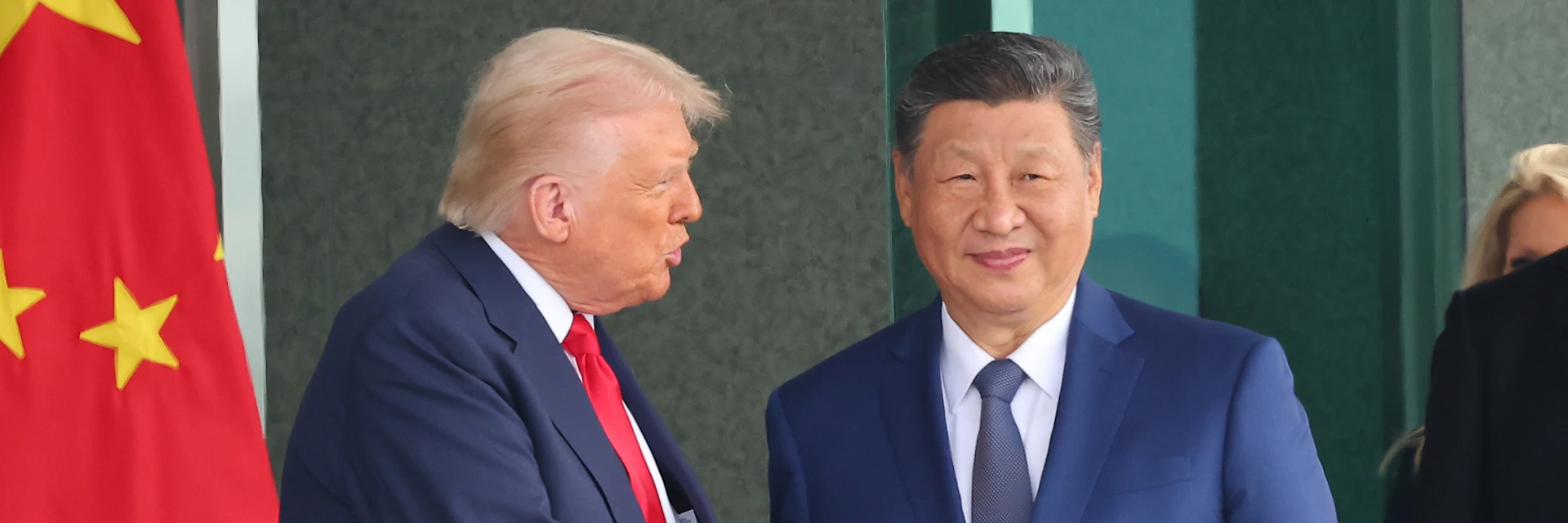
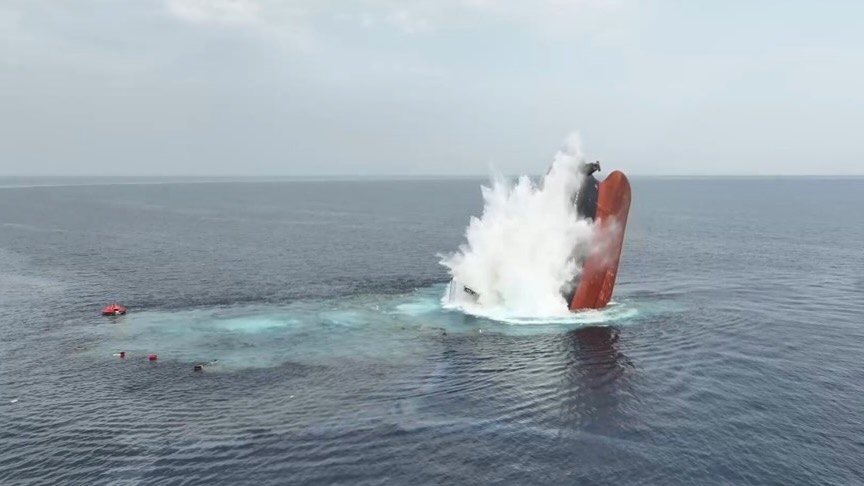
Trump Revives Iran Blockade, Demands 20% Toll for US ‘Guarding’ Strait of Hormuz

Spread the love

Article by Jessica Corbett republished from Common Dreams under Creative Commons (CC BY-NC-ND 3.0). 
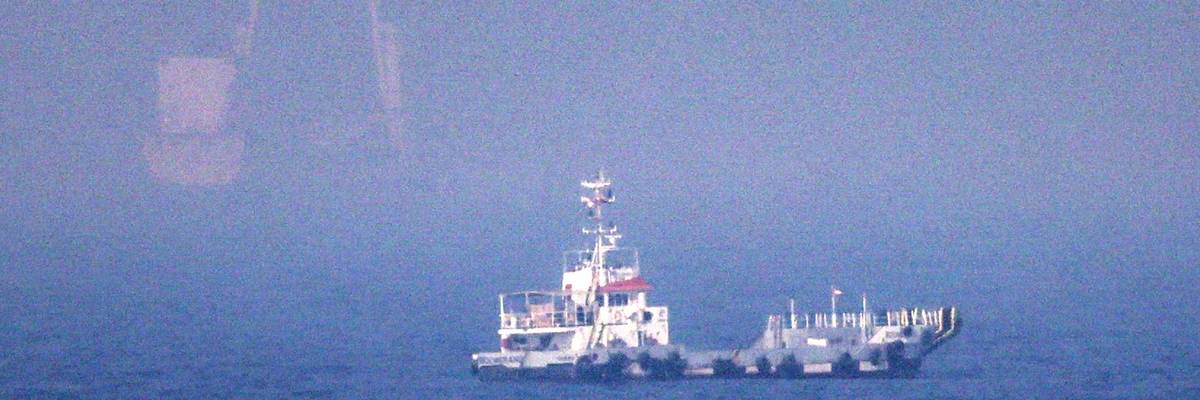
Ships sail near the Strait of Hormuz off the eastern coast of the United Arab Emirates at Khor Fakkan on July 13, 2026.
 (Photo by AFP via Getty Images)

Critics noted that “20% of the value of any cargo is actually substantially MORE than Iran is seeking to charge ships to transit the strait.

Following fresh US airstrikes against Iran over the weekend, President Donald Trump said Monday that the United States would reimpose a naval blockade on the Mideast country, serve as the “guardian” of the Strait of Hormuz, and charge a 20% toll for cargo ships trying to safely travel on the key trade route.

Trump made the comments while calling in to “Fox & Friends” on Monday morning, as well as on his Truth Social platform.

RECOMMENDED…
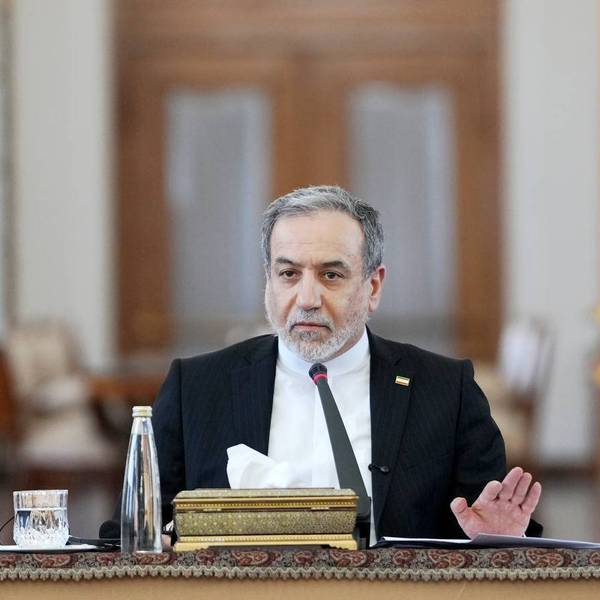
Iranian Foreign Minister Abbas Araghchi held a meeting in Tehran

Iranian Foreign Minister: Trump ‘Absolutely Right’ About Guarding Strait of Hormuz—But Iran Will Charge ‘Fair’ Price
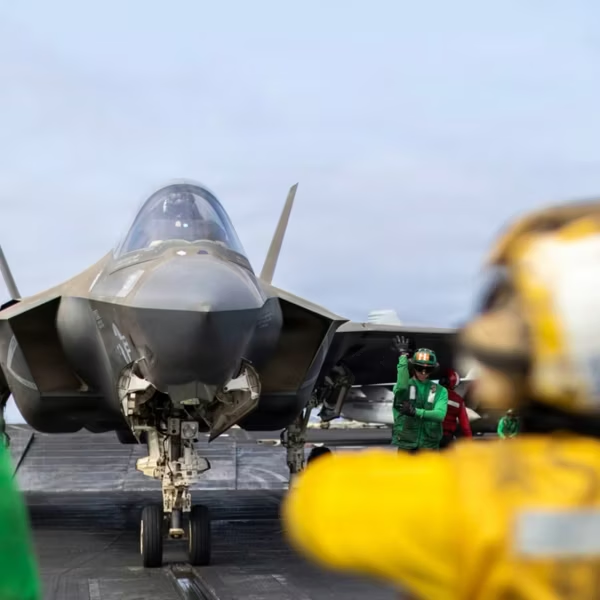
A US F-35 fighter is seen on a carrier deck

US Resumes ‘Powerful Strikes’ on Iran After Attacks on Strait of Hormuz Shipping

“We’re just gonna hit them very hard, and we’re gonna keep the strait, and we’ll probably run it. We’ll become the guardian of the strait. Maybe we’ll call it the guardian angel of the strait. And we should be reimbursed for that,” Trump said on the Fox News morning show.

“When we do that, we’re gonna be reimbursed, because the other nations are very wealthy. They’re on our side, and we can’t be expected to do that for nothing,” the president said. “Now we’re gonna guard it, and we’re gonna get paid for guarding it—a lot of money.”

Later Monday morning, Trump wrote on Truth that “the Hormuz Strait is OPEN, and will remain OPEN, with or without Iran. We are reinstating the THE IRANIAN BLOCKADE, so named because it is only stopping Iran’s ships or customers from entering or leaving. All other countries will have fair and open use of the Strait.”

“The U.S.A. will be, from this point forward, known as ‘THE GUARDIAN OF THE HORMUZ STRAIT,’ but as such, and as a matter of FAIRNESS, will be reimbursed, at the rate of 20% on all cargo shipped, for any and all costs necessary to do the job of providing safety and security to this very volatile section of the World,” he added. “The process and formation will begin immediately.”

Bloomberg energy and commodities columnist Javier Blas pointed to US Secretary of State Marco Rubio’s remarks just a couple of weeks ago that “no country is allowed to charge tolls or fees on an international waterway.”

Critics and experts were also quick to note that, as immigration attorney Aaron Reichlin-Melnick put on the platform X, “20% of the value of any cargo is actually substantially MORE than Iran is seeking to charge ships to transit the strait.”

Trita Parsi, executive vice president of the Quincy Institute for Responsible Statecraft, quipped that it “seems like Trump just made a pitch for the Iranian toll system. :) Because the Iranians were going to charge $1 million per ship, which would amount to 1-2% of the value of the cargo of an oil tanker. But Trump is going to charge 20%! :)”

In an early Monday blog post, Parsi had written that “for all practical purposes, the US-Iran memorandum of (mis)understanding is over. The dispute over how to manage the Strait of Hormuz in the interim has pushed the two sides back into open war.”

As Parsi explained:

The dispute over the strait turns, at least on the surface, on paragraph 5 of the MOU: whether Iran is responsible for safe passage throughout the strait for the duration of the agreement, or only for the waterway’s northern corridor.

Beneath the surface, however, lies a more fundamental strategic disagreement. Even before the MOU was signed, Tehran believed Washington’s objective was to establish a southern shipping corridor through Omani waters that would gradually erode Iran’s control over the strait. Such a corridor would require Oman’s cooperation, which may explain why Trump at one point threatened to bomb Oman unless it abandoned its proposal for joint management of the strait, with administrative fees collected by Muscat and Tehran.

The corridor would remain operational even if war resumed and Iran sought once again to close the strait. From Tehran’s perspective, Washington used the MOU to strengthen this alternative route, and the US military’s escort of commercial shipping without coordinating with Iran marked a significant step in that direction. If successful, the strategy would deprive Iran of its most important source of leverage—which is precisely why it appeals to Washington.

“This is why Tehran has insisted that all ships transiting the strait—regardless of the corridor they use—coordinate with Iran, consistent with its reading of paragraph 5 of the MOU,” he continued. “Washington, by contrast, argues that the MOU merely assigns Iran responsibility for ensuring the safe passage of commercial vessels, without granting it operational control over all maritime traffic.”

Sina Toossi, a senior nonresident fellow at the Center for International Policy, warned in a statement about Trump’s Monday comments that “if implemented, the announced re-blockade would effectively restart the economic clock that the MOU had temporarily paused. Iran would once again face mounting pressure on its ability to export, store, and monetize oil, while the United States and the global economy would again confront the risks of prolonged disruption to Persian Gulf energy flows.”

“The strategic environment, however, is no longer what it was before the war,” he added. “US strategic petroleum reserves continued to decline during the MOU period and remain at historically low levels, while global inventories also remain tight. As a result, there is less cushion to absorb a prolonged supply disruption than in the previous round of fighting, increasing the risks of sharper energy price spikes, higher inflation, and broader economic disruption.”

This article has been updated with comment from Sina Toossi.

Article by Jessica Corbett republished from Common Dreams under Creative Commons (CC BY-NC-ND 3.0). 
Orcas discuss rotting brain, front Orca says Sundown Syndrome is a dead givaway and he wishes someone would Lock Him Up
Continue ReadingTrump Revives Iran Blockade, Demands 20% Toll for US ‘Guarding’ Strait of Hormuz

US blockade of Strait of Hormuz ratchets up tensions with China ahead of Trump visit to Beijing

Spread the love

Tom Harper, University of East London

The US president is set to visit Beijing in mid-May. EPA/Yonhap

The Trump administration’s decision to carry out a naval blockade of the Strait of Hormuz has raised tensions in the Persian Gulf to new and more perilous levels. The move was announced by the US president, Donald Trump, after negotiations over a ceasefire with Iran broke down on April 11, partly due to Iran wanting to retain control of the vital Strait of Hormuz, through which one-fifth of the world’s oil transits.

The blockade is designed to neutralise Iran’s efforts to close the strait to shipping it deems unfriendly to Tehran and implement a toll system for other vessels transiting the strait.

The US blockade can be seen as the latest attempt by the Trump administration to project strength. But it also throws down a challenge to Beijing. China has been the main purchaser of Iranian oil in recent years and is one of the few nations whose shipping can enter the strait unchallenged.

It appeared very likely that this status would be tested on April 14 when the Rich Starry, a Chinese owned and operated tanker under US sanction for transporting Iranian oil, transited the strait unchallenged by the US warships in the region.

But it has since been reported that the vessel turned back in the Gulf of Oman and headed back to the Strait of Hormuz. The US now claims that six vessels that attempted to transit the strait were turned around.

The Rich Starry’s willingness to avert a potential Sino-American clash, suggests that Beijing is still unwilling to challenge Washington’s red lines, particularly so close to a state visit by the US president next month, a trip postponed from March 31 as a result of the conflict in Iran. China has called the US blockade a “dangerous and irresponsible act”.

But what appears to be a deliberate decision not to challenge the blockade may be interpreted as another instance of Chinese weakness, which will probably embolden Washington to take more active measures against China’s tanker fleets.

However, the US seizure of any Chinese shipping could certainly provoke a more dangerous outcome, with the prospect of increased tensions or even conflict with Beijing. Should the US seize a Chinese vessel, Beijing could see this as an act of war on Washington’s part, if it chooses to interpret such an incident as an American effort to strangle the Chinese economy.

While an armed clash between the US and China in the Persian Gulf is unlikely, it is possible that Beijing may deploy its fleet stationed in Djibouti to the region. China’s base in Djibouti is home to its 48th escort group which has previously performed anti-piracy operations in the region as well as escort duties for Chinese-owned ships in the region. This which raises the question over whether Washington would be willing to fire on Chinese warships to enforce its blockade.

China’s challenge to the US

China’s response to an American blockade may be more indirect in nature. One form this could take is the provision of Chinese weapons systems to Iran.

China’s Beidou satellite navigation system has already played a significant role in guiding Iran’s existing stockpile of missiles against American and Israeli targets. Further Chinese military assistance, especially in the form of missiles and drones, can help Beijing retaliate indirectly through Iran.

The New York Times recently reported intelligence sources alleging that China may have shipped shoulder-launched missiles to Iran – but this was strenuously denied by Beijing.

On the other hand, a potential Chinese retaliation may not even take place in the Middle East. Instead, it is possible that Beijing may target American assets and interests in the Asia Pacific.

This comes at a time where several American allies in the region have become increasingly vulnerable, with some missiles system being deployed to the Middle East from South Korea. Coupled with fuel shortages as a result of the closure of the Strait of Hormuz, the region is potentially even more exposed to China’s moves should Beijing choose to act.

Full Map of the Strait of Hormuz
The US is reportedly turning vessels around in the Golf Oman, where they emerge from the Strait of Hormuz. Wikimedia Commons

While Beijing prefers a more stable Middle East and global economy, having been one of the key beneficiaries of globalisation, there are several opportunities for China’s wider goals. One of the biggest is the status of the Renminbi. It has become prominent in the oil trade in the Persian Gulf, with Iran primarily dealing with transactions in the currency. This is in line with the emergence of the petroyuan in the 21 century to challenge the dominance of the petrodollar.

Alongside China’s position as a supplier of aviation fuel in the Asia Pacific, the conflict has entrenched and strengthened China’s role in the global economy.

In addition, the potential shortage of petroleum can open the door for wide-scale adoption of electric vehicles (EVs), with Chinese firms such as BYD being potential beneficiaries of a future EV boom. This echoes the popularity of Japanese cars during the Opec crisis of the 1970s, due to their comparatively high fuel efficiency in contrast to American and European models.

As a result, a prolonged Middle East oil crisis may see firms such as BYD become household names, furthering the influence of “Brand China”.

Alongside these, the crisis may further China’s push to present itself as a more stable partner in contrast to Washington’s more chaotic approach. This has gained traction due to the perceived unpredictability of the Trump administration over the past 15 months.

China already has a comparatively favourable global image when compared to the US. A wider conflict with Iran will probably take this further. As a result, the path of the Rich Starry may chart the course of the Sino-American competition and the world that this competition will shape.

Tom Harper, Lecturer in International Relations, University of East London

This article is republished from The Conversation under a Creative Commons license. Read the original article.

Climate science denier Donald Trump confirms that he knows nothing about democracy and that more liquid gold is being secured according to his policy of global privateering.
Orcas discuss how Trump was re-elected and him being an obviously insane, xenophobic Fascist.

Continue ReadingUS blockade of Strait of Hormuz ratchets up tensions with China ahead of Trump visit to Beijing

Yemen’s Ansar Allah sinks two ships bound for Israel in the Red Sea

Spread the love

Original article by Aseel Saleh republished from peoples dispatch under a Creative Commons Attribution-ShareAlike 4.0 (CC BY-SA) license.

Liberia-flagged bulk carrier Eternity C sinking after it was attacked by Ansar Allah at sea. Photo: Ansar Allah Media Center

The two strategic operations are part of an escalation by the Yemeni resistance group against the Israeli occupation, in response to its continued genocide in Gaza.

The Ansar Allah-led Yemeni armed forces escalated their operations in the Red Sea last week against merchant vessels that violated the movement’s previously declared naval blockade by docking in the ports of occupied Palestine.

“Magic Seas”

The Yemeni Armed Forces’ spokesperson, Brigadier General Yahya Saree, announced in a televised speech on Monday, July 7, that Liberian-flagged Greek-operated cargo ship “Magic Seas” was struck, one day earlier, by two unmanned boats, five ballistic and cruise missiles, and three drones.

Saree added that the attack sank the ship, but the Yemeni Forces allowed its crew to safely evacuate.

“Eternity C”

On Wednesday, July 9, Ansar Allah released a video of an attack launched Monday on Liberian-flagged bulk carrier “Eternity C”, as it made its way to the occupied Palestinian city of Umm al-Rashrash (also known as Eilat).

Repeated warnings and calls by Ansar Allah’s naval forces for the crew to evacuate the vessel prior to the attack were heard at the beginning of the video. However, the ship continued sailing towards the port, ignoring the instructions.

Saree confirmed that “Eternity C” completely sank after it was targeted with an unmanned surface vehicle, and six cruise and ballistic missiles. He also pointed out that a special unit from the Yemeni naval forces moved to rescue several members of the vessel crew, who were provided with medical care and transported to a safe location.

According to media reports, the crew consisted of 25 members, four of whom were killed in the attack, 10 were saved after a 48-hour rescue operation, while 11 are still missing, including six who are believed to be taken by Ansar Allah to an unknown location.

Ansar Allah hits Ben Gurion Airport and vows to continue maritime blockade until Israel ends Gaza genocide

The recent escalation of Ansar Allah’s attacks has not been limited to the ban on Israel’s maritime navigation. Yemeni missiles have continued to target strategic sites in the depth of the territories occupied by Israel.

On Thursday, July 10, the Yemeni Armed Forces carried out a strike on the Israeli occupation’s Lod Airport (known as Ben Gurion) using a Zolfiqa precision ballistic missile

Ansar Allah confirmed the success of the operation in a statement, noting that it resulted in halting air traffic, and driving millions of panicked Israeli settlers into shelters after air raid sirens sounded in over 300 towns and cities occupied by Israel. 

The Yemeni resistance movement vowed to expand their operations by targeting more military and strategic Israeli sites inside occupied Palestine, while persisting with a maritime blockade on Israeli ports, until “the crimes of the Zionist entity in Gaza are brought to an end.”

Continue ReadingYemen’s Ansar Allah sinks two ships bound for Israel in the Red Sea

Israel’s defence minister vows to prevent aid boat carrying Greta Thunberg from reaching Gaza

Spread the love

https://morningstaronline.co.uk/article/israels-defence-minister-vows-prevent-aid-boat-carrying-greta-thunberg-reaching-gaza

 Climate activist Greta Thunberg stands near a Palestinian flag after boarding the Madleen boat and before setting sail for Gaza along with activists of the Freedom Flotilla Coalition, departing from the Sicilian port of Catania, Italy, June 1, 2025

ISRAEL’S far-right defence minister vowed today to prevent an aid boat carrying Greta Thunberg and other activists from reaching the Gaza Strip.

The remarks by Israel Katz comes as the Israelis continue to carry out their attacks on Palestinians desperately seeking aid in Gaza.

Mr Katz said today that Israel wouldn’t allow anyone to break its naval blockade of the Palestinian territory, which he said was aimed at preventing Hamas from importing arms.

“To the anti-semitic Greta and her fellow Hamas propagandists — I will say this clearly: You should turn back, because you will not make it to Gaza,” he said in a statement.

Ms Thunberg, a climate campaigner, is among 12 activists aboard the Madleen, which is operated by the Freedom Flotilla Coalition. The vessel departed Sicily last Sunday on a mission that aims to break the sea blockade of Gaza and deliver humanitarian aid to the Palestinian enclave.

The vessel was expected to reach Gaza’s territorial waters this evening.

After a three-month total blockade aimed at pressuring Hamas, Israel started allowing some basic aid into Gaza last month, but humanitarian workers have warned of famine unless the blockade [is lifted] and the war end[s].

Article continues at https://morningstaronline.co.uk/article/israels-defence-minister-vows-prevent-aid-boat-carrying-greta-thunberg-reaching-gaza

Experiencing issues with this image not appearing. I suspect because it's so critical of Zionist Keir Starmer's support of and complicity in Israel's genocides.
Genocide denier and Current UK Prime Minister Keir Starmer is quoted that he supports Zionism without qualification. He also confirms that UK air force support has been essential in Israel’s mass-murdering genocide. Includes URLs https://www.declassifieduk.org/keir-starmers-100-spy-flights-over-gaza-in-support-of-israel/ and https://youtu.be/O74hZCKKdpA
UK Labour Party government ministers Keir Starmer, Angela Rayner and Rachel Reeves explain that they are partners complicit in Israel's Gaza genocide. The UK has provided Israel with arms, military and air force support. They explain that they don't do gas chambers but do do forced marches, starvation, destroy hospitals, mass-murders of journalists and healthcare workers.
UK Labour Party government ministers Keir Starmer, Angela Rayner and Rachel Reeves explain that they are partners complicit in Israel’s Gaza genocide. The UK has provided Israel with arms, military and air force support. They explain that they don’t do gas chambers but do do forced marches, starvation, destroy hospitals, mass-murders of journalists and healthcare workers.

Continue ReadingIsrael’s defence minister vows to prevent aid boat carrying Greta Thunberg from reaching Gaza

Trump Bombs Yemen After Houthis Revive Blockade on Israeli Ships

Spread the love

Original article by Jessica Corbett republished from Common Dreams under Creative Commons (CC BY-NC-ND 3.0).

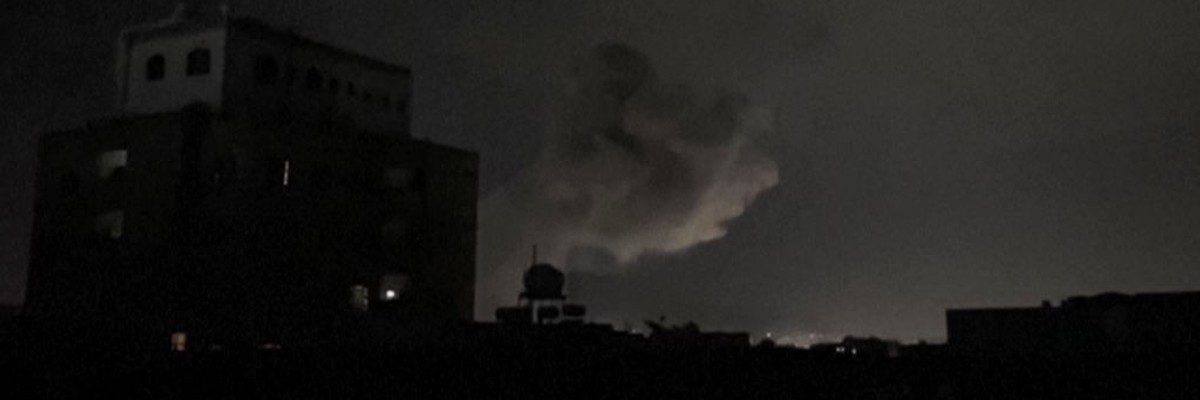
AFPTV footage shows smoke plumes rising after the U.S. bombed Houthi targets in Sanaa, Yemen on March 15, 2025. (Photo: Osama Abdulrahman/AFP via Getty Images)

“U.S. officials are escalating deadly attacks on one of the poorest and most devastated nations in the Middle East, while recklessly pushing the U.S. toward a wider regional war with Iran,” said one peace group.

This is a developing news story… Please check back for possible updates.

U.S. President Donald Trumpannounced Saturday that he had ordered the military to “launch decisive and powerful” action against the Houthis in war-torn Yemen, a glaring contradiction of what critics have called the Republican’s “anti-war charade.”

The U.S. bombing follows Trump redesignating the Houthis—also known as Ansar Allah—as a terrorist organization shortly after returning to office in January and comes just days after the group renewed a blockade on Israeli ships.

Shuaib Almosawa reported earlier this week for Drop Site News that “the military spokesperson for the Houthi-led government in Yemen on Tuesday announced the resumption of the naval blockade targeting Israeli ships traversing Yemen’s waterways, following the expiration of its deadline for Israel to allow aid into the besieged Gaza Strip.”

“In a televised statement broadcast by Almasirah TV channel, Houthi spokesperson, Brigadier General Yahya Saree, said that the blockade on Israeli ships now covers Yemen’s waterways in the Red Sea, Arabian Sea, Gulf of Aden, and the Bab el-Mandeb Strait,” according to Almosawa, a freelance journalist based in the Yemeni capital Sanaa.

Trump’s lengthy Saturday post on his Truth Social platform did not explicitly mention Israel or Gaza. He said in part that “funded by Iran, the Houthi thugs have fired missiles at U.S. aircraft, and targeted our Troops and Allies. These relentless assaults have cost the U.S. and World Economy many BILLIONS of Dollars while, at the same time, putting innocent lives at risk.”

Almosawa reported Saturday that at least nine civilians have been killed in Trump’s new bombing campaign.

According toThe Associated Press:

The Houthi media office said the U.S. strikes hit “a residential neighborhood” in Sanaa’s northern district of Shouab. Sanaa residents said at least four airstrikes rocked the Eastern Geraf neighborhood in Shouab district, terrifying women and children in the area.

“The explosions were very strong,” said Abdallah al-Alffi. “It was like an earthquake.”

The United States, Israel, and Britain have previously hit Houthi-held areas in Yemen. Israel’s military declined to comment.

Trump noted the bombings under former U.S. President Joe Biden, saying Saturday that his predecessor’s “response was pathetically weak, so the unrestrained Houthis just kept going.”

The U.S.-based peace group CodePink called out another part of Trump’s post, saying that he “claimed that the Houthis have waged an ‘unrelenting campaign of piracy, violence, and terrorism’ against America and other ships, aircraft, and drones. However, he conveniently ignores critical context behind these actions. The Houthis’ attacks on foreign cargo ships began in response to the ongoing genocide in Gaza, aimed at deterring the continuation of Israel’s ongoing plan to ethnically cleanse Palestine.”

“This campaign ceased when a cease-fire was finally put in place, only to resume due to Israel’s ongoing violations of the cease-fire agreement,” CodePink continued, noting Israeli strikes that just reportedly killed aid workers and journalists in Gaza. “Instead of confronting the root causes of this violence, U.S. officials are escalating deadly attacks on one of the poorest and most devastated nations in the Middle East, while recklessly pushing the U.S. toward a wider regional war with Iran.”

“CodePink and its allies demand an immediate halt to U.S. military intervention in Yemen and across the Middle East,” the group concluded. “We call on the government to prioritize peace and justice by immediately ending all military aid and funds to Israel and holding Israel accountable for breaking the cease-fire.”

Members of Congress across the political spectrum have a history of criticizing U.S. bombings of Yemen throughout its decadelong civil war as illegal. Justin Amash, a libertarian former Michigan congressman, slammed the Saturday strikes on social media.

“I’ll say it again. It is unconstitutional for President Trump to engage in acts of war in Yemen,” Amash explained. “It doesn’t matter how appropriate you think it is for the U.S. to take on Houthis or terrorists or anyone. Congress has not authorized war in Yemen. Engaging in war there is unlawful.”

Original article by Jessica Corbett republished from Common Dreams under Creative Commons (CC BY-NC-ND 3.0).

Neo-Fascist Climate Science Denier Donald Trump says Burn, Baby, Burn.
Elon Musk urges you to be a Fascist like him, says that you can ignore facts and reality then.
Continue ReadingTrump Bombs Yemen After Houthis Revive Blockade on Israeli Ships