OPINION: Trump’s Strategic Mistakes in His War Against Iran

Spread the love

This work by Middle East Monitor is licensed under a Creative Commons Attribution-NonCommercial-ShareAlike 4.0 International License.

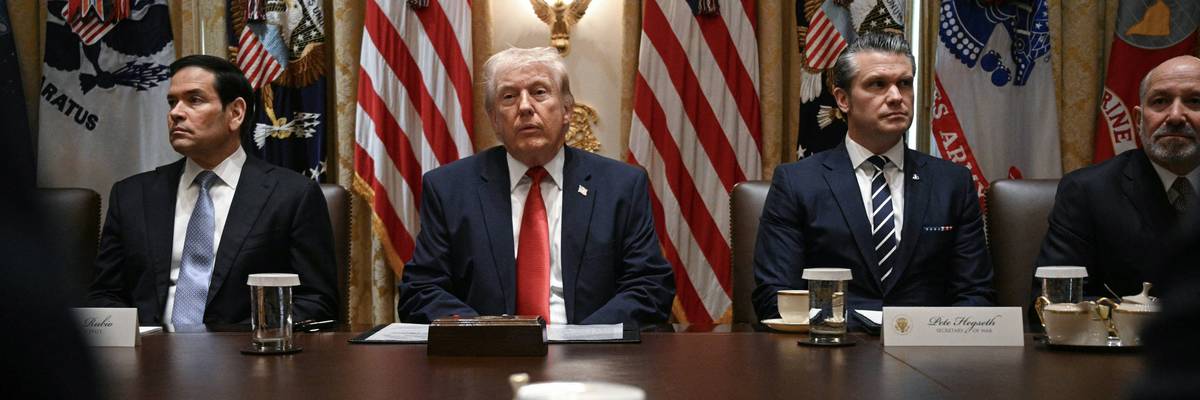
US President Donald J. Trump monitors U.S. military operations in Iran: Operation Epic Fury, February 28, 2026. [White House X Account – Anadolu Agency]

by Jasim Al-Azzawi

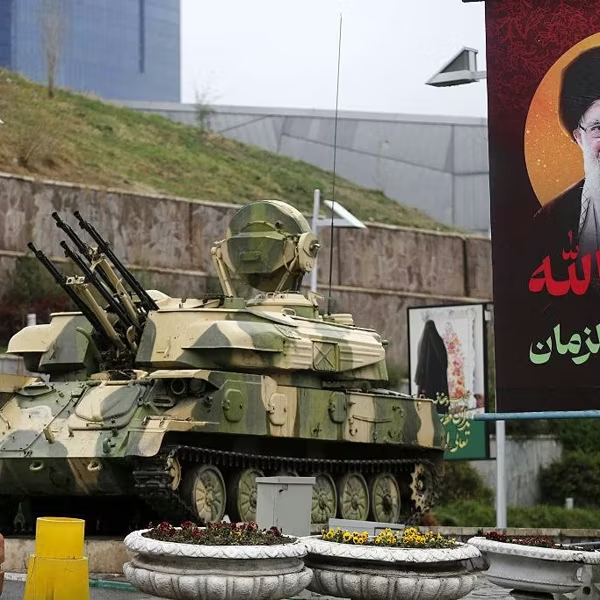
In January 2026, flushed with the swift, covert removal of Venezuelan President Nicolás Maduro, the Trump administration rolled the dice on a far more volatile and deeply rooted adversary. President Donald Trump operated under the seductive assumption that a high-tech, stealth excursion against the Islamic Republic of Iran would yield a parallel, cost-free triumph. Yet, months into the conflict sparked by the administration’s aggressive “Maximum Pressure 2.0” campaign and escalated via Operation Epic Fury, Washington finds itself trapped in a familiar, agonizing quagmire. Tactical brilliance has once again been mistaken for strategic victory. As Winston Churchill famously observed in the wake of early wartime triumphs, “Now this is not the end. It is not even the beginning of the end. But it is, perhaps, the end of the beginning.” By prioritizing spectacular kinetic displays over coherent political end states, the administration has committed critical strategic errors that echo America’s past blunders in the region, ultimately leaving the United States more vulnerable, its deterrence degraded, and the Middle East fundamentally destabilized.

The administration’s first and most glaring mistake was the illusion of the “quick win”—a fundamental misreading of Iranian resilience, nationalism, and asymmetric depth.

The opening salvos of the 2026 campaign achieved extraordinary tactical milestones, including the systematic destruction of Iran’s conventional naval assets and the stunning decapitation of Supreme Leader Ali Khamenei. Yet, as the Cato Institute observed shortly after the dust settled, “tactical successes cannot mask what has quickly become another strategic failure… the administration’s strategy is divorced from its ostensible aims.” Airpower and targeted assassinations did not trigger a domestic democratic uprising, nor did they erase decades of deeply entrenched institutional control. Instead, power quickly consolidated around an even harder-line, war-hardened faction of the Islamic Revolutionary Guard Corps (IRGC), proving General Omar Bradley’s timeless maxim that “amateurs talk about tactics, but professionals talk about logistics” and long-term sustainability.

Furthermore, the administration drastically underestimated Iran’s capacity for regional, asymmetric retaliation. For years, Washington’s defense establishment operated under the comfortable assumption that Tehran would limit its responses to localized attacks on U.S. assets or proxy skirmishes.

Instead, the conflict immediately metastasized into a multi-theatre conflagration. On day one, Iranian missiles and sophisticated loitering munitions struck across all six Gulf Arab states, completely shattering the regional security umbrella and exposing the fiction of impenetrable air defenses. Rather than dismantling Iran’s missile architecture, the war revealed that a staggering 70 percent of Iran’s ballistic missile stockpile and mobile launchers remained entirely intact, deeply buried in hardened underground “missile cities” and fully operational weeks into the fighting.

READ: Iran threatens to halt US negotiations if Israeli attacks continue in Lebanon

This massive miscalculation triggered the second strategic error: a failure to anticipate and mitigate crippling global economic blowback. The administration’s aggressive naval blockade was met with a brutal, symmetric counter-strategy in the maritime chokepoints. Tehran seized effective de facto control of the Strait of Hormuz—the vital artery through which 25 percent of the world’s oil transits—implementing a coercive toll and mining system that drove global crude prices past $100 a barrel. The economic ripples disrupted fragile global supply chains and sparked inflationary spikes across Western economies. In a supreme irony, the administration was forced to quietly ease certain oil sanctions and grant waivers to keep global energy markets afloat, giving Tehran unexpected economic leverage in the middle of a war meant to break its financial resolve.

This economic vulnerability recalls the warning of British Prime Minister Margaret Thatcher, who noted that defense cannot be sustained if it destroys the economic foundation upon which national power rests.

The deeper tragedy of this conflict lies in how it has perversely incentivized the very behavior Washington sought to deter. The administration’s stated rationale for military intervention was the total, permanent elimination of Iran’s nuclear program. However, by demanding what amounted to “unconditional surrender” while systematically dismantling the remaining diplomatic guardrails, the administration left Tehran with zero peaceful off-ramps. Before the outbreak of hostilities, regional intermediaries noted that Iran was willing to offer nuclear concessions that went well beyond the original international agreements. By replacing diplomacy with existential military threats, Washington has practically guaranteed that any post-war Iranian regime will view a functional nuclear deterrent not as a negotiable luxury, but as an absolute requirement for national survival. As the legendary strategist Carl von Clausewitz famously wrote, “War is the continuation of politics by other means.” When war loses its political objective and becomes merely punitive, it transforms into an engine of endless escalation.

READ: Trump agreed to release $24B in frozen Iranian assets without formal announcement: Report

Finally, the war has accelerated a structural shift toward an aggressively post-American global order, severely damaging U.S. credibility among allies and adversaries alike. Writing on the cascading geopolitical fallout of the conflict, foreign policy analyst Robert Kagan noted that the war has triggered an “accelerating global adjustment to a post-American world as a result of this massive miscalculation.” Far from isolating Iran, the conflict has bound Washington’s primary geopolitical rivals closer together. U.S. forces have faced an adversary heavily fortified by external collaboration, ranging from advanced Chinese semiconductor chips and real-time satellite imagery to shared tactical innovations in drone warfare.

The Trump administration entered this conflict under the hubristic assumption that it could unilaterally dictate the terms of a short, low-cost engagement. Instead, it has ignored the foundational rule of strategic statecraft: never launch a war without a clear, achievable definition of peace.

By chasing the mirage of an effortless regime collapse, the administration has degraded America’s conventional deterrence, exposed the global economy to severe energy shocks, and driven a resilient adversary deeper into the camp of our most formidable global competitors. If Washington does not pivot swiftly toward a realistic, diplomatically enforceable ceasefire, Operation Epic Fury will not be remembered as a historic triumph but as a textbook case of how tactical hubris breeds strategic disaster.

OPINION: The end of American forward presence in the Persian Gulf

The views expressed in this article belong to the author and do not necessarily reflect the editorial policy of Middle East Monitor.

This work by Middle East Monitor is licensed under a Creative Commons Attribution-NonCommercial-ShareAlike 4.0 International License.

Keir Starmer explains that UK is actively supporting Israel's genocidal expansion and repeats his previous quotation that he supports Zionism "without qualification". Keir Starmer said “I said it loud and clear – and meant it – that I support Zionism without qualification.” here: https://www.jewishnews.co.uk/keir-starmer-interview-i-will-work-to-eradicate-antisemitism-from-day-one/
Keir Starmer explains that UK is actively supporting Israel’s genocidal expansion and repeats his previous quotation that he supports Zionism “without qualification”. Keir Starmer said “I said it loud and clear – and meant it – that I support Zionism without qualification.” here: https://www.jewishnews.co.uk/keir-starmer-interview-i-will-work-to-eradicate-antisemitism-from-day-one/

Continue ReadingOPINION: Trump’s Strategic Mistakes in His War Against Iran

After Castro Charges, Critics Ask: When Are Indictments Coming for Trump-Hegseth ‘Extrajudicial Murders’?

Spread the love

Article by Julia Conley republished from Common Dreams under Creative Commons (CC BY-NC-ND 3.0).

US President Donald Trump hosts a cabinet meeting in the Cabinet Room of the White House in Washington, DC, on March 26, 2026. (Photo by Jim Watson/AFP via Getty Images)

“Apparently you’re not allowed to kill people in international waters now?” said one progressive organizer.

Over the last eight months, at the direction of President Donald Trump and Secretary of Defense Pete Hegseth, the US military has bombed at least 57 boats and killed close to 200 people—among them fishermen, a young man known in his town for his indoor soccer playing, and working people who had recently struggled to make ends meet—in what human rights experts have called “murders” and extrajudicial killings.

But the indictment filed this week regarding unlawful killings by government forces in the Caribbean region had nothing to do with Trump’s boat bombing spree, which the White House has claimed it aimed at stopping drug trafficking. Instead, the target of the indictment filed by the US Justice Department was 94-year-old former Cuban President Raúl Castro, who was charged with one count of conspiracy for his alleged role in shooting down planes that flew into Cuba’s airspace in 1996.

RECOMMENDED…

"These are murders": boat targeted by Trump

‘These Are Murders’: Trump Killing Spree Hits At Least 185

Four victims of the Trump administration's boat bombings

13 of the Nearly 200 People Murdered by Trump and Hegseth Identified for First Time

The planes were operated by an anti-Fidel Castro group, Brothers to the Rescue, and four Cuban-Americans were killed in the operation.

In expressing support for the indictment, US Rep. Carlos Giménez (R-Fla.), a Cuban-American immigrant, said that “there will be consequences to pay if you harm American citizens in international waters, in international airspace for no reason at all, and believe me, this was no reason at all.”

Michael Galant, a member of the secretariat of the Progressive International, commented with feigned surprise: “Apparently you’re not allowed to kill people in international waters now? Someone tell Hegseth.”

The organization’s co-general coordinator, David Adler, added, “I simply do not understand how we, as a country, tolerate the hypocrisy of indicting Raúl Castro for defending Cuban airspace—while our own government celebrates the extrajudicial assassinations of innocent fishermen sailing across the sea below,” while Ryan Grim of Drop Site News noted the indictment also followed the bombing of a school in Iran—an attack that investigators said was likely carried out by the US.

The indictment of Castro, noted the Progressive International, was set to coincide with Cuba’s Independence Day and came as Secretary of State Marco Rubio, the son of Cuban immigrants who has long desired regime change in the communist country, mused that the Cuban government has “plundered billions of dollars, but nothing has been used to help the people”—echoing his criticism of Iran, another target of the US military under Trump.

The timing of and ramp-up to the indictment was “a piece of political theater calibrated to one audience only: the Miami exile lobby that has spent decades pursuing its commercial and ideological vendetta against the Cuban Revolution,” said the group’s Cabinet.

“US officials themselves acknowledge they do not believe Cuba is an imminent threat, nor actively planning to attack American interests—and yet in the same breath, the administration has laundered a set of alarming claims about Cuban drone acquisitions, presented with all the breathless urgency of a casus belli,” the Progressive International added, referring to Axios’ reporting last weekend on claims from an administration official that Cuba is preparing to attack the US with drones—a report that ultimately acknowledged the Cubans are not planning any preemptive strikes on the US but are rather thought to be strategizing on self-defense as the US intensifies its anti-Cuba rhetoric and continues the oil blockade it imposed in February.

The Cuban embassy in the United Kingdom on Thursday said it rejected US claims about the downing of the Brothers to the Rescue plane, which it called “an irrefutable act of sovereign self-defense” that took place after “25 deliberate, calculated violations of our national airspace” by the exile group.

“To criminalize our nation, the US manipulated the official [International Civil Aviation Organization] investigation, deliberately erasing the first six minutes of radar and radio recordings to conceal the territorial incursion,” the embassy asserted. “The narrative of an attack in international waters is an absolute juridical fraud.”

In a column at Common Dreams Thursday, Codepink co-counder Medea Benjamin added that she was in Cuba in 1996 when the planes were shot down. The leader of Brothers to the Rescue, José Baulto, she said, openly stated that he was “trained as a terrorist by the United States,” and said after one mission in which the group dropped leaflets over Havana that the group was seeking “confrontation.”

“The Cuban government repeatedly warned Washington, the Federal Aviation Administration (FAA), and international aviation authorities that these flights were illegal and dangerous. US officials knew the risks,” wrote Benjamin. “The hypocrisy of indicting Raúl Castro nearly 30 years later is staggering, given the long history of anti-Cuban extremists operating from US soil to wreak havoc against the island with bombings, sabotage, and airline terrorism.”

Those US-based extremists include the perpetrators of the 1976 midair bombing of Cubana Flight 455, a commercial airliner carrying 73 crew and passengers, many of them teenage members of Cuba’s junior Olympic fencing team.

The Trump administration’s boat bombings, meanwhile, have been called likely “war crimes” by some legal experts and “murders” by others. The White House has insisted the US is in an “armed conflict” with drug cartels in Latin America, but no conflict has been officially declared. In at least one instance, US military members were ordered to bomb the survivors of an initial strike—a clear violation of international law.

The US in the past has treated suspected drug trafficking as a criminal issue—not one to be dealt with militarily. Before the boat bombings began, one top military legal adviser warned Pentagon officials, “There is no world where this is legal,” and said carrying out the attacks could expose everyone involved, from top White House officials to rank-and-file service members ordered to carry out the strikes, to legal liability.

“The same US government now pursuing charges against Raúl Castro has itself been carrying out deadly strikes on alleged drug-smuggling boats in the Caribbean and Pacific, strikes that have killed at least 193 people since September 2025, with no transparency or due process,” wrote Benjamin.

Following the Castro indictment, the Progressive International called on “governments, movements, and peoples of conscience everywhere to call out this escalation for what it is—a naked effort to recolonize Cuba and the hemisphere at large—and to stand firmly against it.”

“We have seen this playbook before—in Iraq, in Libya, in Venezuela, and in other sites of manufactured consent for illegal war across the world. The Progressive International will not stand silent as it is deployed against Cuba,” said the group. “Hands off Cuba.”

Article by Julia Conley republished from Common Dreams under Creative Commons (CC BY-NC-ND 3.0).

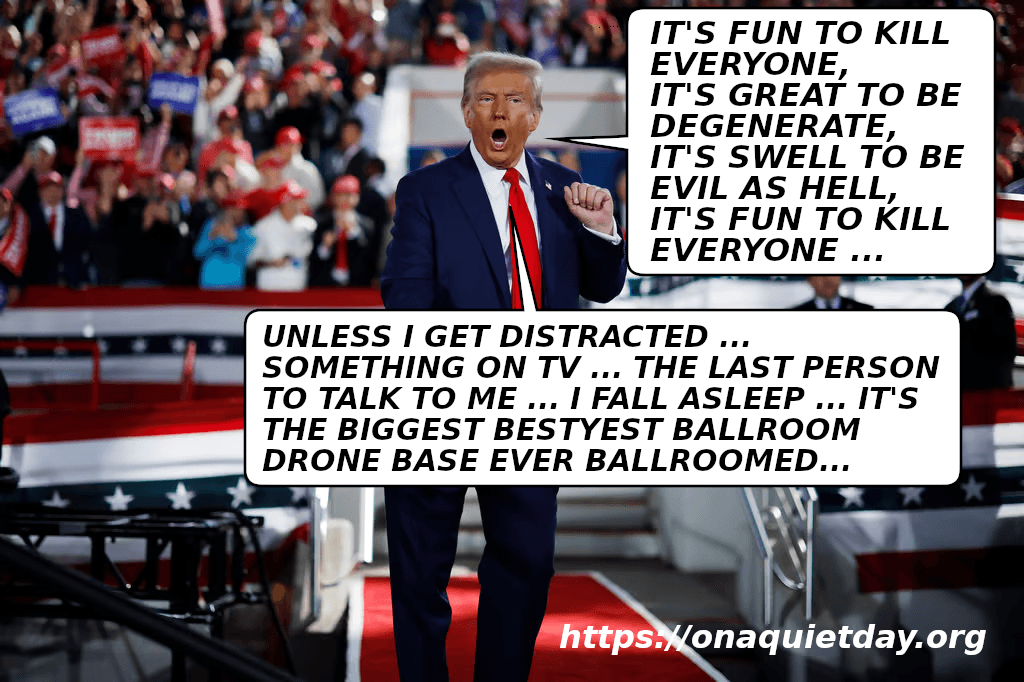
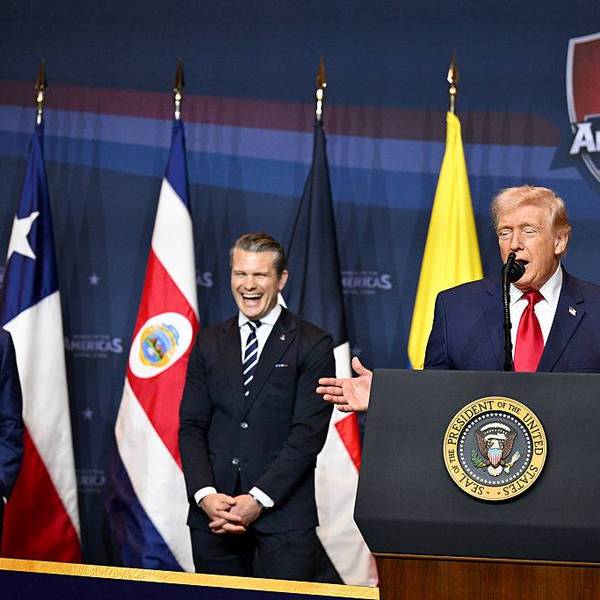
Donald Trump sings and dances, says that it's fun to kill everyone ... unless he gets distracted or falls asleep.
Donald Trump sings and dances, says that it’s fun to kill everyone … unless he gets distracted or falls asleep.

Continue ReadingAfter Castro Charges, Critics Ask: When Are Indictments Coming for Trump-Hegseth ‘Extrajudicial Murders’?

Major fire erupts at UAE oil facility after drone strike from Iran

Spread the love

This work by Middle East Monitor is licensed under a Creative Commons Attribution-NonCommercial-ShareAlike 4.0 International License

High-rise buildings stand at the Dubai Marina on August 28, 2025. [FADEL SENNA / AFP/ Getty Images]

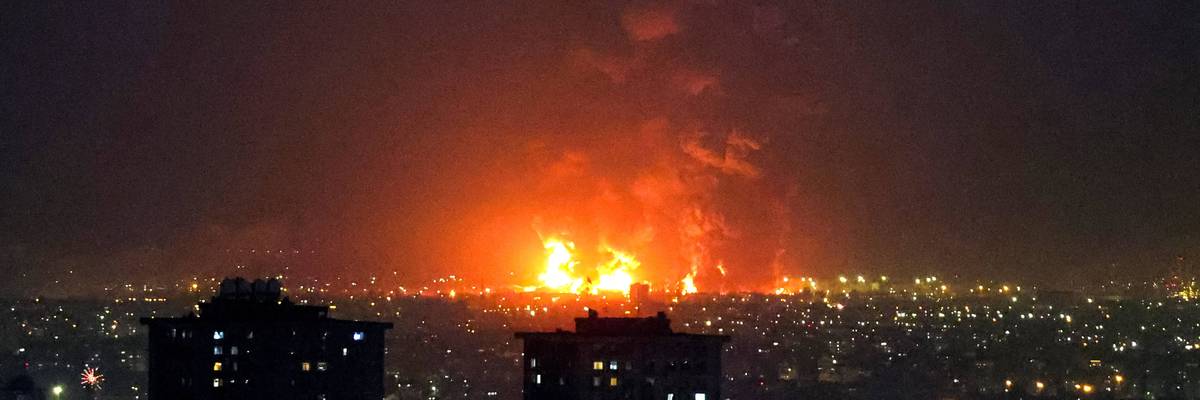
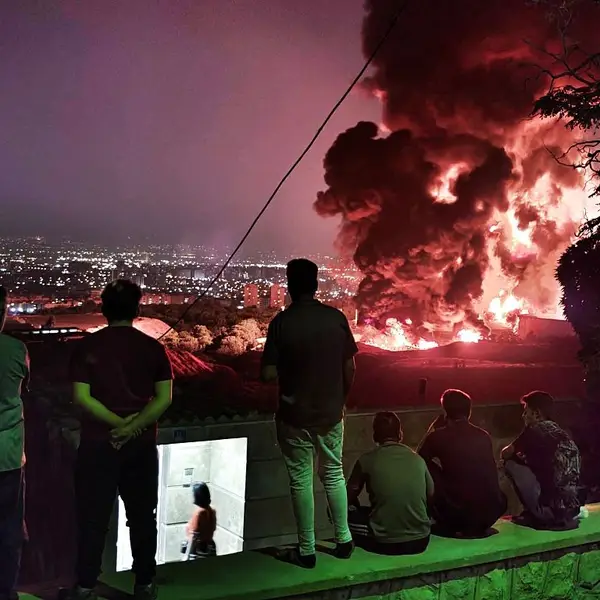
A major fire broke out at an oil facility in the Fujairah emirate of the UAE on Monday after it was struck by a drone launched from Iran, authorities said, Anadolu reports.

The attack marks the first since a ceasefire took effect between Iran and the US last month.

In a statement, the Fujairah Media Office said the blaze erupted at the Fujairah Oil Industry Zone, a key energy hub on the UAE’s eastern coast, after it was targeted by a drone launched from Iran.

Civil defense teams were immediately dispatched to the site and are continuing efforts to contain and extinguish the fire, the statement said.

Authorities in Fujairah said three Indian nationals were injured with moderate wounds and were transported to a hospital for treatment, it added.

The incident came shortly after the UAE Defense Ministry said it detected four cruise missiles launched from Iran toward the country, adding that air defenses successfully intercepted most of them.

READ: US directs ships to transit Strait of Hormuz through Oman’s territorial waters

Three of the missiles were intercepted over the country’s territorial waters, while the fourth fell into the sea, it added.

Regional tensions have escalated after the US and Israel launched strikes against Iran on Feb. 28, triggering retaliation from Tehran against Israel, as well as US allies in the Gulf, along with the closure of the Strait of Hormuz.

Since April 13, the US has enforced a naval blockade targeting Iranian maritime traffic in the strategic waterway.

A two-week ceasefire became effective on April 8 through Pakistani mediation, followed by direct talks in Islamabad on April 11, but no agreement was reached on a lasting truce.

US President Donald Trump later extended the ceasefire without setting a new deadline, following a request from Pakistan.

This work by Middle East Monitor is licensed under a Creative Commons Attribution-NonCommercial-ShareAlike 4.0 International License

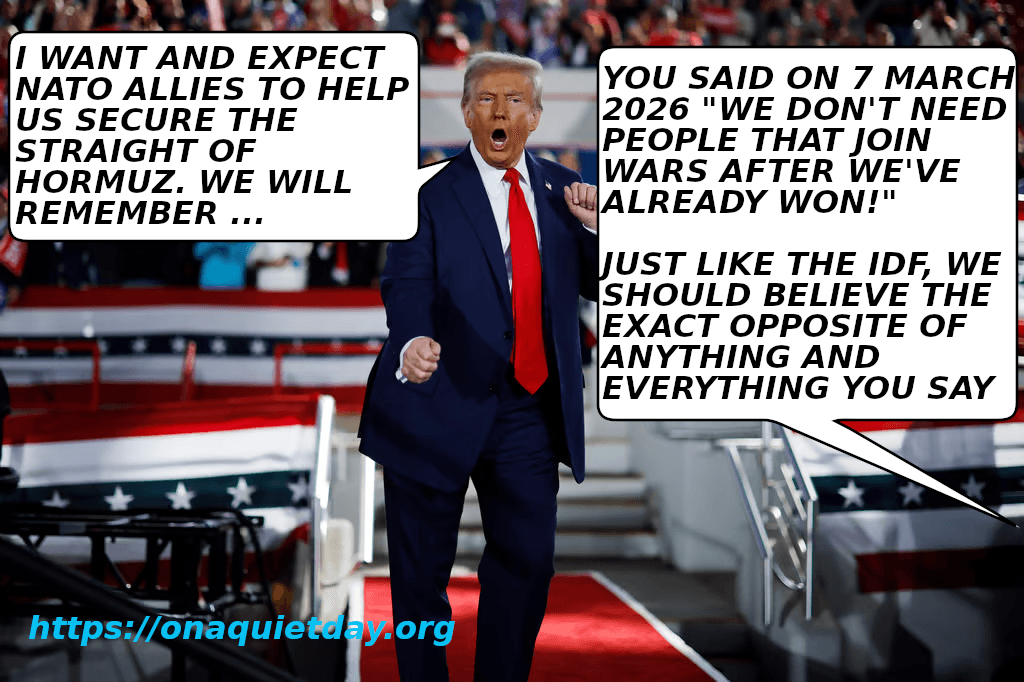
Donald Trump calls for help from NATO allies in securing the Strait of Hormuz despite saying on 7 March 2026 that they don't need people to join wars after they've already won. He's challenged with the claim that he lies as much as the IDF.
Donald Trump calls for help from NATO allies in securing the Strait of Hormuz despite saying on 7 March 2026 that they don’t need people to join wars after they’ve already won. He’s challenged with the claim that he lies as much as the IDF.
Keir Starmer explains that UK is actively supporting Israel's genocidal expansion and repeats his previous quotation that he supports Zionism "without qualification". Keir Starmer said “I said it loud and clear – and meant it – that I support Zionism without qualification.” here: https://www.jewishnews.co.uk/keir-starmer-interview-i-will-work-to-eradicate-antisemitism-from-day-one/
Keir Starmer explains that UK is actively supporting Israel’s genocidal expansion and repeats his previous quotation that he supports Zionism “without qualification”. Keir Starmer said “I said it loud and clear – and meant it – that I support Zionism without qualification.” here: https://www.jewishnews.co.uk/keir-starmer-interview-i-will-work-to-eradicate-antisemitism-from-day-one/

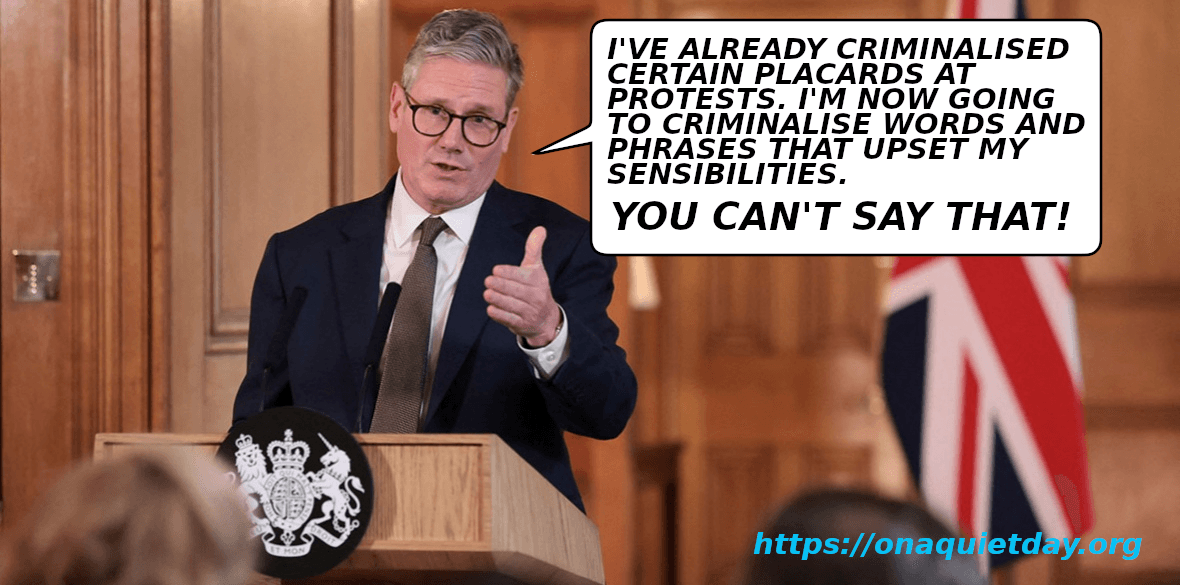
Keir Starmer says that he's banning words and phrases now as well as placards.
Keir Starmer says that he’s banning words and phrases now as well as placards.

Continue ReadingMajor fire erupts at UAE oil facility after drone strike from Iran

Historian Among Those Warning Countries That Have Aided Trump’s Iran Assault ‘Will Come to Regret It’

Spread the love

Original article by Julia Conley republished from Common Dreams under Creative Commons (CC BY-NC-ND 3.0). 

UK Prime Minister Keir Starmer speaks at an event on March 30, 2026 in Wolverhampton, United Kingdom. (Photo by Christopher Furlong/Getty Images)

“One of the biggest implications of this war is how badly Europe miscalculated,” said one analyst.

As President Donald Trump made his most explicitly genocidal threat yet against Iran on Tuesday, one historian based in Tehran suggested that countries which have aided and abetted the rapidly intensifying US-Israeli assault on the Middle Eastern country are coming face-to-face with the fact that appeasing Trump has been a grave error.

Trump’s threat that “a whole civilization will die tonight, never to be brought back again”—referring to Iran’s population of 93 million people—was the “textbook definition of genocide,” said Narjes Rahmati. “Those who could have intervened but did not will come to regret it.”

RECOMMENDED…

'This War Is Dumb as Hell': Military Historian Assesses Trump's Disaster in Iran

‘This War Is Dumb as Hell’: Military Historian Assesses Trump’s Disaster in Iran

Analyst Calls for Smashing the US Network That Paved Way for Trump’s Iran War

Analyst Calls for Smashing the US Network That Paved Way for Trump’s Iran War

Trump has lashed out at numerous European countries for being insufficiently supportive of the US-Israeli war, which has killed more than 2,000 people in Iran, nearly 1,500 in Lebanon, and hundreds across the Middle East, but countries including the United Kingdom have provided various support to the US and Israel since they abruptly cut off diplomatic talks and began bombing the country in February.

While UK Prime Minister Keir Starmer has attempted to distance his government from the conflict, saying, “This is not our war,” the UK has allowed US bombers to use British military bases for “defensive” missions. Late last month the UK also authorized the US to use military bases for strikes against Iranian missile sites that were targeting ships in the Strait of Hormuz. The country has ramped up its military resources in the region in recent weeks.

Ed Davey, leader of the Liberal Democrats Party in the UK, said Tuesday that Starmer and his Labour government face “a choice” about continuing to back the US and Israel in light of Trump’s latest threat on what the president previously referred to as “Power Plant Day, and Bridge Day.”

“The UK must immediately and unequivocally suspend support for the US military,” added Zack Polanski, the British Green Party leader. “The government have tried to appease him, then they tried to say they’re standing up to him. Words aren’t enough—it’s time for action.”

Philippe Dam, European Union director for Human Rights Watch, also condemned the European Commission for its tepid response to Trump’s threat against “a whole civilization.”

Anitta Hipper, foreign affairs spokesperson for the commission, said it rejects threats to attack critical civilian infrastructure, warning that “such attacks risk impacting millions of people across the Middle East and beyond, and also may lead to further dangerous escalation.”

Dam warned that “international law is eroded by those who flout it as much as by those who fail to speak up.”

“Despite renewed threats of attacks on civilian infrastructures in Iran—would be war crimes and possible crimes against humanity—EU leaders still fail to name USA and Israel in their statements,” said Dam.

The US has also received varying degrees of military support from Portugal, Italy, Germany, and France, though the French and Italian governments have angered Trump in recent weeks by blocking the US from using certain military bases and barring military flights from French airspace. Spanish President Pedro Sánchez has stood out among North Atlantic Treaty Organization leaders, leading the way in refusing to allow the US to use its bases for Iran attacks.

Sina Toossi, a senior fellow at the Center for International Policy, said European leaders over the last several weeks “had [a] real chance to help make diplomacy succeed. Instead, they aligned with and enabled Trump’s worst instincts.”

Adil Haque, a Rutgers University law professor and executive editor of Just Security, called on “all states” to “immediately condemn Trump’s threat; deny the use of their territory and airspace by US forces to attack Iran; demand an immediate, unconditional, and permanent end to the war.”

“Hormuz can be dealt with separately,” he said, referring to Iran’s closure of the strait, a key trade waterway. “Enough is enough.”

Original article by Julia Conley republished from Common Dreams under Creative Commons (CC BY-NC-ND 3.0). 

Keir Starmer explains that UK is actively supporting Israel's genocidal expansion and repeats his previous quotation that he supports Zionism "without qualification". Keir Starmer said “I said it loud and clear – and meant it – that I support Zionism without qualification.” here: https://www.jewishnews.co.uk/keir-starmer-interview-i-will-work-to-eradicate-antisemitism-from-day-one/
Keir Starmer explains that UK is actively supporting Israel’s genocidal expansion and repeats his previous quotation that he supports Zionism “without qualification”. Keir Starmer said “I said it loud and clear – and meant it – that I support Zionism without qualification.” here: https://www.jewishnews.co.uk/keir-starmer-interview-i-will-work-to-eradicate-antisemitism-from-day-one/
Donald Trump warns against following the https://onaquietday.org blog, says that it's easy atm, she only needs to report war crimes supporting Israel's genocidal expansion.
Donald Trump warns against following the https://onaquietday.org blog, says that it’s easy atm, she only needs to report war crimes supporting Israel’s genocidal expansion.
Orcas discuss rotting brain, front Orca says disinhibition and swearing are typical and common symptoms
Continue ReadingHistorian Among Those Warning Countries That Have Aided Trump’s Iran Assault ‘Will Come to Regret It’

Another Oil War, Another Perfect Reason to Stop Burning It

Spread the love

Original article by Kyle Schmidlin republished form Common Dreams under Creative Commons (CC BY-NC-ND 3.0). 

Explosions erupt following strikes at Tehran Oil Refinery in Tehran on March 7, 2026. (Photo by Atta Kenare/ AFP via Getty Images)

It’s a dirty business that’s ruining the planet and jeopardizing our futures in countless ways, of which this despicable war in Iran is just the latest and highest profile.

On February 28, President Donald Trump and Israeli Prime Minister Benjamin Netanyahu started a war with Iran. Since then, violence has spread throughout the Middle East. On the first day of bombing, the US bombed an elementary school, killing more than 100 children. Iran struck back, hitting Israel and US bases in the region. Israel expanded into Syria and Lebanon, bombing apartment buildings in Beirut. A few weeks ago Israel bombed oil depots in Tehran, engulfing the sky in flames and raining toxic oil on a population bigger than New York City.

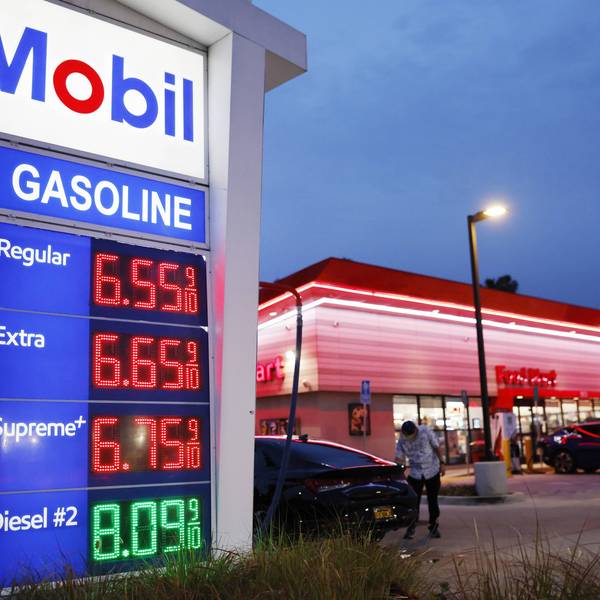
But all Americans can think of, naturally, is the price of gas.

RECOMMENDED…

Iran Calls Israeli Strikes 'Declaration Of War' As Region Braces For Escalation

As Another Oil-Fueled War Erupts, Study Reveals Planet Heating at Unprecedented Rate

Gas prices are displayed at a Mobil gas station

As G7 Weighs Measures to Confront Growing Energy Crisis, Officials Urged to Tackle ‘Fossil Fuel Profiteering’

Oil is both a major driver of this war and, for now at least, the primary way Americans are feeling its effects. The war drives home the grim reality that we are hostage to this toxic ooze that burns dirty, poisons wildlifecauses cancer, and accelerates climate change. The necessity to wean ourselves off of it, as quickly and completely as possible, has never been more apparent.

An Oil Crisis of Trump’s Own Making

Even Trump is subservient to the whims and demands of the oil economy. Since he started the war, he’s tried desperately to control the chaotic effect his bombing campaign has had on global oil markets. Trump may not be bright, but he understands one very basic political reality: He can cover up the Epstein files, get away with all manner of fraud and graft, and even commit war crimes—but he cannot let the price of gas get too high.

Oil makes all our lives dirtier and less safe. Fighting wars so we can dig it up until it’s all gone—or until we are—is as stupid, reckless, and self-destructive a thing as any animal has ever done.

From a strategic perspective, then, the focal point of the war quickly became the Strait of Hormuz, a narrow passageway out of the Persian Gulf that pinches down between southern Iran and the Omani Musandam Peninsula. The strait is an essential shipping lane for 20% of the world’s liquefied natural gas (LNG), as well as a third of the global fertilizer trade. With essentially uncontested control of the strait, Iran has closed it to “enemy-linked” ships. Iran insists that non-hostile ships pay a toll in Chinese yuan, which is an attempt to undermine the supremacy of the petrodollar.

The crisis at the Strait of Hormuz is entirely of Trump’s own making, and has triggered an erratic series of threats, pleas, lies, and bargaining from him as he tries to keep his stupid war from grinding the global economy to a halt. Trump has even threatened to deploy the US Navy to escort ships through the strait. One has to wonder how sailors feel about being offered up as bodyguards for Qatari tankers, thrown into a situation where they would be wide open for Iranian drone and missile attacks.

Trump the Oil Imperialist

Trump sees this war almost entirely through the lens of oil. As part of alleged ceasefire negotiations, Trump claimed Iran “gave us a present… worth a tremendous amount of money… it was oil-and-gas related.” That turned out to be Iran allowing 10 oil ships through the Strait of Hormuz. Trump also implied that those high gas prices causing so many people pain at the pump are actually good for the country. Because the US is a net exporter of oil, Trump said, “When oil prices go up, we make a lot of money”—perhaps forgetting that most Americans do not own oil companies.

Compare Trump’s constant talk of oil with the Bush administration’s 2003 invasion of Iraq. In 2003-06, calling Iraq a war for oil was considered a conspiracy theory. Dissidents and war critics were driven out of polite conversations for even bringing it up. Insinuating that the troops would ever be deployed for such an ignoble purpose was treated as beyond the pale, if not treasonous, by Fox News and the Bush White House.

This time, there’s next to no pretense of nobility in Trump’s war. While lots of motivations, with varying degrees of believability and logic, have been given—ranging from halting Iran’s nuclear capabilities to ushering in Armageddon—the Trump administration is perfectly open about the centrality of oil to their war mission. In a way, it’s almost refreshing to hear a politician speak so forwardly about their imperialist intent, even if it does lay bare the villainy of the US empire.

In addition to the Strait of Hormuz, Trump is focused on Kharg Island, a small island in the Persian Gulf that handles up to 90% of Iran’s crude oil exports. Sen. Lindsey Graham (R-SC), who is among the most bloodthirsty war hawks on the planet, encouraged Trump to seize Kharg Island (and compared such an operation to Iwo Jima, in which 7,000 Marines died—no skin off Lindsey Graham’s back). Trump himself then said, while discussing his military options, “My favorite thing is to take the oil in Iran.”

Trump has long openly fantasized about using the military to conquer oil fields. In 2013, before his political career really started, he tweeted, “I still can’t believe we left Iraq without the oil,” and he repeated this urge to plunder Iraq’s oil during the 2016 election. To Trump, this is just how the world works: If your guns and bombs make bigger holes and explosions, you get to just take whatever you want, anywhere in the world. There is no right, no wrong, no law.

This also tracks with how Trump has handled the oil industry in Venezuela. Last year, Trump started claiming that Venezuela had stolen, or “unilaterally seized and sold American oil.” This claim was a reference to Venezuela nationalizing their oil industry and evicting American oil companies. Then, in January, the US military abducted Venezuelan President Nicolás Maduro, an astonishing breach of international norms. With Maduro gone, Trump began shadily directing Venezuelan oil revenue into an offshore Qatari account.

The Need to Wean Ourselves off of Oil

Such oil imperialism long predates Trump. Just ask other offenders of the US oil monopoly, like Muammar Gaddafi or Saddam Hussein. Oil is the locus of US foreign policy. The US military itself is the single largest institutional polluter and user of fossil fuels. It’s a dirty business that’s ruining the planet and jeopardizing our futures in countless ways, of which this despicable war in Iran is just the latest and highest profile.

The simple answer to all this madness is to wean ourselves off of oil. It won’t be easy, and we’ll probably never be fully rid of it, but we aren’t even trying. There are a million ways we could start cutting back, a million investments we could make toward a future that is as oil free as possible. But Trump is doing everything he can to keep us addicted to it, including starting an unpopular and illegal war.

Trump has always been particularly pro-fossil fuel. He loves the nonsensical phrase “beautiful clean coal.” He calls green energy a “scam” and has repeatedly made the utterly deranged claim that windmills cause cancer. His administration displays a psychotic obsession with destroying green energy initiatives, most recently paying a French energy company $1 billion to cancel a wind farm and instead invest in oil and gas.

Oil makes all our lives dirtier and less safe. Fighting wars so we can dig it up until it’s all gone—or until we are—is as stupid, reckless, and self-destructive a thing as any animal has ever done. With a little bit of will and some leadership, we could control our greed and addiction. If we were able to do that, we might not find ourselves charging into the Middle East on such a regular basis, burning through American lives and treasure, killing countless men and women and children, and making the rest of the world hate us.

Original article by Kyle Schmidlin republished form Common Dreams under Creative Commons (CC BY-NC-ND 3.0). 

Climate science denier Donald Trump confirms that he knows nothing about democracy and that more liquid gold is being secured according to his policy of global privateering.
Donald Trump urges you to be a Climate Science denier like him. He says that he makes millions and millions for destroying the planet, Burn, Baby, Burn and Flood, Baby, Flood.
Orcas comment on killer apes destroying the planet by continuing to burn fossil fuels.

Continue ReadingAnother Oil War, Another Perfect Reason to Stop Burning It