Original article by Olivia Rosane republished from Common Dreams under Creative Commons (CC BY-NC-ND 3.0).
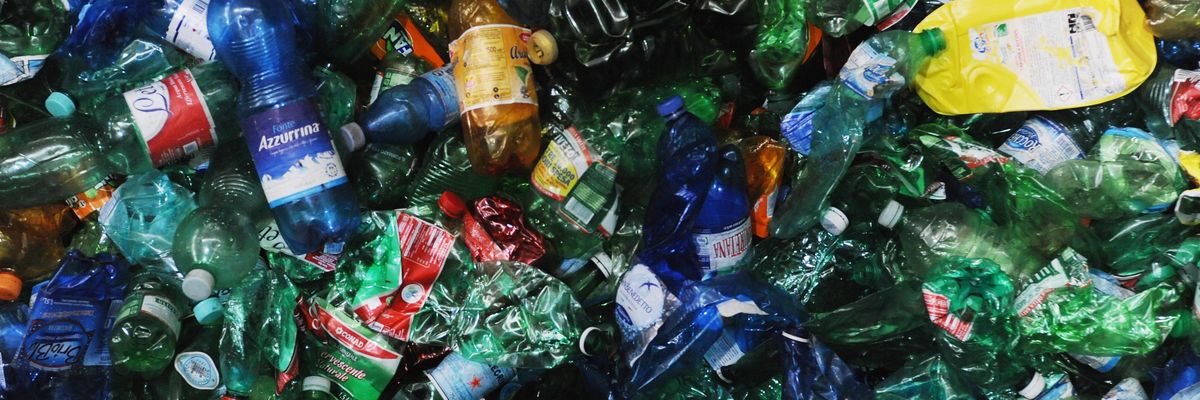
“The oil industry’s lies are at the heart of the two most catastrophic pollution crises in human history,” one advocate said.
The petrochemical industry—including major oil companies like ExxonMobil—knew for decades that recycling was not a sustainable solution to the problem of plastic waste, yet continued to promote it in order to avoid regulation and deceive consumers into continuing to buy and use their products, a report released Thursday by the Center for Climate Integrity reveals.
The report, titled The Fraud of Plastic Recycling: How Big Oil and the Plastics Industry Deceived the Public for Decades and Caused the Plastic Waste Crisis, includes newly disclosed industry documents proving that companies and trade groups knew that plastics could not be recycled indefinitely in the 1980s and 90s even as they launched a massive public relations campaign to sell voters and policymakers on the process.
“This evidence shows that many of the same fossil fuel companies that knew and lied for decades about how their products cause climate change have also known and lied to the public about plastic recycling,” Center for Climate Integrity (CCI) president Richard Wiles said in a statement. “The oil industry’s lies are at the heart of the two most catastrophic pollution crises in human history.”
Plastic pollution is a major environmental and public health crisis. If current trends continue, plastics are expected to outweigh fish in the ocean by 2050, and the toxic fumes from plastic production facilities and incineration are a major environmental justice hazard for frontline communities. Humans in general also ingest an estimated credit-card’s worth of plastic each week, with unknown but potentially serious health impacts.
Recycling is often touted as a solution for keeping plastic out of the environment, but this has proven to be ineffective and insufficient: More than 90% of the plastics disposed of between 1950 and 2015 were either burnt, sent to landfills, or dumped into the environment. There are several technical and economic reasons why plastic recycling doesn’t work at scale. Plastics lose quality as they are recycled and can only really be reused once or potentially twice. The decline in quality also means that recycled plastics are more likely to leach toxins added during production or picked up from other waste items. Economically, it is cheaper to produce new plastics than recycle older ones, and only two types of plastic—PET and HDPE—actually attract markets that will recycle them.
The industry has long been aware of these limitations. In 1969, the American Chemical Society declared, “It is always possible that scientists and engineers will learn to recycle or dispose of wastes at a profit, but that does not seem likely to happen soon on a broad basis.”
“We are committed to the activities, but not committed to the results.”
Despite this, petrochemical companies and their trade groups began to push plastic recycling in the 1980s and 90s as a response to growing public concern over plastic waste, and the threat that this would lead to bans on plastic products.
“No doubt about it, legislation is the single most important reason why we are looking at recycling,” Wayne Pearson, the executive director of industry front group the Plastics Recycling Foundation and a DuPont marketing director, said in 1988.
The plastics industry used various strategies to sell the public on recycling, according to the report. These included:
- Funding front groups to promote recycling;
- Running ad and PR campaigns;
- Investing in recycling research to convince the public that it was taking action;
- Setting unrealistic internal recycling goals;
- Writing educational material promoting recycling to school children;
- Advocating for “advanced recycling,” a term for breaking plastics down to chemical components that can theoretically be reused but are not in practice; and
- Claiming, against evidence, that recycling can be part of a “circular economy.”
CCI provides new evidence that, while the industry was employing these strategies, it was simultaneously aware of recycling’s limitations.
For example, a report from the Vinyl Institute trade group concluded in 1986 that “recycling cannot be considered a permanent solid waste solution, as it merely prolongs the time until an item is disposed of.”
In 1994, Exxon Chemical Vice President Irwin Levowitz told employees of the American Plastics Council that “we are committed to the activities, but not committed to the results.”
CCI argued that the petrochemical industry should face legal consequences for its “campaign of deception” similar to suits brought against tobacco and opioid companies.
“When corporations and trade groups know that their products pose grave risks to society, and then lie to the public and policymakers about it, they must be held accountable,” Wiles said. “Accountability means stopping the lying, telling the truth, and paying for the damage they’ve caused.”
CCI vice president of legal and general counsel Alyssa Johl added: “Big Oil and the plastics industry’s decades-long campaign to deceive the public about plastic recycling has likely violated laws designed to protect consumers and the public from corporate misconduct and pollution.”
“Attorneys general and other officials should carefully consider the evidence that these companies defrauded the public and take appropriate action to hold them accountable,” Johl said.
Original article by Olivia Rosane republished from Common Dreams under Creative Commons (CC BY-NC-ND 3.0).
- For Plastic Free July, the US Gov Should Hold Polluters Accountable ›
- Cleanup of Oceans ‘Futile’ If Plastic Production Continues at Current Rate: Scientist ›
- When Coca-Cola Fails at its Sustainability Goals, That’s Everyone’s Problem ›
- Celebrities Join Greenpeace in Demanding Biden Go Big on Global Plastics Treaty ›
- Biden, Back a Plastics Treaty That Slashes Production ›
- 200+ Groups Decry ‘Orwellian’ Industry-Backed Plastic Burning Push ›