Original article by Sian Norris republished form OpenDemocracy
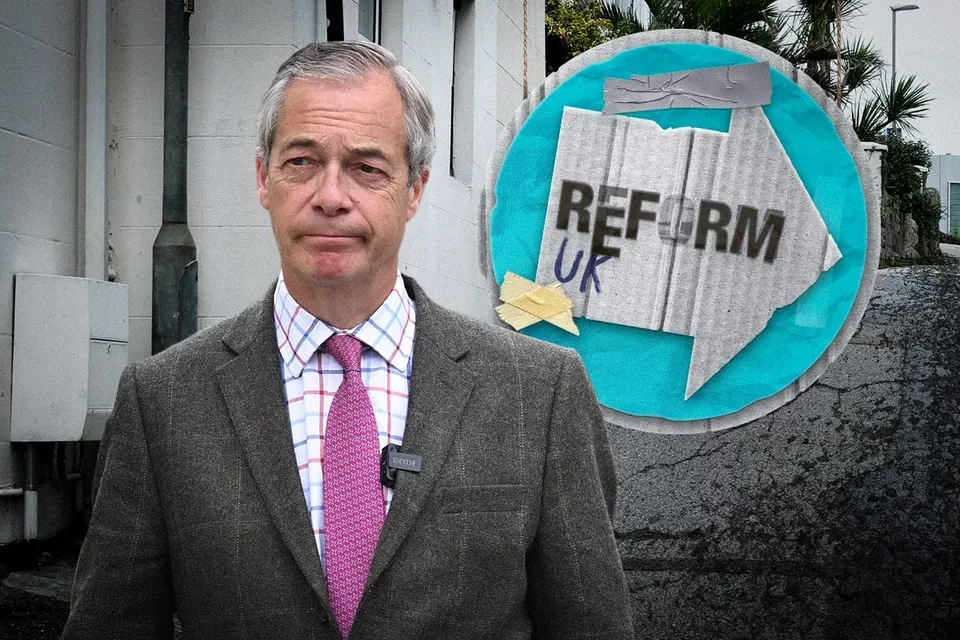
Reform has run councils for a year. As local elections near, we ask: how has the party performed in power?
Broken promises, broken roads, and broken council leadership teams – that’s the outcome of Reform UK’s first year in power, an investigation by openDemocracy reveals.
Twelve months ago, Nigel Farage’s latest party took control of 10 English councils, meaning they now hold a total of 985 seats across Britain. Now, as Reform seeks to increase its foothold at elections in other English local authorities and pick up seats in the Scottish and Welsh Parliaments next week, we have examined its track record in office, finding that it failed to deliver on its pledges across the board.
Reform is still a young party, founded in 2022. To win so many seats after just three years – and on a promise to do things ‘differently’ – demands scrutiny, particularly when early polls suggest they could win government at the next general election.
While Reform was never going to be able to meaningfully deliver on many of its 2025 campaign points, which focused on policy areas not devolved to local government – such as illegal immigration, net-zero “madness” and law and order – we have been able to shed some light on its local priorities by reviewing election leaflets that it distributed in different areas of the country.
These materials reveal that Reform intended to slash council tax, fix potholes, and cut council waste by emulating Elon Musk’s ‘DOGE’ drive in Donald Trump’s White House. Yet even in these areas, our analysis shows it frequently fell short on its promises.
Instead, Reform raised taxes in every council where it holds or shares power. Potholes continue to cause accidents and damage, and councillors’ struggles over where to make promised savings have put much-loved local services at risk of closure.
For some Reform councillors, the broken promises were too much. The party has lost more than 70 of its elected local politicians in the space of a year, according to research by Liberal Democrat peer Mark Pack, although some were forced to resign or sacked.
One former Reform councillor, David Taylor, resigned from the party during a live BBC interview in February over the 9% council tax rise in Worcestershire, where Reform is the largest party but lacks overall control.
Taylor, who now represents the ward of Redditch East as an independent councillor, told openDemocracy of his discomfort at being expected to pass both the tax increase and bonuses of up to 10% for the council’s senior staff, who reportedly have six-figure salaries.
“I run a small recruitment company, and the party wanted me to sit on the council’s employment panel,” he said. “The discussion was on bonus payments. This was to pay a retention bonus to all staff, but realistically in that panel you are only dealing with senior staff. I was not going to vote for that, not when there is so much debt, redundancies and people being put on shorter hours – and then put up council tax.”
The policy shift felt at odds with the reasons why Taylor ran for office in the first place.
“I live in my community, all my family live in my constituency, all my friends live in my constituency. I talk directly with people who are impacted every day and who know the things we want to change,” he explained. “As a councillor, I could focus on helping people who matter most to me. We campaigned on lowering taxes and saving money, and none of it happened.”
‘If anything, it’s worse’
As last year’s local elections neared, Farage seized on one particular issue that he said was “getting worse all over the country”. He rode into a Reform rally on a JCB Pothole Pro and posted videos of himself playing ‘pothole golf’ and planting flowers in holes in the road.
Since then, though, Reform has struggled to keep its promise to drivers, according to Freedom of Information data obtained by openDemocracy.
We asked the ten Reform-led councils how many complaints they received about potholes in the years before and after the party took power. Only five councils responded; complaints had increased in four.
Staffordshire, where Farage filmed himself planting flowers in potholes, was among four councils to fail to respond to our FOI request within the 20-day legal time limit, while a fifth rejected our request.
In West Northamptonshire, residents made an average of 1,193 complaints about potholes each month after Reform took power – a sharp increase since the council was controlled by the Conservatives, when it received an average of 860 pothole-related complaints each month, according to data obtained by openDemocracy.
The data also shows that many of the complaints made since Reform took office concerned potholes that the council claimed to have already fixed, and that council staff marked 381 as “unable to fix”..
In March of this year, one aggrieved local complained: “Pot hole has been reported, a bodge job infill was done, this was not done to any standard, when your workmen arrived today they were very rude to my husband when he asked if he could help. THIS POT HOLE IS STILL THERE.”
“I had an email though today, marking this pothole as fixed at 15:12,” wrote another resident. “I can confirm that I drove past this pothole at 15:49 and it definitely has not been repaired, and if anything has got significantly worse!”

This sentiment was echoed by Sally Keeble, the leader of the Labour group at West Northamptonshire council. “They are not repairing potholes,” she told openDemocracy. “If anything, it has got worse.”
Doncaster City Council received an average of 165 pothole complaints a month before Reform took power, rising to 147 complaints a month after. It did, however, also fix more potholes under Reform. Other councils recorded smaller numbers of complaints.
While complaints persist, one company benefiting from the pothole crisis is JCB, which donated £200,000 to Reform in 2025 and whose owner, Conservative donor Lord Bamford, paid £8,400 for Farage and an aide to visit the firm’s factory via helicopter in October 2024.
The Reform-run council in Lincolnshire has invited the heavy machinery outfit back to re-trial its Pothole Pro despite it previously being rejected by the council after a nine-week trial in 2021, when engineers concluded “better tools” were available. The same model is now also being trialled by the Reform councils in Derbyshire and Staffordshire.
Culture wars
Reform also promised to cut council waste by slashing spending on projects linked to “diversity, inclusion and equality” and “net-zero”. Once in power, however, the party found little to cut.
Four of the 10 councils had no equality officers even before Reform took control, according to their Freedom of Information responses to openDemocracy. The three that did have a small number of equality staff still employed them one year later (three councils did not respond to our request). DEI training programmes were also still being run at the same levels.
“Everyone thought we’d come in and there were going to be these huge costs we could cut away, but there just aren’t,” one anonymous Reform cabinet member at Kent County Council told the Financial Times in October last year. Months later, a cabinet member at the council, Matthew Fraser Moat, told the same paper that Reform had “not actually made any cuts”. He later resigned from cabinet over the comment, which he said had been “twisted to fit what I believe to be an anti-KCC narrative”.
Durham council chose to attack “DEI” by withdrawing the £2,500 funding set aside for the annual local Pride march, a celebration of LGBTQ+ rights, which is due to take place on 30 May this year. It justified its decision in an email to organisers, and seen by openDemocracy, by saying that “the focus of the modern Pride movement has shifted in a way that many find divisive”.
The council said it was taking “a principled stand that the council should not be in the position of subsidising events that have become primarily associated with the promotion of a specific and contested political ideology.”
This week, it was reported in local media that Reform’s leader of the council, Andrew Husband, had been accused of homophobia after using an offensive slur on a social media post that openDemocracy has reviewed but is choosing not to repeat for legal reasons. We put this allegation to Husband, who called it “desperate deflection from the Labour Party which doesn’t deserve a response”.
Despite the cut, Pride is going ahead, with organiser Mel Metcalf saying: “We are fighting hate with love. We have a lot of support. A lot of unions are coming together to support us.” Still, Reform’s attitude to LGBTQ+ rights has had an effect, he said.
“Some of our volunteers no longer feel confident wearing their rainbow T-shirts or lanyards in public for fear of being challenged. That’s the difference. There is a hesitation now in Durham, about not being as out or open as previous,” he said. “It is sad that people are feeling that way.”
But, Metcalf insists, “what will get us through is love, not hate.”
Reform councils have become embroiled in culture wars on issues surrounding flags, misogyny and racism.
“The equalities stuff is appalling,” said Sally Keeble in West Northants. “Reform’s Peter York was in trouble for saying women should never have left the kitchen. Female councillors have resigned and when I challenged the leader of the council Mark Arnull about what he was doing to get more women into the cabinet, he accused me of promoting toxic identity politics. I thought it was an appalling response when you have to provide services to all communities.”
Further north, in Derbyshire, councillor Stephen Reed apologised at the end of last year after using a council meeting to declare that if having a “view that says our citizens should come first rather than people jumping on boats and getting into the country illegally is racist, then guess what? I’m a racist and I’m proud of it!”
The climate crisis is another front in Reform’s culture war.
Derbyshire council scrapped its climate change committee, with Labour group leader Anne Clarke telling openDemocracy: “They don’t believe in climate change. The committee ran for four years and was looking at the reductions on carbon in the council portfolio. Work was progressing’.” She added that the savings Reform made by scrapping the committee “are small”, describing the decision to do so as “disappointing”.
Reform councillor Carol Wood, Derbyshire County Council’s cabinet member for net zero and environment, said: “Making sure this council is as efficient as it can be and that every pound of council tax-payers’ money is accounted for and spent wisely is our top priority.” Focus on environmental issues, she said, has moved under the “existing ‘Place’ scrutiny committee to streamline operations.”
Kent council has similarly abandoned its Net Zero 2030 Plan in favour of an Energy Efficiency Plan, branding the original as “unattainable” and a source of “financial and operational risk.”
In Lincolnshire, rejecting what Conservative MP-turned-Reform mayor Andrea Jenkyns called “the net-zero bandwagon” has opened the doors to US fracking interests. According to reports in The Guardian, Jenkyns has courted Egdon Resources and its parent company, US fracker Heyco Energy, in the hope of bringing fracking to the region. The controversial energy method was effectively banned in England in 2019 due to earthquake concerns.
Losing out
Despite promises to put Britain’s people first, our investigation learnt that Reform is failing local residents, including by threatening to close much-needed local services such as Glossop tip.
“The local tip is something that everyone uses; it impacts on everyone,” Derbyshire’s Anne Clarke told openDemocracy. “It has really sparked local concerns and the savings made will be small. It’s in a Reform councillor’s patch and even he is campaigning to keep it open!”
Clarke is concerned that a longer drive to a local tip will lead to more fly-tipping, which affects quality of life and tourism. “We are reliant on our visitor economy, so even a small increase in fly tipping could affect our local businesses.”
Also facing permanent closure is the Grange care home, a centre that is close to the heart of Labour district councillor for North East Derbyshire and parish councillor for Eckington, Kathy Clegg. Her grandmother, also a councillor, helped to open the home.
“It’s a special place,” she said. “Everyone would consider this as the place to go to for care. It’s local, we all know each other. It’s hugely sad to see it closed. Residents had to move out and were effectively homeless. There’s an issue of relocation stress syndrome. People die due to the stress when moved out of care homes.” Some of the residents have lived there for more than two decades.
The Grange is one of eight care homes facing closure following a decision by the previous Conservative administration. Local businessman Matt Davison has since offered to buy the Grange, to rescue it for the community and residents, but said he was rebuffed by the Reform council, which planned to sell all eight homes to one buyer. When that sale fell through, Davison again made an offer, telling local media that he was ignored and Reform wants to “close the home.”
This is in contrast to a second care home, with the council currently in negotiations with a private buyer.
Derbyshire council’s cabinet member for adult care, Joss Barnes, told openDemocracy that “all offers to buy [the care homes] were carefully considered – whether singly, in groups, or as a whole package. Unfortunately, despite intensive negotiations with a provider to take over the running of the homes, the sale fell through and we are now in the process of ensuring residents find new, suitable homes to live in.”
“I think people feel let down, people feel terrified,” said Kathy Clegg. “Some of the Grange carers went to visit a former resident in his new care home. He was inconsolable. I am choking up thinking about it, because he was saying ‘I want to go home, I want to go home.’ Our local Reform councillor is silent. He’s done nothing at all.”
“Derbyshire County Council led by Reform has failed in every promise they made before the election,” she added.
Vulnerable people are also losing out in West Northants, where the Reform council has scrapped free parking for disabled blue badge holders in Northampton.
A year of broken promises, attacks on equalities, and unfair spending decisions is a warning for the UK as a whole, said Sally Keeble. “What we are seeing is the reality of how Reform behaves, and what they would do if they got into power.”
openDemocracy approached Kent, Durham, West Northants councils and JCB for comment, as well as Peter York and Mark Arnull. We did not receive a response before publication.
Original article by Sian Norris republished form OpenDemocracy




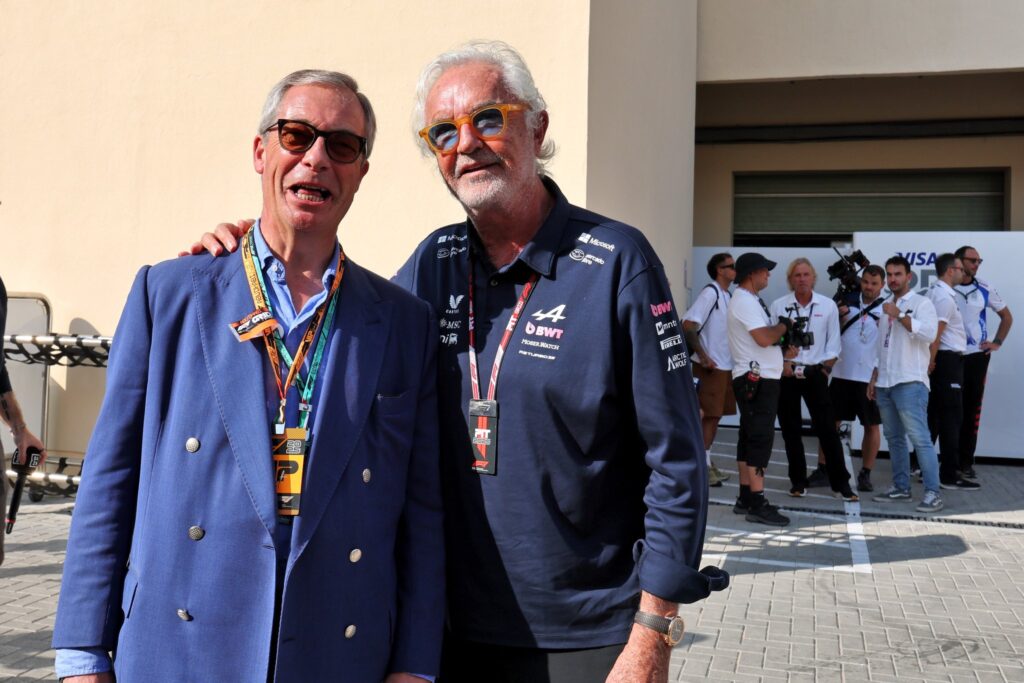





 Reform UK leader Nigel Farage speaks during a press conference at UPS Steels in Kingswinford, Dudley, February 24, 2026