Tag: schools

  • US, Israel ‘Going Gaza on Iran’ as Death Toll Tops 500 Amid New Massacres

    Spread the love

    Original article by Brett Wilkins republished from Common Dreams under Creative Commons (CC BY-NC-ND 3.0).
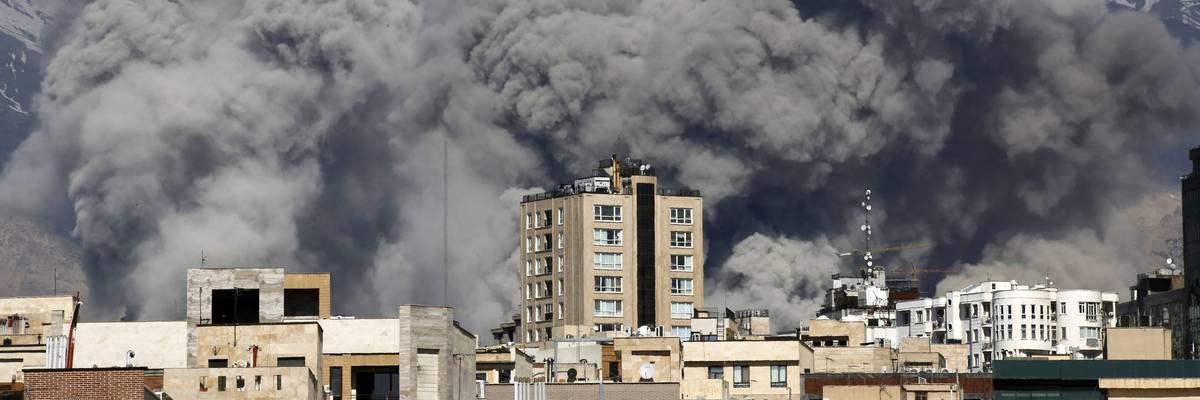
    Smoke is seen billowing skyward during US-Israeli bombing of Tehran, the Iranian capital, on March 1, 2026. (Photo by Fatemeh Bahrami/Anadolu via Getty Images)

    “This is carpet-bombing, which has struck everything from playgrounds, to an emergency services HQ, schools, media buildings, and medical facilities,” said one observer.

    US and Israeli forces were accused Monday of “seemingly indiscriminate” bombing of Iran as the country’s Red Crescent said that at least 555 people have been killed amid reports of fresh mass casualty attacks across the country.

    The Iranian Red Crescent Society said at least 555 people have been killed so far during three days of a US and Israeli war of choice aimed at toppling Iran’s long-ruling Islamist government. US Secretary of State Marco Rubio on Monday continued to insist that the war is not about regime change, but rather enduring yet bogus claims that Iran is close to developing nuclear weapons.

    RECOMMENDED…
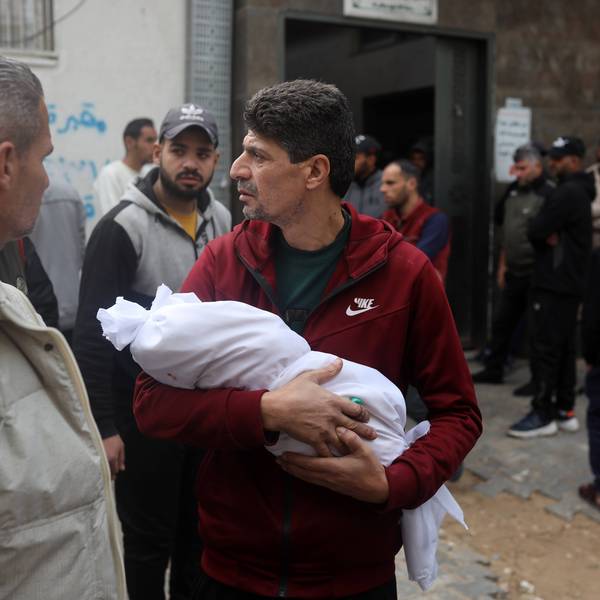
    Mourners React Following Israeli Strike At Al-Shifa Hospital In Gaza City

    ‘Where Is the Ceasefire?’: Israel’s Bombing of Gaza Kills 23, Mostly Women and Children
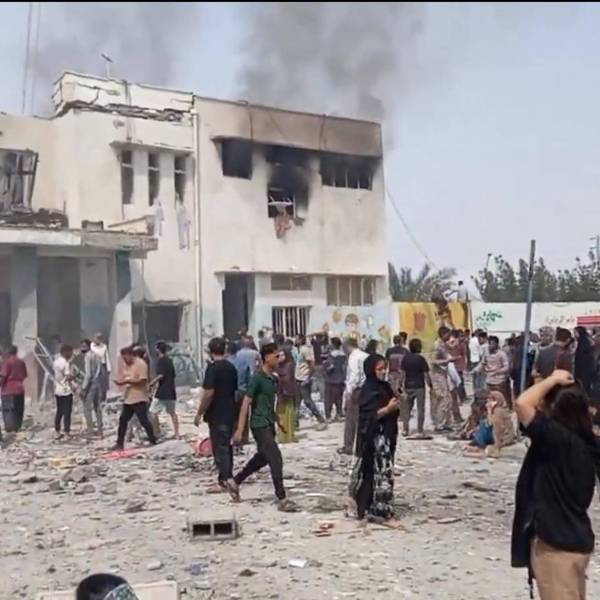
    Iranian school

    ‘More Horrific Death and Destruction Will Come,’ Warns Tlaib as Israeli Strike Kills Dozens of Iranian Kids

    Those killed include many civilians as well as former Iranian Supreme Leader Ayatollah Ali Hosseini Khamenei and dozens of senior government and military officials. Iranian counterattacks have killed half a dozen US troops, 9 Israelis, and a handful of people in Gulf nations allied with the United States.

    An attack on the Abbasabad Police Station—where anti-government protesters were allegedly tortured during the recent deadly crackdown—in Niloofar Square in central Tehran killed at least 20 people, local media reported.

    “This is carpet-bombing, which has struck everything from playgrounds, to an emergency services HQ, schools, media buildings, and medical facilities,” documentary filmmaker Robert Inlakesh said in a social media post showing the aftermath of the strike.

    Local residents said that the site was attacked for the second time in three days. This was part of broader US-Israeli strikes on Tehran, including attacks on the Revolutionary Court, Defense Ministry, other government sites, and civilian infrastructure including at least eight medical facilities and state media outlets.

    Video footage of another attack on central Tehran—this one in Ferdowsi Square—showed devastation from what political analyst Trita Parsi called “seemingly indiscriminate” bombing.

    “Increasingly, Israel and the US appear to be following the Gaza playbook, having failed to achieve a quick regime implosion,” Parsi said on social media.

    Parsi also shared video of a distraught woman who described an apparent so-called “double-tap” strike, a common tactic used by the US, Israel, and other militaries in which an initial bombing is followed up with a second one in a bid to kill and injure survivors and first responders.

    “They killed everyone,” the woman said of the attackers. “They dropped the first bomb, then when people went to help, they dropped another bomb.”

    Local and international media reported at least 35 people killed in multiple attacks on targets in the southern Fars province, which neighbors Hormozgan province, where the deadliest massacre of the young war took place on Saturday. Officials said at least 175 people—mostly children—were killed in a strike on the Shajareh Tayyebeh girls’ elementary school in Minab.

    Several hours later, a missile strike on a gymnasium in Lamerd, Pars province, where dozens of teenage girls were playing sports reportedly killed at least 18 people.

    “Like the destruction of the school in Minab, basic protections to safeguard the lives of civilians in war either failed or were disregarded, leading to catastrophic loss among Iran’s civilian population,” the National Iranian American Council said in a statement Monday.

    Iranian Red Crescent chief Pirhossein Kolivand said in a video posted on social media Sunday that “the Minab school incident has no comparison with any other incident, even in Gaza.”

    Comparisons with Gaza—where Israel’s genocidal assault has left more than 250,000 Palestinians dead, maimed, or missing since October 2023 and the coastal strip in ruins—have been numerous.

    Condemning what it called the “barbarous” and “treacherous” US-Israeli attacks on Iran, Hezbollah, the Lebanon-based resistance group targeted by Israel during the Gaza war, said, “This aggression confirms the full and direct partnership between America and Israel in planning and execution, not only in the war against the Islamic Republic, but also in all the wars and crimes the region is facing, in Gaza, Lebanon, Syria, and Yemen.”

    Ori Goldberg, an Israeli political analyst, said that, in Israeli society, “there’s a sense of triumphalism, of having attacked an enemy regime.”

    “Not really because we’re greatly invested in the future of the Iranian people, but because, through the genocide on Gaza, we’ve devalued human life,” he added.

    Parsi said that “Israel appears to be going Gaza on Iran.”

    The renewed US and Israeli attacks on Iran follow last year’s limited war on the country that left thousands of Iranians dead or wounded, including at least 436 civilians killed and over 2,000 others injured, according to officials and activists.

    United Nations officials and international human rights defenders were also among those condemning the US-Israeli war of choice.

    Addressing the Minab school strike, UNESCO—the UN’s educational, scientific, and cultural agency—said that “the killing of pupils in a place dedicated to learning constitutes a grave violation of the protection afforded to schools under international humanitarian law.”

    UN Messenger of Peace and Nobel Peace laureate Malala Yousafzai asserted that “all states and parties must uphold their obligations under international law to protect civilians and safeguard schools,” adding that “every child deserves to live and learn in peace.”

    In the United States—where Democratic and a handful of Republican lawmakers are reportedly drafting a war powers resolution in a bid to rein in President Donald Trump’s aggression—Rep. Rashida Tlaib (D-Mich.) took to social media to note the “over 555 Iranians already killed by US-Israeli bombs, including at least 165 at a girls’ elementary school.”

    “At least four US service members are dead,” she also wrote, before that figure rose to six. “Any member of Congress who votes against the war powers resolution is voting for more of this.”

    The Not Above the Law coalition was among the civil society groups urging Congress to pass an Iran war powers resolution.

    “President Trump has launched deadly military strikes against Iran without congressional approval, in flagrant violation of the Constitution,” the coalition’s co-chairs said Monday. “Article I, Section 8 is crystal clear: Only Congress can declare war. Yet Trump has secured neither a declaration of war nor congressional authorization for military force.”

    “Trump’s reckless unilateral action puts American lives and global security at risk while trampling the foundational principle that no president is above the law,” Not Above the Law added. “Congress must act immediately. Pass war powers resolutions to reject this unconstitutional power grab and reassert its authority over matters of war and peace. The rule of law demands it.”

    Original article by Brett Wilkins republished from Common Dreams under Creative Commons (CC BY-NC-ND 3.0).

    Orcas discuss Donald Trump and the killer apes' concept of democracy. Front Orca warns that Trump is crashing his country's economy and that everything he does he does for the fantastically wealthy.
    Orcas discuss Donald Trump and the killer apes’ concept of democracy. Front Orca warns that Trump is crashing his country’s economy and that everything he does he does for the fantastically wealthy.
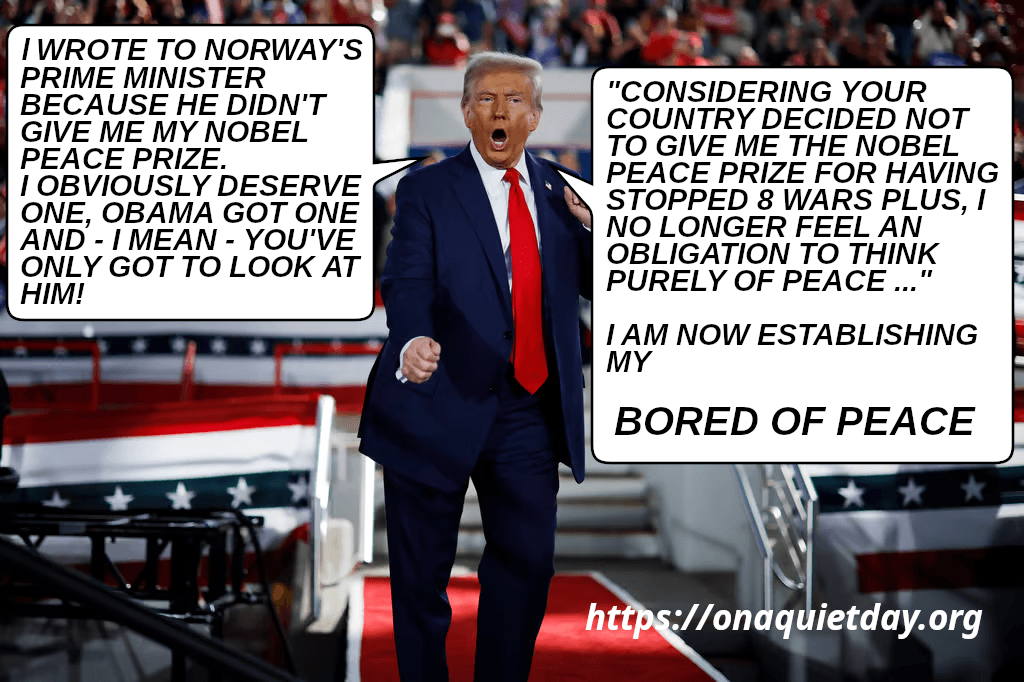
    Donald Trump explains why he established his Bored of Peace
    Donald Trump explains why he established his Bored of Peace
    Orcas discuss rotting brain. Front Orca says "Wish someone would lock him up".
    Orcas discuss rotting brain. Front Orca says “Wish someone would lock him up”.
  • A global army to liberate Palestine: An investigative reading of Colombian President Gustavo Petro’s speech

    Spread the love

    This work by Middle East Monitor is licensed under a Creative Commons Attribution-NonCommercial-ShareAlike 4.0 International License.

    Gustavo Petro, Colombia’s president, during the United Nations General Assembly (UNGA) in New York, US, on Tuesday, Sept. 23, 2025. [Photographer: Michael Nagle/Bloomberg via Getty Images]

    by Dr Rassem Bisharat

    In one of the most daring and controversial political interventions to echo through the halls of the United Nations in decades, Colombian President Gustavo Petro, in his address to the UN General Assembly on 23 September 2025, called for the creation of an international army that transcends the traditional balance of power and whose first mission would be the liberation of Palestine from Israeli occupation and the cessation of the ongoing genocide in Gaza.

    The speech drew widespread global attention, opening the door to a complex debate on the future of the international order, the limits of international law, and the possibility of a fundamental transformation toward a new architecture of international relations that moves beyond bipolarity and the centrality of U.S. power.

    Petro: The end of words and the beginning of action

    In his speech, President Gustavo Petro sharply criticised the current international order, asserting that a world dominated by a single power and complicit in genocide cannot credibly claim to defend democracy or human rights. He emphasised that statements and declarations are no longer sufficient amid the mass killings in Gaza, calling for the creation of an international armed force composed of states that reject genocide, tasked with protecting threatened populations and enforcing international justice. Petro declared: “We need a strong army of nations that do not accept genocide… We must gather weapons and armies. We must liberate Palestine.”

    Invoking Simón Bolívar, he added: “We are tired of words… It is time for the sword of liberty or death.”

    In later remarks posted on X (formerly Twitter), Petro announced plans to submit a draft resolution to the UN General Assembly to establish a “global army for justice,” with its first mission focused on liberating Palestine,” marking a dramatic call for action over [sic]

    READ: Saudi Arabia warns global inaction on Gaza war threatens regional, world stability

    A paradigm shift in international politics

    Petro’s proposal marks a significant shift in international political discourse. Since the UN’s founding in 1945, international forces have primarily focused on post-conflict peacekeeping, operating under limited mandates and with Security Council approval. Petro, however, envisions a force designed not to maintain the status quo but to actively change it, intervening militarily to prevent genocide and end occupation. This transition from neutrality to action challenges core principles of international law, including state sovereignty and non-intervention, while contesting the Security Council’s monopoly, particularly its five permanent members, over the authorised use of force. Petro suggested that such a force could be established through the General Assembly, referencing the 1950 “Uniting for Peace” resolution, when the Assembly bypassed a deadlocked Security Council to authorize military intervention in Korea, setting a precedent for acting when conventional mechanisms fail.

    Enormous political and legal obstacles

    Despite Petro’s bold proposal, formidable obstacles make its near-term realization highly unlikely. The UN’s legal framework restricts the use of force to the Security Council, where the US holds veto power and would never allow the creation of a force that could act against Israel, its key Middle Eastern ally. Geopolitical realities also hinder the formation of a global coalition outside the Western security umbrella. Even countries critical of Israeli policies, including EU members and Global South states, may resist joining a force that risks direct confrontation with Israel or the U.S Additionally, there is a significant lack of collective political will: while smaller and medium-sized states often use strong rhetoric, turning such words into military action demands a consensus that is currently absent. Past struggles to reform the Security Council or establish war crimes tribunals underscore how difficult it is to translate ambitious ideas into action within today’s entrenched power structures.

    The significance and timing of Petro’s speech

    Despite significant practical obstacles, Petro’s speech carries profound symbolic and political weight in shaping global discourse on Palestine and the international order. He reframes the Palestinian issue from a mere “conflict” to an act of “genocide,” shifting the debate from political negotiation to one centered on liberation and international justice. His references to “Bolívar’s sword” and an “army of justice” seek to place Palestine at the core of a broader struggle against double standards and for global legitimacy.

    Moreover, Petro’s call sparks renewed debate on reforming the United Nations. Beyond advocating for a force dedicated to Palestine, he highlights the failure of the current system to prevent genocides in Rwanda, Syria, Myanmar, and now Gaza. The proposed army thus symbolizes a deeper demand for rebuilding the international order on fairer, more pluralistic foundations.

    Finally, the speech underscores a shift within the Global South. From Colombia to South Africa and Brazil, states on the geopolitical periphery are increasingly using the UN stage to challenge the Global North’s dominance and redefine concepts of legitimacy. Petro’s message aligns with this momentum, adding new strategic depth to the Palestinian cause within emerging international alliances.

    READ: Malaysia urges sanctions on Israel at UN meeting

    Justice in the age of genocide

    President Petro’s speech comes at a critical moment, as Gaza endures one of the most brutal Israeli military campaigns since the Nakba. UN agencies and human rights organizations, including OCHA, Oxfam, and Human Rights Watch, report the killing of tens of thousands of civilians and the widespread destruction of vital infrastructure, including hospitals, schools, and relief centers. The UN has also documented the deaths of hundreds of humanitarian workers, in what international organizations describe as the largest targeting of the humanitarian sector in modern conflict.

    In this context, Petro’s speech becomes more than a theoretical proposal, it is a cry against a world that remains silent in the face of genocide. His call to form an “army of justice” is, at its core, an expression of the failure of the international system to fulfill its most fundamental duty: protecting civilians and enforcing international law.

    And while the idea may be unattainable at present, it exposes the glaring gap between the UN’s rhetoric and its reality, opening the door to rethinking the mechanisms of collective international action.

    Conclusion

    President Petro’s project to form an international army to liberate Palestine may seem, in the realpolitik balance, a utopian dream difficult to achieve amid current power dynamics. Yet, in the realm of symbolic and strategic politics, it reflects a profound shift in how international justice, Palestine, and the global order itself are conceived.

    The speech will not change the world tomorrow, but it could mark a turning point in a longer trajectory toward reshaping international institutions so that they are capable of confronting genocide and injustice. And just as Simón Bolívar’s words once ignited the liberation of entire continents, President Petro’s speech may, even if only in the long run, be the spark that drives the world to contemplate a global army for justice, one whose first mission would begin in Gaza, if Gaza, as we know it, still exists.

    OPINION: Paraguay’s fluctuating positions on Palestine: Between interests and justice

    The views expressed in this article belong to the author and do not necessarily reflect the editorial policy of Middle East Monitor.

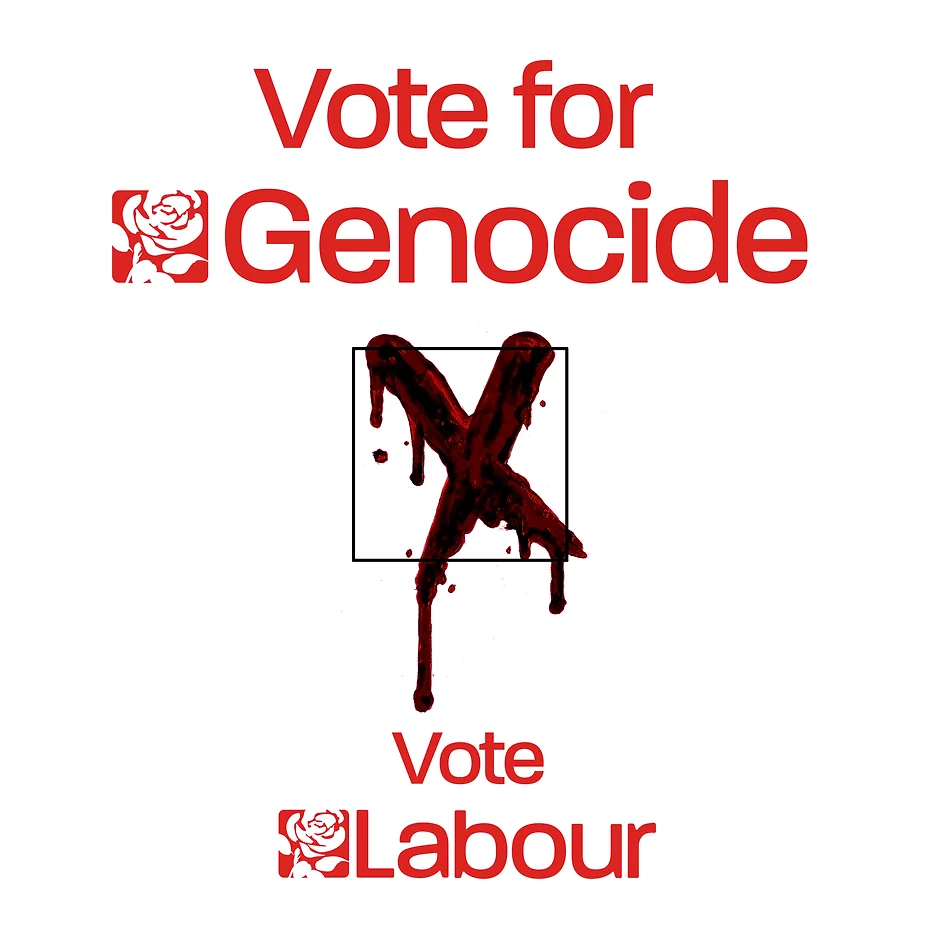
    Experiencing issues with this image not appearing. I suspect because it's so critical of Zionist Keir Starmer's support of and complicity in Israel's genocides.
    Genocide denier and Current UK Prime Minister Keir Starmer is quoted that he supports Zionism without qualification. He also confirms that UK air force support has been essential in Israel’s mass-murdering genocide. Includes URLs https://www.declassifieduk.org/keir-starmers-100-spy-flights-over-gaza-in-support-of-israel/ and https://youtu.be/O74hZCKKdpA
    Keir Starmer objects to criticism of the IDF. He asks how could anyone object to them starving people to death, forced marches like the Nazis did, bombing Gaza's hospitals and universities, mass-murdering journalists, healthworkers and starving people queuing for food, killing and raping prisoners and murdering children. He calls for people to stop obstructing his genocide for Israel.
    Keir Starmer objects to criticism of the IDF. He asks how could anyone object to them starving people to death, forced marches like the Nazis did, bombing Gaza’s hospitals and universities, mass-murdering journalists, healthworkers and starving people queuing for food, killing and raping prisoners and murdering children. He calls for people to stop obstructing his genocide for Israel.
    Vote Labour for Genocide.
    Vote Labour for Genocide.

  • With Genocide Confirmed and Gaza City a ‘Lifeless Wasteland,’ US Vetoes Another UN Ceasefire Resolution

    Spread the love

    Original article by Brett Wilkins republished from Common Dreams under Creative Commons (CC BY-NC-ND 3.0). 

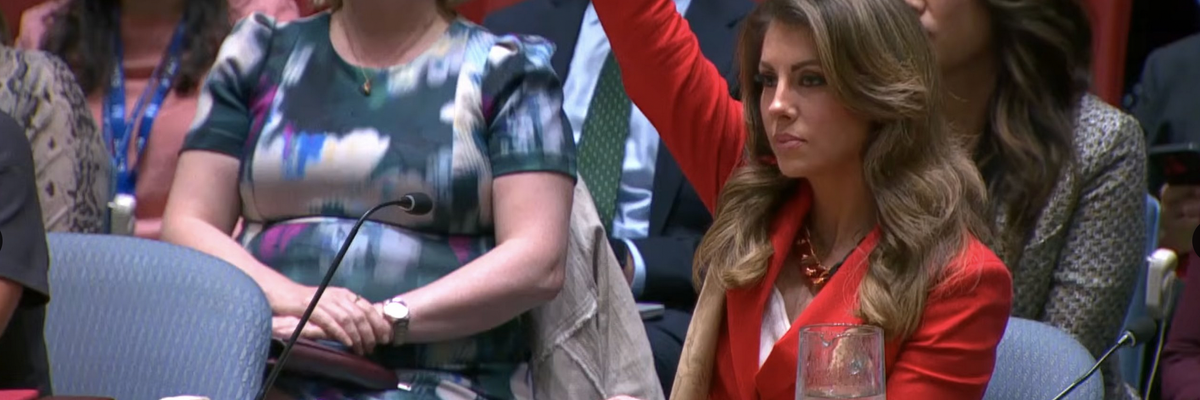
    Deputy United States Special Envoy to the Middle East Morgan Ortagus raises her hand to veto a United Nations Security Council veto of a Gaza ceasefire resolution at UN headquarters New York City on September 18, 2025. (Photo by UN News/X)

    “Israel kills every day and nothing happens,” said Algeria’s UN ambassador. “Israel starves a people and nothing happens. Israel bombs hospitals, schools, shelters, and nothing happens.”

    Against a backdrop of Israel’s genocidal obliteration of Gaza City and a worsening man-made famine throughout the embattled Palestinian exclave, the United States on Thursday cast its sixth United Nations Security Council veto of a resolution calling for an immediate ceasefire and the release of all hostages held by Hamas.

    At its 10,000th meeting, the UN Security Council voted 14-1 with no abstentions in favor of a resolution proposed by the 10 nonpermanent UNSC members demanding “an immediate, unconditional, and permanent ceasefire” in Gaza, the “release of all hostages” held by Hamas, and for Israel to “immediately and unconditionally lift all restrictions on the entry of humanitarian aid” into the besieged strip.

    Morgan Ortagus, President Donald Trump’s deputy special envoy to the Middle East, vetoed the proposal, saying that the move “will come as no surprise,” as the US has killed five previous UNSC Gaza ceasefire resolutions under both the Biden and Trump administrations, most recently in June.

    Ortagus said the resolution failed to condemn Hamas or affirm Israel’s right to self-defense and “wrongly legitimizes the false narratives benefiting Hamas, which have sadly found currency in this council.”

    The US has unconditionally provided Israel with billions of dollars worth of armed aid and diplomatic cover since October 2023 as the key Mideast ally wages a war increasingly viewed as genocidal, including by a commission of independent UN experts this week.

    Palestinian Ambassador to the UN Riyad Mansour said the torpedoed resolution represented the “bare minimum” that must be accomplished, adding that “it is deeply regrettable and painful that it has been blocked.”

    “Babies dying of starvation, snipers shooting people in the head, civilians killed en masse, families displaced again and again… humanitarians and journalists targeted… while Israeli officials are openly mocking all of this,” Mansour added.

    Following the UNSC’s latest failure to pass a ceasefire resolution, Algerian Ambassador to the UN Amar Bendjama asked Gazans to “forgive” the body for not only its inability to approve such measures, but also for failing to stop the Gaza famine, in which at least hundreds of Palestinians have died and hundreds of thousands more are starving. Every UNSC members but the US concurred last month that the Gaza famine is a man-made catastrophe.

    “Israel kills every day and nothing happens,” Bendjama said. “Israel starves a people and nothing happens. Israel bombs hospitals, schools, shelters, and nothing happens. Israel attacks a mediator and steps on diplomacy, and nothing happens. And with every act, every act unpunished, humanity itself is diminished.”

    Benjama also asked Gazans to “forgive us” for failing to protect children in the strip, more than 20,000 of whom have been killed by Israeli bombs, bullets, and blockade over the past 713 days. He also noted that upward of 12,000 women, 4,000 elderly, 1,400 doctors and nurses, 500 aid workers, and 250 journalists “have been killed by Israel.”

    Condemning Thursday’s veto, Hamas accused the US of “blatant complicity in the crime of genocide,” which Israel is accused of committing in an ongoing International Court of Justice (ICJ) case filed in December 2023 by South Africa and backed by around two dozen nations.

    Hamas—which led the October 7, 2023 attack on Israel and is believed to be holding 20 hostages left alive out of 251 people kidnapped that day—implored the countries that sponsored the ceasefire resolution to pressure Israeli Prime Minister

    who along with former Israeli Defense Minister Yoav Gallant is wanted by the International Criminal Court for alleged war crimes and crimes against humanity, to accept an agreement to halt hostilities.

    Overall, at least 65,141 Palestinians have been killed and over 165,900 others wounded by Israeli forces since October 2023, according to the Gaza Health Ministry—whose figures have not only been confirmed by former IDF Chief of Staff Herzi Halevi, but deemed a significant undercount by independent researchers. Thousands more Gazans are missing and presumed dead and buried beneath the ruins of the flattened strip.

    UK Ambassador to the UN Barbara Woodward stessed after Thursday’s failed UNSC resolution that “we need a ceasefire more than ever.”

    “Israel’s reckless expansion of its military operation takes us further away from a deal which could bring the hostages home and end the suffering in Gaza,” Woodward said.

    Thursday’s developments came as Israeli forces continued to lay waste to Gaza City as they push deeper into the city as part of Operation Gideon’s Chariots 2, a campaign to conquer, occupy, and ethnically cleanse around 1 million Palestinians from the strip’s capital. Israeli leaders have said they are carrying out the operation in accordance with Trump’s proposal to empty Gaza of Palestinians and transform it into the “Riviera of the Middle East.”

    In what some observers said was a bid to prevent the world from witnessing fresh Israeli war crimes in Gaza City, internet and phone lines were cut off in the strip Thursday, although officials said service has since been mostly restored.

    Gaza officials said Thursday that at least 50 Palestinians were killed by Israeli forces since dawn, including 40 in Gaza City, which Al Jazeera reporter Tareq Abu Azzoum said is being pummeled into “a lifeless wasteland.”

    Azzoum reported that tens of thousands of Palestinians “are moving to the south on foot or in carts, looking for any place that is relatively safe—but with no guarantee of safety—or at least for shelter.”

    Israel has repeatedly bombed areas it advised Palestinians were “safe zones,” including a September 2 airstrike that massacred 11 people—nine of them children—queued up to collect water in al-Mawasi.

    “Most families who have arrived in the south have not found space,” Azzoum added. “That’s why we’ve seen people setting up makeshift tents close to the water while others are left stranded in the street, living under the open sky.”

    Original article by Brett Wilkins republished from Common Dreams under Creative Commons (CC BY-NC-ND 3.0). 

    Elon Musk urges you to be a Fascist like him, says that you can ignore facts and reality then.
    Elon Musk urges you to be a Fascist like him, says that you can ignore facts and reality then.
    Donald Fuhrump says that Amerikkka doesn't bother with crimes or charges anymore, not being 100% Amerikkkan and opposing his real estate intentions is enough.
    Donald Fuhrump says that Amerikkka doesn’t bother with crimes or charges anymore, not being 100% Amerikkkan and opposing his real estate intentions is enough.
  • Jeremy Corbyn: Surprise, surprise – Labour is reaping what it has sown

    Spread the love
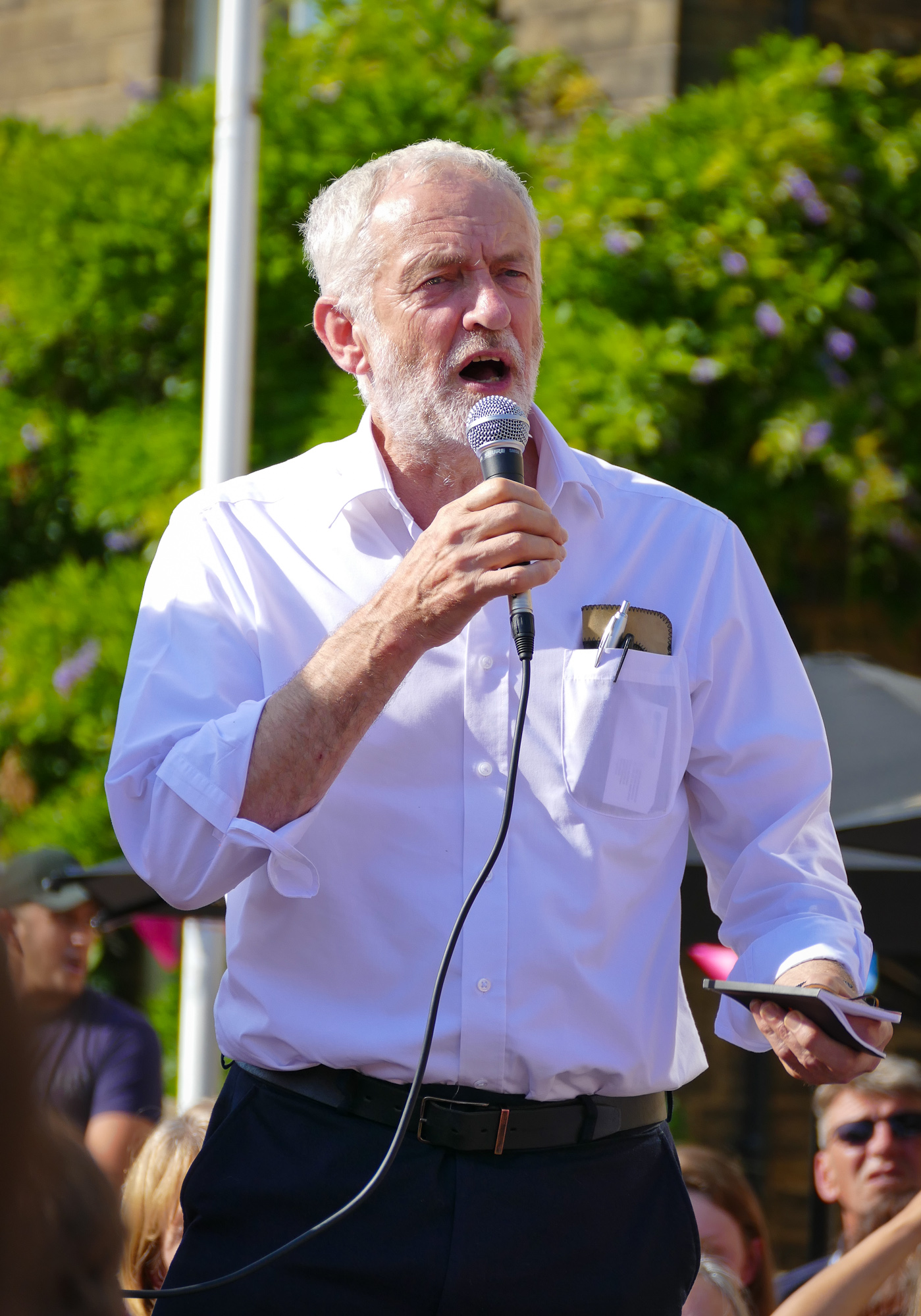
    Image of Jeremy Corbyn MP, former leader of the Labour Party
    Jeremy Corbyn MP, former leader of the Labour Party

    https://www.independent.co.uk/voices/jeremy-corbyn-new-party-labour-uk-poverty-b2827322.html

    Instead of addressing child poverty, homelessness, poor working conditions or any of the real issues impacting this country, Labour has chosen to deflect the blame and pour billions into arms, says Jeremy Corbyn. Britain is tired of having no political choice – and we’re here to fix that

    …

    Over the past year, the government has continued a programme of austerity and privatisation. It has refused to lift the two-child benefit cap, the single biggest driver of child poverty. It has tried to take away the winter fuel allowance. It has increased the bus fare cap. And it has tried to take away £5bn from disabled people, curating a two-tiered benefit system that deprives thousands of people of a dignified life.

    There is one area where the government has been very generous, though: arms spending. Government military spending is now at £31.7bn, which is a 6 per cent increase in real terms from last year. Imagine how much better ordinary people’s lives would be if we spent that money on schools, hospitals and green energy instead.

    …

    People have had enough of a political regime that serves the interests of billionaires and corporations. They have had enough of a government that inflicts suffering at home and enables genocide abroad. They have had enough of broken promises from political parties that fail to deliver real change.

    Original article at https://www.independent.co.uk/voices/jeremy-corbyn-new-party-labour-uk-poverty-b2827322.html

    Keir Starmer says that the Labour Party under his leadership all feel a small part of Scunthorpe.
    Keir Starmer says that the Labour Party under his leadership all feel a small part of Scunthorpe.
    Keir Starmer explains the moral case for cutting disability benefits. He says work will set you free.
    Keir Starmer explains the moral case for cutting disability benefits. He says work will set you free.
    Palestine Action joke that appeared in the UK satirical magazine 'Private Eye'.
    Palestine Action joke that appeared in the UK satirical magazine ‘Private Eye’.
  • ‘It’s time for a grown-up conversation about taxing wealth’

    Spread the love

    https://morningstaronline.co.uk/article/its-time-grown-conversation-about-taxing-wealth

     model houses on a pile of coins and bank notes

    TUC hits back at banking boss who suggested public-sector pay should be curbed because the economy falling

    …

    TUC general secretary Paul Nowak said that while the government has “taken the right approach” by investing in public services and infrastructure, “the job of securing growth is far from over — and more support is needed to see that investment sustained in the long term.”

    “That’s why it’s time for a grown-up conversation about taxing wealth and financial institutions,” he said.

    “It’s only right that banks, gambling companies and the wealthiest in our society contribute their fair share to fund our schools, hospitals and local authorities.

    “The government needs to ensure it can repair and rebuild our vital public services along with wider critical national infrastructure.”

    Mr Nowak also called on the Bank of England to further Bank of England to “ease the pressure on household budgets and to make it more affordable for businesses to invest.”

    …

    Ooriginal article at https://morningstaronline.co.uk/article/its-time-grown-conversation-about-taxing-wealth