This work by Middle East Monitor is licensed under a Creative Commons Attribution-NonCommercial-ShareAlike 4.0 International License.
A Palestinian toddler hugs a woman as relatives of the deceased mourn as the bodies of Palestinians killed in the Israeli attack on Al-Saftawi region are taken out of Al-Shifa Hospital for burial in Gaza City, Gaza on May 18, 2025. [Khames Alrefi – Anadolu Agency]
The United Nations children’s agency UNICEF said Sunday that the situation in the Gaza Strip has drastically worsened due to Israel’s crippling siege on the Palestinian enclave, Anadolu reports.
“The situation in Gaza has drastically deteriorated over the last two months due to the imposed siege and the prevention of humanitarian aid,” UNICEF said in a statement on X.
It said Gaza’s children continue to endure relentless Israeli airstrikes and are being deprived of essential goods, services, and life-saving care.
The organization called for the immediate resumption of a ceasefire and the urgent entry of humanitarian aid into the besieged enclave.
Since March 2, Israel has kept Gaza crossings closed to food, medical, and humanitarian aid, deepening an already severe humanitarian crisis in the enclave, according to government, human rights, and international reports.
Earlier this month, Israel’s Security Cabinet approved an aid delivery plan for the Palestinians in war-torn Gaza through private US security contractors based on handing over aid boxes to individuals.
The Israeli plan, however, has been rejected by the UN and dozens of international aid groups, saying it runs against humanitarian principles, is logistically unworkable, and could put Palestinian civilians and staffers in harm’s way.
The Palestinian resistance group Hamas also decried the Israeli plan as “political blackmail” and “a violation of international law.”
Nearly 2.4 million people in Gaza live completely dependent on humanitarian aid, according to World Bank data.
The Israeli Defense Minister Israel Katz said on Sunday that Tel Aviv is coordinating with a US firm to distribute humanitarian aid in Gaza, suggesting that the aid distribution may start on May 24.
The Israeli army has continued its brutal offensive on the Gaza Strip since Oct. 7, 2023, killing more than 53,300 Palestinians, most of them women and children.
Last November, the International Criminal Court issued arrest warrants for Israeli Prime Minister Benjamin Netanyahu and his former Defense Minister Yoav Gallant for war crimes and crimes against humanity in Gaza.
Israel also faces a genocide case at the International Court of Justice for its war on the enclave.
This work by Middle East Monitor is licensed under a Creative Commons Attribution-NonCommercial-ShareAlike 4.0 International License.
UK Labour Party government ministers Keir Starmer, Angela Rayner and Rachel Reeves explain that they are partners complicit in Israel’s Gaza genocide. The UK has provided Israel with arms, military and air force support. They explain that they don’t do gas chambers but do do forced marches, starvation, destroy hospitals, mass-murders of journalists and healthcare workers.Vote For Genocide Vote Labour.
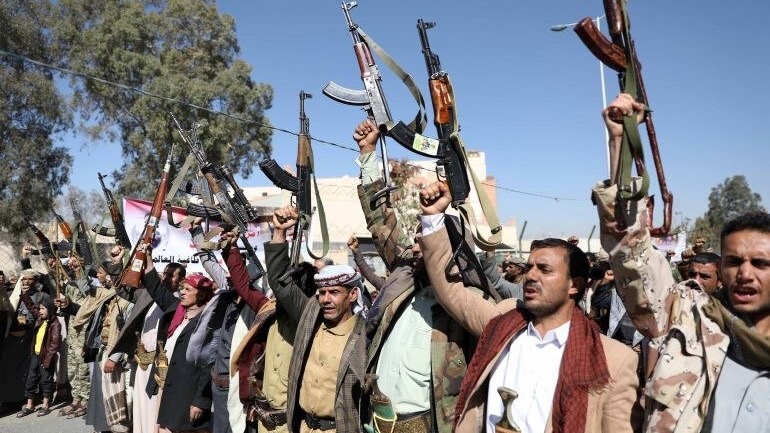
While Trump declared the truce agreement a US victory, Ansar Allah said that Washington contacted them in order to “avoid drowning in the mountains of Yemen”.
Yemen’s Ansar Allah movement reached a ceasefire deal with the United States on Wednesday, May 7, according to Oman, which mediated the negotiations.
The deal stipulates the halt of Ansar Allah’s attacks on US ships in the Red Sea and Bab al-Mandab Strait, and an end to US aggression on Yemen. However, it does not prevent the Yemeni movement from launching attacks on Israel.
“Following recent discussions and contacts conducted by the Sultanate of Oman with the United States and the relevant authorities in Sana’a, in the Republic of Yemen, with the aim of de-escalation, efforts have resulted in a ceasefire agreement between the two sides,” Omani Foreign Minister, Badr Albusaidi, wrote on X.
“In the future, neither side will target the other, including American vessels, in the Red Sea and Bab al-Mandab Strait, ensuring freedom of navigation and the smooth flow of international commercial shipping,” the minister added.
Peoples Dispatch spokes to a member of the Communist Party of Jordan, Dr. Emad Al-Hatabeh, to discuss the ceasefire, which he described as a “sudden development in the war in the Red Sea.”
Dr. Emad Al-Hatabeh indicated that “both the US and Oman didn’t comment on Ansar Allah’s missiles targeting Israel, especially that this agreement was reached shortly after a Yemeni missile reached Ben Gurion airport, near the occupied city of Lydda (also known as Lod).”
As per Al-Hatabeh’s analysis, “important questions about this agreement are left without answers. Taking into consideration the Omani role in the American – Iranian negotiations, is the ceasefire in the Red Sea part of the deal? Another question will arise from this assumption, did America give up some of Israel’s interests in order to reach an agreement with Iran? Where does this agreement leave Netanyahu’s government, especially after Ansar Allah’s spokesman told Reuters that the agreement doesn’t include Israel.”
Ansar Allah says the US contacted them seeking a truce
One day before Oman announced that the deal was sealed, US President Donald Trump alluded that a ceasefire agreement was about to be reached, claiming that Ansar Allah agreed to stop the fight with the US because they “capitulated”.
“They just don’t want to fight, and we will honor that and we will stop the bombings, and they have capitulated,” Trump said from the White House on Tuesday, May 6.
“They will not be blowing up ships anymore, and that’s what the purpose of what we were doing. So that’s just news. We just found out about that. So I think that’s very, very positive,” he added.
Although Trump bragged about the deal, presenting it as a US victory, analysts suggest that it was Ansar Allah that forced the world’s greatest military superpower to the negotiating table, after paralyzing US naval traffic off the Yemeni coast.
Ansar Allah’s chief negotiator, Mohammed Abdulsalam, confirmed during an interview with Almasirah TV channel, that the movement “did not make any request to the Americans to hold ceasefire talks”. Abdulsalam asserted that, on the contrary, the movement recently received US requests and messages seeking a truce, via the Sultanate of Oman.
The Yemeni official pointed out that US endeavors to reach a ceasefire with Ansar Allah were a great disappointment to Israel. “The Israelis have endured great disappointment after the stance of the US, which tried to walk away and avoid drowning in the mountains of Yemen,” he said.
However, Abdulsalam clarified that Ansar Allah is still “assessing this US position so that the facts on the ground do not contradict its statements”. He further warned that in the event that the US “would not abide by the agreement in any way”, the movement “will respond”.
Abdulsalam considered the deal “a success to be added to Yemen’s credit, as it enhances a situation that would leave the “usurper entity” [Israel] in a situation of loneliness, in confrontation with the great popular and military stance led by Yemen on behalf of the Arab and Islamic nation.”
The ceasefire was announced two months after Trump ordered a large-scale aerial campaign against Yemen on the pretext of protecting US shipping, air, and naval assets and to restore “navigation freedom” from Ansar Allah’s attacks. Trump’s order followed Ansar Allah’s decision to resume a ban on Israeli ships due to Israel’s continuous blockade of humanitarian aid to Gaza.
Yemen threatens Israel with a devastating and painful response for attacking Sana’a airport
While Ansar Allah agreed to a truce with the US, it vowed to escalate its operations against Israel as long as its blockade on humanitarian aid to Gaza is not lifted.
In response to Israel’s aggression on Sana’a International Airport on Tuesday, that destroyed terminal buildings and caused USD 500 million in damage, Yemen’s Supreme Political Council Chairman, Mahdi al-Mashat, threatened that “Sanaa’s response will be devastating, painful, and beyond what the Israeli enemy can endure.”
“From this moment onward, stay in your shelters or leave for your homelands immediately. Your failed government will no longer be able to protect you,” Al-Mashat warned Israeli people.
Moreover, the Yemeni senior official reaffirmed that no aggression will deter Yemen from its “rightful decision” to support the people of Palestine “until the genocide ends and the siege on Gaza is lifted.”
Neo-Fascist Climate Science Denier Donald Trump says Burn, Baby, Burn.Elon Musk urges you to be a Fascist like him, says that you can ignore facts and reality then.
Five-month-old Suwar Ashur, one of hundreds of children diagnosed with malnutrition, is being treated at Nasser Hospital in Khan Younis, Gaza on May 1, 2025. (Photo: Doaa Albaz/Anadolu via Getty Images)
The two-month-long siege is a “clear and calculated effort to collectively punish over two million civilians and to make Gaza unlivable.”
“This is genocide in action,” said one official with Amnesty International on Friday, referring to Israel’s two-month humanitarian blockade in Gaza which has resulted in death, starvation, and suffering on a nearly unimaginable scale.
The human rights group is demanding that Israel’s allies, including the United States, take immediate action to ensure the Israeli government lifts the total aid blockade that’s plunged the enclave into what the United Nations has called “mass starvation,” with food supplies rapidly dwindling and thousands of children diagnosed with acute malnutrition.
“The international community must not continue to stand by as Israel perpetrates these atrocities with impunity,” said Erika Guevara Rosas, Amnesty’s senior director for research, advocacy, policy, and campaigns.
After a brief cease-fire, Israel reimposed a ban on the entry of commercial goods and aid into Gaza on March 2 and cut off power to the enclave’s desalination plant, after it had been briefly reconnected to electricity. The plant’s blackout has worsened water scarcity that’s plagued Gaza for all of Israel’s 17-year blockade and has left some Palestinians resorting to drinking seawater.
A spokesperson for the United Nations Office for the Coordination of Humanitarian Affairs (OCHA) told reporters in Geneva on Friday that the agency is in “constant contact” with Israeli authorities as it advocates for the reopening of border crossings.
“We don’t ask if food is nutritious or not, if it’s fresh or good; that’ a luxury, we just want to fill the stomachs of our children. I don’t want my child to die hungry.”
“Food stocks have now mainly run out, water access has become impossible,” Olga Cherevko said, leaving children “who have been deprived of their childhood for many months… rummaging through piles of trash” in search of food and combustible material to burn for cooking, due to rapidly shrinking supplies of fuel.
“Gaza is inching closer to running on empty,” said Cherevko.
"The international community has a choice – to keep scrolling through the grisly images of Gaza being suffocated and starved or muster the courage and the moral fiber to make decisions that would break this merciless blockade."
Amnesty interviewed 35 internally displaced people about the forced starvation crisis facing Gaza, which began again shortly before Israel resumed its bombardment of the enclave on March 18—killing at least 2,325 people including 820 children since then.
With the severe food scarcity being “exploited by individuals hoarding or looting supplies, selling them at extortionate prices,” according to Amnesty, most Palestinians are relying on overcrowded charity kitchens where they can wait for hours each day for just one meal.
“We don’t ask if food is nutritious or not, if it’s fresh or good; that’ a luxury, we just want to fill the stomachs of our children. I don’t want my child to die hungry,” one parent told the aid group.
Another described sending their son to wait in line for drinking water “for hours and he had to walk long distances.”
“With the relentless bombardment and danger lurking everywhere, you don’t know,” said the parent. “You may send your child to bring water only for him to return in a body bag. Every day is like this here.”
OCHA has reported that 92% of infants and pregnant and breastfeeding mothers are not meeting their nutrient requirements, while the United Nations Children’s Fund (UNICEF) released a statement Friday warning that malnutrition among children is on the rise across the enclave.
“More than 9,000 children have been admitted for treatment of acute malnutrition since the beginning of the year,” said Catherine Russell, executive director UNICEF. “Hundreds more children in desperate need of treatment are not able to access it due to the insecurity and displacement.”
“For two months, children in the Gaza Strip have faced relentless bombardments while being deprived of essential goods, services and lifesaving care. With each passing day of the aid blockade, they face the growing risk of starvation, illness, and death—nothing can justify this,” Russell added.
One doctor at Al-Rantissi pediatric hospital in Gaza City told Amnesty that healthcare workers have observed “the impact of the hunger on the children who come here to receive treatment… You recommend that the parent give the child specific attention, specific food, and you know that what you are recommending is an impossibility.”
The two-month mark of the current siege came as the International Court of Justice held public hearings this week on Israel’s humanitarian obligations in Gaza. The ICJ has previously ordered Israel to prevent genocide in Gaza and to allow humanitarian aid into the enclave.
Amnesty argued that the “cruel and inhumane siege” offers “further evidence of Israel’s genocidal intent in Gaza.”
“Apart from a brief respite during the temporary truce, Israel has relentlessly and mercilessly turned Gaza into an inferno of death and destruction,” Erika Guevara Rosas said. “For the past two months, Israel has completely cut off the supply of humanitarian aid and other items indispensable to the survival of civilians in a clear and calculated effort to collectively punish over two million civilians and to make Gaza unlivable.”
Mohamad Safa, CEO and representative to the U.N. for the non-governmental organization Patriotic Vision, emphasized that the crisis that is gripping Gaza is “not famine,” but rather “forced starvation.”
“”Forced starvation is an act of genocide,” he said.
U.S. Rep. Rashida Tlaib (D-Mich.), the only Palestinian-American member of Congress, repeated her call for an arms embargo on Israel, which counts the U.S. as the largest international funder of its military.
“The government of Israel is starving Gaza to death,” said Tlaib. “It’s a war crime to use starvation as a weapon. The only way to end this genocide is with an arms embargo. Time for my colleagues to end their silence.”
Guevara Rosas accused the international community, especially Israel’s allies, of “contemptible failure to live up to their legal responsibilities to prevent and bring an end to Israel’s genocide in Gaza.”
“These states’ decades of inaction helped establish pervasive impunity for Israel’s persistent violations and it is now exacting an unprecedented toll of death, destruction, and suffering on Palestinians,” said Guevara Rosas. “States must take action to render Israel’s violations against Palestinians politically, diplomatically, and economically unsustainable—the siege on Gaza must end now.”
UK Labour Party government Keir Starmer, Angela Rayner and Rachel Reeves explain that they are participants and complicit in Israel’s Gaza genocide providing Israel with army and air force support.
This work by Middle East Monitor is licensed under a Creative Commons Attribution-NonCommercial-ShareAlike 4.0 International License.
A Palestinian child named Osama El Rakab struggles for his life at Nasser Hospital in Khan Yunis, located in the southern part of Gaza, due to malnutrition-related body weakness on April 24, 2025 [Doaa Albaz/Anadolu Agency]
Gaza’s government issued a dire warning, Friday, that Palestinians in the besieged enclave are “on the brink of mass death” from widespread famine due to Israel’s nearly two-month aid blockade and the total collapse of essential services, Anadolu Agency reports.
In a statement, the Government Media Office held Israel and its backers responsible for a “genocide documented in sound and image”.
We warn of the worsening humanitarian catastrophe in Gaza as the complete Israeli siege and closure of crossings enters its 55th day, leading to the spread of famine and endangering the lives of over 2.4 million people
the office said.
The office added that famine in Gaza is now “a grim reality, not a threat”, with 52 recorded deaths due to hunger and malnutrition including 50 children, describing the situation as “one of the most horrifying forms of slow, deliberate killing.”
It added that more than 60,000 children suffer from acute malnutrition, while over a million children are facing daily hunger, leading to visible wasting and frailty.
Calling it “a final call before the catastrophe”, the office stressed that any delay in response would amount to “clear complicity and active participation in the crime, a stain on the conscience of humanity and history.”
It demanded the urgent and unconditional opening of a safe humanitarian corridor “to save the lives of over 2.4 million Palestinians in Gaza before it’s too late.”
The office also called for independent international investigation of “the crime of starvation and slow killing committed by the Israeli Occupation.”
On 2 March, Israel shut all three Gaza Crossings to humanitarian aid and fuel, resuming its onslaught. The blockade has plunged Gaza’s 2.4 million residents, already dependent on aid after nearly 19 months of war, into extreme poverty, according to World Bank data.
Nearly 51,400 Palestinians have been killed in Gaza in a brutal Israeli onslaught since October 2023, most of them women and children.
The International Criminal Court issued arrest warrants in November for Netanyahu and his former Defence Minister, Yoav Gallant, for war crimes and crimes against humanity in Gaza.
Israel also faces a genocide case at the International Court of Justice for its war on the enclave.
This work by Middle East Monitor is licensed under a Creative Commons Attribution-NonCommercial-ShareAlike 4.0 International License.
Palestinians, including children gather around a water tanker to collect clean water amid ongoing Israeli attacks on Gaza and the continued closure of border crossings, which have severely limited access to basic necessities in Khan Yunis, Gaza on March 29, 2025. [Abed Rahim Khatib – Anadolu Agency]
Under the weight of war and a suffocating blockade, more than two million people in the Gaza Strip are facing an unprecedented water crisis that threatens their daily survival. What was already a dire situation before the escalation has now turned catastrophic due to the ongoing bombardment and the widespread destruction of water infrastructure. The UN report from 2022 unveils a grim reality: over 97 per cent of Gaza’s drinking water is unfit for drinking or human consumption as a result of contaminants infiltrating groundwater reserves, whether it was caused by the excessive pumping of polluted water by the Israeli Occupation into Wadi Gaza, leakage from deteriorating sewage networks into the aquifer or the intrusion of the polluted saltwater into the aquifer by 75 per cent to meet the water deficit of the increased demand caused by the increased population. Compared to that, natural rain that does not exceed 30 per cent of natural replenishment. The situation is further exacerbated by the leakage of residues from Israeli munitions into groundwater sources.
Gaza’s water crisis: Numbers dripping with pain
Gaza’s water reality reveals a prolonged and profound deficit. While the Israeli Occupation enjoys a near-universal coverage of clean water (more than 99 per cent), as well as a substantial control over the aquifer, Gaza languishes among the world’s lowest water access rates, with a coverage below 10 per cent, placing it in a state of constant water emergency.
Over the past years, Israel, through its national water company, Mekorot, supplied Gaza with around 18 million cubic meters of water annually through three pipelines, amounting to only 9 per cent of Gaza’s needs. Yet, the water sector in Gaza suffers from a severe deficit exceeding 120 million cubic meters per year (approximately 60 per cent of total demand). With the outbreak of the latest war, these limited supplies have been repeatedly disrupted and, today, they are completely cut off following the destruction of transmission networks. During the war, these pipelines provided up to 70 per cent of Gaza City’s water supply, after most local water sources were destroyed. More than 85 per cent of Gaza’s water and sewage networks have been bombarded, causing destruction and damage to 2,263 kilometres of pipelines and 47 pumping stations, as well as the cessation of all operations of wastewater treatment plants. Currently, only 30 per cent of Gaza’s wells remain operational. The capacity of desalination plants has plummeted to their lowest levels due to continuous bombardment and the shortages of electricity and fuel. Consequently, water supplies available to Gaza’s people have dropped by 95 per cent, with the average daily water consumption per capita reduced to just 3–5 litres, far below the 15-liter minimum emergency threshold set by the United Nations.
Gaza’s displaced: Long queues and arduous journeys for a few drops of water
Since the beginning of the escalation, thousands of Gaza’s residents have endured the tragedy of displacement, which has only deepened their daily suffering. Hundreds of families, forced to flee their homes under heavy bombardment, now face the exhausting challenge of searching for water in distant areas or in overcrowded shelters lacking even the most basic necessities of life. Long queues at water distribution points and wells have become a daily reality, fraught with the constant risks of air strikes, fear and loss of life.
“We wait for long hours just to access unsafe and contaminated water, and sometimes we only manage to get our share after complete exhaustion,” says Fatima, a 35-year-old mother of four, who was displaced with her children to a shelter in western Gaza. “The distance we have to walk every day just to collect water can stretch for several kilometres and, with each passing day, the journey becomes even more difficult.”
Contaminated water: An immediate and long-term health threatThe health situation in Gaza has become catastrophic due to the acute shortage of clean water and the forced reliance on contaminated sources for drinking and hygiene, if available, which has led tothe widespread outbreak of acute diseases such as diarrhoea, kidney infections, urinary tract infections and waterborne diseases, as well as skin infections due to poor hygiene conditions or the use of polluted water for personal care.
These health risks are even more severe for children under the age of five, who are particularly vulnerable to malnutrition, intestinal infections, and severe diarrhoea, which can lead to dehydration or death. Pregnant women also face higher risks of early miscarriage, premature delivery and reduced breast milk production due to dehydration and exposure to contaminated water. The elderly are not spared, either, as they face an increased risk of kidney diseases, kidney failure and challenges in managing chronic conditions in the absence of safe and sufficient water supplies.
Impact of the water crisis on food security and forced displacement
The water crisis in Gaza is not only a health emergency but also a growing threat to food security. The destruction of agricultural irrigation networks has further worsened the already fragile economic situation, increasing poverty and hunger across the Gaza Strip due to a sharp decline in agricultural and livestock production. Agricultural productivity in the limited available farmland has dropped by 60 per cent as a result of using contaminated water, not to mention that farmlands have become either unsuitable for cultivation or located in unsafe areas due to the ongoing conflict. Moreover, the scarcity of clean and safe water has intensified forced displacement, with many residents compelled to leave their homes in search of areas where drinking water is available.
A grave breach of International Law: Denying people their right to life
The targeting and destruction of water sources and infrastructure in Gaza constitute a grave breach of international humanitarian law.
According to the 1977 Additional Protocol I to the Geneva Conventions, it is prohibited to attack resources indispensable to the survival of civilians, such as water supplies. Denying water to civilians amounts to a war crime under the Fourth Geneva Convention and represents a blatant violation of Article 25 of the Universal Declaration of Human Rights.Such acts may also qualify as crimes against humanity under the Rome Statute of the International Criminal Court.
In the face of tragedy: An urgent call for action
In light of this tragic reality, there is an urgent need for immediate and coordinated action. Internationally, the United Nations must activate emergency protection mechanisms, while international organisations, including the Organisation of Islamic Cooperation and the Arab League, should play a key role in intensifying political pressure on the United States to compel Israel to stop the war, halt the supply of weapons to the Occupying forces and ensure the immediate entry of humanitarian aid into Gaza. The Human Rights Council is also expected to issue investigative reports on these violations, and the International Criminal Court should open immediate investigations into the crimes committed.
On the humanitarian level, aid organisations must intensify efforts to find emergency solutions for providing clean water to the population in Gaza by repairing damaged water networks, maintaining wells and desalination plants using locally available resources, operating mobile desalination units powered by solar energy, expanding water distribution through water trucks to shelters and displacement camps and providing households with simple tools for water purification and desalination.
On the relief level, it is essential to pre-position water-related equipment, including well supplies, fixed and mobile desalination units, generators, solar energy systems, spare parts for water networks and fuel in both Egypt and Jordan. These should be ready for immediate delivery as soon as border crossings are opened for humanitarian aid. It would be a grave mistake to wait until Crossings re-open before starting to procure these critical supplies, given the time required for sourcing and delivery.
For the recovery and development of Gaza’s water system, it is equally critical not to wait until the war ends to begin planning and preparation. Delaying the restoration and development of the water sector will only prolong the suffering of a population that has already endured unimaginable hardship for over 17 months. Efforts must begin now by developing a comprehensive recovery plan, securing supply chains, mobilising funding and preparing technical teams to respond without delay, ensuring the most vital resource for life, water, is restored for Gaza’s population.
Between a suffocating siege and relentless bombardment, the people of Gaza struggle for every drop of water, much like a drowning person gasping for their final breath. They call for water but receive none; they cry out for help but are left unheard. Has humanity truly turned its back on them? Is water not a right for every living soul, including those trapped and besieged in Gaza?