Ellie Chowns, Green Party MP for North Herefordshire. CC image Wikipedia.
Responding to a pledge made by Andy Burnham that there will be access to free social care services for everyone in England, and that the plans will be put before voters at the next general election, Green Party leader in parliament, Dr Ellie Chowns MP, said:
“For too long successive governments have kicked social care down the road and treated it as a political football – so it is certainly welcome to hear the Prime Minister both recognising the scale of the challenge and signalling a willingness to work across party lines to tackle it.
“The Green Party is clear that social care should be available to everyone who needs it and free at the point of use, just like the NHS is for healthcare – it makes no sense that help is available for those facing cancer, but not for those struggling with dementia, disability, or old age.
“Despite the Prime Minister’s stated commitment to working cross-party on this issue, so far no invitation has been extended to the Greens to take part in discussions. We would therefore like to reiterate to the Prime Minister that the Green Party stands ready to work constructively with the government and other parties to build a social care system that commands broad support and truly works for families across Britain.
“And for those struggling with the cost of care now, promises of transformative action following the next general election are simply not good enough. After years of delay, we simply cannot kick this crucial work down the road again. Work needs to begin now to fix the system that is failing too many people and putting unsustainable pressure on families and the NHS.”
F35 fighters on the flight deck of HMS Prince of Wales, the Royal Navy’s flagship aircraft carrier, in Plymouth, Devon
SIR KEIR STARMER’S militarism faces mass opposition after he announced today that the government is to buy 12 new fighter jets capable of delivering nuclear weapons.
The Prime Minister used the Nato summit in The Hague to break the news, which campaigners called a breach of Britain’s obligations under the nuclear Non-Proliferation Treaty.
The new aeroplanes and nuclear weapons will be US-built but flown by RAF crews, based at RAF facilities in East Anglia and assigned to the Nato nuclear mission.
Under the plan, Britain will buy 12 F-35A jets, which are capable of carrying conventional munitions and also the B61-12 gravity bomb, which is three times more powerful than the weapon dropped on Hiroshima in 1945.
…
In the Commons, independent MP Jeremy Corbyn demanded that ministers explain how the decision complied with treaties “which require nuclear weapons states not to allow proliferation and take steps towards nuclear disarmament.”
The Stop the War Coalition asked: “On what planet does buying F-35s for around £80 million each from the US company Lockheed Martin equal job creation at home while cutting welfare?”
Campaign for Nuclear Disarmament general secretary Sophie Bolt called the planned purchase a “disastrous decision by the Starmer government that makes the world more dangerous and puts the British population on the nuclear front line.”
She pledged mass action against the deployments.
“The millions that will be spent on these jets, and the millions more that would be needed to upgrade RAF Marham, will be coming out of further cuts to public services, to our NHS and our social care system,” Ms Bolt said.
After 14 years of billionaires doubling their wealth, the political elite’s choice of starving pensioners and children shows austerity as a complete con job.
Jeremy Corbyn MP, former leader of the Labour Party
Every day, my constituents make tough choices. Tough choices like deciding whether to heat their homes or put food on the table. Tough choices like taking out a loan to pay for this month’s rent. Tough choices like selling their home to pay for their family’s social care.
People are making tough choices because governments have made the wrong choices. We warned that Tory austerity would weaken our economy and decimate our public services. We were ignored, and the poorest in society paid the price. Austerity is not just a buzzword. It is the ongoing, brutal reality for millions of people who have been pushed into destitution. It is the face of desperation and anxiety of those forced into a spiral of debt. It is a freezing cold night for the record numbers of people sleeping rough on the streets. It is the graveyard for those left without vital support: more than 300,000 excess deaths have been attributed to austerity policies.
We often talk about austerity in terms of cuts to public spending, but that is just one side of the coin. By starving public services of resources, the government manufactured a convenient excuse for their privatisation. We saw this most acutely with the NHS: an underfunded public service does not just cause satisfaction to plummet, but the belief in the principle of public healthcare itself. Austerity was never about saving money (the UK’s debt pile increased every single year under the Tories). It was about transferring money from the poorest to the richest. Between 2010 and 2018, aggregate wealth in the UK grew by £5.68 trillion. 94% went to the richest 50% of households. 6% went to the poorest 50%. As child poverty was heading towards its highest levels since 2007, Britain’s billionaires more than doubled their wealth.
It was a political decision to defund, dismantle and auction off our public services. And it will be a political decision to repeat this failed economic experiment. ‘It’s going to be painful’, the Prime Minister told the nation last week, prepping the public for ‘difficult choices’ ahead. Did he get permission from the Tories to reuse their trademark slogans? Other ministers have gone one step further, indicating that they do not have any choice at all but to impoverish children and pensioners. Keeping children in poverty is unavoidable, apparently, if we want to restore the public finances. Scrapping the winter fuel allowance is a necessity, we were risibly told, if we want to stop a run on the pound.
It is astonishing to hear government ministers try to pull the wool over the public’s eyes. The government knows that there is a range of choices available to them. They could introduce wealth taxes to raise upwards of £10 billion. They could stop wasting public money on private contracts. They could launch a fundamental redistribution of power by bringing water and energy into full public ownership. Instead, they have opted to take resources away from people who were promised things would change. There is plenty of money, it’s just in the wrong hands — and we will not be fooled by ministers’ attempts to feign regret over cruel decisions they know they don’t have to take.
The Existing, not Living report, commissioned by Scotland’s largest social landlord, the Wheatley Group, spoke to tenants around the country to look at the impact of the social security system on their lives.
The research showed that 65 per cent of claimants believed that UC payment failed to give them enough money to cover the basics of life.
One tenant said of her situation: “Trying to live on £243 per month, that’s horrible.
“I’m expected to pay my council tax, gas and electricity, pay debt and rent arrears.
“It’s physically impossible to pay for all that and, of course, also your internet or some kind of mobile phone with internet, which you need to have if on UC.”
THREE major unions will be launching a joint campaign to halt social care privatisation in West Lothian, they announced over the weekend.
Following the integration of health and social care in Scotland in 2014, local integration joint boards (IJBs) have run social care, with council social work departments relegated to the status of “contractor.”
The boards are made up of health board members and local councillors.
West Lothian IJB, which operates in a locale with the fastest-growing elderly population in Scotland, is considering forcing the privatisation of four care homes for the elderly, according to the Unite, GMB and Unison unions.
The government has quietly published plans to effectively legalise “hazardous” accommodation for thousands of asylum seekers in England.
In a move labelled “shameful” and an “assault on human rights” by housing and refugee charities, a new draft law proposes removing landlords’ obligation to get a HMO (house in multiple occupation) licence if they are providing accommodation to vulnerable asylum seekers.
Campaigners say HMO licences are the primary way authorities currently ensure homes filled with large numbers of people they were not initially designed to fit do not become a major fire risk. They are normally required for all private rented properties that house five or more people from multiple households and are granted by councils if inspectors are satisfied that the building meets government guidelines, including that it isn’t dangerously overcrowded, in disrepair, damp or mouldy.
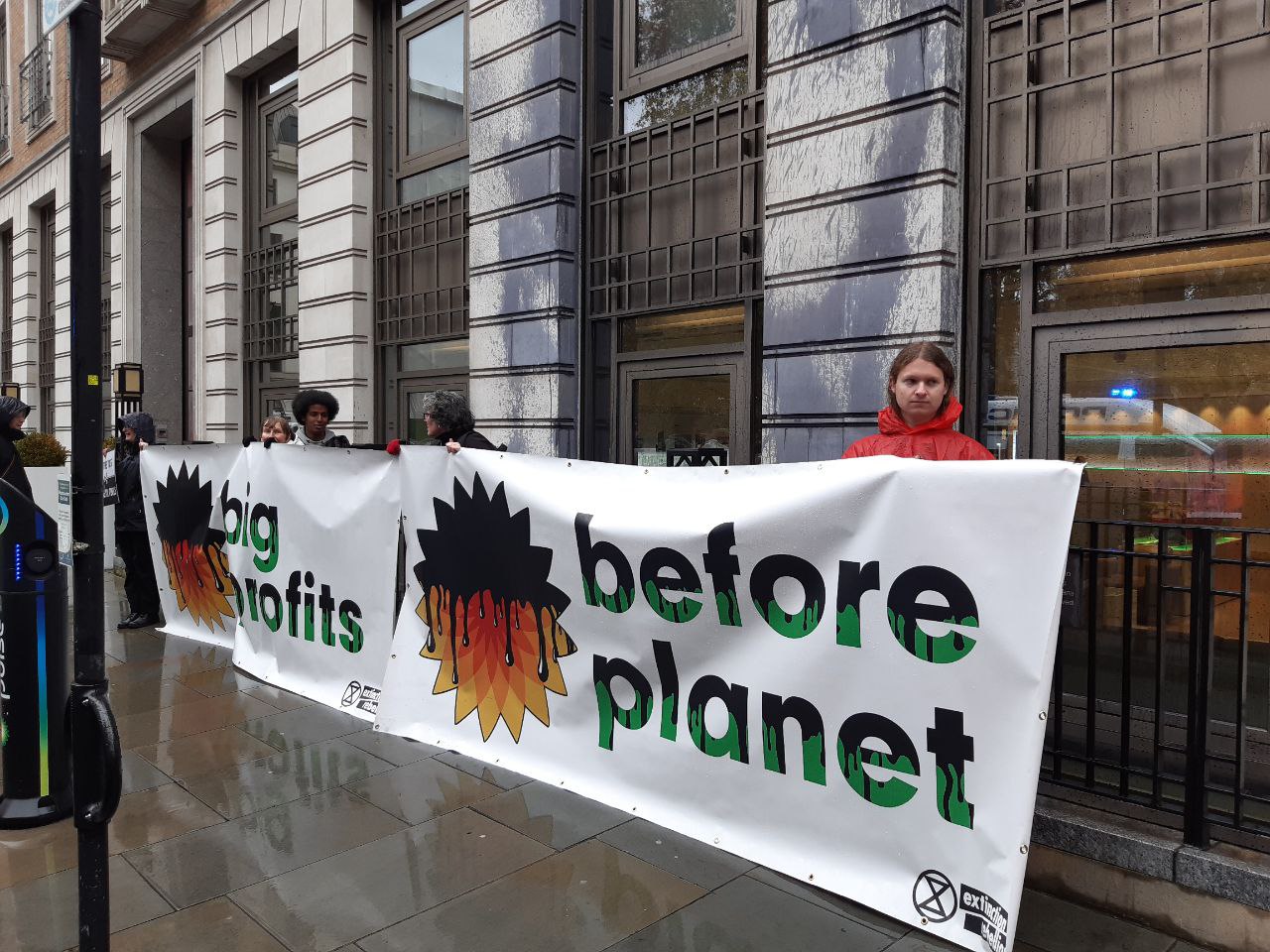
OIL and gas giants were accused of “grotesque profiteering” today after BP reported that it had raked in an eye-watering £4 billion in just three months.
The mammoth profit total for the first quarter of 2023 was down from the near £5bn the energy firm pocketed in the same period last year following Russia’s attack on Ukraine.
But the combined profits of both BP and Shell have now hit a whopping £55bn over the last year as gas and electricity bills have more than doubled for Britons already struggling with 40-year high inflation and plummeting take-home pay.
Unite general secretary Sharon Graham said: “BP’s grotesque profiteering is continuing at pace.
“Profiteering is a blight on the economy which is driving prices higher, leaving workers poorer while businesses struggle to keep the lights on.”
UNISON is challenging the Tory government’s latest attack on the right to strike in a two-day High Court hearing starting on Wednesday.
The public-sector union’s case was prompted by then prime minister Boris Johnson’s decision to scrap decades-old regulations preventing bosses from employing agency workers to break industrial action.
Last July’s widely condemned action was “unlawful and violates fundamental trade union rights,” Unison argued.
General secretary Christina McAnea said: “Breaking strikes with unqualified and ill-experienced agency workers doesn’t address the root causes of why people are striking and it only puts the public in danger.”
THE TUC is calling today for solidarity in defence of democracy and against racism and extremism to mark the day 90 years ago that trade unions were banned in Nazi Germany.
Union offices were raided and officials and activists rounded up on May 2 1933; some were tortured and some died in concentration camps in the years that followed.
Independent trade unions were replaced with the Nazi-controlled German Labour Front, a propaganda tool for the regime and its hate-filled anti-semitic ideology.
“Trade unions are a bastion of democracy and freedom against authoritarian and violent regimes,” said the TUC, which is providing training and resources for union activists to counter racism, including anti-semitism, and attempts by the far right to recruit in workplaces.
Persecution of trade unionists continues around the world, the union body said.
The Electoral Commission has admitted it will ‘not be possible to accurately quantify’ the impact of the new rules by counting who does or doesn’t have ID at the ballot box
The number of people turned away at polling stations because they do not have Voter ID will never be known, the elections watchdog has admitted.
People will be required to show photographic ID for the first time at polling stations on Thursday.
But the Electoral Commission has admitted it will “not be possible to accurately quantify” the impact of the new rules by counting who does or doesn’t have ID at the ballot box.
Data reveals the world’s leading oil and gas majors continue risk-laden, global expansion, despite net-zero pledges.
…
Analysis of exclusive fields data from GlobalData, Energy Monitor’s parent company, shows that the world’s five largest Western oil majors by revenue – BP, Chevron, ExxonMobil, Shell and TotalEnergies – are planning for a future misaligned with a net-zero pathway, as outlined by the IEA.
The findings come despite the fact that all five companies have pledged on paper to reach net zero by 2050, and they are all based in countries that hold similar pledges on a national level. The findings also come on top of an earlier Energy Monitor investigation, which found that the oil and gas extraction plans of just 25 oil majors will produce carbon emissions that use up 90% of the world’s remaining 1.5°C carbon budget.
In the case of the five Western oil majors, the first key net-zero misalignment is the sheer size of the companies’ expansion plans. Rather than entering the period of managed decline that the IEA recommends should occur to be aligned with net zero by 2050, data shows that the five companies are in the process of developing 157 new fields, on top of the 1,350 they already operate. These upcoming fields would add a massive 122 billion barrels of oil equivalent (bboe) to the 299 bboe remaining in the five companies’ already-operating fields.
A motorist drove through Just Stop Oil protesters blocking a road in north London on Tuesday morning (2 May), colliding with a person.
“It went over my foot,” a member of the group can be heard saying.
The demonstration was part of Just Stop Oil’s vow to march every weekday and on Saturdays from 24 April to call on the government to stop licensing any new fossil fuel projects in the UK.
The car wasn’t hanging around for Just Stop Oil’s protest. Credit: Twitter/Just Stop Oil
…
A spokesperson for the Metropolitan Police told LADbible: “Police are appealing for witnesses and dash cam footage after a person was involved in a collision with a vehicle on Holloway Road, Islington, whilst engaged in a protest, at around 10:00hrs, today Tuesday 2 May.
“The incident was brought to police attention after being circulated on social media and shows the person being involved in collision with a grey Renault Megane.
“If you were the person or have any information about the incident please report by calling 101, tweeting @MetCC or online at www.met.police.uk/.”
After the footage went viral, Just Stop Oil shared the video and commented how they believe that ‘inflammatory language’ from politicians and commentators has caused this end result.
The group tweeted: “After weeks of inflammatory language from politicians and right-wing media personalities, a car has finally rammed into a peaceful protest.
“Are you about to comment ‘Good!’ or ‘Stay out of the road?’
“Are you sure that the side you want to pick is the side of violence, of the repression of protest?
Since mid-March, the world’s oceans have been hotter than at anytime since at least 1982, raising concerns among some climate experts about accelerated warming.
Why it matters: Hotter oceans are hugely consequential for land areas, since they can contribute to more frequent and severe extreme weather and climate events, from deluges to heat waves.
In addition, the temperature spike could be a sign that warming is speeding up in ways that climate models failed to anticipate.
The situation has also driven conflict, with more than four million people now in need of humanitarian aid.
A cohort of 19 researchers from seven countries studied if climate change was to blame, ruling that the longer rainy season has become drier, while the short rainy season has become wetter all due to changes in global temperatures.
They branded the drought “one of a kind”, adding that climtae change had made agricultural drought one hundred times more likely.


 F35 fighters on the flight deck of HMS Prince of Wales, the Royal Navy’s flagship aircraft carrier, in Plymouth, Devon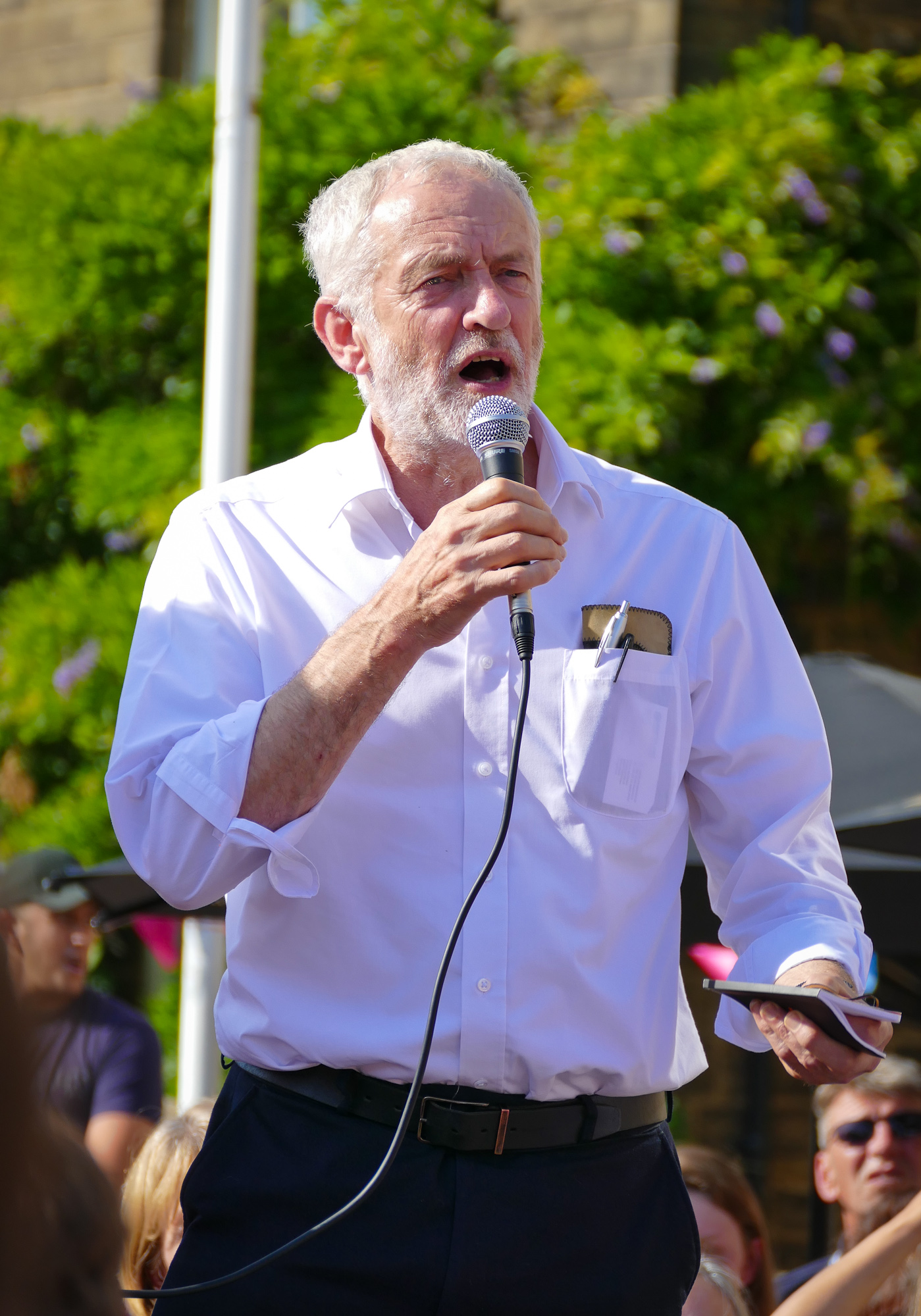

.webp)