Trump Revives Iran Blockade, Demands 20% Toll for US ‘Guarding’ Strait of Hormuz

Spread the love

Article by Jessica Corbett republished from Common Dreams under Creative Commons (CC BY-NC-ND 3.0). 

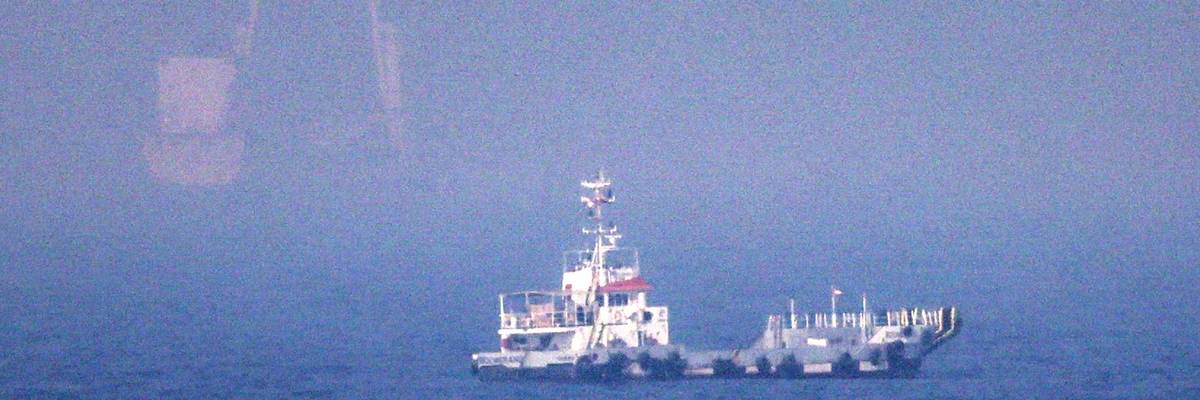
Ships sail near the Strait of Hormuz off the eastern coast of the United Arab Emirates at Khor Fakkan on July 13, 2026.
 (Photo by AFP via Getty Images)

Critics noted that “20% of the value of any cargo is actually substantially MORE than Iran is seeking to charge ships to transit the strait.

Following fresh US airstrikes against Iran over the weekend, President Donald Trump said Monday that the United States would reimpose a naval blockade on the Mideast country, serve as the “guardian” of the Strait of Hormuz, and charge a 20% toll for cargo ships trying to safely travel on the key trade route.

Trump made the comments while calling in to “Fox & Friends” on Monday morning, as well as on his Truth Social platform.

RECOMMENDED…

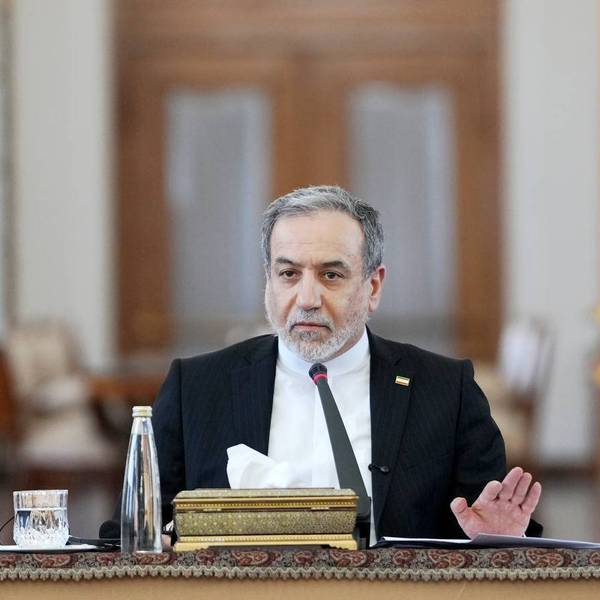
Iranian Foreign Minister Abbas Araghchi held a meeting in Tehran

Iranian Foreign Minister: Trump ‘Absolutely Right’ About Guarding Strait of Hormuz—But Iran Will Charge ‘Fair’ Price

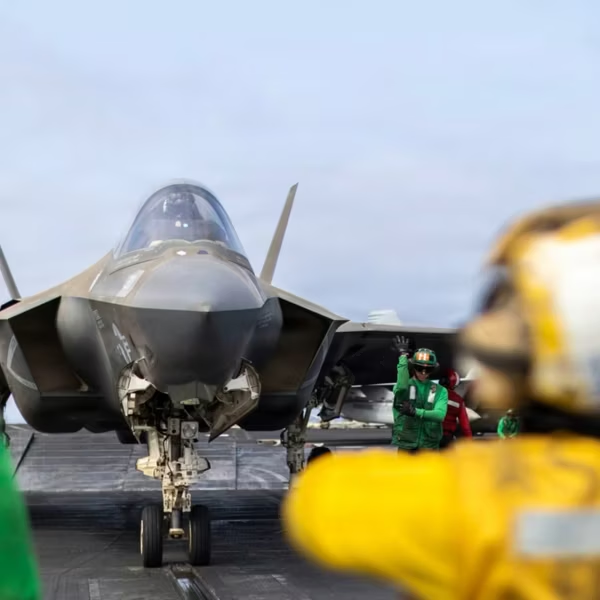
A US F-35 fighter is seen on a carrier deck

US Resumes ‘Powerful Strikes’ on Iran After Attacks on Strait of Hormuz Shipping

“We’re just gonna hit them very hard, and we’re gonna keep the strait, and we’ll probably run it. We’ll become the guardian of the strait. Maybe we’ll call it the guardian angel of the strait. And we should be reimbursed for that,” Trump said on the Fox News morning show.

“When we do that, we’re gonna be reimbursed, because the other nations are very wealthy. They’re on our side, and we can’t be expected to do that for nothing,” the president said. “Now we’re gonna guard it, and we’re gonna get paid for guarding it—a lot of money.”

Later Monday morning, Trump wrote on Truth that “the Hormuz Strait is OPEN, and will remain OPEN, with or without Iran. We are reinstating the THE IRANIAN BLOCKADE, so named because it is only stopping Iran’s ships or customers from entering or leaving. All other countries will have fair and open use of the Strait.”

“The U.S.A. will be, from this point forward, known as ‘THE GUARDIAN OF THE HORMUZ STRAIT,’ but as such, and as a matter of FAIRNESS, will be reimbursed, at the rate of 20% on all cargo shipped, for any and all costs necessary to do the job of providing safety and security to this very volatile section of the World,” he added. “The process and formation will begin immediately.”

Bloomberg energy and commodities columnist Javier Blas pointed to US Secretary of State Marco Rubio’s remarks just a couple of weeks ago that “no country is allowed to charge tolls or fees on an international waterway.”

Critics and experts were also quick to note that, as immigration attorney Aaron Reichlin-Melnick put on the platform X, “20% of the value of any cargo is actually substantially MORE than Iran is seeking to charge ships to transit the strait.”

Trita Parsi, executive vice president of the Quincy Institute for Responsible Statecraft, quipped that it “seems like Trump just made a pitch for the Iranian toll system. :) Because the Iranians were going to charge $1 million per ship, which would amount to 1-2% of the value of the cargo of an oil tanker. But Trump is going to charge 20%! :)”

In an early Monday blog post, Parsi had written that “for all practical purposes, the US-Iran memorandum of (mis)understanding is over. The dispute over how to manage the Strait of Hormuz in the interim has pushed the two sides back into open war.”

As Parsi explained:

The dispute over the strait turns, at least on the surface, on paragraph 5 of the MOU: whether Iran is responsible for safe passage throughout the strait for the duration of the agreement, or only for the waterway’s northern corridor.

Beneath the surface, however, lies a more fundamental strategic disagreement. Even before the MOU was signed, Tehran believed Washington’s objective was to establish a southern shipping corridor through Omani waters that would gradually erode Iran’s control over the strait. Such a corridor would require Oman’s cooperation, which may explain why Trump at one point threatened to bomb Oman unless it abandoned its proposal for joint management of the strait, with administrative fees collected by Muscat and Tehran.

The corridor would remain operational even if war resumed and Iran sought once again to close the strait. From Tehran’s perspective, Washington used the MOU to strengthen this alternative route, and the US military’s escort of commercial shipping without coordinating with Iran marked a significant step in that direction. If successful, the strategy would deprive Iran of its most important source of leverage—which is precisely why it appeals to Washington.

“This is why Tehran has insisted that all ships transiting the strait—regardless of the corridor they use—coordinate with Iran, consistent with its reading of paragraph 5 of the MOU,” he continued. “Washington, by contrast, argues that the MOU merely assigns Iran responsibility for ensuring the safe passage of commercial vessels, without granting it operational control over all maritime traffic.”

Sina Toossi, a senior nonresident fellow at the Center for International Policy, warned in a statement about Trump’s Monday comments that “if implemented, the announced re-blockade would effectively restart the economic clock that the MOU had temporarily paused. Iran would once again face mounting pressure on its ability to export, store, and monetize oil, while the United States and the global economy would again confront the risks of prolonged disruption to Persian Gulf energy flows.”

“The strategic environment, however, is no longer what it was before the war,” he added. “US strategic petroleum reserves continued to decline during the MOU period and remain at historically low levels, while global inventories also remain tight. As a result, there is less cushion to absorb a prolonged supply disruption than in the previous round of fighting, increasing the risks of sharper energy price spikes, higher inflation, and broader economic disruption.”

This article has been updated with comment from Sina Toossi.

Article by Jessica Corbett republished from Common Dreams under Creative Commons (CC BY-NC-ND 3.0). 

Orcas discuss rotting brain, front Orca says Sundown Syndrome is a dead givaway and he wishes someone would Lock Him Up
Continue ReadingTrump Revives Iran Blockade, Demands 20% Toll for US ‘Guarding’ Strait of Hormuz

US naval blockade of Strait of Hormuz: what it involves and the risks attached

Spread the love
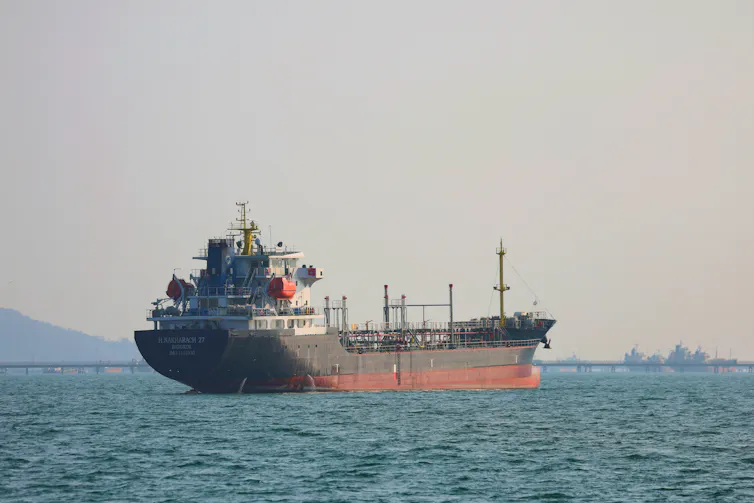
The US blockade of the Strait of Hormuz aims to cut off Iran’s oil exports and punish any ship that pays a toll for transiting the waterway. somkanae sawatdinak/Shutterstock

Basil Germond, Lancaster University

A US-sanctioned tanker with links to China, the Rich Starry, has transited the Strait of Hormuz, despite the US blockade of the waterway. According to the respected maritime news and intelligence agency Lloydslist, the Rich Starry is falsely registered in Malawi, but is Chinese owned and carrying a Chinese crew. It is subject to US sanctions for carrying Iranian goods. It is not known what the vessel is currently transporting.

Having been anchored off the UAE, the Rich Starry is not technically in breach of the blockade, but the incident has raised fears of a potential confrontation between the US and China in the region. Other vessels are reported to be waiting to transit the Strait, despite the US blockade.

The decision to impose a blockade on Iranian ports in the vicinity of the Strait was announced by the US president, Donald Trump, following the breakdown of US-Iran peace talks in Islamabad on April 11. Trump’s announcement was clarified by a statement on April 12 from US Central Command, which stipulated that the operation would prevent ships entering and exiting Iranian ports and coastal areas while not impeding vessels transiting the Strait to and from non‑Iranian ports.

Trump also announced that: “I have also instructed our Navy to seek and interdict every vessel in International Waters that has paid a toll to Iran. No one who pays an illegal toll will have safe passage on the high seas.” It remains unclear as to whether this will be implemented.

The Strait of Hormuz has been as good as closed since shortly after the US and Israel launched their attacks on Iran at the end of February. Most ship owners, charterers and insurers are unwilling to accept the financial risk – and risk to human life – that transiting the Strait under threat of Iranian attack would entail.

Blockades are used to convert naval dominance into advantage on land by preventing imports and exports of goods, in Iran’s case oil, to put pressure on an adversary’s population and government by hurting their economy. Likewise, Iran’s strategy of closing down the Strait after it was attacked intended to disrupt the global economy in order to put international pressure on the Trump administration.

Iran has long threatened to use its geographical proximity to the Strait of Hormuz to close it down. Having demonstrated how effective this can be in disrupting oil and liquid natural gas prices, Tehran has been flexing its muscles by demanding that ships wanting to transit the waterway pay a tariff of up to US$2 million (£1.5 million). Lloydslist reported on March 25 that “a total of 26 vessel transits through the strait have followed a route pre-approved under an IRGC [Islamic Republican Guard Corps] ‘toll booth’ system that requires the ship operators to submit to a vetting scheme”.

This was reportedly a sticking point in negotiations between the US and Iran in Pakistan on April 11. Tehran wants to retain control of the Strait and the ability to levy tolls from transiting ships. The US is demanding that the maritime right of free passage must be enforced. It was when the first round of talks ended in deadlock that the US president decided to impose the naval blockade.

Former US diplomat to the Middle East, David Satterfield, told the BBC on April 13 that it was now about which country could absorb more pain, adding: “The Iranians believe … that they can absorb more pain for a longer period than their opponents can.”

Expensive – and risky – gambit

The cost calculus is asymmetric. It will be more expensive for the US to maintain its blockade than it was for Iran to close the Strait. The question will be whether Washington can sustain interdiction long enough to effectively undermine the regime – always remembering that the Islamic Republic has potentially had decades to prepare for this sort of scenario.

A prolonged crisis in the Gulf will inevitably affect prices and disrupt the global economy. Justin Ng/Alamy Live News

If the blockade can be implemented effectively, it could – in time – have an effect on an economy wrecked by years of sanctions and further weakened by the recent war and nationwide protests in January. The question is how long that might take.

To be effective, the blockade will require considerable naval resources. The US is reported to have as many as 21 warships in the Middle East, including the aircraft carrier USS Abraham Lincoln and the USS Tripoli, an amphibious assault ship with a complement of marines who are trained to board ships using helicopters and small boarding craft.

This introduces another layer of risk as assets operating near to the Iranian coasts will need to be protected against Iranian missiles, drones and fast attack craft. So, this would be resource‑intensive, operationally demanding and thus politically exposed for the US.

How the US will go about enforcement remains to be seen. In December and January, US naval and coastguard ships boarded and seized several vessels linked to Venezuela’s shadow fleet that had broken America’s blockade. Whether it would pursue the same action with a vessel linked to China is another matter though. And while another option would be to fire warning shots, these can be dangerous around tankers because of the risk of oil spillage, as well as the obvious political risk attached to Chinese-linked vessels.

It’s not clear at present that imposing a blockade on the Strait of Hormuz will restore free navigation of the waterway any time soon. But it now appears that, in the absence of free navigation, some countries have decided to call America’s bluff and attempt to transit the waterway in defiance of the US blockade. And the big concern must be the serious risk of escalation if the US attempts to enforce the blockade on a Chinese-owned vessel.

None of this will be welcomed by the US president and his national security team.

Basil Germond, Professor of International Security, School of Global Affairs, Lancaster University

This article is republished from The Conversation under a Creative Commons license. Read the original article.

Climate science denier Donald Trump confirms that he knows nothing about democracy and that more liquid gold is being secured according to his policy of global privateering.
Keir Starmer explains that UK is actively supporting Israel's genocidal expansion and repeats his previous quotation that he supports Zionism "without qualification". Keir Starmer said “I said it loud and clear – and meant it – that I support Zionism without qualification.” here: https://www.jewishnews.co.uk/keir-starmer-interview-i-will-work-to-eradicate-antisemitism-from-day-one/
Keir Starmer explains that UK is actively supporting Israel’s genocidal expansion and repeats his previous quotation that he supports Zionism “without qualification”. Keir Starmer said “I said it loud and clear – and meant it – that I support Zionism without qualification.” here: https://www.jewishnews.co.uk/keir-starmer-interview-i-will-work-to-eradicate-antisemitism-from-day-one/

Continue ReadingUS naval blockade of Strait of Hormuz: what it involves and the risks attached

Trump announces Hormuz blockade as US and Iran fail to reach a deal

Spread the love

https://morningstaronline.co.uk/article/trump-announces-hormuz-blockade-us-and-iran-fail-reach-deal

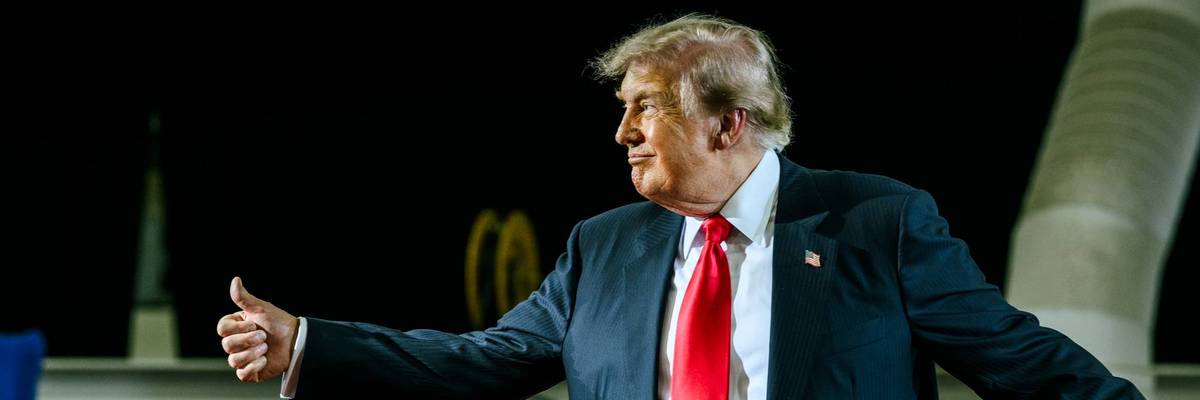
 President Donald Trump waves after arriving on Air Force One at Miami International Airport, April 11, 2026, in Miami

US PRESIDENT Donald Trump ramped up tensions even further in the Middle East today, announcing that the US navy would “immediately” begin a blockade to stop ships from entering or leaving the Strait of Hormuz.

This followed Iranian and US negotiators leaving the Pakistani capital Islamabad after failing to reach a deal in marathon peace talks to end the illegal and unprovoked war on Iran launched by the US and Israel.

In his first public comments after the 21-hour talks, the far-right US president sought to assume control over the waterway thorough which 20 per cent of global oil supplies passed before the war began, hoping to eliminate Iran’s key source of leverage.

The prospect of a US blockade is likely to further alarm global energy markets and send oil and gas prices soaring. 

It was not immediately clear how a blockade might be carried out, but Mr Trump said the goal was to ensure that all ships could use the strait.

“It’s going to be all or none and that’s the way it is,” he insisted.

Mr Trump said he has “instructed our navy to seek and interdict every vessel in international waters that has paid a toll to Iran. No-one who pays an illegal toll will have safe passage on the high seas.” 

Article continues at https://morningstaronline.co.uk/article/trump-announces-hormuz-blockade-us-and-iran-fail-reach-deal

Climate science denier Donald Trump confirms that he knows nothing about democracy and that more liquid gold is being secured according to his policy of global privateering.
Keir Starmer explains that UK is actively supporting Israel's genocidal expansion and repeats his previous quotation that he supports Zionism "without qualification". Keir Starmer said “I said it loud and clear – and meant it – that I support Zionism without qualification.” here: https://www.jewishnews.co.uk/keir-starmer-interview-i-will-work-to-eradicate-antisemitism-from-day-one/
Keir Starmer explains that UK is actively supporting Israel’s genocidal expansion and repeats his previous quotation that he supports Zionism “without qualification”. Keir Starmer said “I said it loud and clear – and meant it – that I support Zionism without qualification.” here: https://www.jewishnews.co.uk/keir-starmer-interview-i-will-work-to-eradicate-antisemitism-from-day-one/
Continue ReadingTrump announces Hormuz blockade as US and Iran fail to reach a deal