Britain’s Year of Arresting Pensioners As Terrorists Has Taken a Hatchet to Our Civil Liberties
It’s a slippery slope.
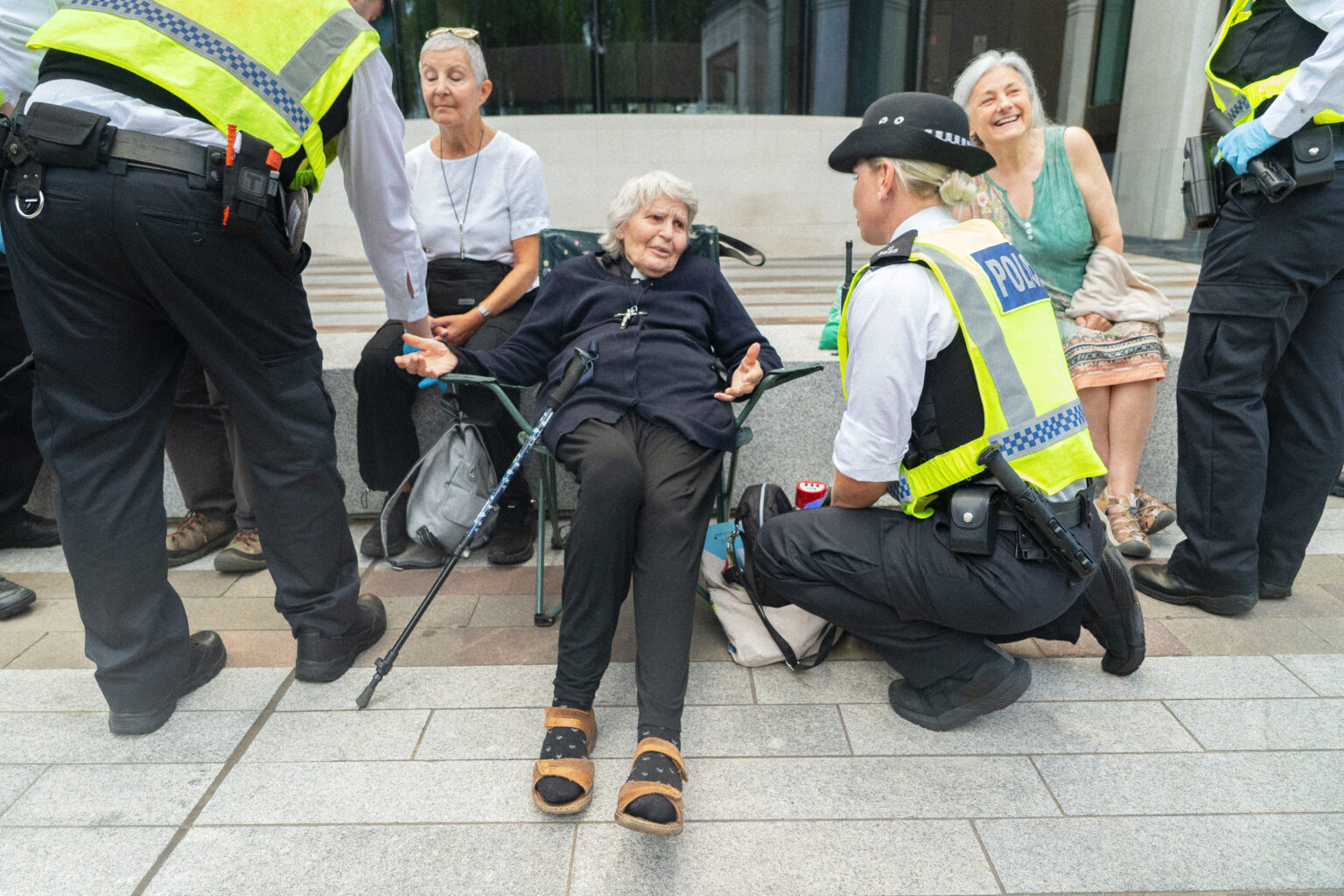
A year and a day ago [article published 6 July 2026], octogenarian priest Sue Parfitt told Novara Media, “we cannot be bystanders”. Moments later, she became one of the first people in the country to be arrested under a draconian new law that many didn’t believe could be enforced.
Parfitt had, of course, defied the proscription of direct action group Palestine Action as a terrorist organisation, after a ban came into effect at 00.01 the night before.
Onlookers, who surrounded the group and chanted “free, free Palestine”, said they were shocked to see her and 28 other mostly elderly protesters bundled into police vans simply for holding up paper signs. Parfitt said she hoped “common sense would prevail” and that the new law would be immediately overturned.
We expected that might happen, too. In the first few weeks, the UN, Amnesty International, many other NGOs and dozens of public figures condemned the ban as a “disturbing legal overreach” with chilling repercussions for freedom of speech and assembly. As more and more people vowed to break the law, things looked pretty bad for the British government and its loyal, miserable police force.
But twelve months later – despite judges siding with Palestine Action across three of four court hearings, and initially finding the ban unlawful – the proscription has held.
…