Ali Abdel Rahman Zorout, (5), who was wounded by an Israeli air strike, poses for a picture at the Alaaeddine Hospital in Sarafand, south Lebanon, September 26, 2024
Britain’s call for temporary Israel-Hezbollah ceasefire not enough, campaigners say
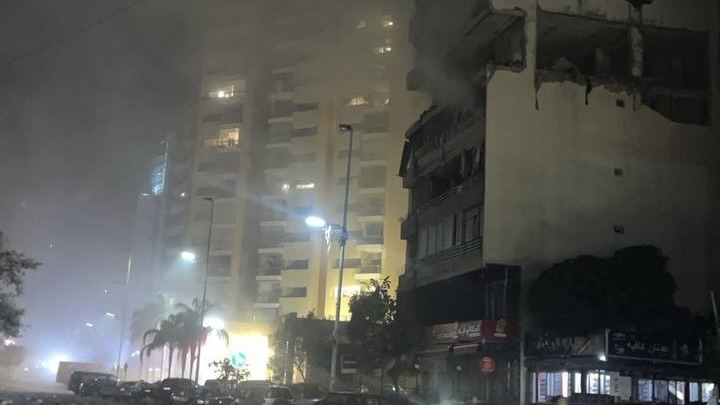
BRITAIN came under increased pressure to stop arms sales to Israel today after the Western-backed state snubbed international calls for a 21-day temporary ceasefire and unleashed a “fresh wave of horror” across Lebanon.
Amnesty International UK warned Israel could be committing more war crimes as it raised “deep alarm” over the staggering death toll since it launched an intense series of air strikes that began earlier this week, displacing half a million people.
The Stop the War Coalition (StWC) and former Labour leader Jeremy Corbyn MP were also among the peace campaigners calling for urgent action to prevent an all-out regional war in the Middle East.
Fifty-one people were killed in Israeli air strikes on Wednesday, Lebanon’s Health Ministry says, with more than 90,000 people displaced across the country since Monday, according to the UN.
Amnesty International UK decried the latest onslaught on Lebanon, warning that using explosive weapons with “wide-area effects in the vicinity of densely populated residential areas is likely to violate the prohibition of indiscriminate attacks and can also lead to disproportionate attacks.”
UK Foreign Secretary David Lammy says that UK is suspeding 30 of 350 arms licences to Israel. He also confirms the UK government’s support for Israel’s Gaza genocide.Vote For Genocide Vote Labour.
At the UNGA, world leaders condemn Israel for committing genocide in Gaza and provoking a regional war, calling for an immediate ceasefire and de-escalation
The General Debate of the United Nations (UN) General Assembly, an annual meeting of heads of state and government, began on Tuesday, September 24, in New York City. This year’s theme, “Leaving no one behind: acting together for the advancement of peace, sustainable development, and human dignity for present and future generations,” framed the discussion.
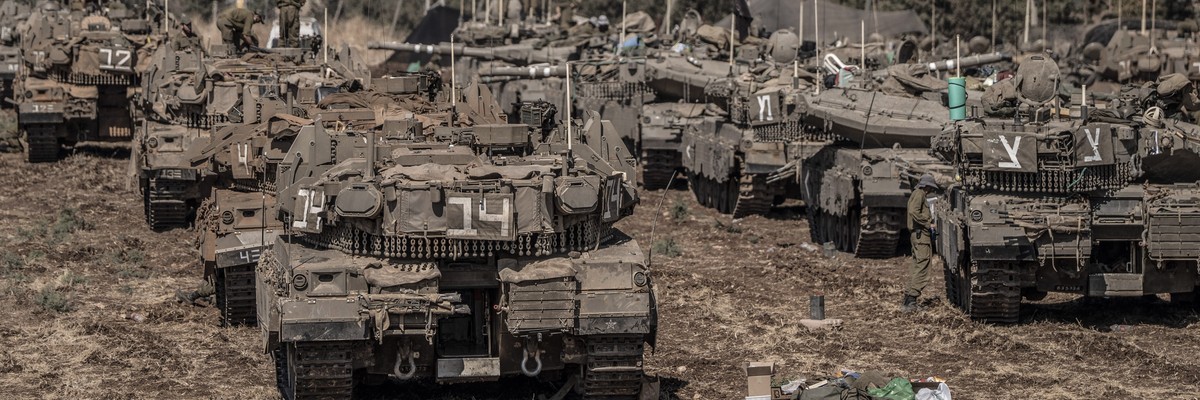
So far, the ongoing genocidal war waged by Israel against Gaza, Lebanon, and the occupied West Bank, as well as Israel’s repeated assaults on Palestinians, dominated the interventions of heads of state from all continents in this year’s session.
UN Secretary-General António Guterres opened the debate by emphasizing the growing climate of impunity that allows governments and political actors to violate international laws and human rights conventions, including the UN Charter. “We see this age of impunity everywhere—in the Middle East, in the heart of Europe, in the Horn of Africa,” Guterres stated.
He described the mass killings and destruction in Gaza as unprecedented, noting that 200 United Nations staff members had been killed, many slain alongside their families. “The speed and scale of the killing and destruction in Gaza are unlike anything in my years as Secretary-General,” Guterres said. He called for an immediate ceasefire, the unconditional release of hostages, and a committed effort toward a two-state solution. Guterres also warned that Lebanon is on the brink of becoming “another Gaza,” stating that the world cannot afford that. “Meanwhile, Gaza is a non-stop nightmare that threatens to take the entire region with it,” he stated.
Philémon Yang, President of the 79th session of the General Assembly, echoed these concerns. “For almost a year now, the people of Gaza and Israel have been caught in a spiraling cycle of conflict and retribution,” he said. “Indeed, only a two-State solution can end the cycle of violence and instability, ensuring peace, security and dignity for both Palestinians and Israelis.”
Brazilian President Lula da Silva was the first head of state to address the Assembly, describing the Israeli assault on Gaza and the West Bank as one of the worst humanitarian crises in recent history, with the conflict threatening to spill over into Lebanon. He condemned Israel’s actions as genocide and collective punishment that has killed more than 40,000 Palestinians, stating: “The right to defense has turned into a right to vengeance, which prevents an agreement for the release of hostages and postpones the ceasefire.”
US President Joe Biden, whose administration has provided financial and military aid to Israel used to massacre Palestinians, claimed that his country has been working with Qatar and Egypt on a ceasefire and hostage deal with the support of the UN Security Council. “Now is the time for the parties to finalize its terms, bring the hostages home, and secure security for Israel and Gaza,” Biden said, reiterating support for a two-state solution with “Israelis enjoying peace and security” and “Palestinians living in security, dignity and self-determination in a ‘state of their own’.”
While calling for diplomacy, Biden’s remarks were contradictory, as the US has supported Israel’s expansion of the conflict into other parts of the region, including Lebanon, Syria, Yemen, and Iran. Despite this, Biden claimed that “a full-scale war is not in anyone’s interest” and that “a diplomatic solution is still possible.”
Turkish President Recep Tayyip Erdoğan accused Israel of turning Gaza into “the largest cemetery for children and women in the world.” He condemned the United Nations for its inaction, saying that, as children die in Gaza, the UN system is dying too. He asked: “Are those in Gaza and the occupied West Bank not human beings? Do children in Palestine have no rights?”
Erdoğan also held the United Nations Security Council accountable for failing to prevent the genocide in Gaza. “What are you waiting for to prevent the genocide in Gaza and to put a ‘stop’ to this cruelty, this barbarism?” he asked. “How long are you going to be able to carry the shame of witnessing this massacre?” He further criticized countries that offer Israel unconditional support and blamed Israeli Prime Minister Benjamin Netanyahu for escalating the conflict and dragging the ‘Middle East’ deeper into a regional war.
Arab and Latin American leaders demand justice for Gaza
Jordan’s King Abdullah II bin al-Hussein accused Israel of deliberately targeting Palestinian civilians and UN workers, stating, “The UN is under attack, both literally and figuratively.” He criticized the blockade preventing UN aid convoys from reaching Gaza, as aid trucks “sit motionless just miles away from starving Palestinians.” King Abdullah also highlighted the ongoing killings and forced displacement of thousands of Palestinians in the West Bank since October 7. He added that the Arab world had extended its hand to Israel through “the Arab Peace Initiative” for years, but Israel rejected peace and chose confrontation instead.
Qatar’s Emir, Sheikh Tamim bin Hamad al-Thani, whose country has been mediating efforts for a ceasefire and prisoner exchange, described Israel’s actions in Gaza as a “crime of genocide” and “the most barbaric and heinous and extensive in breaching human values, international charters and norms.” He reaffirmed Qatar’s commitment to securing a permanent ceasefire and ensuring Palestinians gain their legitimate rights, above all an independent state with East Jerusalem as its capital.
Colombian President Gustavo Petro reminded the international community that Colombia had called for a peace conference for Palestine a year ago, before 20,000 Palestinian children were killed by Israel. He condemned the global community’s double standards, based on a foundation of racism. “The democratic project of humanity is dying,” Petro said, “while those who stupidly believe that the Aryan race should dominate the world prepare to do just that through bombs and terror.”
“This is what is happening in Gaza and Lebanon,” he added. “When Gaza dies, humanity will die.”
Palestinians walk around the damage in Jenin’s city center after an Israeli military raid in the occupied West Bank on September 6, 2024. (Photo: Nasser Ishtayeh/SOPA Images/LightRocket via Getty Images
“We watched their bulldozers tear up streets, demolish businesses, pharmacies, schools,” said one local leader. “They even bulldozed the town soccer field, and a tree in the middle of a road.”
As the world watched Israel’s assaults on Lebanon and the Gaza Strip, The New York Times on Wednesday also directed attention to the West Bank, detailing how “Israeli military bulldozers tore up mile after mile” of Jenin and Tulkarm in recent weeks.
While “nearly nightly raids” by the Israel Defense Forces (IDF) “have become the norm” in the West Bank since the Hamas-led October 7 attack, the military last month “launched one of its most extensive and deadliest raids” in the illegally occupied Palestinian territory in years, the newspaper reported, citing videos and interviews with residents.
“We watched their bulldozers tear up streets, demolish businesses, pharmacies, schools. They even bulldozed the town soccer field, and a tree in the middle of a road,” said Kamal Abu al-Rub, governor of Jenin. “What was the point of all of this?”
In addition to ground operations in the West Bank, the IDF has increased airstrikes that critics say run afoul of international law. The military defended the strikes and told the Times that in recent raids, troops found weapon stockpiles and killed or arrested dozens of militants—but also caused some “unavoidable harm to certain civilian structures.”
In response to videos included in the reporting, freelance journalist Pete Tucker accused Israeli soldiers of “methodically laying waste to” the West Bank.
Malini Ranganathan, an associate professor at American University’s School of International Service, said on social media that “Israel’s criminality knows no limits. IDF bulldozers have been obliterating the West Bank, even tearing up roundabouts.”
Israeli forces have damaged homes, shops, and roads along with internet, electricity, phone, water, and sewage lines in the West Bank. Emergency crews have been unable to respond to hundreds of calls per day, because they can’t reach people in need.
“They are imposing conditions, materially and psychologically, that make people feel: Gaza is coming to you,” Al Haq director Shawan Jabarin told the Times. “There is a feeling among Palestinians across the West Bank that what is coming is very bad—that it will be a plan to kill and expel us.”
Since the October 7 attack on Israel that killed more than 1,100 people, Israeli forces have slaughtered at least 41,455 Palestinians in Gaza and 716 in the West Bank. Across the Palestinian territories, over 100,000 others have been injured over the past year. The bloodshed led to an ongoing genocide case at the International Court of Justice (ICJ).
The ICJ in July issued a nonbinding advisory opinion that Israel’s decadeslong occupation of Gaza and the West Bank, including East Jerusalem, is illegal and must end “as rapidly as possible.” Instead, Israel has ramped up attacks on not only the Palestinian territories, but also Lebanon, home to the political and paramilitary group Hezbollah.
This week’s bombing campaign in Lebanon—which has killed at least 569 people—sparked fresh calls for the Biden administration to finally cut off weapons to Israel, as did the new reporting from the Times, which has been accused of pro-Israel bias in its coverage of the assault on Gaza.
Meanwhile, Israeli destruction in the West Bank continues. The International Middle East Media Centerreported that “on Wednesday, Israeli soldiers invaded the town of Beit Ula, west of Hebron in the occupied West Bank’s southern part, [and] bulldozed over 20 dunams of land, uprooting more than 600 fruit-bearing trees, and demolishing several agricultural structures and wells.”
Khalida Jarrar is one of 10,000 Palestinians that has been arrested by Israel in the last year as part of a massive crackdown. Photo: Archive
Legal experts and human rights advocates renew their call for solidarity with Palestinian prisoners detained by Israel since October 2023
Since October 7, 2023, approximately 10,000 Palestinians from across the West Bank and other occupied territories have been imprisoned by Israeli Occupation Forces (IOF) in what human rights lawyers describe as an unprecedented assault on all branches of the resistance movement. Thousands more have been forcibly disappeared from the Gaza Strip, with little information available about their whereabouts.
Amid the increased use of torture and detention of the Palestinian people by Israel, international solidarity movements have intensified campaigns calling for their release.
Among those recently detained from the occupied West Bank is Khalida Jarrar, a prominent human and women’s rights activist, who has faced persecution by Israel on multiple occasions, and is now being held in Neve Tirza prison.
At a briefing on Palestinian political prisoners, organized by the International Peoples’ Assembly (IPA), Tala Nasir from Addameer Association for Prisoner Support and Human Rights, along with human rights lawyer Bilal Naammeh, highlighted the IOF’s violations of basic human rights among prisoners. Nasir pointed out that many arrests in the past year have targeted specific groups of professionals who play an important role in building the material basis of the community, including engineers and health workers. However, anyone can face arrest for something as minor as posting on social media, which occupation forces often manipulate into allegations of supporting resistance groups, including Hamas.
Israel is attempting to practically ban all political participation by Palestinians, Naammeh noted, a threat reinforced through military courts and remote trials designed to instill fear in the population. Since October 2023, these practices have become even more severe than before. Naammeh described how, in court, Israeli lawyers often accuse defendants of being involved in the resistance. When defense lawyers challenge these accusations due to insufficient evidence, they can be sanctioned or temporarily barred from representing clients.
As lawyers are currently the only point of contact between prisoners and the outside world, restricting their access—whether through sanctions or lengthy delays—has profound consequences.
Conditions inside Israeli prisons have also worsened significantly. Access to prisoners is limited, even for representatives of the International Committee of the Red Cross (ICRC). Prisoners face severe shortages of food and water, which has led to weight loss of up to 30 kilograms per person, and are allowed only one hour outside their cells each day, leaving them isolated for the rest of the time, according to Nasir.
The lack of water and hygiene has led to mass outbreaks of disease and infection, including scabies. According to Naammeh, some prisoners with scabies have been tied to their beds to prevent them from scratching. Other reports indicate that the IOF moves prisoners with scabies between sections in order to purposely exacerbate the contagion. Despite the widespread health crisis, medical care remains out of reach for most. Naammeh highlighted that even the most pressing health issues can take up to two months to receive basic medical attention, leaving prisoners in prolonged suffering.
Conditions in the camps where Palestinians from Gaza are held are even worse, the two advocates suggested, but up-to-date information is nearly impossible to obtain. The only reports come from Israeli media or the testimonies of those who have been released. Nasir recounted stories of prisoners enduring extreme torture, including rape. Witnesses described prisoners being forced to bark for food and given only thin mattresses for six hours a day, making proper rest impossible. This treatment extends even to those who are supposed to enjoy specific protection under international law, such as health workers. Nasir explained that dozens of health workers abducted from Gaza are being held under the Unlawful Combatants Law, meaning they could remain imprisoned until the end of the conflict under such conditions.
In response to Israel’s blatant disregard for human rights and international law, Addameer and the IPA renewed their call for the immediate release of all political prisoners and urged international activists to escalate solidarity efforts, including by insisting on adherence to recent International Court of Justice rulings. The organizers reminded participants that even the simplest acts of solidarity can contribute meaningfully to the broader struggle for liberation.