Meta Drops $65 Million on Super PACs to Back Pro-AI Candidates Against Big Tech Critics

Spread the love

Original article by republished from Common Dreams under Creative Commons (CC BY-NC-ND 3.0). 

Meta CEO Mark Zuckerberg shows a prototype of computer glasses that can display digital objects in transparent lenses at the Meta Connect developers conference in Menlo Park, California on September 25, 2024. (Photo: Andrej Sokolow/picture alliance via Getty Images)

“We can’t afford more corrupt politicians bought by Big Tech,” said one Democratic US House candidate.

Meta, the parent company of social media giants Facebook, Instagram, and WhatsApp, is spending big bucks to ensure that government regulations don’t interfere with its ambitions in artificial intelligence.

The New York Times reported on Wednesday that Meta is planning to spend $65 million on this year’s midterm elections, with one super political action committee (PAC) dedicated to electing AI-friendly Democrats, and another dedicated to electing AI-friendly Republicans.

RECOMMENDED…

‘What Oligarchy Looks Like’: AI Giants Pledge to Pump $100 Million Into 2026 Midterms
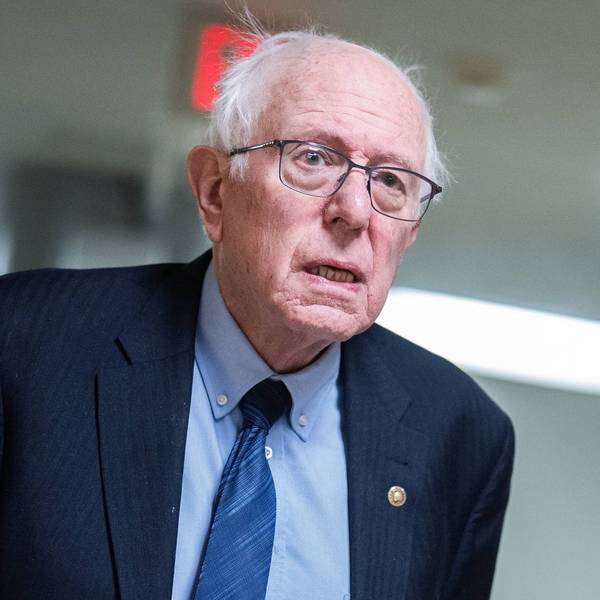
‘What Oligarchy Looks Like’: AI Giants Pledge to Pump $100 Million Into 2026 Midterms

Bernie Sanders 2/4/26

‘What a Surprise’: Sanders Undeterred by Bezos-Owned Washington Post’s Dismissal of AI Data Center Pause

The pro-Democratic super PAC, called Making Our Tomorrow, will work to influence congressional races in Illinois, while the pro-GOP PAC, called Forge the Future Project, will be focusing on congressional races in Texas.

The Times noted that Meta has in the past been “cautious about campaign engagements, making small donations out of a corporate political action committee and contributing to presidential inaugurations,” but it has decided to ramp up its spending to defend its AI business from governmental interference.

Meta’s spending splurge to elect pro-AI candidates is just one of many efforts by the AI industry to ensure a friendly regulatory environment.

CNN reported last week that Leading the Future—a super PAC backed by venture capital firm Andreessen Horowitz, Palantir co-founder Joe Lonsdale, and other AI heavyweights—is pledging to spend at least $100 million to influence the 2026 midterm election.

The goal of the PAC will be to elect lawmakers who will pass legislation to set a single set of AI regulations that will take effect throughout the US, overriding any restrictions placed on the technology by state governments.

The PACs’ big spending comes as a nationwide backlash to Big Tech has been forming across the US, as many communities are fighting against the construction of energy-devouring AI data centers that are raising electricity prices and have been accused of degrading the quality of local water supplies.

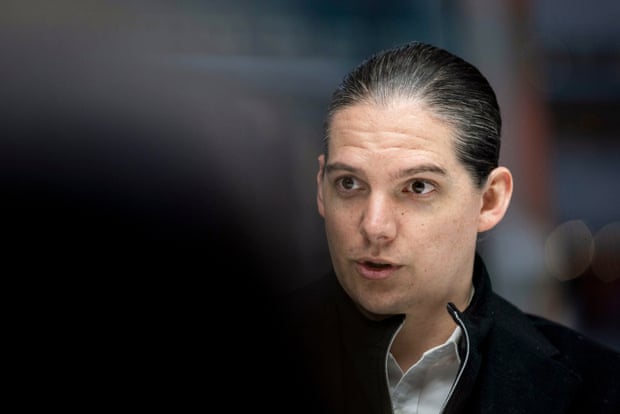
Reed Showalter, a Democratic US House of Representatives candidate running in Illinois’ 7th Congressional District, said the report of Meta’s big spending showed the importance of ensuring that voters elect leaders who will hold the major tech companies accountable.

“We deserve representatives who are going to take an honest look at AI and regulate it accordingly,” he wrote in a social media post. “We can’t afford more corrupt politicians bought by Big Tech.”

Democratic New York congressional candidate Alex Bores, who is running on a platform of regulating AI, said during an interview with CNN on Wednesday that the tech companies’ actions show they are “terrified” of being held accountable by elected officials.

He also noted that being attacked by the Leading the Future super PAC has ironically helped his candidacy.

“The fact that they’re being so aggressive with it, I think, has been redounding to my benefit,” he told host Dana Bash. “I’ve had a lot of constituents who have reached out and said, ‘I hadn’t even heard of you until all these text messages [from the AI super PAC].”

Watchdog social media account @OilPACTracker predicted that Meta’s major political spending could turn into a liability if voters are made aware of its machinations.

“We would make sure the electorate knows about it,” the watchdog wrote. “Big Tech money is toxic.

Orcas discuss how Trump was re-elected and him being an obviously insane, xenophobic Fascist.
Donald Fuhrump says that Amerikkka doesn't bother with crimes or charges anymore, not being 100% Amerikkkan and opposing his real estate intentions is enough.
Donald Fuhrump says that Amerikkka doesn’t bother with crimes or charges anymore, not being 100% Amerikkkan and opposing his real estate intentions is enough.
Elon Musk urges you to be a Fascist like him, says that you can ignore facts and reality then.

Continue ReadingMeta Drops $65 Million on Super PACs to Back Pro-AI Candidates Against Big Tech Critics

Meta AI adviser spreads disinformation about shootings, vaccines and trans people

Spread the love

https://www.theguardian.com/technology/2025/oct/12/meta-ai-adviser-robby-starbuck

Robby Starbuck speaks in an interview in New York in March. Photograph: Bess Adler/Bloomberg via Getty Images

Critics condemn Robby Starbuck, appointed in lawsuit settlement, for ‘peddling lies and pushing extremism’

A prominent anti-DEI campaigner appointed by Meta in August as an adviser on AI bias has spent the weeks since his appointment spreading disinformation about shootings, transgender people, vaccines, crime, and protests.

Robby Starbuck, 36, of Nashville, was appointed in August as an adviser by Meta – owner of Facebook, Instagram, WhatsApp, and other tech platforms – in an August lawsuit settlement.

Since his appointment, Starbuck has baselessly claimed that individual shooters in the US were motivated by leftist ideology, described faith-based protest groups as communists, and without evidence tied Democratic lawmakers to murders.

Starbuck’s online posts have not changed in tenor since the “anti-DEI agitator” was brought into the Meta fold, and his Trump administration connections raise broader questions about the extent to which corporate America has capitulated to the Maga movement.

The Guardian repeatedly contacted Meta for comment on Starbuck’s role, and his rhetoric online, but received no response.

Article continues at https://www.theguardian.com/technology/2025/oct/12/meta-ai-adviser-robby-starbuck

Elon Musk urges you to be a Fascist like him, says that you can ignore facts and reality then.
Donald Fuhrump says that Amerikkka doesn't bother with crimes or charges anymore, not being 100% Amerikkkan and opposing his real estate intentions is enough.
Donald Fuhrump says that Amerikkka doesn’t bother with crimes or charges anymore, not being 100% Amerikkkan and opposing his real estate intentions is enough.
Continue ReadingMeta AI adviser spreads disinformation about shootings, vaccines and trans people

Zuckerberg and Musk have shown that Big Tech doesn’t care about facts

Spread the love

Original article by Jasper Jackson republished from TBIJ under This work is licensed under a Creative Commons Attribution-NonCommercial-NoDerivs 3.0 Unported License.

With tech titans openly disregarding the truth ahead of Trump’s second term, 2025 is likely to herald a new era of disinformation

The online information ecosystem has been in critical condition for some years now, but the prognosis for 2025 is looking more dire than ever.

Already this year two of the world’s richest men, who between them control a huge chunk of our communications infrastructure, have made it clear that they are not interested in our access to the truth.

On Tuesday, Mark Zuckerberg announced that his company Meta – which owns Facebook, Instagram and WhatsApp – would be scrapping its fact checking programme. The only exception to this for now will be in the EU, where strong regulations require it to police its platform.

The core purpose of this programme was to check content that had been flagged as containing potentially harmful misinformation, such as false claims about vaccines or military conflicts. These checks were carried out by third-party organisations, which had to follow rules around process and transparency – and which received significant funding from Meta.

In their place, Meta will now adopt a “community notes-style” system, which enables users themselves to weigh in on content that might be false. A similar set-up has already been adopted by X, where it has proven open to manipulation and failed abysmally to curb misinformation on the platform.

Recommended Articles

To be clear, Meta’s fact checking programme was not without its problems. For a start, there was no way it could catch every falsehood on the platforms. Meta’s financial arrangements with these organisations also raised questions. And ultimately, there is no definitive proof that showing people fact checks has any real impact on whether they believe the false claims.

But the programme did provide vital financial support to newsrooms that did hugely valuable work, from uncovering Russian propaganda campaigns to exposing online scam artists. And while it was only ever a partial solution at best, Meta’s programme was a sign that the company at least wanted to be seen to care about the accuracy of the information spreading across its platforms.

Zuckerberg’s about-turn came after a week in which another tech tycoon, Elon Musk, had been weighing in on UK politics, most notably with twisted falsehoods about the handling of child grooming cases and messages of support for Tommy Robinson, the far-right figure currently in prison for contempt of court after targeting a Syrian refugee with lies. On Monday, Musk suggested in a poll posted on X that “America should liberate the people of Britain from their tyrannical government”.

Click to sign up to TBIJ newsletter now

The recent behaviour of Zuckerberg and Musk can only be seen in light of the impending second term of Donald Trump, whose propensity for lying is legendary. Musk was already all in on Trump’s presidency. But since the election, much of the rest of the tech world has sought to curry favour with the incoming president, with many prominent figures making big donations to his inauguration.

Like the Trump presidency itself, Musk and Zuckerberg’s dismantling of systems that help protect the truth are logical consequences of the digital structures we have built. An online economy that rewards attention above all else has given new power to false claims. Outlandish lies spread quicker than boring truths. Telling people what they want to hear is more engaging than telling them what they need to hear.

And all the signs suggest that the problem will only be worsened by the tech world’s latest obsession: generative AI. Systems such as ChatGPT, which can come up with content that seems human and accurate but is often simply a convincing lie, are rapidly being incorporated into all our major channels of information and communication. Apple is putting inaccurate headlines on curated news articles. Meta is planning to flood its social networks with AI bots mimicking humans. Google is pushing AI-driven search that regularly throws up false results.

A huge amount of money has been poured into generative AI, and much of the tech industry is banking on it to deliver another lucrative boom. But it has turned out to be even worse than humans at telling fact from fiction – and even more willing to make things up. Dealing with this problem is vital for democracy, but it also threatens the industry’s next big payout. As Zuckerberg proved this week, it’s a lot easier to simply give up on accurate information altogether.

Big Tech is no longer even keeping up the pretence that it is committed to the truth. Keeping our information ecosystem healthy is going to be up to the rest of us.

Reporter: Jasper Jackson
Deputy editor: Katie Mark
Editor: Franz Wild

Production editor: Alex Hess
Fact checker: Frankie Goodway

TBIJ has a number of funders, a full list of which can be found here. None of our funders have any influence over editorial decisions or output.

Original article by Jasper Jackson republished from TBIJ under This work is licensed under a Creative Commons Attribution-NonCommercial-NoDerivs 3.0 Unported License.

This image added 11/1/25

Elon Musk urges you to be a Fascist like him, says that you can ignore facts and reality then.
Continue ReadingZuckerberg and Musk have shown that Big Tech doesn’t care about facts

Green Group Sounds Alarm Over Meta’s Nuclear Power Plans

Spread the love

This article was originally posted 6/12/24 but was deleted probably by mistake.

Mark Zuckerberg, CEO of Meta, testifies before a U.S. Senate Judiciary Committee hearing on January 31, 2024, in Washington, D.C.
(Photo: Celal Gunes/Anadolu via Getty Images)

“In the blind sprint to win on AI, Meta and the other tech giants have lost their way,” said a leader at Environment America.

Environmental advocates this week responded with concern to Meta looking for nuclear power developers to help the tech giant add 1-4 gigawatts of generation capacity in the United States starting in the early 2030s.

Meta—the parent company of Instagram, Facebook, WhatsApp, and more—released a request for proposals to identify developers, citing its artificial intelligence (AI) innovation and sustainability objectives. It is “seeking developers with strong community engagement, development, …permitting, and execution expertise that have development opportunities for new nuclear energy resources—either small modular reactors (SMR) or larger nuclear reactors.”

The company isn’t alone. As TechCrunch reported: “Microsoft is hoping to restart a reactor at Three Mile Island by 2028. Google is betting that SMR technology can help it deliver on its AI and sustainability goals, signing a deal with startup Kairos Power for 500 megawatts of electricity. Amazon has thrown its weight behind SMR startup X-Energy, investing in the company and inking two development agreements for around 300 megawatts of generating capacity.”

In response to Meta’s announcement, Johanna Neumann, Environment America Research & Policy Center’s senior director of the Campaign for 100% Renewable Energy, said: “The long history of overhyped nuclear promises reveals that nuclear energy is expensive and slow to build all while still being inherently dangerous. America already has 90,000 metric tons of nuclear waste that we don’t have a storage solution for.”

“Do we really want to create more radioactive waste to power the often dubious and questionable uses of AI?” Neumann asked. “In the blind sprint to win on AI, Meta and the other tech giants have lost their way. Big Tech should recommit to solutions that not only work but pose less risk to our environment and health.”

“Data centers should be as energy and water efficient as possible and powered solely with new renewable energy,” she added. “Without those guardrails, the tech industry’s insatiable thirst for energy risks derailing America’s efforts to get off polluting forms of power, including nuclear.”

In a May study, the Electric Power Research Institute found that “data centers could consume up to 9% of U.S. electricity generation by 2030—more than double the amount currently used.” The group noted that “AI queries require approximately 10 times the electricity of traditional internet searches and the generation of original music, photos, and videos requires much more.”

Meta is aiming to get the process started quickly: The intake form is due by January 3 and initial proposals are due February 7. It comes after a rare bee species thwarted Meta’s plans to build a data center powered by an existing nuclear plant.

Following the nuclear announcement, Meta and renewable energy firm Invenergy on Thursday announced a deal for 760 megawatts of solar power capacity. Operations for that four-state project are expected to begin no later than 2027.

Original article by Jessica Corbett republished from Common Dreams under Creative Commons (CC BY-NC-ND 3.0).

Continue ReadingGreen Group Sounds Alarm Over Meta’s Nuclear Power Plans