HIROSHIMA today [6 August] marked the 81st anniversary of the United States atomic bombing of the western Japanese city.
The US is still the only nation to have used nuclear weapons.
The bombing of Hiroshima on August 6 1945 destroyed the city and killed 140,000 people. A second bomb dropped three days later on Nagasaki killed 70,000.
Japan surrendered on August 15, ending World War II and Japan’s nearly half-century of aggression in Asia.
Hiroshima’s mayor, Kazumi Matsui, slammed major powers for waging wars and urged them to stop justifying the possession of nuclear weapons as a method of deterrence.
Mayor Matsui said: “Downplaying the inhumanity of nuclear weapons and accepting the use of force to pursue one’s own prosperity risks cycles of violent retaliation that could ultimately result in another Hiroshima or Nagasaki.”
Too many political leaders still consider nuclear deterrence a realistic approach and legitimise violence, which “simply pushes a world without nuclear weapons further into the distance,” Mayor Matsui said in his peace declaration at the ceremony at the Hiroshima Peace Memorial Park.
About 50,000 people, including representatives from some 120 countries and regions including the US and Iran, attended the ceremony. A minute of silence was held while a peace bell rang out at 8.15am, the time when US B-29 Enola Gay dropped the bomb on the city.
Sanae Takaichi, who attended the memorial for the first time as Prime Minister, said she will take “a realistic approach” toward achieving a world where nuclear weapons are never used, within the framework of the United Nations’ treaty to prevent the spread of nuclear weapons.
This year’s ceremony comes at a time of looming speculation that Ms Takaichi’s right-wing government, which states support for the concept of nuclear deterrence, may ease Japan’s postwar three non-nuclear principles when it compiles new security and defence documents later this year.
Ms Takaichi has advocated a review of the possibility of dropping the principle of not permitting nuclear weapons to be brought into the country.
Ms Takaichi said Japan has maintained its postwar three non-nuclear principles, but fell short of expressing commitment for sticking with that policy into the future.
The number of survivors has fallen to 91,105, about a quarter of the original number, with their average age exceeding 86. Survivors worry about fading memories, as the youngest of the survivors were too young to clearly recall the attack.
Marking the 80th anniversary of Nazi Germany’s defeat, Global South leaders are gathering in Moscow, while EU remains absent
Source: Ministry of Foreign Affairs of Russia/X
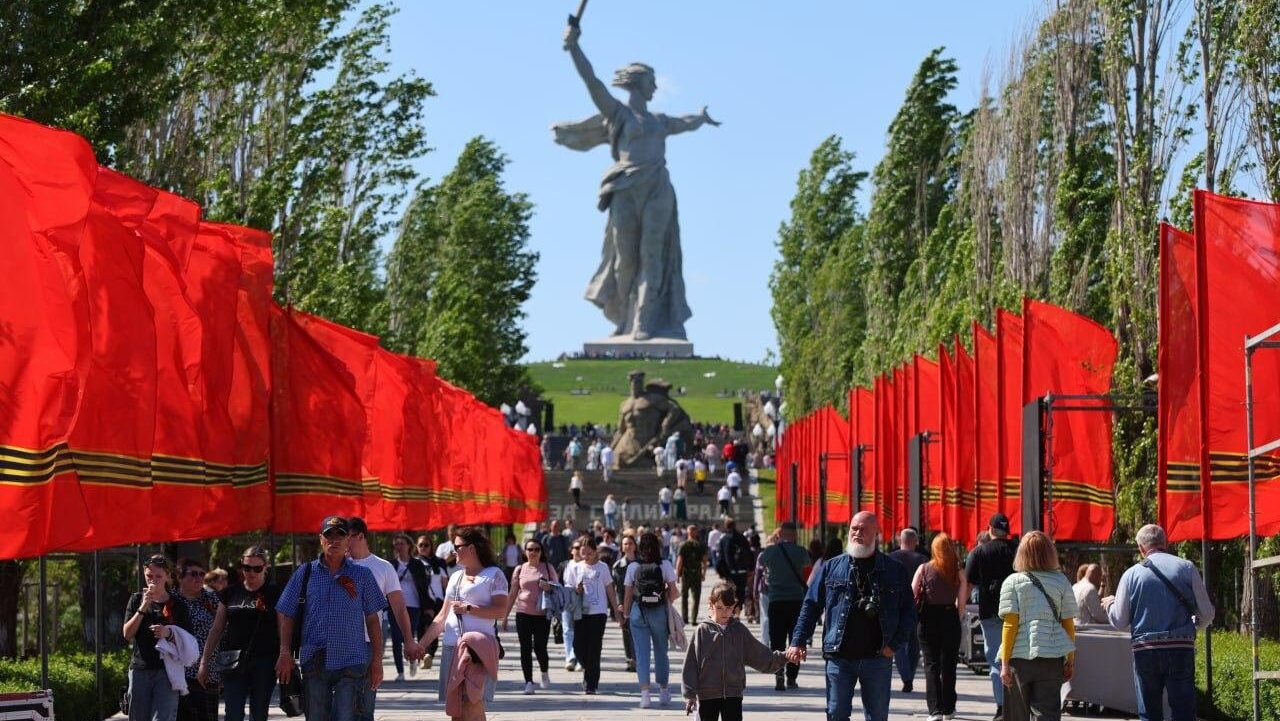
Early high-level events marking the 80th anniversary of the defeat of Nazi Germany are underway in Russia, where the traditional Victory Parade on Friday, May 9, will welcome a host of world leaders and other guests to commemorate the Red Army’s role in the liberation of Europe. According to Russian authorities, 29 countries have confirmed their leaders will attend the event, including Brazil, Burkina Faso, China, Cuba, Venezuela, and Vietnam.
Victory Day, falling on May 8 in most of Europe and on May 9 in Russia due to time zone differences, marks the official surrender of Nazi Germany in 1945. Although the date holds deep historical significance for Europe, its political leaders will be largely absent from this year’s events in Moscow. Slovakia is the only EU country to appear on the latest list of attendees, ignoring warnings from the bloc’s High Representative for Foreign Affairs, Kaja Kallas, who implied there would be ‘consequences’ for European officials participating in the event. Her threats mark the latest episode in a long-standing campaign of historical revisionism led by the EU, aimed at minimizing and obscuring the Soviet Union’s role in the liberation of Europe in World War II.
Honoring Red Army’s role in defeating Nazi Germany
In contrast to the EU, Global South leaders attending the events expressed their respect and acknowledged those who fought for liberation. At the beginning of his visit, Venezuelan President Nicolás Maduro stated simply: “It was the Red Army that liberated Europe.” Similarly, Chinese President Xi Jinping emphasized the importance of maintaining an accurate historical perspective on World War II and applying its lessons to the present, particularly when it comes to resisting Western domination.
“Eighty years ago, the forces of justice around the world, including China and the Soviet Union, united in courageous battles against their common foes and defeated the overbearing fascist powers,” Xi wrote in an article for the Russian Gazette. “Eighty years later today, however, unilateralism, hegemonism, bullying, and coercive practices are severely undermining our world.”
Despite efforts by Western governments to demonize the Red Army, many around the world still remember the USSR’s decisive role in the antifascist struggle, the immense sacrifices it made during the war, and the international solidarity it championed. “The peoples of the world have not forgotten who, in 1945, liberated them from Nazi enslavement and destruction,” stated Gennady Zyuganov, leader of the Communist Party of the Russian Federation, ahead of Victory Day.
“Celebrating the 80th anniversary of the great victory over fascism, we must remember the origins of Nazism,” he added. “Imperialism, which gave birth to that plague, is not a thing of the past. It is no coincidence that today our former allies in the anti-Hitler coalition are erasing us from the list of victorious countries.”
Left movements reclaim antifascist legacy for today’s struggles
Although communist groups across Europe circulated statements honoring the Red Army’s role in World War II, some also voiced concern about the context of this year’s central commemoration in Russia – just as much as the revisionism of core EU countries
It is in the spirit of reclaiming the resistance, that left and progressive groups across the region are organizing their own events. In Belgium, for example, activists have rallied around long-standing demands to re-establish May 8 as a public holiday. In former Yugoslav countries, actions will affirm the relevance of antifascism today, particularly in connection with solidarity for Palestine and mobilizations against genocide. All these events are not limited to remembrance: they aim to resist efforts to rewrite history in service of the Global North’s current political agenda.
Source: Potere al Popolo Bologna e provincia/Facebook
On the 80th anniversary of liberation from Nazi-fascism, left forces in Italy mobilize against genocide, armament, and the Meloni government
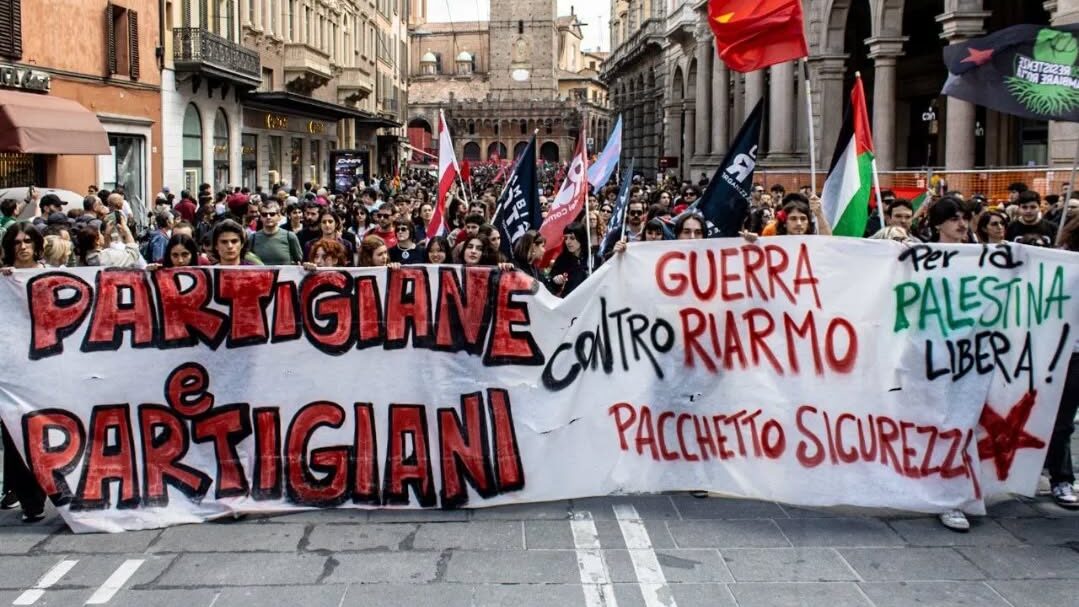
In the coming weeks, many European countries will mark the 80th anniversary of liberation from Nazi-fascist occupation. Italy is among the first, with dozens of events organized for April 25 – Liberation Day – despite ongoing attempts by the Meloni government and right-wing forces to rewrite or erase the memory of the Resistance. For most grassroots groups, this year’s events aim to locate the values that inspired partisan fighters in the 1940s into today’s context, marked by an aggressive rearmament agenda, support for Israel’s genocide in Gaza, and domestic repression of civil rights.
“Eighty years ago, our grandparents freed us from the grip of fascism. But remembering the past is not enough, especially not in the stale, institutional way the Democratic Party and center-left do,” Giuliano Granato of Potere al Popolo said during the demonstration in Naples. Along similar lines, the Unione Sindacale di Base (USB) stated that April 25 should not be reduced to a mere ritual or commemoration. “It should actualize the values and ideals of the partisan Resistance, which freed, perhaps not once and for all, this country from the barbarity of war and Nazi-fascism and provided an inescapable push toward better democratic, working, and living conditions for the people of this country,” the trade union declared in its call to action.
Against Israeli genocide
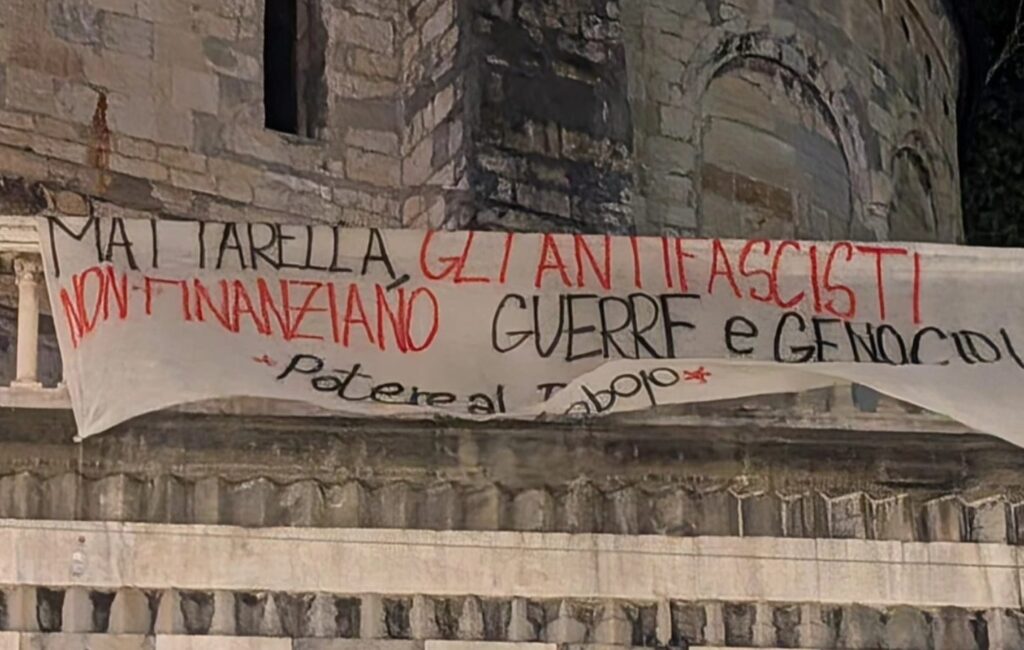
These values, according to USB, Potere al Popolo, and other left groups, must necessarily include opposition to genocide. In many cities, protesters have insisted that Italy’s ongoing ties with the Israeli occupation are unacceptable. These ties, they argue, are evidence that the political establishment has failed to grasp the true meaning and importance of the Resistance. Ahead of Liberation Day, the Genoa chapter of Potere al Popolo organized an action addressing President Sergio Mattarella, criticizing him for formally honoring the Resistance while remaining silent on the genocidal war against Palestinians and on the breakdown of democratic rights under the current government.
Potere al Popolo Genoa with banner reading: “Mattarella, antifascists don’t finance wars and genocide.” Source: Potere al Popolo Genoa/Facebook
“To do so [speak of the Resistance] after cozying up to the president of the criminal state of Israel, effectively supporting the ongoing genocide of the Palestinians, is an insult to those who, since the days of the partisan struggle, have fought against all genocide,” Potere al Popolo Genoa stated. “To honor the Resistance while equating the Soviet communists who liberated much of Europe from Nazism with the Third Reich is an insult to history and memory.”
Against armament
Equally prominent as the call to stop the genocide and sever ties with Israel is the demand to reject Europe’s new armament agenda, which will come at the cost of public services, education, healthcare, and climate justice. Giorgia Meloni’s administration and mainstream opposition parties alike have supported this agenda in different ways, endorsing increased spending on so-called defense and entertaining proposals for a joint European army. These priorities stand in stark contrast with the interests of Italy’s working class and the vision of a more just society that accompanied the antifascist Resistance.
“The rearmament plan launched by the EU represents the latest folly of a continental political class disinterested in building a present and future of peace and prosperity for the peoples of Europe,” warned USB. Similarly, Potere al Popolo called on people to rally around an alternative set of priorities: “We don’t need more money to enrich the arms industry. We need money for wages, for health care and services, for envisioning an ecological revolution and addressing the real challenge of our time, which is the climate crisis.”
Against new iterations of fascism
Meanwhile, Giorgia Meloni and her ministers are pursuing a different kind of battle, one aimed at minimizing the role of the antifascist struggle, led largely by communists, in shaping modern Italy. While the mainstream opposition tends to fixate on this behavior by the right wing, Granato warns that doing so risks missing important pieces of the puzzle.
“For us, Giorgia Meloni is simply following the path she’s always been on, one clearly tied to the rise of neo-fascism. After the defeat of Nazism, the slogan of the Italian Social Movement [neo-fascist party] was ‘neither renounce nor restore’ – and that’s exactly what Meloni is doing today. She doesn’t outright deny their fascist roots, but she also doesn’t walk around openly glorifying Benito Mussolini,” Granato told Peoples Dispatch.
The most recent attempt of the right to undermine the legacy of the Resistance came in the wake of the death of Pope Francis, when the government declared a record five days of mourning and called for “sobriety” at all public events. Many understood this to be an attempt to minimize April 25 events. Liberal and right-wing local administrations seized the opportunity to scale down and cancel rallies, while far-right media ran headlines such as April 25: Day of mourning. “Sure, they can claim they were referring to the death of the pope, but the truth is, they’ve been waiting 80 years for an excuse to print something like that, because for them, April 25 has always been a defeat,” says Granato.
Progressive forces, however, resisted, criticizing the government for using the death of a pope who – unlike the administration, called for peace and solidarity – to advance its agenda. They also refused to limit the day’s activities to commemorations, echoing the partisans’ revolutionary vision of a radically different society. “We don’t stop at the official ceremonies, not just because they’re cold and formulaic, but because we believe the fight for liberation and resistance isn’t over,” Granato explains. “Just like many partisans understood back then that toppling fascism wasn’t enough, we believe that defeating the Meloni government wouldn’t be enough either.”
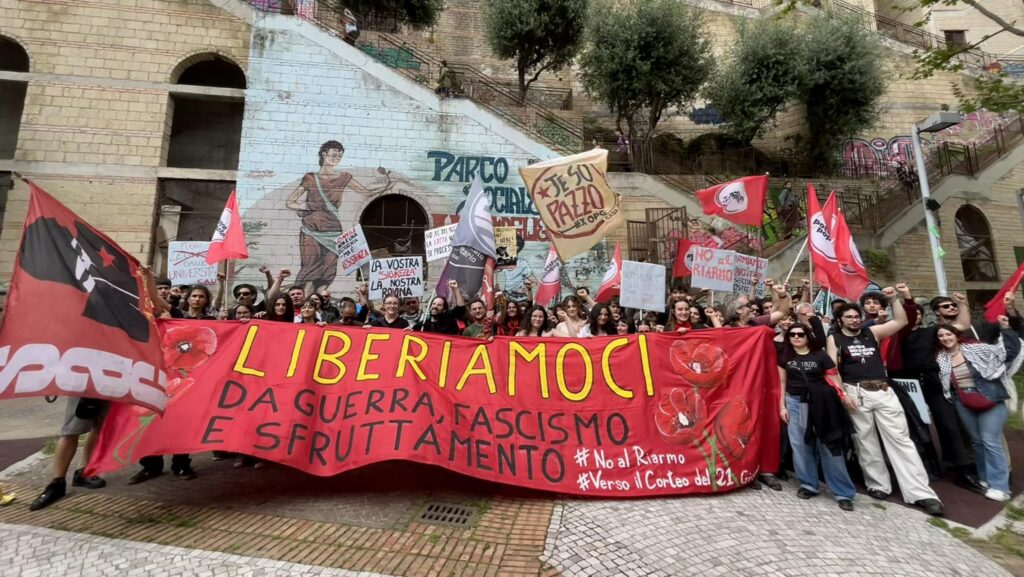
A group of protesters after the central demonstration in Naples, April 25, 2025. Source: Ex-OPG Je so’ pazzo/Facebook
Instead, Granato calls on the people to work together to free themselves from contemporary forms of danger and oppression: first and foremost genocide and militarization. “We worked to make today a day of liberation from militarism and genocide and to link it to the mobilization we are building, including a national assembly in Rome on May 24, and a mass demonstration on June 21, just days before the NATO summit in The Hague,” he adds.
“We believe militarism has always been a tool of fascism. The militarization of Europe today goes hand-in-hand with growing authoritarianism at home and worsens conditions for the working class across the continent.”
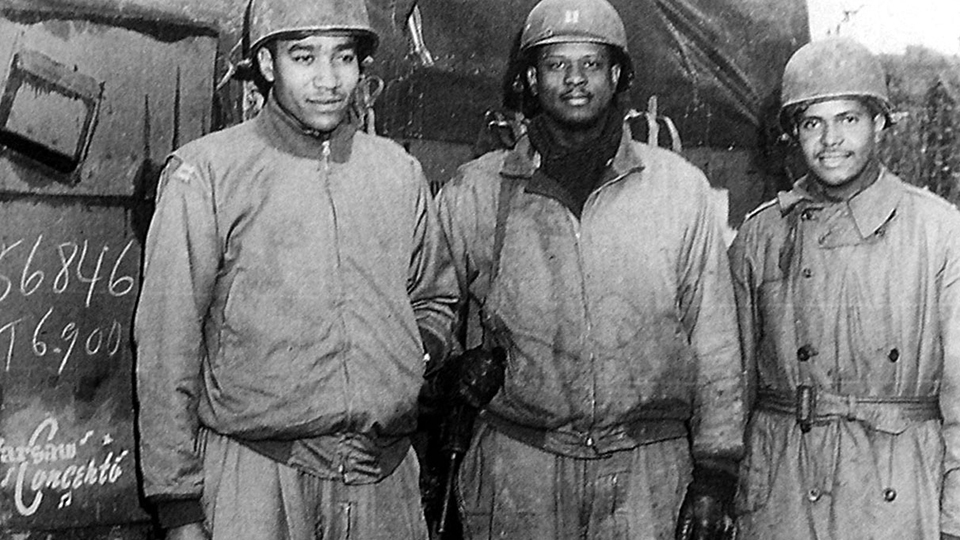
Captain Ivan Harrison, Captain Irvin McHenry, and 2nd Lieutenant James Lightfoot of the 761st Tank Battalion (Photo: US Army)
The US Army’s all-Black unit has gone down in history for heroism and are referred to by some as the “original Black Panthers”
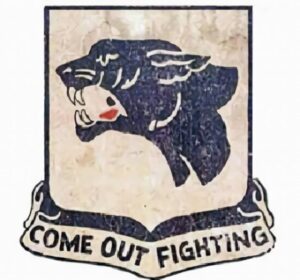
The US Army’s 761st Tank Battalion, the first all-Black tank unit to see combat during World War II, has gone down in history as “one of the most effective tank battalions” during the war, leaving a legacy of fighting Nazis and liberating concentration camps. Yet due to the realities of racism and segregation in the United States, back home, these Black soldiers were treated like second class citizens. With a bold logo of a snarling black Panther emblazoned with the motto “Come Out Fighting,” this all-Black unit is occasionally referred to as the “original Black Panthers.”
Shoulder sleeve patch of the United States 761st Tank Battalion (Photo: US Military)
Heroism abroad, oppression at home
The US Army did not officially desegregate until President Harry Truman signed an executive order after World War II. The Black soldiers of the 761st Tank Battalion were not allowed to serve in the same units as white soldiers. The Battalion’s soldiers also had to train in installations located throughout the highly segregated US South, in states such as Kentucky, Louisiana, and Texas, still under the shadow of Jim Crow.
Institutional racism characterized much of the training experience of the 761st Tank Battalion. Training for the men of the 761st lasted for almost two years, yet white units were sent overseas after far less training. As a result, the 761st Tank Battalion, which had been originally created for the purpose of maintaining support within the Black community for the WWII war effort, developed into one of the better trained units in the army and was later celebrated for its heroism.
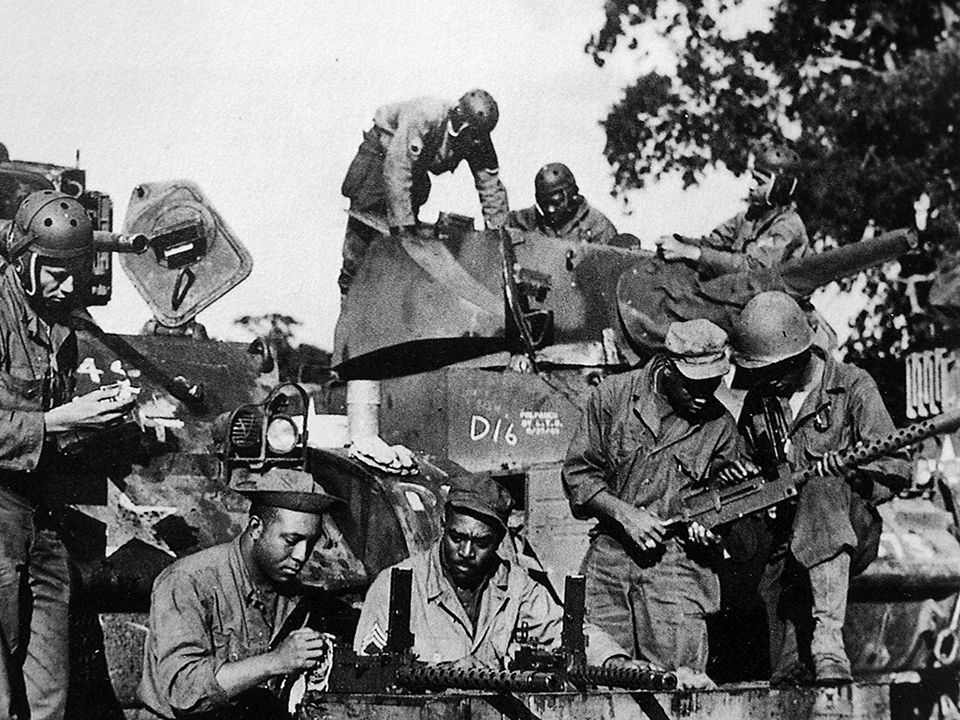
61st Tank Battalion preparing for combat (Photo: US Army)
“This was [US Army General George] Patton’s best tank unit and they didn’t get any recognition because whites did not look upon blacks as having any competence as fighting men,” writes athlete and author Kareem Abdul-Jabbar in his book about the unit, “Brothers in Arms.”
The soldiers of the 761st Battalion were subject to racist violence from their white fellow soldiers. A bloody “race riot” broke out while 761st soldiers were in training in Alexandria, Louisiana, after Black soldiers from Northern states, unused to the violence of the Jim Crow South, reacted to the brutal arrest of a fellow Black soldier by white military police. Soldiers in the 761st were incensed at the racist violence, and went as far as to commandeer six tanks and a half-track, but were eventually persuaded to stand down by their commanding officer, Lieutenant Colonel Paul Bates.
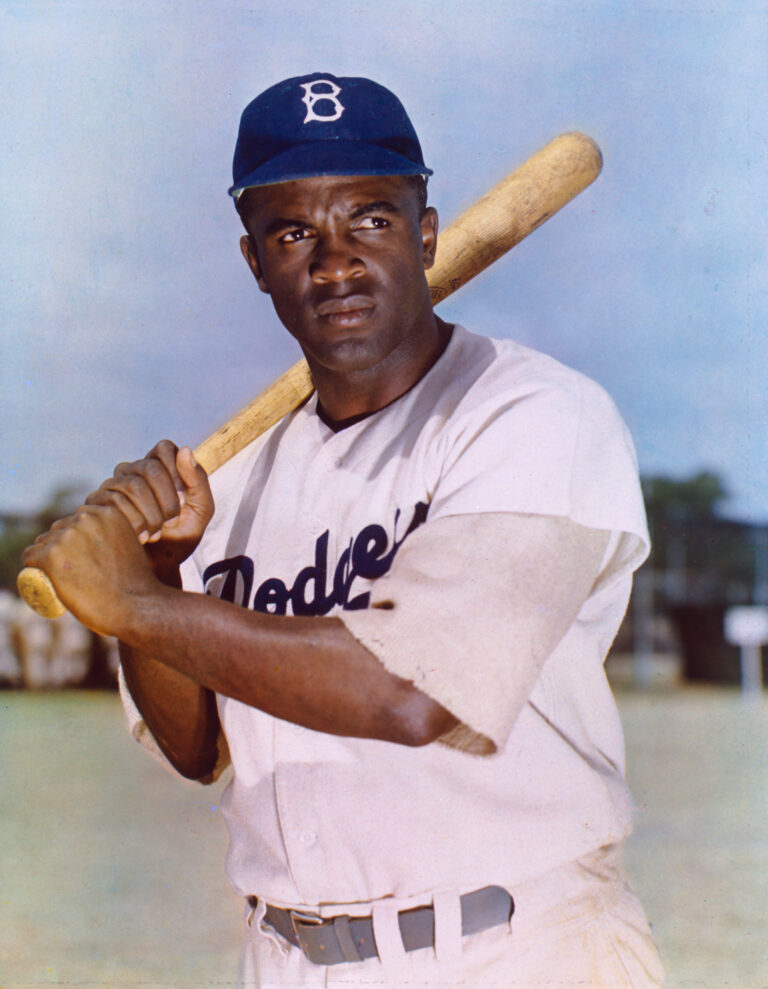
The most famous member of the 761st Battalion was Jackie Robinson, who would go on to become the first Black player in Major League Baseball, heralding the end of racial segregation in professional baseball in the US. During 761st’s training in Texas, a White bus driver told Robinson to move to sit at the back of the bus, which Robinson refused—a move that resulted in his arrest. Lieutenant Colonel Bates refused to consider the court martial charges against Robinson. Robinson was subsequently transferred to the 758th Tank Battalion, also an all-Black unit.
761st Battalion member Jackie Robinson would go on to become the first Black player in Major League Baseball (Photo: National Portrait Gallery, Smithsonian Institution)
761st breaches Nazi defenses
After training for two years in Texas, 761st was finally deemed ready for deployment overseas in 1944. The unit was assigned to General George Patton‘s Third Army. As the unit was about to enter into combat, Patton, himself white, made a speech to bolster their confidence, claiming that “Everyone has their eyes on you and is expecting great things from you. Most of all your race is looking forward to your success.” However, Patton expressed doubts about their abilities to his fellow officers, remarking that “They gave a good first impression, but I have no faith in the inherent fighting ability of the race.”
The 761st would go on to serve in the infamous Battle of the Bulge, the last major German offensive on the Western Front, in which it opened the way for the US 4th Armored Division into Germany, during an action which breached the Nazi German defensive Siegfried Line, rapidly advancing into the Reich. The 761st became one of the first US units to reach Steyr, Austria, which became a meeting point between the Black tank battalion and the Soviet Red Army on May 9, 1945.
Seeing Black soldiers rise out of their tank hatches reportedly put a unique terror into the hearts of the ultra-racist German Nazi soldiers.
Liberation of Gunskirchen camp
The 761st Tank Battalion, alongside the 71st Infantry Division, liberated the Gunskirchen concentration camp in Austria on May 4, 1945, which Nazi guards had fled days before. Captain J. D. Pletcher, a member of the 71st Infantry, recounted his experience at Gunskirchen, “When the German SS troops guarding the concentration camp at Gunskirchen heard the Americans were coming, they suddenly got busy burying the bodies of their victims—or rather, having them buried by inmates,” Pletcher recounted.
“Skin and bone… skin and bone and filthy rags and bodies crawling with vermin… row on row, endless… filling the square. And not a sound. Not one human sound came from those thousands of throats. Perhaps they hadn’t the strength to speak, even in gratitude. Perhaps words of thanks were long forgotten… forgotten under the lash and the pistol-butt, the abysmal degradation.”
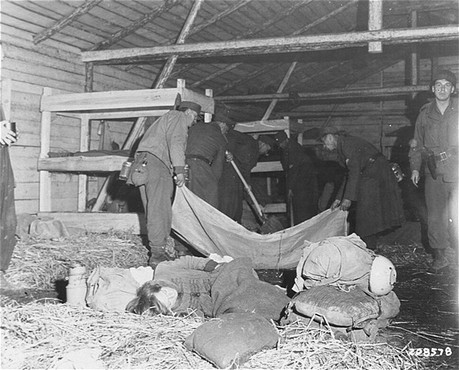
Medical corpsmen of the US 71st Infantry Division look on as captured German soldiers remove bodies from inside a barracks in the liberated Gunskirchen concentration camp (Photo: National Archives and Records Administration, College Park, MD)
It was only on January 24 1978 that the 761st Tank Battalion was awarded the Presidential Unit Citation by then-President Jimmy Carter for their service during World War II. Many individual members of the battalion also received individual accolades, including one Medal of Honor, eleven Silver Stars and around 300 Purple Hearts.
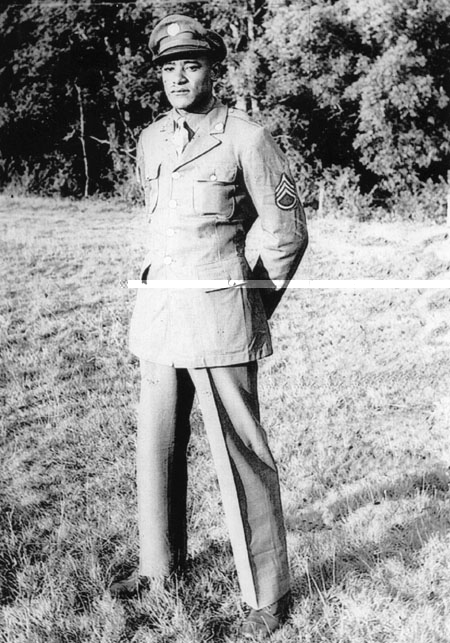
761st Tank Battalion staff sergeant Ruben Rivers was posthumously awarded the Medal of Honor, the nation’s highest military decoration for valor, his actions on November 16–19, 1944 in France, during which he was killed in combat.
The 761st Tank Battalion was historic, as a Black unit striking fear into the hearts of Nazis and liberating victims of the most extreme forms of fascist violence. And yet, the stories of the soldiers’ training period and their challenges of being recognized for their bravery after the war are yet another example of the deep legacy of racism in the United States itself. Recounting the unique story of the 761st becomes even more crucial when marking Black History Month this February, and recognizing the long legacy of Black struggle against racism and white supremacy, at home and abroad.
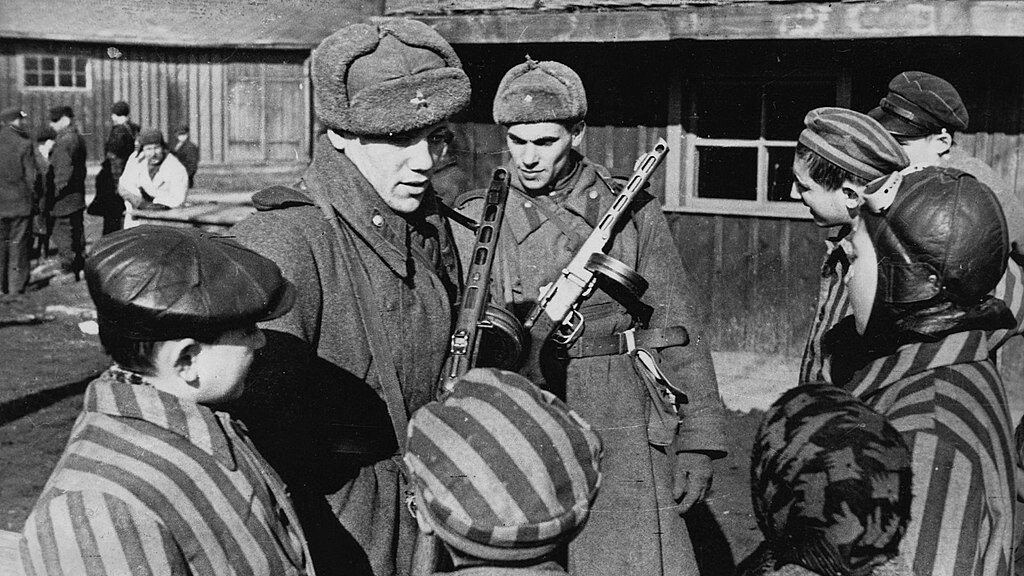
Red Army soldiers with prisoners of Nazi concentration camp, 1945. Source: Wikimedia Commons
As European leaders gathered at Auschwitz to commemorate 80 years since its liberation, they upheld a revisionist narrative that downplays the role of the Red Army in defeating Nazism
On January 27, 1945, soldiers of the Soviet Red Army liberated Auschwitz, the Nazi concentration camp where over one million people—overwhelmingly Jews—were murdered. Eighty years later, European leaders gathered in Poland, now home to the Auschwitz memorial, to hear survivor testimonies and reaffirm the commitment to ensuring such atrocities never happen again.
Yet this year’s commemoration came with a blazing omission. Despite the USSR’s vital role in defeating Nazi Germany and its allies—at the cost of over 20 million Soviets’ lives—there were no representatives of the Russian Federation at Auschwitz. In its pursuit of punishing Russia for the war in Ukraine, the European Union (EU) has virtually erased the Red Army’s contributions from the narrative. Leaders like Ursula von der Leyen and Giorgia Meloni issued statements of remembrance while avoiding any mention of the USSR. Only left politicians dared to talk about the full picture in their messages on the day of remembrance.
These events have to be read as part of a broad revisionist trend spreading through Europe, in which far-right parties, such as Meloni’s Brothers of Italy and France’s National Rally, are using anti-communist tropes to rewrite history. This trend has taken root among mainstream parties as well. Just days before Holocaust remembrance day, the European Parliament adopted a resolution condemning Russia for “exploiting the narrative of the ‘liberation of Europe from Nazism.’” The text of the resolution also criticized the restoration of Lenin’s monuments in Ukraine and called for a “pan-European” memorial for “victims of the 20th century totalitarian regimes,” a vocabulary that aims to equate fascism and communism.
In what can only be described as a severe case of historical amnesia, the parliamentaries proposed a ban on “both Nazi and Soviet communist symbols” across the EU. As some have pointed out, implementing such a ban would complicate commemorations like the one on Monday, given the prominence of Soviet uniforms in archival photographs of liberation.
While the EU is entertaining itself with erasing communism’s role in defeating Nazism in World War II, it seems to have learned extremely little from the Holocaust itself. The first phase of a ceasefire in Gaza had not even begun when Polish authorities announced they would allow Israeli Prime Minister Benjamin Netanyahu to attend the Auschwitz commemoration—despite an International Criminal Court warrant for his arrest on war crimes charges. Though Netanyahu ended up not attending himself, the mere possibility highlights Europe’s willingness to overlook crimes against humanity if committed by its current allies.
“Laying claim to the memory of one genocide in order to justify another genocide is morally and politically unacceptable,” historian Enzo Traverso said in a recent interview with Jacobin, commenting on Europe’s reactions to the genocide in Gaza. “The memory of Auschwitz should be mobilized to impede new genocides, not to justify them.”
By refusing to acknowledge the full history of Nazism’s defeat in 1945—especially the contributions of the Red Army and communist movements—Europe only fuels the rise of the far-right. Parties like Alternative for Germany (AfD), National Rally and Brothers of Italy may avoid explicit antisemitism in their platforms, but their policies thrive on the same hatred and violence that drove the Holocaust. As these parties gain electoral ground, the slogan “Never again is now” is becoming increasingly difficult to believe.

 The aftermath of the Hiroshima bombing