For decades, governments have subsidised fossil fuels. But why?
Spread the love
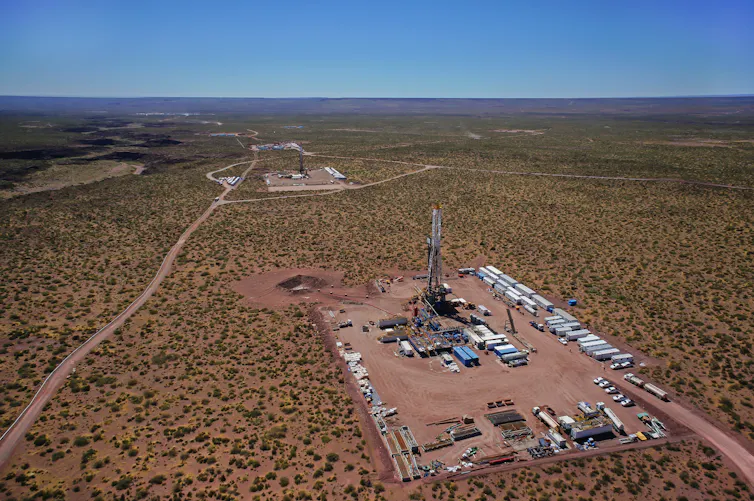
Sobrevolando Patagonia/Shutterstock

Bernard Njindan Iyke, La Trobe University

Even now, decades after we first began trying to avert the worst of global warming, more than 80% of the world’s total energy comes from fossil fuels.

You might think this would make fossil fuel production extremely profitable. But it’s not always the case. Much of the most accessible oil has already been extracted and burned. Many countries want to shore up domestic sources of fossil fuels to boost energy security. Energy price fluctuations and competition from new energy sources such as solar, wind and fossil gas have made it harder for some fossil fuel companies to make money, especially in coal.

This is where fossil fuel subsidies come in. Australia gave A$14.5 billion in subsidies to major fossil fuel producers and consumers in 2023–24 alone.

You might have wondered – why would some of the largest companies on Earth need subsidies? Here’s why.

LNG tanker
Australia’s surging liquefied natural gas industry has been boosted by government funding. KDS Photographics/Shutterstock

Private companies, public money

Globally, private companies dominate fossil fuel production, though fossil fuel-rich nations often have state-owned companies, such as Saudi Arabia’s Aramco and Russia’s Rosneft.

Why would governments give fossil fuel companies money? Many reasons. But the most important is that wealthy countries have historically needed huge volumes of fossil fuels for manufacturing, transport and power. Many countries have some sources of fossil fuels inside their borders, but only a few are self-sufficient. This has enabled fossil fuel giants such as Saudi Arabia to become wealthy beyond belief.

Many governments have used subsidies to boost their energy security and encourage local producers to seek out new sources of coal, gas and oil. These subsidies can make all the difference in making fossil fuel companies competitive internationally. For instance, Canada spent billions on subsidies to boost its oil sands and fracking projects.

Subsidies were essential in the United States’ fracking revolution. Novel approaches to extracting fossil gas and oil – boosted by major tax incentives – turned the US from a major importer of oil and gas into a net exporter by 2019.

You can see why the US did this. At a stroke, it went from being dependent on energy provided by foreign nations to being independent.

Once subsidies are in place, they become very hard to remove. Indonesia’s lavish fuel subsidies now account for 2% of the nation’s GDP. When the national government tried to walk these back, there were riots.

And there’s another reason, too. Fossil fuels are still playing an important role in boosting the economy in most nations. Subsidising them has long been seen as a way to maintain economic growth and stability.

Globally, these subsidies are estimated at a staggering $10.5 trillion each year.

This figure has grown sharply in recent years, after Russia’s invasion of Ukraine. As European nations tried to wean themselves off Russia’s gas, energy prices surged worldwide. In response, some countries introduced new subsidies to support businesses and consumers.

The top-line figure of $10.5 trillion includes two types of subsidy – explicit (meaning real dollars change hands) and implicit (for example, governments building roads and railways to encourage crude oil transport).

Explicit subsidies

Explicit fossil fuel subsidies are direct financial incentives from governments to fossil fuel producers and consumers. These incentives come in different forms, such as tax breaks, direct payments, grants and price controls. All of them aim to reduce the financial burden associated with fossil fuel production and use.

In Australia, explicit subsidies include fuel tax credits and exploration tax reductions. Fossil fuel companies can get subsidies to offset the losses they make during the years it takes to find and begin extracting new fossil fuels.

In the US, oil and gas companies benefit from the oil depletion allowance, which permits them to deduct a percentage of their gross income from oil and gas sales as an expense. They can also claim tax deductions for intangible drilling costs, such as the wages of workers and material needed to find new sources of oil and gas.

China, too, uses direct subsidies, discounted land-use fees, and preferential loans as explicit subsidies to boost coal production and consumption. The national government also supports fossil fuel consumption through direct payments to consumers.

coal miners China
China has used subsidies to encourage exploitation of its large coal resources. zhaoliang70/Shutterstock

Implicit subsidies

Implicit subsidies are often described as “imaginary”. That doesn’t mean they don’t exist, just that they’re not a direct transfer to directly paid to fossil fuel producers.

For instance, the cost of burning fossil fuels is borne by the global community and the natural world, in the form of climate change, damage to human health and other harms. Most fossil fuel companies don’t have to pay a cent for the pollution their products cause – so in effect, they are being granted an indirect subsidy.

Implicit incentives also include government investment in facilities such as transport networks, pipelines, oil refineries and port infrastructure, which will accelerate fossil fuel production and delivery. Think of the Middle Arm development in Darwin, funded by both the federal and territory government.

Why are these subsidies still being paid?

As the world grapples with a worsening climate crisis, fossil fuel subsidies are under great scrutiny.

It’s politically difficult to withdraw subsidies once given. This is why governments around the world have instead begun to give subsidies and tax incentives to green energy developers, including the enormous $500 billion Inflation Reduction Act in the US, the European Union’s Green Deal, and China’s massive subsidies of green technologies such as electric vehicles and solar panels.

The goal here is to make renewable energy and electrified transport steadily more affordable and competitive – just as fossil fuel subsidies did for oil, gas and coal.

Bernard Njindan Iyke, Lecturer in Finance, La Trobe University

This article is republished from The Conversation under a Creative Commons license. Read the original article.

Continue ReadingFor decades, governments have subsidised fossil fuels. But why?

Park Fire Doubles in Size, Becomes Sixth-Largest in California History

Spread the love

https://www.ecowatch.com/park-fire-california-wildfires-2024.html

Firefighters set a backfire on the eastern front of the Park Fire, spanning 360,141 acres and 12% contained on July 28, 2024 near Chico, California. David McNew / Getty Images

Thousands of firefighters in California are battling the Park Fire in northern California after it doubled in size within 24 hours, reported Reuters.

The massive wildfire is the sixth-largest in the state’s history, having burned 370,000 acres since it started on Wednesday, The New York Times reported. It had also destroyed more than 100 structures and threatened thousands more.

“It looked like a volcano,” said Paul Mozzino, who had evacuated his Humboldt Highlands home, “like something out of ‘Hellraiser,’” as reported by The New York Times.

The fire was 12 percent contained, but evacuation orders or warnings remained for Butte, Plumas, Tehama and Shasta counties, CNN reported.

https://www.ecowatch.com/park-fire-california-wildfires-2024.html

Continue ReadingPark Fire Doubles in Size, Becomes Sixth-Largest in California History

Elon Musk accused of spreading lies over doctored Kamala Harris video

Spread the love

https://www.theguardian.com/technology/article/2024/jul/29/elon-musk-accused-of-spreading-lies-over-kamala-harris-video

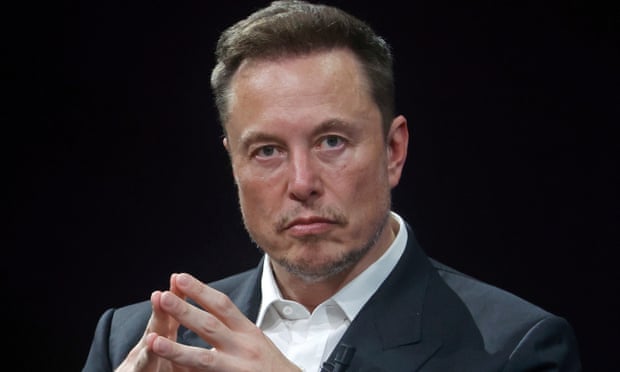
Elon Musk responded on X that ‘parody is legal in America’. Photograph: Chesnot/Getty Images

Doctored campaign video featuring US vice-president reposted by Tesla chief executive watched 128m times

Kamala Harris’s election campaign has accused Elon Musk of spreading “manipulated lies” after the Tesla chief executive posted a doctored video featuring the vice-president on his X account.

Musk reposted a manipulated Harris campaign video on Friday evening in which a fake Harris voiceover says: “I was selected because I am the ultimate diversity hire,” and that anyone who criticises her is “both sexist and racist”.

The video has been viewed 128m times on Musk’s account after the world’s richest man posted it with the words “this is amazing” followed by a laughing emoji. Musk owns X, which he rebranded from Twitter last year.

Amy Klobuchar, a Democratic senator, accused Musk of violating the platform’s guidelines. According to X’s synthetic and manipulated media policy, users are barred from sharing “synthetic, manipulated, or out-of-context media that may deceive or confuse people and lead to harm” although allowances are made for satire provided it does not “cause significant confusion about the authenticity of the media”.

A spokesperson for Harris’s presidential campaign said: “The American people want the real freedom, opportunity and security Vice-President Harris is offering; not the fake, manipulated lies of Elon Musk and Donald Trump.”

https://www.theguardian.com/technology/article/2024/jul/29/elon-musk-accused-of-spreading-lies-over-kamala-harris-video

Continue ReadingElon Musk accused of spreading lies over doctored Kamala Harris video

Morning Star Editorial: ‘Fixing the foundations of the economy’ must address the structure of ownership and wealth

Spread the love
Image of cash and pre-payment meter key

https://morningstaronline.co.uk/article/fixing-foundations-economy-must-address-structure-ownership-and-wealth

AFTER months in which Labour argued that such is the dire state of the economy that Tory spending limits must be maintained, the Chancellor of the Exchequer now says that further cuts in public expenditure are needed.

The question raised by any talk about varying the structure of taxation is where taxes fall. The richest 10 per cent of families hold 43 per cent of all wealth. The bottom 50 per cent — and be sure that this includes the greater proportion of people who see themselves as working class — possess less than 10 per cent of wealth.

When the overwhelming majority of voters, including Tory voters, see public ownership of rail, mail, water and energy as desirable this is not simply a yearning for the more efficient delivery of these services and utilities than private ownership is able to provide. More, it is an expression of a clear understanding that revenues from these myriad transactions should not be privately appropriated but applied to the common good.

The present Labour administration has, with rare exceptions, ruled out the recovery into public ownership of privatised sectors and, less performatively than Gordon Brown in his day but no less systematically, has assured the corporate world that not only are the foundations of private ownership safe but that Labour, even more than its Tory predecessors, holds appeasing the bond markets a central part of its economic strategy. Hence the cuts announced today.

Reeves’s dilemma is highlighted by the necessity to find £1 billion to fund the juniors doctors’ pay increase; something similar for the teachers and a backlog of other public-sector pay claims.

Under this system spending is always about priorities. But there is money about. She is already committed by Starmer’s diktat to find £57.1bn in defence spending in 2024-25 which is a 4.5 per cent increase in real terms. No cuts there!

A bigger source of revenue would result from taxing wealth at the same level as income by raising the capital gains and dividend tax rates to the level at which workers pay on their wages.

An even bigger windfall would result from a socialist economy in which all rents, interest and profits arising from human economic activity were held in common rather than being privately acquired.

https://morningstaronline.co.uk/article/fixing-foundations-economy-must-address-structure-ownership-and-wealth

Continue ReadingMorning Star Editorial: ‘Fixing the foundations of the economy’ must address the structure of ownership and wealth