I was sentenced as a terrorist. Now my barrister is on trial for defending me
Article by Charlotte Head republished from OpenDemocracy.
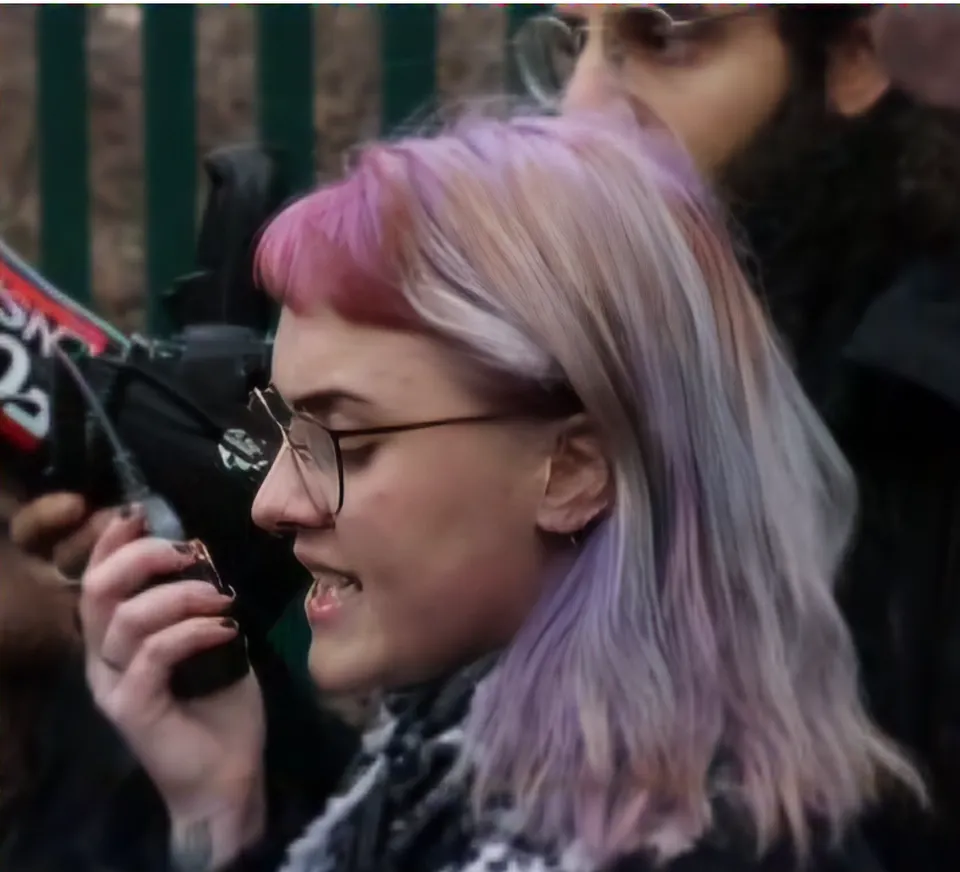
My lawyer faces jail over a speech to jurors – a first in English history – as state seeks to silence Palestine solidarity
Editor’s note: Shortly after this piece was published, Rajiv Menon was granted a last-minute stay on his appeal. His case will now be heard in September.
England prides itself on its legal system, supposedly a pinnacle of fairness, neutrality and justice.
Having faced two trials and 18 months’ incarceration before a verdict was even reached, I’ve witnessed the falsity of these claims. Today will mark another low: the lead barrister on my case, Rajiv Menon, will appear at the Royal Courts of Justice accused of contempt of court over remarks he made in a closing speech to the jury.
If found guilty, he’ll face up to two years in prison.
This is the first time in English legal history that a barrister has been prosecuted for defending their client in this way. The Garden Chambers, where Menon is a KC, has said it is “extremely concerned about the chilling effect on the Bar of the state seeking to criminalise barristers for their representation of their clients”. The Criminal Bar Association (CBA) has warned that other lawyers are now afraid of doing their jobs.
“[They] have become uncertain and scared of what they can and can’t say; scared that somehow they might be – at the end of a trial where they have faithfully represented their client themselves – facing a charge of criminal contempt,” said Riel Karmy-Jones KC, chair of the CBA. “It is starting to feel like it’s about the politics of the subject matter of the trial, rather than the core principles of how a barrister represents his client.”
That has certainly been my experience.
In August 2024, I entered an Israeli weapons factory in Filton, Bristol, along with other activists. We destroyed military drones created by Elbit Systems: quadcopters set to be exported for use in Israel’s illegal genocide against the Palestinians in Gaza.
Any nation found to be supporting or abetting those committing a genocide is complicit and culpable under international law; there are legal precedents that allow an offence to be committed to prevent a greater offence occurring, as we did at Filton. Yet upon arrest we were held incommunicado for almost three weeks in counter-terrorism custody, which the UN warned may amount to ‘enforced disappearance’.
We were presented at magistrates’ court, charged with criminal damage, violent disorder and aggravated burglary. These were ordinary offences, but Judge Johnson later granted himself the right to use a ‘terrorism connection’ at sentencing. We were denied bail and imprisoned under the Terrorism Act. Johnson introduced reporting restrictions to ban the media from mentioning that, if the jury found us guilty, he could sentence us as terrorists, which would drastically lengthen our jail time and impact our futures. Jurors were also not made aware of this fact.
Despite the restrictions, media coverage of our case blew up during my 18 months in custody awaiting trial, with grand accusations made about my co-defendants and me.
In June 2025, five months before our trial, Yvette Cooper, then the home secretary, discussed her decision to proscribe Palestine Action in the Commons. She specifically acknowledged that she could not discuss our case “to avoid prejudicing future criminal trials”. Yet just moments earlier, she had referred to the “attacks at […] Elbit Systems UK in Bristol”, saying Palestine Action had “committed acts of serious damage to property with the aim of progressing its political cause and influencing the government”.
Two months later, Cooper went further still. In an Observer article titled “Palestine Action ‘is not lawful protest’”, she referenced the charges in our case, which she said, “in the assessment of the independent Crown Prosecution Service, [had] a terrorism connection”. She also accused Palestine Action of “intimidation, violence, weapons, and serious injury to individuals”.
Given that our trial had yet to take place, it seemed a case of putting the cart before the horse – and one that risked prejudicing jurors. Given Cooper’s position in government and the role she played in the legal proceedings to proscribe Palestine Action, it is inconceivable that she did not understand the reporting restrictions surrounding our trial. She has faced zero repercussions for what may amount to breaking the law on contempt of court.
For Rajiv Menon, the sole KC for the defence, it is a very different story.
At our trials, a heavy burden fell on Menon’s shoulders as he and the other defence barristers were forced to contort themselves to keep up with Johnson’s ever-increasing restrictions on what he deemed permissible as evidence.
As well as being prohibited from telling the jury about the terrorist connection, we were forbidden from referencing material the prosecution had included in its own evidence bundles. Elbit’s actions in supporting Israel’s genocide were deemed irrelevant.
In his closing speech, Menon reminded the jury of their role. He spoke about the case of Penn and Mead in 1670, which saw a jury imprisoned and fined for contempt of court after acquitting two Quakers of unlawful assembly. As Menon said, that case it is the cornerstone of the British legal system as we know it – it established the right of juries to make decisions freely and without threat of repercussions.
Menon also spoke emotionally and passionately about my background and how I ended up involved in this action, highlighting the centrality of the Palestinian cause to my motivations. His has since been dubbed a historic speech by legal professionals and the public alike.
On 4 February, after 36 hours of deliberating, the jury found us not guilty of aggravated burglary. It was unable to reach a verdict on the other charges of criminal damage and violent disorder. Two weeks later, we were released.
Around this time, the Crown Prosecution Service announced it would seek a retrial and Johnson advised that he would refer Menon for criminal proceedings, a fact that could only be reported on last week.
Johnson alleged Menon committed contempt of court by referencing a plaque commemorating the Penn and Mead case, which highlights “the right of juries to give their verdict according to their convictions”. This plaque isn’t hidden, it’s in the entryway of the Old Bailey, where our trial would have taken place had it not been for space and timetabling constraints. Our jurors would have had to pass it several times a day.
Menon was not threatened for being inaccurate; he was persecuted for jeopardising what has become a lynchpin case in the British state’s war against Palestine Action.
The crucial question is why. Why was a government minister – the home secretary, no less – allowed to publicly and repeatedly prejudice our right to a fair trial and get away scot-free, whilst a renowned human rights lawyer was punished for doing his job?
Did the government feel the Filton defendants were too close to winning, thereby undermining its proscription claim? Did it want to issue a warning, to create a chilling effect on legal professionals and defendants in subsequent trials? Or is our legal system simply a two-tier system, where those in power are above the law and the rest of us can be punished for simply being irksome?
During our retrial earlier this year, further restrictions were placed on the scope of evidence. The jury was told that in that courtroom, Justice Johnson was the law – and in a courtroom, the law is tantamount to God.
We were found guilty of criminal damage. We had never been charged with terrorism, yet Judge Johnson sentenced us as terrorists on 12 June. I am serving six years in prison and will face a further 15 years on notification once I am released, during which time I will have to regularly check in with the authorities, and will have to register any new device, bank account, telephone number, email address, vehicle, relationship and overseas travel plans with the police for the rest of my life.
The UK abolished the divine right of kings long ago; but it is alive and kicking in our legal system. The privileged few in the upper echelons are permitted to bend the law to breaking point to further the government’s political agenda. The same people are trying to rob the British public of the right to a jury of their peers by blaming jury trials for our backlogged court systems. It is not juries that are the problem; it is our courts that are beleaguered by pressure from those in Parliament, the intelligence services and the police.
The Home Office has interfered with our case again and again in a bid to shore up its proscription of Palestine Action by using us as political scapegoats. Yet, for his work in defending me, my barrister may be disbarred and potentially face prison time himself.
Article by Charlotte Head republished from OpenDemocracy.