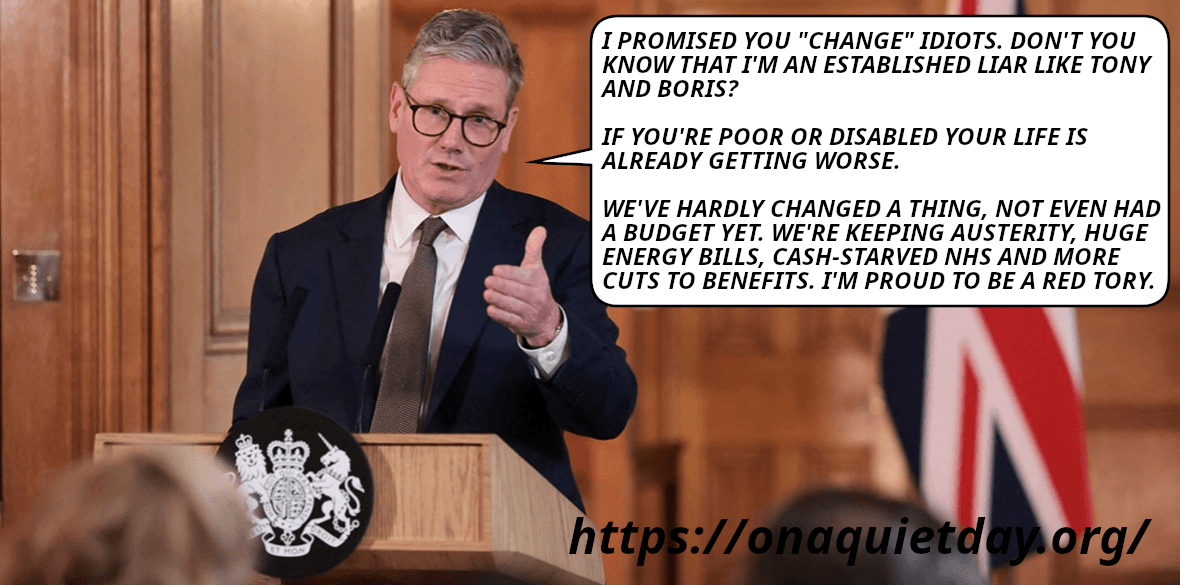
Downing Street has billed the speech tomorrow as “a direct message to the working people across Britain.”
In it, Sir Keir is expected to develop the line of attack that Chancellor Rachel Reeves began when she accused the Tories before the summer recess of leaving a £22 billion black hole in this year’s budget.
Sir Keir will claim government has to take “unpopular decisions” to rebuild the country from “rubble and ruin” left by the Tories, saying: “We have inherited not just an economic black hole but a societal black hole.
“And that is why we have to take action and do things differently.
The Welsh Government has defended the employment by NHS Wales of partially trained medics known as “physician associates”, despite concerns that they can pose a danger to patients.
PAs, as they are referred to, receive some medical training, but it falls far short of the level required for qualification as a doctor.
Critics argue they are a cost-cutting measure and fear safety standards are being compromised.
An assessment carried out by Health Education England (HEE) , and considered by all four of the UK’s health departments, concluded that patients were at high risk of harm from PAs. The health departments have therefore recommended the introduction of statutory regulation for the profession.
Campaigners, including many who are personally infected and affected by infected blood, gather in Westminster, London, July 26, 2024
CONTAMINATED blood victims expressed confusion and anger after the government announced changes to a multibillion-pound compensation plan today.
Paymaster General and Cabinet Office Minister Nick Thomas-Symonds said survivors of the biggest treatment disaster in NHS history will get life-long support with up to £15,000 extra for those subjected to “unethical” research.
Payouts under the scheme will start by the end of the year for survivors and by next year for affected people such as family members under a second set of regulations.
Mr Thomas-Symonds said the total estimate of the cost of scandal compensation will be set out in the Budget red book, with more than £1 billion had already been paid out.
“We know no amount of compensation can fully address the damage to people who suffered as a result of this scandal,” he said.
The £15,000 payout was, however, branded as “derisory and insulting” and a “kick in the teeth” by a victim who was infected with HIV and other viruses while subjected to unethical medical testing at a specialist school.
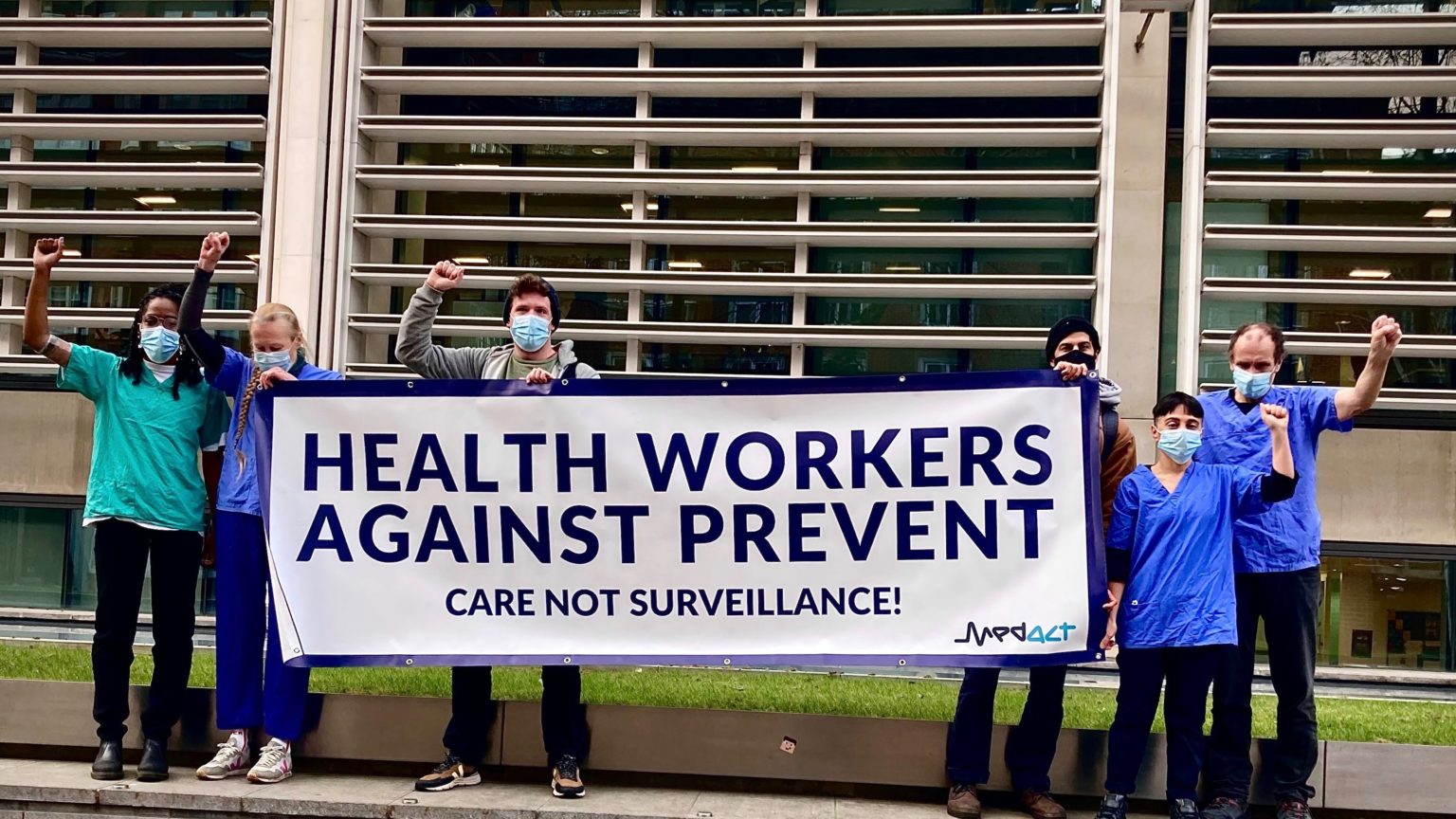
(Action against Prevent by members of Medact’s Securitization of Health group outside the UK Home Office on February 15, 2023. (Photo: Medact/Twitter)
NHS staff pulled into counter-terrorism programs, raising alarms over patient care and professional ethics
Mental health workers in the United Kingdom are being drawn into joint ventures with police and intelligence institutions as part of the national counter-terrorism agenda.
A new report by Medact, an association of health workers advocating for peace and social justice, highlights how the Counter Terrorism Clinical Consultancy Service (CT CCS) integrates National Health Service (NHS) staff with counter-terrorism agents. This service effectively turns health workers into interpreters for the police, who use the information provided to decide on tactics for individuals identified as potential terrorist threats.
In 2024, approximately £17 million was awarded to NHS Trusts to collaborate with security services involved in counter-terrorism. At the report’s launch in London, author Charlotte Heath-Kelly explained that these funds support interdisciplinary teams tasked with analyzing information about selected subjects.
The teams comprise mental health professionals, including nurses, psychiatrists, psychologists, and police officers. Health workers receive basic information on individuals identified as threats, which they then process and explain to their police counterparts. If the decision is made to continue monitoring a person, health workers interpret new information collected and may reach out to the person’s GP practice to encourage them to report on their patients in case they, for example, discontinue therapy or experience a stressful situation.
“This creates an indirect surveillance relationship between health workers and patients and may compromise a patient’s right to discontinue medical treatment since police-led interventions may follow non-compliance,” Heath-Kelly writes.
Unseen patients
CT CCS health professionals contextualize and explain how potential mental health issues could affect an individual’s behavior. This process, referred to as “formulating,” is commonly used in mental health care to better understand a person’s mental health status in the context of their everyday life and offering them support. However, unlike in healthcare settings where formulating is done collaboratively with the patient, CT CCS professionals have no direct contact with the people they are assessing, nor do they have their consent for the process to take place. This puts the teams at odds with professional ethics.
The involvement of health workers means that counter-terrorism teams do not only profile individuals but are guided in using available medical information contextually. Despite these “improvements,” it is likely that those most affected by this new line of intelligence will be racialized. Previous analyses by Medact have shown that Muslims were about 23 times more likely to be referred to a mental health hub for ‘Islamism’ than white British people were for ‘Far Right extremism.’
CT CCS work: legal but controversial
Alarmingly, there is no public accountability or oversight over the implementation of this program. If allowed to continue unchecked, it will persist as a “bubble of trust” between select health professionals and police officers, as described by a high-ranking officer interviewed by Heath-Kelly. This could easily erode the relationship between health workers and their patients and undermine the overall role of the NHS.
The work of CT CCS teams, while controversial, is entirely legal. They operate within regulations such as the GDPR, relying on provisions that allow information sharing when a person is flagged as a risk to themselves or others. However, they apply these rules even at very low levels of perceived risk, including many cases involving young people and children. This potential for misuse in the field of health information and data, which is particularly sensitive, suggests that similar practices could occur in other areas.
There must be a better way to utilize the millions of pounds allocated to the intersection of health and policing services, Heath-Kelly appealed at the launch. Considering the soaring needs in mental health services and the shortage of health workers in the field, the new government might want to divert the budget to address these critical areas instead.
The Green Party is today calling for an additional £22bn capital investment to bring crumbling NHS hospitals, primary care buildings and outdated equipment up to modern standards. This comes as the King’s Fund warns that without action, we will inevitably continue to have a ‘deteriorating NHS estate increasingly unfit for purpose’
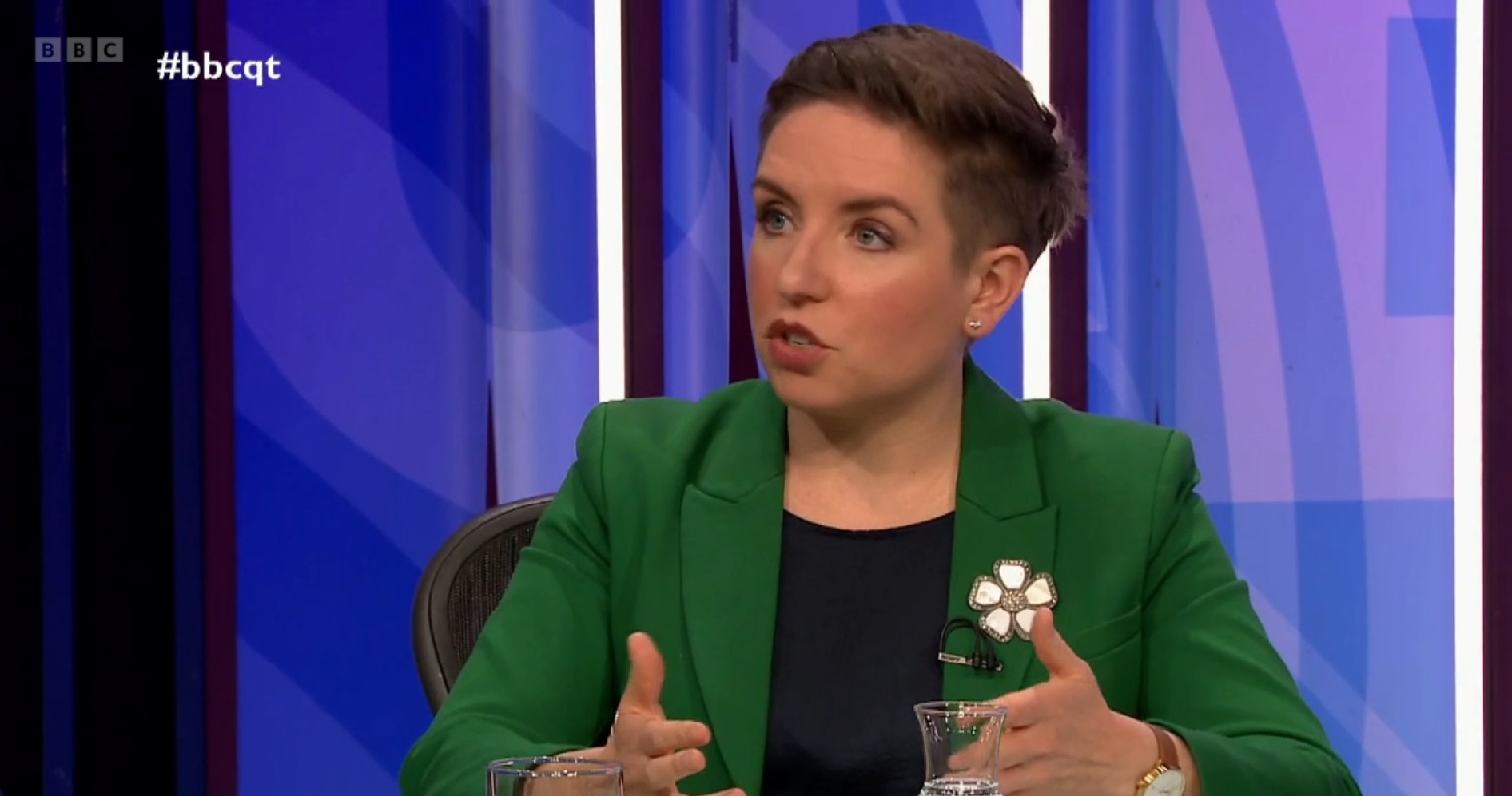
Image of the Green Party’s Carla Denyer on BBC Question Time.
Green Party co-leader, Carla Denyer, said: “No other political party is being honest enough with voters – the very fabric of our NHS is crumbling and must be repaired and rebuilt.
“The NHS is stretched to breaking point and so we are offering a package to train and retain staff and cut waiting lists, but we also need to recognise that we are asking over-worked staff to cope with outdated equipment and poor buildings.”
Rachel Birch, an intensive care nurse with 12 years’ experience in the NHS, added, “I’ve seen leaking ceilings in our intensive care unit, staff having to work out of portacabins, and wards in desperate need of improvements and modernisation.
“The buildings that we use treating patients are old and inadequate for use.
“Our department cares for critically ill patients needing maximum support that deserve the best facilities and treatment.”
Green MPs elected on Thursday would press for:
£22bn in capital investment over the next five years to bring our crumbling hospitals and old equipment up to standard
Including, a one off £2bn capital investment in primary care buildings, £1.1bn annually assigned to clear the maintenance backlog and £3bn a year to be spent on hospitals.
This £22bn capital investment fund will sit alongside a £30bn revenue expenditure that will see people accessing an NHS dentist, working towards GP appointments on the day of need for those in high need and significant uplift in pay for frontline staff.
“It is only the Greens who are offering a cast-iron guarantee to push back against the creeping privatisation of the NHS and rebuild it, so it is fit for the future.