Tens of Thousands Rally in Havana Against US Aggression as Cuba Prepares Citizens for War

Spread the love

Article by Brett Wilkins republished from Common Dreams under Creative Commons (CC BY-NC-ND 3.0).
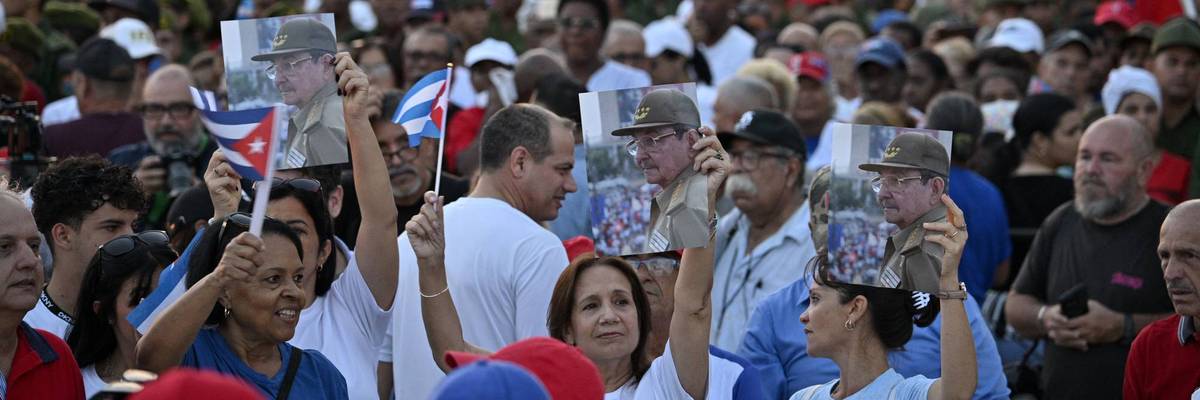
Cubans hold photos of revolutionary hero and former President Raúl Castro outside the US Embassy in Havana on May 22, 2026 amid threats of attack by the United States. (Photo by Adalberto Roque/AFP via Getty Images)

“Here we are prepared to fight imperialism,” said Cuban lawmaker Mariela Castro, daughter of Raúl Castro. “Cuba is a small and poor country, but one with experience confronting US imperialism.”

Tens of thousands of Cubans rallied Friday in Havana to denounce the Trump administration’s indictment of former President Raúl Castro and threats to attack the island nation, whose socialist government has been preparing its citizens to defend their homeland and revolution against US aggression.

“No disrespect is shown to the heroes of the homeland!” Cuban President Miguel Díaz-Canel said as people flooded the streets outside the US Embassy in Havana. “History and traditions are not insulted without a response! That does not happen in Cuba!”

RECOMMENDED…
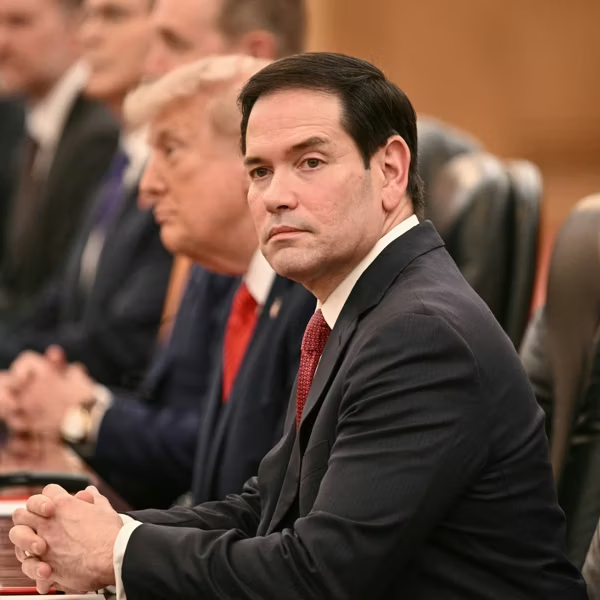
Marco Rubio

Trump Admin Claims of Cuban Plans for Drone Attacks Denounced as ‘Ludicrous Pretext’ for War
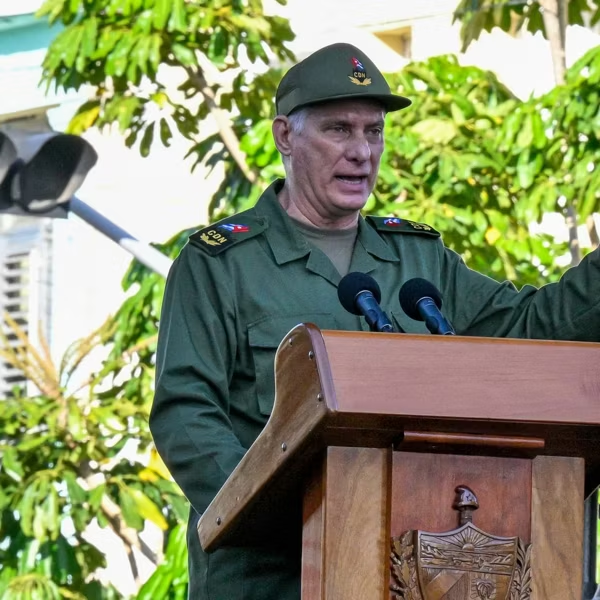
CUBA-POLITICS-ANNIVERSARY

Unlawful US Attack, Says Cuban President, ‘Would Trigger a Bloodbath With Incalculable Consequences’

The massive rally followed Wednesday’s US Department of Justice indictment of revolutionary hero Raúl Castro, who served as president for a decade after his older brother, Fidel Castro, stepped down in 2008. The DOJ indicted Castro for his alleged role in the 1996 shoot-down of planes operated by the counterrevolutionary group Brothers to the Rescue after repeated warnings that they had violated Cuban airspace.

Rallying under the slogan “Raúl is Raúl”—originally popularized during the transitional period of rule between the Castros to highlight the younger brother’s reforms—Cubans vowed to defend their revolution in the face of the latest US threats.

“This new aggression has united us more and elevated the honor, dignity, and anti-imperialist spirit of a people already recognized around the world for their brave resistance to any form of subordination to the empire,” Díaz-Canel said.

Cuban legislator Mariela Castro, Raúl’s granddaughter, told rallygoers that “we are prepared for combat.”

“No one is going to kidnap him. I can assure you of that,” she said, alluding to the US invasion and abduction of Venezuelan President Nicolás Maduro on dubious narco-terrorism charges earlier this year. “Neither him nor anyone else.”

“My father is very calm, watching and smiling,” Castro added. “Here, we are prepared to fight imperialism. Cuba is a small and poor country, but one with experience confronting US imperialism. We know that as long as there is an anti-imperialist revolution, there will be a gigantic and ruthless enemy.”

Critics noted the hypocrisy of the Castro indictment, given the ongoing illegal US bombing of boats that the Trump administration claims—without providing evidence—were smuggling drugs in the Caribbean Sea and Pacific Ocean.

“Washington has no moral authority to judge anyone,” Gerardo Hernández, coordinator of the Committees for the Defense of the Revolution, said, referring to the boat-bombing campaign, which has killed nearly 200 people in close to 60 reported attacks. “Cuba is a people of peace and reaffirms its legitimate right to self-defense.”

“Cuba does not constitute a threat to US security,” he continued. “On the contrary, Cuba is a state under attack by the United States.”

Observers have pointed to the decadeslong US-backed campaign of anti-Castro terrorism against the Cuban people, including the 1976 bombing of Cubana Flight 455, a commercial airliner with 73 people aboard, including 11 Guyanese nationals and 24 teenage members of Cuba’s junior Olympic fencing team. Perpetrators of the attack enjoyed safe haven in the United States, mainly in Miami, where the city celebrated a day in honor of one of the bombing’s alleged masterminds.

“The Cuban people reaffirm the unwavering decision to defend their homeland and revolution,” Hernández added. “With the greatest determination, they reaffirm their absolute and firm support for Army General Raúl Castro.”

Mariela Castro said that “my family, like all Cuban families, is waiting for instructions to know where we need to go” in the event of a US attack.

As US Secretary of State Marco Rubio—whose parents immigrated to the United States from Cuba during the US-backed dictatorship that preceded the Castro-led revolution—said Thursday that the chances of a “negotiated and peaceful agreement” with Havana are “not high,” Deputy Cuban Foreign Minister Carlos Fernández de Cossío acknowledged that his country is preparing for war, asserting that “we would be naive not to.”

Cuban officials have been circulating a pamphlet titled a “Family Guide for Protection Against Military Aggression.” The publication warns that the US is preparing “to launch a military assault and destroy our society with the aim of perpetuating capitalism… and annihilating the dream of our Commander-in-Chief, Fidel Castro.”

The pamphlet instructs Cubans to pack survival kits and seek shelter in the event of air-raid alerts. It also contains life-saving first aid instructions.

“Should the enemy attack, our Revolution will defend itself until victory is achieved and the aggressor is expelled,” the pamphlet states.

US President Donald Trump recently tightened the internationally condemned 65-year US economic embargo on Cuba, imposing a fuel blockade that has exacerbated an energy emergency characterized by blackouts and deadly suffering among the most vulnerable Cubans, including sick people and children.

Last month, Trump said that “we may stop by Cuba after we’re finished” with the illegal US-Israeli war of choice against Iran. The president has also stated he believes he’ll “be having the honor of taking Cuba,” language echoing the 19th-century US imperialists who conquered the island along with Puerto Rico, Guam, and the Philippines from Spain in another war waged on dubious pretense.

“Whether I free it, take it—I think I can do anything I want,” Trump said of the island and its 11 million inhabitants.

BreakThrough News interviewed Havana residents earlier this week about the specter of US attack.

“We Cubans have to protect ourselves,” elderly Havana resident Juan Hernández said. “We’re not going to hand any Cuban over to a foreigner, because that would be immoral. It would be treason.”

Hernández accused the US of “provocation” in order to “justify invading the country,” adding “that would only lead to bloodshed on both sides.”

“Besides,” he added, “Cuba isn’t a threat to them at all. What does Cuba have? Do we have atomic bombs? Do we have anything? We have nothing.”

Article by Brett Wilkins republished from Common Dreams under Creative Commons (CC BY-NC-ND 3.0).

Donald Trump sings and dances, says that it's fun to kill everyone ... unless he gets distracted or falls asleep.
Donald Trump sings and dances, says that it’s fun to kill everyone … unless he gets distracted or falls asleep.
Orcas discuss how Trump was re-elected and him being an obviously insane, xenophobic Fascist.
Elon Musk urges you to be a Fascist like him, says that you can ignore facts and reality then.
Continue ReadingTens of Thousands Rally in Havana Against US Aggression as Cuba Prepares Citizens for War

Five questions over Nigel Farage’s £5 million donation

Spread the love
EPA/ANDY RAIN

Sam Power, University of Bristol

Questions about a £5 million gift to the leader of Reform UK Nigel Farage from a crypto billionaire simply won’t go away. As someone who spends their life thinking, writing and talking about money in politics, I’ve been left with at least five questions that remain unanswered. These centre not just on the donation and Reform’s financial arrangements, but also on what it says about the system of political finance in the UK.

1. Should he have declared it?

It appears so. It was reported in late April that Farage had received the cash from Christopher Harborne. This was shortly before deciding to stand in the seat of Clacton in the 2024 general election, which he subsequently won.

Farage claims that because it was a personal gift it did not need to be registered. However, the House of Commons code of conduct states that the possible motive of the gifter and what the donation is to be used for should be considered. If there is doubt, the code is clear that it should be registered.

Harborne has said he expected nothing in return, but only wanted to ensure Farage’s security. But given the timing of the gift, in 2024, questions might be asked about his motive. At this time, according to the Electoral Commission, Harborne had given about £1.5 million to the Conservatives (and £1 million to Boris Johnson’s private office). He had also given millions to Reform ahead of its 2019 general election campaign.

As such, Harborne was not some unknown benefactor. This information, at the very least, creates doubt about whether the donation ought to be declared. And there have also been questions over a house Farage bought weeks after receiving the £5 million.

But the question of whether the money should have been declared is now one for the parliamentary standards commissioner, which is investigating whether Farage broke the rules.

2. What does it tell us about how Reform is funded?

One thing that we know about Reform is that its funding base is remarkably shallow. In fact, investigative journalist Peter Geoghegan has found that 75% of all the reportable donations Reform has received came from just three men. They are Christopher Harborne, millionaire businessman Jeremy Hosking and Reform’s own deputy leader, Richard Tice.

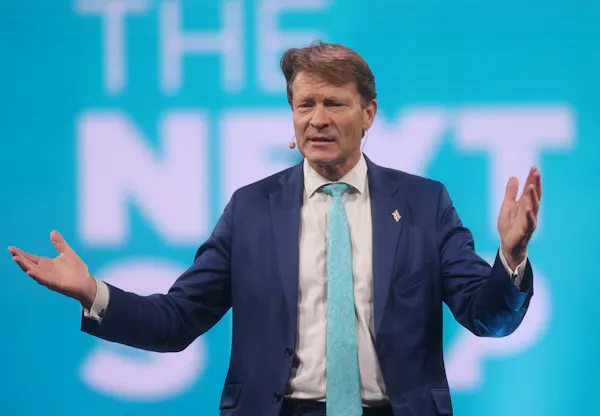
Reform’s deputy leader Richard Tice is one of the three main donors bankrolling the party. EPA/NEIL HALL

I have shown in my research that the UK is very much a donor-led democracy where the few get more of a say than the many. So concerns about the wealthy having a larger influence on the way politics is run are certainly not a Reform-shaped novelty.

3. Should the public be worried?

Yes. It has been argued that for elections to have integrity, four things need to be on show: participation, contestation, deliberation and adjudication. Importantly, perception is as important as reality here.

Public opinion fluctuates, but one of the more robust polling findings is that the public has always been and remains concerned that donors have an outsized influence on British politics. So whether they do or not (and it’s notoriously hard to prove), the damage is done.

4. Should Reform be worried?

When he was questioned about Farage’s £5 million, Tice maintained that voters knew about it and “they said, we want more Nigel”. It is true that if you ask the UK public to rank issues that matter to them, then (unless you happen to knock on my door) party funding wouldn’t come close to the top ten.

And yet standards never seem to matter to politicians – until they really do. Just ask Boris Johnson, Keir Starmer or Peter Mandelson, all of whom have faced questions of their own. There are many populists who build personas as mavericks who refuse to play by the rules. While voters might not always agree with their methods, they get results. (And some voters might even think: gosh, you can’t help but love them a little bit for it.)

Nigel Farage might not think the public cares about this. But it appears that they do. And maybe Farage knows this too. If not, he’d probably have been happy to mention the £5 million in the first place.

5. Why don’t Labour care?

It remains astonishing that Labour seems to be so uninterested in addressing a financial pattern of behaviour that could risk undermining democracy – which the party is professing to protect.

It seems even more astonishing that the party seems so casual about addressing the issue of mega-donors while a bill is going through parliament that is quite literally designed to restore faith in politics.

But it may be that the government doesn’t want to cap donations (as many other countries do) because it thinks it would mean introducing more state funding. But the problem has now become too stark to ignore, and a compromise position is imperative.

This could be a “democracy backstop” donation cap of £1 million. This is far higher than any other cap I know of around the world. But it would reflect the voluntarist tradition of the UK – and could start a conversation. Get a backstop in place, and then conduct research on how much it can be lowered without a) risking the financial ruin of parties or b) the need for further state support.

After the May elections, Labour said it was listening to voters and that as a government it needed to be bold. It’s time for the party to put its money where its mouth is. That is, before a mega-donor does it for them.

Sam Power, Lecturer in Politics, University of Bristol

This article is republished from The Conversation under a Creative Commons license. Read the original article.

Nigel Farage urges you to ignore facts and reality and be a climate science denier like him and his Deputy Richard Tice. He says that Reform UK has received £Millions and £Millions from the fossil fuel industry to promote climate denial and destroy the planet.
Nigel Farage explains the politics of Reform UK: Racism, Fake anti-establishmentism, Deregulation, Corporatism, Climate Change Denial, Mysogyny and Transphobia.
Elon Musk urges you to be a Fascist like him, says that you can ignore facts and reality then.
Continue ReadingFive questions over Nigel Farage’s £5 million donation

‘No records’ from meetings between top officials and Mandelson’s lobbying firm

Spread the love

Article by Ethan Shone republished from OpenDemocracy under a Creative Commons Attribution-NonCommercial 4.0 International licence.

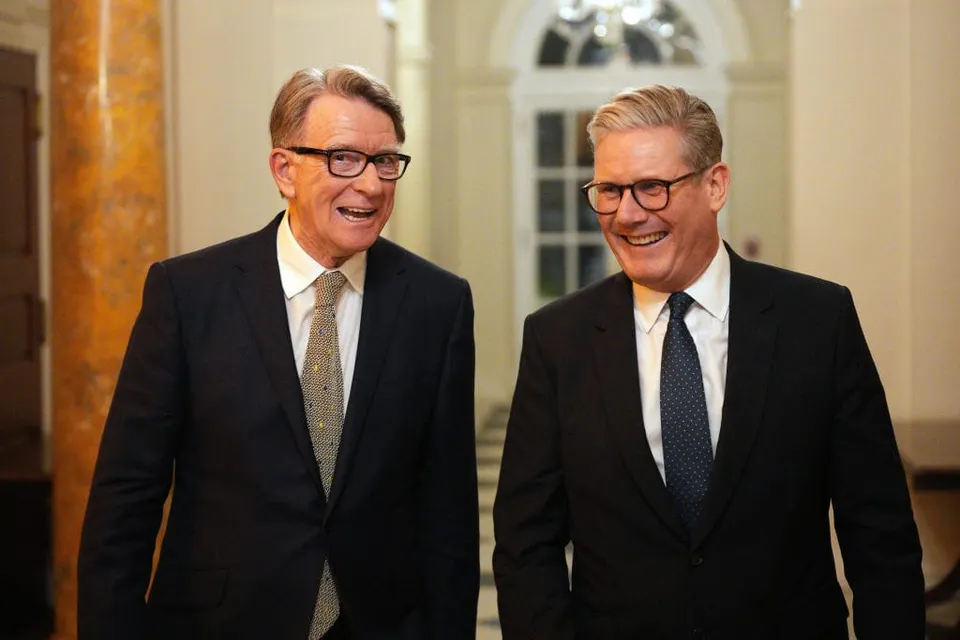
Peter Mandelson was Keir Starmer’s pick for US ambassador, but was forced to resign following the release of the Epstein Files (Photo by Carl Court/Getty Images)

Government failed to declare meeting with top Global Counsel clients, and says no notes were taken at several meetings

The government has no official records of meetings that top civil servants held with senior figures and clients from Peter Mandelson’s lobbying firm last year, including an undeclared meeting with oil giants and private equity firms, openDemocracy can reveal.

Global Counsel went into administration earlier this year after details of Mandelson’s close relationship with Jeffrey Epstein were revealed in the Epstein Files, including emails showing how he sought the billionaire paedophile’s advice on establishing the firm.

But before its collapse, Global Counsel’s business was booming as it and its founder established close ties to Keir Starmer’s Labour Party. 

Ahead of the 2024 election, the company donated a member of staff to support Labour’s work on financial services policy development and produced promotional materials, which openDemocracy has seen, touting its significant access to the party. “Our clients’ engagement pays dividends in the long run,” it promised, adding that it was “uniquely placed” to help corporate clients “establish relationships that outlive the election and deliver policy dividends on the other side”.

By the end of that year, Starmer had appointed Mandelson as the UK’s US ambassador, and Global Counsel had seen its UK revenue surge by 75% since 2022, from £7.9m to £13.9m. The business also took on over 20 new clients in the first quarter after Labour’s win – more than in the previous five years combined – including Palantir, Shell and TikTok.

Now, openDemocracy can reveal that the most senior civil servant from the Department for Business and Trade and a senior Treasury official met with Global Counsel’s representatives several times last year, including at a roundtable the firm hosted for its clients.

No records from the discussions – including notes or minutes – exist, the government told openDemocracy in response to a Freedom of Information request.

Our investigation comes as parliament’s Intelligence and Security Committee takes the rare step of voicing “grave concerns” about the government’s failure to keep proper records from official meetings, following its review of documents set to be published relating to Mandelson’s time as US ambassador.

ISC chair Lord Beamish wrote to the government expressing a number of concerns, including over a “lack of an audit trail – in terms of agendas, minutes and records of conversations,” which he described as “unacceptable in government.”

Shadowy meetings

In January last year, Gareth Davies, then permanent secretary at the Department for Business and Trade, met Global Counsel’s most senior adviser on business and trade, Geoffrey Norris, at the exclusive Royal Horseguards Hotel in Whitehall. 

The meeting was useful enough that four months later, in May 2025, the pair returned to the same hotel to chat some more. 

Yet little is known about what they discussed. The department quite vaguely recorded the purpose of these meetings as “to discuss latest business updates” and “discussion on growth”, respectively.

When openDemocracy asked for more information, the government said it had none.

Davies then spoke at a Global Counsel dinner event in early June and attended a client roundtable event that the firm hosted, which Norris chaired, at its offices weeks later. 

There, the senior civil servant spoke with executives from several Global Counsel clients, including oil giants Shell and Equinor, plus JP Morgan and Blackstone. But you wouldn’t know that from the government’s published transparency requests, which fail to mention that clients were present. Their attendance was revealed to openDemocracy only in documents obtained via Freedom of Information requests.

Norris was not the only Global Counsel member Davies was in touch with. In July last year, he met with Benjamin Wegg-Prosser, the company’s co-founder and CEO, “to discuss the industrial strategy”. 

Both Norris and Wegg-Prosser are New Labour alumni. Norris was a top business aide in Tony Blair and Gordon Brown’s governments, and later advised Mandelson while he was business secretary, while Wegg-Prosser worked as an adviser to Mandelson before becoming Blair’s director of strategic communications. 

When Labour lost power at the 2010 election, Mandelson and Wegg-Prosser established Global Counsel, which Norris joined soon afterwards, remaining at the company until its collapse in February. 

Wegg-Prosser was reportedly offered a peerage and a role as Labour’s investment minister in September 2024, but declined to avoid stepping down as Global Counsel’s CEO. He eventually quit in February of this year after it was revealed that he’d had extensive contact with Jeffrey Epstein, including traveling to New York to meet Epstein in 2010, two years after Epstein was convicted for soliciting prostitution from a minor. Global Counsel went into administration weeks after Wegg-Prosser’s exit.

Davies is a long-serving civil servant who recently left DBT to become the top official at the Home Office. He began his career in government alongside Davies, Wegg Prosser and Mandelson, as a Downing Street adviser during the New Labour years. 

A DBT spokesperson said: “Transparency returns are published in line with Cabinet Office guidance, and the Civil Service Code has not been broken.”

‘We need full transparency’

Global Counsel also enjoyed significant access to the Treasury under Labour – in some cases with no record of what it lobbied ministers and officials about. 

A Global Counsel lobbyist specialising in financial services was seconded to the office of Labour’s first City minister, Tulip Siddiq, before she resigned in January 2025 over alleged corruption links to her aunt’s ousted government in Bangladesh. The staffer’s secondment was a registrable donation-in-kind valued at more than £35,000, and not against parliament’s rules.

In November 2024, Siddiq, who was also economic secretary to the Treasury, met with one of Global Counsel’s most senior figures, its financial services lead, Rebecca Park, to discuss “growth and competitiveness of the financial services sector”. The government declined to provide any details of what was discussed after openDemocracy submitted an FOI request last year.

Later, in July 2025, the Treasury’s director general of financial services, Gwyneth Nurse, met Global Counsel’s Benedict Brogan, a former journalist-turned banking lobbyist, at the Wolseley to “discuss the UK regulatory environment”. Again, the government told openDemocracy it held no further record of what was discussed at the meeting. 

Follow-up correspondence obtained by openDemocracy shows Brogan invited Nurse to a client roundtable event in the autumn, with the suggested date of 20 October. Government transparency data shows Nurse attended a Global Counsel dinner event on 20 October, though the records do not show which of the firm’s clients were in attendance. 

Financial deregulation has been a significant feature of Labour’s policy offering to the City, which has won the party rare public shows of support from some of the world’s most influential financiers, notably JP Morgan’s Jamie Dimon and Jon Gray of Blackstone. Both firms have, incidentally, worked with Global Counsel. 

The lobbying firm was also reportedly contracted by other financial giants as part of an ultimately successful campaign against an increase in ‘carried interest,’ the reduced rate of tax that dealmakers pay on their profits from private equity deals, which can often save them millions.

Mick McAteer, a former regulator and the director of the Financial Inclusion and Markets Centre, said the finance sector should “serve the interests of the real economy, environment, and society”. 

“But, finance sector lobbyists now exercise undue influence over finance sector policy. As a result, we are seeing a programme of deregulation and corporate welfare designed to promote finance sector growth, which could ultimately harm our interests. We need full transparency on meetings between policymakers and finance lobbyists.”

The government has previously faced significant criticism over its failure to declare a meeting in early 2025 between Starmer, Mandelson and Palantir.

Now, its failure to keep records of the meetings it has had with Global Counsel and its clients appears to breach the Civil Service Code, under which all civil servants are legally required to “keep accurate official records”. 

Separate guidance on managing records in ministers’ private offices states explicitly that officials are “bound by the government’s commitment to keep records of meetings with outside interest groups”.

Duncan Hames, senior director of policy at Transparency UK, said: “When government transparency is treated as a tick-box exercise, or ignored altogether, this undermines our right to know how decisions are made and leaves room for undue influence. 

“In this case, as in so many others, it is clear that the current system is not working as it should. It’s time for the UK government to follow Scotland’s lead and publish a comprehensive register of those lobbying government.”

openDemocracy contacted Ben Wegg Prosser and Benedict Brogan but neither responded.

Article by Ethan Shone republished from OpenDemocracy under a Creative Commons Attribution-NonCommercial 4.0 International licence.

Keir Starmer says that the Labour Party under his leadership is intensely relaxed about assaulting those least able to defend themselves - the very poorest and most vulnerable.
Keir Starmer says that the Labour Party under his leadership is intensely relaxed about assaulting those least able to defend themselves – the very poorest and most vulnerable.
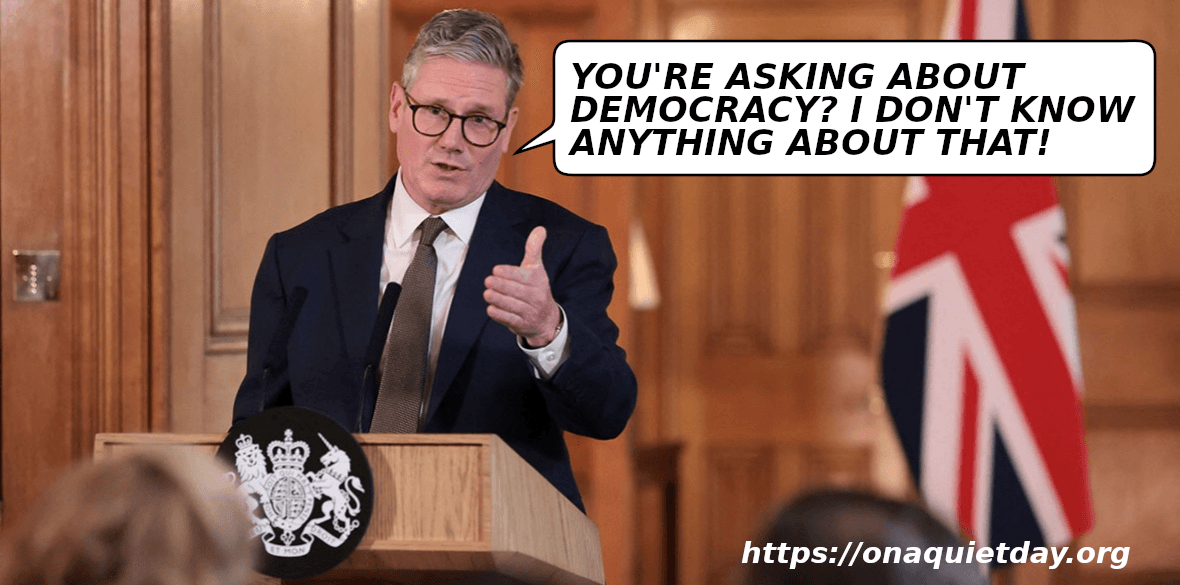
Keir Starmer confirms that he doesn't know anything about democracy.
Keir Starmer confirms that he doesn’t know anything about democracy.

dizzy: Busy this morning.

Continue Reading‘No records’ from meetings between top officials and Mandelson’s lobbying firm

High levels of toxic ‘forever chemicals’ found off coast of southern England

Spread the love

https://www.theguardian.com/environment/2026/may/19/toxic-pfa-forever-chemicals-channel-southern-england-solent

A family looking for marine life on the Isle of Wight. The study found one source of Pfas was from treated effluent from Southern Water plants on the mainland. Photograph: Nikreates/Alamy

Study of Channel finds levels of toxic Pfas in Solent at 13 times safe limits in some places, with much coming from treated sewage

Scientists have found high levels of toxic Pfas, or “forever chemicals”, in soil, water and throughout the marine food chain in the UK’s Solent strait, including at protected environmental sites, according to a new study.

In some samples, pollution was 13 times the safe threshold for coastal waters. Others, which were below legal limits for individual chemicals, failed tests for combined toxicity.

The samples were taken from the Solent strait, which runs between the Isle of Wight and the mainland, forming part of the Channel. The chemicals are thought to have entered the environment from wastewater treatment plants, sewage outflows, historic landfills and nearby military sites.

Researchers said their findings highlighted the need to monitor chemicals in combination and to make a blanket ban on Pfas part of the government’s water reform agenda.

Prof Alex Ford, a biologist at the University of Portsmouth and one of the study’s authors, said: “If there was an oil spill in the Solent that industry would have to pay for the restoration of those habitats, but that doesn’t happen with sewage.

But he added: “This is one thing I don’t necessarily pin on the water companies because they don’t have the capacity to treat these compounds. That’s why they should be banned at source.”

[T]he Marine Conservation Society, which funded the Solent study, said: “We need to go further and faster.”

“It’s not good enough to plan to have a plan,” said Calum Duncan, head of policy at the environmental charity. “We urgently need action and we have this once-in-a-generation opportunity with the water reform process to get on and do that.”

https://www.theguardian.com/environment/2026/may/19/toxic-pfa-forever-chemicals-channel-southern-england-solent

Continue ReadingHigh levels of toxic ‘forever chemicals’ found off coast of southern England