Greens respond to possible airport expansions

Spread the love
Green Party MP for Brighton Pavilion Siân Berry. Image by Kelly Hill, Wikimedia CC BY-SA 4.0.

Responding to the news that Rachel Reeves is expected to give the go-ahead to a series of airport expansions across the UK, Green Party MP for Brighton Pavilion, Sian Berry, said:

“We must ask who these decisions would be made for and why. Whose advice is the Government listening to, when record-high wealth inequality is causing harm to the economy and society in many different ways, while frequent flying is the preserve of the super-rich?

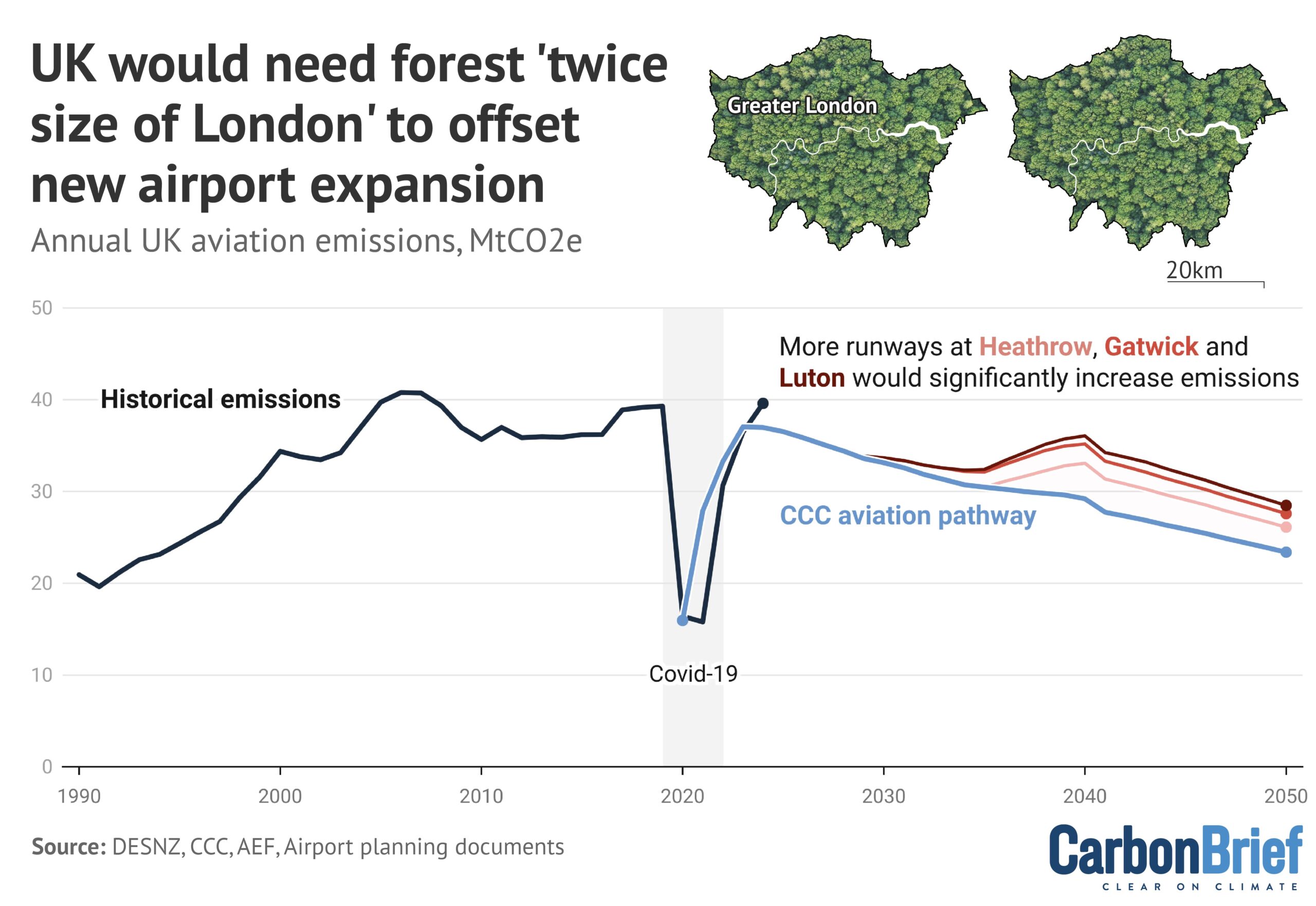
“The aviation lobby is loud and well-funded, but the Government should instead be listening to scientists and its own Climate Change Committee, which has already urged a halt to overall airport expansion. The previous Labour government’s poor record on airport expansion doesn’t have to continue.

“If Ed Miliband is serious in his role as Net-Zero Minister, he will work to prevent the Chancellor and Transport Secretaries making a huge mistake, and advise the Chancellor to not make any dangerous new decisions until they have heard and listened to the new advice from the Climate Change Committee which is due in February.”

Orcas comment on killer apes destroying the planet by continuing to burn fossil fuels.
Continue ReadingGreens respond to possible airport expansions

CCC: Labour must ‘make up lost ground’ to hit UK climate goals

Spread the love
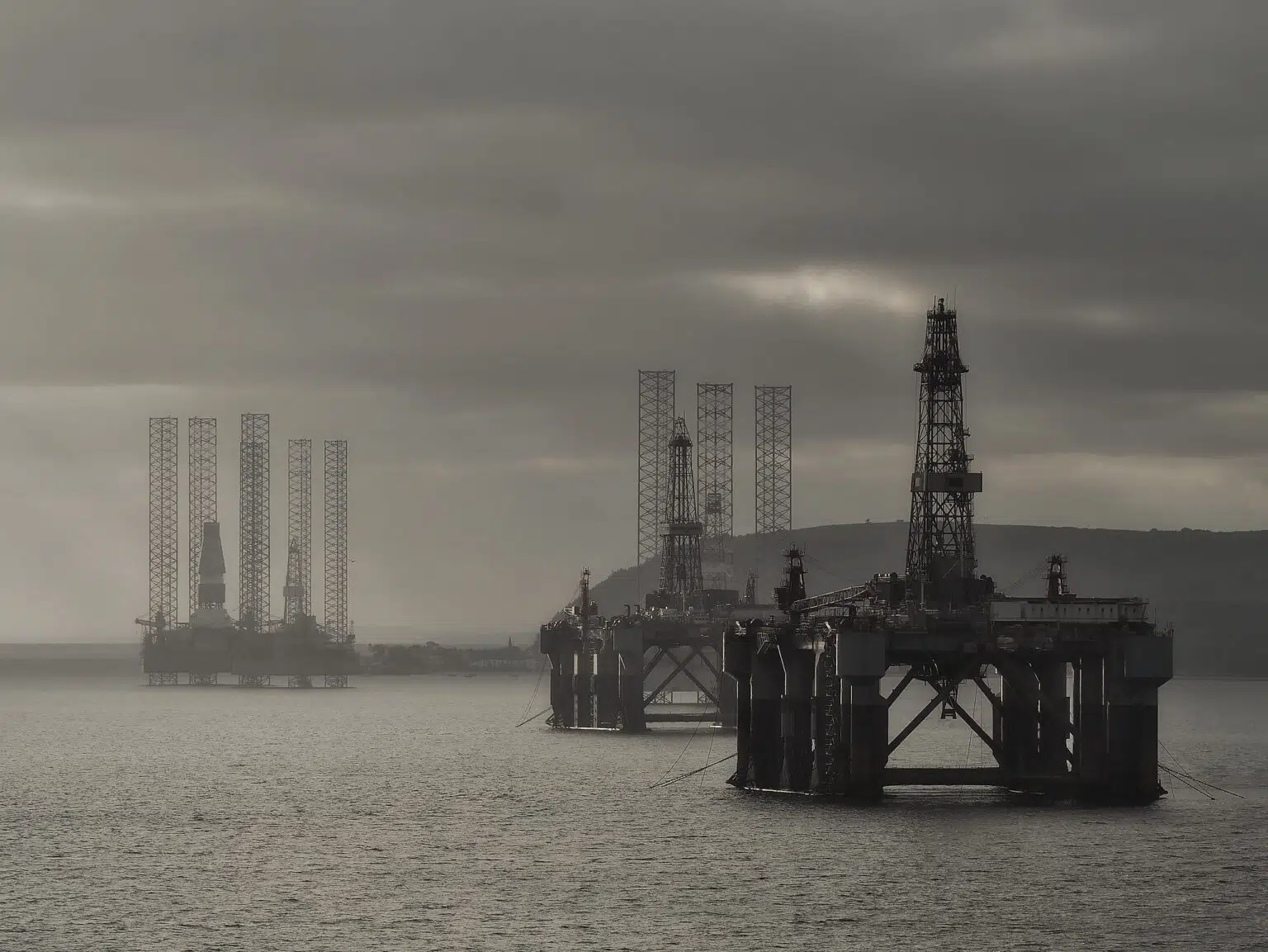
North Sea oil rigs in Cromarty Firth, Scotland. Credit: joiseyshowaa (CC BY-SA 2.0)

Original article by Josh Gabbatiss and Molly Lempriere from Carbon Brief

The UK’s new Labour government must urgently reinstate the net-zero plans shelved by its predecessor in order to “limit the damage” caused by Conservative policy rollbacks, according to official advisers at the Climate Change Committee (CCC).

In its latest annual progress report, the CCC issues some frank words about the “confusing and inconsistent” behaviour of the previous government.

The Conservatives only brought in “credible” policies to cover one-third of the emissions cuts required to hit the UK’s 2030 climate target, the committee finds.

Despite being “insufficient”, the CCC notes that this is a slight improvement on last year. Since then, a requirement for carmakers to sell electric models and a deal to help decarbonise heavy industry both boosted the credibility of the UK’s climate strategy, it says.

Nevertheless, the committee criticises former prime minister Rishi Sunak’s decision to roll back key net-zero policies, notably delaying bans on the sale of new gas boilers and non-electric cars. It says that, contrary to his claims, there was “no evidence” the delays would save people money.

The committee points to a general need to scale up emissions cuts across the economy. It says almost none of the UK government efforts to scale up low-carbon technologies or invest in nature-based solutions are on track.

With this in mind, the progress report lays out a selection of “priority” actions that the new Labour government should take to “make up lost ground” so the UK can achieve its climate goals.

In the new report, the committee says a priority for the Labour government should be pausing any new airport expansions until there is a UK-wide “capacity management framework” in place. 

This would assess aviation emissions and ensure there is no overall expansion “unless the carbon intensity of aviation is outperforming the government’s emissions reduction pathway”.

Long and detailed original article at Carbon Brief

Continue ReadingCCC: Labour must ‘make up lost ground’ to hit UK climate goals

The world no longer needs new fossil fuels – and the UK could lead the way in making them taboo

Spread the love
Savva_25/Shutterstock

Greg Muttitt, UCL; Fergus Green, UCL, and Steve Pye, UCL

North Sea oil and gas has become a battleground issue in the UK general election.

The Labour party’s manifesto promises an end to issuing new licenses for finding oil and gas. The Conservative party meanwhile proposes a law that would require the next government to hold a licensing round every year.

Our recent study found that new fossil fuels are not needed, and that stopping the extraction of new coal, oil and gas is among the best ways to tackle the climate crisis.

Scientific assessments tell us that global warming above 1.5°C will mean escalating danger to the environment, human health and the economy. We found that, in a world that limits warming to 1.5°C, remaining global demand for fossil fuels could be met by assets that have already been built.

This means that Labour’s plans do not go far enough. Even under existing licenses, new oil and gas fields need not be opened, nor new platforms and pipelines built.

Surplus to requirements

Our research confirms an earlier finding of policy experts at the International Energy Agency (IEA): that no new fields are needed to meet energy demand as the world attempts to achieve net zero emissions. However, our analysis goes further by demonstrating that no new fossil-fuelled power stations are needed either.

If governments stop new projects, the production and consumption of fossil fuel will gradually decline over coming decades as existing assets reach the end of their lifespans. This gradual transition will give time to plan the process, to protect and create jobs and to build solar and wind farms that meet energy demand as fossil fuels are phased out.

A seaman working on an offshore rig.
Winding down the fossil fuel industry should allow workers time to retrain.
Arild Lilleboe/Shutterstock

A stop to new fossil fuel projects is essential to “transitioning away” from coal, oil and gas, which is what governments agreed to do in December 2023 at the COP28 climate summit in Dubai. This is a necessary commitment, but since it is expressed as a vague and collective goal with an indeterminate end point, it is easy for governments to pay lip service to it while maintaining business-as-usual.

The IEA recently reported that global investment in fossil fuels has increased every year since 2020, even as governments announced net zero emissions targets. An investigation by campaign group Global Witness found that the United Arab Emirates signed over US$100 billion of oil deals in 2023 while it presided over climate negotiations.

Commitments to no new fossil fuels, such as Labour’s plan to end new licensing, are less prone to obfuscation because they are specific and immediate. What’s more, it is clear for everyone to see if a new fossil fuel project is being built. Making commitments that are easily verifiable is a proven recipe for building international trust and cooperation around a shared goal.

There are also political advantages to stopping new fossil fuel projects. Coalitions that support fossil fuels, including oil firms and their employees, are more capable of organising against the closure of existing assets than the cancellation of those yet to be built. Opposing coalitions, including communities living with the pollution and disruption of oil and gas extraction, tend to be more successful when mobilising against planned projects.

The new norm

By making a “no new fossil fuels” commitment, governments can help establish a new norm.

A norm is an expected standard of behaviour, like the norm against smoking in indoor public places, or the international norm against slavery. The more states and global institutions adopt a norm the more social pressure it places on others to follow suit. Once a critical mass has adopted the norm, its spread is self-sustaining.

Arguably, this process is well underway for coal – the dirtiest fossil fuel. The Powering Past Coal Alliance, a group of governments committed to phasing out coal power, was founded in 2017 by the UK and Canada. Already the alliance has expanded to include 60 national governments, including major coal consumers Germany and the US.

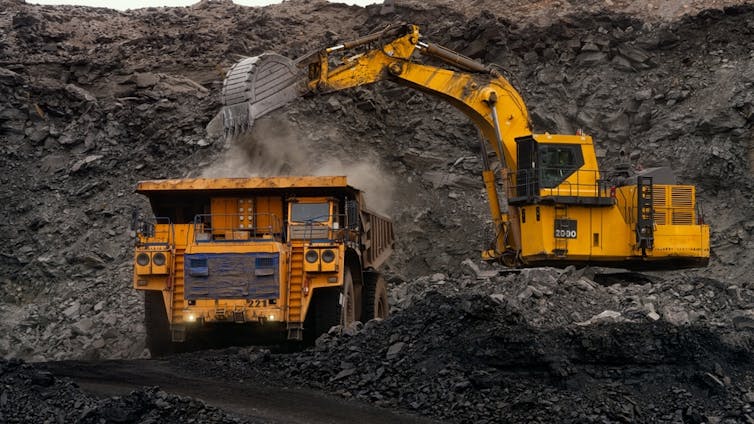
An excavator piles coal onto a truck.
Global coal demand rose when gas prices spiked in 2021 and 2022.
Roman Vasilenia/Shutterstock

The process of norm-building is gathering pace for other fossil fuels too. Governments that become core members of the Beyond Oil and Gas Alliance, which so far numbers 15, commit to issuing no new licenses for oil and gas exploration on a path to the total phase-out of fossil fuel production.

The Clean Energy Transition Partnership, comprising 41 governments and financial institutions, commits to ending international lending for fossil fuel projects. And in the private sector, 22 financial institutions have pledged to stop financing new oil and gas projects.

Were a future UK government to commit to stopping new oil and gas fields, it would lend considerable momentum to the norm, given the UK’s role in the history of the oil industry and the fact that is home to BP and Shell, two of the world’s five “supermajor” oil companies.

The UK Climate Change Committee, the government’s independent advisers, has noted that stopping new oil and gas projects would send an important signal to other countries. Such a move would also restore the UK’s reputation as an international leader on tackling climate change, at a critical time when the climate-denying far right is making inroads.


Imagine weekly climate newsletter

Don’t have time to read about climate change as much as you’d like?

Get a weekly roundup in your inbox instead. Every Wednesday, The Conversation’s environment editor writes Imagine, a short email that goes a little deeper into just one climate issue. Join the 30,000+ readers who’ve subscribed so far.The Conversation


Greg Muttitt, Honorary Research Fellow, Energy & Climate Change, UCL; Fergus Green, Lecturer in Political Theory and Public Policy, UCL, and Steve Pye, Associate Professor in Energy Systems, UCL

This article is republished from The Conversation under a Creative Commons license. Read the original article.

Continue ReadingThe world no longer needs new fossil fuels – and the UK could lead the way in making them taboo

Nigel Farage’s Anti-Climate Record

Spread the love

Original article by Sam Bright republished from DeSmog

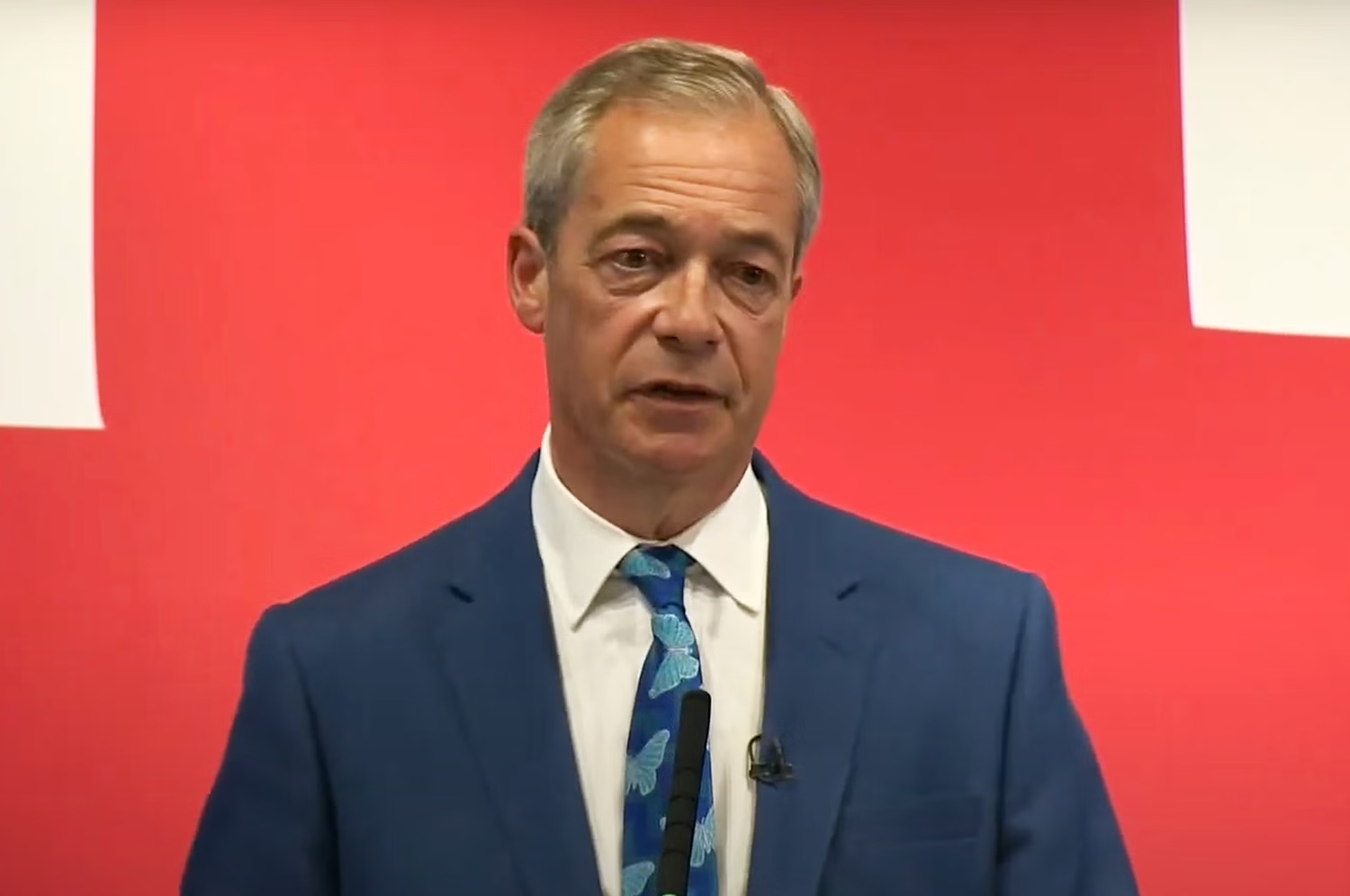
Reform UK Leader Nigel Farage speaking at a Reform UK press conference on 3 June 2024. Credit: Reform UK / YouTube

The Reform UK leader is a vocal opponent of net zero policies, and has questioned the basis of established climate science

Pro-Brexit campaigner Nigel Farage has announced that he will be standing to be an MP at the upcoming general election and will be replacing Richard Tice as leader of the populist party Reform UK

Farage, who says that he hopes to become “the voice of opposition” in Parliament, has long been a vocal opponent of climate action and a critic of climate science – campaigning for a referendum on the UK’s 2050 net zero emissions target.

When he was the leader of the UK Independence Party (UKIP), the party’s 2015 and 2017 election manifestos pledged to rip up green measures, repeal the UK’s Climate Change Act, withdraw from the 2015 Paris Agreement – the flagship deal to tackle global emissions – and support fossil fuel extraction.

These reflected Farage’s personal views on climate action. In 2015, he told the libertarian website Spiked: “I think wind energy is the biggest collective economic insanity I’ve seen in my entire life. I’ve never seen anything more stupid, more illogical, or more irrational.”

Farage is a presenter on GB News, the right-wing broadcaster that has regularly provided a platform to climate science denial and attacks on green reforms since it launched in June 2021. 

Speaking on GB News in August 2021, Farage said that he was “very much an environmentalist” and that he couldn’t “abide things like plastics in our seas, pollution in our rivers.” However, on the issue of climate change, he added: “What annoys me though, is this complete obsession with carbon dioxide almost to the exclusion of everything else, the alarmism that comes with it, based on dodgy predictions and science.”

The world’s foremost climate science body, the UN’s Intergovernmental Panel on Climate Change (IPCC), has stated it is “unequivocal that human influence has warmed the atmosphere, ocean and land”, while scientists at NASA have found that the last 10 years were the hottest on record. Earth’s average surface temperature in 2023 was the warmest since records began in 1880.

The IPCC has also stated that carbon dioxide “is responsible for most of global warming” since the late 19th century, which has increased the “severity and frequency of weather and climate extremes, like heat waves, heavy rains, and drought”.

Farage has been a vocal critic of net zero. He has claimed that the policy is an “act of self harm” and has called for it to be scrapped. 

He has said: “It will not bring economic benefits. It will make everybody a whole lot poorer. And yet the lemmings in Parliament are taking us towards an economic cliff,” adding: “I can’t think of an issue on which the public and politicians are more divided.”

In fact, politicians are markedly less in favour of climate action than the general public. New polling by YouGov for the Energy and Climate Intelligence Unit (ECIU) has shown that almost two-thirds (62 percent) of the public believe the best way to achieve energy security is to reduce the use of fossil fuels and instead expand the use of renewable energy, compared to 48 percent of MPs. 

The Climate Change Committee, which advises the government on its net zero policies, has estimated that the cost of achieving net zero will be less than 1 percent of UK GDP, while the government independent spending watchdog – the Office for Budget Responsibility – has said that, “the costs of failing to get climate change under control would be much larger than those of bringing emissions down to net zero”.

Farage has also claimed that, “If green technology is going to work, it ought to work without ordinary folk subsidising it” – referring to the government grants and investment dedicated to developing clean energy sources. The UK government has given £20 billion more in support to fossil fuel producers than their renewable energy peers since 2015.

Farage has also spread conspiracy theories about anti-pollution measures being used to control people’s lives. 

In a video posted on Twitter, he argued that Mayor of London Sadiq Khan’s calls to reduce air pollution by cutting car engine use would pave the way to “climate lockdowns”. 

He said: “Mark my words this isn’t going to end with 20mph zones and low-traffic neighbourhoods. No no. This is the beginning of climate lockdowns. We will have, in years to come, days where we’re told we can’t drive, we can’t do this, you can’t do that while Sadiq Khan is leading the way. Remember you heard it here first. Climate lockdowns.”

The Institute for Strategic Dialogue has highlighted how climate lockdown claims are part of “a conspiratorial narrative which claims that global elites are using climate change as a pretext to restrict individual freedoms and civil liberties.”

Farage and Reform UK

Farage used his announcement to state his belief that Labour will win the general election, which will be held on 4 July, and that the Conservative Party has “crushed itself”. With the Tories predicted to lose in a landslide, Farage appears to believe that he can lead a new right-wing movement.

The Reform leader was already a key figure in the party prior to today’s announcement, effectively owning the party as well as serving as its president. Reform operates as a private company without a democratic structure, so Farage’s majority shareholding meant that could have appointed himself as leader at any time. 

Despite Farage failing to be elected as an MP when he stood in seven previous general elections, and Reform only winning two councillors in May’s local elections, polls indicate that Farage may succeed in becoming the MP for Clacton.

If this is the case, Farage will be advocating in Parliament for the anti-climate policies that have been proposed by his party. 

Reform has called for the UK’s net zero emissions target to be scrapped, and has proposed holding a referendum on the policy – a campaign launched by Farage in 2022. 

The party’s policy agenda states that: “Westminster’s net zero plans send our jobs and money overseas, making us net poorer and net colder”, adding that net zero policies are “net stupid”. 

The party’s former leader Tice, who will now become its chairman, is a prominent climate science denier. Tice has claimed that “there is no climate crisis”, and has also expressed the view that “CO2 isn’t a poison. It’s plant food”.

Of the £2.5 million that Reform UK has received in donations since the 2019 election, around 92 percent (£2.3 million) of that income has been given by fossil fuel interests, polluting industries, or climate science deniers.

Original article by Sam Bright republished from DeSmog

Continue ReadingNigel Farage’s Anti-Climate Record

Tories Have Received £8.4 Million from Fossil Fuel Interests, Polluters, and Climate Deniers Since 2019 Election

Spread the love

Original article by Sam Bright republished from DeSmog

Prime Minister Rishi Sunak. Credit: Associated Press / Alamy

“Outrageous” findings show that the Conservative Party “is clearly in bed with the fossil fuel lobby”, say MPs and campaigners.

The Conservative Party has received £8.4 million since December 2019 from oil and gas interests, highly polluting industries, and individuals who have expressed or supported climate science denial, DeSmog can reveal. 

This comes as climate action is increasingly being used as a “wedge” issue to divide voters ahead of the next election, which is due to be held on 4 July. 

Over the last year, the governing Conservative Party has watered down its support for the UK’s flagship 2050 net zero emissions target, and has enacted policies to increase fossil fuel extraction. In July, Prime Minister Rishi Sunak confirmed that his government plans to issue hundreds of new oil and gas licences, as well as introducing annual licensing rounds, claiming that he intends to “max out” the UK’s fossil fuel reserves.

Sunak launched the election campaign by claiming that he had “prioritised energy security and your family finances over environmental dogma”.

DeSmog reviewed the donations to every major Westminster party since 12 December 2019 and found that the Conservative Party and its MPs had received 80 times more polluting cash than the Liberal Democrats (£132,600), and 160 times more than Labour (£41,600). The anti-net zero party Reform UK has received more than £2 million in polluting donations since December 2019, accounting for more than 90 percent of its funding. 

Since the December 2019 election, the Conservatives have received £2.35 million from fossil fuel interests, £5.7 million from highly polluting industries, and £404,000 from supporters of climate science denial.

“No political party should be taking any money from fossil fuel interests whatsoever,” Caroline Lucas, the Green Party MP for Brighton Pavilion, told DeSmog. 

“To have the Conservative party of government in their pocket to the tune of £8.4 million is simply outrageous and unacceptable. Is it any wonder they’ve adopted so many reactionary and dangerous policies to prop up planet-wrecking fossil fuels? He who pays the piper, calls the tune.”

The Conservative Party did not respond to DeSmog’s request for comment.

Fossil Fuel Donations

Since the 2019 general election, the Conservative Party has received more than £2 million from fossil fuel companies, their executives, and those with a financial interest in oil and gas. 

These donations have come from some of the party’s highest-ranking figures. 

Tory peer Lord Michael Spencer is a former party treasurer who sits on the board of its endowment fund, the Conservative Party Foundation. In a personal capacity and through his family office, IPGL, Spencer has given £548,500 to the party since December 2019. 

Spencer currently holds an 18.8 percent (£4.5 million) stake in the oil and gas exploration company Deltic Energy, which has been awarded multiple North Sea licences by the government. 

He previously told DeSmog that he believes “it is totally in the best interest of the UK to replace imported oil and gas by energy extracted from our own North Sea.”

He added in a new comment that “using our own oil and gas clearly is a huge benefit to UK balance of payments” – with reference to the amount that the UK exports versus the amount that it imports. 

Spencer has a number of oil and gas interests. His House of Lords register of interests shows that he has a stake in Pantheon Resources, a UK company exploring for oil in Alaska, and previously had a stake in Cluff Energy Africa, which is described as an “early stage oil prospecting company seeking licences in Africa (Angola and Sierra Leone)”.

Tory peer Lord Michael Farmer has also donated £317,000 to the party since the last election. Until April 2024, Farmer held shares in the fossil fuel giants Shell and BP, each worth more than £100,000. Farmer still holds shares in BHP Group, which has mining and oil assets. In 2022, BHP’s petroleum business merged with the energy company Woodside, with the new firm being 48 percent owned by BHP shareholders, creating a “global top 10 independent energy company”.

The Conservative Party has also received £75,900 from Amjad Bseisu, the CEO of EnQuest – a company that has been awarded North Sea oil and gas licences, as well as licences to explore CO2 storage under the North Sea. EnQuest declined to comment.

Alasdair Locke, who chairs the UK’s largest independent petrol station operator Motor Fuel Group, has given £280,000 to the Tories since December 2019. Locke is also the non-executive chair of Well-Safe Solutions, a firm that decommissions oil and gas wells, and is the founder and former executive chairman of Abbot Group, a major North Sea oil and gas services company.

Balmoral Holdings, an engineering firm heavily involved in the North Sea industry, has given £335,000 to the party, while more than £100,000 has been donated by Matthew Ferrey, a former senior partner at oil trading firm Vitol.

Donations worth £63,000 have also been given by Nova Venture Holdings, a firm owned by Jacques Tohme, who describes himself as an “energy investor” on LinkedIn and says that he is the co-founder and former director of Tailwind Energy, an oil and gas company. 

In 2023, Serica Energy bought Tailwind, reportedly making Serica one of the 10 largest North Sea oil and gas producers.

“This investigation is yet more evidence of the stranglehold the oil and gas industry has on our politics,” Georgia Whitaker, Greenpeace UK’s climate campaigner, told DeSmog. “And it’s bill payers and the climate that will continue to suffer because of it.

“The governing party we’ve had for the last 14 years is clearly in bed with the fossil fuel lobby. We’ve seen rowback after row back on climate policy, as well as highly damaging rhetoric from political leaders. It’s clear that the Conservatives can’t be trusted to make the right decisions about energy policy.

“We already have the solutions to cut bills, increase energy security and cut emissions, but the government has ignored them in favour of pandering to vested interests at the expense of the rest of us. Dirty money from fossil fuels, highly polluting industries, or climate deniers should have no place in our politics.”

Carbon-Intensive Industry

The largest polluting donation to the Conservatives came from Amit Lohia, a petrochemicals executive whose business interests include a Russian textiles plant, as previously revealed by DeSmog. Lohia donated £2 million to the party in March 2023. 

The Conservative Party also received more than £1.7 million during this period from the construction giant JCB and its proprietors the Bamford family. JCB sells its products in 150 countries and specialises in heavy machinery. The company, chaired by Tory peer Lord Anthony Bamford, also sells diesel-powered generators.

According to the government’s Environmental Audit Committee, the UK’s built environment is responsible for 25 percent of the UK’s greenhouse gas emissions. The construction industry is responsible for 18 percent of large particle pollution in the UK, a figure that rises to 30 percent in London, according to a report by Impact on Urban Health, and the Centre for Low Emission Construction.

Aviation entrepreneur Christopher Harborne has given more than £1.6 million to the party since the last election. Harborne is the owner of AML Global, an aviation fuel supplier operating in 1,200 locations across the globe with a distribution network that includes “main and regional oil companies”, according to its website. Harborne is also the CEO of Sheriff Global Group, which trades in private jets.

In addition to his Conservative Party donations, since December 2019 Harborne has given £465,000 to Reform UK, the country’s most overtly anti-net zero political party.

Aviation emissions accounted for eight percent of the UK’s annual greenhouse gas emissions before the pandemic, according to the government’s Climate Change Committee (CCC).

In response to DeSmog’s request for comment, Harborne posted a lengthy statement on the AML Global website. He said: “I am not a climate science denier and … I do not seek to influence any government through donations or lobbying regarding their policies on climate change or in favour of corporate interests.”

Harborne added that “there is overwhelming scientific evidence that human activity and in particular the use of hydrocarbons as an energy source is accelerating climate warming due to the greenhouse effect.”

He noted that he supports “aviation industry initiatives to improve fuel efficiency and the use of sustainable aviation fuel” and that he is “financing a business that is creating ambitious and innovative new designs for next generation aircraft that will have a radically lower carbon footprint.”

Climate-Denier Donors

Climate science denial is a growing feature of mainstream British politics. Its proponents dispute the settled consensus around human-caused climate change and the need to reach net zero emissions by 2050, displacing informed debate with divisive conversations that mislead the public.

The Climate Action Against Disinformation global coalition has observed that “climate has become co-opted into the culture wars”, which has widened the potential scope of mis- and disinformation around both the causes of and best solutions to global heating.

Since the 2019 election, the Conservative Party has received hundreds of thousands of pounds from individuals who have funded and promoted climate science denial. 

Hedge fund manager Lord Michael Hintze has donated £294,000 to the Tories and a number of its MPs, including energy security and net zero secretary Claire Coutinho in January 2024.

Hintze, a Conservative peer, was one of the early funders of the Global Warming Policy Foundation (GWPF), the UK’s leading climate science denial group, which has claimed that carbon dioxide has been mis-characterised as pollution, when it is a “benefit to the planet”. 

Hintze has said that he believes “there is climate change” caused “in part due to human activity over the past century”. However, he has said that “all sides must be heard” on climate change “to reach the right conclusion for society as a whole“.

A number of climate consensus studies conducted between 2004 and 2015 found that between 90 percent and 100 percent of experts agree that humans are responsible for climate change. A study published in 2021, which reviewed over 3,000 scientific papers, found that over 99 percent of climate science literature says that global warming is caused by human activity.

The UN’s Intergovernmental Panel on Climate Change (IPCC), the world’s foremost climate science body, has stated it is “unequivocal that human influence has warmed the atmosphere, ocean and land”.

The party has also received £90,000 from First Corporate Consultants, a firm owned by Terence Mordaunt, a director and former chair of the GWPF. Mordaunt told openDemocracy in 2019 that “no one has proved yet that CO2 is the culprit” of climate change.

The IPCC has stated that carbon dioxide “is responsible for most of global warming” since the late 19th century, which has increased the “severity and frequency of weather and climate extremes, like heat waves, heavy rains, and drought”.

Jolyon Maugham, director of the Good Law Project, told DeSmog: “No one who has seen how the Conservative Party chose Big Oil over families during the cost of living crisis will be surprised by these numbers. But that shouldn’t dull our sense of quite how grim all of this is.”

Other Parties

Last year First Corporate Consultants also donated £200,000 to Tory rivals, the right-wing party Reform UK, which has been the second largest recipient of donations from polluting sources since December 2019. 

Of the £2.5 million that Reform UK has received in donations since the 2019 election, around 92 percent (£2.3 million) of that income has been given by fossil fuel interests, polluting industries, or climate science deniers.

Reform UK has received £515,000 from former Tory donor Jeremy Hosking, whose investment firm had more than $134 million (around £108 million) invested in the energy sector at the close of 2021, two thirds of which was in the oil industry, along with millions in coal and gas. 

Hosking, who also donated £50,000 to the Conservatives during this period, previously told DeSmog: “I do not have millions in fossil fuels; it is the clients of Hosking Partners who are the beneficiaries of these investments.” He declined to comment further for this article. 

Hosking told The Guardian in May that he had ended his donations to Reform UK and is now channelling his political donations to Reclaim, a radical right-wing party led by actor Laurence Fox. 

Since December 2019, Reform UK has also received more than £1.1 million from businesses run by its leader Richard Tice, who is a prominent climate science denier. Tice has claimed that “there is no climate crisis”, and has also expressed the view that “CO2 isn’t a poison. It’s plant food”. Reform UK campaigns on an overtly anti-climate platform. It has called for the UK’s 2050 climate target to be scrapped, and has proposed holding a “referendum on net zero”. 

Reform UK has also received more than 50 loans collectively worth around £1.4 million from a company called Tisun Investments, which is owned by Tice, since the start of 2020.

A Reform UK spokesman said: “Climate change is real, Reform UK believes we must adapt, rather than foolishly think you can stop it. We are proud to be the only party to understand that economic growth depends on cheap domestic energy and we are proud that we are the only party that are climate science realists, realising you can not stop the power of the sun, volcanoes or sea level oscillation.

“The deniers are those who continually gaslight the public into thinking you can stop these powerful natural forces. We must use the energy under our feet, rather than send our money and jobs abroad.”

The Liberal Democrats and Labour have received much smaller sums from fossil fuel interests, polluters, and climate science deniers since December 2019. DeSmog’s analysis found that the Lib Dems have received £132,600, including £10,000 from energy investor Hosking, and £110,600 from Christopher D. Leach, who runs a private plane chartering and management business. 

The Labour Party has received £41,600, including £9,600 from the aviation firm Airbus, and £12,000 from biomass company Drax, which is the UK’s largest single source of carbon emissions. Labour has also received sizeable donations from green technology entrepreneurs, including eco-campaigner Dale Vince. 

The Scottish National Party (SNP) did not receive any Westminster donations from fossil fuel interests, polluters, or climate science deniers, according to DeSmog’s research. 

Labour and the Liberal Democrats did not respond to DeSmog’s request for comment.

Original article by Sam Bright republished from DeSmog

Continue ReadingTories Have Received £8.4 Million from Fossil Fuel Interests, Polluters, and Climate Deniers Since 2019 Election