New Liz Truss Faction ‘Pops’ With Climate Science Denial and Fossil Fuel Ties
Original article by Adam Barnett republished from DeSmog.
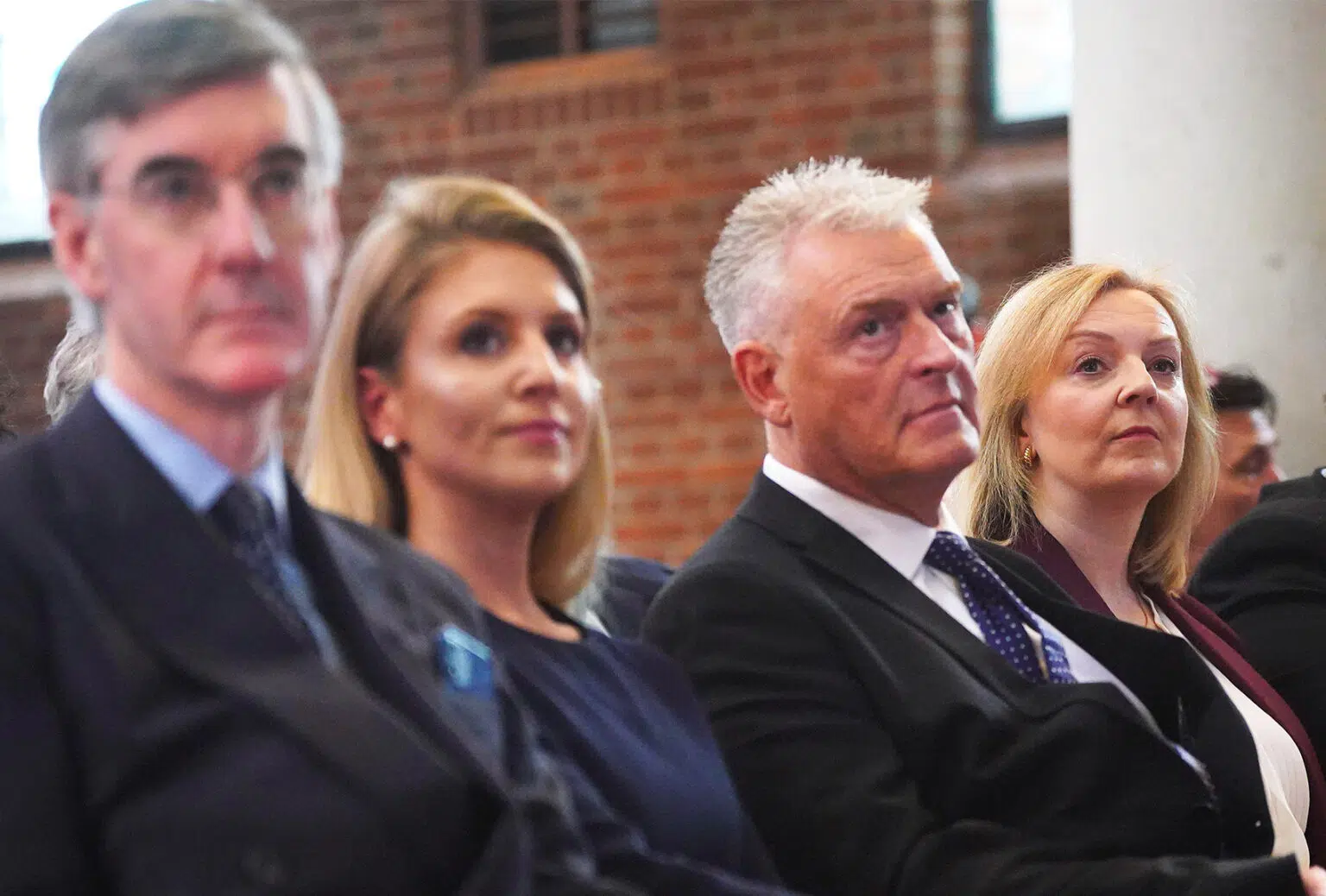
The launch of Popular Conservatism saw attacks on “net zero zealots” and the Climate Change Committee.
Liz Truss’s new ‘Popular Conservatism’ faction of the Conservative Party launched today with attacks on net zero targets and environmental bodies, using the playbook established by libertarian lobby groups.
The self-styled PopCons included politicians critical of climate policies and science, including Lord Frost, who is a director of the climate science denial Global Warming Policy Foundation, as well as Conservative MP Lee Anderson and Reform party president Nigel Farage.
PopCon director Mark Littlewood is the outgoing managing director of the Institute of Economic Affairs (IEA), an influential free market think tank that has talked up its access to government.
The IEA received funding from oil company BP every year from 1967 to 2018, according to an Unearthed investigation confirmed by the IEA. Both IEA and BP have declined to say if this funding continues, when asked by DeSmog.
A branded leaflet handed out at the event, under the heading “what we stand for”, stated: “End net zero zealotry and promote energy pragmatism to provide both security of supply and low prices”.
The leaflet also named the Climate Change Committee (CCC), the government’s independent advisory body on hitting its climate targets, as one of the institutions which “stand in the way of meaningful reform”.
Littlewood’s speech criticised the UK’s net zero target, complaining about “the Climate Change Committee, pronouncing on our progress to the eye-wateringly [sic] expensive and almost certainly unachievable aim of being carbon net zero”.
Lee Anderson, former deputy chair of the Conservative Party, repeatedly attacked net zero in his speech, which he claimed “never comes up on the doorstep” aside from when it is brought up by “the odd weirdo”.
Anderson said: “if we became net zero tomorrow, this country… it wouldn’t make a blind bit of difference to the earth’s atmosphere”, pointing to the higher emissions produced by other countries.
Anderson argued that net zero would cost voters money, calling for an “opt-in, opt-out” approach to what he called “green levies” on energy bills, adding: “Not one politician can put their hand on their hearts and tell you how much it’s [net zero] going to cost.”
The CCC has estimated the cost of net zero at less than one percent of GDP, while the Office for Budget Responsibility has said that “the costs of failing to get climate change under control would be much larger than those of bringing emissions down to net zero”.
Liz Truss used her speech to say: “If we look at the net zero zealots that Lee has just been talking about, the need for cheaper energy is being drowned out by some very active campaigners.” She claimed voters “don’t like the net zero policies which are making energy more expensive”.
The International Monetary Fund found in September 2022 that the energy crisis was hitting UK households harder than any country in western Europe, due to the UK’s reliance on gas for heating homes.
Tufton Street Links
Politicians fronting the PopCon group have a history of working with anti-green think tanks and supporting more fossil fuel extraction.
Truss (who went to the University of Oxford with Littlewood) has extensive ties to the IEA, which is part of the Tufton Street network – a cluster of libertarian pressure groups and think tanks that oppose state-led climate action.
In 2022, Truss’s campaign for Tory leader was run by Ruth Porter, a former communications director at the IEA. Once in 10 Downing Street, Truss hired Porter as her senior special advisor, and has since appointed her to the House of Lords. A number of former Tufton Street figures were appointed to government advisory roles during Truss’s short-lived tenure in Downing Street.
The IEA publicly supported Truss’s ‘mini-budget’, which caused economic chaos by promising large tax cuts without explaining how they would be funded. While in office, Truss lifted the UK’s ban on fracking for shale gas, a policy advocated by the IEA. (The policy was ditched by her successor Rishi Sunak.)
The IEA has consistently opposed UK government climate policies, preferring “market solutions”. In October 2022, IEA executive Andy Mayer said the government should “get rid of” its net zero target, which he called a “very hard left, socialist, central-planning model”.
During her 2022 leadership campaign, Truss received £5,000 from Lord Vinson, one of the few known funders of the Tufton Street-based Global Warming Policy Foundation (GWPF), the UK’s main climate science denial group.
Rees-Mogg also has a long record of opposing climate policies. Earlier this month he said: “the current headlong rush to net zero risks impoverishing the nation to no global benefit on emissions”.
The UK government’s legally-binding target to cut carbon dioxide emissions to net zero by 2050 is part of international efforts to keep global warming below 1.5C.
As Business and Energy Secretary in 2022, Rees-Mogg supported overturning the UK’s ban on fracking, and said “we have to stop demonising oil and gas” in a meeting with the UAE’s state investment company.
He also receives around £29,000 per month to host a show on right-wing broadcaster GB News. A DeSmog investigation last year found one in three GB News hosts spread climate science denial on air in 2022, while more than half attacked net zero policies. The channel‘s co-owner, Paul Marshall, has £1.8 billion invested in fossil fuels via his investment fund Marshall Wace.
Science Denial
Several figures with ties to climate science denial turned out for the PopCon launch. They included Lord Frost, a trustee of the GWPF who last year said global warming could be “beneficial”, along with Dame Andrea Jenkyns, who sits on the board of the GWPF’s campaign arm, Net Zero Watch.
The IEA and GWPF have both received funding from Neil Record, a Conservative donor who was IEA chairman until July 2023 and remains chair of Net Zero Watch. Record has donated thousands to Tory MP Steve Baker, an IEA ally and former GWPF trustee who has claimed much climate science is “contestable” and “propagandised”.
The PopCon launch was also attended by GB News host Nigel Farage, honorary president of right-wing party Reform UK, which campaigns to “scrap net zero”. Last year the party received £135,000 from donors who spread climate denial or had fossil fuel interests. Reform leader Richard Tice has claimed that “CO2 isn’t poison; it’s plant food”.
Farage posed for a photo at the PopCon event with Lois Perry, director of climate denial group CAR26, who is running for leader of UKIP and last month said she does not believe in human-caused climate change.
Original article by Adam Barnett republished from DeSmog.
Liz Truss attacks ‘left-wing extremists’ at Tory PopCon launch
…
Addressing the audience Truss made a series of bizarre attacks on the Left, taking aim at “wokeism” and said the Tories had failed to “take on the left-wing extremists”.
“Wokeism seems to be on the curriculum,” said Truss. “There is confusion about basic biological facts, like what is a woman.
“Look at the net zero zealots, if you listen to the Today programme, I don’t recommend it, you’ll hear demands for more public spending.”
Truss went on to warn that the left were “on the march and actively organising”.
“These people have repurposed themselves, they don’t believe they are socialist or communists anymore. They say they’re environmentalists, they say they’re in favour of helping people across all communities, they are in favour of supporting LGBT people or groups of ethnic minorities.
“So they no longer admit that they are collectivists but that is what their ideology is about.”
She went on to claim that anti-capitalists were being “pandered to” by the Government and that Conservative values were being eroded and said it was “only through Conservative values that we can give the British people what they want”, however fell short on saying what this was exactly.
…
Liz Truss attacks ‘left-wing extremists’ at Tory PopCon launch
Truss summons ‘Secret Tories’ to fight Davos and Left
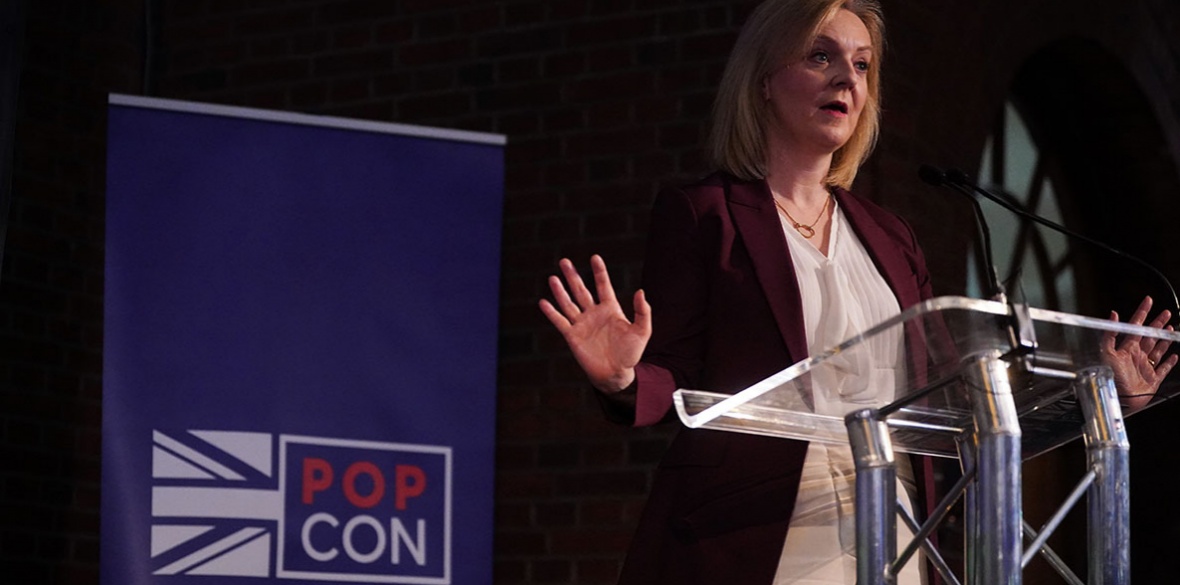
…
Running through a list of enemies almost longer than her catastrophic time in Downing Street, Ms Truss nevertheless claimed that Britain was “full of secret Conservatives — people who agree with us but don’t want to admit it,” while the Tory party had been appeasing “left-wing extremists.”
Painting a picture of a world on the edge of socialism, the former prime minister, best known for crashing the economy in a matter of days, asserted that “the left have been on the march.”
“They have been on the march in our institutions, they have been on the march in our corporate world, they are on the march globally,” she claimed.
Taking on this menace and “changing the system itself” will require “resilience and bravery,” Ms Truss added.
Unfortunately, rather than resilience and bravery, she had to hand only Lee Anderson and Jacob Rees-Mogg, former frontbenchers taking a break from their present gigs on GB News.
…
Truss summons ‘Secret Tories’ to fight Davos and Left