There are far better ways to tackle climate breakdown, but successive governments have chosen to listen to the fossil fuel companies instead
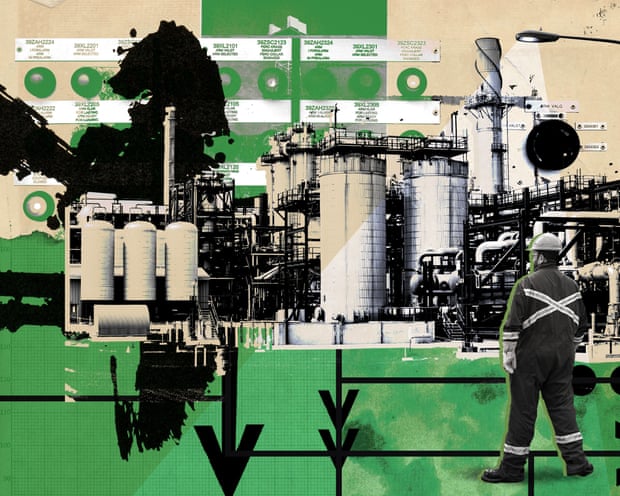
The new prime minister will be looking for money? Well, here’s £21.7bn lying on the ground. The government could cancel its deranged, disastrous carbon capture and storage (CCS) programme at no cost to public welfare: in fact, it would greatly reduce the harm we will suffer.
[N]ew CCS plants will mean massively more gas use than the UK would otherwise have required. Ultimately, that means more imports of liquefied natural gas (LNG). We now know that, thanks to methane leakage along the production and transport chain, LNG has higher emissions than coal. Two-thirds of its greenhouse impact occurs before the gas arrives in this country. So that’s all right then – it doesn’t count towards our national figures.
If the real aim were to cut emissions, we would push fossil fuel use in the electricity sector down to zero, and scale up renewables and battery storage instead. The net effect? Much lower climate impacts and much lower bills. Instead, the programme will greatly ramp up both. Why?
Well, the whole thing has been built the wrong way round. It appears likely to be the result of massive lobbying by fossil fuel companies. In 2023 alone, as the key decision on deployment loomed, the oil companies Equinor, BP and ExxonMobil attended 24 meetings with Conservative ministers to discuss CCS. Why? Because they know it’s the only way they will be permitted to keep burning gas. Governments have sought to find a way of meeting their demands while adhering to the climate budgets, so lo, a £264bn white elephant is born. As the Climate Change Committee admits, “gas with CCS accounts for around half of the remaining demand for fossil fuels in 2050” in the UK. In other words, this is their lifeline.
Neo-Fascist Climate Science Denier Donald Trump says Burn, Baby, Burn.Nigel Farage urges you to ignore facts and reality and be a climate science denier like him and his Deputy Richard Tice. He says that Reform UK has received £Millions and £Millions from the fossil fuel industry to promote climate denial and destroy the planet.Elon Musk urges you to be a Fascist like him, says that you can ignore facts and reality then.
dizzy: Carbon Capture and Storage (CCS) should be regarded as a fossil fuel subsidy.
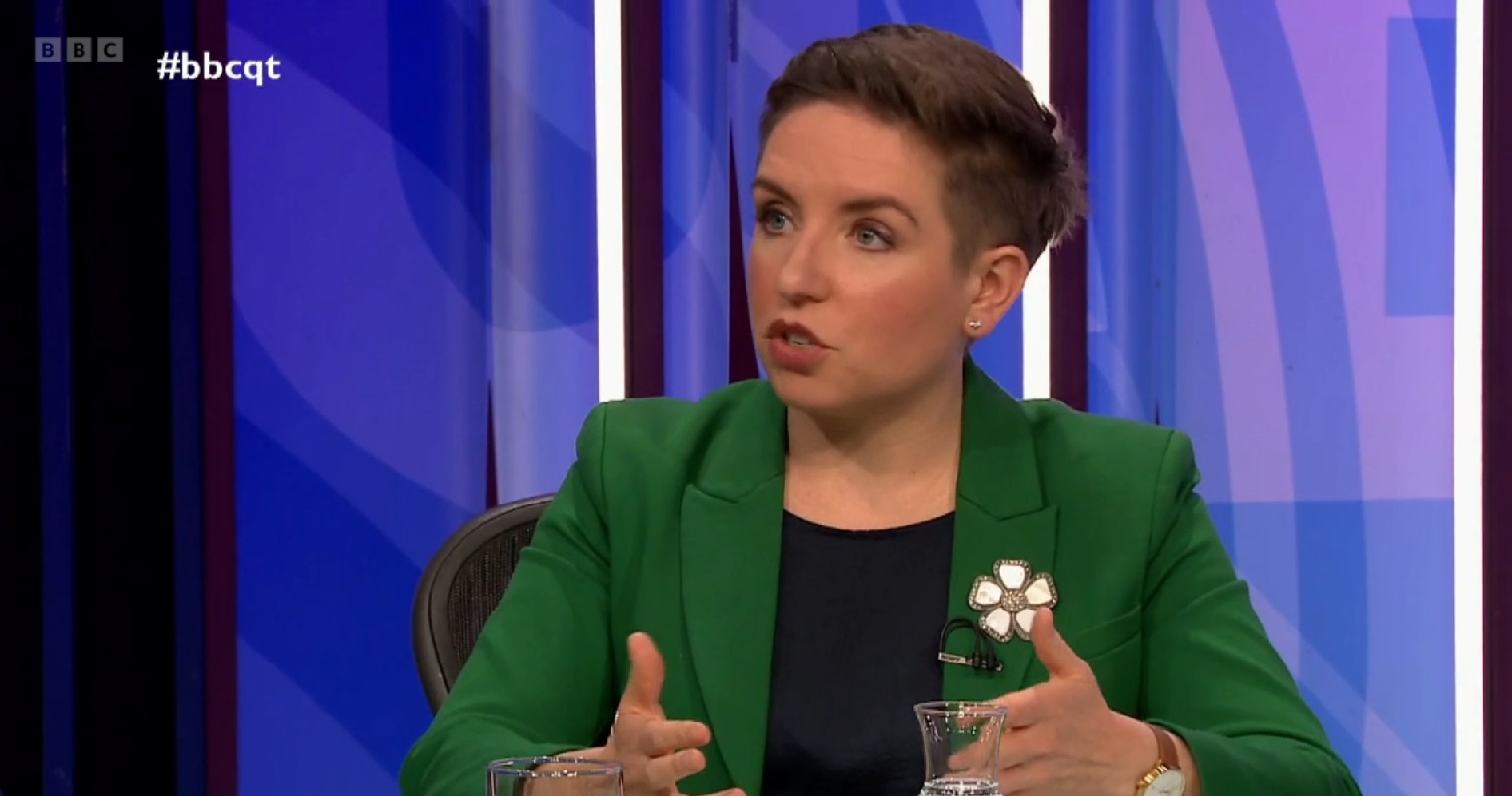
Image of the Green Party’s Carla Denyer on BBC Question Time.
Responding to the Climate Change Committee’s latest report, co-leader Carla Denyer MP said:
“Last year fossil fuel giants Shell and BP made a total of £26 billion in profit – while ordinary people struggle every day to pay their energy bills, and the climate crisis takes its toll on communities across the UK.
“The Climate Change Committee’s latest report shows some movement in the right direction towards trying to keep us all safe, but the truth is we’re not moving nearly fast enough. Stalling progress means we all have higher bills in cold and leaky homes, while wildfires, extreme heat and flooding put lives and livelihoods at risk. The best time for action was years ago – the next best time is now.
“We need urgent action to bring down the cost of electricity more widely, to reduce household bills and keep us all safe from the growing threat from the climate crisis. Instead of handing fossil fuel giants a licence to keep profiting from climate destruction, or wasting money on slow and expensive nuclear projects, now is the time for a national push to roll out energy efficiency, heat pumps, solar panels and battery storage for our homes.
“Crucially, it’s time for the government to stop throwing money at the fossil fuel industry and instead make big polluters like Shell and BP pay up. Currently the government subsidises the fossil fuel industry to the tune of a staggering £17.5 billion per year – it’s time to pull the plug and put that money into lowering bills instead.”
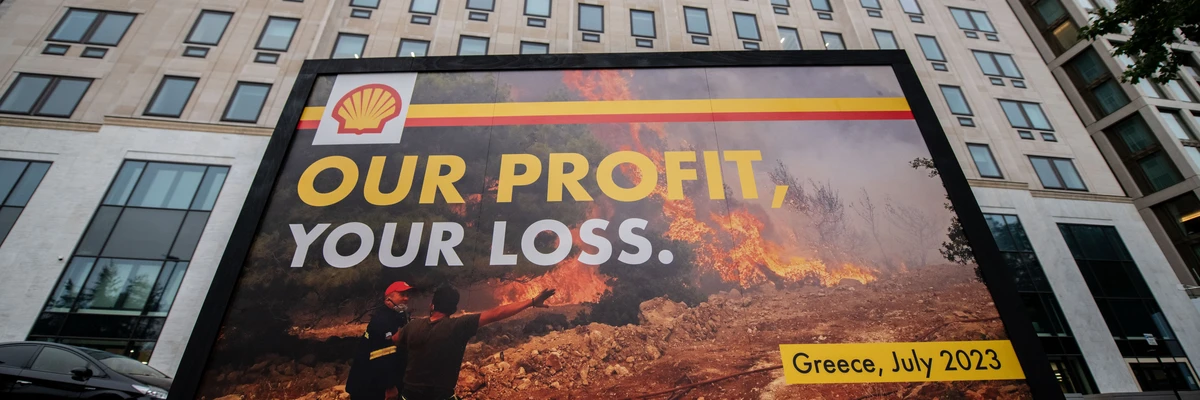
Greenpeace activists display a billboard during a protest outside Shell headquarters on July 27, 2023 in London. (Photo: Handout/Chris J. Ratcliffe for Greenpeace via Getty Images)
“Tony Blair has decided to mimic Nigel Farage on net zero and sounds like he is speaking on behalf of petro-states like Saudi Arabia and Kazakhstan for whom he has lobbied for more years than he was prime minister.
“It is vital that the government distance itself from this latest dodgy dossier from Blair and turn its attention instead to what the Climate Change Committee is saying today. Their report could not be clearer: we are woefully unprepared for the impacts of climate breakdown as a country. Tomorrow is likely to be the hottest local election day on record – a potent reminder that we need a comprehensive plan to prepare for increasingly extreme weather events.
“The future is green; Labour must not allow yesterday’s man to drag us back into the dark ages. The government must press ahead with the drive towards clean energy and the green economy and all the advantages that will bring in creating good quality jobs, cutting energy bills and creating a healthier society.”
Green Party Co-leader Adrian Ramsay. Wikipedia CC.
As the Climate Change Committee publishes its 7th carbon budget, the co-leader of the Green Party, Adrian Ramsay MP, has demanded the Government ensure ambitious climate action isn’t delayed any further – and for polluters to pay the highest price, not the poorest in our communities.
Adrian Ramsay MP said: “Today’s advice from the Climate Change Committee (CCC) makes clear that a climate safe future is still within our grasp – and that the cost of not reducing climate emissions will be far higher for our economy than the cost of investment in net zero. Crucially, we need to see the Government make investment choices that result in households benefiting financially from climate action too – both by ensuring everyone can access renewables and energy efficiency and because they are paying lower bills. The public are clear that they want to see the worst climate polluters pay, and we need to make sure that the costs of climate action never fall on those least able to afford it.
“A thriving green economy is also vital if we are to prevent climate deniers, like Reform, from weaponising the mass destruction of climate chaos. Instead, we must help the most vulnerable and build resilience in communities to adapt to climate breakdown.”
He continued: “Without an immediate acceleration of climate ambition, our economy, national security and environment are all at serious risk. That’s why we are disappointed not to see the CCC go even further on measures to reduce energy demand. In the face of impending airport expansion decisions by this Labour government, more ambitious policy is urgently needed to keep the aviation sector in check. Their advice shows strong public support for limiting airport expansion and introducing a frequent flier levy where the small percentage of the population who take the vast majority of the flights have to pay more .
“The CCC have shown that a positive, fairer, jobs-rich, greener future is possible, and they have set a clear pathway for the Government to follow. Now, we need the Government to step up, stop the vested interests who are intent on delaying, and show the ambition and leadership this moment demands.”
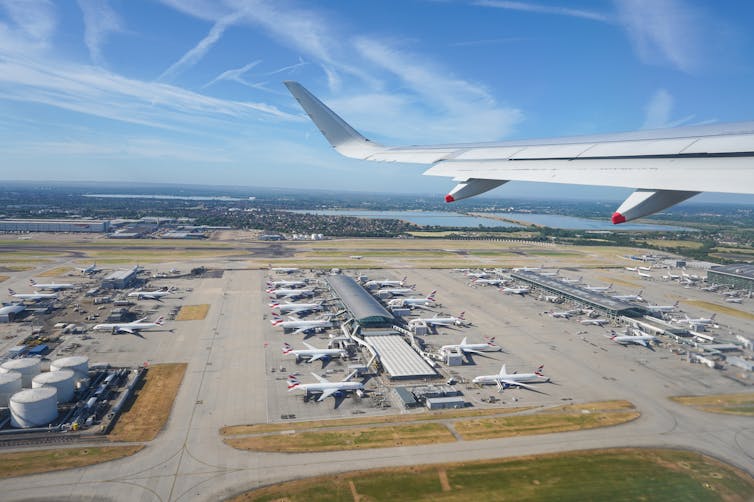
Environmentalists and locals have resisted a third runway at London’s Heathrow, Europe’s busiest airport, for more than two decades. Today, their efforts took a major setback.
The UK government has announced it will give the green light to airport expansion. This is not guaranteed to increase growth in the national economy as Chancellor Rachel Reeves hopes. More flights and more emissions are certain, however, at a time when experts are practically screaming at governments to rein them in.
“No airport expansions should proceed” without a UK-wide plan to annually assess and control the sector’s climate impact said the government’s watchdog, the Climate Change Committee, in 2023. Aeroplanes are 8% of UK emissions and 2% of the world’s, but they also release gases that seed heat-trapping clouds in the upper atmosphere, which triples air travel’s greenhouse effect.
While the government’s own advisers have effectively ruled out new runways for the sake of net zero, airport and airline bosses play a different tune. So what does the sector propose to manage its own pollution?
Not enough cooking oil to save us
Aviation is a notoriously difficult sector to decarbonise says Richard Sulley, a senior research fellow in sustainability policy at the University of Sheffield: “If electric or hydrogen-powered planes are possible, it won’t be for many years yet.”
To justify air travel emissions ballooning in the meantime, the aviation sector has promised a mix of “supply-side” measures, like replacing kerosene with so-called “sustainable aviation fuel” (SAF), which Reeves described as “a game changer”, and making planes lighter and more fuel-efficient.
Efficiency, in this context, is a slippery path to decarbonisation. When a high-emitting activity is reformed so that it consumes less energy, the efficiency savings are generally eclipsed by the increasing demand it drives.
“Indeed, the sector’s own plans for growth will outstrip efforts to decarbonise through synthetic fuel, delivering a neutral effect at best,” Sulley says.
“Demand-side” measures like fewer flights, taxes on frequent flying and domestic flight bans (see France) could cut emissions, he notes, but are seldom mentioned.
The UK has set a target for airline fuel to be 10% SAF by 2030. So far we’re at 1.2% – and Sulley reports that the industry has not said how it will scale up in time.
Even if airlines start taking their commitment to SAF seriously very soon, it’s a dubious solution to aviation’s climate impact according to political economists Gareth Dale (Brunel University) and Josh Moos (Leeds Beckett University).
Earlier SAF test flights burned coconut oil – 3 million coconuts to power a journey from London to Amsterdam, as Dale and Moos calculate it. At that rate, they argue Heathrow would exhaust the world’s entire crop in a few weeks (there are 18,000 commercial airports worldwide).
Modern SAF is blended with waste products from farms and kitchens. But the pair argue that the market for used cooking oil is “notoriously unregulated”. SAF may in fact be relabelled palm oil from plantations that are erasing orangutan habitat in the tropics. Again, Dale and Moos argue there is not enough used cooking oil to meet existing, let alone future, demand.
Transport for the rich, by the rich
At least the hype around SAF addresses the main problem, albeit misleadingly. Policy experts David Howarth (University of Essex) and Steven Griggs (De Montfort University) marvel at how often “carbon-neutral airports” in aviation sustainability strategies simply mean terminals powered by renewable energy.
“A terminal’s heating or lighting is, of course, largely irrelevant when its core business is as emissions-intensive as flying,” says Sulley.
Unfortunately for Rachel Reeves, a 2023 report by the New Economics Foundation found that any economic benefits of airport expansion will be largely confined to the airports themselves. Meanwhile, a wealthy subset of UK society can be expected to capture the biggest share of any new flight capacity. Each year, around half of British residents do not fly at all, Sulley points out.
At the stratospheric heights of that subset are the private jet passengers who are served by “more or less dedicated airports” that are more obscure to the general public, says Raymond Woessner, a geographer at Sorbonne Université. A study published in November found that emissions from these flights rose by 46% between 2019 and 2023. The lead author described wealthy passengers using jets “like taxis”.
“Discretion and anonymity” is what one airport nestled in the Oxfordshire countryside promises for “routine celebrity, head of state and royal visits”. Without state direction or regulation, it is these people who are setting the agenda for air travel.
Woessner notes that the world’s richest man, Elon Musk, successfully lobbied to derail a high-speed rail project in California in 2013. Instead of an option that has shown its ability to cut flight demand, the US will be offered intercontinental rocket travel.
Musk’s company SpaceX says that rockets could ferry passengers between New York and Shanghai in under an hour. Rockets would burn “vastly more fuel per trip than conventional aircraft”, says aerospace engineer Angadh Nanjangud of Queen Mary University of London, but this might “drive critical research into carbon-neutral” methane-based rocket fuel.
It would not be the first time an industry seeking to grow has used an as yet fantastical fuel to justify more carbon in Earth’s atmosphere.
“There is the potential to create a good life for all within planetary boundaries,” say Dale and Moos.
“But getting there requires clipping the wings of the aviation industry.”