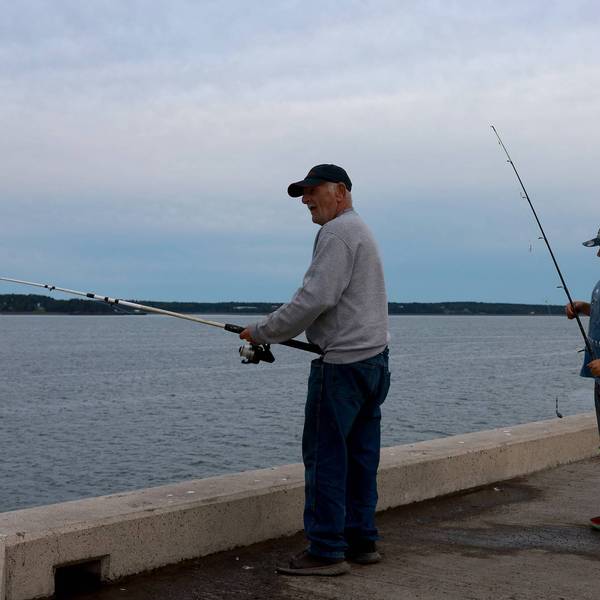
Huge “No Kings” protests throughout the United States and a huge anti-Fascist protest in London yesterday.


Huge “No Kings” protests throughout the United States and a huge anti-Fascist protest in London yesterday.


We have an urgent responsibility. Our existing economic system is incapable of addressing the social and ecological crises we face in the 21st century. When we look around we see an extraordinary paradox. On the one hand, we have access to remarkable new technologies and a collective capacity to produce more food, more stuff than we need or that the planet can afford. Yet at the same time, millions of people suffer in conditions of severe deprivation.
What explains this paradox? Capitalism. By capitalism we do not mean markets, trade and entrepreneurship, which have been around for thousands of years before the rise of capitalism. By capitalism we mean something very odd and very specific: an economic system that boils down to a dictatorship run by the tiny minority who control capital – the big banks, the major corporations and the 1% who own the majority of investible assets. Even if we live in a democracy and have a choice in our political system, our choices never seem to change the economic system. Capitalists are the ones who determine what to produce, how to use our labour and who gets to benefit. The rest of us – the people who are actually doing the production – do not get a say.
And for capital, the purpose of production is not primarily to meet human needs or to achieve social progress, much less to deliver on any ecological goals. The purpose is to maximise and accumulate profit. That is the overriding objective. This is the capitalist law of value. And to maximise profits, capital requires perpetual growth – ever increasing aggregate production, regardless of whether it is necessary or harmful.
…
We urgently need to overcome the capitalist law of value and democratise our economy, so that we can organise production around urgent social and ecological priorities. After all, we are the producers of the goods, the services, the technologies. It is our labour and our planet’s resources that are at stake. And so we must claim the right to decide what is produced, how, and for what purpose.
…


Original article by Pablo Meriguet republished from peoples dispatch under a Creative Commons Attribution-ShareAlike 4.0 (CC BY-SA) license.

Cuban President Miguel Díaz-Canel spoke to the press on Thursday, February 5, about the situation facing the island in the wake of the latest measures imposed by Washington.
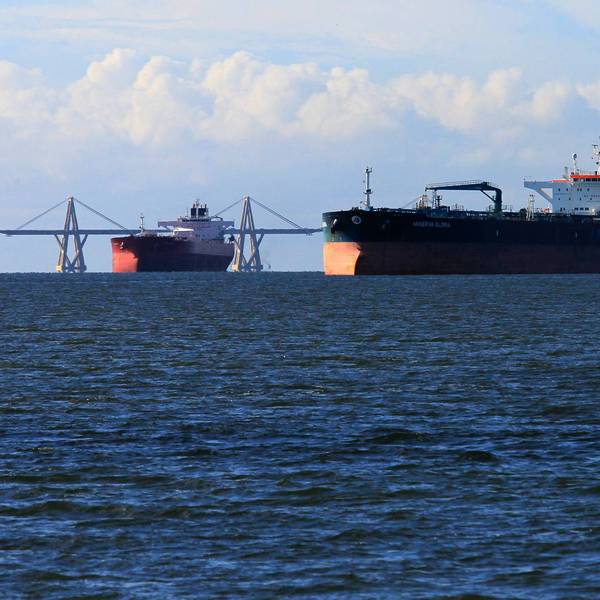
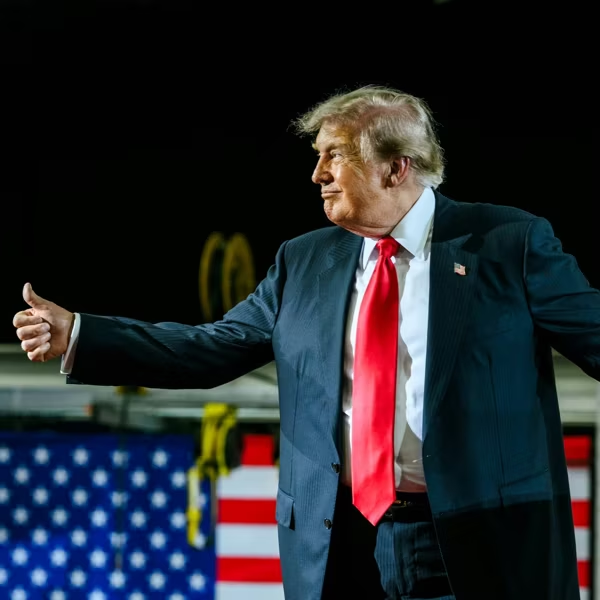
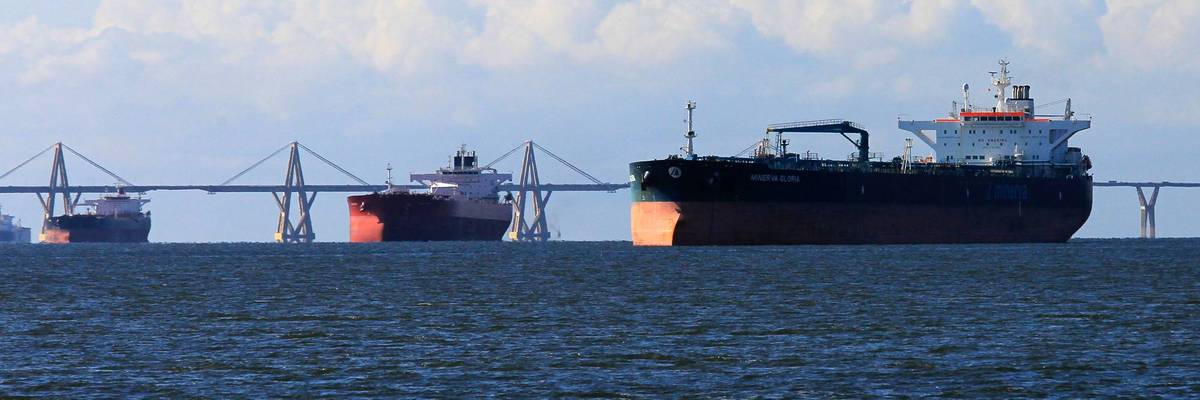
Following the seizure of Venezuelan tankers bound for Cuba by the United States Military, the Trump administration increased pressure on the island, which has been under an economic and commercial blockade for more than 60 years, by threatening to increase tariffs on any country that sells fuel to Cuba.
The US military campaign against Venezuela, including a naval blockade on oil and the kidnapping of the president and the first lady, cut off one of Cuba’s only alternatives for obtaining oil.
In his address, the president reported that no fuel has entered Cuba since December.
The loss of fuel supply severely complicates the electricity supply on which schools, transportation, and vital health infrastructure depend. In view of this, several analysts have called Trump’s latest measure against the Cuban people “genocidal”.
Díaz-Canel said he is aware of the difficulties and painful hardships that the Cuban people are going through following a decision that Washington justifies based on an alleged threat that Cuba poses to its national security, something that has been widely questioned by various analysts and politicians around the world.
On this subject, a deeply moved Díaz-Canel said during his appearance: “Cuba is not a terrorist country, nor is it a threat to the security of the United States. Cuba has never carried out, nor proposed, nor organized any aggressive action that puts at risk the territorial integrity, the security, or the stability of the government of the United States.”
He added: “We do not protect terrorists, and there are no military forces in Cuba from other nations or from other groups. In Cuba, there is indeed a military base – an illegal military base – and it is an illegal United States military base on Cuban soil, in the province of Guantánamo, against the will of the Cuban people.”
In response, he affirmed that Cuba has always been and remains willing to engage in dialogue with Washington, although he clarified that “dialogue under pressure is not dialogue.” In this regard, he said that Cuba advocates civilized relations between neighbors, but rejects blackmail, threats, and impositions by some countries on others as a method of negotiation. He thus demanded respect for Cuban sovereignty.
Díaz-Canel said that his government is willing to meet with officials from the Trump administration to discuss the situation between the two countries: “Cuba is open to dialogue on any issue that needs to be debated or discussed, as long as there is no pressure or preconditions, in a situation of equality and respect for our sovereignty, independence, and self-determination.”
According to Cuban Foreign Minister Bruno Rodríguez, between March 2024 and February 2025 alone, the damage caused by the economic blockade of Cuba amounts to 7.556 billion USD, which represents a 49% increase compared to the previous period, showing that the blockade causes greater damage over time.
For his part, the Cuban president recalled that the US strategy of applying pressure until the country collapses is not new, and that despite all the difficulties Cuba has had to endure, it is not a failed state, as claimed by the White House: “The theory of collapse and the insistence on it is related to a whole set of constructs that the US government has tried to use to characterize the Cuban situation. This theory of collapse is associated with one of the currents in which the US government is determined to overthrow the Cuban revolution.”
Currently, he said, Cuba is enduring not only a series of mechanisms that seek to suffocate the Caribbean country, combined with the constant threat of military aggression, but also a media campaign that combines slander, hatred, and psychological warfare to justify various US attacks.
However, the Cuban president also pointed out that, despite the new conditions following the attack on Venezuela on January 3, there are several signs of international solidarity with his government: “Cuba is not alone, and we know that there are countries and companies willing to continue working with the largest of the Antilles.”
Faced with this difficult situation, Díaz-Canel outlined the decisions his government has taken to tackle this new onslaught: “We have had to make a series of assessments in the Political Bureau, the Executive Committee of the Council of Ministers, and the National Defense Council, and we have just had a meeting in the Council of Ministers to update the plan to be implemented based on government directives to address an acute fuel shortage.”
Cuba has implemented fuel rationing to ensure the functioning of essential and basic activities for the Cuban population, although he acknowledged that the difficulty has been enormous, considering that no oil shipments have arrived in Cuba throughout 2026. This will mean a reduction in public transportation and an increase in blackouts on the island, which have already broken records.
In response, the Cuban president raised the possibility of increasing other types of energy sources, such as renewable energies, although this process will take time. Therefore, he said, the government must now demonstrate enormous creativity to overcome this new barrier that the United States, the most powerful country on earth, is unilaterally imposing on a country of just 10 million inhabitants.
In addition, Díaz-Canel stated that following the attack on Venezuela, in which more than 30 Cuban combatants on security missions in the South American country were killed, Cuba has prepared itself to face possible US military aggression: “One of the priorities we established was to deploy a defense preparedness plan.”
According to Díaz-Canel, in the event of military aggression, Fidel Castro’s old military principle of “war by the entire people” will be used against external aggressors. This, however, does not mean that the country is entering a “state of war”, but rather that it is preparing for the moment when that step must be taken, the president said.
In this regard, Foreign Minister Rodríguez said on Telegram: “The US seeks to impose its will on the rights of sovereign states and has been using force and aggression against Cuba for 67 years. On its side is enormous military power and the size of its economy, plus vast experience in aggression and crimes. On our side is reason, international law, and the patriotic spirit of a people.”
He added: “We Cubans are not willing to sell our country or give in to threats and blackmail, nor are we willing to renounce the inalienable prerogative with which we build our own destiny, in peace with the rest of the world. We will defend Cuba. Those who know us know that this is a firm, categorical, and proven commitment.”
Original article by Pablo Meriguet republished from peoples dispatch under a Creative Commons Attribution-ShareAlike 4.0 (CC BY-SA) license.


Original article by Julia Conley republished from Common Dreams under Creative Commons (CC BY-NC-ND 3.0).
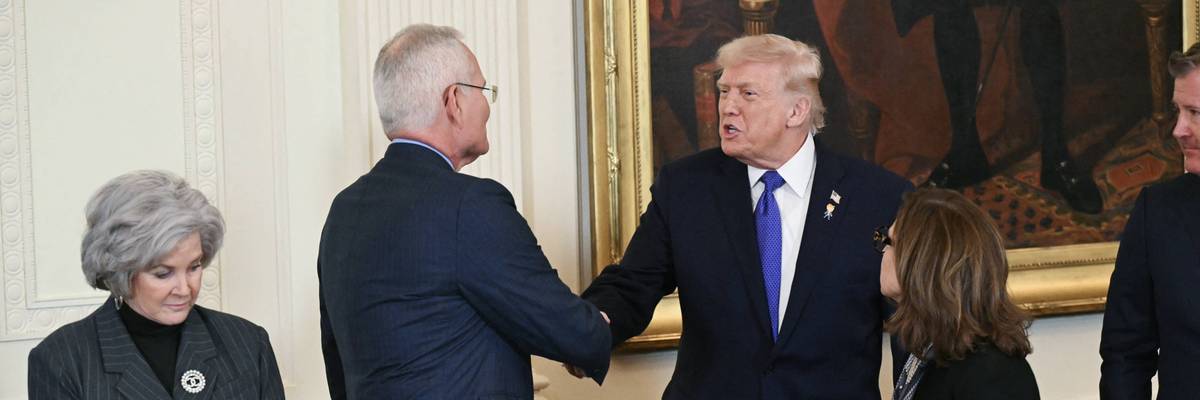
Cuba’s Ministry of Foreign Affairs on Monday said the country is open to expanding “bilateral cooperation” with the US, following President Donald Trump’s comments that the White House is “going to make a deal with Cuba”—but diplomatic officials emphasized that they vehemently reject Trump’s recent accusations that they harbor terrorists and pose an “unusual and extraordinary threat” to the US.
“Cuba categorically declares that it does not harbor, support, finance, or permit terrorist or extremist organizations,” said the ministry.
RECOMMENDED…


The statement was released days after the White House issued an executive order to address what it called threats that Cuba poses to the US, threatening to impose new tariffs on countries that sell oil to Cuba.
Trump’s invasion of Venezuela—which had been the top energy supplier to Cuba—and his push to take control of the South American country’s oil has left Cuba’s economy struggling with a virtual energy blockade and rolling blackouts. The US has also been pressuring Mexico to stop supplying energy to the island nation, prompting fears of a potential humanitarian crisis.
White House Deputy Chief of Staff Stephen Miller said last month that the US has the right to take over any country if doing so furthers its interests, and said the Trump administration should “secure our interests unapologetically in our hemisphere.”
In the executive order last week, the president made sweeping accusations against Cuba, claiming that it provides support for countries including Russia and China—though the Trump administration has also sought improved relations with Russian President Vladimir Putin and Chinese President Xi Jinping—and offering no evidence for the allegation that it also supports Hamas and Hezbollah.
The Cuban storytelling platform Belly of the Beast called the accusation “laughable, if it weren’t so serious,” and spoke to some of the hundreds of Palestinian medical students who are studying to be doctors at the Latin American School of Medicine and other institutions.
“The vast majority of Palestinians in Cuba are medical students,” said Ihab Masri, who is studying there alongside students from about 100 other countries. “Trump is a person who says he stopped 10 or 12 wars… a person who not only justifies but also denies the genocide in Gaza that they commit and have committed. You can’t trust someone like that.”
In his attempt to block oil shipments to Cuba, Donald Trump now claims the country is a safe haven for Hamas and Hezbollah, without presenting any evidence. Cubans say it’s complete nonsense. The real story? Hundreds of Palestinian students training to be doctors in Havana. pic.twitter.com/3X24dhF6mN
— Belly of the Beast (@bellybeastcuba) February 1, 2026
Trump’s executive order also accused Cuba of spreading “its communist ideas, policies, and practices around the Western Hemisphere, threatening the foreign policy of the United States.”
The Ministry of Foreign Affairs on Monday emphasized that “Cuba does not host foreign military or intelligence bases and rejects the characterization that it is a threat to the security of the United States. Nor has it supported any hostile activity against that country, nor will it allow its territory to be used against another nation.”
The US has maintained a trade embargo on Cuba for more than six decades and has had hostile relations with the country since the communist revolution gave rise to the late President Fidel Castro and overthrew authoritarian leader Fulgencio Batista, who was backed by the US.
US Rep. Jesús “Chuy” García (D-Ill.) warned that Trump’s “latest economic assault against the island is designed to cause a humanitarian collapse, deepening our collective punishment of the Cuban people and forcing more migration.”
“Cuba poses no threat to the United States, but that’s not the point. Trump is manufacturing an excuse for cruelty and regime change,” added the congressman, while Rep. Rashida Tlaib (D-Mich.) denounced Trump’s executive order as “pure cruelty” that could “kill countless innocent Cubans.”
Cuban President Miguel Diaz-Canel said last week that Trump’s threat against countries that continue to supply energy “reveals the fascist, criminal, and genocidal nature of a clique that has hijacked the interests of the American people for purely personal ends.”
On Monday, the global organization Progressive International joined Cuban officials in denouncing Trump’s executive order as a “cruel and criminal act of economic warfare that will bring nothing but starvation, deprivation, and despair to [Cuba’s] people.”
“With this new executive order, the logic of siege has reached its apotheosis: Sanction not only Cuba but every nation that dares show solidarity, effectively demanding that sovereign states choose between the interests of their own people and the dictates of an empire,” said the Cabinet of Progressive International.
The group called on the international community to “coordinate diplomatic resistance, demand that governments refuse to enforce secondary tariffs, and amplify Cuban voices against this assault on international law, human dignity, and basic human rights.”
“History will judge those who saw this moment and turned away. Cuba stood with oppressed peoples globally—from defeating apartheid in South Africa to sending doctors to the frontlines of epidemics—and now it is our time to act with audacity, moral courage, and collective force,” said Progressive International.“
“Stand with the Cuban people now,” the group added. “Stand against this siege, this economic assault, this unfolding humanitarian disaster; join together in the provision of key supplies to the island, from medicine to food to fuel for its people; and stand for the right of all nations to self-determination and human dignity, or be complicit in its destruction.”
Original article by Julia Conley republished from Common Dreams under Creative Commons (CC BY-NC-ND 3.0).


Original article by Brad Reed republished from Common Dreams under Creative Commons (CC BY-NC-ND 3.0).
After flirting last year with forming his own political party, far-right billionaire Elon Musk is funding Republican political candidates once again.
Axios reported on Monday that Musk recently made a massive $10 million donation to bolster Nate Morris, a MAGA candidate who is vying to replace retiring US Sen. Mitch McConnell (R-Ky.).
RECOMMENDED…


Axios described the massive donation, the largest Musk has ever given to a Senate candidate, as “the biggest sign yet that Musk plans to spend big in the 2026 midterms, giving Republicans a formidable weapon in the expensive battle to keep their congressional majorities.”
Sen. Bernie Sanders (I-Vt.) reacted with disgust to the news, and said that Musk’s enormous donation was indicative of a broken campaign finance system.
“Are we really living in a democracy when the richest man on earth can spend as much as he wants to elect his candidates?” Sanders asked in a social media post.
“The most important thing our nation can do is end Citizens Unitedand move to public funding of elections,” he added, referring to the 2010 Supreme Court decision that cleared the way for unlimited spending on elections by corporations. “Billionaires can’t be allowed to buy elections.”
Democratic Maine State Auditor Matt Dunlap, currently running to represent Maine’s second congressional district, also denounced Musk for throwing his weight around to buy politicians.
“Billionaires buy our elections, rig the tax code, and undermine our democracy,” wrote Dunlap. “Working people deserve a government that works for them—not for billionaires like Elon Musk.”
Musk is no stranger to spending big to help elect Republicans, having spent more than $250 million in 2024 to help secure President Donald Trump’s victory.
However, his riches are no guarantee of a GOP win. Last year, for example, Musk spent millions to elect former Wisconsin Attorney General Brad Schimel to a seat on the Wisconsin Supreme Court, only to wind up losing the race by 10 points.
Original article by Brad Reed republished from Common Dreams under Creative Commons (CC BY-NC-ND 3.0).