More than 200 scientists from 19 countries want to tell us the Southern Ocean is in trouble

Spread the love
Pat James, Australian Antarctic Division

Andrew J Constable, University of Tasmania and Jess Melbourne-Thomas, CSIRO

While the Southern Ocean around Antarctica has been warming for decades, the annual extent of winter sea ice seemed relatively stable – compared to the Arctic. In some areas Antarctic sea ice was even increasing.

That was until 2016, when everything changed. The annual extent of winter sea ice stopped increasing. Now we have had two years of record lows.

In 2018 the international scientific community agreed to produce the first marine ecosystem assessment for the Southern Ocean. We modelled the assessment process on a working group of the Intergovernmental Panel on Climate Change (IPCC). So the resulting “summary for policymakers” being released today is like an IPCC report for the Southern Ocean.

This report can now be used to guide decision-making for the protection and conservation of this vital region and the diversity of life it contains.

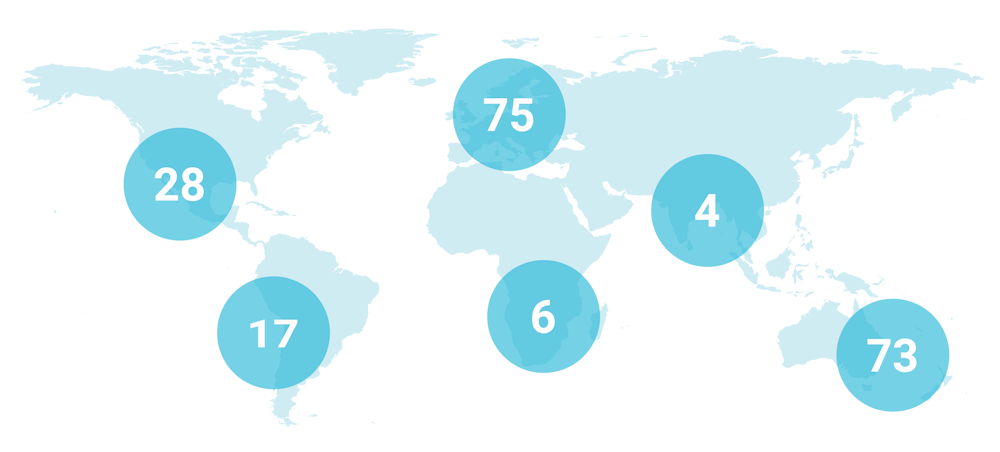
Map showing the number of authors from different regions, illustrating the international nature of the assessment process.
Global participation (numbers of authors from different regions) in the assessment.
Constable, A.J. et al (2023) Marine Ecosystem Assessment for the Southern Ocean., CC BY-NC

Why should we care about sea ice?

Sea ice is to life in the Southern Ocean as soil is to a forest. It is the foundation for Antarctic marine ecosystems.

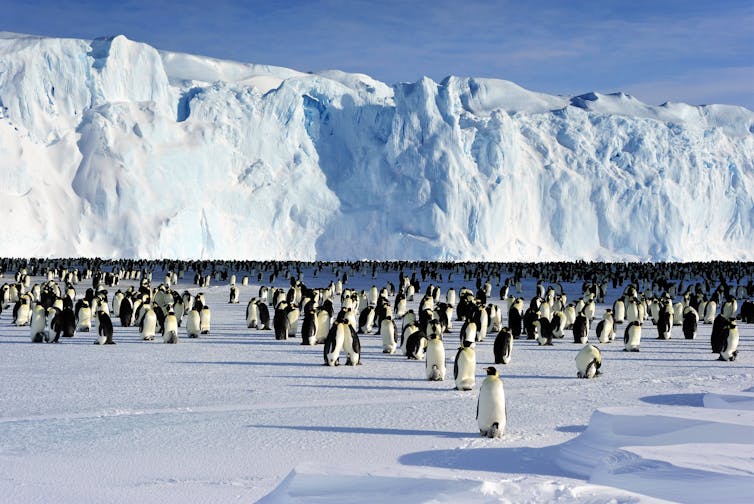
Less sea ice is a danger to all wildlife – from krill to emperor penguins and whales.

The sea ice zone provides essential food and safe-keeping to young Antarctic krill and small fish, and seeds the expansive growth of phytoplankton in spring, nourishing the entire food web. It is a platform upon which penguins breed, seals rest, and around which whales feed.

The international bodies that manage Antarctica and the Southern Ocean under the Antarctic Treaty System urgently need better information on marine ecosystems. Our report helps fill this gap by systematically identifying options for managers to maximise the resilience of Southern Ocean ecosystems in a changing world.

An open and collaborative process

We sought input from a wide range of people across the entire Southern Ocean science community.

We sought to answer questions about the state of the whole Southern Ocean system – with an eye on the past, present and future.

Our team comprised 205 authors from 19 countries. They authored 24 peer-reviewed papers. We then distilled the findings from these papers into our summmary for policymakers.

We deliberately modelled the multi-disciplinary assessment process on a working group of the IPCC to distill the science into an easy-to-read and concise narrative for politicians and the general public alike. It provides a community assessment of levels of certainty around what we know.

We hope this “sea change” summary sets a new benchmark for translating marine research into policy responses.

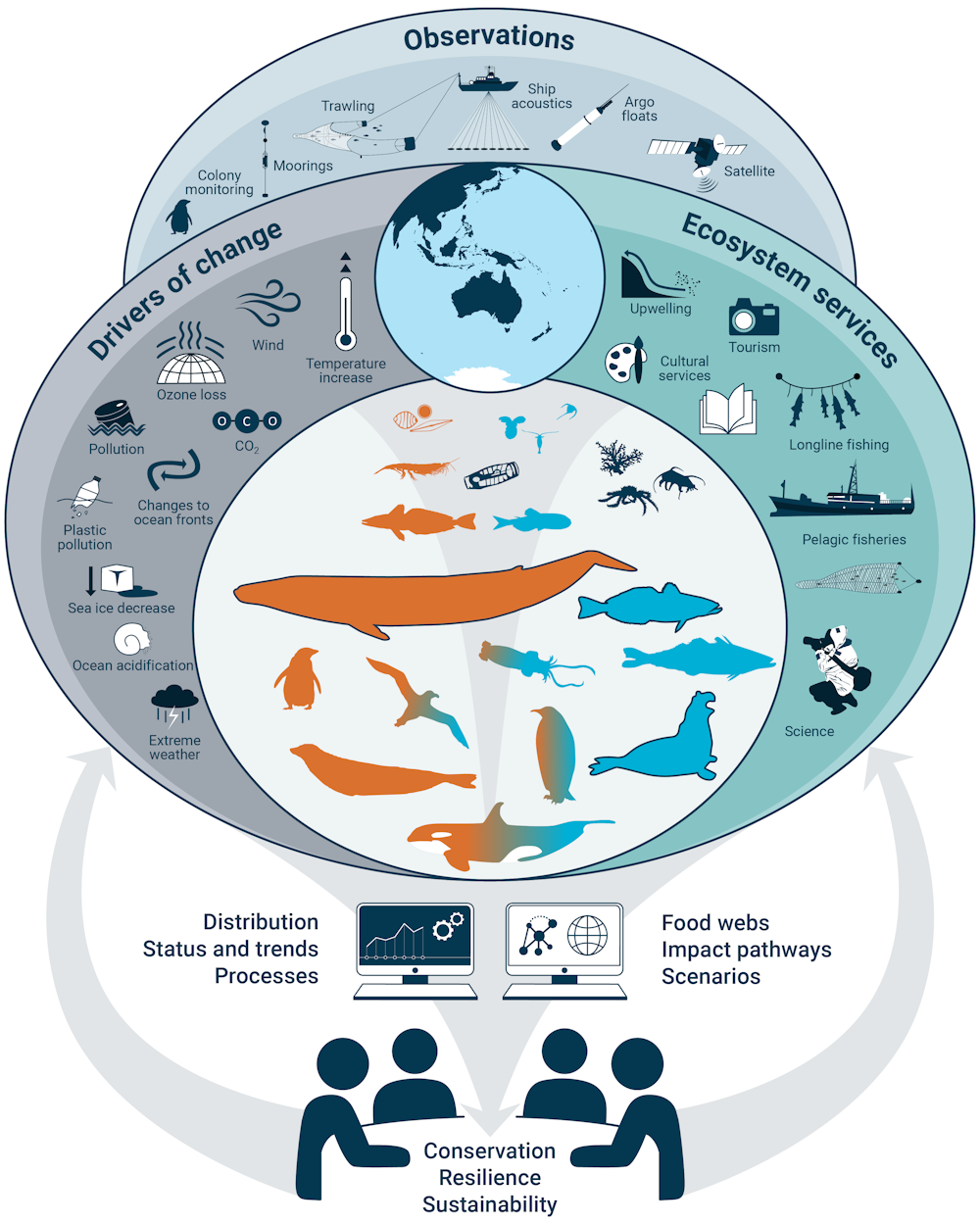
A graphic illustrating how the system-level assessment of marine ecosystems came together, showing a group of people at a table with concentric circles in the background including observations, drivers of change and ecosystem services
Our system-level assessment addressed the multiple drivers of ecosystem change in the Southern Ocean.
Constable, A.J. et al (2023) Marine Ecosystem Assessment for the Southern Ocean., CC BY-NC

So what’s in the report?

Southern Ocean habitats, from the ice at the surface to the bottom of the deep sea, are changing. The warming of the ocean, decline in sea ice, melting of glaciers, collapse of ice shelves, changes in acidity, and direct human activities such as fishing, are all impacting different parts of the ocean and their inhabitants.

These organisms, from microscopic plants to whales, face a changing and challenging future. Important foundation species such as Antarctic krill are likely to decline with consequences for the whole ecosystem.

The assessment stresses climate change is the most significant driver of species and ecosystem change in the Southern Ocean and coastal Antarctica. It calls for urgent action to curb global heating and ocean acidification.

It reveals an urgent need for international investment in sustained, year-round and ocean-wide scientific assessment and observations of the health of the ocean.

We also need to develop better integrated models of how individual changes in species along with human impacts will translate to system-level change in the different food webs, communities and species.

What’s next?

Our report will be tabled at this week’s international meeting of the Commission for the Conservation of Antarctic Marine Living Resources in Hobart.

The commission is the international body responsible for the conservation of marine ecosystems in the Southern Ocean, with membership of 26 nations and the European Union.

It is but one of the bodies our new report can assist. Currently assessments of change in habitats, species and food webs in the Southern Ocean are compiled separately for at least ten different international organisations or processes.

The Southern Ocean is a crucial life-support system, not just for Antarctica but for the entire planet. So many other bodies will need the information we produced for decision-making in this critical decade for action on climate, including the IPCC itself.

Beyond the science, the assessment team has delivered important lessons about how coordinated, collaborative and consultative approaches can deliver ecosystem information into policymaking. Our first assessment has taken five years, but this is just the beginning. Now we’re up and running, we can continue to support evidence-based conservation of Southern Ocean ecosystems into the future. The Conversation

Andrew J Constable, Adviser, Antarctica and Marine Systems, Science & Policy, University of Tasmania and Jess Melbourne-Thomas, Transdisciplinary Researcher & Knowledge Broker, CSIRO

This article is republished from The Conversation under a Creative Commons license. Read the original article.
Continue ReadingMore than 200 scientists from 19 countries want to tell us the Southern Ocean is in trouble

Drought in the Amazon: Understanding the causes and the need for an immediate action plan to save the biome

Spread the love

Lucas Ferrante, Universidade Federal do Amazonas (UFAM)

The drought plaguing the Amazon is a worrying portrait of the climate challenges facing the world. The combination of the El Niño phenomenon and anthropogenic climate change has played a significant role in accentuating this extreme weather event. The Amazon region, known for its lush rainforest and flowing rivers, is facing a critical situation due to a lack of rainfall and rising temperatures.

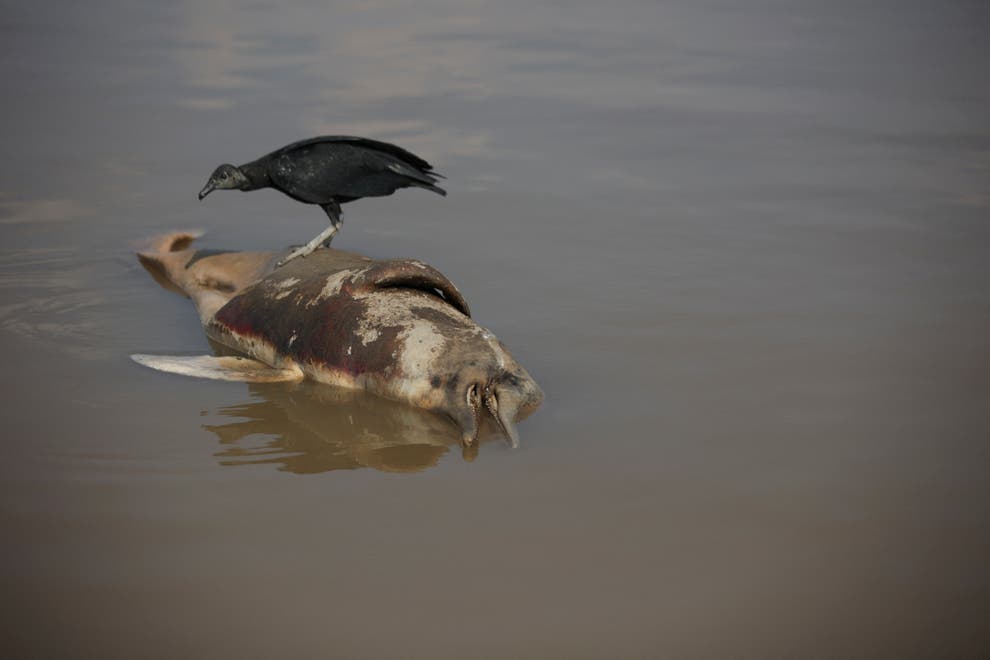
This phenomenon, never recorded at this intensity, has affected biodiversity and human life in eight Amazonian states. The drought has already killed more than 140 dolphins, including pink dolphins and tucuxis, also known as grey dolphins. The mortality of fish and other aquatic animals is also high. The low volume of the rivers affects the human supply, causing a lack of drinking water and food in all the small villages, even those located on the banks of the big rivers. Of the 62 municipalities in the state of Amazonas, 42 are in a state of emergency, 18 are in a state of alert and only two are in a normal situation.

The El Niño phenomenon has a direct influence on the Amazon drought. It manifests itself in the abnormal warming of the surface waters of the Pacific Ocean, affecting the rainfall regime in various parts of the world. In the case of the Amazon region, the drought is exacerbated by a decrease in humidity and a lack of rainfall, damaging the vegetation, fauna and local communities that depend on natural resources.

However, anthropogenic climate change is making the situation even worse. Rampant deforestation, driven by agricultural expansion and logging activity, reduces the Amazon rainforest’s ability to regulate the climate and retain moisture. In addition, the destruction of vast areas of vegetation contributes to rising temperatures, creating a cycle of even more accentuated droughts.

Deforestation and mining, major factors

Deforestation has been particularly devastating in the region of Highway BR-319, in the south of Amazonas state, driven by land grabbing which has provided cheap land to cattle ranchers from other states. In turn, this deforestation has increased the number of fires that feed back into the climate crisis. When they occur near riverbanks, deforestation also intensifies the phenomenon known as fallen land, which has drastically affected the draught of rivers and is already significantly jeopardising navigation and logistics, mainly affecting villages in the interior of the Amazon, which are already suffering from shortages.

Another factor that has played a significant role in affecting navigation is mining activity. Disorganised mineral extraction has created banks of land that are harmful to navigation and which, in the critical scenario of drought, have caused many vessels to run aground.

The impact of hydroelectric dams

Hydroelectric dams also play a role in contributing to the drought scenario, especially on the Madeira River. This is mainly due to the decomposition of organic matter in reservoirs created by dams, which releases methane, a potent greenhouse gas, into the atmosphere. In addition, deforestation associated with the construction of dams, as well as soil degradation and erosion resulting from the alteration of aquatic and terrestrial ecosystems, can increase emissions of carbon dioxide (CO2) and other pollutants, contributing to the impact of hydroelectric dams on climate change.

The Madeira River, now at its lowest level in almost 60 years, has been drastically affected and transformed by the Jirau and Santo Antônio hydroelectric dams. This was due to the drastic alteration of the river’s natural flow caused by the damming of water for power generation. When water is dammed, a reservoir is formed that retains part of the water that would normally flow along the river. This diversion of the flow directly affects the region’s aquatic and terrestrial ecosystems, since the basin’s hydrological cycle is interrupted. The reduction in the volume of water in the Madeira River, for example, can lead to prolonged periods of drought, affecting not only aquatic fauna and riparian habitats, but also local communities that depend on the river for their livelihoods.

In addition, the construction and operation of hydroelectric dams in the Amazon often involves the clearing of significant areas of forest for the construction of dams and associated infrastructure. Deforestation contributes to a reduction in evapotranspiration, which is a crucial process for water balance in the region. With fewer trees to release water into the atmosphere, the Amazon becomes more susceptible to drought. The combination of these factors results in a significant impact on the region, making hydroelectric dams one of the causes of drought in the Amazon, particularly on the Madeira River, with worrying environmental and social consequences.

What can still be done

In order to combat the extreme drought in the Amazon and its devastating effects, it is essential to adopt strict measures to curb deforestation and illegal mining in the region, and for the federal government to review major undertakings such as hydroelectric dams and roads, such as the BR-319 motorway.

Many politicians have argued that the road, if paved, could reduce the state’s isolation, especially during droughts. However, this is a fallacious argument, because connecting the most isolated municipalities would require hundreds of kilometres of side roads, which would further increase deforestation and aggravate the climate crisis.

In addition, the BR-319 motorway has become a spearhead that cuts through one of the most conserved blocks of forest, linking the central Amazon, which is still preserved, to the “arc of Amazonian deforestation”, a region that concentrates most of the climate anomalies in the entire biome.

Ecosystem on the edge

In a recent study published in the renowned journal Conservation Biology, it was shown that deforestation in the Amazon is already impacting ecosystem services that are essential for Brazil, such as the Amazon’s flying rivers. This scientific data shows that we are already at the threshold of deforestation and environmental degradation tolerated by the Amazon, and more forceful action needs to be taken now.

Part of this responsibility lies now in the hands of President Lula, in reviewing major developments in the Amazon, such as hydroelectric dams and highways like the BR-319. In addition, it is essential to institute a zero deforestation policy that should begin this year, and not in 2030, when it will be too late. Furthermore, it is crucial that the international community and local governments work together to reduce greenhouse gas emissions and tackle climate change effectively. Only with coordinated and decisive action will we be able to mitigate the impacts of drought in the Amazon and protect this unique ecosystem that plays a vital role in regulating the global climate.The Conversation

Lucas Ferrante, Pesquisador Vinculado ao Programa de Pós-graduação em Zoologia, Universidade Federal do Amazonas (UFAM)

This article is republished from The Conversation under a Creative Commons license. Read the original article.
Continue ReadingDrought in the Amazon: Understanding the causes and the need for an immediate action plan to save the biome

6 reasons why global temperatures are spiking right now

Spread the love
Jonas Weckschmied/Unsplash

Andrew King, The University of Melbourne

The world is very warm right now. We’re not only seeing record temperatures, but the records are being broken by record-wide margins.

Take the preliminary September global-average temperature anomaly of 1.7°C above pre-industrial levels, for example. It’s an incredible 0.5°C above the previous record.

So why is the world so incredibly hot right now? And what does it mean for keeping our Paris Agreement targets?

Here are six contributing factors – with climate change the main reason temperatures are so high.

1. El Niño

One reason for the exceptional heat is we are in a significant El Niño that is still strengthening. During El Niño we see warming of the surface ocean over much of the tropical Pacific. This warming, and the effects of El Niño in other parts of the world, raises global average temperatures by about 0.1 to 0.2°C.

Taking into account the fact we’ve just come out of a triple La Niña, which cools global average temperatures slightly, and the fact this is the first major El Niño in eight years, it’s not too surprising we’re seeing unusually high temperatures at the moment.

Still, El Niño alone isn’t enough to explain the crazily high temperatures the world is experiencing.

2. Falling pollution

Air pollution from human activities cools the planet and has offset some of the warming caused by humanity’s greenhouse gas emissions. There have been efforts to reduce this pollution – since 2020 there has been an international agreement to reduce sulphur dioxide emissions from the global shipping industry.

It has been speculated this cleaner air has contributed to the recent heat, particularly over the record-warm north Atlantic and Pacific regions with high shipping traffic.

It’s likely this is contributing to the extreme high global temperatures – but only on the order of hundredths of a degree. Recent analysis suggests the effect of the 2020 shipping agreement is about an extra 0.05°C warming by 2050.

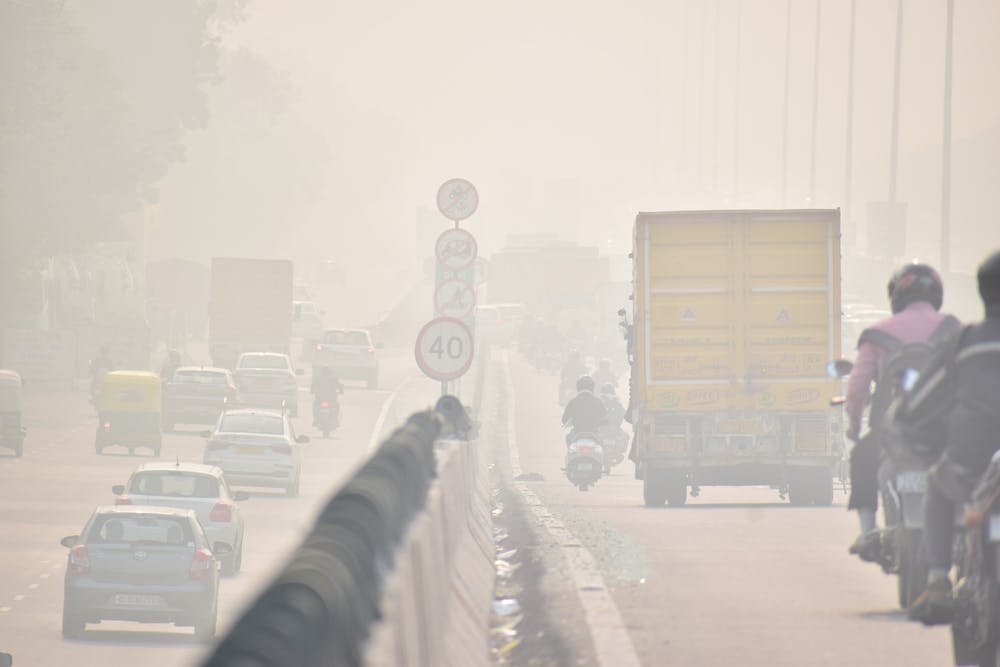
A smog shrouded road with motorcycles, trucks and cars barely visible through the pollution
People pass through the rising pollution on the Delhi-Jaipur Expressway in Gurgaon, Haryana, India, on November 12 2021.
Shutterstock

3. Increasing solar activity

While falling pollution levels mean more of the Sun’s energy reaches Earth’s surface, the amount of the energy the Sun emits is itself variable. There are different solar cycles, but an 11-year cycle is the most relevant one to today’s climate.

The Sun is becoming more active from a minimum in late 2019. This is also contributing a small amount to the spike in global temperatures. Overall, increasing solar activity is contributing only hundredths of a degree at most to the recent global heat.

4. Water vapour from Hunga Tonga eruption

On January 15 2022 the underwater Hunga Tonga–Hunga Haʻapai volcano erupted in the South Pacific Ocean, sending large amounts of water vapour high up into the upper atmosphere. Water vapour is a greenhouse gas, so increasing its concentration in the atmosphere in this way does intensify the greenhouse effect.

Even though the eruption happened almost two years ago, it’s still having a small warming effect on the planet. However, as with the reduced pollution and increasing solar activity, we’re talking about hundredths of a degree.

5. Bad luck

We see variability in global temperatures from one year to the next even without factors like El Niño or major changes in pollution. Part of the reason this September was so extreme was likely due to weather systems being in the right place to heat the land surface.

When we have persistent high-pressure systems over land regions, as seen recently over places like western Europe and Australia, we see local temperatures rise and the conditions for unseasonable heat.

As water requires more energy to warm and the ocean moves around, we don’t see the same quick response in temperatures over the seas when we have high-pressure systems.

The positioning of weather systems warming up many land areas coupled with persistent ocean heat is likely a contributor to the global-average heat too.

6. Climate change

By far the biggest contributor to the overall +1.7°C global temperature anomaly is human-caused climate change. Overall, humanity’s effect on the climate has been a global warming of about 1.2°C.

The record-high rate of greenhouse gas emissions means we should expect global warming to accelerate too.

While humanity’s greenhouse gas emissions explain the trend seen in September temperatures over many decades, they don’t really explain the big difference from last September (when the greenhouse effect was almost as strong as it is today) and September 2023.

Much of the difference between this year and last comes back to the switch from La Niña to El Niño, and the right weather systems in the right place at the right time.

The upshot: we need to accelerate climate action

September 2023 shows that with a combination of climate change and other factors aligning we can see alarmingly high temperatures.

These anomalies may appear to be above the 1.5°C global warming level referred to in the Paris Agreement, but that’s about keeping long-term global warming to low levels and not individual months of heat.

But we are seeing the effects of climate change unfolding more and more clearly.

The most vulnerable are suffering the biggest impacts as wealthier nations continue to emit the largest proportion of greenhouse gases. Humanity must accelerate the path to net zero to prevent more record-shattering global temperatures and damaging extreme events.The Conversation

Andrew King, Senior Lecturer in Climate Science, The University of Melbourne

This article is republished from The Conversation under a Creative Commons license. Read the original article.

Continue Reading6 reasons why global temperatures are spiking right now

More than 100 dolphins and thousands of fish found dead in Brazilian Amazon

Spread the love

https://www.independent.co.uk/climate-change/news/dolphins-fish-thousands-dead-amazon-brazil-b2422855.html

Dolphins die due to severe drought and many more could be affected if water temperatures remain high

A dead dolphin is seen at the Tefe lake effluent of the Solimoes river that has been affected by the high temperatures and drought in Tefe in Brazil’s Amazonas state on 1 October (REUTERS)

More than 100 dolphins have died in the Brazilian Amazon rainforest in the past week as the region grapples with a severe drought, and many more could die soon if water temperatures remain high, experts say.

The Mamiraua Institute, a research group of Brazil’s Ministry of Science, Technology and Innovation, said two more dead dolphins were found Monday in the region around Tefe Lake, which is key for mammals and fish in the area. Thousands of fish have also died, local media reported.

Experts believe high water temperatures are the most likely cause of the deaths in the lakes in the region. Temperatures since last week have exceeded 39 degrees Celsius (102 degrees Fahrenheit) in the Tefe Lake region.

https://www.independent.co.uk/climate-change/news/dolphins-fish-thousands-dead-amazon-brazil-b2422855.html

Continue ReadingMore than 100 dolphins and thousands of fish found dead in Brazilian Amazon

Youth Challenge 32 European Nations in ‘Truly Historic’ Climate Trial

Spread the love

Original article by Isabella Kaminski republished from De Smog.

Portuguese young people claim their human rights have been violated, while accused countries argue the lawsuit should be thrown out.

Portuguese youth, from left, André dos Santos Oliveira, Sofia dos Santos Oliveira, Martim Duarte Agostinho, Mariana Agostinho, Cláudia Duarte Agostinho and Catarina dos Santos Mota talk to the press before their landmark hearing in front of the European Court of Human Rights in Strasborg, France. Credit: Courtesy of the Global Legal Action Network (GLAN)

After Portugal experienced massive wildfires and extreme heat waves this summer, six children and youth from the nation appeared in the European Court of Human Rights Wednesday for a landmark lawsuit against 32 European nations charged with violating their human rights due to the impacts of climate change.

At the hearing in Strasbourg, France, lawyers representing six Portuguese young people said the youth were being discriminated against by state inaction in cutting greenhouse gas emissions, the effects of which have been “foreseeable for decades.” 

Inadequate action to curb global emissions, the lawyers argue, violates the youths’ rights to life, privacy and family life, and to be free from torture, inhuman or degrading treatment. Additionally, it violates their rights to be free from discrimination on grounds of their age, the lawyers said. All of these are enshrined in the European Convention on Human Rights, which the court is responsible for upholding. 

This case is “truly historic,” said Sébastien Duyck, senior attorney at the Center for International Environmental Law. It forces the national governments in the suit “to lay out a legal defense justifying the gap between their climate policies and what science says is needed to avoid climate breakdown.”

Cláudia Duarte Agostinho, age 24, Catarina dos Santos Mota, 23, Martim Duarte Agostinho, 20, Sofia dos Santos Oliveira, 18, André dos Santos Oliveira, 15, and Mariana Agostinho, 11, are suing 32 countries, including all EU member states, the United Kingdom, Norway, Turkey, Switzerland and Russia, for failing to act on the climate crisis. It is unprecedented  that so many governments have to defend themselves in front of any court in the world.

In 2017, damaging wildfires in Portugal, made worse by climate change, killed more than 100 people and sparked the youths to file the lawsuit, which began in 2020. Over the past three years, the young people’s legal team filed a number of supporting documents, including a detailed climate science briefing. The documents show that the current global trajectory for cutting greenhouse gas emissions falls far short of keeping the global temperature rise under the 1.5C threshold agreed by states at the COP27 climate talks last year.

Portugal hit hard by climate change

Portugal describes itself as the European country most affected by the adverse impact of climate change. Since 1976, it has seen a significant trend in heat waves and tropical nights, with high temperature records broken in 2018, 2019 and 2022. This summer, severe drought hit the country and wildfires blazed again.

The young people live in Lisbon and Leiria, parts of Portugal that are particularly at risk. And according to the Intergovernmental Panel on Climate Change, the country faces “hard limits” to its ability to adapt.

The young claimants in the lawsuit point to research by Climate Action Tracker, which calculates a “fair share” of emission cuts for the 32 countries at the center of the case, based on their levels of development, capacity and/or historic responsibility. Most of these cuts are higher than the states’ current goals for the year 2030.

To address this, they want all 32 states to increase their climate ambitions and meet these goals by cutting the production and export of fossil fuels, lowering their consumption emissions, and forcing companies domiciled within their territories to clean up their global supply chains. 

The lawsuit describes the young people as both current and future victims of climate change, outlining the existing effects on their physical and mental health.

It notes the dangerous impacts of extreme heat, including heatstroke and the exacerbation of chronic conditions such as asthma and other  respiratory problems experienced by Martim Duarte Agostinho, Catarina dos Santos Mota and André dos Santos Oliveira. During periods of extreme heat, some of the youth in the suit have had had to stop playing and exercising outdoors, while extremely hot nights have made it difficult to sleep, leaving them more tired and less able to study and work.

A psychological assessment showed they were all experiencing symptoms of anxiety or depression. The three also describe a form of mental suffering called “moral injury” caused by an awareness of the failure by those in authority to protect them.

The severity of all these impacts, the legal team concludes, will only get worse if nations can’t meet the 1.5C warming threshold. Although climate change affects everyone, lawyer Alison Macdonald argued in court that it will have a disproportionate impact on the young people at the heart of the case, “as they will have to live longer with the consequences of the respondents’ failures.”

This is the third climate case heard by the European Court of Human Rights this year. In March, a group of older Swiss women known as the KlimaSeniorinnen argued that they were disproportionately affected by the climate crisis and wanted the court to order Switzerland to do more to cut its emissions. This was followed the same day by a claim brought by a former French politician who also argued France was breaching his human rights.

The court wants to hear all three of these cases before making a final decision. There are a handful of other climate-related cases pending before it.

Swiss women involved in another European climate lawsuit support the Portuguese youth at the courthouse in Strasbourg. Credit: Courtesy of the Global Legal Action Network (GLAN)

But the claimants in the Portuguese youth case have some big technical hurdles to overcome before judges even begin to consider the merits of their lawsuit.

The governments named in the lawsuit submitted individual responses to the court, and all except Russia and the Netherlands also submitted a joint statement, which says the states recognise the severity of the threat of climate change and the need for urgent action.

But it says the case should be thrown out for failing to meet the court’s basic rules on admissibility. These include the requirement to have exhausted all national legal options before filing a claim at the ECHR. Ignoring this, it says, would involve “radically overhauling” legal precedent.

The young people’s legal team argues that the rule should be lifted in their case because climate change is such an urgent issue and because it would be a practically and financially unreasonable burden, taking huge legal resources, time, and money, for the group. 

All states. except Portugal, also argue they should not be held to account for harms in another country. The claimants contend that the impacts of greenhouse emissions do not respect national boundaries.

Representing 30 states in court, UK lawyer Sudhanshu Swaroop said the lawsuit requires the court to “exceed its mandate.”

“The applicants in reality are asking the court to build a new model of extra-territorial jurisdiction, contrary to legal principles and with the effect that any person on the planet that claims to be affected by climate change could claim,” he noted. 

He added that these issues are being addressed through the UN Framework Convention on Climate Change (UNFCCC) and that the young people “are asking the courts to act as legislators rather than judges, and to legislate for a global challenge without having global jurisdiction.”

Ricardo Matos, a lawyer for Portugal, said the young people could not claim to be victims of the 2017 wildfires, and were effectively trying to bring an actio popularis – a claim on behalf of the wider public rather than themselves as individuals. The European Convention on Human Rights does not allow such claims.

The governments also argued that the young people are not ‘victims,’ pointing out they cannot prove that they suffer more than the general population by virtue of their age. 

The young people’s legal team believes these hurdles can be overcome. “This court is uniquely well placed to address these legal issues in the transnational way that climate change requires,” Macdonald told the court. “Piecemeal regulation across Europe represents no effective remedy.”

According to Climate Action Network, which submitted a third-party intervention, a successful judgment in this case would be “like a new, legally binding treaty, directly obligating 32 European governments to act urgently on the climate crisis.” 

It also wields “remarkable influence” in the broader context of global litigation, said Duyck, “given that the European Court of Human Rights holds a prominent role in setting legal precedents within Europe and beyond.”

Speaking outside the court after the hearing, the oldest claimant, Cláudia Duarte Agostinho, said what she had just heard was “very sad.” 

“The governments have just said that what’s happening all around us is not important,” she added. “They are minimising the effects that climate change has on our human rights. 

“Outside the courtroom they say all the right things about the climate emergency,” she continued. “But today they are denying the reality that what we are experiencing is getting worse and worse.”

Travel to report on this lawsuit was supported by a grant from the Foundation for International Law for the Environment.

Original article by Isabella Kaminski republished from De Smog.

Continue ReadingYouth Challenge 32 European Nations in ‘Truly Historic’ Climate Trial