Only 3 years left – new study warns the world is running out of time to avoid the worst impacts of climate change

Spread the love
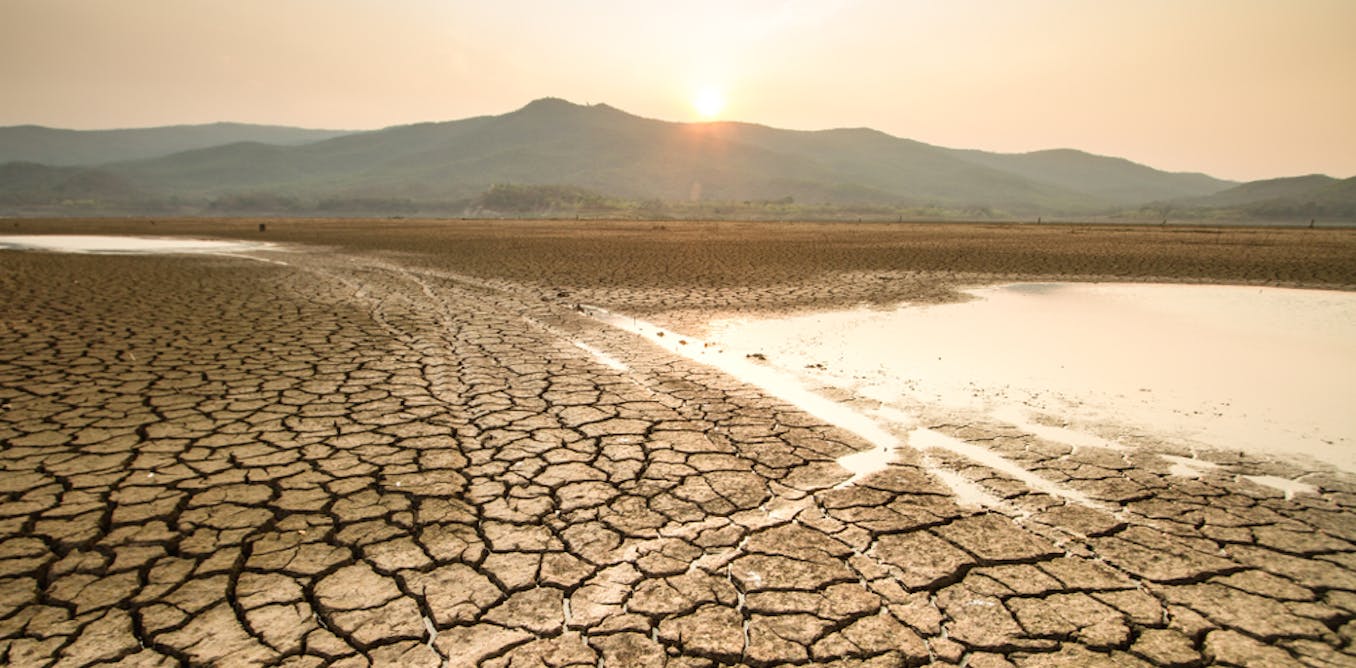
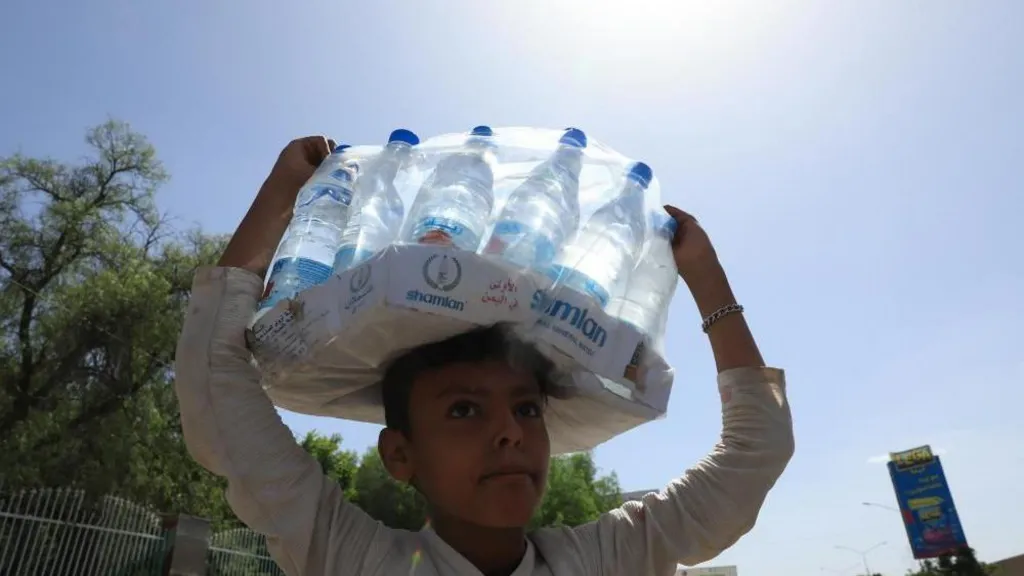
Piyaset/Shutterstock

Piers Forster, University of Leeds and Debbie Rosen, University of Leeds

Bad climate news is everywhere. Africa is being hit particularly hard by climate change and extreme weather, impacting lives and livelihoods.

We are living in a world that is warming at the fastest rate since records began. Yet, governments have been slow to act.

The annual global climate change conference of the parties (COP30) is just months away. All of the 197 countries that belong to the United Nations were supposed to have submitted updated national climate plans to the UN by February this year. These plans outline how each country will cut its greenhouse gas emissions in line with the legally binding international Paris Agreement. This agreement commits all signatories to limiting human-caused global warming to no more than 1.5°C above pre-industrial levels.

Governments must also bring their newly updated national climate action plans to COP30 and show how they plan to adapt to the impacts that climate change will bring.

But so far, only 25 countries, covering around 20% of global emissions, have submitted their plans, known as Nationally Determined Contributions. In Africa, they are Somalia, Zambia and Zimbabwe. This leaves 172 still to come.

The nationally determined contributions are very important in setting out countries’ short- to medium-term commitments on climate change. They also provide a direction of travel that can inform broader policy decisions and investments. Aligning climate plans with development goals could lift 175 million people out of poverty.

But arguably only one of the submitted plans – the UK’s – is compatible with the Paris Agreement.

We are climate scientists, and one of us (Piers Forster) leads the global science team that publishes the annual Indicators of Global Climate Change report. This report gives an overview of the state of the climate system. It is based on calculations of the net emissions of greenhouse gases globally, how these are concentrating in the atmosphere, how temperatures are rising on the ground, and how much of this warming has been caused by humans.

The report also looks at how extreme temperatures and rainfall are intensifying, how much the sea levels are rising, and how much carbon dioxide can still be emitted before the planet’s temperature exceeds 1.5°C more than it was in pre-industrial times. This is important because staying within 1.5°C is needed to avoid the worst impacts of climate change.

Our report shows that human-caused global warming reached 1.36°C in 2024. This boosted average global temperatures (a combination of human-induced warming and natural variability in the climate system) to 1.52°C. In other words, the world has already reached the level where it has warmed so much that it cannot avoid significant impacts from climate change. There is no doubt we are in dangerous waters.

Our dangerously hot planet

Although last year’s global temperatures were very high, they were also alarmingly unexceptional. The data speaks for itself. Continued record high levels of greenhouse gas emissions have led to rising atmospheric concentrations of carbon dioxide, methane and nitrous oxide.

The result is rising temperatures that are rapidly eating into the remaining carbon budget (the amount of greenhouse gases that can be emitted within an agreed time). This will be exhausted in less than three years at current levels of emissions.

We need to face this head on: the window to stay within 1.5°C is essentially shut. Even if we can bring temperatures back down in future, it will be a long and difficult road.

At the same time, climate extremes are intensifying, bringing long-term risks and costs to the global economy but also, importantly, people. The African continent is now facing its deadliest climate crisis in over a decade.

It would be impossible to imagine economies operating without fast access to trusted data. When share prices plummet or growth stalls, politicians and business leaders act decisively. None would tolerate outdated intelligence on sales or the stock market.

But when it comes to climate, the speed of climate change often outpaces the data available. This means fast decisions can’t be made. If we treated climate data as we do financial reports, panic would ensue after each dire update. But while governments routinely pivot when faced with an economic downturn, they have been far slower to respond to what key climate indicators – the Earth’s vital signs – are telling us.

What needs to happen next

As more countries develop their climate plans, it’s time for leaders across the globe to face the hard truths of climate science.

Governments need to have fast access to trusted climate data so that they can develop up-to-date national climate plans. The national climate plans need to take a global perspective too. This is really important for fairness and equity. For example, developed countries must acknowledge that they’ve emitted more greenhouse gases and take the lead in presenting ambitious mitigation efforts and in providing finance for other countries to decarbonise and adapt.

In Africa, the UN is hosting UNFCCC Climate Week in Addis Ababa in September. As well as making plans for COP30, there will be sessions on accessing climate finance and ensuring that the transition to zero human-caused carbon emissions by 2050 (net zero) is just and equitable. The summit also aims to support countries that are still working on their national climate plans.

If nationally determined contributions are implemented, the pace of climate change will slow down. This is vital not just for the countries – and economies – currently on the frontline against climate change, but for a functioning global society.

Just five of the G20 countries have submitted their 2035 plans: Canada, Brazil, Japan, the United States and the United Kingdom. But the G20 is responsible for around 80% of global emissions. This means that South Africa’s current G20 presidency can help to ensure that the world prioritises efforts to help developing countries finance their transition to a low-carbon economy.

Another worrying factor is that just 10 of the updated nationally determined contributions have reaffirmed or strengthened commitments to move away from fossil fuels. This means that national climate plans from the European Union, China and India will be key in testing their climate leadership and keeping the Paris Agreement’s 1.5°C temperature goals alive. Many other countries will be scrutinising what these countries commit to before they submit their own national climate plans.

The data in our report helps the world to understand not just what’s happened in recent years, but also what to expect further down the track.

Our hope is that these and other countries submit ambitious and credible plans well before COP30. If they do, this will finally close the gap between acknowledging the climate crisis and making decisive efforts to address it. Every tonne of greenhouse gas emissions matters.

Piers Forster, Professor of Physical Climate Change; Director of the Priestley International Centre for Climate, University of Leeds and Debbie Rosen, Research and Innovation Development Manager for the Priestley Centre for Climate Futures, University of Leeds

This article is republished from The Conversation under a Creative Commons license. Read the original article.

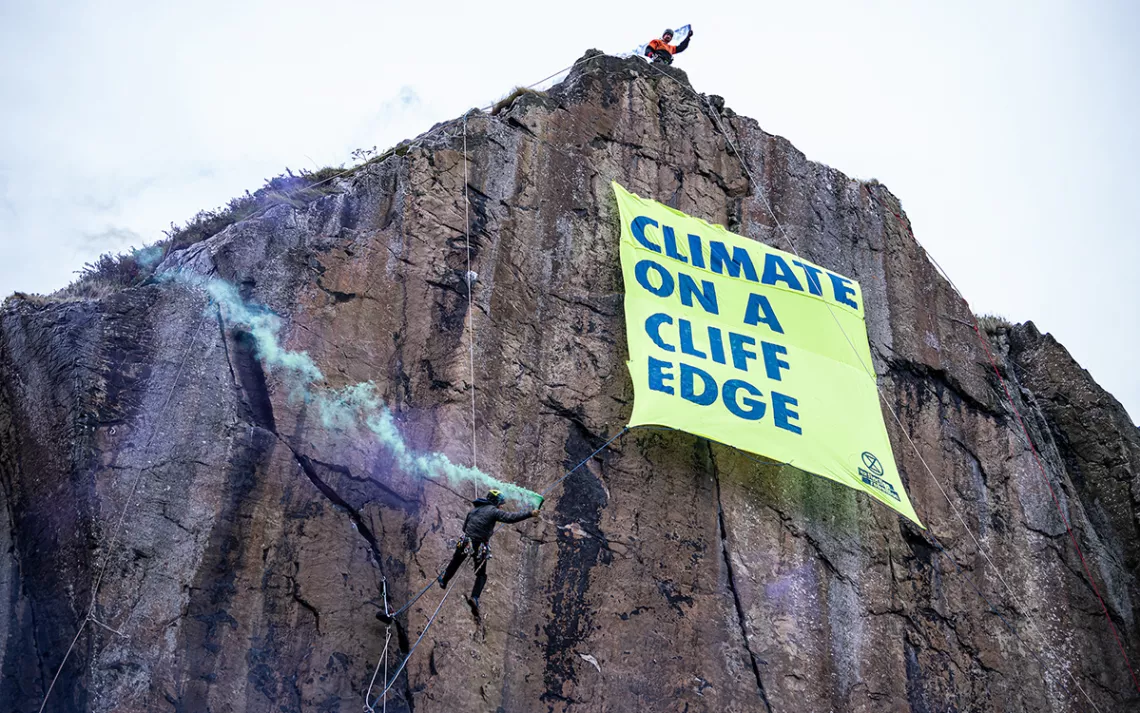
Experienced climbers scale a rock face near the historic Dumbarton castle in Glasgow, releasing a banner that reads “Climate on a Cliff Edge.” One activist, dressed as a globe, symbolically looms near the edge, while another plays the bagpipes on the shores below. | Photo courtesy of Extinction Rebellion and Mark Richards
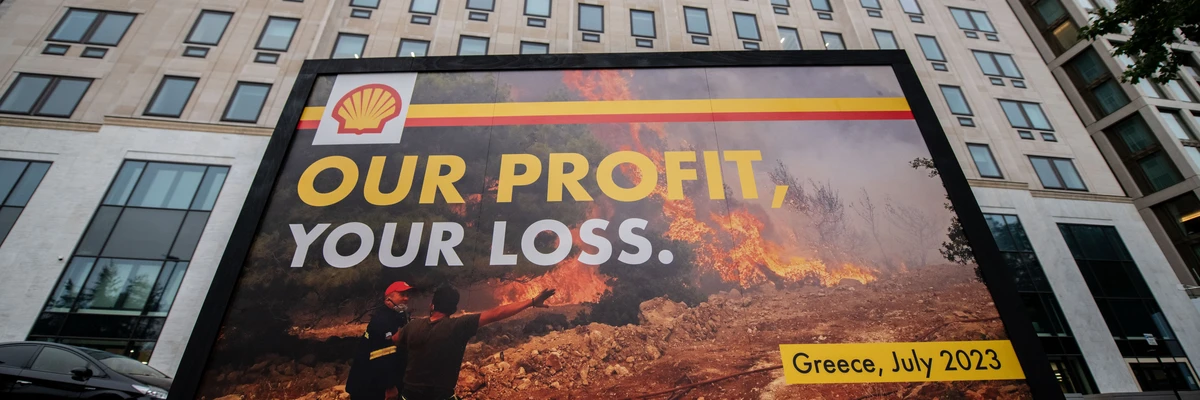
Greenpeace activists display a billboard during a protest outside Shell headquarters on July 27, 2023 in London.
Greenpeace activists display a billboard during a protest outside Shell headquarters on July 27, 2023 in London. (Photo: Handout/Chris J. Ratcliffe for Greenpeace via Getty Images)

Continue ReadingOnly 3 years left – new study warns the world is running out of time to avoid the worst impacts of climate change

Green Party co-leader calls for climate resilience to be put on a statutory footing

Spread the love
Green Party Co-leader Adrian Ramsay. Wikipedia CC.

Responding to the Met Office’s State of the Climate Report, published today, co-leader of the Green Party, Adrian Ramsay MP, has called on the Prime Minister to put climate resilience on a statutory footing. He said:

“England is facing its driest start to a year in my lifetime. Extreme weather is becoming the norm, and we are nowhere near prepared to protect our citizens. Our climate is fuelling extreme weather, and that is having direct and urgent consequences in the here and now.

He continued: ”We had the warmest spring on record, and we are in the middle of this summer’s third heatwave. The last three years have been among the top five warmest on record. The Government has not adequately prepared our infrastructure to protect our citizens.”  

”The Government must outline the steps they are taking to prepare for the increasing threat of extreme temperatures. This is not just about this summer, it’s about how we adapt as the climate crisis continues to escalate.”

“We need to safeguard the public from this rising climate threat. That is why the Prime Minister must put climate resilience on a statutory footing, requiring local councils and major infrastructure providers to carry out climate risk assessments for all projects.”

Continue ReadingGreen Party co-leader calls for climate resilience to be put on a statutory footing

Three years left to limit warming to 1.5C, leading scientists warn

Spread the love

https://www.bbc.com/news/articles/cn4l927dj5zo

The Earth could be doomed to breach the symbolic 1.5C warming limit in as little as three years at current levels of carbon dioxide emissions.

That’s the stark warning from more than 60 of the world’s leading climate scientists in the most up-to-date assessment of the state of global warming.

Nearly 200 countries agreed to try to limit global temperature rises to 1.5C above levels of the late 1800s in a landmark agreement in 2015, with the aim of avoiding some of the worst impacts of climate change.

But countries have continued to burn record amounts of coal, oil and gas and chop down carbon-rich forests – leaving that international goal in peril.

Climate change has already worsened many weather extremes – such as the UK’s 40C heat in July 2022 – and has rapidly raised global sea levels, threatening coastal communities.

“Things are all moving in the wrong direction,” said lead author Prof Piers Forster, director of the Priestley Centre for Climate Futures at the University of Leeds.

“We’re seeing some unprecedented changes and we’re also seeing the heating of the Earth and sea-level rise accelerating as well.”

These changes “have been predicted for some time and we can directly place them back to the very high level of emissions”, he added.

Article continues at https://www.bbc.com/news/articles/cn4l927dj5zo

Neo-Fascist Climate Science Denier Donald Trump says Burn, Baby, Burn.
Elon Musk urges you to be a Fascist like him, says that you can ignore facts and reality then.
Continue ReadingThree years left to limit warming to 1.5C, leading scientists warn

The climate is changing so fast that we haven’t seen how bad extreme weather could get

Spread the love
Andreas Thaller/Alamy Stock Photo

Simon H. Lee, University of St Andrews; Hayley J. Fowler, Newcastle University, and Paul Davies, Newcastle University

Extreme weather is by definition rare on our planet. Ferocious storms, searing heatwaves and biting cold snaps illustrate what the climate is capable of at its worst. However, since Earth’s climate is rapidly warming, predominantly due to fossil fuel burning, the range of possible weather conditions, including extremes, is changing.

Scientists define “climate” as the distribution of possible weather events observed over a length of time, such as the range of temperatures, rainfall totals or hours of sunshine. From this they construct statistical measures, such as the average (or normal) temperature. Weather varies on several timescales – from seconds to decades – so the longer the period over which the climate is analysed, the more accurately these analyses capture the infinite range of possible configurations of the atmosphere.

Typically, meteorologists and climate scientists use a 30-year period to represent the climate, which is updated every ten years. The most recent climate period is 1991-2020. The difference between each successive 30-year climate period serves as a very literal record of climate change.

This way of thinking about the climate falls short when the climate itself is rapidly changing. Global average temperatures have increased at around 0.2°C per decade over the past 30 years, meaning that the global climate of 1991 was around 0.6°C cooler than that in 2020 (when accounting for other year-to-year fluctuations), and even more so than the present day.

A moving target for climate modellers

If the climate is a range of possible weather events, then this rapid change has two implications. First, it means that part of the distribution of weather events comprising a 30-year climate period occurred in a very different background global climate: for example, northerly winds in the 1990s were much colder than those in the 2020s in north-west Europe, thanks to the Arctic warming nearly four times faster than the global average. Statistics from three decades ago no longer represent what is possible in the present day.

Second, the rapidly changing climate means we have not necessarily experienced the extremes that modern-day atmospheric and oceanic warmth can produce. In a stable climate, scientists would have multiple decades for the atmosphere to get into its various configurations and drive extreme events, such as heatwaves, floods or droughts. We could then use these observations to build up an understanding of what the climate is capable of. But in our rapidly changing climate, we effectively have only a few years – not enough to experience everything the climate has to offer.

Extreme weather events require what meteorologists might call a “perfect storm”. For example, extreme heat in the UK typically requires the northward movement of an air mass from Africa combined with clear skies, dry soils and a stable atmosphere to prevent thunderstorms forming which tend to dissipate heat.

Such “perfect” conditions are intrinsically unlikely, and many years can pass without them occurring – all while the climate continues to change in the background. Based on an understanding of observations alone, this can leave us woefully underprepared for what the climate can now do, should the right weather conditions all come together at once.

Startling recent examples include the extreme heatwave in the Pacific north-west of North America in 2021, in which temperatures exceeded the previous Canadian record maximum by 4.6°C. Another is the occurrence of 40°C in the UK in summer 2022, which exceeded the previous UK record maximum set only three years earlier by 1.6°C. This is part of the reason why the true impact of a fixed amount of global warming is only evident after several decades, but of course – since the climate is changing rapidly – we cannot use this method anymore.

Playing with fire

To better understand these extremes, scientists can use ensembles: many runs of the same weather or climate model that each slightly differ to show a range of plausible outcomes. Ensembles are routinely used in weather prediction, but can also be used to assess extreme events which could happen even if they do not actually happen at the time.

When 40°C first appeared in ensemble forecasts for the UK before the July 2022 heatwave, it revealed the kind of extreme weather that is possible in the current climate. Even if it had not come to fruition, its mere appearance in the models showed that the previously unthinkable was now possible. In the event, several naturally occurring atmospheric factors combined with background climate warming to generate the record-shattering heat on July 19 that year.

The highest observed temperature each year in the UK, from 1900 to 2023

A graph showing the highest observed temperature in the UK between 1900 and 2023.
The hottest days are getting hotter in the UK. Met Office/Kendon et al. 2024

Later in summer 2022, after the first occurrence of 40°C, some ensemble weather forecasts for the UK showed a situation in which 40°C could be reached on multiple consecutive days. This would have posed an unprecedented threat to public health and infrastructure in the UK. Unlike the previous month, this event did not come to pass, and was quickly forgotten – but it shouldn’t have been.

It is not certain whether these model simulations correctly represent the processes involved in producing extreme heat. Even so, we must heed the warning signs.

Despite a record-warm planet, summer 2024 in the UK has been relatively cool so far. The past two years have seen global temperatures far above anything previously observed, and so potential extremes have probably shifted even further from what we have so far experienced.

Just as was the case in August 2022, we’ve got away with it for now – but we might not be so lucky next time.


Imagine weekly climate newsletter

Don’t have time to read about climate change as much as you’d like?
Get our award-winning weekly roundup in your inbox instead. Every Wednesday, The Conversation’s environment editor writes Imagine, a short email that goes a little deeper into just one climate issue. Join the 35,000+ readers who’ve subscribed so far.


Simon H. Lee, Lecturer in Atmospheric Science, University of St Andrews; Hayley J. Fowler, Professor of Climate Change Impacts, Newcastle University, and Paul Davies, Chief Meteorologist, Met Office and Visiting Professor, Newcastle University

This article is republished from The Conversation under a Creative Commons license. Read the original article.

Orcas discuss Donald Trump and the killer apes' concept of democracy. Front Orca warns that Trump is crashing his country's economy and that everything he does he does for the fantastically wealthy.
Orcas discuss Donald Trump and the killer apes’ concept of democracy. Front Orca warns that Trump is crashing his country’s economy and that everything he does he does for the fantastically wealthy.
Neo-Fascist Climate Science Denier Donald Trump says Burn, Baby, Burn.
Elon Musk urges you to be a Fascist like him, says that you can ignore facts and reality then.
Continue ReadingThe climate is changing so fast that we haven’t seen how bad extreme weather could get

Global wheat yields would be ‘10%’ higher without climate change

Spread the love

Original article by Orla Dwyer republished from Carbon Brief under a CC license.

Wheat affected by drought conditions in Bremen, Germany in May 2025. Credit: dpa picture alliance / Alamy Stock Photo.

Global yields of wheat are around 10% lower now than they would have been without the influence of climate change, according to a new study. 

The research, published in the Proceedings of the National Academy of Sciences, looks at data on climate change and growing conditions for wheat and other major crops around the world over the past 50 years. 

It comes as heat and drought have this year been putting wheat supplies at risk in key grain-producing regions, including parts of Europe, China and Russia. 

The study finds that increasingly hot and dry conditions negatively impacted yields of three of the five key crops examined. 

Overall, global grain yields soared during the study period due to technological advancements, improved seeds and access to synthetic fertilisers. 

But these yield setbacks have “important ramifications for prices and food security”, the study authors write. 

Grain impacts 

Most parts of the world have experienced “significant” yield increases in staple crops since the mid-20th century. 

The new study notes that, in the past 50 years, yields increased by 69-123% for the five staple crops included in the research – wheat, maize, barley, soya beans and rice. 

But crop production is increasingly threatened by climate change and extreme weather. A 2021 study projected “major shifts” in global crop productivity due to climate change within the next two decades.

Earlier this year, Carbon Brief mapped out news stories of crops being destroyed around the world by heat, drought, floods and other weather extremes in 2023-24. Maize and wheat were the crops that appeared most frequently in these reports. 

The crops that appeared most frequently in media reports of extreme weather impacts analysed by Carbon Brief, ranked in order of most to least frequent: maize, wheat, rice, potatoes, soya beans, olives, bananas, grapes, sunflowers and coffee. Credit: Carbon Brief.

Hot and dry weather is currently threatening wheat crops in parts of China, the world’s largest wheat producer, Reuters reported this month.

In the UK, wheat crops are struggling amid the “driest start to spring in England for almost 70 years”, the Times recently reported. Farm groups say some crops are already failing, the Guardian said. 

As a result, global wheat supplies are “tight”, according to Bloomberg, with price rises possible depending on weather conditions in parts of Europe, China and Russia. 

Food security and prices

The study uses climate datasets, modelling and national crop statistics from the UN Food and Agriculture Organization to assess crop production and climate trends in key grain-producing countries over 1974-2023, including Argentina, Brazil, Canada, China, the EU, Russia and the US. 

The researchers assess climate observations and then use crop models to calculate what yields would have been with and without these climate changes. 

For example, “if it has warmed 1C over 50 years and the model says that 1C leads to 5% yield loss, we’d calculate that the warming trend caused a loss of 5%”, Prof David Lobell, the lead study author and a professor at Stanford University, tells Carbon Brief. 

The study looks at two reanalysis climate datasets that include information on temperature and rainfall over the past 50 years: TerraClimate (TC) and ERA5-Land. (Reanalysis data combines observations with a modern forecasting model.)

The researchers find that yields of three of the five crops are lower than they would have been without warmer temperatures and other climate impacts in the past 50 years. 

Yields were lower than they otherwise would have been by 12-14% for barley, 8-12% for wheat and 4% for maize. 

The impacts on soya beans were less clear as there were “significant differences” between data sources. But both datasets show a negative impact on yields, ranging from 2% to 8%.

The effects on rice yields were inconclusive, with one dataset showing a positive effect of around 1% while the other showed a negative effect of about 3%.   

The chart below shows the estimated yield impacts for each crop based on the calculations from the two climate datasets.

The estimated percentage impact of climate factors on yields of wheat (brown), maize (yellow), rice (blue), soya bean (green) and barley (purple) from 1974-2023, using two different historical climate datasets. Source: Lobell et al. (2025).

Given soaring overall crop yields during this time, impacts of 4-13% “may seem trivial”, the researchers write. But, they say, it can have “important ramifications for prices and food security” given growing food demand, noting: 

“The overall picture of the past half-century is that climate trends have led to a deterioration of growing conditions for many of the main grain-producing regions of the world.” 

Water stress and heat

The study also assesses the impacts that warming and vapour pressure deficit – a key driver of plant water stress – have on crop yields. 

Vapour pressure deficit is the difference between the amount of water vapour in the air and the point at which water vapour in the air becomes saturated. As air becomes warmer, it can hold more water vapour. 

A high deficit can reduce plant growth and increase water stress. The models show that these effects may be the main driver of losses in grain yield, with heat having a more “indirect effect”, as higher temperatures drive water stress. 

Agricultural irrigation system watering dry soil on a crop field in the US. Credit: Andrii Biletskyi / Alamy Stock Photo. Image ID: 3AKGHEX.
Agricultural irrigation system watering dry soil on a crop field in the US. Credit: Andrii Biletskyi / Alamy Stock Photo.

The study finds that vapour pressure deficit increased in most temperate regions in the past 50 years. 

The researchers compare their data to climate modelling simulations covering the past 50 years. They find largely similar results, but notice a “significant underestimation” of vapour pressure deficit increases in temperate regions in most climate models. 

Many maize-growing areas in the EU, China, Argentina and much of Africa have vapour deficit trends that “exceed even the highest trend in models”, they write. 

The researchers also find that most regions experienced “rapid warming” during the study period, with the average crop-growing season now warmer than more than 80% of growing seasons 50 years ago. 

The findings indicate that, in some areas, “even the coolest growing season in the present day is warmer than the warmest season that would have occurred 50 years ago”. 

Wheat growing in a field. Credit: Jon Freeman / Alamy Stock Photo. Image ID: EXYNXR.
Wheat growing in a field. Credit: Jon Freeman / Alamy Stock Photo.

An exception to this is in the US and Canada, they find, with most maize and soya bean crop areas in the US experiencing lower levels of warming than other parts of the world and a “slight cooling” in wheat-growing areas of the northern Great Plains and central Canada.

(The central US has experienced a cooling trend in summer daytime temperatures since the middle of the 20th century, according to the National Oceanic and Atmospheric Administration. There are many theories behind this “warming hole”, which has continued despite climate change.) 

CO2 greening 

Dr Corey Lesk, a postdoctoral researcher at Dartmouth College who studies the impacts of climate on crops, says these findings are in line with other recent estimates. He tells Carbon Brief: 

“There are some uncertainties and sensitivity to model specification here – but it’s somewhat likely climate change has already reduced crop yields in the global mean.” 

The study’s “main limitation” is that it is “behind” on including certain advances in understanding how soil moisture impacts crops, Lesk adds: 

“Moisture changes and CO2 [carbon dioxide] effects are the largest present uncertainties in past and future crop impacts of climate change. This paper is somewhat limited in advancing understanding on those aspects, but it’s illuminating to pause and take stock.”

The research looks at whether the benefits of CO2 increases during the past 50 years exceed the negative effects of higher levels of the greenhouse gas. 

Rising CO2 levels can boost plant growth in some areas in a process called “CO2 fertilisation”. However, a 2019 study found that this “global greening” could be stalled by growing water stress. 

Yield losses for wheat, maize and barley “likely exceeded” any benefits of CO2 increases in the past 50 years, the study finds. 

The opposite is true for soya beans and rice, they find, with a net-positive impact of more than 4% on yields. 

Soya beans growing in a field. Credit: Volodymyr Shtun / Alamy Stock Photo. Image ID: 3B84F7G.
Soya beans growing in a field. Credit: Volodymyr Shtun / Alamy Stock Photo.

Climate science has “done a remarkable job of anticipating global impacts on the main grains and we should continue to rely on this science to guide policy decisions”, Lobell, the lead study author, says in a press release

He adds that there may be “blind spots” on specialised crops, such as coffee, cocoa, oranges and olives, which “don’t have as much modelling” as key commodity crops, noting: 

“All these have been seeing supply challenges and price increases. These matter less for food security, but may be more eye-catching for consumers who might not otherwise care about climate change.”

 Lobell et al. (2025), A half-century of climate change in major agricultural regions: Trends, impacts, and surprises, Proceedings of the National Academy of Sciences, doi:10.1073/pnas.2502789122

Original article by Orla Dwyer republished from Carbon Brief under a CC license.

Neo-Fascist Climate Science Denier Donald Trump says Burn, Baby, Burn.
Orcas discuss Donald Trump and the killer apes' concept of democracy. Front Orca warns that Trump is crashing his country's economy and that everything he does he does for the fantastically wealthy.
Orcas discuss Donald Trump and the killer apes’ concept of democracy. Front Orca warns that Trump is crashing his country’s economy and that everything he does he does for the fantastically wealthy.
Continue ReadingGlobal wheat yields would be ‘10%’ higher without climate change