UK won’t say when or if it will restart aid to Gaza despite reports of famine

Spread the love

Original article by Adam Ramsay republished from OpenDemocracy under a Creative Commons Attribution-NonCommercial 4.0 International licence.
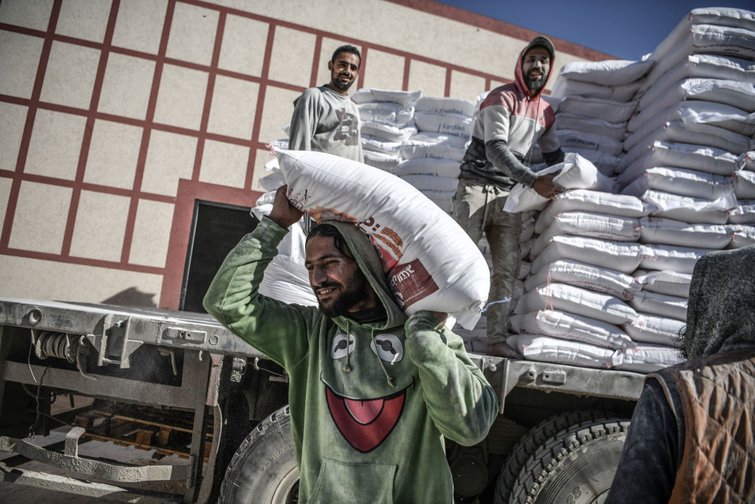
RAFAH, GAZA – JANUARY 04: UNRWA personnel distribute flour to Palestinian families  | (Photo by Abed Zagout/Anadolu via Getty Images)

Aid is suspended amid allegations about UNRWA. There is no such suspension of arms exports despite evidence of genocide

The UK government still has no answers about if or when it will restart funding to the main relief agency in Gaza despite mounting reports of famine.

Britain’s Foreign, Commonwealth and Development Office (FCDO) said last month it was stopping aid to UNRWA while it “reviewed” allegations from the Israeli government that 12 of the agency’s 13,000 staff had been involved in attacks on Israel in October.

No such suspension has been announced of Britain’s arms exports to Israel, despite the International Court of Justice having found there was a plausible case that Israel was committing genocide in Gaza. The ICJ also ordered Israel to allow aid into the region.

The Israeli government’s allegations came in the form of a six-page dossier, which Israel passed to UNRWA and its donors the day after the genocide ruling. In recent years, claims made by the Israeli government have repeatedly been subsequently dismissed as propaganda intended to influence geopolitics at key moments.

Labour MP Zarah Sultana has submitted a parliamentary question asking the department what the review involves and how long it will take given the urgent humanitarian crisis in the region more than two weeks on, but it has snubbed both her and openDemocracy’s questions.

While the dossier that Israel passed to UNRWA and its donors was confidential, Channel 4 News managed to get a copy, and said it provided no evidence for the explosive claims, which knocked the genocide ruling off front pages across the western world.

UNRWA, whose full name is the United Nations Relief and Works Agency for Palestine Refugees in the Near East, was founded in 1949 to support the hundreds of thousands of Palestinian refugees forced from their homes in order to create the state of Israel in 1948.

It currently supports 5.9 million Palestinian refugees, including those in Gaza and the West Bank affected by the current conflict, in Lebanon where there is ongoing socio-economic collapse, in Syria, where the civil war continues, and in Jordan. With its projects including running schools, medical clinics and hospitals and the distribution of food aid, it is the biggest single UN agency.

Before the allegations were made, senior Israeli officials had argued that it would be necessary to destroy UNRWA in order to win the war on Gaza.

Sultana called the government’s suspension of UNRWA funding “an act of collective punishment on the Palestinian people, millions of whom are currently displaced, unable to access food and water, and in urgent need of humanitarian aid”.

She said it was right that the allegations against UNRWA staff were investigated, but added that it was Britain’s duty under international law to ensure Palestinians in Gaza have access to humanitarian assistance. “The government’s refusal to be transparent about this decision and the process for its investigation is wholly unacceptable,” she said.

The UK’s contributions to UNRWA have varied over the years, peaking at around £90m in 2019 before being slashed to around £25m in 2022. UNRWA has subsequently admitted it fired all the staff members accused by Israel of involvement in the attacks before investigating whether there was any truth to the allegations.

The UN Secretary General has called for the donors who have suspended their funding “to, at least, guarantee the continuity of UNRWA’s operations”. UNRWA has said that the decision of some donors to suspend funding “threatens our ongoing humanitarian work across the region”. While some governments, like the UK, have suspended aid, others including Belgium, Ireland, Denmark and Spain have continued their funding.

The UK government has said that it remains “committed to getting humanitarian aid to the people in Gaza who desperately need it,” but other aid organisations who operate in Gaza have argued that none but UNRWA has the capacity to deliver it. More than 20 aid groups, including Oxfam and Save the Children, have warned that, if funding suspensions are not reversed, “we may see a complete collapse of the already restricted humanitarian response in Gaza”, calling the government’s decision “reckless”.

The UK says it “allocated” £16m to UNRWA between 7 October and the suspension in January, and that no further UK funding was due until April 2024. It has not said how much of the £16m has already been paid or spent, and how much is affected by the decision to suspend payments.

The BBC reported yesterday that children in northern Gaza have been going for days without food as aid can no longer reach them.

Original article by Adam Ramsay republished from OpenDemocracy under a Creative Commons Attribution-NonCommercial 4.0 International licence.
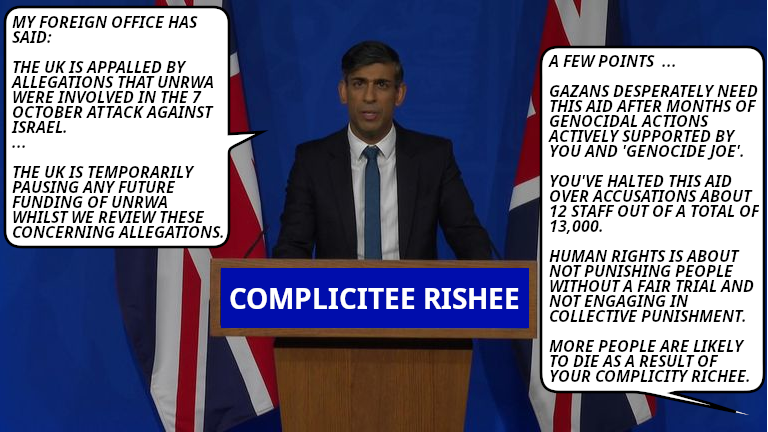
Image of UK Prime Minister Rishi Sunak. UK halts aid to UNRWA in Gaza over Israeli allegations that 12 staff from a total of 13,000 were involved in the 7 October 2024 attack on Israel.
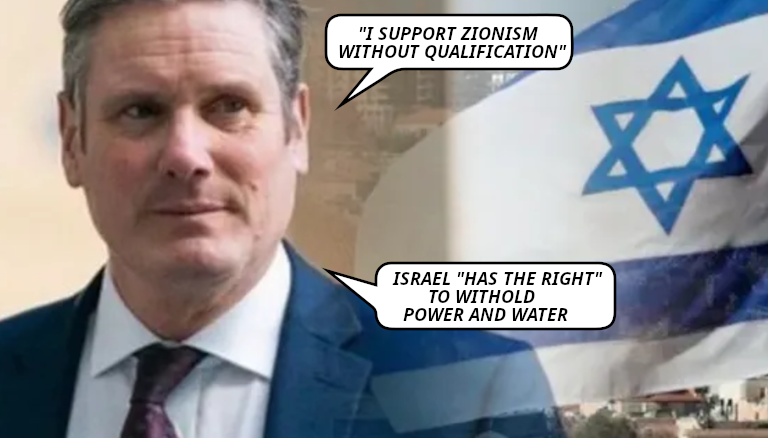
Zionist Keir Starmer supports Israel's Gaza genocide.
Zionist Keir Starmer supports Israel’s Gaza genocide.
Continue ReadingUK won’t say when or if it will restart aid to Gaza despite reports of famine

‘Horror Is Growing By the Minute,’ Says Rights Group, as Israel Starves Gaza

Spread the love

Original article by JULIA CONLEY republished from Common Dreams under Creative Commons (CC BY-NC-ND 3.0). 

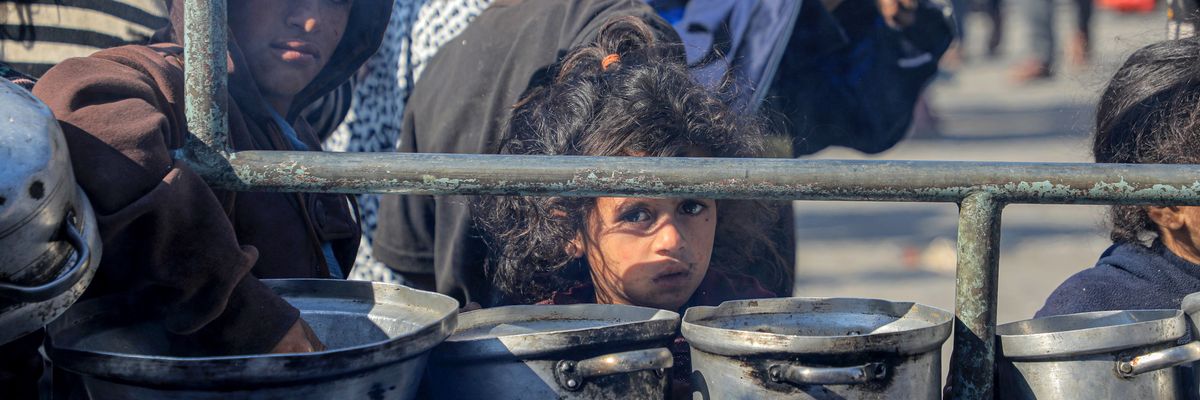
Children wait for food relief in the southern Gaza Strip city of Rafah on December 31, 2023. (Photo: Rizek Abdeljawad/Xinhua via Getty Images)

“If current conditions persist,” said Israeli group B’Tselem, “there is significant risk that famine will be declared throughout the entire Gaza Strip within six months.”

The Israeli government “can, if it chooses to,” save more than 2 million people who are starving in Gaza by ending its blockade on aid, an Israel-based human rights group emphasized in a report on Monday, condemning the country for continuing to allow just a fraction of the food needed in the enclave through border crossings as it relentlessly bombs civilian targets.

“Everyone in Gaza is going hungry,” said B’Tselem in the dispatch, bluntly titled, “Israel Is Starving Gaza.”

The organization pointed to a recent analysis by the Integrated Food Security Phase Classification Famine Review Committee from late last month, which found that about 93% of Gaza’s over 2 million people were suffering from “acute food insecurity” at Phase 3, while more than 15%—378,000 people—were already at the most dire classification, Phase 5, with “extreme food shortages, hunger, and exhaustion.”

By February 7, the entire population of Gaza is expected to reach Phase 3, and “if current conditions persist,” said B’Tselem, “there is significant risk that famine will be declared throughout the entire Gaza Strip within six months.”

“Such a declaration is made when 20% of households read Phase 5, when 30% of children suffer from extreme malnutrition, and when two adults or four children out of 10,000 die of hunger every day,” said the group.

Before Israel began its U.S.-backed bombardment of Gaza in retaliation for Hamas’ October 7 attack, about 80% of Gaza residents relied on humanitarian aid to survive.

Israel’s destruction of cultivated fields, bakeries, food warehouses, and factories has meant that residents now wholly depend on food supplies from outside Gaza.

That aid is still available, B’Tselem stressed, but cannot reach people because “Israel is deliberately denying the entry of enough food to meet the population’s needs.”

About 500 aid trucks entered Gaza daily before the assault began, but only about 120 trucks are allowed through just two crossings—Rafah and Kerem Shalom—on a daily basis.

The Rafah crossing is a designed for passenger vehicles rather than “massive commercial transports,” and the recent opening of the Kerem Shalom crossing was “merely a token addition that has failed to alleviate the hardship,” said B’Tselem.

“The little food that does get in is very difficult to distribute due to constant bombings, destroyed roads, frequent communications blackouts, and shelters overflowing with hundreds of thousands of [internally displaced people] crowding into smaller and smaller areas,” said the group.

Israel’s continued blockade has resulted in “children begging for food, people waiting in long lines for paltry handouts, and hungry residents charging at aid trucks,” B’Tselem added. “The horror is growing by the minute, and the danger of famine is real.”

Martin Griffiths, undersecretary-general for humanitarian affairs and emergency relief coordinator at the United Nations, said late last week that Israel’s air and ground assault on Gaza has rendered the enclave “uninhabitable.”

“A public health disaster is unfolding,” said Griffiths. “Infectious diseases are spreading in overcrowded shelters as sewers spill over. Some 180 Palestinian women are giving birth daily amidst this chaos. People are facing the highest levels of food insecurity ever recorded. Famine is around the corner.”

“For children in particular, the past 12 weeks have been traumatic: No food. No water. No school,” he added. “Nothing but the terrifying sounds of war, day in and day out.”

Last month, Human Rights Watch accused Israel of using starvation as a “method of warfare”—a war crime according to international humanitarian law.

“Changing this policy is not just a moral obligation,” said B’Tselem. “Allowing food into the Gaza Strip is not an act of kindness but a positive obligation under international humanitarian law: Starvation as a method of warfare is prohibited, and when a civilian population lacks what it needs to survive, parties to the conflict have a positive obligation to allow rapid and unimpeded passage of humanitarian aid—including food.”

“These two rules are considered customary law,” added the group, “and violating them constitutes a war crime under the Rome Statute of the International Criminal Court.”

Original article by JULIA CONLEY republished from Common Dreams under Creative Commons (CC BY-NC-ND 3.0). 

Continue Reading‘Horror Is Growing By the Minute,’ Says Rights Group, as Israel Starves Gaza