What grief for a dying planet looks like: Climate scientists on the edge

Desperate climate scientists embrace civil disobedience and specialised therapy to deal with their growing anxiety over global warming.
“I was scared as hell. … I remember feeling very nervous.”
On April 6, 2022, Peter Kalmus, a climate scientist at NASA’s Jet Propulsion Laboratory, got a ride into downtown Los Angeles, where he was about to handcuff himself to the door of a JPMorgan Chase bank alongside three fellow scientists.
“There was a moment,” he says of the decision to engage in civil disobedience when he “realised that I just had to do it, to find that courage”.
He was joining more than 1,000 activists taking to the streets in nearly 30 countries across the globe under the slogan “1.5C is dead, climate revolution now!” – a campaign led by Scientist Rebellion, an activist group of scientists, academics and students committed to disruptive, nonviolent action to raise alarm over the global climate emergency.
“I was really scared,” Kalmus reiterates over a call, about how his colleagues, the police and, especially, his employer would respond. “I thought there was a very good chance that I’d get fired, which was probably my biggest concern.”
But by that point, he had exhausted all other avenues. For Kalmus, civil disobedience came as a culmination of decades of attempts to raise awareness of the climate emergency by other means. With what he sees as half the country being in denial of the urgency of the climate crisis, Kalmus says he didn’t know what else to do; this was the next logical step and one he admits has been the most effective.

During a speech he delivered that day, which has gone viral around the world, Kalmus is visibly emotional, breaking down in tears as he tells the onlookers: “So I’m here because scientists are not being listened to. I’m willing to take a risk for this gorgeous planet – for my sons,” he gasps as he tries to control the tremor in his voice. “I’ve been trying to warn you for so many decades, and now we’re heading towards a f****** catastrophe.”
After a standoff with police and an eight-hour stint in jail, Kalmus was charged with misdemeanour trespassing, but the charges were later dropped. That first arrest felt exhilarating and freeing, he says, but the incident led to a months-long investigation by NASA’s ethics and human resources departments, and the resulting stress caused Kalmus’s diverticular disease to flare up. While he was stuck in a holding pattern awaiting the outcome of the inquiry, which ended in his favour (Kalmus is still employed by NASA and spoke to Al Jazeera in a private capacity), Kalmus felt like the institution was making a mistake by not supporting his activism “since climate activists are clearly on the right side of history”, he says.
Article continues at https://www.aljazeera.com/features/2024/6/16/what-grief-for-a-dying-planet-looks-like-climate-scientists-on-the-edge-2
Climate activists blockade Farnborough private jet airport’s three main gates

Extinction Rebellion climate activists are blocking access to Farnborough Airport this morning (Sunday 2 June) to protest against the increasing use of highly polluting private jets by the super-rich and to call on the government to ban private jets, tax frequent flyers and make polluters pay.
Today’s blockade is part of a global week of action against private aviation under the banner Make Them Pay with actions in Denmark, Germany, Mexico, Norway, Sweden, Switzerland and the US, and follows Europe’s largest private jet convention EBACE in Geneva this week.
In Farnborough, protesters have barricaded the airport’s Gulfstream Gate with the iconic XR pink boat with “LOVE IN ACTION” painted on the side, Ively Gate has four protesters locked on to oil drums, and the airport’s departure gate has an activist mounted on a tripod blockading the entrance. Police have seized a second tripod.
A fourth group of protesters are playing cat and mouse with the airport authorities, moving between the airport’s other gates to block them. At all three main gates, protesters are releasing colourful smoke flares, chanting slogans and engaging with members of the public, accompanied by the XR Rebel Rhythms band of drummers.
The activists are supported at all three main entrances to the airport by scores of demonstrators holding banners reading “FLYING TO EXTINCTION”, “PRIVATE FLIGHTS = PUBLIC DEATHS”, “STOP PRIVATE FLIGHTS”, “PRIVATE FLIGHTS COST THE EARTH” and “TAX FREQUENT FLYERS”.
Climate activists are targeting Farnborough Airport in an escalating campaign because it is the UK’s largest private jet airport. Last year 33,120 private flights landed and took off from its runways, carrying an average of just 2.5 passengers per flight, making them up to 40 times more carbon intensive than regular flights. Currently 40% of flights to and from the airport are empty. The airport is now seeking planning permission to increase the number of planes taking off or landing from a maximum of 50,000 a year to up to 70,000 a year.
Farnborough Airport claims to be a centre for business aviation yet around 50% of Farnborough flights headed to the Mediterranean during summer months, rather than business locations, with around 25% heading to Alpine destinations during the winter months. Last year a service was launched specifically to shuttle dogs and their owners to Dubai and back.
The demonstration includes campaigners from Extinction Rebellion, who have joined forces with local residents, Quakers, and campaign organisations Farnborough Noise Group, Blackwater Valley Friends of the Earth, and Bristol Aviation Action Network to voice their opposition to the airport’s expansion plans.
Dr Jessica Upton, 54, from Oxford, a Veterinary surgeon and foster carer said: “I’m here today because private airports are an abomination. Expanding Farnborough would be putting the indulgent wants of the rich minority over the needs of the majority. Local people need cleaner air and less noise pollution, and the world’s population urgently needs rapid reductions in greenhouse gas emissions to survive. Private airports disproportionately contribute to climate breakdown and closing them would boost our chances of sticking to the Paris Climate Accords, the supposedly legally binding international treaty agreed to and signed by our government.“
Daniela Voit, 37, from Surbiton, a Shiatsu Practitioner and Teacher, said: “Last year we hit a global average temperature rise of 1.5oC degrees celsius over an entire year. For decades we were told a 1.5oC rise needs to be avoided to avoid catastrophic changes to our lives due to the planetary warming caused by humanity’s CO2 emissions. We can see the consequences of this temperature rise all over the world – currently immense flooding in Brazil and Afghanistan and temperature of 52C in Pakistan. To carry on flying in private jets, one of the biggest causes for CO2 emissions per person, in a time of climate crisis is reckless. The rich 1% that are flying from Farnborough Private Jet Airport seem to think they are exempt from taking responsibility for what they are doing to our only home. Banning Private Jets is one of the first things we need to do to stop further temperature rises. This is vital to ensure the survival of all life – human, animal and plant – on this planet that we call our Mother Earth.”
Make Them Pay demands:
1) Ban private jets. Flying in a private jet is the most inefficient and carbon-intensive mode of transport. Flights on private jets can be as much as 40 times more carbon-intensive than regular flights, and 50 times more polluting than trains. A four-hour private flight emits as much as the average person does in a year. Private jet use is entirely inappropriate during a climate emergency. There’s strong public support for banning private jets and banning this mode of travel was a key recommendation of the Climate Assembly.
2) Tax frequent flyers. Various citizens’ assemblies, for example in the UK, Scotland, and France, have recommended that frequent flyers and those who fly further should pay more.
They believe this would “address issues of tax fairness, as currently those who don’t fly are subsidising those who do” and that “this would deliver significant behaviour changes across society and have a positive impact on reducing overall carbon emissions caused by flying.”
Taxes on air travel would be a socially progressive way of raising climate funds and have been proposed by the group representing the most vulnerable countries at COP27 as an effective way to raise climate finance and pay for loss and damage, alongside debt cancellation.
3)Make polluters pay. It is only fair that the wealthiest in society and the highest-income, highest-emitters pay for their climate damage, and pay the most into climate Loss and Damage funds for the most affected peoples and areas to mitigate and adapt to the worst impacts of climate change.
The top 1% of the global population by income are responsible for more emissions than the bottom 50% combined. So not only is it a question of morality that the wealthiest in society pay the most, and commit to the most rapid emissions reductions – it’s also a mathematical necessity and a question of practicality and science.
How bad are private jets for the environment?
https://www.energymonitor.ai/sectors/transport/how-bad-are-private-jets-for-the-environment/
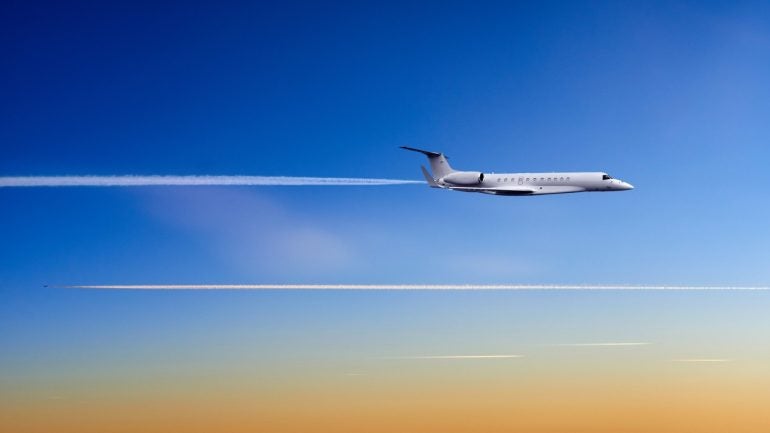
As public pressure grows, some governments are attempting to reduce the number of private and commercial short-haul flights.
Recent coverage of celebrities like Taylor Swift and politicians using private jets for short journeys has reignited a debate about the justifiability of their use. As public pressure to curb carbon emissions grows, some governments are attempting to reduce the number of short-haul flights undertaken by commercial and private jet aircraft.
…
The crux of the issue with private jets, is they have a dramatically higher carbon footprint per passenger than commercial alternatives.
A 2021 report from Brussels-based campaign group Transport and Environment found that private jets are five to 14 times more polluting per passenger than commercial flights and 50 times more polluting than trains.
The report also stated that some private jets emit two tonnes of CO2 per hour, which is staggering when compared to the average annual output per person of 8.2 tonnes in advanced economies.
…
“Aeroplanes are one of the most polluting methods of transport due to the variety of released gases,” explains GlobalData analyst Will Tyson. “It is not just CO2 emissions, but also nitrogen oxides and the effects of vapour trails.
“The altitude from which the gases are emitted also has an impact due to the greenhouse effect being stronger the higher in the air you are.”
As a whole, air travel accounts for 2% of CO2 emissions. In contrast, militaries around the world contribute 5.5% of CO2 emissions.
Global NGO Greenpeace is part of a growing number of organisations lobbying to ban private jet use once and for all, arguing that, despite 80% of the world’s population having never taken a flight, the super-rich 1% are responsible for half of the world’s aviation emissions.
…
https://www.energymonitor.ai/sectors/transport/how-bad-are-private-jets-for-the-environment/