Project Freedom and the end of the Arabs’ automatic “yes” to Washington by Timothy Hopper 

Spread the love

This work by Middle East Monitor is licensed under a Creative Commons Attribution-NonCommercial-ShareAlike 4.0 International License.

US President Donald Trump addresses a meeting with Gulf leaders of the six-nation Gulf Cooperation Council (GCC) in Riyadh on May 14, 2025. [Photo by BRENDAN SMIALOWSKI/AFP via Getty Images]

The suspension and redesign of Trump’s plan to reopen Hormuz showed that the Arab states of the Persian Gulf still need the United States, but they are no longer willing to pay, unconditionally, the price of a war they did not start.

When Donald Trump spoke of “Project Freedom” to reopen the Strait of Hormuz, the plan was supposed to be a display of restored American deterrence: an operation meant to prove that Washington could still open the world’s energy artery with its military fleet and its network of regional bases. Yet the rapid suspension of the project, after Saudi Arabia’s initial opposition to the use of its bases and airspace, carried a deeper meaning. This was not merely an operational disagreement.

“Project Freedom” showed that the Persian Gulf security order has entered a new phase: Arab states have not turned their backs on America, but they are no longer willing, without calculation, to serve as the launchpad for Washington’s war with Iran.

The significance of this shift became even clearer with the interim agreement between the United States and Iran. The framework, which is reportedly expected to lead to the reopening of Hormuz, ease pressure on the energy market, and begin a sixty-day period for nuclear negotiations, was not simply the product of military pressure. It was also the result of the constraints America faced on the regional battlefield. Washington could send more warships, but it could not be certain that all of its Arab partners would stand with it in every escalation scenario.

For decades, the relationship between Washington and the Arab governments of the Persian Gulf rested on a simple formula: oil, bases, and political alignment in exchange for security. Arab states provided access and alignment; in return, they expected protection. But the 2019 attacks on Aramco created the first serious crack in that mindset. Riyadh expected a decisive response, yet America’s reaction remained limited. From that moment, a hard question began to take shape: in a moment of danger, would America really enter a costly war to defend its allies?

READ: Hezbollah chief: Resistance thwarted ‘Greater Israel’ project, disarmament will not pass

The Hormuz crisis revived that question, but this time with greater urgency. The Arab states of the Persian Gulf know that any overt participation in an American military operation against Iran could turn them into direct targets of missile, drone, or maritime attacks. Their refineries, ports, and coastal cities are vulnerable, while the decision for war is made in Washington. From the perspective of Riyadh and Kuwait, the danger is not only Iran; the danger is being trapped in a war designed by others, while its geographic and economic costs fall on the Persian Gulf.

For this reason, the initial opposition to “Project Freedom” should not be read as a Saudi or Kuwaiti break with America. It was not an ideological “no”; it was a conditional and calculating “no.” Riyadh and Kuwait did not say they would no longer cooperate with the United States. They said they were not prepared to turn their territory into part of the theater of operations without clear guarantees about the consequences of war. Even later reports that Saudi Arabia and Kuwait had eased restrictions on U.S. military access did not erase the core issue. The significance of the episode was not that the restrictions were permanent; it was that such restrictions were imposed at all.

Some argue that because the restrictions were later reduced, no structural change has occurred. This argument sees part of the reality, but it misses the political meaning of hesitation. In regional politics, the pause itself matters.

If a plan that was supposed to display American authority became, from the very beginning, dependent on the consent of Riyadh and Kuwait, it means that American military power alone is no longer enough to produce political obedience. This is precisely the point at which strategic dependence remains, but automatic compliance begins to erode.

This shift cannot be separated from Saudi Arabia’s internal transformations either. Saudi Arabia today is not the Saudi Arabia of the early years of the Yemen war. Mohammed bin Salman needs stability in order to attract investment, expand tourism, and reduce dependence on oil. “Vision 2030” makes sense with the image of a safe country, not with the spectacle of a battlefield exchanging missiles and drones. Recent analyses of the consequences of a Hormuz war have also shown that the crisis made Saudi Arabia’s strategic vulnerability—and its need for safer energy routes—even more visible.

READ: US envoy says ‘without Israel, there would be no America’

From this perspective, de-escalation with Iran is not a sign of weakness; it is part of a new rationality of survival. The Tehran-Riyadh agreement mediated by China, and the effort to preserve channels of communication with Tehran, can be understood within this same framework.

Arab countries know that Iran is not a neighbor that can be erased. They can compete with Tehran, but they cannot change geography. America can change its priorities; the Persian Gulf, however, must live with the consequences of every war in that same region.

Trump’s policy made this reality even more visible. On the one hand, he spoke in the language of threats, sanctions, and displays of power; on the other, he tried to avoid an all-out war, one that could endanger the energy market, the elections, and America’s focus on China. The result of this contradiction was the transfer of risk to allies. Arab states felt that Washington wanted to use their territory to pressure Iran, without offering a clear guarantee that it would bear the heavy costs of defending them. This is where security trust begins to erode from within.

Nor has the interim agreement between the United States and Iran ended this problem; rather, it has revealed it in a different form. If this agreement keeps Hormuz open on a durable basis, Arab governments will breathe a sigh of relief. Reports of oil tankers carrying Iranian crude once again passing through the route of America’s naval blockade are a sign of reduced tensions. But if the negotiations fail and Trump returns to the military option, the same question will return: should the Persian Gulf be the main arena for Iran’s retaliation?

“Project Freedom,” then, was not merely a plan to escort ships through Hormuz. It was a test of the Persian Gulf security order. And that test showed that America remains the region’s superior military power, but it can no longer count on the unconditional cooperation of its Arab partners. Arab allies still need Washington’s security umbrella, but they want distance between their own security and America’s costly adventures.

The Middle East today is not witnessing America’s complete withdrawal. It is witnessing the end of a political habit. The old habit was that whenever Washington decided to escalate pressure against Iran, the Arab states of the Persian Gulf would line up behind it without hesitation. Now they have become too cautious, and too vulnerable, to take such a decision lightly.

This is the main message of “Project Freedom”: America’s Arab allies still say “yes” to Washington, but that “yes” is no longer automatic, cheap, or unconditional.

OPINION: Why the Iran conflict demands a fresh strategy in the Arab world

The views expressed in this article belong to the author and do not necessarily reflect the editorial policy of Middle East Monitor.

This work by Middle East Monitor is licensed under a Creative Commons Attribution-NonCommercial-ShareAlike 4.0 International License.

Experiencing issues with this image not appearing. I suspect because it's so critical of Zionist Keir Starmer's support of and complicity in Israel's genocides.
Genocide denier and Current UK Prime Minister Keir Starmer is quoted that he supports Zionism without qualification. He also confirms that UK air force support has been essential in Israel’s mass-murdering genocide. Includes URLs https://www.declassifieduk.org/keir-starmers-100-spy-flights-over-gaza-in-support-of-israel/ and https://youtu.be/O74hZCKKdpA
Keir Starmer objects to criticism of the IDF. He asks how could anyone object to them starving people to death, forced marches like the Nazis did, bombing Gaza's hospitals and universities, mass-murdering journalists, healthworkers and starving people queuing for food, killing and raping prisoners and murdering children. He calls for people to stop obstructing his genocide for Israel.
Keir Starmer objects to criticism of the IDF. He asks how could anyone object to them starving people to death, forced marches like the Nazis did, bombing Gaza’s hospitals and universities, mass-murdering journalists, healthworkers and starving people queuing for food, killing and raping prisoners and murdering children. He calls for people to stop obstructing his genocide for Israel.
Orcas discuss rotting brain, front Orca says Sundown Syndrome is a dead givaway and he wishes someone would Lock Him Up

Continue ReadingProject Freedom and the end of the Arabs’ automatic “yes” to Washington by Timothy Hopper 

US claims 125 million barrels of oil escorted through Strait of Hormuz

Spread the love

This work by Middle East Monitor is licensed under a Creative Commons Attribution-NonCommercial-ShareAlike 4.0 International License.

U.S. Secretary of War Pete Hegseth speaks during a news conference in James S. Brady Press Briefing Room of the White House on April 06, 2026 in Washington, DC. [Kyle Mazza – Anadolu Agency]

US Defense Secretary Pete Hegseth suggested on Sunday that Washington has maintained control over the Strait of Hormuz, successfully guiding millions of barrels of oil through the strategic waterway despite regional tensions, Anadolu reports.

“Project Freedom never stopped, and we have run 125 million barrels of oil through the straits, and Iran could not do anything about it,” Hegseth told CBS News.

He claimed that not a single Iranian vessel managed to transit the American blockade, asserting that US President Donald Trump’s administration holds “absolute leverage” in ongoing diplomatic negotiations from a position of strength.

READ: Iran threatens to halt US negotiations if Israeli attacks continue in Lebanon

The defense chief warned that the US military posture will remain active to ensure Tehran complies with the memorandum of understanding within the next 60 days. He noted the military has developed plans to ensure nuclear material is “down blended, destroyed, or removed.”

Hegseth said the document on table stipulates that Tehran “will never have a nuclear weapon, won’t seek one, won’t buy one, won’t have one.”

Trump on Saturday said a deal with Iran is scheduled to be signed on Sunday, even as Tehran disputed the timeline.

Sources in Tehran told the Fars News Agency that the proposed deal remains “under consideration” and no final decision has been announced.

OPINION: Trump’s Strategic Mistakes in His War Against Iran

This work by Middle East Monitor is licensed under a Creative Commons Attribution-NonCommercial-ShareAlike 4.0 International License.

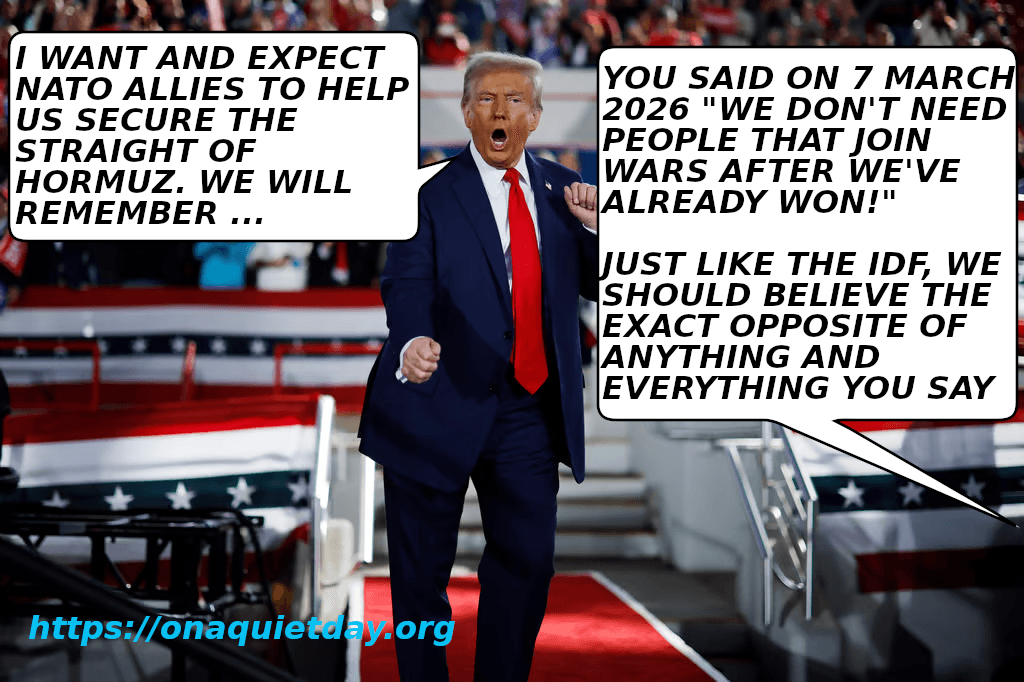
Donald Trump calls for help from NATO allies in securing the Strait of Hormuz despite saying on 7 March 2026 that they don't need people to join wars after they've already won. He's challenged with the claim that he lies as much as the IDF.
Donald Trump calls for help from NATO allies in securing the Strait of Hormuz despite saying on 7 March 2026 that they don’t need people to join wars after they’ve already won. He’s challenged with the claim that he lies as much as the IDF.
Keir Starmer explains that UK is actively supporting Israel's genocidal expansion and repeats his previous quotation that he supports Zionism "without qualification". Keir Starmer said “I said it loud and clear – and meant it – that I support Zionism without qualification.” here: https://www.jewishnews.co.uk/keir-starmer-interview-i-will-work-to-eradicate-antisemitism-from-day-one/
Keir Starmer explains that UK is actively supporting Israel’s genocidal expansion and repeats his previous quotation that he supports Zionism “without qualification”. Keir Starmer said “I said it loud and clear – and meant it – that I support Zionism without qualification.” here: https://www.jewishnews.co.uk/keir-starmer-interview-i-will-work-to-eradicate-antisemitism-from-day-one/

Continue ReadingUS claims 125 million barrels of oil escorted through Strait of Hormuz

‘Desperately Bouncing From One Extreme to Another’: Trump Pauses ‘Project Freedom’ in Strait of Hormuz

Spread the love

Article by Jake Johnson republished from Common Dreams under Creative Commons (CC BY-NC-ND 3.0).

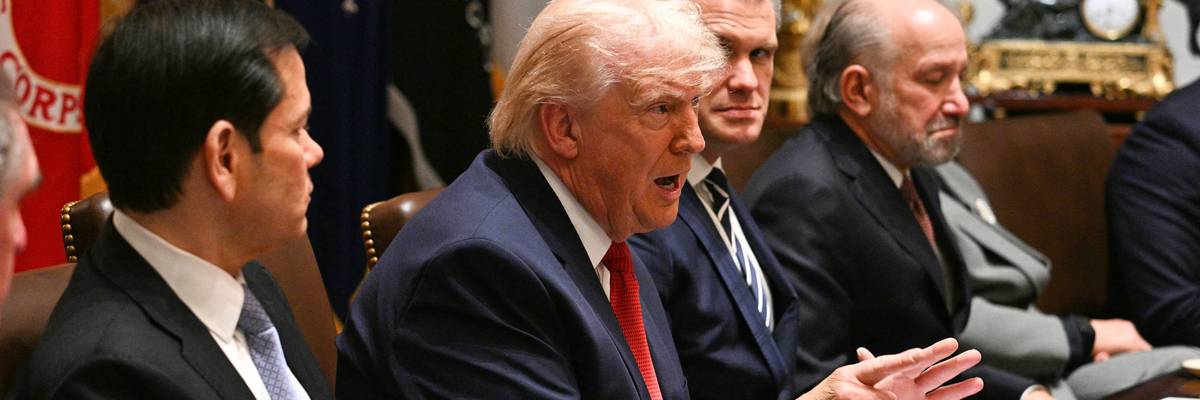
US President Donald Trump speaks flanked by top administration officials at the White House in Washington, DC on March 26, 2026.(Photo by Jim Watson/AFP via Getty Images)

An Iranian official said Trump’s operation “failed completely” and that Iran “will not participate in direct negotiations until the United States formally announces the end of the blockade.”

US President Donald Trump announced late Tuesday that he is putting his administration’s scheme to guide ships through the Strait of Hormuz on hold after just one full day, a decision that came hours after top American officials touted the president’s so-called “Project Freedom” at press briefings.

Trump said in a social media post that he paused the project—which allowed just two commercial ships to pass through the strait—“based on the request of Pakistan and other countries.” The US president, whose war of choice is historically unpopular with the American public, also asserted that “Great Progress has been made toward a Complete and Final Agreement with Representatives of Iran,” a claim that Iran rejected.

RECOMMENDED…

Cargo boat natigates sea

Trump’s Strait of Hormuz Ploy Aims to Manufacture ‘Pretext for Escalation,’ Iran Warns

U.S. Vice President JD Vance Leads U.S. Delegation In Peace Talks With Iran In Pakistan

‘Designed-to-Backfire’: Trump Slammed for Closure of Hormuz Strait as Iran Talks Falter

As Pakistan’s prime minister welcomed Trump’s announcement, an unnamed Iranian official told Drop Site’s Jeremy Scahill that the US president’s short-lived operation “failed completely” and that his statement announcing the pause of Project Freedom was “riddled with falsehoods.” The official added that “we will not participate in direct negotiations until the United States formally announces the end of the blockade.”

The US president said in his post that the illegal US naval blockade of Iran would “remain in full force and effect.”

“Trump is desperately bouncing from one extreme to another,” said political scientist Robert Pape in response to Trump’s announcement.

Trump’s decision to put Project Freedom on hold came shortly after Pentagon Secretary Pete Hegseth, Joint Chiefs of Staff Chairman Dan Caine, and Secretary of State Marco Rubio hailed the president’s initiative as a bold mission to rescue some 1,600 vessels stranded in the Strait of Hormuz, which Iran closed in response to the unlawful US-Israeli war and subsequent naval blockade.

“Iran’s plan, a form of international extortion, is unacceptable. That ends with Project Freedom,” Hegseth declared during a press briefing on Tuesday morning.

Rubio similarly decried Iran’s actions in the Strait of Hormuz—located in Omani and Iranian territorial waters—as violations of international law.

“There is no international law that allows you to say: I’m going to put mines in an international body of water, and I’m going to blow up ships that don’t listen to us and try to go through,” said Rubio.

Legal scholar Maryam Jamshidi rejected the top US diplomat’s assessment, calling it “all wrong.”

“Hormuz is not international waters,” Jamshidi wrote. “It’s an international strait composed of the territorial waters of Iran and Oman. Iran can mine its territorial waters during wartime. The laws of naval warfare also allow Iran to target ships in certain cases. The US is the only criminal here.”

Article by Jake Johnson republished from Common Dreams under Creative Commons (CC BY-NC-ND 3.0).

Keir Starmer explains that UK is actively supporting Israel's genocidal expansion and repeats his previous quotation that he supports Zionism "without qualification". Keir Starmer said “I said it loud and clear – and meant it – that I support Zionism without qualification.” here: https://www.jewishnews.co.uk/keir-starmer-interview-i-will-work-to-eradicate-antisemitism-from-day-one/
Keir Starmer explains that UK is actively supporting Israel’s genocidal expansion and repeats his previous quotation that he supports Zionism “without qualification”. Keir Starmer said “I said it loud and clear – and meant it – that I support Zionism without qualification.” here: https://www.jewishnews.co.uk/keir-starmer-interview-i-will-work-to-eradicate-antisemitism-from-day-one/
Donald Trump calls for help from NATO allies in securing the Strait of Hormuz despite saying on 7 March 2026 that they don't need people to join wars after they've already won. He's challenged with the claim that he lies as much as the IDF.
Donald Trump calls for help from NATO allies in securing the Strait of Hormuz despite saying on 7 March 2026 that they don’t need people to join wars after they’ve already won. He’s challenged with the claim that he lies as much as the IDF.

Continue Reading‘Desperately Bouncing From One Extreme to Another’: Trump Pauses ‘Project Freedom’ in Strait of Hormuz

Trump Admin Denies That Iran Hit US Warship Entering Strait of Hormuz

Spread the love

Article by Stephen Prager republished from Common Dreams under Creative Commons (CC BY-NC-ND 3.0).

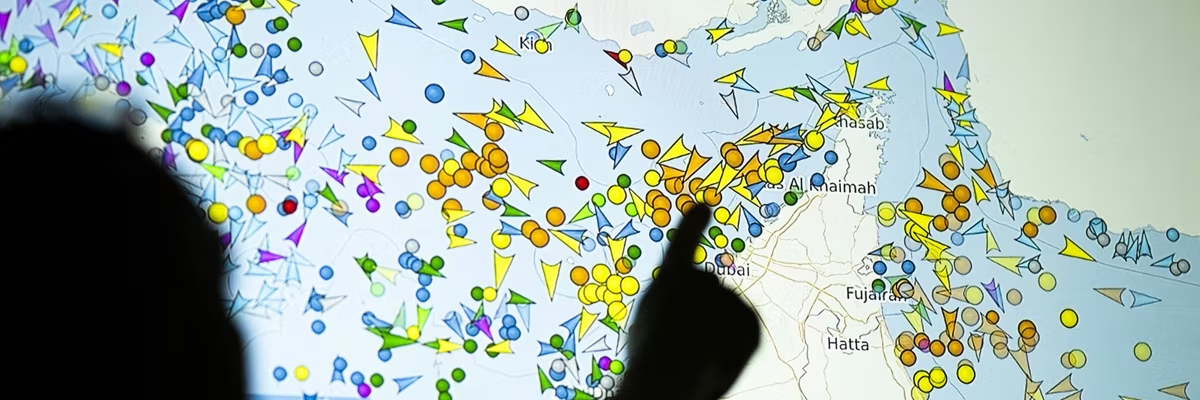
A photo illustration taken in Nicosia on May 4, 2026, shows a person in front of a large screen displaying vessel movements in the Strait of Hormuz on a ship-tracking website. (Photo by AFP via Getty Images)

One foreign policy expert urged skepticism of the administration’s claim, noting its consistent pattern of “immediate, unequivocal denial, then slowly dribbling out confirmation.”

The Trump administration has denied reports from Iranian media on Monday that a US Navy warship was hit in the Strait of Hormuz.

After US President Donald Trump said this weekend that the US Navy would help “guide” commercial ships through the strait, in what was referred to as “Project Freedom,” an Iranian official described it as a ploy to “provoke” retaliation and pledged that any vessels attempting to navigate the waterway without authorization would be “promptly intercepted” by Iranian forces.

RECOMMENDED…

U.S. Vice President JD Vance Leads U.S. Delegation In Peace Talks With Iran In Pakistan

‘Designed-to-Backfire’: Trump Slammed for Closure of Hormuz Strait as Iran Talks Falter

Escalating Attacks in Strait of Hormuz Risk Return to 'Full-Blown War'

Escalating Attacks in Strait of Hormuz Risk Return to ‘Full-Blown War’

According to Iranian news agencies, that is just what occurred on Monday morning. The Fars News Agency, which is linked to Iran’s Islamic Revolutionary Guard Corps (IRGC), said that according to local news sources, “two missiles” had made impact in an attack on a US Navy frigate that had entered the strait without permission from the Iranian government.

It said the ship “violated security protocols for transit and navigation near Jask with the intent to pass through the Strait of Hormuz, [and] came under missile attack after ignoring warnings from the Islamic Republic of Iran’s Navy.” Fars added that the ship “has been prevented from continuing its course due to these strikes and has been forced to retreat and flee the area.”

In a comment to Reuters, a senior Iranian official added that it was unclear whether the warship had sustained any damage.

The Tasnim news agency published a statement from the Iranian army’s public relations department, saying that “with the decisive and swift warning from the Navy of the Islamic Republic of Iran, the entry of enemy American Zionist destroyers into the Strait of Hormuz area was prevented.”

US Central Command (CENTCOM) quickly denied the claim, posting a “fact check” on social media.

“CLAIM: Iranian state media claims that Iran’s Islamic Revolutionary Guard Corps hit a US warship with two missiles,” the post said. “TRUTH: No US Navy ships have been struck. US forces are supporting Project Freedom and enforcing the naval blockade on Iranian ports.”

Another post stated that “US Navy guided-missile destroyers are currently operating in the Arabian [Persian] Gulf after transiting the Strait of Hormuz in support of Project Freedom” and that “American forces are actively assisting efforts to restore transit for commercial shipping.”

It added that “as a first step, two US-flagged merchant vessels have successfully transited through the Strait of Hormuz and are safely headed on their journey.”

Iran’s shuttering of the Strait of Hormuz to unauthorized ships has allowed it to wreak havoc on the Western economy in retaliation for the war launched by the US and Israel at the end of February.

About 20% of the globe’s seaborne oil shipments pass through the waterway, and its closure has caused global oil prices to spike, driving US gas prices to more than $4 on average and rippling inflation through the economy.

Observers of open-source marine tracking reports have said it did not show that two US-flagged merchant ships passed through the strait on Monday. However, it is possible the ships could have navigated the strait with the tracking technology disabled.

While information from the strait remains scarce, Matt Duss, a former foreign policy adviser to Sen. Bernie Sanders (I-Vt.) has said the public should remain skeptical of the Trump administration’s denials given its track record.

“Watch closely,” he wrote on social media. “The Trump administration’s consistent pattern has been immediate, unequivocal denial, then slowly dribbling out confirmation that ‘yeah, that happened, it was bad, actually very bad,’ and hope coverage has already moved on, and no one notices.”

As an example, he pointed to the first Trump administration’s claim following the 2020 assassination of IRGC Gen. Qassem Soleimani that retaliatory attacks against the Al Asad airbase, a US military installation, had resulted in zero casualties.

“Initially, Trump claimed, ‘We suffered no casualties,’” Duss said. “In the weeks that followed, we learned that there were actually over 100 casualties.” At least 109 US troops had suffered brain injuries from the strikes, according to the Pentagon.

More recently, CENTCOM initially denied claims that Iran had shot down US fighter jets in early April, claiming that “all aircraft are accounted for” when a plane had, in fact, been shot down, requiring a multi-day operation to rescue two pilots from Iranian territory.

Article by Stephen Prager republished from Common Dreams under Creative Commons (CC BY-NC-ND 3.0).

Donald Trump calls for help from NATO allies in securing the Strait of Hormuz despite saying on 7 March 2026 that they don't need people to join wars after they've already won. He's challenged with the claim that he lies as much as the IDF.
Donald Trump calls for help from NATO allies in securing the Strait of Hormuz despite saying on 7 March 2026 that they don’t need people to join wars after they’ve already won. He’s challenged with the claim that he lies as much as the IDF.

Continue ReadingTrump Admin Denies That Iran Hit US Warship Entering Strait of Hormuz

Trump’s Strait of Hormuz Ploy Aims to Manufacture ‘Pretext for Escalation,’ Iran Warns

Spread the love

Article by Jake Johnson republished from Common Dreams under Creative Commons (CC BY-NC-ND 3.0).

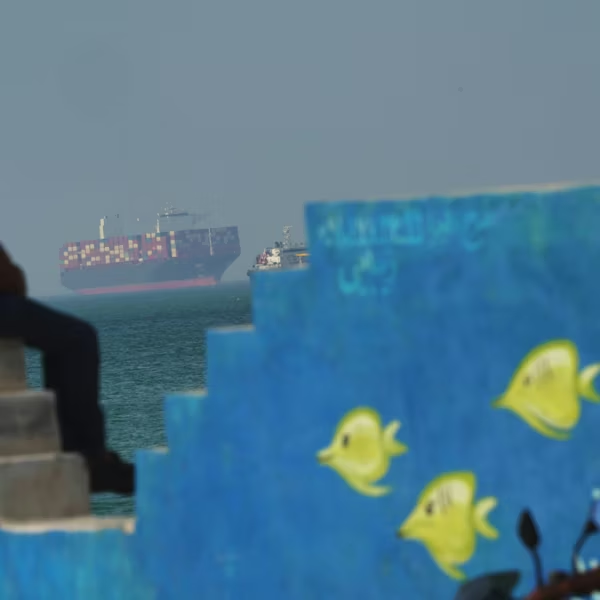
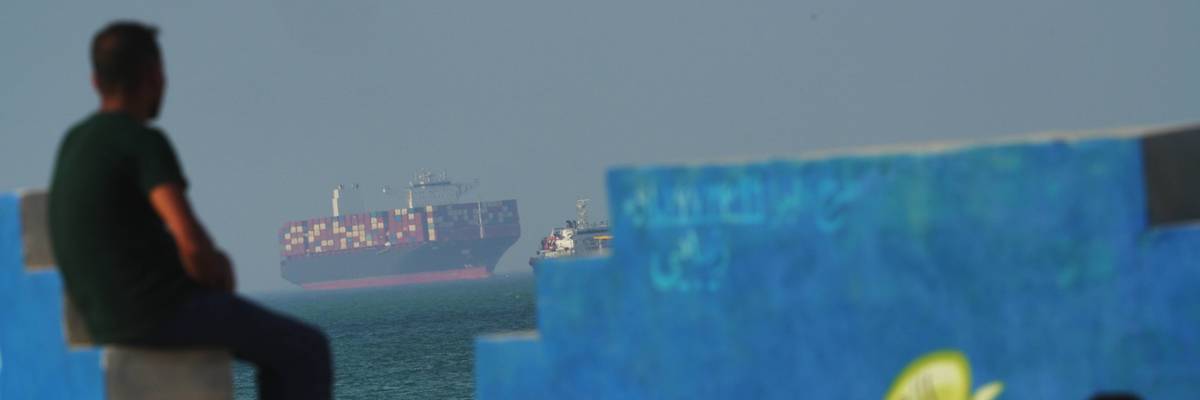
A cargo boat navigates the sea behind a mural depicting the shoreline on April 28, 2026 on Qeshm Island, Iran. (Photo by Asghar Besharati/Getty Images)

“Any American interference in the new maritime regime of the Strait of Hormuz will be considered a violation of the ceasefire,” said a member of the Iranian Parliament.

Iranian officials warned Sunday that US President Donald Trump’s newly announced plan to help “guide” stranded ships out of the Strait of Hormuz is an attempted provocation aimed at justifying additional military action against the Middle Eastern country.

An unnamed senior Iranian official told Drop Site that Trump’s plan, announced on Truth Social and confirmed by the US military, “is primarily intended to provoke Iran into taking an initial step toward confrontation, thereby creating a pretext for escalation and enabling him to justify further military action in response to an Iranian initiative.”

RECOMMENDED…

Escalating Attacks in Strait of Hormuz Risk Return to 'Full-Blown War'

Escalating Attacks in Strait of Hormuz Risk Return to ‘Full-Blown War’

U.S. Vice President JD Vance Leads U.S. Delegation In Peace Talks With Iran In Pakistan

‘Designed-to-Backfire’: Trump Slammed for Closure of Hormuz Strait as Iran Talks Falter

The official added that “our definitive position is that any commercial vessel attempting to transit through designated restricted routes without prior coordination will be promptly intercepted by Iranian forces.”

“Should US military vessels respond, such actions would be met with an immediate and corresponding response from Iran,” the official continued. “The US military vessels are far from the corridor area. If commercial vessels attempt to move, they would be engaged well before reaching any American ships,” the official added. “Trump has effectively turned them into bargaining tools in his political game.”

Ebrahim Azizi, who heads the national security commission of the Iranian Parliament, warned in response to Trump’s plan that “any American interference in the new maritime regime of the Strait of Hormuz will be considered a violation of the ceasefire” that took effect in early April.

“The Strait of Hormuz and the Persian Gulf would not be managed by Trump’s delusional posts,” Azizi added.

Trump wrote on his social media platform on Sunday that his administration has told countries with vessels stranded in the vital strait that “we will guide their Ships safely out of these restricted Waterways, so that they can freely and ably get on with their business.” Iran closed the strait—through which around 25% of the world’s seaborne oil trade and a third of global fertilizer trade flows each year—in response to the US-Israeli war as well as the Trump administration’s naval blockade against Iran.

The US president characterized his plan, which is titled Project Freedom and set to take effect on Monday, as a “humanitarian gesture on behalf of the United States,” but provided few details on how it would work.

US Central Command (CENTCOM) said in a statement on Sunday that military support for Project Freedom would “include guided-missile destroyers, over 100 land and sea-based aircraft, multi-domain unmanned platforms, and 15,000 servicemembers.”

“Last week, the U.S. Department of State announced a new initiative, in partnership with the Department of War, to enhance coordination and information sharing among international partners in support of maritime security in the strait,” CENTCOM said. “The Maritime Freedom Construct aims to combine diplomatic action with military coordination, which will be critical during Project Freedom.”

Brian Finucane, senior adviser to the US Program at the International Crisis Group, wrote that CENTCOM’s statement makes the president’s plan “sound like information-sharing backed by a vague threat of military action.”

The president’s scheme drew immediate support from one of the most vocal boosters of the Iran war, US Sen. Lindsey Graham (R-SC), who said he “totally” agrees with Trump’s decision to launch Project Freedom.

“I hope this conflict can end diplomatically,” said Graham, “but it is now time to regain freedom of navigation and forcefully respond to Iran if they insist on terrorizing the world.”

Article by Jake Johnson republished from Common Dreams under Creative Commons (CC BY-NC-ND 3.0).

Donald Trump sings and dances, says that it's fun to kill everyone ...
Donald Trump sings and dances, says that it’s fun to kill everyone …

Continue ReadingTrump’s Strait of Hormuz Ploy Aims to Manufacture ‘Pretext for Escalation,’ Iran Warns