‘Gamechanger’ Study Warns Carbon Capture May Fall Short of Expectations, Citing Storage Location Dangers
Spread the love

https://www.desmog.com/2025/09/23/gamechanger-study-warns-carbon-capture-may-fall-short-of-expectations-citing-storage-location-dangers

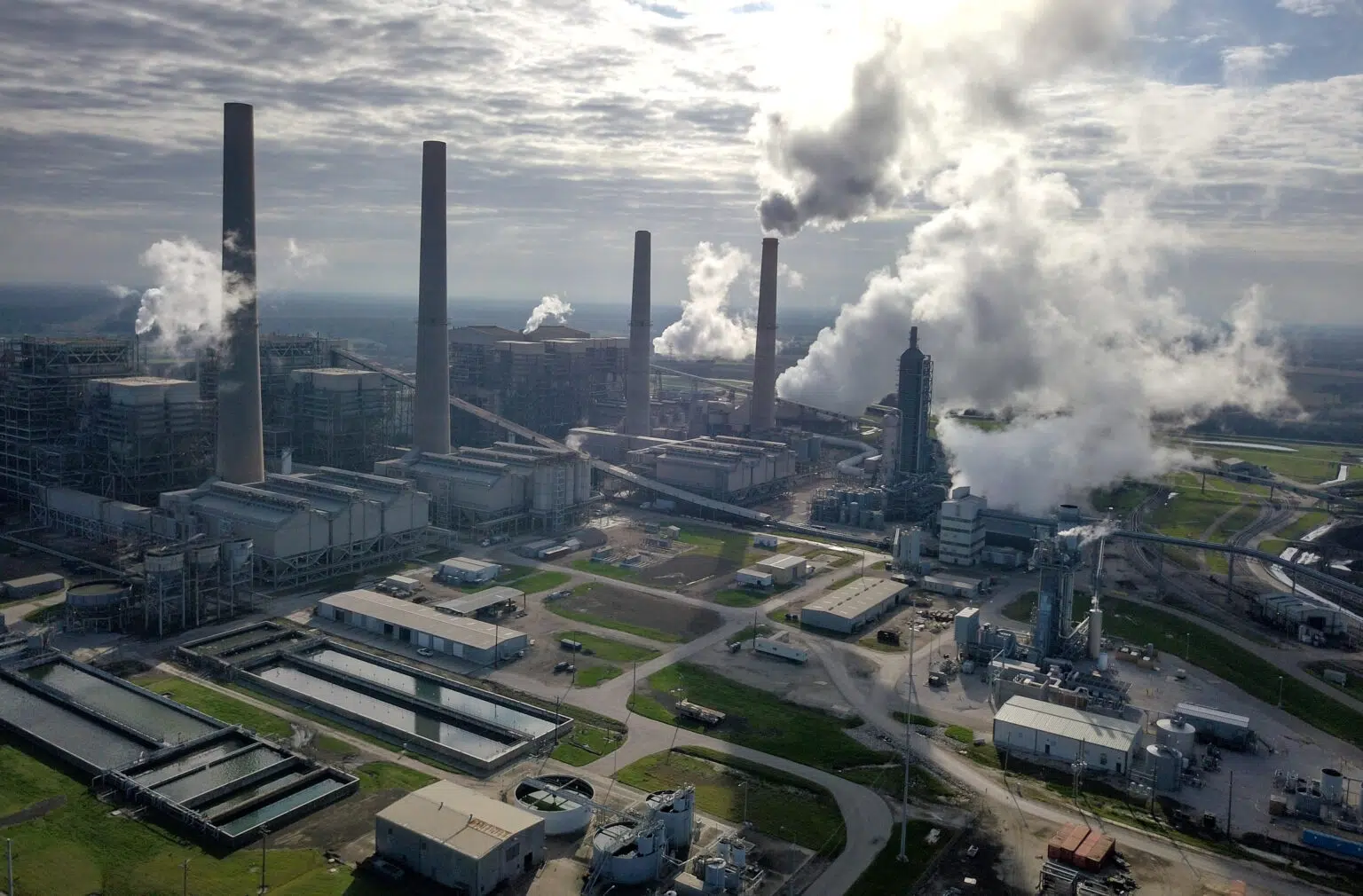
Carbon capture faces significant skepticism from environmentalists who note that the industry’s past is littered with failed projects, missed targets, and an overall net increase in emissions. Credit: Matt Hrkac (CC BY-NC-ND 2.0) NDLA

CCS can “no longer be considered an unlimited” climate solution, researchers caution after concluding most storage options are in risky regions

As the Trump administration seeks to wipe away environmental rules covering the oil, gas, and coal industries, fossil fuel producers and sellers are reassuring buyers that carbon capture and storage (CCS) could slash climate-altering emissions from a growing range of fossil-fuel projects — like blue hydrogen, LNG export terminals, and data centers.

“That’s right: data centers,” fossil fuel giant ExxonMobil wrote in December, adding that the need for more data centers for AI could represent a fifth of the world’s demand for carbon capture by 2050.

Carbon capture already faces significant skepticism from environmentalists who note that the industry’s past is littered with failed carbon capture projects, missed targets, and an overall net increase in emissions.

Now, a study published in the journal Nature calls attention to another issue that could loom in the future if CCS were to really take off — a lack of easy-to-develop locations where captured carbon can be buried underground.

The vast majority of places where you can find the kinds of sedimentary rocks that allow carbon dioxide to be stored underground sit in higher risk zones or in areas like the Arctic that are potentially off-limits for practical or political reasons, the study found.

That has big implications for the energy transition, since once carbon dioxide is put into storage, it’s supposed to stay there for as long as possible. Any storage sites we use today can’t be expected to be available for future generations — not just the children and grandchildren of people alive today but “more than ten generations into the future,” the study notes.

“This study should be a gamechanger for carbon storage,” coauthor Joeri Rogelj, director of research at the Grantham Institute at Imperial College London, said in a statement when the study was announced. “It can no longer be considered an unlimited solution to bring our climate back to a safe level. Instead, geological storage space needs to be thought of as a scarce resource that should be managed responsibly to allow a safe climate future for humanity.”

In fact, there may be only enough practical storage to potentially reverse between 0.4 and 0.7 degrees Celsius of warming — a tiny fraction of the five or six degrees experts previously estimated, the researchers said.

The carbon storage that is available “should be used to halt and reverse global warming,” Rogelj added, “and not be wasted on offsetting on-going and avoidable CO2 pollution from fossil electricity production or outdated combustion engines.”

On Track to Overshoot

International plans to limit climate change tend to assume that we can “overshoot” on climate pollution, pushing the Earth’s climate into dangerous territory past 1.5 or 2 degrees Celsius of warming. That’s because, the argument goes, carbon capture and storage could come to the rescue if we go too far, letting us draw carbon dioxide levels back down.

The new study calls that assumption into question, highlighting uncertainty about how effective carbon removal will be at curbing climate change, in addition to concerns over difficulties in accessing underground carbon storage.

“With current trends suggesting warming up to 3°C this century, using all of the safe geological storage wouldn’t even get us back to 2°C,” said lead author Matthew Gidden, research professor at the Center for Global Sustainability at the University of Maryland.

Industry estimates, like those from the Oil and Gas Climate Initiative (OGCI), suggest the world has plenty of storage potential to keep 14,000 gigatons of carbon dioxide buried below ground and out of the atmosphere.

That would be “more than enough to meet projected needs for CCUS [carbon capture, use and sequestration] over the coming century,” the OGCI wrote in a 2023 report it called a “playbook for regulators, industrial emitters and hub developers.”

The new study, however, takes a closer look at where that storage is located — and in particular whether it’s in regions at higher risk of earthquakes or groundwater contamination like locations deep in the ocean, or in the Arctic and Antarctic circles. The study concludes that nearly 90 percent of that storage capacity is in less-than-desirable locations.

The researchers estimate there’s just 1,460 gigatons worth of “prudent” storage available worldwide — a tenth of the industry estimates.

Some earlier estimates stretch even higher, suggesting there’s around 40,000 gigatons of CO2 storage capacity worldwide.

“These estimates are also important as they remove all the technical constraints from assessment and assume that cost and engineering challenges will pose no issue in the future,” coauthor Siddharth Joshi, a research scholar at the Integrated Assessment and Climate Change Research Group, told DeSmog, adding that “the shock value of technical potentials is enough to sometimes drive an industry forward.”

At the same time, focusing only on larger capacity estimates can create a “false sense of abundance,” Gidden noted, if policy-makers think the world has more room for overshoot than carbon storage can really offer.

The Nature study raises big questions about how the world’s carbon storage should be used long term.

“As [the study authors] point out, if we act to reduce emissions now, we probably have enough storage, but that ceases to be true really, really soon,” Rob Anex, professor at the University of Wisconsin-Madison who researches carbon capture technology, told Canada’s CBC News. “Global emission rates are so high that the window of time in which geologic storage is practical is shutting really, really fast.” 

Trump Backs Carbon Capture Subsidies

Despite the federal government’s retreat from climate action, including Trump’s January executive order withdrawing the U.S. from the Paris Agreement, the Trump administration has moved to protect and expand some federal subsidies for CCS.

Lucrative tax credits for using captured carbon for enhanced oil recovery were expanded this summer as part of Trump’s “One Big Beautiful Bill Act.”

Given this political climate, experts didn’t expect to see a major direct impact from the study for blue hydrogen projects and other proposals aiming to use carbon storage.

“The pragmatist in me says it’s unlikely,” Anika Juhn, energy data analyst for the Institute for Energy Economics and Financial Analysis (IEEFA), told DeSmog. “I don’t see government taking those kinds of steps.”

The Nature study follows a precautionary approach to carbon storage, she noted. “The precautionary principle says if we don’t really know about it, then maybe we shouldn’t be rushing headlong into just applying this technology everywhere as fast as possible,” she said. “I think that’s really where the strength of it is, saying if you are interested in doing it safely, here are some key aspects that you should really focus on.”

“Because their estimate is so prudent, it really doesn’t reflect at all current industry practice,” Juhn noted.

So far, there’s not a lot of carbon storage operating worldwide, with the Nature study pointing out existing projects currently store just 49 megatons per year, with 416 megatons worth “either planned or in construction.” Meanwhile, annual global emissions from fossil fuels topped 37,400 megatons last year, according to the World Meteorological Organization, another record high.

But that small CCS industry has already caused significant safety incidents — including well blowouts and a major 2020 CO2 pipeline leak that hospitalized dozens of people. 

Concerns over the potential for groundwater contamination — one of the factors highlighted in the Nature study — have already begun curbing real-world carbon storage availability at the state and local level.

Take, for example, Illinois, home to the nation’s first dedicated carbon storage project, the Archer-Daniels-Midland (ADM) carbon storage site in Decatur, Illinois.

Carbon injections were halted at ADM’s site a year ago, after the company discovered leaks below ground. “Given the extreme depth and the multiple layers of shale and other confining rock up to the surface, at no time was there an impact to the surface or groundwater sources, nor any threat to public health,” ADM said at the end of August, announcing the restart of operations at its Decatur site.

But the incident appears to have hit a nerve in the state, where nearly a million people rely on the Mahomet Aquifer in Champaign, Illinois, as their sole source of drinking water.

This summer, Illinois passed a law banning carbon storage below that aquifer, making roughly 15 percent of the state’s counties off limits for carbon storage. ADM’s leak had reached within about six miles of the Mahomet Aquifer, Taxpayers for Common Sense notes.

The Nature study notes that most of the carbon storage in operation today doesn’t actually offer any net climate benefit — because it’s used for enhanced oil recovery, which, the researchers wrote, “overall results in net-positive CO2 emissions.” 

“After decades of bold projections, only around 10 million tons of CO₂ are captured and permanently stored each year (excluding enhanced oil recovery), representing less than 0.03% of annual global fossil fuel emissions,” Kevin Anderson, professor of Energy and Climate Change at the University of Manchester, said in a statement responding to the study. “Rather than serving as a credible mitigation technology, CCS has largely functioned as a rhetorical device to delay robust fossil fuel regulation.”

https://www.desmog.com/2025/09/23/gamechanger-study-warns-carbon-capture-may-fall-short-of-expectations-citing-storage-location-dangers

Donald Trump urges you to be a Climate Science denier like him. He says that he makes millions and millions for destroying the planet, Burn, Baby, Burn and Flood, Baby, Flood.
Nigel Farage urges you to ignore facts and reality and be a climate science denier like him. He says that Reform UK has received millions and millions from the fossil fuel industry to promote climate denial and destroy the planet.
Continue Reading‘Gamechanger’ Study Warns Carbon Capture May Fall Short of Expectations, Citing Storage Location Dangers

Ed Miliband looking into more North Sea drilling despite Labour pledge

Spread the love

https://www.theguardian.com/business/2025/sep/25/ed-miliband-looking-into-more-north-sea-drilling-despite-labour-pledge

An oil drilling platform off the coast of Aberdeen. Officials are understood to have looked at a range of proposals in recent weeks. Photograph: Simon Price/Alamy

[Guardian] Exclusive: Energy secretary examining ways to allow oil and gas exploration without breaking manifesto promise

Ed Miliband is planning to encourage drilling in the North Sea despite a manifesto promise not to grant new licences on new parts of the British sea bed.

The energy secretary is looking at ways in which the government can allow companies to look for and produce more oil and gas without breaking Labour’s pre-election pledge not to issue new licences on new fields.

The plans, which will be announced in the coming months as part of a wider strategy for the North Sea, come amid pressure on one side from climate activists to stop all drilling, and on the other from Donald Trump to “drill, baby, drill”.

A government spokesperson said: “The strategy will set out how the government intends to meet its manifesto commitments to ensure no new licenses to explore new fields and maintaining existing fields for their lifetime.” They said the government would meet its manifesto commitments “in full”.

Miliband has been working on proposals for the North Sea for months as the government looks for ways to maximise the lives of existing oil and gas fields without allowing completely new exploration.

Labour promised in its manifesto not to grant any new licences on new fields, and ministers are now looking at how they can implement that while also gaining an economic return from the sizeable industry which already exists. Oil and gas companies employ about 30,000 people from their base in north-east Scotland.

Continues at https://www.theguardian.com/business/2025/sep/25/ed-miliband-looking-into-more-north-sea-drilling-despite-labour-pledge

dizzy: It looks like yet more broken promises from the Labour party, seems to be what they’re really good at. Expanding airports is ignoring climate commitments, a huge danger with the North Sea is Rosebank.

Continue ReadingEd Miliband looking into more North Sea drilling despite Labour pledge

‘Patently Illegal’: Experts Raise Major Red Flags About Trump’s Drug Boat Bombings

Spread the love

Original article by Brad Reed republished from Common Dreams under Creative Commons (CC BY-NC-ND 3.0).

US President Donald Trump delivers remarks during a Cabinet meeting at the White House on February 26, 2025 in Washington, DC. (Photo by Andrew Harnik/Getty Images)

“As history shows, no nation can kill their way out of the drug problem,” argued one critic.

US President Donald Trump has now repeatedly ordered the American military to use deadly force against boats in international waters that are allegedly engaged in drug smuggling, and many experts are raising red flags about both its legality and its effectiveness.

In an essay published by Just Security on Wednesday, Ret. Army Lt. Col. Daniel Maurer argued that Trump and Defense Secretary Pete Hegseth had issued “a patently illegal order” with the attacks on the alleged drug boats, and warned that the service members who carried it out could be exposed to “to a range of criminal punishments” under both federal criminal law and the Uniform Code of Military Justice.

RECOMMENDED…

Congressional Democrats Hold Capitol Hill Press Conference To Speak Out Against Trump's Cryptocurrency Dinner

Senator Says New Details of Venezuela Bombing Reveal ‘Trump’s Growing Lawlessness’

grainy US footage of alleged drug boat

Another ‘Extrajudicial Execution’ as US Bombs Second Alleged Venezuelan Drug Boat

However, Maurer said it was highly unlikely that the service members who followed Trump’s orders would actually face consequences given the broad criminal immunity that the US Supreme Court granted presidents last year for carrying out official acts.

Regardless, Maurer concluded that Trump has “prejudiced good order and discipline within the armed forces” by “placing US service members in the position of having to contemplate whether they’d escape justice” by carrying out an illegal action.

John Yoo, an attorney who has long embraced a maximalist view of presidential powers and who has in the past authored legal memos justifying the torture of prisoners in American military custody, nonetheless also argued Trump’s drug boat bombing goes too far.

Writing in The Washington Post on Tuesday, Yoo made the case that ordering the military to use deadly force against suspected drug traffickers risks blurring the line between military action and law enforcement in ways that could lead to an “amorphous military campaign against the illegal drug trade, which would violate American law and the Constitution.”

Yoo said that the only way the Trump administration could possibly justify military action against cartels would be if it could prove that the cartels were carrying out acts of violence at the behest of a foreign government whose intention was to harm American citizens.

But he cautioned that the administration “has yet to provide compelling evidence in court or to Congress” that this is the case, and he said any action taken without such evidence would constitute “the misuse of the tools of war to fight the eternal social problem of crime.”

Daniel DePetris, a fellow at the national security think tank Defense Priorities, argued in Time on Wednesday that Trump’s drug boat bombings were not only “likely illegal and unconstitutional,” but would prove to be tactically ineffective as well.

“As history shows, no nation can kill their way out of the drug problem,” he argued. “Various governments have prefaced their entire anti-drug campaigns on military force before and have consistently failed. For example, the Mexican government declared war on the cartels in 2006 and tasked the military with prosecuting counter-drug operations, only to see those very same cartels get even more violent in their response.”

DePetris said that Trump doesn’t seem to grasp that as long as US citizens are willing to pay for illegal drugs, there will be criminal enterprises willing to go to extreme lengths to make money from them.

“As long demand is strong and the US remains the world’s top market, these criminal outfits will have billions of dollars’ worth of reasons to continue their operations, no matter the risk,” he concluded.

In a Wednesday editorial criticizing Trump’s bombing of suspected drug boats, The New York Times noted that the Trump administration has actually harmed efforts to reduce the demand for drugs in the US, despite considerable evidence that doing so is the surest way to hurt cartels.

“The White House has sought huge cuts to programs designed to bring down that demand, including widely praised addiction medicine and harm reduction efforts,” the Times editors wrote. “And it is cutting Medicaid, which will leave many users without access to effective treatment programs. It is doing so even though these programs helped produce a 26% decline in overdose deaths in 2024 from the year before.”

The Times editorial also linked Trump’s use of the military to take out purported drug traffickers with his deployment of the National Guard in US cities under the pretense of combating crime.

“His attacks at sea fit a disturbing pattern of using the military to address law-enforcement problems,” the editors wrote. “Just as he continues to send the National Guard into cities in a supposed effort to reduce street crime, he wants to achieve the illusion of dominance over drug smuggling, even if his actions make little difference and even if he kills people, guilty or innocent, in the process.”

Original article by Brad Reed republished from Common Dreams under Creative Commons (CC BY-NC-ND 3.0).

Orcas discuss how Trump was re-elected and him being an insane, xenophobic Fascist.
Continue Reading‘Patently Illegal’: Experts Raise Major Red Flags About Trump’s Drug Boat Bombings

38 Former World Leaders Have a Message: Tax Fossil Giants to Fight Climate Crisis

Spread the love

Original article by Jon Queally republished from Common Dreams under Creative Commons (CC BY-NC-ND 3.0).

A Greenpeace sign projected on a building says, “Stop Drilling-Start Paying”—a message directed at the world’s fossil fuel companies. (Photo: Greenpeace)

“Pressure is mounting on today’s politicians to hold those most responsible for the climate crisis to account,” said one Greenpeace campaigner.

Thirty-eight former world leaders on Wednesday used the occasion of the United Nations General Assembly this week in New York—as well as other global summits on the horizon—to demand a new global framework for steeper taxes on the world’s wealthiest and most powerful fossil fuel giants to pay for an urgent transition away from dirty energy sources toward a healthier planet and more equitable economy.

Under the auspices of the nonpartisan Club de Madrid, the world’s largest forum of former democratically-elected presidents and prime ministers, an open letter—signed by Carlos Alvarado, former President of Costa Rica; Mari Kiviniemi, former Prime Minister of Finland; Chandrika Kumaratunga, former President of Sri Lanka; former UN Secretary General Ban-Ki Moon; and dozens of others—calls the climate crisis “a defining challenge of our time” and urges current leaders to “place the question of fair taxation of fossil fuel company profits firmly on national and international agendas” before it is too late.

RECOMMENDED…

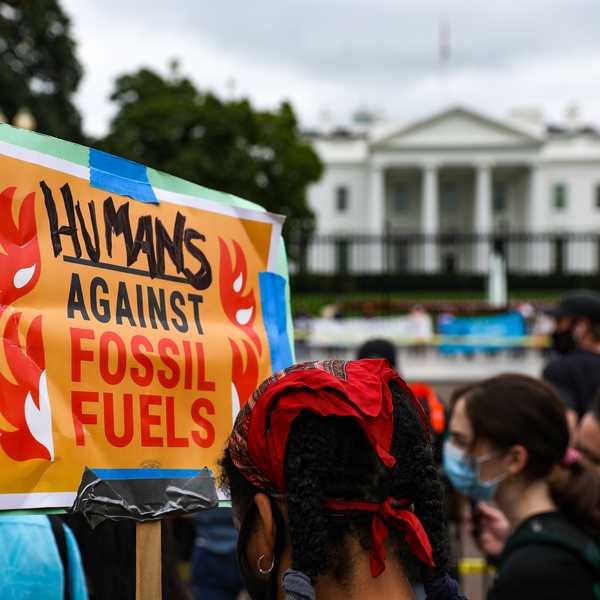
Week-long fossil fuel demonstrations continue in Washington

‘Reckless’ Countries to Extract More Than Double the Fossil Fuels Consistent With 1.5°C

US President Donald Trump

Climate Defenders Blast Trump’s ‘Reckless’ UN Speech

“With wealthier countries leading by example,” say the leaders, increased taxation of the world’s coal, oil, and gas giants coupled with a redirection of taxpayer subsidies away from the fossil fuel sector and toward a just renewable energy transition “could be transformative, enabling a faster and fairer global transition and strengthening public trust that climate action can deliver tangible benefits for all.”

“Taxing fossil fuel profits is not only fair—it is also essential to ease the economic burden of the climate crisis, felt by ordinary people through higher food prices, lost working days, pressure on energy bills and higher home insurance premiums.”

Citing the need for global cooperation and ambition to address the warming planet and ongoing climate breakdown, the open letter states:

It is time to consider innovative solutions that can simultaneously establish a clear incentive for companies to shift investment to renewable energy as quickly as possible, while mobilising significant funds to address climate damages and advance both equality and equity. Today, we call on you to consider permanent polluter profit taxes applied to high-emitting industries, designed to ensure contributions come from those with the greatest capacity to pay rather than from ordinary consumers of fossil fuels. With wealthier countries leading by example, these taxes should place the primary responsibility on those with the greatest capacity, not on middle- and low-income communities.

The former world leaders acknowledge the strain governments feel about generating the necessary revenue, estimated at approximately $6.5 trillion per year by 2030, to fund the rapid transition scientists and experts say is necessary to avoid the worst future impacts of an increasingly hotter planet. However, they argue that the polluting companies that have profited most from the fossil fuel era are best positioned to foot the bill, and that the cost of action is far less than the cost of fixing the damage that future climate change will cause if left unaddressed.

“During the oil and gas price crisis in 2022, many governments implemented windfall taxes. We must consider making such approaches permanent,” the letter argues. “A polluter profits tax modestly applied to normal returns and significantly higher on windfall gains could, if applied just to oil, coal, and gas companies, generate up to $400 billion in its first year.”

Rebecca Newsom, Greenpeace International’s global political lead for its “Stop Drilling Start Paying” campaign, said the letter represents what real leadership looks like and that forcing fossil fuel giants to pay higher taxes to help solve the planetary crisis their insatiable greed has spurred has never been more popular with the people worldwide.

“This is a powerful call from former world leaders to make oil and gas corporations pay their fair share for the destruction they have caused,” said Newsom.

Noting recent survey data, Newsom said 8 out of 10 people around the world now “support taxing these polluters for climate damages—the backing of former political leaders adds more weight to this urgent demand.”

“Pressure is mounting on today’s politicians to hold those most responsible for the climate crisis to account,” she said. “Taxing fossil fuel profits is not only fair—it is also essential to ease the economic burden of the climate crisis, felt by ordinary people through higher food prices, lost working days, pressure on energy bills and higher home insurance premiums.”

With the upcoming G20 summit in South Africa and the UN Global Tax Convention in Kenya, both scheduled for November, the former world leaders say the moment is right for global leaders to finally show urgency on the issue.

“The world has the tools, the knowledge, and the resources to act,” their letter concludes. “What is needed now is the political courage to ensure that those with the greatest capacity contribute their fair share. This will not only advance climate justice but also strengthen the foundations of a more stable, resilient, and prosperous global economy.”

Greenpeace’s Newsom said the message is clear. “Governments must find the courage to decisively tax oil and gas corporations and redirect those funds towards a just transition away from fossil fuels and a safe future in the face of a climate crisis.”

Original article by Jon Queally republished from Common Dreams under Creative Commons (CC BY-NC-ND 3.0).

Continue Reading38 Former World Leaders Have a Message: Tax Fossil Giants to Fight Climate Crisis